Kansas Nonresident Fishing License Cost
Heading to Kansas for some fantastic fishing can be an absolute blast, but trying to navigate the different fishing license options and their costs from out of state can sometimes feel like trying to untangle a bird's nest of fishing line. It's a common frustration, wondering if you need a separate permit for every little thing, or which license type truly makes the most sense for your trip. This guide is here to untangle all that confusion, breaking down everything you need to know about Kansas nonresident fishing license costs so you can spend less time worrying about permits and more time reeling in your next big catch.
Understanding Nonresident Fishing License Options in Kansas
When you're planning a fishing trip to the Sunflower State, one of the first things you'll need to sort out is your fishing license. Kansas offers a few different options for nonresidents, each designed to fit different needs, from a quick weekend getaway to an extended stay. Knowing which one is right for you can save you both money and headaches.
The Annual Nonresident Fishing License
For many out-of-state anglers who plan to visit Kansas multiple times throughout the year or for an extended period, the annual nonresident fishing license is often the most cost-effective choice. This license covers you for a full calendar year from the date of purchase, allowing you the flexibility to fish Kansas waters whenever the urge strikes, without having to buy a new license each time. Currently, the Kansas Nonresident Annual Fishing License Costs $75.
This option is particularly appealing for those who live in neighboring states like Missouri, Oklahoma, or Nebraska, and frequently cross the border to fish. Imagine discovering the incredible walleye bite at Cheney Reservoir or planning several trips throughout the year to chase monster catfish in the Kansas River. If you find yourself in these scenarios, the annual pass quickly pays for itself compared to buying multiple short-term licenses. It truly simplifies your planning, allowing you to just grab your gear and go.
Short-Term Nonresident Options: 1-Day and 5-Day Licenses
Not every nonresident angler needs a full year of fishing access. Maybe you're just passing through on a road trip and want to wet a line for a day, or perhaps you're joining a friend for a specific weekend tournament. For these shorter excursions, Kansas offers convenient short-term nonresident fishing licenses. The Kansas Nonresident One-Day Fishing License Costs $10, and there's also a Kansas Nonresident Five-Day Fishing License Costs $25.
These daily and multi-day options are fantastic for casual visitors or those testing the waters for the first time. The 1-day license is perfect if you only have a single afternoon to spare, perhaps at a community fishing lake near Wichita or Topeka. The 5-day license offers a bit more flexibility, covering a typical long weekend or a short vacation, giving you enough time to explore a larger body of water like Milford Lake without committing to a full annual license. It’s a great way to experience the fishing Kansas has to offer without a significant upfront investment.
Combination Licenses for Nonresident Anglers
Kansas understands that many outdoor enthusiasts enjoy more than just fishing; some also love to hunt. To make things easier and more affordable for these versatile adventurers, the state offers combination licenses. The primary option here for nonresidents is the Nonresident Combination Hunt-Fish License.
This particular license allows you to pursue both hunting and fishing opportunities within Kansas with a single purchase, streamlining your outdoor activities. While the exact cost can vary, it’s designed to be a consolidated price that offers savings compared to buying a separate annual hunting and fishing license. If you're planning an expedition that includes both chasing pheasants in the fall and battling bass in the spring, this combination license is a sensible and economical choice. It’s all about providing value and convenience for the multi-faceted outdoors person visiting Kansas.
Navigating Additional Permits and Endorsements for Nonresidents
Beyond the basic fishing license, there are a few other permits and endorsements that nonresidents might need, depending on where and what they plan to fish. It’s crucial to be aware of these as they are separate from your main fishing license and carry their own costs. Overlooking them could lead to an unexpected fine, which is the last thing you want on a relaxing fishing trip.
The Kansas Trout Permit for Nonresidents
One of the most common additional endorsements needed by nonresidents is the Kansas Trout Permit. If you plan on fishing any waters that are specifically designated as trout waters and are stocked by the Kansas Department of Wildlife and Parks (KDWP), this permit is mandatory. The Kansas Adult Trout Permit Costs $14.50, and there's a Kansas Youth Trout Permit Costs $7 for younger anglers.
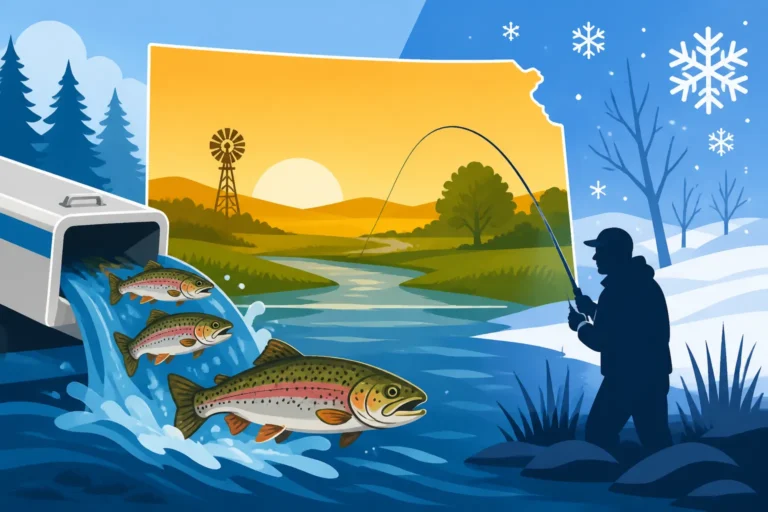
Kansas runs a fantastic winter trout stocking program, bringing rainbow trout and sometimes even golden rainbow trout to various lakes and ponds across the state, typically from December through March. You’ll find these stocked waters in urban areas and state parks, providing a unique cold-water fishing experience. Without this permit, even if you have a valid fishing license, you cannot legally keep trout from these designated areas. For more in-depth information on when and where to find these opportunities, be sure to check out our Kansas Trout Permit Guide. Getting the right tackle for trout can also be helpful; a quick search on Amazon for "trout fishing lures Kansas" might give you some good options to pick up before your trip.
State Park Permits and Other Access Fees
Accessing certain fishing locations might require more than just your fishing license. Many of Kansas’s prime fishing spots are located within State Parks, and these often require a separate daily or annual vehicle permit to enter. While the fishing license covers the act of fishing, the state park vehicle permit covers access to the park itself.
It's a common oversight for out-of-state visitors to arrive at a beautiful lake within a Kansas State Park, only to realize they need to purchase an additional permit at the gate or visitor center. These fees directly support the upkeep of these recreational areas, ensuring they remain beautiful and accessible for everyone. Always check the specific requirements for your chosen fishing destination beforehand, especially if you're heading to popular spots like Milford State Park or Cheney State Park.
Special Permits for Specific Fishing Activities
While not as common for every angler, certain specialized fishing methods or target species might require additional permits or have specific regulations that nonresidents need to heed. For instance, if you're interested in the unique experience of paddlefish snagging, which occurs during a specific season, you’ll need to be fully aware of the Kansas Paddlefish Snagging Season Dates and any associated permit requirements.
Similarly, if you're considering unconventional methods like trotline fishing or jug fishing, Kansas has specific rules for these techniques, and while they generally fall under the standard fishing license, understanding all the regulations is key. The Kansas Fishing Regulations Explained guide is an excellent resource for clarifying these nuances. Always do your homework if your fishing plans go beyond typical rod and reel angling, as regulations can vary significantly.
Where and How Nonresidents Can Purchase a Kansas Fishing License
So, you've decided which license fits your Kansas fishing adventure. Now, how do you actually get your hands on one? Luckily, the Kansas Department of Wildlife and Parks (KDWP) has made the purchasing process quite straightforward, offering both online and in-person options. Convenience is key, especially when you're an out-of-state visitor trying to maximize your time on the water.
Online Purchase Through KDWP
By far, the easiest and most recommended way for nonresidents to purchase a Kansas fishing license is online, directly through the KDWP website. This digital portal is accessible 24/7, meaning you can secure your license from the comfort of your home, anytime before you even cross into Kansas. The process is intuitive: you'll navigate to the licensing section, select the appropriate nonresident license, provide some personal details (including proof of your state of residency), and complete the payment.
Once purchased, you'll often receive a digital copy of your license that you can display on your smartphone, eliminating the need to print anything out. This is incredibly convenient, as you'll always have it with you, just like your phone. For a detailed walkthrough, our guide on Where to Buy a Kansas Fishing License Online provides all the steps. While you're at it, you might consider stocking up on some essential gear like a new tackle bag or a quality pair of polarized sunglasses from Amazon, which can be delivered right to your door before you even leave for your trip.
In-Person Retailers Across the State
If you prefer a more traditional approach or find yourself in Kansas without a pre-purchased license, you can still buy one in person. The KDWP partners with numerous authorized license vendors throughout the state. These typically include sporting goods stores, bait and tackle shops, Walmart locations, and various convenience stores in towns big and small.
Purchasing in person allows you to ask questions from local staff who might have insight into current fishing conditions or hotspots. Just remember to bring a valid ID and be prepared to provide the necessary information. To find a location near your destination, a quick search for "Where to Buy a Kansas Fishing License" can point you to the closest vendor. Sometimes, local bait shops also carry unique local baits that you can't find online, although for generic items or specialized gear, Amazon remains a strong contender for convenience.
Important Considerations for Nonresident Purchase
When buying your Kansas fishing license as a nonresident, there are a few crucial details to keep in mind. First, always be prepared to provide proof of your state of residency. This isn't just to confirm you're a nonresident; it helps the KDWP ensure you're getting the correct license type and contributes to accurate data tracking. Second, be aware of the Age Requirements in Kansas. While adults will always need a license, there are specific exemptions for younger anglers, which we'll discuss shortly.
Lastly, pay attention to the license year expiration. While some states' licenses expire on your birthday, Kansas annual fishing licenses expire a full year from the date of purchase. For instance, if you buy an annual license on July 1st, it's valid until June 30th of the following year, regardless of your birthday. This simplifies planning considerably, allowing you to use your license for multiple trips across seasons. You can explore more about this in our article When a Kansas Annual Fishing License Expires.
Nonresident License Exemptions and Special Cases
Even as a nonresident, there are specific situations where you might be exempt from needing a fishing license or qualify for special discounts. It's important to understand these exemptions because they can save you money and ensure you're legally compliant without unnecessary purchases. Don't assume you need a license for everyone in your party until you've checked these rules.
Youth and Children's Fishing Exemptions
One of the most heartwarming exemptions in Kansas fishing regulations is for our youngest anglers. The state strongly encourages kids to get involved in fishing, and to make it easier, children under a certain age are not required to have a fishing license, even if they are nonresidents. Specifically, all individuals under the age of 16 are exempt from needing a fishing license in Kansas.
This is fantastic news for family fishing trips! You can bring your kids, nieces, nephews, or grandchildren from out of state to enjoy the abundance of Kansas waters without worrying about an additional license cost for them. They can fish alongside you, learning the ropes and hopefully catching their first fish, absolutely free. This exemption applies to all waters, including public lakes, rivers, and community fishing ponds. For more details on this, our Do Kids Need a Fishing License in Kansas? article offers a complete breakdown, alongside information on Kansas Youth Fishing License Rules for those who might opt for one.
Landowner and Private Pond Exemptions
Another common question, especially for nonresidents visiting friends or family in Kansas, revolves around fishing on private property. Generally, Kansas law offers specific exemptions for landowners and their immediate family members fishing on their own property. However, for nonresidents, the rules can be a little different if you don't own the land.
If you are a nonresident fishing on private land or a private pond that you do not own, you will still need a valid Kansas fishing license. The exemption typically applies to bona fide owners or tenants of land, or their family members, fishing on their own property. If you're a guest, even on a private pond, your license is still required. This ensures that all anglers contributing to the state's fisheries management are properly licensed. Our Fishing Rules for Private Ponds in Kansas goes into more depth on this specific scenario.
Military Personnel and Disabled Veteran Discounts
Kansas proudly supports its military personnel and veterans. For resident military members and disabled veterans, there are often significant discounts or even free lifetime licenses available. However, for nonresidents, these exemptions are more limited but still worth checking.
Generally, the specific free or discounted licenses for disabled veterans or active-duty military personnel are tied to Kansas residency. That said, it's always a good idea to check the most current KDWP regulations, as policies can evolve. While a full exemption might not be available for all nonresident military, understanding the details is crucial. Our article on Kansas Disabled Veteran Free Fishing License Rules provides valuable insights into what's available. It’s always best to contact the KDWP directly or visit their website for the most up-to-date information regarding nonresident military discounts before your trip.
Financial Planning: Comparing Nonresident License Costs and Maximizing Value
Planning a fishing trip, especially out of state, involves more than just picking a destination and packing your rods. Budgeting for licenses and permits is a key part of the preparation. Understanding the different costs and when certain options offer the best value can significantly impact your overall trip expense and enjoyment. Let's break down the numbers and consider how to make your dollars go further.
Annual vs. Short-Term Value Proposition
The choice between an annual and a short-term nonresident license really boils down to how often you anticipate fishing in Kansas. If you’re a dedicated angler who envisions multiple trips throughout the year, perhaps targeting spring crappie, summer catfish, and fall walleye, the annual license at $75 presents clear value. After just three or four 1-day trips ($10 each) or two 5-day trips ($25 each), you’re already approaching the cost of the annual license, making the annual pass the more economical choice in the long run.
However, for that one-off family vacation or a spontaneous day trip, committing to an annual license would be overkill. The 1-day ($10) or 5-day ($25) options are specifically designed for these brief encounters with Kansas waters. They offer flexibility and ensure you're only paying for the fishing access you actually use. It’s a simple calculation: if you think you'll fish for more than 7-8 days in Kansas within a year, the annual license is your best bet. If less, stick to the short-term options. This comparison is further explored in our Kansas Resident vs Nonresident License Cost Compared article, which offers broader context.
Cost Breakdown Table for Nonresidents
To give you a clear, at-a-glance overview of the main nonresident fishing license and permit costs in Kansas, here’s a handy table. This should help you quickly identify the price points for the most common options you might consider.
| License/Permit Type | Nonresident Cost | Duration | Notes |
|---|---|---|---|
| Annual Fishing License | $75 | 1 Year | Valid for a full year from purchase date. Best for frequent visitors. |
| 1-Day Fishing License | $10 | 1 Day | Ideal for quick stops or single-day trips. |
| 5-Day Fishing License | $25 | 5 Consecutive Days | Great for weekend trips or short vacations. |
| Combination Hunt-Fish License | Varies | 1 Year | Combines hunting and fishing. Cost is generally higher than fishing alone. |
| Adult Trout Permit | $14.50 | Annual | Required to fish designated trout waters. |
| Youth Trout Permit (Age 15 & Under) | $7 | Annual | Required for youth to fish designated trout waters. |
| State Park Vehicle Permit | Varies (Daily/Annual) | Daily/Annual | Required for vehicle entry into most State Parks. |
Costs are approximate and subject to change by the KDWP. Always verify current prices before purchasing.
Budgeting for Your Kansas Fishing Adventure
Beyond the license itself, it's wise to consider the broader financial picture of your fishing trip. The license is just one piece of the puzzle. Factor in travel costs, accommodation, boat rentals (if applicable), bait, tackle, and food. For instance, if you're traveling a long distance, a full week of fishing might justify the annual license, especially if you plan to hit multiple lakes like Wilson Lake or Tuttle Creek Lake.
Don't forget the little things: sunscreen, insect repellent, and extra fishing line can add up. You can often find deals on these essentials on platforms like Amazon, which can help keep your overall budget in check. Think about the Total Cost of a Kansas Season of Licenses and Permits if you're planning an ambitious year of fishing. A well-planned budget ensures that your focus remains on the joy of fishing and exploring Kansas's beautiful outdoors, rather than unexpected expenses.
Disclaimer
The information provided in this guide is for general informational purposes only and is subject to change. While we strive to keep the content accurate and up-to-date, fishing regulations and license costs in Kansas are determined by the Kansas Department of Wildlife and Parks (KDWP) and can be modified at any time. Always consult the official KDWP website or contact them directly for the most current and precise information before planning your fishing trip.