Kansas Trotline and Jug Fishing Rules
Navigating the world of specialized fishing methods in Kansas, like trotlines and jug lines, can feel like you need a law degree just to understand what's allowed. It’s easy to get confused by the specific rules for tagging, placement, and attendance, which can really take the fun out of trying these effective techniques. This comprehensive guide will untangle all the knots, giving you a clear understanding of the Kansas Department of Wildlife and Parks (KDWP) regulations so you can enjoy trotlining and jug fishing legally and responsibly.
Understanding Trotline Fishing in Kansas
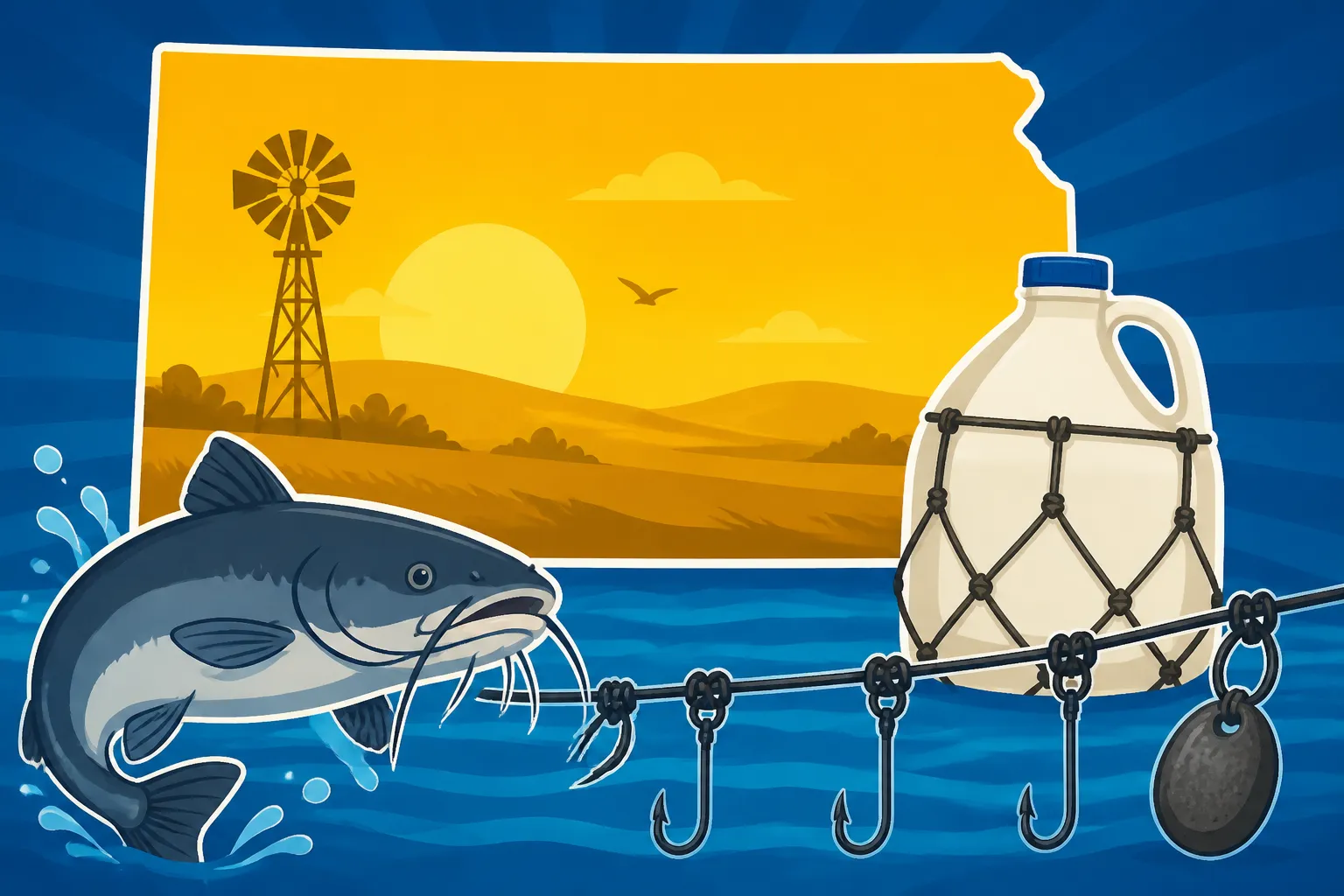
Trotlining is a time-honored fishing method, especially popular for catching catfish in Kansas. It involves setting a main line, often stretching across a river or cove, from which multiple baited hooks are suspended. It's a fantastic way to cover more water and increase your chances of a substantial catch, but it definitely comes with its own set of rules and responsibilities. Many anglers appreciate the efficiency of a trotline, allowing them to target larger catfish that might not be easily fooled by a single rod and reel. However, misunderstanding these regulations can lead to a lot of frustration and potential penalties.
What Exactly Is a Trotline?
A trotline, in essence, is a stationary fishing line equipped with multiple hooks. Unlike traditional rod-and-reel fishing where you hold a single line, a trotline is typically anchored at both ends, allowing it to remain in place for extended periods. Picture a clothesline strung across a section of water, but instead of laundry, it's holding baited hooks. These hooks are usually spaced out to cover a wider area, maximizing the opportunity to attract fish. Anglers often debate the best type of line for their main trotline, with heavy-duty nylon or braided synthetic ropes being common choices due to their strength and resistance to abrasion. The weight of the line itself, combined with strategically placed sinkers, keeps it submerged at the desired depth, preventing it from drifting or becoming a hazard to navigation.
Common misconceptions about trotlines often involve their legality. Some new anglers might assume they're a "set it and forget it" solution, but as we'll discuss, that's far from the truth in Kansas. There are strict rules regarding how often you must check your line and how it must be marked. Others might believe they can use an unlimited number of hooks, which is also incorrect. The KDWP regulations are very specific about the maximum number of hooks allowed on a single trotline, ensuring fair use of the resource and preventing overharvesting.
Specific Regulations for Trotline Setup
Setting up a trotline in Kansas isn't just about throwing a line in the water. The KDWP has detailed rules to ensure safety, identify ownership, and prevent environmental issues. First off, a trotline can have no more than 25 hooks. This limit is crucial, so don't be tempted to add "just one more." Each trotline must be tagged with the angler's name and KDWP customer identification number. This tagging needs to be clearly visible and permanently attached to the line, usually near one of the anchor points. This helps wildlife officials identify who owns the line and ensures accountability. You can often find durable tags or engravable plates on online retailers like Amazon that stand up to the elements.
The line itself, including any drop lines to the hooks, must be made of non-metallic material. This is an important detail for durability and safety. Also, trotlines must be checked and all fish removed at least once every 24 hours. This isn't just a rule; it's a humane practice that ensures caught fish don't suffer unnecessarily and that your catch remains fresh. Neglecting to check your lines can result in serious penalties. It’s also important to remember that unattended lines can become navigational hazards, especially if not properly marked, which is why buoys or markers are often required.
Where Trotlines Are Permitted or Prohibited
Knowing where you can deploy a trotline is just as critical as knowing how to set one up. In Kansas, trotlines are generally permitted in public waters, which includes most rivers and larger reservoirs. However, there are significant exceptions. They are not allowed in any of the State Fishing Lakes (SFLs) or Community Fishing Lakes (CFLs). These smaller, often urban or semi-urban, impoundments are typically managed for more conventional rod-and-reel angling and often see higher recreational use, making trotlines impractical and potentially dangerous. Additionally, federal reservoirs sometimes have specific regulations that might differ slightly, so it's always wise to check local signage or the KDWP’s current Kansas Fishing Regulations Explained before setting up.
For instance, while you might consider using a trotline in a vast body of water like Milford Lake, you definitely wouldn't be able to in a smaller, intensively managed waterbody like Lake Shawnee near Topeka. The Kansas River, however, is a popular spot for trotliners, especially those targeting large flathead and blue catfish. Always exercise common sense and courtesy; placing a trotline across a boat ramp, swimming beach, or heavily trafficked boating lane is not only illegal but also extremely dangerous and disrespectful to other water users.
Delving into Kansas Jug Fishing Rules
Jug fishing is another popular passive fishing method in Kansas, especially thrilling for catfish anglers who enjoy the chase of a free-floating jug. Instead of being anchored like a trotline, jug lines drift with the current or wind, covering different areas of a water body. The excitement of seeing a jug suddenly dance across the water as a fish takes the bait is quite unique. Just like trotlines, jug fishing has its own specific set of regulations designed to ensure fair play, prevent litter, and maintain angler safety. It’s not just about tossing a soda bottle with a hook in the water; there's a definite art and science to doing it right, and legally.
What Constitutes Jug Fishing?
Jug fishing involves using a single, free-floating line with one or more hooks attached, supported by a buoyant device (the "jug"). These jugs can be anything from repurposed plastic bottles, foam noodles, or specially designed commercial fishing floats. The key is that they float freely on the water's surface, allowing the current and wind to carry them. Each jug line typically consists of the float, a line (often heavy monofilament or braided line), weights to keep the bait at the desired depth, and one or more hooks. The design allows for the jug to act as a strike indicator – when a fish bites, the jug will often move erratically, dip, or even disappear momentarily, signaling a catch.
The materials used for jug fishing devices need to be sturdy enough to withstand the pull of a fighting fish and be clearly visible. Many anglers craft their own jugs from old plastic detergent bottles, painting them bright colors for easy spotting. For those looking for more robust options, many sporting goods stores and online retailers like Amazon offer specialized jug fishing floats that are durable and highly visible. It’s also crucial that any materials used are non-metallic for the line itself, mirroring trotline regulations.
Permitted Locations and Water Bodies for Jug Lines
Similar to trotlines, jug lines are restricted in certain areas. You can use jug lines in most public waters in Kansas, particularly the larger reservoirs and navigable rivers. This makes them a great option for exploring different depths and areas of lakes like Cheney Reservoir or the expanse of Tuttle Creek Lake. However, just like trotlines, jug lines are not allowed in State Fishing Lakes (SFLs) or Community Fishing Lakes (CFLs). This prohibition protects these smaller, often heavily fished bodies of water from being overrun with unattended gear, which could pose a risk to swimmers, boaters, and other anglers.
You'll find many anglers successfully deploying jug lines in the deeper channels and broader flats of Kansas's larger reservoirs, often targeting blue and channel catfish. It's an effective way to locate schools of fish that might be moving across a wide area. Always be mindful of other recreational users; avoid setting jug lines in areas designated for swimming, high-speed boating, or near marinas. It's about sharing the water safely and responsibly with everyone.
Jug Line Tagging and Attendance Requirements
Kansas has specific requirements for tagging and attending jug lines, which are absolutely non-negotiable. Each jug must be marked with the angler's name and KDWP customer identification number. This ensures that every jug is traceable back to an owner, discouraging abandonment and holding anglers accountable for their gear. The tagging needs to be permanent and clearly visible on the jug itself, often written in permanent marker or attached with a durable tag.
Furthermore, jug lines, much like trotlines, must be checked and all fish removed at least once every 24 hours. This "attendance" rule is critical for humane treatment of fish and prevents spoilage. It also means you can't just set out a bunch of jugs and leave them for days on end. The KDWP regulations define "attended" very broadly, so as long as you're checking within the 24-hour window, you're usually good. However, leaving them for multiple days without checking is a violation. It’s a good practice to set your jugs when you know you can commit to checking them regularly, especially if you're fishing in a high-traffic area.
Essential Gear and Best Practices for Trotlines and Jug Lines
Successfully using trotlines and jug lines in Kansas isn't just about knowing the rules; it's also about having the right gear and employing smart fishing practices. The specific conditions of Kansas waters, from muddy river bottoms to deep reservoir channels, mean your gear needs to be robust and reliable. Moreover, practicing ethical angling ensures the sustainability of our fisheries and a positive experience for everyone on the water.
Recommended Gear for Setting and Retrieving
For trotlines, the main line itself should be strong and durable, able to withstand significant strain from large fish and the elements. Many experienced anglers prefer braided nylon or polypropylene rope, often in the 1/4-inch to 3/8-inch diameter range. The snoods (the shorter lines connecting the hooks to the main line) should be slightly lighter but still strong, usually heavy monofilament or fluorocarbon to be less visible to fish. For hooks, heavy-duty circle hooks are a popular choice for their self-setting nature and effectiveness in preventing gut-hooking, which can increase fish survival if you plan to release them. Sizes typically range from 5/0 to 8/0, depending on your target species. You'll also need sturdy anchors (bricks, concrete blocks, or heavy weights work well) and brightly colored buoys or floats to mark the ends of your trotline for visibility. A good pair of heavy-duty gloves is essential for handling the line and fish, protecting your hands from hooks and rough rope.
For jug lines, the "jugs" themselves are paramount. While DIY options are common, many anglers invest in purpose-built fishing floats, available on sites like Amazon, that are highly visible, durable, and often weighted for better stability in the water. The line should be tough, like 80-150 pound test monofilament or braided line, long enough to reach varying depths, and equipped with a strong swivel and appropriate sinkers to keep the bait down. Hooks should again be strong, like circle hooks, to improve catch rates and reduce harm to fish. A net or a gaff can be invaluable for landing larger fish once you retrieve your jug.
Safety Considerations and Ethical Angling
Safety should always be your top priority. When setting or retrieving trotlines and jug lines, always wear a life jacket, especially if you're on a boat. Handling lines with multiple hooks can be dangerous; use caution and always have a pair of pliers or a hook remover handy. Be aware of your surroundings: avoid setting lines in high-traffic boating areas, swimming zones, or anywhere they might pose a hazard to other water users. Inform others of your fishing locations if possible.
Ethical angling extends beyond just following the rules. It means checking your lines regularly (within the 24-hour limit) to prevent unnecessary suffering of caught fish and to ensure your catch doesn't spoil. It also means removing all your gear, including any lost hooks or line, when you're done fishing. Abandoned lines are a major hazard to wildlife and other anglers and contribute to litter. Always be respectful of other anglers and landowners. Understanding Kansas Boating Safety Equipment Requirements is also crucial, as you'll likely be deploying and checking your lines from a boat. If you’re fishing from a kayak, knowing your Kansas Kayak Fishing Gear Guide essentials will keep you safer and more efficient.
Tips for Maximizing Success While Adhering to Regulations
To truly succeed with trotlines and jug lines in Kansas, you need a blend of smart fishing and strict adherence to regulations. First, scout your location carefully. Catfish, the primary target, often prefer deeper channels, submerged timber, and current breaks in rivers like the Kansas River, or main lake points and humps in reservoirs. Using a depth finder can help you identify these hotspots. Bait choice is also critical; cut bait (like shad, carp, or sunfish), prepared stink baits, or live bait (where legal) are excellent for attracting catfish. Always check Kansas Fishing Seasons and Limits for bait regulations.
When setting your lines, try to deploy them just before dusk and check them first thing in the morning. This capitalizes on the nocturnal feeding habits of many catfish. Ensure your lines are properly tagged and that your jugs are highly visible. Double-check your anchor points for trotlines to ensure they won't shift. For jug lines, consider the wind and current direction – they'll dictate where your jugs drift. Remember, the goal is to catch fish legally and responsibly. These methods offer a unique and often productive way to fish, but only when done correctly and within the spirit of conservation.
Licensing, Enforcement, and Penalties
Fishing in Kansas, regardless of your chosen method, requires understanding the necessary licenses and permits. Trotline and jug fishing are no exception, and in some cases, might even have additional requirements or stricter scrutiny due to their passive nature. The KDWP takes regulations seriously, and a quick glance at the Kansas Fishing Law Enforcement and Penalties will show you that ignorance of the rules is not an excuse. It's better to be informed than face an unwelcome encounter with a game warden.
Required Fishing Licenses and Permits
Before you even think about setting a trotline or jug line, you absolutely need a valid Kansas fishing license. For Kansas residents, an annual license is often the most cost-effective option, though multi-year licenses like the Kansas Five-Year Fishing License Savings can provide even more value. Nonresidents will need to purchase a Kansas Nonresident Fishing License Guide, with options ranging from annual to short-term licenses like the Kansas Nonresident Five-Day Fishing License Costs $25. There are specific exemptions for certain age groups, disabilities, or during Kansas Free Fishing Days Guide, but for most adult anglers, a license is mandatory.
Beyond the general fishing license, there aren't typically separate permits specifically for trotlines or jug lines in Kansas. However, this doesn't mean you're off the hook (pun intended) for species-specific permits, though these generally apply to trout fishing (e.g., Kansas Trout Permit Guide) which isn't typically done with trotlines. It's crucial to confirm your license is valid and that you carry proof of it while fishing. A common mistake is letting your license expire, which can lead to fishing without a license, a violation that carries significant penalties. You can easily purchase or renew your license online through the KDWP website or at various vendors listed in Where to Buy a Kansas Fishing License.
Enforcement by KDWP and Common Violations
The Kansas Department of Wildlife and Parks employs dedicated game wardens who are responsible for enforcing all hunting and fishing regulations. These officers patrol public waters, including rivers and reservoirs, and are specifically on the lookout for compliance with trotline and jug line rules. They are trained to identify common violations and ensure that passive fishing gear is being used responsibly. Expect wardens to check for proper tagging (your name and KDWP ID number), adherence to hook limits (25 for trotlines, typically 2 per jug for most states, though Kansas doesn't specify for jugs, general fishing rules imply a reasonable number for sport fishing), and the 24-hour attendance requirement.
Common violations include:
- Fishing without a valid license: This is perhaps the most frequent infraction and can lead to fines and even seizure of equipment.
- Improperly tagged lines/jugs: Forgetting to tag your gear or using illegible tags is a quick way to get noticed.
- Exceeding hook limits: Adding too many hooks to a trotline is a clear violation.
- Failure to attend lines: Leaving trotlines or jug lines unchecked for more than 24 hours.
- Setting lines in prohibited areas: Deploying trotlines or jugs in State Fishing Lakes, Community Fishing Lakes, or other restricted zones.
- Using illegal materials: For instance, metallic lines or hooks that don't meet KDWP specifications.
Consequences of Non-Compliance
The penalties for violating Kansas fishing regulations can be quite serious, ranging from substantial fines to the loss of fishing privileges. If you are caught fishing without a license, for example, you can face a hefty fine, court costs, and potentially the seizure of your fishing equipment. The fine for fishing without a license in Kansas can easily be several hundred dollars, plus court fees, which is a far cry from the modest cost of an annual license. Fine for Fishing Without a License in Kansas illustrates the potential financial hit.
Beyond fines, repeat offenses or serious violations can lead to suspension of your fishing license, meaning you won't be able to legally fish in Kansas for a set period. In some cases, especially involving commercial-level poaching or significant environmental damage, charges could escalate to more serious legal actions. It's a stark reminder that these regulations are not suggestions; they are laws designed to manage our natural resources responsibly. Always err on the side of caution, familiarize yourself with the current Kansas Fishing Regulations Explained, and don't hesitate to call the KDWP if you have any questions about specific rules.
Species You Can Target with Trotlines and Jug Lines
While you could technically catch almost any fish species on a trotline or jug line, these methods are overwhelmingly popular for targeting one specific group: catfish. Kansas is blessed with an abundance of excellent catfish fisheries, and trotlines and jug lines are incredibly effective ways to put some of these whiskered beauties in the cooler. Understanding which species are fair game, and their respective limits, is just as important as knowing the gear and the rules.
Primary Target Species
In Kansas, the undisputed kings of trotline and jug fishing are catfish. Specifically, the three main species you'll encounter are:
- Channel Catfish: These are the most widespread and frequently caught catfish in Kansas. They are abundant in rivers, reservoirs, and even many ponds. Channel catfish are known for their strong fight and delicious white meat. They readily take a variety of baits, from cut bait to stink bait, making them an ideal target for passive methods.
- Blue Catfish: Often found in the larger rivers and reservoirs, particularly in the eastern half of the state, blue catfish are the largest catfish species in Kansas. They can grow to impressive sizes, offering a truly epic battle when hooked. Blue cats are primarily piscivorous (fish-eaters), so fresh cut bait, especially shad, is often the most effective. Rivers like the Kansas River are renowned for their blue catfish populations.
- Flathead Catfish: These solitary giants prefer rocky or woody cover in rivers and larger reservoirs. Flatheads are ambush predators and almost exclusively prefer live bait. Catching a large flathead on a trotline is a prize for any angler. You can learn more about their habits and identification in the Kansas Flathead Catfish Daily Limit guide.
While these are the primary targets, it's not uncommon to hook other species incidentally. Common carp, freshwater drum, and even some types of gar might occasionally find their way onto a trotline hook, especially if using a versatile bait. However, if you're specifically targeting catfish, focus your bait and location choices accordingly.
Length and Creel Limits for These Species
Even when using trotlines or jug lines, the standard KDWP length and creel limits for each species still apply. These limits are in place to ensure sustainable fish populations and fair distribution among anglers. It's crucial to know these numbers before you start fishing, as keeping undersized or over-limit fish, regardless of the method used, is a violation. You can find comprehensive details in the Kansas Daily Creel Limits by Species resource.
Here's a quick overview of some common catfish limits (though always double-check current regulations as they can change):
| Species | Daily Creel Limit | Length Limit |
|---|---|---|
| Channel Catfish | 10 | None |
| Blue Catfish | 5 | No more than two greater than 25 inches in length |
| Flathead Catfish | 5 | No more than one greater than 30 inches in length |
Note: These are general guidelines; always consult the official KDWP fishing regulations for the most current and specific rules, as special regulations may apply to certain bodies of water.
For blue and flathead catfish, the slot limits are particularly important. These rules are designed to protect the breeding stock of larger, trophy-sized fish, ensuring they continue to reproduce and sustain the population. This is a common conservation strategy for long-lived, slow-growing species.
Species to Avoid or Those Illegal to Take with These Methods
While accidental catches happen, it's important to understand which species are generally not appropriate or are outright illegal to target with trotlines and jug lines. Most game fish that are not catfish, such as walleye, crappie, or bass, are typically caught using active rod-and-reel methods. While a small bass might occasionally hit a bait meant for a catfish, these species are not the intended targets for passive gear. The use of certain baits, like live game fish, is also generally prohibited.
Additionally, certain rare or protected species might inhabit Kansas waters. While unlikely to be caught on a typical trotline, it's good to be aware. If you inadvertently catch a species you cannot identify, or one that appears unusual, it's best to release it unharmed immediately. The focus of trotline and jug fishing in Kansas remains firmly on the robust and plentiful catfish populations. By respecting species limits and focusing your efforts, you contribute to healthy fisheries for years to come.
Comparing Trotline and Jug Line Fishing
Both trotlines and jug lines are effective and popular methods for catching fish in Kansas, especially catfish. However, they each come with distinct advantages and disadvantages, making them suitable for different situations and angler preferences. Understanding these differences can help you decide which method is best for your next fishing adventure.
Pros and Cons of Each Method
Let's break down the distinct characteristics of trotlines and jug lines:
Trotline Fishing
- Pros:
- High Catch Potential: With up to 25 hooks, a single trotline can cover a significant area and present many baits, often leading to higher catch rates than single rod and reel setups.
- Stationary and Predictable: Once set, a trotline stays in place, allowing you to target a specific piece of structure, a river channel, or a feeding lane you've identified. You know exactly where to return to check your fish.
- Effective for Large Catfish: The heavy-duty nature of trotlines and the multiple baits can be very effective at enticing and landing trophy-sized blue and flathead catfish.
- Less Active Involvement: After setting, you only need to check the line every 24 hours, freeing up time for other activities or simply relaxing.
- Cons:
- Labor Intensive to Set Up: Deploying and anchoring a long trotline can be physically demanding and time-consuming, especially by yourself.
- Potential for Entanglement: Trotlines can get snagged on submerged timber or rocks, leading to lost gear or difficult retrieval.
- Navigation Hazard: If not properly marked, trotlines can pose a risk to boaters and swimmers, especially in low light conditions.
- Limited Mobility: Once set, the trotline is fixed. If fish move, your line stays put.
Jug Line Fishing
- Pros:
- Covers More Water: Jugs drift with currents and wind, effectively scouting larger areas for active fish without requiring constant boat movement.
- Dynamic and Exciting: The sight of a bobbing or darting jug signals a bite, adding an element of chase and excitement to the fishing experience.
- Easier to Deploy and Retrieve (Individual Jugs): Setting out individual jugs is generally less strenuous than deploying a long trotline.
- More Adaptable: You can easily change locations or depths by simply moving your jugs.
- Cons:
- Requires Constant Monitoring (in some contexts): While the KDWP allows for 24-hour attendance, many anglers prefer to keep a closer eye on their jugs to prevent loss or theft and to land fish quickly.
- Jugs Can Drift Far: Depending on current and wind, jugs can travel long distances, requiring more effort to track and retrieve. This is especially true on large reservoirs like Milford Lake.
- Risk of Loss: Jugs can get snagged, float into private property, or simply drift out of sight, especially in adverse weather.
- Lower Hook Count per Device: Each jug typically has fewer hooks than a trotline, so you might need to deploy more jugs for a similar total number of hooks.
Situational Suitability for Different Anglers and Water Bodies
Choosing between a trotline and jug line often comes down to personal preference, the type of water body you're fishing, and your fishing goals.
Trotlines are often preferred for:
- Larger Rivers: Ideal for setting across river channels, along drop-offs, or around large snags where big catfish are known to congregate. The stability of a trotline allows you to consistently fish these productive spots. The Republican River and Kansas River are prime examples.
- Targeting Specific Structures: If you know exactly where a sunken bridge, rock pile, or deep hole is holding fish, a trotline allows you to precisely target that spot.
- Anglers Seeking Larger Fish: The robust nature and multiple hooks make trotlines excellent for trophy catfish hunters who are patient.
- Less Active Fishing: If you want to set your gear and then attend to other camp duties or spend time with family, trotlines require less immediate attention after deployment than constantly chasing jugs.
Jug lines are often preferred for:
- Large Reservoirs: The drifting nature of jugs makes them perfect for covering expansive open water in lakes like El Dorado Lake or Wilson Lake, searching for roaming schools of catfish.
- Exploring New Areas: If you're unfamiliar with a body of water, jugs can help you scout for productive depths and areas where fish are active.
- Anglers Who Enjoy the Chase: The excitement of spotting a moving jug and reeling in a fish appeals to those who like a more dynamic fishing experience.
- More Flexible Fishing: If you plan to move around throughout the day, deploying and retrieving individual jugs is often more convenient than repositioning a long trotline.
- Beginners (with supervision): While they still have rules, jug lines can sometimes be less intimidating to start with compared to a full trotline setup, especially if you're experimenting with just a few jugs.
Ultimately, both methods are incredibly effective for Kansas catfish, and many experienced anglers utilize both, choosing the best tool for the specific conditions and their fishing objectives.
Disclaimer
The information provided in this guide is for general informational purposes only and does not constitute legal advice. Fishing regulations in Kansas are subject to change by the Kansas Department of Wildlife and Parks (KDWP). While every effort has been made to ensure the accuracy of the information, it is the angler's sole responsibility to consult the most current official KDWP fishing regulations summary before engaging in any fishing activities. Failure to comply with current regulations may result in fines, penalties, or loss of fishing privileges.