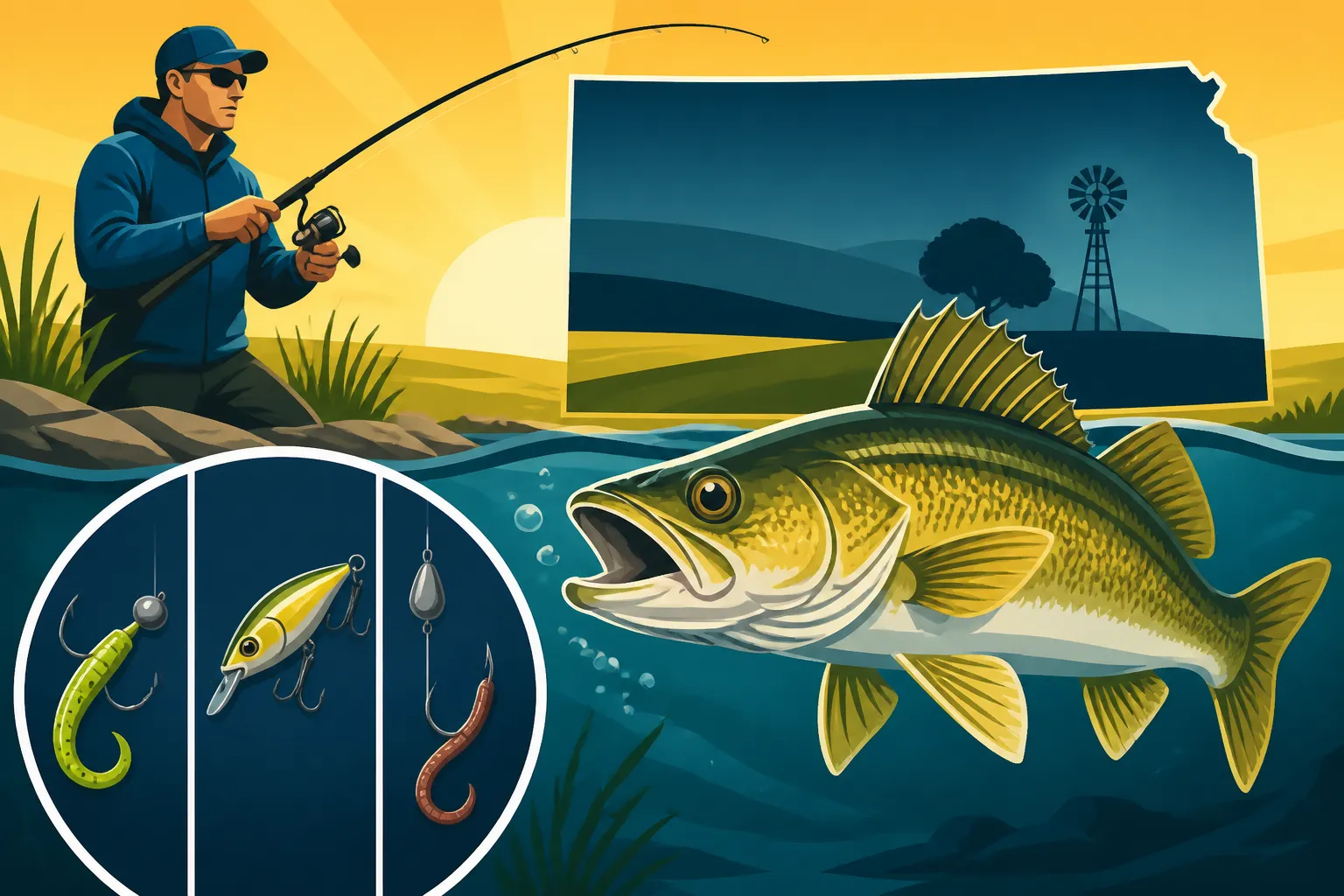
Kansas Walleye Fishing Techniques
There's nothing quite like the thrill of feeling that subtle "thump" of a walleye on the end of your line, especially when you've put in the time and effort to crack their code. But let's be honest, walleye can be notoriously finicky, making them one of the most challenging, yet rewarding, fish to target in Kansas. If you've ever felt frustrated by unproductive days or struggled to consistently locate these toothy predators in our vast reservoirs, you're not alone. This guide is dedicated to breaking down the most effective techniques, seasonal strategies, and critical insights to significantly improve your walleye fishing success across the Sunflower State.
Unraveling the Mystery of Kansas Walleye
Walleye are fascinating creatures, perfectly adapted to their environment. Understanding their biology and preferred habitats is the first step to consistently putting them in your livewell. They're not just any fish; they're predators with specific needs that, once understood, become your biggest advantage.
The Walleye's Sensory World and Preferred Meals
Walleye, members of the perch family, are easily identified by their prominent, glassy eyes. These eyes are actually highly light-sensitive, thanks to a reflective layer called the tapetum lucidum. This gives them exceptional low-light vision, which is why they're often most active during dawn, dusk, cloudy days, or at night. This sensitivity to light also explains why you'll rarely find them basking in shallow, clear water on a sunny afternoon. Instead, they seek out deeper, darker waters or areas with ample cover like submerged timber or dense weed beds to shield themselves from the sun.
Their diet largely consists of whatever baitfish are abundant in a particular lake. In Kansas, this usually means gizzard shad, threadfin shad, various species of shiners, crappie, or even juvenile walleye and white bass. Their predatory nature means they're constantly on the hunt for an easy meal. Knowing what they're feeding on, and where that forage congregates, is absolutely crucial. For instance, if a lake has a booming shad population, presentations that mimic shad will often outperform other baits. Understanding these nuances is key to selecting the right lure and presentation.
Prime Walleye Locations in Kansas Waters
Kansas reservoirs offer diverse environments, but walleye tend to gravitate towards specific types of structures and cover. They are ambush predators, often positioning themselves to intercept unsuspecting baitfish. Look for hard bottom areas like rocky points, humps, and ledges. These locations provide natural current breaks and staging areas for walleye to rest and feed. Creek channels, especially those that wind through main lake basins, are also high-percentage spots, offering a highway for baitfish and deeper water access for walleye.
Beyond natural contours, man-made structures are also walleye magnets. Old roadbeds, foundations, and bridge abutments (when submerged) create excellent ambush points. Submerged timber and brush piles provide crucial cover, especially in clearer lakes like Wilson Lake, where walleye might use them to escape light or hide from predators. Even subtle changes in bottom composition, like where a mud flat meets a rocky edge, can hold fish. These "transition areas" often concentrate baitfish, and by extension, walleye. Exploring different spots on your favorite lake, like those outlined in our guide to the Best Walleye Lakes in Kansas, will start to reveal patterns specific to that body of water.
Mastering Seasonal Walleye Tactics
Just like us, walleye change their habits with the seasons. What works in the spring won't necessarily be effective in the scorching heat of summer or the chilly days of fall. Adapting your approach is fundamental to consistent success.
Spring's Shallow Water Hunt: Pre-Spawn and Spawn
As ice recedes and water temperatures begin to climb in late March and April (typically 40-50°F), walleye shake off their winter sluggishness and move shallow for their annual spawn. This is arguably one of the most exciting times to target them. Pre-spawn walleye will stage near spawning grounds, feeding aggressively to build energy. Focus on shallow, wind-swept rocky points, riprap shorelines, and dam faces. These areas warm up faster and provide the hard bottom walleye need to deposit their eggs. River inlets and rocky shoals in the upper ends of reservoirs are also prime locations, especially in lakes like Milford Lake where the Republican River feeds in.
During the spawn itself, which usually occurs when water temperatures are consistently in the mid-40s to low 50s Fahrenheit, walleye become less interested in feeding and more focused on reproduction. While targeting them directly on their spawning beds is generally discouraged (and often less productive for actual eating fish), fishing the immediate staging areas before and after the peak spawn can be highly successful. Tactics like slow trolling small crankbaits (Wally Divers, Shad Raps), casting blade baits, or vertically jigging with a minnow can be incredibly effective. Even a simple slip bobber rig with a lively shiner or large minnow fished over shallow rocks can entice a bite from a wary walleye. Remember to always check current regulations, as seasonal changes might impact limits or methods.
Summer's Deep Water Domain: Finding the Thermocline Bite
When Kansas summers really heat up, and water temperatures soar into the 70s and 80s, walleye retreat to deeper, cooler waters. In many of our larger reservoirs, a thermocline develops – a distinct layer where warmer surface water meets cooler, deeper water. This thermocline often holds a high concentration of oxygen and baitfish, making it a key area to target. Walleye will typically suspend just above, in, or directly below this layer, often in depths ranging from 15 to 30 feet, depending on the lake and its specific characteristics.
Look for them on deep main lake points, submerged humps, offshore rock piles, and old creek channels. Trolling is often the most efficient way to cover these vast deep-water areas and locate scattered schools of fish. Deep-diving crankbaits that reach the desired depth are indispensable. Brands like Rapala, Berkley, and Salmo offer excellent deep-diving options that are readily available on Amazon. Another highly effective technique is using bottom bouncers paired with spinner rigs or crawler harnesses. These rigs present live bait (often a juicy nightcrawler) just off the bottom, where walleye are frequently lurking. Vertical jigging with heavy spoons or blade baits can also be deadly when you mark fish directly beneath your boat on your fish finder.
Fall's Feeding Frenzy: Aggressive Angling
As autumn arrives and water temperatures begin their gradual descent, walleye enter a period of aggressive feeding known as the fall turnover. They know winter is coming and need to pack on calories. This can be one of the best times of year for both numbers and size. Walleye will often follow schooling baitfish that move from deeper water back towards shallower main lake points, creek channels, and even large flats as they seek out warmer pockets of water.
Aggressive trolling with larger crankbaits is a fantastic way to cover water and find these active fish. Don't be afraid to experiment with faster trolling speeds than you might use in spring or summer. Jigging spoons, such as Johnson Silver Minnows or Kastmasters, can be dropped onto schools of baitfish or structure where walleye are ambushing their prey. Casting jerkbaits (like a Rapala Husky Jerk or a Lucky Craft Pointer) can also trigger violent strikes from hungry walleye positioned on points or along weed lines. Pay close attention to current conditions, as a good fall bite can often be ignited by the first few cold fronts that push through.
Core Walleye Fishing Techniques Explored
While seasonal changes dictate where walleye might be, specific techniques are your tools for actually catching them. Each method has its time and place, and mastering them all will make you a much more versatile and successful angler.
The Art of Trolling: Covering Water with Crankbaits and Rigs
Trolling is undeniably one of the most productive ways to catch walleye in Kansas' large reservoirs. It allows you to cover vast amounts of water efficiently, systematically searching for active fish and dissecting various depth zones and structures. When it comes to lures, deep-diving crankbaits are king during summer and fall. Consider the water clarity: natural colors like silver, blue, or perch patterns often excel in clear water, while brighter colors like firetiger, chartreuse, or even purple can be highly effective in stained or muddy conditions. Depth control is paramount; understanding your lure's diving curve and using line counter reels or lead core line helps you consistently present your bait at the desired depth.
Beyond crankbaits, bottom bouncers paired with crawler harnesses or spinner rigs are incredibly effective, especially when walleye are hugging the bottom or when you want to use live bait. A typical setup involves a lead bottom bouncer (usually 1-3 ounces, depending on depth and speed) that drags along the bottom, followed by a snelled leader (often 4-6 feet long) with a colored blade and beads, tipped with a juicy nightcrawler. The spinner blade provides flash and vibration, while the nightcrawler offers natural scent and appeal. Varying your trolling speed, from a slow 1.0 mph to a brisk 2.5 mph, can make a huge difference, as different speeds impart different actions to your lures and rigs. This is especially true when targeting walleye on Kansas Reservoirs.
Precision Jigging: Targeting Structure and Reaction Bites
Jigging is a more hands-on, active approach that excels when walleye are concentrated in specific areas, especially over structure or when they are less aggressive. It's about presentation and feel. Lead head jigs, tipped with live minnows or soft plastics (like a Berkley Gulp! Minnow or a Z-Man MinnowZ), are a classic and highly effective option. The key is to lift and drop the jig, mimicking a struggling baitfish, allowing it to flutter or hop along the bottom. Pay close attention to subtle bites, which often feel like a slight "tick" or added weight.
Blade baits (like a Silver Buddy or a Heddon Sonar) and jigging spoons (such as a Northland Tackle Buck-Shot Spoon) are fantastic for triggering "reaction strikes" from less active walleye. These baits are fished vertically, dropped to the bottom, and then ripped up a few feet before being allowed to fall back on a semi-slack line. The erratic action and vibrations often entice a strike even when walleye aren't actively feeding. This technique is particularly potent when you've located schools of fish on your electronics over humps, creek channels, or brush piles. While similar to Jigging Techniques for Kansas Crappie, walleye jigging often employs heavier baits and targets deeper, rockier structures.
Live Bait Lure: The Subtle Approach for Finicky Walleye
Sometimes, when walleye are finicky or in cold water conditions, nothing beats the natural appeal of live bait. Slip bobbers are an excellent tool for presenting live bait at a precise depth, especially around submerged brush, timber, or weed edges where you want to keep your bait suspended just above the cover. A slip bobber rig allows you to easily adjust your depth, letting your minnow, leech, or nightcrawler swim naturally in the strike zone. This method is incredibly effective for targeting individual fish or small schools in specific spots.
Another versatile live bait setup is the simple Carolina rig or split-shot rig. Here, a small weight is positioned above a swivel, leading to a fluorocarbon leader (18-36 inches) and a plain hook. This allows the bait to drift and move naturally, unhindered by the weight, which remains on the bottom. Tipping your jigs with live bait also combines the best of both worlds – the jig's action with the natural scent and movement of a minnow or a piece of nightcrawler. For live bait, always ensure it's fresh and lively; unhealthy bait rarely gets a second look from a walleye.
Essential Gear for Successful Walleye Angling
Having the right tools for the job can make a world of difference. Investing in quality gear designed for walleye fishing will not only enhance your experience but also increase your chances of landing that trophy fish.
Selecting the Right Rod, Reel, and Line Combo
For walleye, a balanced rod and reel setup is critical. Generally, a medium-light to medium power spinning rod, 6'6" to 7'6" in length, is ideal for jigging, casting crankbaits, and slip bobber fishing. The extra length helps with casting distance and hook sets. For trolling, baitcasting rods, often 7' to 9' in length, with a medium-heavy power, are preferred, especially when using bottom bouncers or heavier crankbaits. A line counter reel is a fantastic asset for trolling, allowing you to precisely replicate productive depths.
When it comes to line, each type has its advantages. Monofilament (like Berkley Trilene XL or Stren Original) is forgiving with its stretch, making it good for crankbaits, but its stretch can hinder feel when jigging deep. Fluorocarbon (like Seaguar InvizX) offers less stretch and is virtually invisible underwater, making it a great leader material. Braided line (such as PowerPro or Sufix 832) has almost no stretch, providing incredible sensitivity and strength, perfect for jigging or as a main line when trolling with a fluorocarbon leader. You can find a wide array of options for all these lines and more on Amazon. For instance, a medium power, fast action spinning rod paired with a 2500-3000 size reel spooled with 8-10 lb braided line and a 10-12 lb fluorocarbon leader is a versatile setup for many Kansas walleye techniques.
Leveraging Modern Electronics for Walleye Success
In the vast expanse of Kansas reservoirs, electronics aren't just a luxury; they're a necessity. A quality fish finder with GPS capabilities is your best friend. Modern units, such as those from Humminbird (Helix series) or Lowrance (HDS or Elite FS series), offer incredibly detailed sonar readings, allowing you to identify submerged structure, differentiate between baitfish and game fish, and even see your lure as you jig. Side imaging and down imaging technologies provide a much broader and clearer view of the bottom, helping you locate hidden humps, brush piles, or old roadbeds that would otherwise go unnoticed.
The GPS function is equally important. Use it to mark waypoints on productive spots, follow specific depth contours, or navigate back to a hot bite. A reliable trolling motor, like a Minn Kota Ulterra or a MotorGuide Xi5, with GPS spot-lock capabilities, is a game-changer. It allows you to precisely hold your boat position over a hot spot in windy conditions, freeing you up to focus on fishing rather than constantly steering. For serious walleye anglers, having a good mapping chip (like Lakemaster or Navionics) for your specific Kansas lakes can provide even more detailed contour maps, further enhancing your ability to find prime walleye habitat.
Decoding Environmental Cues for Walleye
Walleye are highly influenced by their environment. Understanding how factors like wind, current, and even barometric pressure affect their behavior can give you a significant edge, allowing you to predict where they might be and how they might be biting.
The Impact of Wind, Current, and Water Temperature
Wind is perhaps the most significant environmental factor for walleye fishing in Kansas. A consistent wind creates current, pushing baitfish and nutrients against wind-swept shorelines, points, and humps. This congregation of forage often attracts walleye. Savvy anglers often call this the "walleye chop" – a light to moderate ripple on the surface created by the wind, which breaks up light penetration and seems to make walleye more comfortable moving shallower to feed. Fishing the windy side of a lake or structure, particularly points, can be incredibly productive. Conversely, strong, sustained winds can make boat control challenging and blow baitfish out of an area, requiring a different approach. Knowing if Does Wind Direction Affect Kansas Walleye Fishing? can be the difference between a great day and a slow one.
Water temperature dictates walleye metabolism and activity levels. As discussed, they move shallow during the spring spawn when temperatures are ideal and retreat to cooler, deeper water in the summer heat. Monitoring water temperature can tell you where walleye are most likely to be comfortable and active. Significant changes in temperature, like a sudden cold snap, can also temporarily shut down the bite, making fish lethargic. Understanding how to adapt to these temperature fluctuations is key.
Barometric Pressure and Light Conditions: A Walleye's Perspective
Barometric pressure, often overlooked by anglers, can profoundly influence walleye behavior. A steady, high-pressure system generally means stable, clear weather, which can often lead to a slower bite as fish become less active. However, a falling barometric pressure, often preceding a storm front, can trigger a feeding frenzy as fish sense the impending change and feed aggressively. Conversely, a rapidly rising pressure after a storm can make fish lockjaw. While it's not an exact science, keeping an eye on the forecast and understanding how Does Barometric Pressure Affect Kansas Fishing? can help you plan your trips around optimal feeding windows.
Given their light-sensitive eyes, light conditions play a huge role. Cloudy days, dawn, dusk, and even night fishing are prime times for walleye. On bright, sunny days, they'll often retreat to deeper water, dense cover, or the shaded side of structures. Adapting your fishing depth and location to match the light conditions is crucial. For instance, on a bright day, you might need to fish deeper humps, but on an overcast day, those shallower points could be red hot. For a comprehensive overview, checking the Best Time of Day to Fish in Kansas can offer further insights.
Navigating Kansas Walleye Regulations and Conservation
As anglers, we have a responsibility to understand and abide by fishing regulations to ensure healthy fish populations for years to come. Kansas has specific rules for walleye that every angler should know.
Understanding Kansas Walleye Limits and Length Rules
Kansas has clear regulations designed to manage its walleye populations effectively. Currently, the Kansas Walleye Minimum Length Limit of 21 Inches is in place in most waters, meaning any walleye you catch under 21 inches must be immediately released. This protects younger, growing fish and allows them to reach maturity and spawn multiple times, contributing to the health of the fishery. There are some exceptions, such as specific slot limits on certain lakes that might allow you to keep fish within a certain size range while protecting larger broodstock. Always consult the most current Kansas Fishing Regulations Explained guide from the KDWP before heading out.
In addition to length limits, there's also a Kansas Walleye Daily Limit of Two Fish per angler. This relatively conservative limit reflects the importance of managing walleye as a prized game fish, allowing for a sustainable harvest while safeguarding the population. Adhering to these limits is not just about avoiding penalties; it's about being a responsible steward of our natural resources. Understanding Why the Kansas Walleye Limit Is Only Two Fish highlights the careful balance conservationists strike to ensure future generations can also enjoy the thrill of walleye fishing.
Practicing Responsible Walleye Conservation
Beyond adhering to regulations, practicing good conservation habits is vital. Catch and release, especially for larger breeding-size walleye (often referred to as "broodstock"), helps maintain a strong gene pool. When practicing catch and release, handle fish gently with wet hands, minimize their time out of water, and use proper de-hooking tools. Avoid using stringers in warm water, which can stress fish beyond recovery.
Proper disposal of trash and fishing line is also critical. Monofilament line can be deadly to wildlife, so always retrieve and properly dispose of any discarded line. Educating fellow anglers, especially newer ones, on these practices helps foster a culture of conservation. By following these guidelines, we contribute to the long-term health and vitality of Kansas' incredible walleye fisheries. Remember, a valid Kansas Fishing License Guide is the first step to enjoying these waters legally and responsibly.
Advanced Strategies for Consistent Walleye Catches
Once you've mastered the basics, it's time to refine your approach and delve into more advanced tactics that can truly elevate your walleye game. It's about precision, adaptability, and continuously learning from every moment on the water.
Advanced Trolling and Structure Mapping Techniques
Taking your trolling game to the next level involves more than just dragging lures around. Precision trolling means understanding the contours of the lake bottom and using your electronics and boat control to stay precisely in the strike zone. If you've identified a productive breakline at 20 feet, use your GPS to follow that 20-foot contour with religious devotion. Don't just go in a straight line; "snake" or "S-turn" your boat occasionally. This varies the speed of your lures, making the inside lure slow down and drop slightly, while the outside lure speeds up and rises. This change in action can often trigger strikes from following fish. For more specific insights, check out our guide on Trolling for Walleye on Kansas Reservoirs.
Utilizing detailed mapping on your fish finder (Navionics, Lakemaster) allows you to pre-plan your trolling passes over subtle humps, old river bends, or rock piles that might be overlooked by others. Mark these structures as waypoints, and then establish a trolling path that intersects them multiple times. Experiment with different lead core setups or planer boards to cover a wider swath of water or to present lures away from the boat's path, especially in clear water where walleye might be boat-shy.
Adapting Your Approach for Finicky Fish
Even with all the right knowledge and gear, some days walleye just don't want to cooperate. This is where adaptability truly shines. If your go-to technique isn't producing, don't be afraid to change things up. This might mean altering your lure color, switching from a crankbait to a crawler harness, or going from aggressive trolling to a more subtle slip bobber presentation with live bait. Walleye can be incredibly sensitive to pressure, and sometimes a simple change in retrieve speed or the addition of scent (like Baitmate or Smelly Jelly, available on Amazon) to your lure can turn the tide.
Pay close attention to what the fish are telling you. Are they hitting short? Try a smaller lure or a different hook configuration. Are they only biting on the pause? Focus on a stop-and-go retrieve. Don't be afraid to try different depths, even if your electronics aren't showing fish there. Sometimes, they're just a few feet shallower or deeper than you expect. Every unproductive cast or pass is an opportunity to learn and refine your approach. The best walleye anglers are often the ones who are most willing to experiment and adapt.
Common Challenges and Troubleshooting
Even the most seasoned walleye anglers have days when the bite is tough. It's part of the challenge and the allure of walleye fishing. The key is knowing how to diagnose the problem and make adjustments.
When the Bite is Off: What to Re-evaluate
You're out on Milford Lake, the sun is shining, and you've got your favorite crankbaits running perfectly, but… nothing. Dead silence. This happens to everyone, and the first thing to do is not panic. Instead, start systematically re-evaluating your approach.
- Depth: Are you truly fishing where the fish are? Your electronics might show baitfish at 20 feet, but the walleye could be holding just below them at 22 feet, or even suspended higher if conditions are changing. Double-check your line counter, lead core length, or jig weight to ensure your presentation is at the correct depth.
- Speed: Sometimes, a subtle change in trolling speed from 2.0 mph to 1.5 mph can make all the difference, giving fish more time to react to your bait. Or, conversely, speeding up might trigger a reaction strike.
- Color/Size: If your usual chrome/blue isn't working, try a chartreuse or firetiger. If you're using a 5-inch crankbait, try a 3-inch. Sometimes the walleye are keyed into a very specific baitfish size or hue.
- Location: Have the fish moved? Conditions might have changed since you scouted your spot. Did the wind shift? Did a cold front move in? Be willing to pick up and move to new areas, especially those that might now be benefiting from the current conditions, like a newly wind-blown point or a deeper breakline.
- Presentation: If trolling isn't working, consider switching to jigging or slip bobbers. Some days, a more subtle, vertical presentation is what they want.
Don't be afraid to pull out a different rod, tie on something completely new, and fish it alongside your primary technique. Observing what isn't working is just as valuable as what is.
Avoiding Common Walleye Fishing Mistakes
Many frustrations can be avoided by sidestepping common pitfalls. One of the biggest mistakes is failing to understand and utilize your electronics effectively. Having a fancy fish finder is useless if you're not interpreting what it's telling you about structure, depth, and baitfish. Take the time to learn your unit!
Another mistake is being too static. Walleye are constantly on the move, chasing baitfish or adjusting to environmental changes. If you haven't had a bite in 20-30 minutes in an area, move on. Don't just sit there hoping they'll eventually show up. Cover water, find the fish, then work that area thoroughly.
Finally, overlooking the importance of a sharp hook can cost you many fish. Walleye have bony mouths, and a dull hook will often just skate off. Check your hooks frequently and sharpen or replace them as needed. This simple maintenance task can dramatically improve your hook-up ratio. Additionally, ensure your knot tying skills are solid. A faulty knot is a heartbreaking way to lose a trophy fish and your favorite lure. Practice those knots at home so you're confident on the water!
Walleye Bait & Lure Comparison
Here's a quick look at some popular walleye baits and lures and the situations where they shine:
| Bait/Lure Type | Best Conditions | Presentation Style | Pros | Cons |
|---|---|---|---|---|
| Deep-Diving Crankbaits | Summer/Fall, open water, active fish, searching | Trolling at varying speeds | Covers vast water, triggers reaction bites | Can get snagged easily, specific depth range |
| Crawler Harnesses | Summer/Fall, near bottom, moderate activity | Trolling with bottom bouncers, slow drift | Natural scent, customizable blades | Bait can be delicate, slower presentation |
| Jigs (tipped w/ minnow) | All seasons, structure, less active fish, precise targeting | Vertical jigging, casting & hopping, pitching | Versatile, natural presentation, sensitive | Can be slow, prone to snags in heavy cover |
| Blade Baits/Spoons | All seasons, deep water, schooling fish, reaction bite | Vertical jigging (lift & drop), casting & ripping | Triggers aggressive strikes, great vibration | Can snag easily, less natural presentation |
| Slip Bobber Rigs | All seasons, specific structure, finicky fish, shallow/mid depth | Still fishing, subtle drift | Precise depth control, natural bait movement | Limited coverage, requires live bait |
| Jerkbaits | Spring/Fall, cooler water, aggressive fish | Casting & retrieving with jerks and pauses | Erratic action, good for active fish | Less effective in deep water |
Disclaimer
The information provided in this guide is for general informational purposes only. Fishing regulations in Kansas, including length and creel limits, can change. Always consult the most current Kansas Department of Wildlife, Parks and Tourism (KDWP) fishing regulations before engaging in any fishing activity. Adherence to all local and state laws is the responsibility of the angler. Fishing carries inherent risks; please exercise caution and prioritize safety on the water.