Kansas Fishing Techniques for Beginners
Stepping into the world of Kansas fishing can feel a bit like trying to read a map written in a foreign language – there's so much to learn, and it's easy to get overwhelmed by all the gear, rules, and techniques. But don't you worry, because this comprehensive guide is here to untangle the complexities and set you up for success, making your first fishing adventures in the Sunflower State genuinely enjoyable and fruitful.
Understanding the Basics of Kansas Fishing for Newbies
When you're just starting out, the sheer volume of information about fishing can be daunting. It's not just about throwing a line in the water; there are licenses, regulations, and even basic terminology to learn. But think of it as building a strong foundation. Once you get these initial pieces in place, everything else will start to click.
Getting Started with Simple Gear Setups
You absolutely do not need to break the bank to get started fishing in Kansas. In fact, one of the biggest mistakes beginners make is buying too much specialized gear right off the bat. A simple spinning rod and reel combo is your best friend. Look for a medium-light to medium action rod, about 6 to 7 feet long, paired with a matching spinning reel spooled with 6 to 10-pound monofilament or fluorocarbon line. This versatile setup will allow you to catch most common species in Kansas, from panfish to catfish.
Don't forget the essentials for your tackle box. A small assortment of hooks (sizes 4 to 8 are good all-around choices), some split shot weights, a few bobbers, and a pair of needle-nose pliers for hook removal are really all you need to start. Many big box stores, and even online retailers like Amazon, offer beginner fishing kits that include these basics, which can be a super convenient way to ensure you have what you need without overthinking it. Remember, simplicity is key when you're learning; you can always upgrade and expand your tackle collection as you gain experience and discover what kind of fishing you enjoy most.
Essential Safety Tips for First-Time Anglers
Safety is paramount, whether you're fishing from the bank of a small pond or venturing out onto one of Kansas's larger reservoirs. Always let someone know where you're going and when you expect to return, especially if you're exploring a new spot. Wear appropriate clothing for the weather, and that often means layering in Kansas, as conditions can change rapidly. A wide-brimmed hat, sunglasses, and sunscreen are also crucial for protecting yourself from the sun, even on cloudy days.
If you're going to be near the water, especially on a boat or near swift currents, a life jacket is non-negotiable. Even strong swimmers can get into trouble in unexpected situations. Beyond personal safety, be mindful of your surroundings. Look out for slippery banks, uneven terrain, and wildlife. Handle fish with care, especially those with sharp fins or teeth, and always have those needle-nose pliers handy to easily remove hooks without putting your fingers at risk. Being prepared and aware will make your outing much more enjoyable and significantly reduce any potential hazards.
Deciphering Kansas Fishing Regulations for Beginners
Navigating the rules and regulations can seem intimidating, but it's crucial for responsible angling. First and foremost, almost everyone 16 years of age and older needs a fishing license to fish in Kansas. There are some specific Kansas Fishing License Exemptions for certain groups, but for most adults, a license is a must. You can purchase these easily online through the Kansas Department of Wildlife and Parks (KDWP) website, or at many sporting goods stores across the state.
Beyond the license, you'll want to familiarize yourself with the Kansas Fishing Regulations Explained. This includes understanding daily creel limits (how many fish of a certain species you can keep per day) and length limits (minimum or maximum sizes for certain fish). These rules vary by species and sometimes even by specific body of water, so it's a good habit to check the KDWP fishing regulations summary before heading out, especially if you're targeting a particular species or fishing a new lake. Ignorance of the law is no excuse, and wardens do patrol to ensure compliance.
Mastering Common Kansas Fish Species
Kansas waters are teeming with a variety of fish, but as a beginner, it's smart to focus on a few common, relatively easy-to-catch species. This approach helps build confidence and provides plenty of action, which is what keeps fishing fun!
Catching Channel Catfish: The Kansas Staple
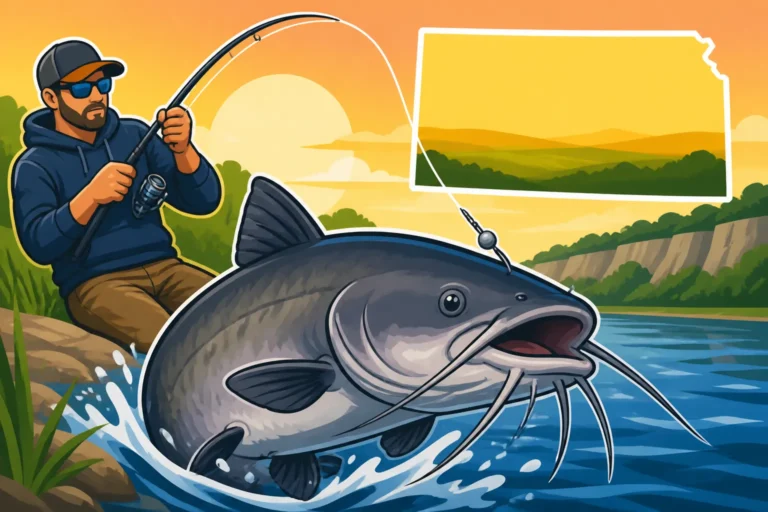
Channel catfish are arguably the most popular sport fish in Kansas, and for good reason: they're abundant, they're found almost everywhere, and they put up a good fight! They are scavengers and opportunistic feeders, which means they aren't usually too picky about what they eat, making them perfect for beginners. You can find channel cats in nearly every river, lake, and even many ponds across the state. They tend to prefer deeper water during the day but will move into shallower areas to feed, especially in the evenings or on cloudy days.
For bait, traditional options like cut bait (shad or carp work great), chicken livers, worms, or commercially prepared "stink baits" are incredibly effective. A simple bottom rig, consisting of a sinker (like an egg sinker or pyramid sinker) above a swivel, and a leader with a hook, is all you need. Cast it out, let it sink to the bottom, and wait for that telltale tug! The Kansas Channel Catfish Daily Limit can be generous in many waters, allowing for a good haul for a fish fry.
Luring in Crappie: Panfish for Everyone
Crappie are another fantastic target for beginner anglers in Kansas. These panfish are delicious to eat and can be caught in large numbers, providing fast-paced action. Both white crappie and black crappie are common, and they are usually found around structure – think submerged timber, brush piles, dock pilings, and bridge abutments. They love to hide in these spots, waiting to ambush smaller baitfish.
The key to catching crappie is often to present small baits or lures near this submerged cover. Live minnows fished under a bobber are a classic and highly effective method. You can also use small jigs, either tipped with a piece of a minnow or a soft plastic grub. Work these baits slowly, letting them sink and then twitching them gently. Pay attention to your bobber; sometimes a crappie bite is just a slight dip or movement rather than a full pull under. Checking the Kansas Crappie Length and Bag Limits is important, as some lakes have specific regulations to protect their populations.
Pursuing White Bass: The Energetic Fighters
If you're looking for an exhilarating fight, white bass are your fish. These hard-hitting schooling fish are found in most major Kansas reservoirs and rivers, and when you find a school, the action can be non-stop! They are especially active during their annual spawning runs in the spring, often venturing up tributary rivers and into feeder creeks, creating what's known as the "white bass run." You can find more specific timing information in our Kansas White Bass Run Timing guide.
White bass chase baitfish aggressively, so lures that mimic small shad or minnows work exceptionally well. Small inline spinners, Kastmasters, Road Runners, and small crankbaits are all great choices. Look for signs of schooling activity, like diving birds or active fish breaking the surface. Often, they can be found near rip-rap shorelines, points, or the edges of river channels. A fast retrieve with your chosen lure is often all it takes to trigger a strike, providing an exciting experience for any new angler.
Fundamental Fishing Techniques for Shore and Boat
Whether you prefer the simplicity of bank fishing or the flexibility of a boat, there are essential techniques every beginner needs to grasp to consistently catch fish in Kansas.
Effective Bank Fishing Strategies
Bank fishing is the perfect entry point for beginners. It requires minimal gear, often provides easy access, and allows you to really focus on the basics of casting and retrieval without the added complexities of boat handling. When choosing a spot, look for areas with cover or structure near the shore: submerged logs, rock piles, weed beds, or points that extend into the water. These are natural fish hangouts.
A popular and effective strategy is using a simple bobber rig for panfish like crappie or bluegill, or a bottom rig for catfish. For a bobber rig, simply attach a bobber a few feet above a small hook, add a split shot weight a few inches above the hook, and bait it with a worm or minnow. Cast it out and watch the bobber! For catfish, a bottom rig cast into deeper sections or current seams can be highly effective. Remember to move along the bank if you're not getting bites; fish aren't always in the same spot, and sometimes a slight change in location makes all the difference. Many Kansas Community Fishing Lake Rules are designed to make bank fishing accessible and productive.
Basic Boat Fishing Approaches for Beginners
Once you're comfortable with the basics, boat fishing opens up a whole new world of opportunities. Even a small jon boat or a kayak can greatly expand your access to prime fishing locations that are inaccessible from shore. For beginners, trolling is an excellent technique to cover a lot of water and find active fish, especially for species like walleye or white bass in larger reservoirs like Milford Lake or Cheney Reservoir. You simply drag lures behind your boat at a slow, consistent speed, letting the boat do the work of searching for fish.
Another fundamental boat technique is anchoring near promising structure. This allows you to fish a specific area thoroughly. Drop your anchor and cast your baits or lures to submerged brush piles, rock formations, or along a drop-off. This is particularly effective for crappie and catfish. Keep your casts varied in direction and distance to explore the area around your boat. Learning basic boat control and anchoring techniques will significantly improve your fishing success and overall enjoyment on the water.
Simple Casting and Retrieval Techniques
Learning to cast accurately and retrieve effectively are fundamental skills for any angler. For spinning reels, the basic cast involves opening the bail, grasping the line with your index finger, bringing the rod back over your shoulder, and then smoothly swinging it forward, releasing the line from your finger as the rod tip points toward your target. Practice makes perfect, and soon you'll be able to hit your spots with confidence.
Retrieval techniques depend on the bait or lure you're using. For live bait, a slow, steady retrieve or simply letting the bait sit still is often best. For artificial lures like crankbaits or spinners, a steady retrieve usually works well. Jigs, on the other hand, often require a "lift and drop" or "twitching" motion to mimic injured baitfish. The key is to experiment with different speeds and actions until you find what triggers a bite. Pay attention to what the fish are telling you! If you get a bite on a certain retrieve, try to replicate it.
Selecting the Right Bait and Lures for Kansas Waters
One of the most exciting aspects of fishing is figuring out what the fish want to eat on any given day. Kansas offers a vast array of options, from classic live baits to modern artificial lures.
Live Bait Essentials for Beginner Success
When in doubt, live bait is often your best bet, especially for beginners. It has natural scent, movement, and appeal that artificial lures sometimes can't replicate. Worms, specifically nightcrawlers or red wigglers, are universal fish catchers. They work for almost everything: bluegill, crappie, catfish, and even small bass. You can buy them at nearly any bait shop or even find them in your own backyard after a rain.
Minnows are fantastic for crappie, walleye, and white bass. Hook them lightly through the lips or just behind the dorsal fin to keep them lively. For larger catfish, shad or small carp cut into chunks (cut bait) are incredibly effective, releasing a strong scent that draws in hungry cats. Always ensure your live bait is fresh and kept in good condition; a dying bait won't attract many fish. You can find excellent live bait containers, often with aerators, on sites like Amazon to keep your minnows lively throughout the day. For more on what to use, check out our guide on the Best Bait for Kansas Catfish and Best Bait for Kansas Crappie.
Top Artificial Lures to Start With
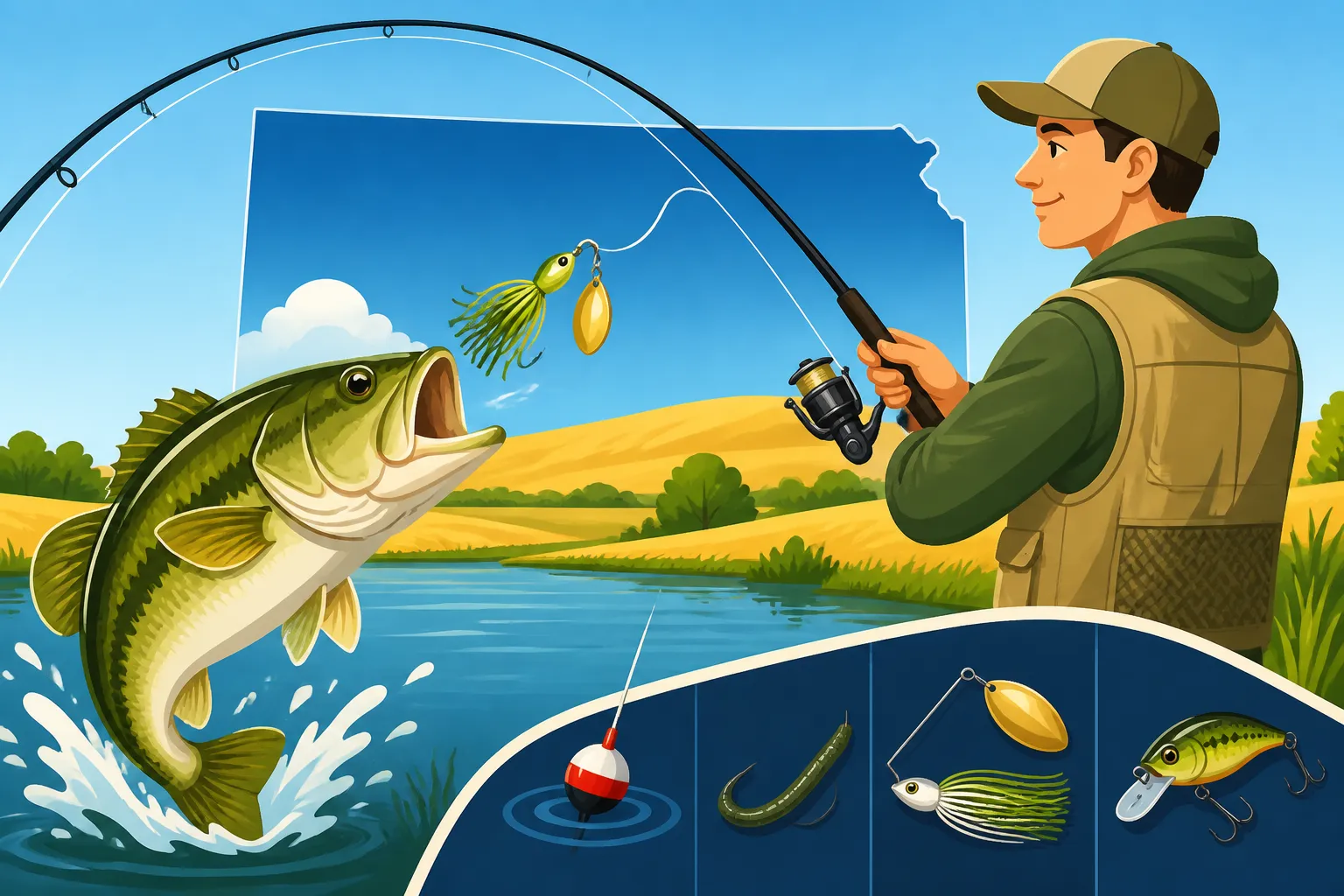
While live bait is great, artificial lures can be incredibly effective and offer a different kind of challenge. For beginners, starting with versatile and easy-to-use lures is key. Spinners, like a Rooster Tail or Mepps Aglia, are excellent for white bass, trout, and even smaller bass. They're simple to cast and retrieve, and the spinning blade creates flash and vibration that fish can't resist.
Jigs, especially small plastic grub jigs, are another must-have. These are fantastic for crappie and often for walleye. You can fish them under a bobber, cast and retrieve them with a jigging motion, or even vertical jig them from a boat. Crankbaits, particularly small to medium-sized ones, are great for covering water and targeting bass and walleye. Their wobbling action mimics baitfish, and they come in various diving depths. Choosing a few reliable colors like natural shad, chartreuse, or firetiger is a good starting point. For white bass, don't miss our insights on the Best Lures for Kansas White Bass.
Matching Bait to Fish Species
The secret to consistent success in fishing often lies in matching your bait or lure to the specific fish you're targeting and their natural diet. Think about what a particular fish species typically eats. For example, channel catfish are scavengers, so stinky baits and cut bait are perfect. Crappie and white bass primarily feed on small baitfish, so minnows or lures that imitate them are ideal.
| Fish Species | Preferred Live Bait | Recommended Artificial Lures | Typical Habitat | Best Time to Fish |
|---|---|---|---|---|
| Channel Catfish | Cut bait, Chicken liver, Worms | Stink baits, Jigs with scent | River channels, Lake bottoms, Ponds | Evening, Night, Cloudy |
| Crappie | Minnows, Small worms | Small jigs (grubs, tubes), Tiny crankbaits | Submerged brush, Docks, Timber | Early morning, Late afternoon, Overcast |
| White Bass | Minnows | Inline spinners, Spoons, Small crankbaits | Open water, River runs, Dam outflows | Dawn, Dusk, Day (active schools) |
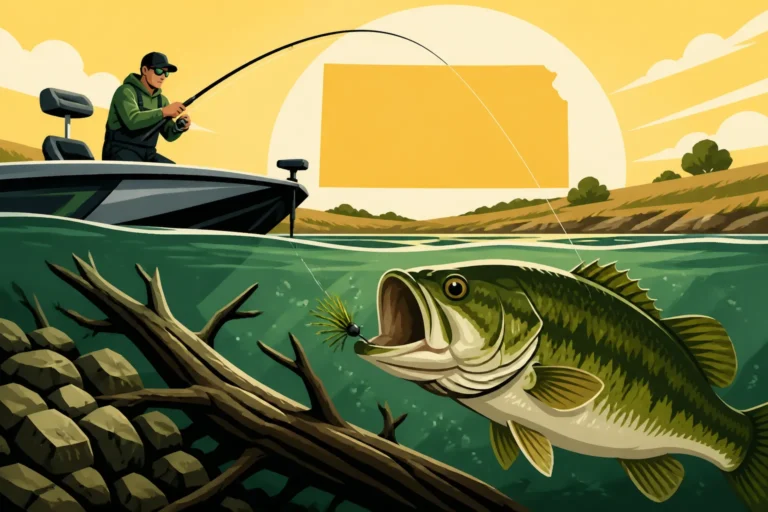
| Largemouth Bass | Large shiners, Frogs | Spinnerbaits, Worms (plastic), Crankbaits | Weed lines, Fallen trees, Shallow cover | Morning, Evening, Overcast |
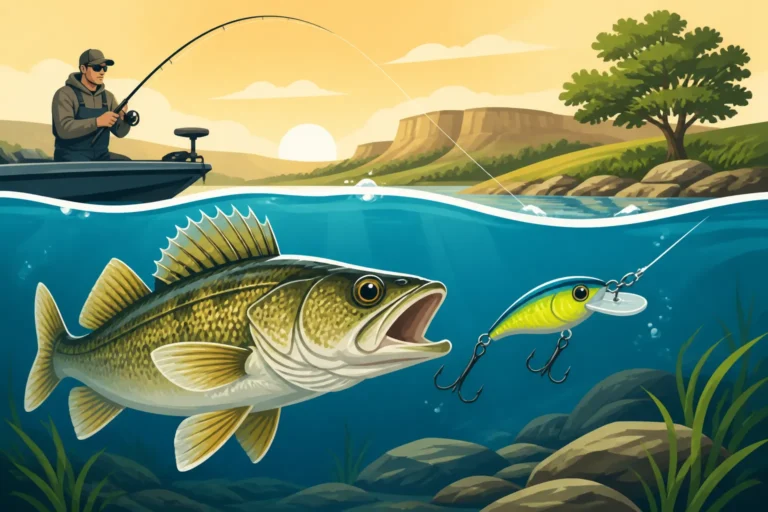
| Walleye | Nightcrawlers, Minnows | Jigs (vertical), Crankbaits, Blade baits | Deep humps, Rocky points, Main lake flats | Dawn, Dusk, Night |
This table offers a basic overview, but fish behavior can change with water temperature, time of year, and even time of day. Observing what local anglers are using or checking recent fishing reports can also provide valuable clues. Don't be afraid to experiment, but having a general idea of what works for each species will significantly shorten your learning curve.
Navigating Different Kansas Fishing Environments
Kansas offers a wide variety of fishing environments, each with its own quirks and best approaches. Understanding these differences will help you choose the right gear and techniques for a successful outing.
Fishing Kansas Community Lakes and Ponds
For many beginners, community lakes and smaller ponds are the ideal starting point. These waters are often easily accessible, stocked regularly by the KDWP, and typically hold good numbers of panfish, channel catfish, and sometimes bass. They are often less intimidating than large reservoirs, with calm waters and fewer boating hazards. You can often find a full list of these locations and their specific rules in our guide to Kansas Community Fishing Lake Rules.
When fishing these smaller waters, focus on bank access points, especially areas with aeration systems, jetties, or any visible structure like culverts or fallen trees. A simple bobber and worm rig is incredibly effective for bluegill and crappie in these spots. For catfish, casting a bottom rig with chicken liver or cut bait near deeper areas or inflow points can yield great results. These locations are fantastic for honing your casting skills and getting a feel for how different fish bite, offering a relaxed environment for learning without the pressure of a big lake.
Tackling Larger Reservoirs and State Lakes
Kansas is home to numerous large reservoirs like Milford Lake, Cheney Reservoir, and Wilson Lake, which offer incredible fishing opportunities for a wider range of species, including walleye, wipers, and larger catfish and bass. These bodies of water are vast, so understanding how fish relate to structure and depth is crucial. Here, a boat or kayak can significantly expand your reach, allowing you to access main lake points, submerged humps, and creek channels.
For bank anglers on these larger lakes, focus on public access areas like dam faces, rip-rap shorelines, or established fishing piers, which often provide access to deeper water or cover. Trolling with crankbaits is a popular method for covering vast expanses of water to locate walleye and white bass in the main lake basins. Alternatively, drifting cut bait over main lake flats or points can be highly effective for blue and flathead catfish. Always be mindful of weather conditions on these larger waters, as winds can whip up quickly and create dangerous waves. Our guide to Best Fishing Lakes in Kansas provides detailed information on these bigger waters.
River Fishing Basics for Beginners
Kansas also boasts a network of rivers, including the Kansas River, Republican River, and Neosho River, that offer exciting fishing, particularly for catfish, white bass, and occasionally sauger or walleye. River fishing presents unique challenges, primarily dealing with current, but also unique opportunities. Fish in rivers often orient themselves to current breaks, such as behind submerged logs, boulders, or along the edges of deeper channels.
When river fishing, focus on using heavier sinkers to keep your bait on the bottom in the current, especially if you're targeting catfish. A Carolina rig or a three-way swivel rig works well here. For white bass, casting inline spinners or small crankbaits into current seams or below riffles can be highly productive. Always be aware of safety when fishing rivers, especially during periods of high flow. Current can be powerful, and bank conditions can be slippery. Knowing how to read the river current to find slack water pockets where fish hold is a skill that will greatly improve your river fishing success over time.
Seasonal Fishing Strategies for Kansas Anglers
Fish behavior is heavily influenced by the seasons, primarily due to changes in water temperature, spawning cycles, and available food sources. Understanding these seasonal shifts is key to consistent success throughout the year in Kansas. For a comprehensive overview, definitely check out our Kansas Fishing Seasons Guide.
Spring Fishing Hotspots and Techniques
Spring is a time of renewal and often the most exciting season for many Kansas anglers. As water temperatures rise after the long winter, fish become much more active and move into shallower waters to feed and spawn. This is prime time for the famous white bass run on many Kansas rivers and reservoir tributaries, offering fast-paced action. Crappie also move into shallow bays and around submerged brush to spawn, making them relatively easy targets for anglers using minnows or small jigs under a bobber.
Largemouth bass will also begin to stage and move into the shallows as the water warms, making spinnerbaits, plastic worms, and shallow-diving crankbaits effective tools. For walleye, early spring finds them spawning on rip-rap shorelines and rocky points, where lipless crankbaits and jigs can be highly productive. Pay close attention to water temperature; a few degrees can make a huge difference in fish activity and location during the spring transition.
Summer Fishing Tactics for Warm Waters
Kansas summers bring hot weather and warm water temperatures, which means fish behavior changes once again. Many species, especially during the heat of the day, will retreat to deeper, cooler water, or seek out shade and dense cover. Early mornings and late evenings, or even night fishing, become prime times to target species like channel catfish, which are incredibly active after dark. Using glow-in-the-dark baits or lanterns can enhance your night fishing experience.
For bass, focus on fishing heavy cover, like deep weed lines, laydowns, or shaded areas under docks. Topwater lures can provide explosive strikes during low light conditions. Walleye will often be found suspended over deep water or relating to main lake humps and points; trolling with deep-diving crankbaits or vertical jigging can be very effective. During summer, keeping your bait fresh and lively is critical, as warm water can quickly deplete oxygen. Don't forget your hydration and sun protection during those long, hot summer days!
Fall Fishing for Active Fish
Fall is another fantastic season for fishing in Kansas, often offering comfortable weather and incredibly active fish. As water temperatures cool down, many species go on a feeding frenzy, bulking up for the coming winter. This means they are often more aggressive and easier to catch. White bass and crappie will often form large schools and chase baitfish in open water, making them susceptible to trolling or casting lures into breaking schools.
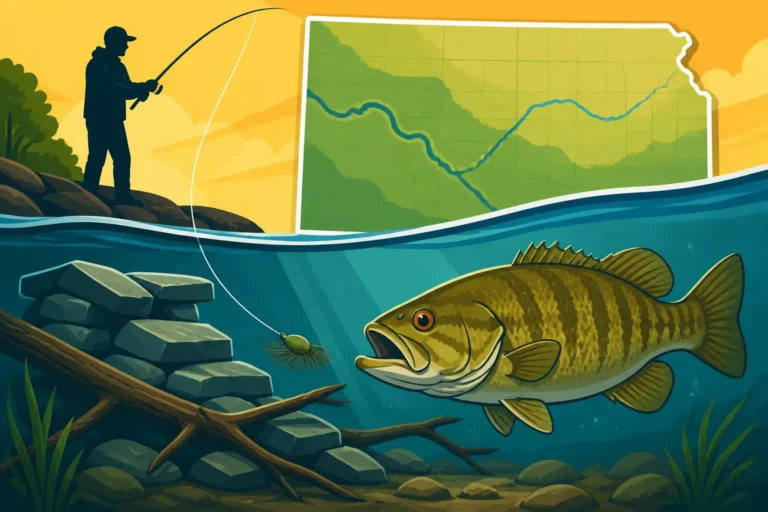
Walleye fishing can be exceptional in the fall, as they become more predictable, often holding on rocky points, humps, and creek channel edges. Jigging spoons, crankbaits, and blade baits are excellent choices. Largemouth and smallmouth bass will also become more active, moving shallower to feed on baitfish. Spinnerbaits, jerkbaits, and jigs can all produce big fish. Fall often means less fishing pressure too, providing a more peaceful and productive angling experience before the waters freeze over.
Disclaimer
The information provided in this guide is for general informational purposes only and is subject to change. Always consult the official Kansas Department of Wildlife and Parks (KDWP) regulations for the most current and accurate rules and licensing requirements before engaging in any fishing activities. Fishing conditions, fish behavior, and species availability can vary by location and season.