Kansas Catfish Fishing Techniques
There's nothing quite like the thrill of a hard-fighting catfish on the end of your line, especially here in Kansas. But let's be honest, figuring out how to consistently land these whiskered beauties across our diverse lakes and rivers can feel like a bit of a mystery, with so many variables like water levels, current, and seasonal changes. This comprehensive guide is designed to unravel those mysteries, arming you with proven Kansas catfish fishing techniques to boost your success, no matter the season or specific species you're targeting.
Understanding the Whiskered Warriors of Kansas Waters
Before we dive into the nitty-gritty of techniques, it's crucial to understand the stars of our show: the catfish species found right here in Kansas. Each type has its own quirks, preferred habitats, and even feeding behaviors, and knowing these differences can dramatically impact your fishing strategy.
Channel Catfish: The Kansas Staple
The channel catfish is probably what most folks picture when they think about catfishing in Kansas, and for good reason – they're abundant, widespread, and put up a fantastic fight. These adaptable fish thrive in a variety of environments, from the muddy bottoms of large reservoirs like Milford Lake and Cheney Reservoir to smaller rivers and even local farm ponds. They're generally identifiable by their deeply forked tail, spotted bodies (especially when younger), and a mouth that's smaller than a blue cat's but larger than a flathead's.
Channel cats are opportunistic feeders, meaning they'll pretty much eat anything they can get their mouths on. This makes them a fun target for anglers using a wide range of baits. They tend to be most active when water temperatures are warm, really getting into a feeding frenzy during the spring and summer months. However, you can still catch them year-round if you know where to look and what to offer. Their popularity is undeniable, making them a consistent draw for anglers across the state, and their daily limits are generous for good reason.
Blue Catfish: The Big River Brawler
If you're chasing truly massive catfish, the blue catfish is your ultimate target in Kansas. These giants primarily inhabit the deeper, faster-moving waters of the Kansas River and its major tributaries, as well as some of our larger reservoirs like Tuttle Creek Lake and Clinton Lake. They are distinguished by their slate-blue coloration, a humped back, and a deeply forked tail, much like a channel cat, but without the spots. What really sets them apart is their sheer size; blue cats are known to grow to incredible weights, with the Kansas state record fish often topping 100 pounds!
Unlike channel cats, blue catfish are primarily piscivores, meaning they prefer to eat other fish. This preference dictates specific bait choices, often leaning towards fresh cut bait or whole shad. They're strong fighters, renowned for long, powerful runs, making them a bucket-list fish for many serious anglers. Targeting blue catfish often requires heavier gear and a different approach than their channel cat cousins, especially when trying to land one of the real monsters. For more in-depth information, check out our guide on Kansas Blue Catfish Facts and Limits.
Flathead Catfish: The Solitary Predator
The flathead catfish is the enigma of the Kansas catfish world, a true apex predator with a distinct personality. You'll find these brutes in rivers, large creeks, and reservoirs, often preferring areas with heavy cover like log jams, rock piles, and undercut banks. They're easily recognizable by their flat, broad head, shovel-like lower jaw, and rounded tail, which is unique among Kansas catfish species. Their coloring is mottled brown and yellow, offering excellent camouflage in their snag-filled homes.
Flatheads are almost exclusively live bait eaters, shunning the stink baits and prepared concoctions that channel cats and blues readily accept. This preference means that successful flathead fishing often involves catching your own bait, like sunfish, green sunfish, or even small carp. They are powerful, territorial fish, and extracting one from its snag-filled lair is a true test of an angler's skill and patience. Fishing for flatheads is a commitment, but the reward of a massive, hard-fighting fish is unparalleled. If you're looking for specific tactics for these beasts, our article on How to Catch Flathead Catfish at Night might be a great resource.
Essential Gear for Kansas Catfishing Adventures
Having the right gear makes all the difference when you're targeting Kansas catfish. From rods and reels built to handle powerful runs to the right lines and terminal tackle, being properly equipped saves you frustration and significantly increases your chances of landing that trophy fish.
Rod and Reel Setups
The rod and reel combination you choose depends heavily on the species you're targeting and the water you're fishing. For general channel catfishing in ponds or smaller rivers, a medium-heavy spinning or baitcasting combo will serve you well. Look for rods in the 6.5 to 7.5-foot range with a moderate-fast action, which provides enough backbone to fight fish while still offering a good bend for casting. Pairing this with a reel spooled with 12-20 lb monofilament or braided line is a solid setup.
When stepping up to larger blue cats or flatheads in big rivers or reservoirs, you'll need to beef up your tackle considerably. Heavy or extra-heavy action rods, often 7.5 to 10 feet long, are necessary to handle heavy weights, strong currents, and big fish. Large baitcasting reels with a robust drag system, capable of holding 50-80 lb braided line, are ideal. Brands like Ugly Stik and Penn are popular choices among seasoned catfish anglers for their durability and power, and you can often find great deals on reliable setups on Amazon. This heavy-duty gear is critical, as a big blue cat in the Kansas River can spool a lighter reel in a heartbeat.
Line, Hooks, and Sinkers
Your choice of fishing line is vital. Monofilament line in 15-30 lb test is a good all-around option for channel cats due to its stretch, which can act as a shock absorber, and its affordability. However, for serious big cat pursuits, braided line in 50-80 lb test is the way to go. Its lack of stretch provides incredible sensitivity, allowing you to feel subtle bites, and its superior strength and abrasion resistance are crucial when fishing around heavy cover or strong currents.
Hooks are another critical component. Circle hooks are highly recommended for catfishing, as they significantly reduce gut-hooking, making for healthier releases and often better hooksets when fish take the bait aggressively. Sizes can range from 3/0 for smaller channel cats up to 8/0 or larger for big blues and flatheads. For sinkers, an assortment of weights will be necessary. Slip sinkers (like egg or no-roll sinkers) in 1-4 ounces are common for bottom fishing, while pyramid sinkers can be useful in strong currents to prevent your bait from washing away. Having a variety on hand, easily purchased from a tackle shop or online retailers, ensures you're prepared for different conditions.
Essential Accessories
Beyond the basics, a few accessories will make your catfishing trips much more enjoyable and productive. A sturdy rod holder is almost mandatory, especially when soaking baits for long periods from the bank or a boat. Pliers or forceps for hook removal, a heavy-duty net or a specialized catfish gripper, and a reliable headlamp for those twilight or night fishing sessions are all incredibly useful. Don't forget a sharp fillet knife if you plan on keeping some fish for dinner – there's nothing better than fresh Kansas catfish!
A good tackle box or bag to keep all your rigs, hooks, and weights organized is also a lifesaver. Consider a waterproof option if you're often fishing from a boat. If you’re targeting trophy fish, a large measuring tape or bump board is essential for documenting your catch, especially if you're participating in any local tournaments or just want bragging rights. Having these items on hand means less fumbling and more time focused on the action.
Prime Locations for Catfish in Kansas
Kansas offers an incredible variety of water bodies, each with its own characteristics that make it ideal for different types of catfishing. Knowing where to go and what to expect from these spots is key to consistent success.
Major Reservoirs and Lakes
Kansas is home to numerous large reservoirs that are absolute catfish factories. Lakes like Milford, Cheney, Wilson, and Tuttle Creek are legendary for their robust channel cat populations, and many also hold impressive numbers of blue and flathead catfish. On these vast bodies of water, focus your efforts on areas with structure: submerged roadbeds, old creek channels, humps, points that drop off into deeper water, and standing timber. The deeper sections of the lake, especially near the dam or river channels, often hold big blue cats.
During warmer months, channel cats will often patrol shallower flats and coves, particularly early mornings and late evenings. For flatheads, look for areas with significant woody debris or rock piles along river bends or deeper points within the reservoir. Using a fish finder can be immensely helpful in locating these underwater features. While many of these lakes offer excellent boat access, don't underestimate the potential for fantastic bank fishing, especially around riprap causeways or accessible points. Our Best Catfish Lakes in Kansas guide has more specific details on where to find them.
Rivers and Smaller Creeks
The rivers and creeks of Kansas offer a more intimate, yet equally productive, catfishing experience. The Kansas River, also known as the Kaw, is particularly famous for its trophy blue catfish and flatheads, especially below the major dams like Perry Lake. Here, strong currents, deep scour holes, and abundant snags provide ideal habitat. Other notable rivers include the Neosho, Marais des Cygnes, and Arkansas River, all of which hold excellent populations of channel cats, and often good numbers of flatheads.
When fishing rivers, pay close attention to current breaks: eddies behind wing dams, log jams, bridge pilings, and inside bends of the river. These are prime ambush points where catfish will lie in wait for food to drift by. For channel cats in smaller creeks, look for deeper pools, riffles, and areas with overhead cover. Bank fishing is often the most practical approach in many river settings, and knowing how to read the current is an invaluable skill. For anglers seeking big river action, exploring these waterways is essential. Read more about specific spots in our Kansas River Fishing Guide.
Community Ponds and Farm Ponds
Don't overlook the smaller water bodies! Kansas has an extensive network of community fishing lakes and countless private farm ponds that are regularly stocked with channel catfish. These spots are fantastic for family outings, beginners, or simply when you want to catch a lot of fish in a shorter amount of time. Catfish in these ponds are often less pressured and more eager to bite.
In ponds, channel cats will cruise the edges, especially near weed lines, submerged brush, or any structure that offers cover and food. Deeper holes in the middle of a pond can hold fish during the heat of summer or cold of winter. While trophy-sized fish are less common in these smaller waters, they offer consistent action and are perfect for honing your skills. Often, a simple bobber and a worm or chunk of cut bait are all you need to find success. Remember, some community lakes might have specific rules, so always check local regulations before you cast a line.
Seasonal Strategies for Catfish Success
Catfish behavior changes dramatically throughout the year, driven largely by water temperature and their spawning cycle. Adapting your techniques to these seasonal shifts is crucial for consistent success.
Spring: The Awakening Bite
As water temperatures begin to rise in spring, typically from late March through May, catfish start to shake off their winter sluggishness and become increasingly active. This is an excellent time for channel cats, as they begin to feed heavily in preparation for spawning. Look for them in shallower waters that warm up fastest, such as sunny coves, flats, and the mouths of creeks feeding into larger lakes or rivers.
During this period, focus on areas where baitfish are congregating or where fresh water is flowing in, bringing with it new food sources. Bottom rigs with stink baits, cut bait, or shrimp are highly effective. For flatheads, they'll also begin to become more active, moving out of their deep winter holes to feed. Targeting them with live bait near heavy cover in slightly deeper transition areas can be productive. The pre-spawn bite can be incredibly aggressive, making for some exciting fishing.
Summer: Peak Catfishing Action
Summer, especially from June through August, is prime time for catfishing in Kansas. The warm water temperatures stimulate high activity levels across all species. Channel cats will be active day and night, though night fishing can be particularly productive as they move into shallower water to feed under the cover of darkness. They'll be found throughout the water column, often relating to structure but also cruising open water.
Blue cats in large reservoirs will suspend over the old river channels or congregate on deep humps, while in rivers, they'll hold in deep holes and current breaks. Flatheads will be locked into their heavy cover, aggressively defending their territory and striking at live baits. For specific tips on fishing during these warmer months, our Kansas Summer Catfish Fishing Tips article is a must-read. Don't forget that longer days and warmer evenings also make for fantastic Kansas Night Fishing Guide opportunities, especially for big blues and flatheads.
| Season | Preferred Habitat (General) | Common Baits | Species Activity (General) |
|---|---|---|---|
| Spring | Shallow flats, creek mouths, warming coves | Cut bait, shrimp, worms, small live bait | Increasing |
| Summer | Deep channels, current breaks, shallow flats (night) | Stink bait, cut bait, shad, live sunfish | High, especially at night |
| Fall | Creek channels, deeper holes, structure | Cut bait, shad, larger live bait, prepared baits | Moderate to High |
| Winter | Deep holes, warmest water pockets, river bends | Smaller cut bait, chicken liver, prepared baits | Slow, but catchable |
Fall: The Pre-Winter Feast
As autumn arrives and water temperatures begin to cool, catfish enter a "fall feed" mode, gorging themselves in preparation for winter. This can be another fantastic time to target all three species, particularly the larger blues and flatheads. They'll often move out of their shallow summer haunts and concentrate in deeper water, following schools of baitfish.
In reservoirs, focus on deeper creek channels, main lake points, and submerged timber. On rivers, look for them in deep scour holes and current seams. Larger baits, both cut bait and live bait, can be very effective as fish are looking for substantial meals. The fall bite can be more consistent during the day than in summer, but still offers good night fishing. The key is to find the baitfish, as the catfish will usually be nearby.
Winter: The Slow Chill Bite
Winter catfishing in Kansas is often overlooked, but it can be surprisingly productive if you know where to look. Catfish become much less active in cold water, but they don't stop feeding entirely. They will concentrate in the deepest, warmest water available, often in large schools. In reservoirs, this means deep holes in the main lake or old river channels. In rivers, look for the deepest, slowest-moving holes, especially below dams.
The bite will be much more subtle, requiring sensitive tackle and patience. Smaller, cut baits, chicken liver, or prepared baits presented on simple bottom rigs are often best. You'll need to leave your bait in one spot longer and pay close attention for light bites. While you might not catch as many fish as in summer, the ones you do catch can often be larger, as the big fish are less active and more concentrated. Ice fishing for catfish, particularly channel cats, is also an option on some of Kansas's smaller lakes and ponds when the ice is safe.
Top Catfish Baits and Rigs for Kansas Waters
Choosing the right bait and rigging it properly are fundamental to catfishing success. What works for one species or in one situation might be useless in another, so having a versatile arsenal is always a good idea.
The Best Baits for Each Species
When it comes to bait, variety is truly the spice of life for Kansas catfishing. For channel catfish, the options are almost endless. Stink baits, punch baits, and dip baits are extremely popular and effective, particularly when fished on sponges or tube baits designed to hold the pungent concoction. Cut bait (shad, carp, perch) is also a fantastic choice, as are chicken livers, shrimp, hot dogs, and good old nightcrawlers. Don't be afraid to experiment, especially if you're targeting new waters.
For blue catfish, fresh cut bait is king. Shad, particularly gizzard shad, are a top choice. Cut bluegill, carp, or even small chunks of skipjack herring (if you can get them) can also be highly effective. The fresher the better, as blue cats rely heavily on their sense of smell. They will occasionally hit prepared baits, but live or fresh cut fish is almost always preferred.
Flathead catfish are the pickiest of the bunch, almost exclusively preferring live bait. Bluegill, green sunfish, perch, and small carp are prime choices. The bait should be lively and of a decent size, often 4-8 inches long. Presenting a struggling live bait near their ambush points is key to triggering a strike. Having a good bait tank to keep your live bait healthy is essential for flathead anglers. Our Best Bait for Kansas Catfish guide dives deeper into specific bait choices.
Common and Effective Rigs
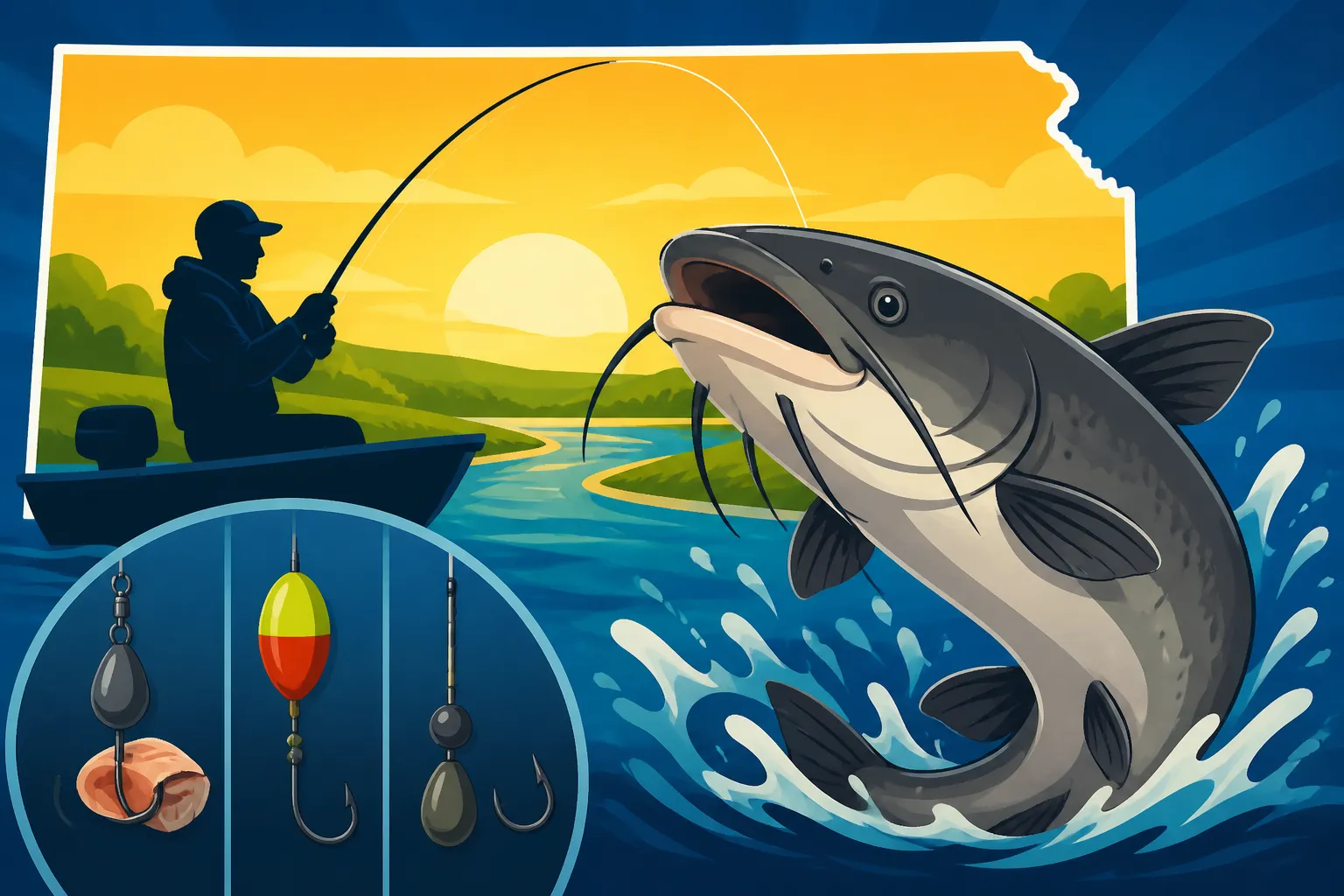
Most catfishing in Kansas involves presenting bait on or near the bottom. The slip sinker rig, also known as a Carolina rig, is perhaps the most versatile and widely used. It consists of a weight (egg or no-roll sinker) that slides freely on the main line, a swivel, and a leader (typically 12-24 inches) tied to a hook. This setup allows the fish to pick up the bait and move off without immediately feeling the weight, resulting in more solid hooksets.
Another popular option, especially when fishing for channel cats in lighter current or still water, is the Santee Cooper rig. This is a variation of the slip sinker rig, but it incorporates a small foam peg or float on the leader, just above the hook. This lifts the bait slightly off the bottom, making it more visible and keeping it out of debris. It's particularly effective with cut bait or larger chunks of prepared bait.
For flathead fishing with live bait, a simple three-way swivel rig or a heavy-duty slip sinker rig with a stout leader is preferred. The key is to use strong components that can withstand the power of a large flathead and to present the live bait in a way that allows it to swim naturally while staying in the strike zone. Experiment with leader lengths and weight sizes to find what works best in specific current conditions.
Advanced Catfish Techniques for Bigger Fish
While the basic setups will catch plenty of fish, sometimes you need to step up your game to consistently land bigger, more elusive catfish. These advanced techniques target fish more strategically and can lead to truly memorable catches.
Drift Fishing on Reservoirs and Rivers
Drift fishing is a fantastic way to cover large areas of water and locate active catfish, particularly blue cats and channel cats, on large Kansas reservoirs or in wide river sections. The concept is simple: you allow your boat to drift with the wind or current, dragging your baits along the bottom. This presents your bait to a wider range of fish than simply anchoring in one spot.
On reservoirs like Milford Lake or Tuttle Creek, you might use a drift sock or sea anchor to control your drift speed, ensuring your baits stay in the strike zone without moving too fast. For river fishing, you simply use the natural current to your advantage. Varying your bait, leader length, and sinker weight can help you adapt to different depths and current speeds. Pay close attention to your fish finder during drifts to identify potential holding areas like ledges, humps, or old river channels, and be prepared to drop an anchor if you find a concentration of fish.
Using Trotlines and Jugs
For anglers looking to catch multiple catfish or target them passively, trotlines and jug fishing are traditional and effective methods, though they require specific permits and adherence to Kansas regulations. Trotlines consist of a main line stretched across a body of water or suspended along a riverbank, with multiple baited hooks attached at intervals. Jug lines involve individual hooks tied to floating jugs or bottles, which drift freely or are anchored in specific locations.
These methods are particularly effective for channel catfish and can yield impressive numbers, especially during active feeding periods. However, it's crucial to understand and follow all Kansas Department of Wildlife, Parks and Tourism (KDWP) regulations regarding the number of hooks, proper labeling, and checking frequency. Improper use can lead to fines and harm to fish. Always check the current Kansas Fishing Regulations Explained or our specific guide on Kansas Trotline and Jug Fishing Rules to ensure compliance.
Targeting Catfish with Electronics
Modern fish finders and GPS units have revolutionized catfishing, allowing anglers to precisely locate fish and structure that were once impossible to find. On large reservoirs, a good side-imaging or down-imaging unit can reveal submerged trees, old creek channels, and even schools of baitfish or catfish holding near structure. This takes the guesswork out of finding productive areas.
GPS is invaluable for marking waypoints where you've caught fish, identified good structure, or found concentrations of bait. This allows you to return to productive spots time and again. Even a basic fish finder can help you identify depth changes and bottom contours that are attractive to catfish. Learning to interpret what your electronics are showing you is a skill that develops over time, but it's one that will drastically improve your catfishing success on unfamiliar or large bodies of water.
Catfish Care, Regulations, and Safety
Successful catfishing isn't just about catching them; it's also about respecting the resource, following the rules, and ensuring your safety and the safety of others.
Catch and Release vs. Harvest
Kansas offers fantastic opportunities for both catch and release and harvesting catfish for the dinner table. If you plan to release fish, especially larger ones, practice good fish handling. Use wet hands when handling fish, support their body weight, and quickly remove the hook. Circle hooks are excellent for promoting healthy releases as they typically hook in the corner of the mouth. For trophy flatheads and blue cats, consider releasing them to ensure these magnificent breeders continue to populate our waters.
If you intend to harvest catfish, be mindful of the daily creel limits and length restrictions. These regulations are in place to ensure sustainable fish populations for future generations of anglers. Always check the current Kansas Catfish Daily Limits before heading out. A cooler with ice is essential for keeping your catch fresh, and knowing how to properly How to Fillet a Channel Catfish ensures you get the most out of your harvest.
Kansas Fishing Regulations and Licenses
Before you even wet a line, make sure you understand the Kansas fishing license requirements. Most resident and non-resident anglers over a certain age are required to possess a valid fishing license. There are various types of licenses, including annual, five-year, and short-term options. Exemptions exist for certain age groups, disabilities, or specific free fishing days.
It's your responsibility to know the rules, which cover everything from legal fishing methods to daily limits, length restrictions, and specific regulations for certain bodies of water. The KDWP publishes an annual fishing regulations summary, which is available online and at license vendors. Always keep a copy handy. Fishing without a proper license or violating regulations can result in fines and penalties. Getting your license is easy and can often be done online through the KDWP website or at a local bait shop.
Safety Considerations for Anglers
Catfishing, especially at night or on larger rivers, comes with inherent safety considerations. Always let someone know where you're going and when you expect to return. Wear appropriate clothing for the weather, including layers for cooler nights and sun protection for hot days. A first-aid kit, flashlight or headlamp, and plenty of water are non-negotiable.
When fishing from a boat, always wear a life jacket, especially when moving or in rough water. Be aware of changing weather conditions and strong currents on rivers. If using trotlines or jug lines, exercise caution when setting and retrieving them, as tangled lines and sharp hooks can pose hazards. For night fishing, ensure you have adequate lighting and are familiar with the area you're fishing. Safety first, always!
Disclaimer
The information provided in this guide is for general informational purposes only and is not intended as legal or professional advice. Fishing regulations, license requirements, and local rules can change frequently. Always consult the official Kansas Department of Wildlife, Parks and Tourism (KDWP) regulations and local ordinances before engaging in any fishing activities. The author and publisher are not responsible for any actions taken based on the information presented herein.