Best Landing Net for Kansas Walleye
Landing a feisty Kansas walleye can be one of the most exciting moments on the water, but that thrill can quickly turn to frustration if you lose your prized catch right at the boat or bank. Many anglers underestimate the importance of a quality landing net, often opting for a cheap, undersized net that simply isn't up to the task when a big walleye decides to make a last-ditch run. This guide is dedicated to helping you choose the best landing net for Kansas walleye, ensuring you can safely and effectively bring those golden beauties into your boat or onto the shore, protecting both your catch and your gear.
Why a Good Landing Net Matters for Walleye Fishing in Kansas
I know, I know, it seems like just another piece of gear, right? But trust me, a good landing net isn't just a convenience; it's a vital tool when you're chasing walleye across Kansas. I've seen too many heartbreaking moments when a trophy fish throws the hook right at the boat because the angler fumbled with an inadequate net. Don't let that be you!
Protecting Your Catch and the Fishery
Walleye are truly prized sport fish here in Kansas, and for good reason. Their fight, their beauty, and their table fare are all top-notch. Losing one right at the boat due to a flimsy, tangled net is not just personally heartbreaking, it can also be detrimental to the fish itself, especially if you're planning a release. A proper net minimizes stress and damage to the fish. Think about it: a thrashing walleye flopping around on the boat deck, or worse, against rough riprap on the bank, is going to suffer more injury than one gently scooped into a soft, secure net.
Kansas has specific length and creel limits for walleye, like the Kansas Walleye Minimum Length Limit of 21 Inches and Kansas Walleye Daily Limit of Two Fish. This means that often, we're catching fish that need to go back into the water. Having a net that allows for quick, gentle handling is absolutely crucial for measuring, photographing, and then releasing those fish that don't meet the regulations. The more quickly and carefully you can handle a walleye, the higher its chances of survival once it swims away. A net that doesn't tangle fins or strip off that essential protective slime coat is a true conservation tool.
Ensuring Angler Safety and Efficiency
Let's be real, walleye have mouths full of sharp teeth – not quite piranha, but definitely enough to give you a nasty nip. And those dorsal fins? Spiky! A quality landing net keeps your hands well away from those hazards, reducing the risk of accidental punctures from teeth or, even worse, from hooks. Trying to hand-land a thrashing walleye with a crankbait full of treble hooks is an accident waiting to happen, potentially leading to a trip to the emergency room instead of a triumphant photo.
Beyond safety, a well-designed net significantly speeds up the landing process. When you've got a walleye on, especially if you're fishing solo or in a high-stakes tournament, every single second counts. You don't want a fish hanging out too long at the side of the boat, potentially getting snagged on the motor or structure, or simply getting enough leverage to shake the hook. A net that deploys easily, handles smoothly, and secures the fish quickly means less stress on your line, less stress on the fish, and ultimately, a higher success rate. It allows you to get that fish in, unhook it, and get back to fishing, which is what we all want to do!
Key Features to Look For in a Walleye Landing Net
Okay, so we've established why you need a good net. Now, let's talk about what makes a net truly great for walleye fishing. Not all nets are created equal, and some features are far more important than others when you're targeting those toothy critters.
Net Material and Mesh Size
This is, without a doubt, the most critical feature when choosing a walleye net. You want to prioritize the well-being of the fish and avoid frustration for yourself.
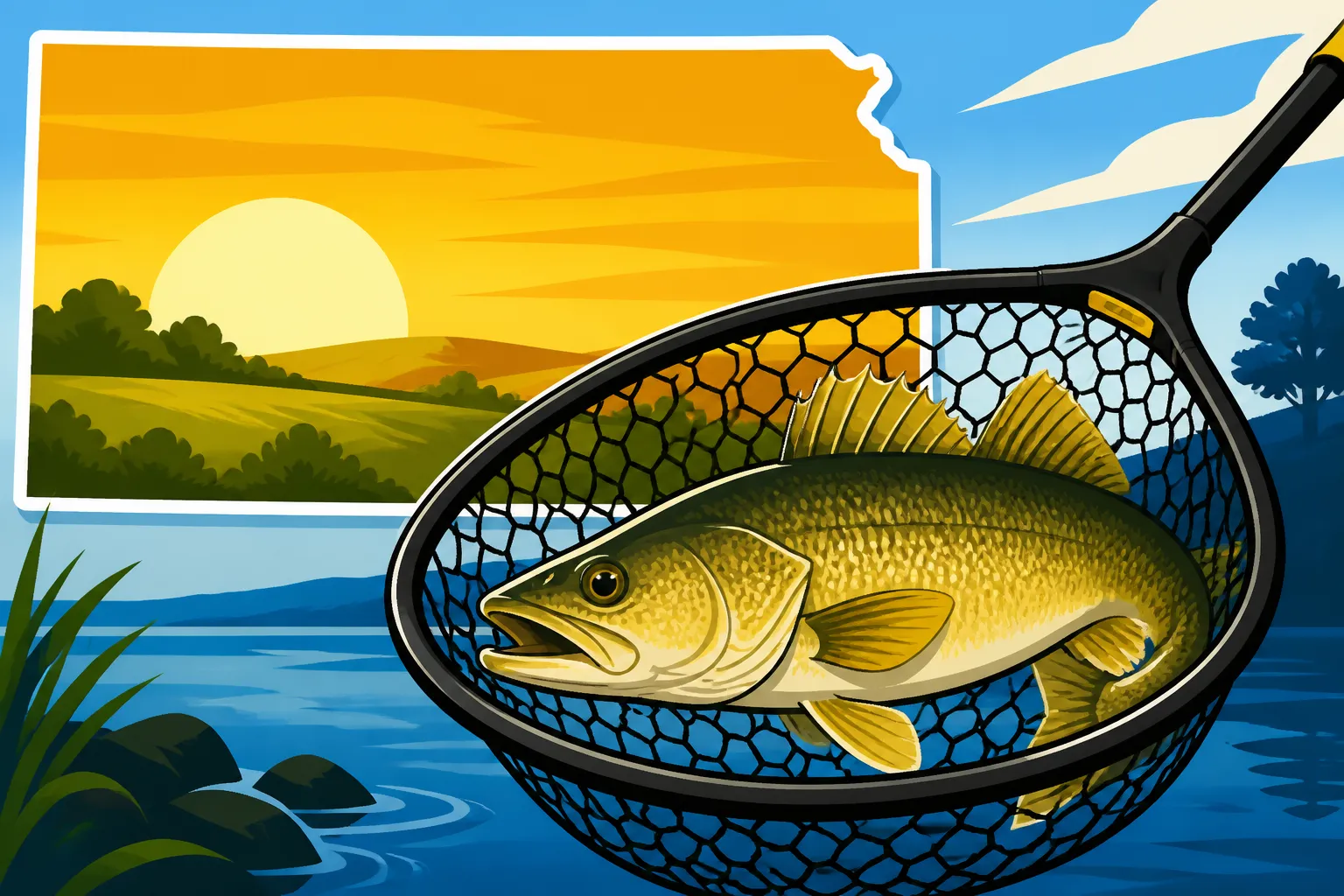
Rubberized, Knotless Mesh: Seriously, if you take one piece of advice from this guide, make it this: get a net with rubberized, knotless mesh. Traditional knotted nylon nets are the bane of an angler's existence when it comes to walleye. They strip the protective slime coat from the fish, making them more susceptible to disease if you plan to release them. They can damage delicate fins and, perhaps most frustratingly, treble hooks from crankbaits will get tangled in them incessantly. I've spent more time than I care to admit trying to untangle a deeply embedded hook from a conventional net, only to have the fish die from stress or prolonged handling. Rubberized, knotless mesh is infinitely gentler on the fish, drastically reduces hook snags (a massive time-saver, especially when the bite is hot!), and is much, much easier to clean. When you're trying to land a 25-inch walleye that's just made a head shake, the last thing you want is a hook buried deep in the net's mesh.
Appropriate Mesh Size: Beyond the material, the size of the mesh holes also matters. The holes shouldn't be so large that the fish's gills or fins can poke through, causing injury or getting stuck. For walleye, a medium-sized, knotless rubber mesh is typically ideal. It's large enough to move through the water with minimal resistance (which is important when trying to scoop a fast-moving fish) but small enough to securely cradle the entire fish without parts poking through.
Hoop Size and Shape
The hoop is the frame that holds the net bag, and its dimensions are crucial for successfully landing a walleye.
Generous Hoop Dimensions: Walleye can grow quite long and have a decent girth, particularly in prime Kansas waters like Milford Lake or Cheney Reservoir. You need a hoop that is wide enough to comfortably fit the head and shoulders of a decent-sized walleye, and long enough to contain its entire body without the tail flopping out. A hoop that's too small means you'll be struggling to cram the fish in, causing more stress and increasing the chance of it escaping. Imagine a beautiful walleye kicking out of a too-small net at the last second—devastating! My personal rule of thumb is to consider the largest walleye I realistically expect to catch and size my net accordingly, adding a few inches for good measure. A hoop in the 20-30 inch range for width and length is usually a good starting point for serious walleye anglers.
Hoop Shape: Landing nets come in various shapes: round, teardrop, or rectangular. While personal preference plays a role, a teardrop or slightly rectangular hoop often provides a good balance. These shapes offer sufficient width at the entry point to guide the fish in easily and then taper slightly to support the fish's body once it's inside. Round hoops can work, but sometimes a fish can slip out the side more easily if the net isn't perfectly positioned.
Handle Length and Construction
A net is only as good as its handle when it comes to effectively reaching and securing your catch.
Telescoping or Extendable Handles: For most walleye anglers, especially those fishing from a boat, an extendable or telescoping handle is an absolute game-changer. It allows you to reach out that extra foot or two to net a fish that might be just beyond arm's length, preventing unnecessary boat maneuvering or awkward leaning. This is particularly valuable when fishing from a larger bass boat, a pontoon, or even a deep-V multispecies boat where the gunwales are higher. For bank anglers, a longer, sturdy handle is even more essential to reach over riprap, logs, or shoreline vegetation to scoop a fish that's still in the water. I've been in situations where a fixed, short handle cost me a good fish because I just couldn't reach it.
Durable Handle Material: The handle needs to be strong enough to lift a heavy, thrashing walleye without bending, breaking, or feeling flimsy. Common materials include aluminum, fiberglass, or robust composites. Aluminum is generally lighter, while fiberglass can be incredibly strong. Look for a handle that feels solid, with good attachment points where it meets the hoop. A comfortable, non-slip grip is also incredibly important, especially when your hands are wet, slimy, or cold. You don't want the net slipping from your grasp just as you're about to make the scoop.
Different Types of Landing Nets and Their Suitability for Walleye
When you start browsing for a landing net, whether you're clicking through options on Amazon or walking the aisles at Bass Pro Shops, you'll notice there's quite a variety out there. Each type has its pros and cons, and understanding them will help you pick the perfect one for your Kansas walleye adventures.
Fixed Handle Nets
These are the most straightforward nets you'll find. They feature a non-extendable handle, usually shorter, which makes them simple, generally more durable due to fewer moving parts, and often more affordable. For anglers operating from smaller boats, canoes, or kayaks where the fish are typically landed right alongside the craft, a fixed handle net can be perfectly adequate. They're also great for those quick, grab-and-go trips to a local pond.
However, the lack of reach is their primary drawback. If you're fishing from a larger boat with high sides, or if you're frequently casting from the bank and need to reach out over obstacles, you'll quickly find yourself wishing for more length. A fixed handle net might be a good option for a dedicated kayak angler fishing smaller Kansas Community Lake Rules for walleye, where the fish are usually right beside the boat. But for chasing trophy walleye in open water, or tackling the varied conditions of Milford Lake Walleye Fishing from a larger vessel, you'll often be under-gunned.
Telescoping/Collapsible Nets
For most serious walleye anglers, telescoping or collapsible nets are the sweet spot. They are arguably the most versatile option available. The handle extends, offering adjustable reach, which is a game-changer for reaching out to net a fish that might be making a last run a few feet from the boat. This versatility means they can adapt to various fishing situations, from boat decks to different bank fishing spots.
Many models also collapse or fold down, making them much easier to store in crowded boat compartments, vehicle trunks, or even a garage without taking up too much space. This is a huge benefit for those of us who feel like our boats are already bursting at the seams with gear. When you're shopping at places like Bass Pro Shops or even looking through the wide selection available on Amazon, you'll find a wide array of telescoping nets. Just be sure to look for models with sturdy locking mechanisms on the handle extension. You absolutely do not want the handle to slip or collapse when you're trying to hoist a lively walleye into the boat. Check the reviews and test the mechanism if you can; a cheap locking collar can quickly turn a good net into a liability.
Cradle and Conservation Nets
While these nets are more commonly associated with larger, tougher species like muskie or pike, smaller versions of cradle nets or specialized conservation nets are gaining significant traction among walleye anglers, particularly those who are focused on catch and release. These nets are designed to fully support the fish's body while it's still in the water, minimizing contact with hard boat surfaces and allowing for easy, stress-free release. Many feature extra-deep, soft mesh bags and minimal frame exposure to prevent any abrasions.
For the serious catch-and-release angler, or someone targeting particularly large walleye in a trophy fishery (perhaps hoping to break a personal best or even the Kansas State Record Walleye), a conservation-focused net with a very large, soft mesh bag can be an excellent investment. They might be a bit bulkier to carry and store compared to standard nets, and often come at a higher price point, but the benefits for fish health and survival are undeniable. If preserving the fishery is a top priority for you, this style of net is definitely worth considering.
Maintenance and Care for Your Walleye Landing Net
Investing in a good walleye landing net is like investing in any other piece of fishing gear—it needs proper care to last. A neglected net can quickly become smelly, damaged, and ineffective, ultimately shortening its lifespan and potentially costing you a fish.
Cleaning and Storage
This might sound like a chore, but it's a quick and easy habit to get into that will pay dividends. After every single outing, especially if you've netted fish or been in particularly weedy water, it's absolutely crucial to rinse your net thoroughly with fresh water. This simple step removes fish slime, bait residue, any plant matter, and even microscopic organisms that could potentially transfer to other bodies of water (a concern for preventing invasive species). Allowing these residues to dry on the net can lead to unpleasant odors, bacterial growth, and, over time, the degradation of the net material, particularly the rubberized coating. I always give mine a good spray down with the garden hose as soon as I get home.
Once it's clean, ensure your net is completely dry before storing it. Store it in a dry, shaded area, away from direct sunlight. Prolonged exposure to UV rays can severely weaken rubberized mesh, causing it to become sticky, crack, and eventually break down. It can also cause plastic components, like handle grips or locking collars, to become brittle and fail prematurely. If you have a collapsible or telescoping net, make sure all parts are thoroughly dry before collapsing and storing it. This prevents mildew, corrosion on metal parts, and unpleasant smells that can permeate your boat or vehicle. Properly maintained, a good quality net, even one purchased from a budget-friendly collection on Amazon, will serve you faithfully for many seasons of Kansas Spring Walleye Fishing Tips and beyond.
Checking for Wear and Tear
Your landing net is a tool that takes a beating, so it's essential to periodically inspect it for any signs of damage. Make this a regular part of your gear check. Examine the mesh for any tears, holes, or areas where the rubberized coating might be peeling or cracking. Even small nicks can quickly become larger problems when you're trying to net a powerful fish. Check the hoop for any bends, cracks, or signs of stress, especially at the points where it connects to the handle. These connection points are often high-stress areas and are prone to fatigue over time.
For telescoping nets, pay close attention to the handle extension mechanism. Test it repeatedly to ensure it still locks securely at all lengths and that there's no excessive play or wobble. A handle that slips or collapses mid-scoop is not only frustrating but also dangerous. Even the most durable nets from reputable brands found at Bass Pro Shops can eventually show wear, especially with frequent use. Addressing minor issues, like a small tear in the mesh, with a repair kit designed for netting or even some heavy-duty fishing line, can prevent it from becoming a major problem that costs you your next trophy walleye. Being proactive with maintenance will save you headaches and help you land more fish in the long run.
Here's a quick comparison of key features for a quality walleye landing net:
| Feature | Recommendation for Walleye Fishing | Why It Matters |
|---|---|---|
| Net Material | Rubberized, knotless mesh | Protects fish's slime coat and fins; reduces hook tangles; easy to clean |
| Hoop Size | 20-30 inches wide/long (or larger for trophy waters) | Comfortably accommodates average to large Kansas walleye; prevents escape |
| Handle Length | Telescoping/extendable (4-8+ feet, ideally) | Crucial for reaching fish from boat or bank; versatile for varying situations |
| Handle Material | Strong aluminum, fiberglass, or durable composite | Provides strength and rigidity to lift heavy, thrashing fish without bending |
| Storage | Collapsible design, robust locking mechanisms | Space-saving for boat/vehicle; quick deployment; secure extension when in use |
| Durability | Corrosion-resistant components, reinforced stress points | Ensures longevity, especially in harsh freshwater environments |
Disclaimer
This article is for general informational purposes only and does not constitute professional advice. Laws, prices and regulations vary by location and change over time. Consult a qualified professional for guidance on your specific situation.