Kansas State Record Walleye
For many Kansas anglers, the thrill of reeling in a robust walleye is a prize in itself. But there's a dream that lingers for some—the pursuit of a truly monumental fish, one that doesn't just fill the cooler but carves its name into the history books as a new state record. This isn't just about catching a big fish; it's about a rare confluence of skill, luck, and the perfect conditions that can lead to an unforgettable moment. This comprehensive guide will delve into what it takes to chase such an elusive trophy, from understanding where these giants lurk to the critical steps you'd need to take if you were lucky enough to land one.
The Legendary Kansas State Record Walleye
The idea of catching a state record fish is something many anglers dream about, but few ever experience. It represents the pinnacle of fishing achievement within a specific region, a testament to both the angler's skill and the remarkable productivity of the waters they fish. For walleye enthusiasts in Kansas, the state record isn't just a number; it's a legend whispered around campfires and boat docks, inspiring countless hours on the water.
The Quest for an Unforgettable Catch: What Defines a Record?
A state record walleye isn't just any big walleye. It's an anomaly, a fish that has beaten the odds, evaded countless lures, and grown to an extraordinary size thanks to a perfect combination of genetics, abundant food sources, and ideal environmental conditions. What defines a record, beyond its sheer weight and length, is its rarity. Think about the thousands upon thousands of walleye caught in Kansas every year—only one can hold that top spot at any given time. It represents the ultimate challenge, pushing anglers to refine their techniques, study fish behavior, and spend countless hours in pursuit of that one in a million bite.
For the angler, it's about more than bragging rights; it's about a moment of pure, unadulterated excitement when that rod bends differently, that fight feels impossibly strong, and the fish that emerges from the depths is unlike any you've ever seen. It's the culmination of years of learning, adapting, and understanding the subtle nuances of walleye fishing. The dedication required to even think about targeting a fish of this caliber shapes an angler, turning routine trips into focused expeditions.
The Story of a Giant: Details of the Current State Record Walleye
While specific dates and names can shift over time as records are occasionally broken, the essence of a state record walleye catch remains consistently awe-inspiring. Imagine an angler, perhaps after a long day of casting or meticulously trolling, feeling a strike that sends a jolt up their arm like never before. The ensuing battle isn't just a tug-of-war; it's a strategic dance between angler and fish, testing tackle, patience, and resolve. A record walleye is often caught when conditions align perfectly – perhaps during a specific feeding window, in deep, cool water, or near an overlooked piece of structure.
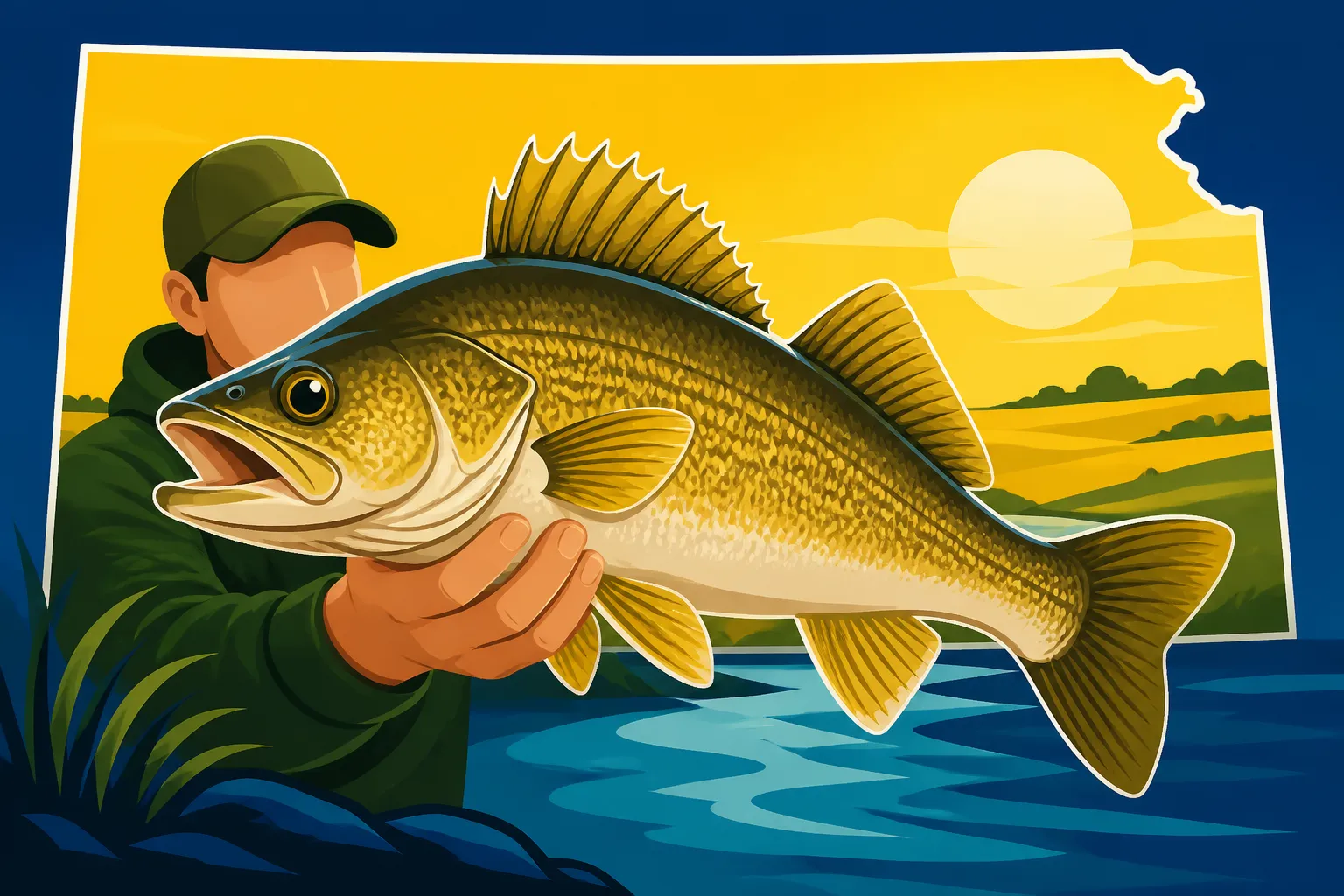
When that immense walleye finally surfaces, its broad shoulders and long, powerful body are unmistakable. The sheer size of it would be breathtaking, a true behemoth compared to the typical keeper. The story of such a catch often involves careful handling, frantic searches for a certified scale, and the eager anticipation of official verification. It’s a moment that defines an angler's career, a story they'll tell for generations, solidifying their place in Kansas fishing lore. The angler who lands such a fish doesn't just catch it; they earn it through a deep respect for the species and an unwavering commitment to the sport.
Understanding the Habitat of Kansas Trophy Walleye
To catch a record walleye, you first need to understand where these giants prefer to live and what makes them grow so large. Kansas waters offer diverse environments, but certain characteristics consistently draw in and sustain larger walleye. It's not just about luck; it's about understanding the underwater landscape and the ecological factors that contribute to a fish's growth.
Where Giants Lurk: Prime Walleye Strongholds in Kansas
Kansas is blessed with several large reservoirs that consistently produce impressive walleye, and it's in these expansive waters that the true giants are most likely to be found. Lakes like Milford Lake Fishing Guide, Cheney Reservoir Fishing Guide, and Wilson Lake Fishing Guide are not just popular fishing destinations; they are ecosystems perfectly suited for walleye growth. These reservoirs often feature extensive rocky structures, steep drop-offs, submerged timber, and vast areas of open water where walleye can roam and feed.
Trophy walleye tend to gravitate towards deeper, cooler water, especially during warmer months. They'll often be found near significant changes in bottom contour, such as ledges, humps, or points that extend into deeper water. These areas provide ambush points for feeding on baitfish and offer thermal refuge. Knowing the Best Walleye Lakes in Kansas is a great start, but truly understanding the specific structure within those lakes is key. For example, the riprap along dams or causeways can be magnets for walleye, providing both structure and access to deeper water. Exploring these specific areas with a good fish finder is crucial for locating potential hotspots.
Environmental Factors for Growth: What Makes Walleye Huge?
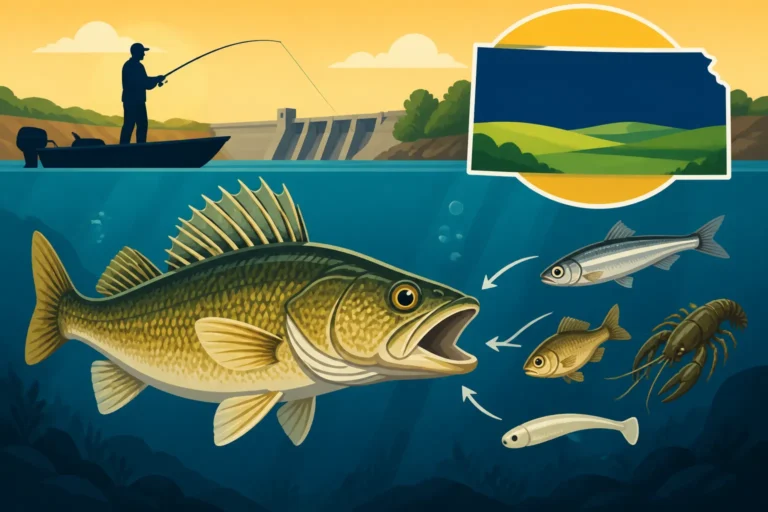
Several environmental factors contribute to a walleye's ability to reach state record proportions. First and foremost is an abundant and consistent forage base. Walleye are predators, and lakes teeming with shad, alewives, or even abundant yellow perch provide the high-protein diet necessary for rapid growth. What Walleye Eat Reservoirs highlights the importance of these baitfish species in their diet. A lake with a healthy population of these baitfish means walleye don't have to expend excessive energy hunting, allowing them to convert more calories into body mass.
Water quality also plays a significant role. Stable water temperatures, good oxygen levels, and clear-to-moderately-stained water create an optimal environment. While walleye can tolerate some turbidity, extremely muddy conditions can impact their feeding efficiency. Furthermore, the sheer size and depth of a reservoir allow walleye to establish distinct territories and mature without excessive fishing pressure in certain areas. Lakes that are regularly stocked with walleye also contribute to a robust population, increasing the odds that a few individuals will outgrow their peers. Finally, strong genetics within the walleye population itself ensure that some fish simply have the inherent potential for exceptional growth.
Advanced Tactics for Targeting Trophy Walleye
Catching an average walleye is one thing, but consistently putting yourself in a position to hook a true trophy requires a refined approach. It demands not just effort, but smart effort—understanding specific techniques, selecting the right gear, and exhibiting immense patience. This isn't about covering water aimlessly; it's about precision and strategy.
Precision Techniques for Big Fish
When you're chasing a state record, your techniques need to be dialed in. One of the most effective strategies for covering large areas and finding active fish is trolling. However, for trophy walleye, it's not just about dragging a lure behind the boat. It's about precision trolling at specific depths and speeds, often targeting very subtle changes in contour or structure that are holding baitfish and, consequently, big walleye. Deep-diving crankbaits or planer boards to spread out multiple lines are common tools. Understanding Trolling for Walleye on Kansas Reservoirs is paramount, as different depths and speeds can trigger strikes from larger, more cautious fish.
Jigging is another incredibly effective technique, especially when walleye are congregated on specific underwater structures like humps, rock piles, or submerged brush. Heavy jigging spoons or larger soft plastics can be dropped directly onto these spots. The key is to present the bait right in the strike zone and be able to detect the often-subtle bite of a big walleye, which can feel like nothing more than a slight "thunk" or added weight on the line. These precision techniques often require anglers to utilize advanced electronics, like side-imaging or down-imaging fish finders, which can be found on platforms like Amazon, to pinpoint exact locations of fish and structure.
The Right Bait and Lure Selection
Big walleye, especially old, wise ones, can be finicky eaters. Therefore, your bait and lure selection become critical. Often, larger baits will attract larger fish. For live bait fishing, substantial shiners, large leeches, or fat nightcrawlers presented on a simple spinner rig or a slip-sinker setup can be irresistible. Many experienced anglers swear by Best Live Bait for Kansas Walleye, noting how the natural movement and scent of live bait can entice even the most hesitant trophy.
When it comes to artificial lures, deep-diving crankbaits that mimic the local forage are essential. Colors should be chosen based on water clarity and light conditions; natural patterns for clear water and brighter, more aggressive colors for stained conditions. Large swimbaits or oversized jigs tipped with soft plastics can also be deadly when fished slowly along the bottom or through suspended baitfish schools. Don't be afraid to experiment with size and retrieve speed. Sometimes, a subtle, slow presentation is what it takes, while other times, an aggressive twitch-and-pause will trigger a reaction strike. Checking out the Best Lures for Kansas Walleye will give you a good starting point, but always be prepared to adapt to the specific conditions of the day.
The Crucial Steps for Documenting a Potential Record
Imagine the moment: you've battled the fish of a lifetime, and it's finally in the net. Your heart is pounding, your hands might be shaking, and you suspect you've just caught a state record walleye. This is where the real work, beyond the catch itself, begins. Proper documentation is absolutely vital to ensure your catch can be officially recognized.
Handling and Measuring Your Prize Catch
The first and most important step after landing a potential record walleye is to handle it with extreme care. If you intend to release the fish after documentation, minimizing its time out of water is paramount. Have a plan ready before you even hook such a fish. A large, rubberized landing net is ideal for minimizing scale damage. If you plan to keep the fish for the record, get it into a livewell with fresh, aerated water immediately, or pack it on ice if immediate weighing is possible.
Next, you'll need accurate measurements. The Kansas Department of Wildlife and Parks (KDWP) requires total length (from the tip of the snout to the tip of the tail, with the tail compressed) and girth (the widest part of the fish's body). Have a reliable measuring tape or a rigid measuring board on your boat. Photos are also crucial. Take multiple clear pictures from different angles: a shot of the fish on a measuring board with the length clearly visible, a picture of the angler holding the fish (if possible, without stressing it too much), and close-ups that show key identifying features for species verification. These photos are not just for your memories; they are critical evidence for the official record application.
Official Verification and KDWP Requirements
Once you suspect you have a record, time is of the essence, especially for fish kept alive or on ice. The primary requirement for any state record fish is to have it weighed on a certified scale. This is not your typical bathroom scale or hand-held fishing scale. Certified scales are typically found at bait shops, marinas, meat markets, or some grocery stores. Call ahead to confirm they have a certified scale and that someone is available to assist you. Bring witnesses—ideally, two unrelated individuals who can attest to the catch and the weighing process.
Upon confirmation of a potential record weight, you must immediately contact the Kansas Department of Wildlife and Parks. They will provide specific instructions for the next steps, which will include completing an official application form. This form will detail the catch, the measurements, the witnesses, and how and where the fish was weighed. You'll likely need to provide your high-quality photographs as well. The KDWP will then review all the documentation and, if everything aligns, officially certify your catch as a new state record. Knowing the Kansas Fishing Regulations Explained in general is always good, but for record purposes, specific KDWP guidance is paramount.
| Step | Description | Why It's Important |
|---|---|---|
| 1. Secure the Fish | Keep the fish alive in a livewell or on ice immediately after capture. | Ensures freshness and allows for live release if desired, or accurate weighing/measurement. |
| 2. Locate a Certified Scale | Find a publicly accessible, certified scale (often at bait shops, marinas, or grocery stores). | Official records require weight from a scale certified for accuracy. |
| 3. Get Witness Verification | Have at least one, preferably two, unrelated witnesses confirm the catch, weighing, and measuring process. | Adds credibility and fulfills official requirements for verification. |
| 4. Measure Accurately | Measure total length (tip of snout to tip of tail) and girth. Lay the fish flat on a measuring board if possible. | Crucial for identifying species and for official documentation. |
| 5. Take Clear Photographs | Capture multiple photos: fish by itself, fish with angler, close-ups of specific features, and fish on the scale/measuring device with measurements visible. | Visual proof for species identification and verification. |
| 6. Contact KDWP | Immediately contact the Kansas Department of Wildlife and Parks (KDWP) to report the potential record and get instructions for official verification. | Initiates the formal record-keeping process. |
Beyond the Record: Embracing the Walleye Fishing Experience
While the quest for a state record walleye is an exciting challenge, it's essential to remember that fishing is about so much more than just numbers on a scale. The broader experience of walleye fishing in Kansas offers immense rewards, whether you're targeting a trophy or simply enjoying a day on the water.
Understanding Walleye Regulations and Conservation
A responsible angler always operates within the established rules and contributes to conservation efforts. Before heading out, always familiarize yourself with the current Kansas Fishing Regulations Explained. These regulations are put in place by the KDWP to manage fish populations, ensure sustainability, and provide fair opportunities for all anglers. For walleye, this includes understanding Kansas Walleye Minimum Length Limit of 21 Inches and the Kansas Walleye Daily Limit of Two Fish. These limits are not arbitrary; they are carefully determined based on scientific data to protect spawning stock and allow fish to reach a mature size, contributing to the health of the fishery.
By adhering to these rules, you're not just avoiding penalties; you're actively participating in the long-term health of Kansas's walleye populations. Practicing catch-and-release, especially for larger breeding fish, is a noble gesture that helps ensure future generations of anglers will have the same opportunities you enjoy. Conservation is a collective effort, and every angler plays a vital role in preserving the natural resources that make Kansas a fantastic place to fish.
The Joy of the Chase, Record or Not
Ultimately, the true essence of fishing, even when chasing a state record, lies in the experience itself. It's the tranquility of being on the water at dawn, the camaraderie shared with fishing buddies, the challenge of deciphering fish patterns, and the pure satisfaction of a successful day, regardless of the size of the catch. The pursuit of a record-breaking walleye sharpens your skills and deepens your appreciation for these magnificent fish, but every walleye caught, every sunset witnessed, and every moment spent immersed in nature adds to a rich tapestry of memories.
Don't let the intensity of the record chase overshadow the simple pleasures of fishing. Explore new lakes, try different techniques, and enjoy the diverse beauty of Kansas's waterways. Whether you're planning a trip around specific seasons mentioned in the Kansas Fishing Seasons Guide or simply dropping a line on a whim, embrace the journey. The state record may be an elusive dream, but the joy of the chase and the connection to the natural world are guaranteed with every cast.
Disclaimer
This article is for general informational purposes only and does not constitute professional advice. Laws, prices and regulations vary by location and change over time. Consult a qualified professional for guidance on your specific situation.