Kansas No-Wake Zone Rules for Boaters
For any angler or boater hitting the beautiful waters of Kansas, there's nothing quite as frustrating as feeling like you're constantly guessing about the rules, especially when it comes to something as common as no-wake zones. You see the signs, you know they mean "slow down," but sometimes the specifics can feel a little hazy, leaving you wondering if you're doing it right or risking a penalty. This guide is here to clear up that confusion, offering a comprehensive look at Kansas no-wake zone rules, why they exist, and how to navigate them with confidence, ensuring a safe and enjoyable experience for everyone on the water.
Understanding the Concept of a No-Wake Zone
When you hear "no-wake zone," it's easy to think it just means "idle speed." While that's often the practical application, truly understanding what constitutes "no-wake" is crucial for responsible boating. It's not just about speed; it's about the effect your boat has on the water.
What Defines a "No-Wake" Condition?
At its heart, a no-wake zone requires you to operate your vessel at the slowest possible speed necessary to maintain steerage and headway, where the boat produces absolutely no white water or minimal disturbance behind it. Think of it this way: your boat should barely be pushing water, creating only small ripples, not a rolling wave that extends outward. This can be trickier than it sounds, especially with different hull designs or prop configurations. A pontoon boat might achieve a no-wake speed differently than a bass boat or a runabout. The key is constant vigilance and adjusting your throttle until you see that minimal disturbance.
Many boaters make the mistake of simply dropping their boat into gear and assuming that's "no wake." But even at a slow idle, some larger or heavier vessels can still push a significant wake. Imagine you're idling along a popular fishing bank at a local community lake, and your boat is still kicking up a foot-high ripple that slaps against the shore, unsettling spawning fish and jostling other anglers in their kayaks. That's still a wake, and it's precisely what these zones are designed to prevent. It's about being observant of your boat's impact, not just its speed dial.
The Physics and Impact of a Wake
A boat's wake is essentially the pattern of waves created by its movement through water. These waves carry energy, and when that energy hits something – a shoreline, another boat, a dock, or even a swimmer – it can cause significant issues. Larger boats, faster speeds, and certain hull shapes all contribute to bigger, more powerful wakes. In areas with specific limitations, this energy can erode shorelines, damage docks, and even swamp smaller boats. Think about the delicate balance of a nesting bird's habitat along a quiet cove; a powerful wake can wash away nests or disrupt their natural behaviors.
The impact isn't just environmental; it's also a major safety concern. A sudden, large wake can knock someone off balance in a smaller craft, push a swimmer or paddleboarder into danger, or cause considerable damage to moored boats. Consider a busy Saturday afternoon on a popular lake like Milford Lake or Cheney Reservoir, with dozens of boats anchored for swimming or fishing. One boat carelessly roaring through a no-wake zone can send a cascade of dangerous waves, potentially causing collisions or injuries. It's a chain reaction, and the no-wake rule is there to prevent that first disruptive link.
Why Kansas Has No-Wake Zones
No-wake zones aren't just arbitrary rules designed to slow you down; they serve critical purposes related to safety, environmental protection, and preserving the enjoyment of Kansas waterways for everyone. Understanding the "why" behind them can help you be a more conscientious boater.
Ensuring Boater and Swimmer Safety
One of the primary reasons for no-wake zones is the safety of everyone on or near the water. Wakes, especially large ones, can be incredibly dangerous. When you're operating near busy boat ramps, marinas, or designated swimming areas, the potential for accidents skyrockets if boats aren't moving at a no-wake speed. Imagine trying to load your boat onto a trailer at a busy ramp, like those found at Wilson Lake, only to have a large wake from another boat crash against your transom, making the process difficult and potentially unsafe.
These zones protect vulnerable individuals, such as children swimming from a private dock or kayakers paddling along a quiet channel. A large wake can easily capsize a canoe or kayak, particularly if the paddler isn't experienced in handling choppy water. It's also about preventing unexpected movements that can lead to falls on boats, particularly when people are standing, walking, or fishing. When you're in a no-wake zone, your reduced speed gives everyone more time to react, and your minimal wake doesn't create unpredictable hazards. It's a courtesy that directly translates to preventing accidents and injuries.
Protecting Shorelines and Wildlife Habitats
Beyond safety, no-wake zones are vital for environmental conservation. The constant battering of boat wakes against shorelines causes erosion, wearing away valuable land and altering the natural contours of lakes and rivers. This erosion can destabilize banks, destroy vegetation, and muddy the water, impacting water quality. Think about the subtle but continuous force of waves generated by careless boaters over an entire season; it can fundamentally change the landscape of a cove or river bend.
Furthermore, many fish species rely on shallow, vegetated areas for spawning and nursery grounds. Constant wave action and turbidity from wakes can disrupt these delicate ecosystems, affecting fish populations. For example, during the spring crappie spawn, large wakes could wash eggs off submerged brush or stir up sediment that smothers them. Similarly, shorelines often provide critical habitats for birds, amphibians, and other wildlife. Unnecessary wakes can destroy their nesting sites, feeding areas, or simply scare them away, impacting the local biodiversity. Kansas Fishing Seasons and Limits are set in part to protect fish during critical times, and no-wake zones play a similar role in protecting their habitat.
Reducing Congestion and Noise Pollution
In addition to safety and environmental benefits, no-wake zones contribute to a more peaceful and organized boating experience. Areas like busy marinas, narrow channels, or access points can become chaotic if boats are moving too quickly and creating large wakes. Slower speeds and minimal wakes mean less congestion, less chance of collision, and a much calmer environment for everyone. If you've ever tried to dock your boat in a crowded marina on a windy day, you understand how much harder it becomes when you're also fighting wakes from other boats.
The reduction in noise pollution is another significant benefit. While the roar of an engine might be thrilling on open water, it can be intrusive and disruptive in quieter areas. No-wake zones often coincide with residential areas along the water or peaceful fishing spots, where excessive noise detracts from the experience. By slowing down, you're not only creating a safer physical environment but also contributing to a more respectful and enjoyable auditory landscape for homeowners and fellow outdoor enthusiasts alike.
Identifying and Navigating Kansas No-Wake Zones
Knowing that no-wake zones exist is one thing; actually identifying them on the water and knowing how to respond is another. Kansas employs clear signage, but it's also about understanding context and being prepared.
Common Locations for No-Wake Zones
You'll typically find no-wake zones in specific types of areas where safety, environmental protection, or congestion are major concerns. These include:
- Within 200 feet of any dock, swimming area, or anchored boat: This is a pretty standard rule across many waterways, and it’s a crucial one to remember even if a specific sign isn't present. It's designed to create a safety buffer around stationary objects and people. Imagine a group swimming off a pontoon boat anchored at El Dorado Lake; your 200-foot no-wake perimeter provides a safe zone for them.
- Near boat ramps and fueling stations: These are high-traffic areas where boats are actively maneuvering, loading, and unloading. Speed and wakes here are a recipe for disaster.
- In narrow channels or confined coves: The narrower the waterway, the greater the impact of a wake on the shoreline and other boats. Areas like the inlets on Tuttle Creek Lake, for instance, might be particularly susceptible to wake-related issues.
- Designated areas within state parks or community fishing lakes: Many managed public access points, particularly smaller ones or those specifically for fishing, will have clear no-wake rules to protect anglers and infrastructure. Always check the local rules for specific locations, such as the various Kansas State Fishing Lakes Guide or Kansas Community Fishing Lake Rules.
- Specific embayments, harbors, or marinas: Any place where boats are routinely moored or where there's heavy traffic of recreational users.
It's always a good practice to familiarize yourself with the specific regulations of the body of water you plan to visit. While signs are usually present, a quick check of the Kansas Department of Wildlife, Parks and Tourism (KDWP) regulations online or a local map can save you from an unintended infraction. Many local bait and tackle shops, and even larger retailers like Bass Pro Shops, often have printed regulations or maps that highlight these zones.
Recognizing Official No-Wake Signage
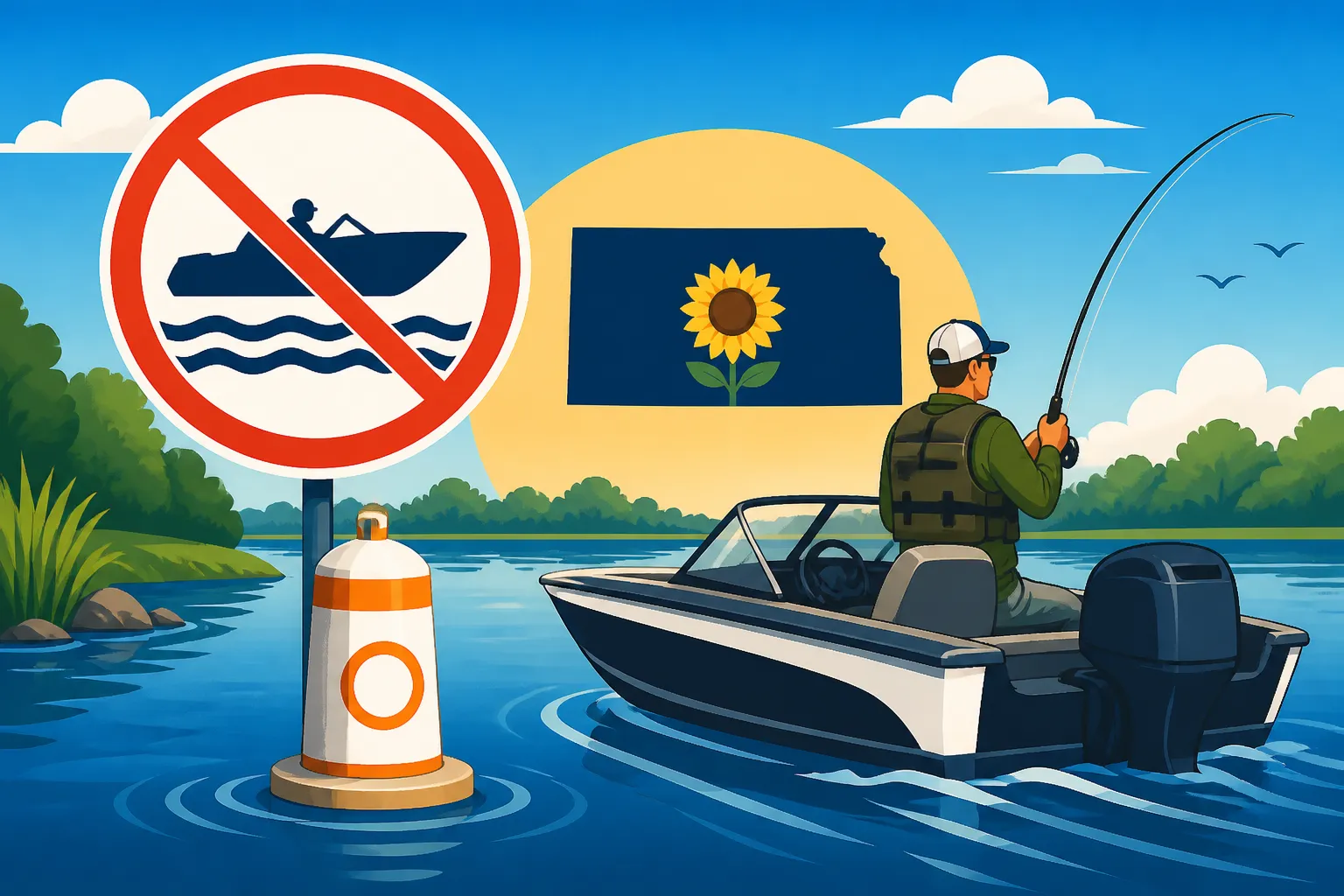
Kansas uses clear and standardized markers to indicate no-wake zones. These are typically white buoys or signs with an orange circle containing a black symbol, often a motorboat with a wave coming off it, alongside text that explicitly states "NO WAKE" or "IDLE SPEED ONLY." Sometimes, a speed limit might be posted (e.g., "5 MPH") to reinforce the no-wake requirement.
It's vital to keep an eye out for these signs as you enter and exit different areas of a lake or river. Don't assume that because you've been in open water, the rules are consistent everywhere. For instance, the main body of Clinton Lake might allow higher speeds, but as you approach the marina or a specific cove, you'll undoubtedly see the no-wake markers. Ignorance of the signs is not an excuse. Investing in a good pair of polarized sunglasses, easily found on Amazon, can also help cut the glare and make it easier to spot these important markers, especially on bright, sunny days.
Operating Your Boat Correctly in a No-Wake Zone
Once you spot that "NO WAKE" sign, it’s time to immediately reduce your speed. The goal is to reach that minimum speed where your boat is still easily controllable but creates almost no wake. This often means coming completely off plane and dropping your engine RPMs significantly. For many boats, this will be just above an idle, enough to keep the propeller pushing water and allow for steering.
Here are a few tips for navigating these zones:
- Anticipate: Look ahead for buoys and signs. Don't wait until you're right on top of a marker to adjust your speed. Smooth, gradual deceleration is better for your boat and for those around you.
- Observe your wake: Look behind your boat. Is there any white water? Are you pushing a V-shaped wave? If so, you need to slow down further. Get a feel for what "no wake" looks like for your particular vessel.
- Maintain steerage: While "slowest possible speed" is the rule, you still need to be able to control your boat effectively. Don't go so slow that you lose control, especially in currents or windy conditions.
- Be patient and courteous: These zones are often in congested areas. Expect to move slowly, and be mindful of other boaters, paddlers, and shore users. Your patience contributes to a safer, more pleasant experience for everyone. Using a small, precise electric trolling motor, many of which can be found on Amazon, can be incredibly helpful for maintaining exact no-wake speeds and maneuverability in tight quarters. Kansas Fishing License Rules for Kayak Anglers reminds us that all water users need to share space respectfully.
Consequences of Ignoring No-Wake Rules
While no-wake zones might feel like an inconvenience when you're eager to get to your favorite fishing spot or open up the throttle, ignoring them carries real consequences, both legally and ethically. It's not just about getting a ticket; it's about potentially harming others and the environment.
Penalties for Violating No-Wake Regulations
Kansas, like all states, takes its boating regulations seriously, and that includes adherence to no-wake zones. If you're caught violating these rules, the penalties can range from a citation and fine to more severe consequences, depending on the specifics of the infraction and if any damage or injury occurred. Enforcement officers, whether it's the Kansas Department of Wildlife, Parks and Tourism (KDWP) or local law enforcement, are often patrolling these sensitive areas, especially during peak boating seasons.
Fines can vary, but generally, they are significant enough to make you think twice about pushing past that no-wake buoy. Repeat offenses can lead to even higher penalties, and in some cases, your boating privileges could even be suspended. Remember, these officers are not just out to ruin your fun; they are ensuring the safety and ecological health of the waterways. It's part of their job, as outlined in Kansas Fishing Law Enforcement and Penalties. Always assume that these rules are actively enforced, because they usually are, particularly in popular fishing and recreation areas.
The Impact on Fellow Boaters and Anglers
Beyond the legal ramifications, ignoring no-wake zones has a direct and often immediate negative impact on everyone else on the water. Imagine you've finally found that perfect calm spot for some quiet crappie fishing at Hillsdale Lake, the water is glassy, and suddenly a boat speeds by, throwing a massive wake that bobs your boat around, snags your line, and spooks the fish. It's incredibly frustrating and disrespectful.
This disregard for rules can ruin another person's peaceful outing, compromise their safety, or even damage their equipment. Kayakers and canoeists, in particular, are extremely vulnerable to large wakes, which can easily swamp or capsize their vessels, turning a relaxing paddle into a dangerous situation. It also creates a general atmosphere of disrespect, where the actions of a few individuals diminish the enjoyment for the many who are following the rules. Being considerate on the water is just as important as on the road.
Environmental Damage and Community Relations
As we touched on earlier, repeated violations of no-wake zones contribute to significant environmental degradation. Shoreline erosion not only changes the landscape but can also impact water quality by stirring up sediment. This makes the water less clear, affecting aquatic plants and fish that rely on sunlight and clean conditions. Over time, consistent wake action can turn clear, healthy shallows into muddy, unproductive areas.
Furthermore, a lack of adherence to no-wake rules can strain relations between boaters and waterfront property owners. Many residential areas are located along no-wake zones precisely because homeowners want to protect their docks, shorelines, and their peaceful enjoyment of the water. When boaters ignore these rules, it can lead to complaints, increased patrols, and potentially even stricter regulations that affect everyone. By respecting no-wake zones, you're not just following a rule; you're actively contributing to the preservation of Kansas's beautiful waterways and fostering positive community relations between all who enjoy them.
Best Practices for Responsible Boating in Kansas
Being a responsible boater in Kansas goes beyond just knowing the rules; it’s about embracing a mindset of safety, courtesy, and environmental stewardship every time you launch your vessel. By adopting a few key best practices, you can ensure your time on the water is enjoyable for you and for everyone else.
Pre-Trip Planning and Education
Before you even leave your driveway, a little preparation can make a huge difference. Always check the local regulations for the specific body of water you plan to visit. Rules can vary from lake to lake, or even within different sections of the same reservoir. What applies at Cheney Reservoir Fishing Guide might be slightly different than at Perry Lake Fishing Spots in Kansas. Look up maps, review KDWP publications, and if you're unsure, don't hesitate to ask local bait shop owners or marina staff. Many will have current information and tips for new areas.
Consider taking a boating safety course if you haven't already. These courses cover everything from navigation and collision avoidance to understanding weather patterns and Kansas-specific regulations. It's an investment in your safety and knowledge that pays dividends. Even experienced boaters can benefit from a refresher course every few years. Knowing your boat, knowing the rules, and knowing the waterway are your best lines of defense against accidents and infractions.
Practicing Courtesy and Situational Awareness
On the water, just like on the road, courtesy goes a long way. Always be aware of your surroundings: other boats, swimmers, paddlers, anglers, and shorelines. Don't assume others see you or know your intentions. Make eye contact, use appropriate signaling, and be prepared to yield when necessary. For instance, if you're coming up to a group of kayakers, it's not enough to simply stay outside a no-wake zone; you should still slow down and give them plenty of space.
Maintain a safe distance from other vessels and people, and operate at appropriate speeds for the conditions. If it's a busy weekend and the lake is crowded, even outside a designated no-wake zone, it might be courteous and safer to reduce your speed to minimize wake and maintain control. Remember that you are sharing the water, and everyone deserves to enjoy it safely. This kind of awareness extends to keeping your boat's safety equipment up to snuff, as detailed in Kansas Boating Safety Equipment Requirements.
Environmental Stewardship on the Water
Finally, responsible boating means being a good steward of Kansas's natural resources. Beyond observing no-wake zones to prevent erosion and protect habitats, practice "leave no trace" principles. Pack out everything you pack in, including fishing line, bait containers, and food wrappers. Never dispose of trash in the water.
Be mindful of invasive species. Before launching and after retrieving your boat, always "Clean, Drain, Dry" your vessel to prevent the spread of unwanted plants and animals from one waterway to another. This means cleaning off any visible mud, plants, or organisms; draining all water from your boat, livewell, and bilge; and drying everything thoroughly before your next outing. These simple actions ensure that Kansas's beautiful lakes and rivers remain healthy and vibrant for generations of anglers and boaters to come. When you buy gear, whether it's from Bass Pro Shops or Amazon, consider reusable options and be prepared to manage any waste responsibly on your trip.
| Zone Type | Description | Required Action | Why It Matters |
|---|---|---|---|
| No-Wake Zone | Clearly marked with signs or buoys, or within a specific distance (e.g., 200 ft) of docks, swimmers, etc. | Operate at the slowest possible speed to maintain steerage and headway, producing minimal to no wake. | Crucial for safety near people and structures, prevents shoreline erosion, and protects sensitive shallow habitats and nesting wildlife. |
| High Traffic Areas | Boat ramps, marinas, fueling docks, congested narrow channels. | Often implicitly or explicitly no-wake; always exercise extreme caution, slow speed, and high awareness. | Reduces collision risk during critical maneuvers, minimizes frustration and waiting times, and ensures a safer environment for all users. |
| Open Water | Main bodies of lakes or wide river sections without specific restrictions. | Follow posted speed limits (if any); operate at a safe speed for conditions and vessel, mindful of other users. | Allows for higher speeds for travel and recreation, but still requires awareness to avoid creating hazardous wakes for distant or smaller crafts. |
| Unmarked Areas | Any part of a waterway where specific signs are not present, but common sense dictates caution. | Exercise good judgment; if in doubt about potential impact, slow down. | Promotes general boater safety and courtesy, particularly near unseen hazards, other small boats, or if encountering unexpected wildlife. |
Disclaimer
This article is for general informational purposes only and does not constitute professional advice. Laws, prices and regulations vary by location and change over time. Consult a qualified professional for guidance on your specific situation.