Best Marine Radio for Kansas Boaters
There's nothing quite like the open water of a Kansas reservoir, the gentle hum of your boat, and the anticipation of a good catch. But as beautiful as our lakes are, they can also be unpredictable, and cell service isn't always reliable when you're miles from shore. This comprehensive guide is here to walk you through why a marine radio isn't just a fancy gadget, but a crucial safety device for any Kansas boater, helping you choose the best one and understand how to use it effectively.
Why a Marine Radio is Essential for Kansas Boaters
When you're out on a sprawling body of water like Milford Lake or Cheney Reservoir, the serene environment can quickly turn challenging. A marine radio provides a dedicated, reliable line of communication that your cell phone simply can't always match, especially when safety is on the line. It's about preparedness, and for Kansas anglers, it's a vital piece of your on-the-water toolkit.
Staying Safe on Large Reservoirs
Imagine this: you're enjoying a fantastic day of fishing on Wilson Lake, miles from the nearest ramp, when suddenly the sky darkens, and a severe thunderstorm rolls in faster than you anticipated. Or perhaps your engine sputters and dies, leaving you adrift. In these moments, a cell phone might be useless due to poor signal strength, a dead battery, or simply being too wet to operate reliably.
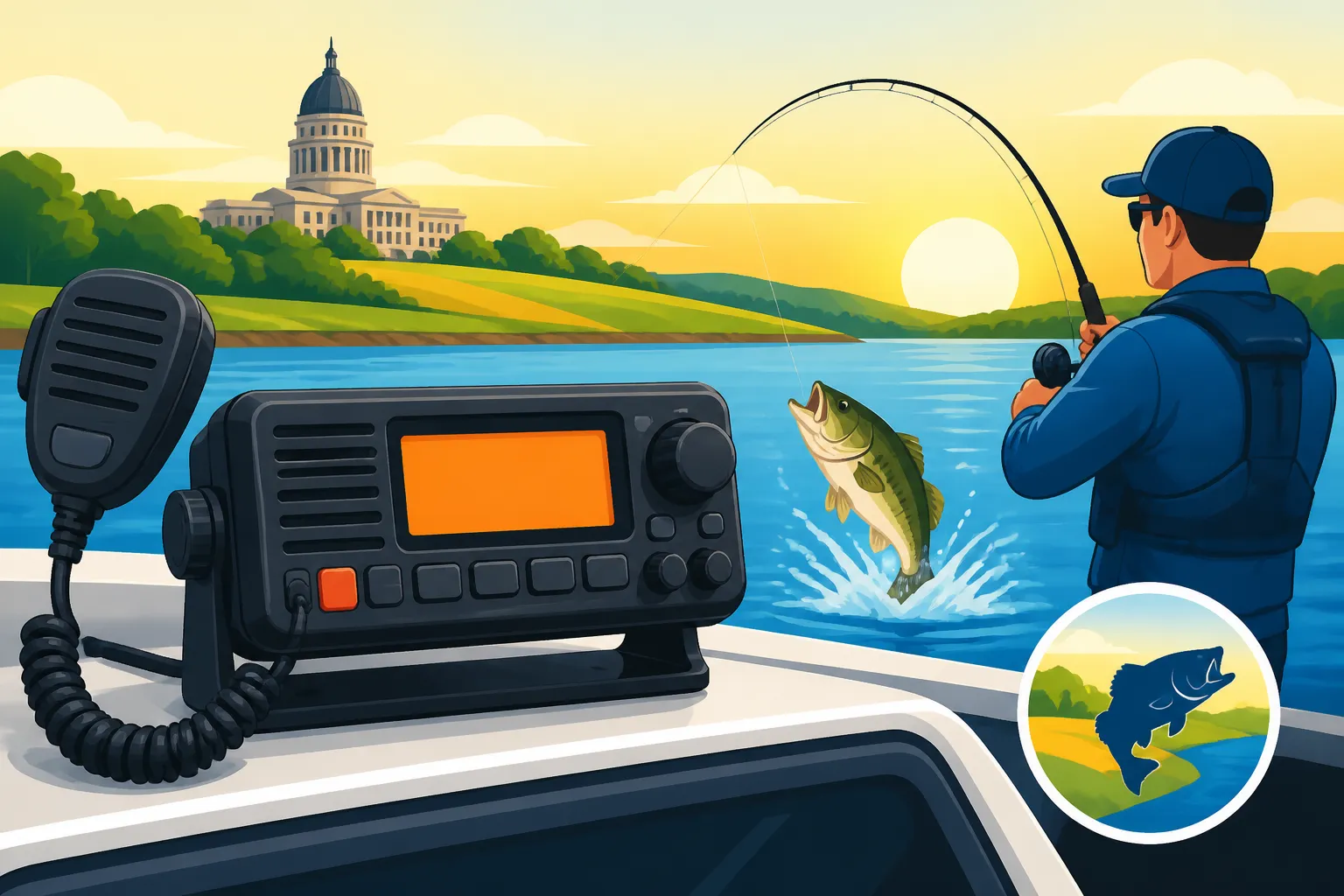
A marine radio, designed specifically for the maritime environment, offers a consistent means to call for help. These radios are built to withstand the elements, often being waterproof and robust. They operate on dedicated VHF (Very High Frequency) channels, which are monitored by other boaters and, critically, by the U.S. Coast Guard and local law enforcement like the Kansas Department of Wildlife and Parks (KDWP) or county sheriff's departments. This means your distress call has a much higher chance of being heard and acted upon promptly, potentially turning a critical situation into a manageable one. Think of it as a direct line to assistance, bypassing the often-flaky cell towers that dot our Kansas landscape.
Communication with Fellow Anglers and Emergency Services
Beyond emergencies, a marine radio enhances your overall boating experience through improved communication. If you're out with a convoy of boats, perhaps on a multi-boat fishing trip targeting walleye or catfish, a marine radio allows for instant, clear communication with your buddies. No need to yell across the water, try to dial a phone number with wet hands, or worry about dropped calls. You can coordinate fishing spots, share bite reports, or simply check in with each other efficiently. This kind of immediate group communication is invaluable for safety and strategy.
More importantly, in a true emergency, a marine radio allows you to directly contact marine emergency services on Channel 16, the international distress, safety, and calling frequency. This isn't just about the Coast Guard; in landlocked Kansas, this often means directly reaching local KDWP rangers or county sheriff patrols who monitor these channels. Imagine you have a medical emergency on board, or you've spotted another boater in distress. Being able to quickly and clearly broadcast your location and situation can shave precious minutes off response times. This dedicated communication pathway is a fundamental difference from relying on a cell phone, which may require multiple steps to reach the right authority. You'll also want to be familiar with general Kansas Boating Safety Equipment Requirements to ensure you're fully prepared for any outing.
Understanding Different Types of Marine Radios
Just like fishing rods come in different powers and actions, marine radios have various forms, each suited for different needs and vessel types. Knowing the distinctions will help you pick the right tool for your Kansas fishing adventures.
Fixed-Mount VHF Radios: Power and Range
These are the workhorses of marine communication, permanently installed in your boat. Fixed-mount radios typically boast a higher power output, usually 25 watts, which translates to significantly greater range compared to their handheld counterparts. This extended range is crucial when you're traversing the vast expanses of our largest lakes, like Milford Lake, which is the largest lake in Kansas, or Clinton Lake. A better range means your signal can cut through more interference and reach further, making it ideal for those long days chasing fish across the reservoir.
The primary benefit of a fixed-mount unit is its dedicated power source from your boat's electrical system, meaning you don't have to worry about batteries dying. They also connect to an external antenna, which can be mounted high on your boat, further maximizing signal reach by getting above obstructions. Many fixed-mount radios also come with Digital Selective Calling (DSC) capabilities, which we'll discuss in detail shortly, offering an advanced layer of safety. The downside? They're not portable, so if you leave your main boat for a smaller craft or a paddleboat, you'll be without it. For serious anglers spending a lot of time on big water in a proper fishing boat, this is almost always the go-to option. For insights on larger vessels, check out our guide on Best Boats for Kansas Reservoirs.
Handheld VHF Radios: Portability and Backup
Handheld VHF radios, on the other hand, are the nimble, versatile members of the marine radio family. They are battery-powered and compact, making them incredibly portable. While their power output is lower (typically 5 or 6 watts), they are perfect for smaller vessels like kayaks, canoes, or even as a crucial backup device on a larger boat. If you're planning a trip where you might be Kansas Kayak Fishing Gear Guide on a smaller state lake or a river, a handheld radio could be your primary means of communication.
The portability factor is huge: you can take it with you if you have to abandon your vessel, use it when fishing from shore in an emergency, or simply carry it in your tackle bag. Many handheld models are designed to float and are highly waterproof, which is a major plus when fishing in wet conditions. The trade-off is battery life, which needs to be managed, and a more limited range due to lower power and smaller, integrated antennas. However, for sheer convenience and as an essential safety net, a good handheld VHF radio is hard to beat, particularly if you're not always in a larger boat.
Digital Selective Calling DSC: Your Lifeline
This is where marine radios truly pull ahead of basic two-way radios or cell phones. Digital Selective Calling, or DSC, is a global standard for sending and receiving distress alerts and other safety communications. Essentially, it allows your marine radio to act as a digital lifeline. When properly connected to a GPS receiver and programmed with a unique Maritime Mobile Service Identity (MMSI) number, a DSC-equipped radio can send an automatic distress signal that includes your precise GPS coordinates, vessel identity, and the nature of your emergency.
Imagine hitting the distress button, and within seconds, your exact location and boat ID are broadcast to every DSC-equipped vessel and shore station within range. This significantly speeds up rescue efforts, as responders immediately know where to look. In Kansas, while the Coast Guard may not be patrolling every reservoir, their rescue coordination center still receives these signals, and they can relay the information to the nearest KDWP or county sheriff patrol. Even if you're simply trying to call a friend with a DSC radio, you can send a "private" digital call that will alert their radio directly. This technology is a game-changer for safety on the water and is strongly recommended for any boater, regardless of the size of their vessel. Many new fixed-mount radios and even some higher-end handheld units now come with integrated GPS, making DSC setup simpler.
Key Features to Look for in a Kansas Marine Radio
When you're ready to invest in a marine radio, there are several features that will make a big difference in its performance, usability, and ultimately, your safety on Kansas waters. Don't just grab the first one you see at Bass Pro Shops or on Amazon; do a little research to ensure it fits your specific fishing needs.
Power Output and Range Considerations
For fixed-mount radios, the standard power output is 25 watts. This is the maximum allowed and provides the best possible range. However, radio range isn't just about watts; it's also about line-of-sight. The higher your antenna, the further your signal can travel. On big Kansas reservoirs, where you might be navigating around large points or across vast open stretches, that extra wattage and a properly mounted antenna can be critical.
Handheld radios typically operate at 5 or 6 watts, which is perfectly adequate for shorter distances or as a backup. Some handhelds allow you to switch between high and low power (e.g., 1 watt for battery saving or short-range communication). Consider the typical distances you cover and the terrain of your favorite fishing spots. If you spend most of your time on smaller community lakes or near the bank, a handheld might suffice. But if you're venturing across Milford Lake Fishing Guide or Cheney Reservoir Fishing Guide, a 25-watt fixed-mount unit will offer peace of mind.
Waterproofing and Durability
Let's face it, Kansas fishing means being around water, whether it's a calm morning or a choppy afternoon. Your marine radio needs to be able to handle splashes, rain, and even a dunking. Look for models with an IPX rating. An IPX7 rating means the device can withstand immersion in 1 meter of water for 30 minutes, which is a good baseline. An IPX8 rating offers even better protection. Many handheld units are also designed to float, so if you drop it overboard, it won't sink to the bottom of the lake, making retrieval much easier.
Durability also extends to the physical construction. These radios should be built to withstand bumps and drops that can happen in a boat environment. Check for sturdy casings and well-sealed buttons. There’s nothing worse than having your emergency communication device fail because it couldn't handle the realities of a fishing trip.
GPS Integration and MMSI Programming
For DSC to be truly effective, your radio needs to know your location. Many modern fixed-mount and some handheld marine radios come with built-in GPS receivers. This is a huge advantage because it means your distress calls will automatically include your precise coordinates. If your radio doesn't have integrated GPS, you'll need to connect it to an external GPS unit on your boat, which can add complexity to the installation.
Once you have a DSC-capable radio, the next step is obtaining and programming your MMSI number. This is a unique nine-digit identification number for your vessel, similar to a phone number. You can obtain an MMSI number from various maritime organizations; typically, for recreational boaters, it's a simple online application process through organizations that are authorized to issue them. Once you have it, you'll program it into your radio. This step is non-negotiable for maximizing your marine radio's safety features.
Battery Life and Charging Options (for handhelds)
If you opt for a handheld marine radio, battery life is a crucial consideration. A long day on the water means you need a battery that can keep up. Look for models with extended battery life or the option to use standard alkaline batteries as a backup to the rechargeable pack. Many handhelds come with a charging cradle or a 12V DC charger, allowing you to charge it from your boat's power supply or vehicle.
Some handheld radios feature a "battery save" mode, which can extend usage by reducing power output when not actively transmitting. Always make it a habit to fully charge your handheld before each trip and carry a spare power source if possible, especially on multi-day outings.
Installation and Maintenance Tips for Your Marine Radio
Getting the right marine radio is only half the battle; proper installation and routine maintenance are equally important to ensure it performs when you need it most. This isn't overly complicated, but a little attention to detail can make a big difference.
Proper Antenna Selection and Mounting
For a fixed-mount VHF radio, your antenna is just as important as the radio itself, if not more so. A high-quality antenna, properly installed, will drastically improve your range and clarity. The general rule of thumb is "the higher, the better" because VHF signals are line-of-sight. For most Kansas fishing boats, a 3 to 8-foot fiberglass whip antenna is common. Mount it in a location that provides the clearest, highest possible line of sight, away from other electronics that might cause interference.
Ensure the antenna is securely mounted and the coaxial cable running from the antenna to the radio is properly routed and protected from kinks or damage. Poor cable connections or a damaged antenna can severely degrade performance, turning your powerful 25-watt radio into little more than a paperweight. If you're unsure, it's always wise to consult with an expert or read up on Best Rod Holders for Kansas Boats which sometimes touches on mounting equipment.
Routine Checks and Battery Care
Like any vital piece of equipment, your marine radio benefits from routine checks. Before each outing, especially on longer trips, do a quick radio check. This involves contacting another boater or using a weather radio channel to ensure your transmission and reception are clear. Never use Channel 16 for a radio check unless it's an emergency; instead, use a working channel like 68, 69, or 71.
For handheld radios, always ensure the battery is fully charged. If your handheld uses a rechargeable battery pack, follow the manufacturer's recommendations for charging and storage to prolong its life. Clean the contacts periodically to ensure a good connection. For fixed-mount radios, periodically check all cable connections for corrosion or looseness, especially where power cables connect to your boat's electrical system. This vigilance can prevent frustrating failures when you're far from shore. Don't forget other crucial maintenance, like how to properly How to Winterize a Boat in Kansas.
Getting Your MMSI and Understanding Channel Usage
We touched on the MMSI, but it bears repeating: if your radio has DSC, get an MMSI number and program it! It's an easy step that massively upgrades your safety. You can usually apply for one online through services like BoatUS or the FCC, depending on your boating activities. Once assigned, you typically only have one chance to program it into your radio, so follow the instructions carefully.
Understanding basic channel usage is also critical. Channel 16 is for distress and hailing only. Once you've made contact, immediately switch to a working channel (like 68, 69, 71, or 72) to continue your conversation. Channel 9 is often used for recreational calling in some areas, but 16 remains the universal hailing channel. Weather channels are also vital, providing continuous broadcasts of marine weather forecasts and warnings, which can be invaluable when unexpected Kansas storms brew. Familiarize yourself with the main channels in use on Kansas waters to communicate effectively and responsibly. Knowing these rules is just as important as understanding Kansas Fishing Law Enforcement and Penalties or Kansas Fishing Regulations Explained.
Marine Radio Features Comparison Table
To help you visualize the differences between fixed-mount and handheld marine radios, here's a quick comparison:
| Feature | Fixed-Mount VHF Radio | Handheld VHF Radio |
|---|---|---|
| Power Output | Typically 25 watts (max allowed) | Typically 5-6 watts (often adjustable to 1 watt) |
| Range | Superior (due to higher power & external antenna) | More limited (due to lower power & integrated antenna) |
| Power Source | Boat's 12V electrical system (constant power) | Rechargeable battery pack (requires charging) |
| Installation | Permanent, requires mounting and wiring | Portable, no installation needed |
| Antenna | External, can be mounted high for best line-of-sight | Integrated, smaller, limits range |
| DSC Capability | Common, often with integrated GPS | Available on higher-end models, sometimes with GPS |
| Waterproofing | Often IPX7/IPX8 rated | Often IPX7/IPX8 rated, many models float |
| Cost | Generally higher (due to power, features, installation) | Generally lower, good budget options available |
| Ideal Use | Larger boats, long distances, primary communication | Smaller boats (kayaks), backup, close-range use |
Remember, whether you choose a powerful fixed-mount unit or a versatile handheld, having a marine radio on board is a smart decision for any Kansas boater. It's a small investment that offers a huge return in terms of safety and peace of mind on the water.
Disclaimer
This article is for general informational purposes only and does not constitute professional advice. Laws, prices and regulations vary by location and change over time. Consult a qualified professional for guidance on your specific situation.