Best Ice Shelter for Windy Days
There's nothing quite like the crisp air of a Kansas winter day, especially when you're out on the ice, but let's be honest, that crisp air can turn into a relentless, bone-chilling gale in a heartbeat. Battling fierce winds while trying to enjoy a peaceful day of ice fishing is a frustration many of us know all too well. This guide is dedicated to helping you choose the best ice shelter designed to stand strong against those blustery Kansas winds, keeping you warm and focused on the fish.
Understanding the Wind Challenge on Kansas Ice
Ice fishing in Kansas can be incredibly rewarding, but it often comes with a significant challenge: the wind. Unlike fishing from shore or a boat in summer, there's often little to no natural protection from wind out on a frozen lake or reservoir. Those wide-open expanses, from Milford Lake Fishing Guide to Cheney Reservoir Fishing Guide, become massive wind tunnels, especially when cold fronts sweep through.
Why Kansas Winds Are So Brutal on the Ice
Kansas is known for its wide-open prairies and often unpredictable weather patterns. On the ice, this translates to winds that aren't just breezy, but can be sustained and gusty, pushing wind chill factors into dangerously low territory. This isn't just about comfort; it's about safety, as prolonged exposure to wind can quickly lead to frostbite and hypothermia, even on days when the air temperature seems manageable. It also makes simple tasks like rigging a line or tending to a hole incredibly frustrating, as gear gets blown around and lines tangle.
Imagine setting up your gear on a calm morning, only for the wind to pick up rapidly by midday, turning your peaceful outing into a scramble to keep your hat on and your tackle box from sliding across the ice. It's not just the discomfort; it's the added stress and the fact that a strong gust can sometimes damage poorly constructed or improperly anchored shelters. You need a shelter that can withstand these forces, providing a stable, warm haven regardless of what the weather throws at you.
Impact on Comfort and Safety
Beyond the sheer annoyance of having to chase your bait container across the ice, wind significantly impacts your ability to stay warm and comfortable. A good ice shelter acts as a windbreak, reducing the effective wind chill and making your portable heater much more efficient. Without proper wind protection, even a powerful heater struggles to keep the interior of your shelter warm, as heat is constantly being stripped away.
Consider a typical Kansas winter day where the air temperature might be 20 degrees Fahrenheit, but a 20 mph wind makes it feel like 0 degrees. Inside a wind-resistant shelter, that wind chill is eliminated, allowing your body to retain heat and your heater to do its job. This improved comfort directly translates to longer, more enjoyable fishing sessions. It also drastically reduces the risk of cold-related injuries, making your ice fishing experience safer. Always remember your Kansas Ice Fishing Safety Tips before heading out.
What Makes an Ice Shelter Truly Wind-Resistant?
When you're shopping for an ice shelter, especially with Kansas's notorious winds in mind, you need to look beyond just size and price. Specific design features and materials are crucial for enduring those blustery days.
Durable Fabric and Frame Construction
The foundation of a wind-resistant shelter lies in its materials. The fabric needs to be tough, tear-resistant, and, ideally, insulated. Look for heavy-denier fabrics like 600D or 900D, as these are less prone to flapping, tearing, and general wear and tear in high winds. Insulated fabric, often a multi-layer design, provides a dual benefit: it helps retain heat, reducing your heating costs, and it adds stiffness to the walls, making them less susceptible to bowing or collapsing under wind pressure.
Equally important is the frame. Whether it's a hub-style shelter with fiberglass or aluminum poles, or a flip-over with an aluminum frame, the joints and connections need to be robust. Flimsy plastic hubs or weak pole connections are often the first points of failure in high winds. Reinforced stitching, heavy-duty zippers, and strong pole pockets are all indicators of a shelter built to last against the elements. If you can, try to feel the stability of the frame in a store like Bass Pro Shops before purchasing.
Effective Anchoring Systems
Even the strongest shelter fabric and frame are useless if the shelter isn't properly anchored. This is arguably the most critical component for wind resistance. Most ice shelters come with some form of ice anchors, but their quality can vary widely. For Kansas winds, you'll want heavy-duty, screw-in ice anchors, preferably with larger threads for better grip. Four anchors are usually standard, but in very windy conditions, having extra anchor points and using six or even eight can make a huge difference.
Some shelters integrate anchor points directly into the skirt or corners, while others rely on guy ropes. A good system will allow you to secure the shelter tightly to the ice, minimizing any lift or lateral movement. Always carry a drill adapter for your anchors, as hand-screwing them into thick ice, especially when your hands are cold, is a chore nobody wants. Consider picking up a spare set of quality anchors, as they can sometimes be lost or damaged, ensuring you're never caught off guard. You might find a wide selection of heavy-duty anchoring systems at your local Bass Pro Shops, or perhaps browse options on Amazon for convenient delivery.
Choosing the Right Shelter Style for Gusty Conditions
Different ice shelter designs offer varying degrees of wind resistance and convenience. Understanding the pros and cons of each style will help you make an informed decision for those notoriously windy Kansas days.
Hub-Style Shelters (Pop-ups)
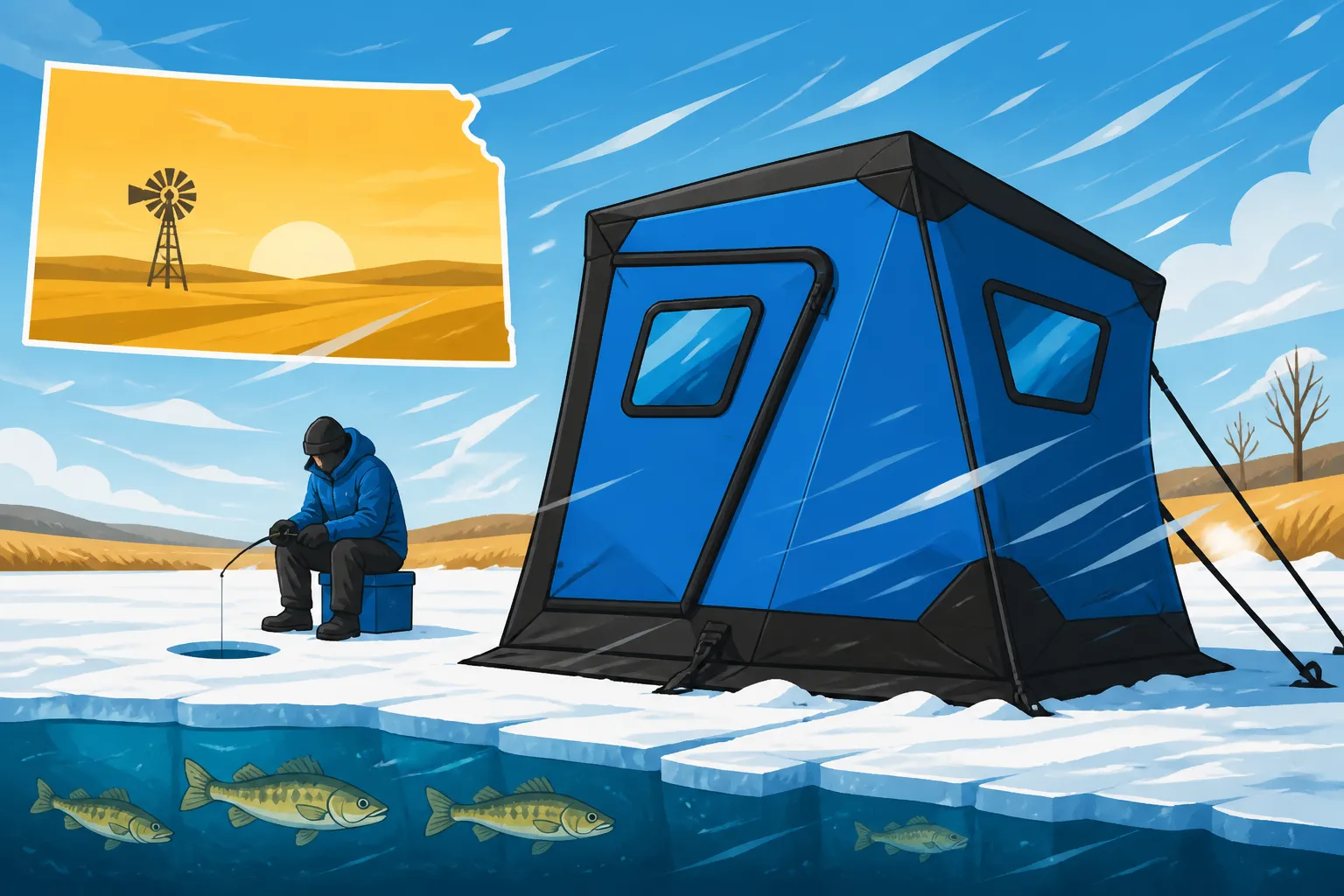
Hub-style shelters, often referred to as pop-ups, are incredibly popular due to their spacious interiors and relatively quick setup. They typically feature a cube or rectangular shape with fiberglass poles that "pop out" to form the structure. For windy conditions, the key is stability and anchoring.
- Pros: Generally offer more interior space for their footprint, allowing multiple anglers and gear. Many are insulated, providing excellent warmth. When properly anchored at all corners and sometimes mid-points, they can be surprisingly stable. They are usually more affordable than flip-over models of comparable size.
- Cons: Require manual anchoring into the ice, which can be a chilly and time-consuming task in high winds. If not fully anchored, they can become kites. The fabric can flap significantly in strong gusts, creating noise and stress on the material.
- Wind Performance Tip: Always deploy all available anchors, starting with the windward side. Consider using extra guy ropes and anchors for maximum security. Look for models with a sturdy, reinforced skirt that lies flat on the ice, which can be covered with snow or ice shavings for an extra seal against drafts and wind lift. A good quality hub shelter with robust materials, like those from trusted brands you might find at Bass Pro Shops, can perform admirably in all but the most extreme Kansas winds.
Flip-Over Shelters (Sled-Style)
Flip-over shelters combine a sled base with a fabric top that "flips over" to create the shelter. They're designed for mobility and quick setup, making them a favorite for anglers who like to move between spots, checking Kansas Walleye Fishing Techniques or Kansas Crappie Fishing Techniques.
- Pros: Extremely fast to set up and take down, which is a huge advantage when the wind is whipping and you don't want to spend extra time exposed. The heavy sled base inherently provides more stability than a free-standing hub, making them less prone to being blown away before anchoring. Many models come with seating already integrated.
- Cons: Can be heavier and bulkier to transport than pop-ups (though the sled makes towing easier). Less interior space for a given footprint compared to hub shelters. Can be more expensive.
- Wind Performance Tip: While the sled provides a good base, you still need to anchor the corners or sides to prevent shifting or lifting in strong gusts. The lower profile of some flip-overs can also make them less susceptible to high winds than taller hub shelters. However, ensure the fabric attaches securely to the frame to prevent flapping.
Hard-Sided Shelters (Permanent/Semi-Permanent)
For those who fish frequently in one location or have access to private property, a hard-sided portable or semi-permanent shanty offers the ultimate wind protection. These are often custom-built or purchased as heavier, insulated units.
- Pros: Superior wind resistance and insulation. Rock-solid stability, often requiring minimal anchoring once in place. Offer a more comfortable, enclosed environment, much like a tiny cabin on the ice.
- Cons: Very heavy and difficult to transport, usually requiring a truck, ATV, or snowmobile and a dedicated sled. Long setup time if not left in place. Much higher cost.
- Wind Performance Tip: While less of a concern than with fabric shelters, ensure the structure is well-built and any doors or windows seal tightly. These shelters are often equipped with heavy-duty anchors or runners that freeze into the ice, providing unmatched stability. They are the true fortresses against extreme Kansas winter conditions.
Setting Up Your Fortress: Tips for Maximum Wind Resistance
Having the right ice shelter is only half the battle; knowing how to set it up correctly is equally crucial for defying those Kansas winds. Proper deployment and anchoring can turn a good shelter into an impenetrable fortress.
Strategic Placement on the Ice
Believe it or not, where you place your shelter can significantly impact its wind resistance. Before you even unpack, take a moment to observe the wind direction and look for any natural windbreaks, however subtle. This might be a slight rise in the terrain, a snowdrift, or even the bank of the lake if you're fishing close to shore. While open ice offers little protection, even a slight indentation or cluster of existing structures can reduce the direct force of the wind.
When possible, orient your shelter with the narrowest side facing directly into the wind. This presents the smallest profile to the wind, reducing the surface area for the wind to push against. Avoid placing your shelter parallel to the wind, as this exposes the largest side, making it more vulnerable to gusts and increasing the risk of it being lifted or shifted. If you can find a spot that offers even a minimal lee side, take it. And always check the How Thick Does Ice Need to Be to Fish? before venturing out.
Proper Anchoring Techniques
This cannot be stressed enough: good anchoring is paramount. Skimping on anchors is a recipe for disaster on a windy Kansas day.
- Start with the Windward Side: Always begin anchoring on the side of your shelter that's facing directly into the wind. This immediately helps secure the most vulnerable side and prevents the shelter from blowing away while you're still working.
- Use All Available Anchor Points: Most shelters come with four anchor points, one at each corner. For windy conditions, utilize all of them. If your shelter has additional tie-down loops along the sides, use those too. The more points of contact you have with the ice, the more distributed the stress from the wind will be.
- Screw-In Anchors are Your Best Friend: Forget about tent stakes or thin spikes. You need robust, screw-in ice anchors. A power drill with an anchor adapter is a game-changer, making quick work of driving these into the ice, even with cold hands.
- Angle Your Anchors: Don't just screw anchors straight down. Angle them slightly away from the shelter. This creates a stronger hold and helps resist outward pulling forces from the wind.
- Secure the Skirt: Once the main structure is anchored, ensure the fabric skirt around the base of your shelter is pressed firmly against the ice. You can shovel snow or ice chips onto the skirt to create a seal, preventing drafts and, more importantly, stopping wind from getting underneath the shelter and lifting it. This "snow seal" also significantly improves interior warmth.
- Check Periodically: Strong winds can loosen anchors over time. It's a good practice to periodically check your anchors throughout the day, especially if the wind direction or intensity changes. Re-tighten any that feel loose.
By diligently following these setup tips, you can transform your ice shelter into a secure and comfortable haven, allowing you to focus on the Fish You Can Catch Ice Fishing in Kansas rather than battling the elements.
Essential Features and Accessories for Windy Conditions
Beyond the shelter itself, certain features and accessories can make a huge difference in your ability to fish comfortably and safely on windy Kansas days. Don't underestimate the power of these additions.
Integrated Seating and Floor Systems
While some anglers prefer to bring their own chairs, shelters with integrated seating or a solid floor system offer advantages in windy conditions. Built-in benches or swivel seats in flip-over models provide stable seating that won't blow away or tip over. A solid floor or heavy-duty fabric floor in a hub shelter helps keep your feet off the cold ice and prevents gear from sliding around. It also creates a more sealed environment, keeping wind-driven snow and drafts out.
Some premium hub shelters now come with insulated floor systems or accessories that lay down to cover the ice, effectively turning your shelter into a warmer, more self-contained unit. This is especially helpful if you're planning on staying out all day or overnight, as it significantly enhances comfort and warmth, particularly when combined with a reliable portable heater.
Enhanced Insulation and Ventilation
For sustained warmth against cold Kansas winds, insulation is key. Many modern shelters feature multi-layer insulated fabric, often with a dark interior to absorb solar heat. This insulation not only keeps the cold out but also makes your heater much more efficient, saving on propane or fuel. While the goal is warmth, proper ventilation is still crucial, especially when using a propane heater. Look for shelters with adjustable vents located high up to allow condensation and carbon monoxide to escape safely.
Effective ventilation ensures that fresh air can circulate without creating a draft or compromising the overall warmth of the shelter. This balance between insulation and ventilation is critical for both comfort and safety. You can find many well-insulated models on Amazon or at outdoor retailers.
Lighting and Visibility Features
Even on cloudy, windy days, good lighting inside your shelter can improve visibility and safety. LED lighting strips, battery-operated lanterns, or headlamps are essential for rigging lines, tying knots, and simply seeing what you're doing. Some shelters come with built-in LED lighting systems.
For safety, especially if you're fishing near active snowmobile or ATV trails, consider adding reflective tape or flags to the exterior of your shelter, particularly if fishing at night or in low visibility conditions. Being seen is just as important as staying warm and comfortable.
| Shelter Type | Wind Resistance (Anchored) | Portability | Setup Time | Interior Space | Ideal Scenario |
|---|---|---|---|---|---|
| Hub (Pop-up) | Good | High | Moderate | High | Group fishing, stationary for extended periods |
| Flip-Over | Very Good | Moderate | Fast | Moderate | Mobile anglers, solo or duo, quick moves |
| Hard-Sided | Excellent | Low | Slow | Variable | Fixed location, ultimate comfort & protection |
Maintenance and Care for Longevity
Investing in a good ice shelter for windy Kansas days means you'll want it to last season after season. Proper care and maintenance are crucial, especially for shelters that face harsh conditions.
Cleaning and Drying Your Shelter
After each use, especially if it's been exposed to snow, slush, or mud, it's vital to properly clean your shelter. A simple wipe-down of interior and exterior surfaces with a damp cloth can remove dirt and grime. Pay special attention to zippers and fabric seams, ensuring no debris is lodged there, which could lead to wear or tearing.
The most critical step is thoroughly drying your shelter before packing it away. If you store a damp shelter, even for a short period, it's highly susceptible to mold and mildew growth. This not only creates an unpleasant smell but can also severely degrade the fabric, reducing its lifespan and compromising its structural integrity. Hang it in a garage or basement, or even set it up in your yard on a dry, sunny day until every surface is completely dry. This will ensure your shelter is ready for your next trip, whether it's for Kansas Trout Permit Cost and Season or late-season walleye.
Inspecting for Wear and Tear
Before and after each ice fishing season, take the time to give your shelter a thorough inspection. Check the fabric for any small tears, punctures, or frayed areas, particularly around anchor points and zippers. Small holes can be patched relatively easily with repair kits designed for outdoor gear, preventing them from becoming larger problems in windy conditions.
Examine the frame poles for any cracks, bends, or signs of stress. Check all the hub connections and pole joints for looseness or damage. Make sure zippers run smoothly and don't snag. Addressing minor issues promptly can prevent major malfunctions out on the ice. Replacing a single pole section is far easier and cheaper than buying a whole new shelter. Many manufacturers offer replacement parts, or you can find universal repair kits on Amazon.
Proper Storage Techniques
When the ice fishing season is over, proper off-season storage is key to extending your shelter's life.
- Clean and Dry Completely: As mentioned, this is non-negotiable.
- Fold Neatly: Follow the manufacturer's instructions for folding and packing your shelter. Crumpling it haphazardly can put undue stress on the fabric and frame, leading to premature wear.
- Store in a Cool, Dry Place: Avoid storing your shelter in extreme temperatures, such as a hot attic or a damp basement. A garage, shed, or climate-controlled storage unit is ideal.
- Protect from Pests: Mice and other critters love to chew through fabric, especially if there's any residual food scent. Store your shelter in its bag, and consider placing it inside a larger, airtight container if pests are an issue in your storage area.
By taking these steps, your ice shelter will be a reliable companion for many winters to come, keeping you warm and comfortable as you explore Kansas Fishing Seasons Guide on the ice.
Disclaimer
This article is for general informational purposes only and does not constitute professional advice. Laws, prices and regulations vary by location and change over time. Consult a qualified professional for guidance on your specific situation.