Kansas Ice Fishing License Requirements
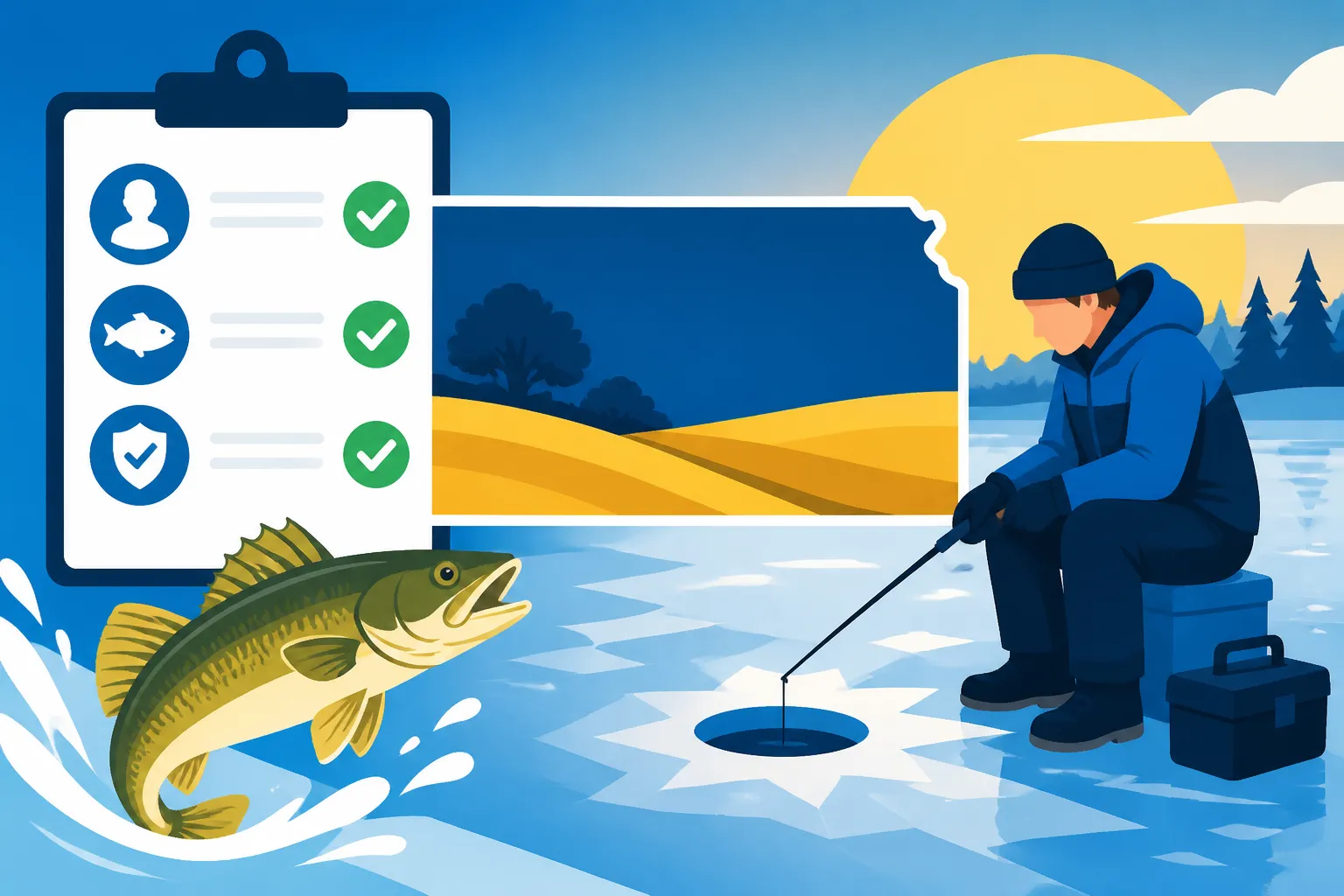
There’s nothing quite like the crisp, quiet solitude of ice fishing in Kansas. Bundled up, hunkered down over a freshly drilled hole, waiting for that subtle tap… it’s pure magic. But before you even think about setting up your portable shelter or dropping a jig, there's one crucial step you absolutely cannot skip: understanding the Kansas ice fishing license requirements. Many folks get confused about whether a standard fishing license covers ice fishing, or if there are special permits needed for winter trout. This guide will clear up all those nagging questions, ensuring your next frosty outing is legal and stress-free.
Understanding Kansas Fishing License Basics for Ice Anglers
Just like any other type of angling in Kansas, ice fishing comes with its own set of rules, and topping that list is having the proper fishing license. It’s not a separate "ice fishing license," per se, but rather your standard Kansas fishing license that covers all legal fishing methods, including when the lakes freeze over. However, there are nuances and specific additions, like the trout permit, that frequently trip up even experienced anglers.
Who Needs a License for Ice Fishing in Kansas?
The simple truth is, if you're 16 years old or older and you're dropping a line into public waters in Kansas, you need a valid fishing license. This rule applies whether the water is liquid or solid. There's no special exemption just because the thermometer dips below freezing. The Kansas Department of Wildlife and Parks (KDWP) uses license sales to fund critical conservation efforts, fish stocking programs, and maintain public access areas, so it's all for a good cause!
Imagine pulling up to a popular ice fishing spot like Hillsdale Lake or Clinton Lake. You've got your auger, your portable shack, and a bucket of minnows. Everything is perfect. Then, a KDWP game warden approaches. If you can't present a valid Kansas fishing license when asked, you could face fines and other penalties. It's a preventable headache that can quickly sour an otherwise perfect day on the ice. Don't let a simple oversight turn your peaceful winter escape into a costly mistake.
The age cutoff of 16 is pretty standard across many states, designed to encourage youth participation in fishing before requiring them to contribute financially. However, once that 16th birthday rolls around, you're officially in the adult angler category. This means planning ahead and making sure your license is in hand before you hit the ice. For a full breakdown of the general requirements, check out our comprehensive guide on the Kansas Fishing License Guide.
Types of Licenses Applicable to Winter Angling
When it comes to purchasing your license for winter angling, you've got a few options depending on your residency and how often you plan to fish. The most common choice for residents is the annual fishing license, which covers you from January 1st to December 31st of the calendar year. This is typically the most cost-effective option if you fish more than a handful of times, even if your primary interest is just a couple of ice fishing trips.
For those who are truly committed to the Kansas angling scene, or just prefer less hassle, the Kansas Five-Year Fishing License is a fantastic option. Not only does it offer some savings over buying five individual annual licenses, but it also means you don't have to remember to renew it every single year. Just buy it once, and you’re set for half a decade of fishing adventures, from spring crappie to winter walleye through the ice. It’s perfect for the angler who knows they’ll be hitting the water for years to come.
Nonresidents have slightly different options. While they can also opt for an annual license, many choose shorter-term permits if they're only visiting Kansas for a quick ice fishing excursion. The one-day and five-day nonresident fishing licenses are designed for this exact purpose, allowing visiting anglers to enjoy Kansas waters without committing to a full year. If you're coming from out-of-state for a dedicated ice fishing trip to try your luck at Webster Reservoir for walleye, these short-term licenses are often your best bet. You can find more details in our Kansas Nonresident Fishing License Guide.
Some anglers also prefer the convenience of a combination hunt/fish license. If you enjoy hunting ducks in the morning and then transitioning to ice fishing in the afternoon, this license simplifies things by covering both activities. Just make sure whatever license type you choose, it explicitly states "fishing" to ensure you're covered for your time on the hardwater. These various options ensure that there’s a suitable license for nearly every angler, regardless of their fishing frequency or residency status.
The Kansas Trout Permit for Ice Fishing
This is where many anglers, especially those new to ice fishing or specific winter fisheries, can get a bit confused. Kansas runs an active winter trout program, stocking various community lakes and state fishing lakes with rainbow trout. These stockings are specifically designed to provide exciting cold-weather fishing opportunities when other species might be less active. However, if you plan on targeting or possessing trout in these designated waters, your regular fishing license isn't enough – you'll need a special Kansas Trout Permit.
The trout permit is an add-on, a stamp that literally allows you to legally fish for and keep trout in designated areas during the official trout season, which typically runs from December 1st through March 31st. This timing aligns perfectly with the ice fishing season in Kansas. If you're out on a lake like Shawnee Mission Park Lake, which is a known winter trout stocking location, and you hook into a beautiful rainbow trout, you must have that permit in addition to your general fishing license. Failing to have one can result in fines, even if you release the fish.
It’s crucial to understand that not all waters require a trout permit. If you're ice fishing for crappie, walleye, or catfish on a lake that isn't designated as a trout water, your standard fishing license is all you need. The KDWP website provides a clear list of current trout stocking locations and schedules. Always check this list before heading out, especially if you hear whispers of fresh trout stockings! Getting your Kansas Trout Permit Guide is a smart move if you're planning on chasing those hard-fighting rainbows through the ice.
The cost of a trout permit is a small investment for the added opportunity it provides. For adult residents, the permit costs $14.50, and for youth, it’s $7. You can purchase it at the same locations you buy your regular fishing license. It's a small price to pay for the chance to catch a beautiful golden rainbow trout or a feisty traditional rainbow, which are often stocked in generous numbers to ensure a good catch rate. Just remember, it's about following the rules to protect those programs we all enjoy.
Specific Ice Fishing License Scenarios and Exemptions
While the general rule is "if you're 16 or older, get a license," Kansas law, like many states, has a few specific exemptions and scenarios that can sometimes be confusing. These exceptions are important to know, as they can save you time and money, or, if misunderstood, lead to an unexpected encounter with a game warden.
Age-Based Exemptions and Youth Anglers
One of the most heartwarming exemptions in Kansas fishing law is for our youngest anglers. Children under the age of 16 do not need a fishing license to fish in Kansas waters. This fantastic rule extends to ice fishing as well. It’s a wonderful way to introduce kids to the joys of the outdoors and the thrill of pulling a fish through the ice without any financial barrier for their parents.
So, if you're planning a family ice fishing trip to a community lake, your 10-year-old nephew or 14-year-old daughter can drop a line alongside you completely license-free. This exemption is not just about convenience; it’s a strategic move by the KDWP to foster a love for fishing in the next generation. We all want to see more kids putting down their screens and picking up a fishing rod, and this policy certainly helps. Just make sure they still abide by all other regulations, like creel and length limits – the fish don't care how old you are!
However, it's important to remember that this exemption has a hard cutoff. The moment a child turns 16, they are legally required to purchase a fishing license if they plan to continue fishing in Kansas. This transition can sometimes be overlooked, especially if a birthday falls in the middle of prime ice fishing season. It's a good idea to mark that birthday on the calendar and ensure their first license is ready to go. For more clarity on this, you can look up Do Kids Need a Fishing License in Kansas?.
This exemption is a gift to families and a boon for encouraging new anglers. Take advantage of it! Equip your young ones with a small ice fishing rod, some warm gear, and plenty of patience. The memories you create together, watching their excitement as they reel in a panfish from under the ice, will be far more valuable than any license fee. Just be sure to always prioritize their safety on the ice.
Fishing on Private Ponds and Landowner Rules
Here's another common question that comes up frequently, especially in a state like Kansas with abundant private land: "Do I need a fishing license to ice fish on a private pond?" The answer, as is often the case with regulations, has a nuance. Generally, if you are fishing in a private pond that is entirely enclosed on private land, and the fish cannot move freely between it and public waters, then you typically do not need a Kansas fishing license. This is often the case for small farm ponds.
However, the moment that "private" water connects to public water, or if fish can migrate between them (think a large private lake with an outlet to a public stream or river), then the KDWP considers the fish within that water to be public resources, and a license is required. It can get tricky, so when in doubt, it's always safer to assume a license is needed or to contact the KDWP for clarification. The spirit of the law is to manage shared resources.
An important related exemption applies to landowners. If you own the land on which an entirely private pond or lake sits, you and your immediate family living with you are typically exempt from needing a license to fish on your own property. This is a common courtesy extended to landowners. However, if you invite friends or extended family who do not reside on the property, they would need a license unless they meet another exemption. Always get permission before stepping onto private land to fish, even if you believe it's an entirely private pond. Respecting private property is paramount.
So, if you're lucky enough to have access to a buddy's fully enclosed private pond for some ice fishing, you might be in the clear without a license. But for any waterbody that feels remotely connected to a broader system, or if you're not the landowner, always err on the side of caution. It's a small price to pay for peace of mind and to avoid potential legal issues. For a deeper dive into these specifics, read our article on Kansas Fishing License Exemptions.
Special Considerations for Disabled Veterans and Residents
Kansas extends a special courtesy to its disabled veterans, acknowledging their service and sacrifice. Eligible disabled veterans can obtain a Kansas fishing license for free, provided they meet specific criteria. This often includes being a Kansas resident with a certain percentage of service-connected disability, as determined by the U.S. Department of Veterans Affairs. This exemption applies to all legal fishing methods, including ice fishing, allowing these veterans to enjoy the tranquility of winter angling without the burden of a license fee.
This free license isn't just a piece of paper; it's a small gesture of gratitude, allowing those who have given so much to enjoy the therapeutic benefits of the outdoors. To apply for this exemption, disabled veterans typically need to provide proof of their Kansas residency and their disability status. The application process usually goes through the KDWP, and it's a straightforward way to access a valuable benefit. You can find detailed information on the Kansas Disabled Veteran Free Fishing License Rules to see if you or a loved one qualify.
Beyond disabled veterans, Kansas also offers specific provisions for other disabled residents. While a general free fishing license for all disabled residents isn't universally available, there are often programs and specific types of permits or exceptions tailored to individuals with certain disabilities, particularly concerning accessible fishing opportunities. These might include special permits for those who require assistance or specific accommodations.
It's always recommended for disabled residents to contact the KDWP directly or visit their website to understand all available exemptions and programs. The goal is to make fishing accessible and enjoyable for everyone, and these special considerations are a testament to that commitment. These provisions ensure that ice fishing, with its unique appeal, remains an option for as many Kansans as possible, fostering inclusion in our outdoor pursuits.
Acquiring Your Kansas Ice Fishing License
So, you've figured out what type of license you need. Now, how do you actually get your hands on one? The Kansas Department of Wildlife and Parks has made the process incredibly convenient, offering several ways to purchase your fishing license, ensuring you're never far from getting properly geared up for your next outing, even if it's a last-minute decision to hit the ice.
Where to Purchase Your Fishing License
The easiest and often most preferred method for many anglers is to purchase your Kansas fishing license online through the KDWP website. Their licensing portal is user-friendly, secure, and available 24/7. You can buy your annual license, five-year license, or that essential trout permit from the comfort of your home, even late at night when you're planning an early morning ice fishing trip. This immediate access means no waiting in line and no unexpected detours on your way to the lake.
If you prefer a more traditional approach or just like supporting local businesses, you can also purchase your license in person. Authorized license vendors are scattered throughout the state, including many Walmart stores, sporting goods shops like Cabela's or Academy Sports + Outdoors, and countless local bait and tackle shops. These locations often have knowledgeable staff who can answer quick questions about regulations or even provide a local fishing report. It’s also a great way to pick up some last-minute ice fishing jigs or a new pair of ice cleats while you're there. You can explore Where to Buy a Kansas Fishing License for a detailed list of vendor types.
For those who enjoy digital convenience, many of these vendors can process your license instantly, printing it out right there. And don't forget the KDWP regional offices; while not as numerous as other vendors, they can certainly help with any licensing needs and offer a wealth of information. Just make sure to check their operating hours before you make a special trip. Sometimes, if you're looking for gear to complement your license purchase, it's easy to browse online at places like Amazon for ice fishing specific items such as portable heaters or hand warmers.
When purchasing, you'll typically need to provide some personal information, including your full name, address, date of birth, and driver's license number. Keep this information handy to make the process smoother, whether you're online or in person. Once purchased, you're ready to hit the ice, knowing you're fully compliant with Kansas regulations.
Digital vs. Physical License: What to Carry
In this digital age, Kansas has embraced technology to make things easier for anglers. You no longer strictly need a paper copy of your fishing license tucked into your wallet. The KDWP allows anglers to carry a digital version of their license on their smartphone or other mobile device. This means that once you purchase your license online, you can simply save the digital file (often a PDF) to your phone or access it through the KDWP's Go Outdoors Kansas mobile app.
This is incredibly convenient, especially when you're bundled up in layers for ice fishing. Fumbling through a wallet with frozen fingers to find a paper license can be a real pain! With a digital license, you can simply pull out your phone and display it to a game warden. Just make sure your phone is charged and protected from the cold, as a dead battery or a frozen screen won't do you any good. Many anglers still prefer to print a paper copy and keep it as a backup, just in case technology fails them out on the ice.
While the digital option is fantastic, it's worth noting that if you do prefer a physical copy, many vendors can still print one for you. Some anglers feel more secure with a laminated card, especially if they are concerned about their phone’s battery life in frigid temperatures. The most important thing is that you have access to a valid, current fishing license that can be presented upon request. For more information on this modern convenience, check out our guide on Can You Show a Digital Fishing License in Kansas?.
Ultimately, the choice between digital and physical comes down to personal preference and practicality for your ice fishing setup. Just remember that whatever method you choose, it must be readily available and legible to avoid any issues with KDWP enforcement. Consider what works best with your ice fishing attire and gear to ensure seamless compliance during your cold-weather adventures.
Renewal and Replacement Procedures
Keeping your Kansas fishing license current is essential, and thankfully, the KDWP makes the renewal process fairly straightforward. Most annual licenses expire on December 31st, meaning if you plan to hit the ice in January, you'll need to renew it before then. The KDWP typically sends out renewal reminders via email or mail, so pay attention to those notifications to avoid any lapse in coverage.
Renewing your license online is by far the easiest method. Just log into your Go Outdoors Kansas account on the KDWP website, and follow the prompts to renew your existing license. It only takes a few minutes, and you can immediately have a digital copy of your updated license. This is particularly helpful if you're planning an impromptu ice fishing trip and realize your license expired over the New Year. For a step-by-step guide, our article on Kansas Fishing License Online Renewal can walk you through it.
What happens if you're out on the ice, and your license slips out of your pocket, or you simply can't find it? Don't panic! Replacing a lost or damaged fishing license in Kansas is also a relatively simple process. You can often obtain a replacement online through your KDWP account or by visiting an authorized license vendor. There's usually a small fee associated with replacement, but it's a small price to pay compared to the fines for fishing without a license.
Always ensure you have a current license before you venture onto the ice. A quick check of your wallet or your phone's digital files before you leave home can save you a lot of hassle and potential expense. The KDWP is focused on conservation and responsible angling, and part of that is ensuring everyone plays by the rules for the benefit of Kansas's aquatic resources.
Beyond the License: Essential Ice Fishing Regulations
Having the correct license is the first step, but it’s by no means the only regulation you need to be aware of when ice fishing in Kansas. There are specific rules tailored to ice fishing, as well as general fishing regulations that still apply, designed to ensure safety, conservation, and fair play for all anglers.
Ice Fishing Specific Rules and Safety
Safety on the ice is paramount, and while KDWP regulations don't dictate ice thickness, they do have rules that indirectly promote safe practices. For example, knowing the number of lines you're allowed to fish through the ice is crucial. In Kansas, anglers are generally allowed to use up to two fishing lines at a time, though some specific waters or special permits might have different rules. Make sure each hole is monitored and clearly marked to avoid any entanglement or hazards to other anglers.
Another common regulation concerns ice fishing shelters. If you're using a portable or temporary shelter, it must have the owner's name and address or KDWP number clearly displayed on the outside. This is important for identification and responsibility, especially if a shelter is left unattended. While it’s tempting to leave your shelter out overnight to hold a prime spot, any temporary shelter left on the ice after midnight must be open on one side to allow for inspection. More importantly, all shelters and equipment must be removed from public waters by a specific date, usually by March 15th, or when the ice becomes unsafe, whichever comes first. You can find comprehensive tips on staying safe in our Kansas Ice Fishing Safety Tips guide.
These rules aren’t arbitrary; they’re put in place to ensure public safety and responsible use of our shared resources. An abandoned ice fishing shelter can become a hazard once the ice thins, and knowing how many lines you can use prevents over-harvesting or interference with other anglers. Being informed about these specifics allows you to focus on the fishing, not on potential regulatory issues.
Beyond KDWP rules, always prioritize common-sense safety. Never venture onto ice that isn't at least 4 inches thick for foot travel, and always go with a buddy. Bring safety equipment like ice picks, rope, and a throw bag. A simple safety check before you head out, and a quick review of the regulations, can ensure your ice fishing experience is not only legal but also enjoyable and safe for everyone involved.
Creel and Length Limits on Ice
Just because you're ice fishing doesn't mean the fish you catch are exempt from daily creel and length limits. These regulations are in place year-round, regardless of the water's temperature or state. Kansas has species-specific limits for popular ice fishing targets like crappie, walleye, bluegill, and various catfish species. For example, there might be a minimum length limit for walleye at certain reservoirs, or a daily bag limit for crappie.
These limits are designed to manage fish populations, allowing certain species to reach reproductive maturity or grow to trophy size, ensuring sustainable fishing for generations to come. Imagine a lake where ice anglers could take as many crappie as they wanted – the population would quickly dwindle! That’s why you’ll see specific numbers, like a 50-fish daily limit for crappie in some areas or a strict Kansas Walleye Length Limits of 21 inches with a two-fish daily limit, as is often the case.
It's critical to know the rules for the specific body of water you're fishing and the species you're targeting. The KDWP publishes an annual fishing regulations summary, available online and at license vendors, which outlines all the current limits. This document is your bible on the water. A common mistake is assuming that the limits are the same across all lakes or for all species, which they often are not. Always double-check, especially if you're fishing a new spot or targeting a new species. You can read up on the general Kansas Daily Creel Limits by Species to get a good overview.
Keeping a small measuring tape in your tackle box or on your person is a wise move, especially when fishing for species with length limits. It's much better to measure a fish quickly and release it if it's undersized than to keep it and face a citation later. Being a responsible angler means not only having your license but also respecting the conservation efforts that these limits represent, contributing to the health and future of Kansas fisheries.
Penalties for Non-Compliance
Let's be blunt: fishing without a license, or failing to adhere to other regulations, is simply not worth the risk. The penalties for non-compliance can range from monetary fines to more serious consequences, including the loss of fishing privileges. KDWP game wardens patrol lakes, rivers, and yes, even the ice, to ensure everyone is playing by the rules. They are experts at identifying violations, and "I didn't know" is rarely an acceptable excuse.
A common violation is fishing without the appropriate license or permit. If caught, you could face a citation and a fine. The cost of a fine for fishing without a license in Kansas can vary, but it will almost certainly be significantly more expensive than the cost of simply buying the license in the first place. In some cases, repeated offenses or more serious violations (like poaching or extreme over-the-limit catches) could lead to your fishing license being revoked, meaning you wouldn't be allowed to fish in Kansas for a period of time. Our guide on Fishing Without a License Penalties in Kansas outlines these consequences in detail.
The job of a game warden is to protect Kansas's natural resources. When they check licenses and enforce limits, they're not trying to ruin your day; they're ensuring that our fish populations remain healthy and accessible for everyone. Cooperating with them, having your license ready, and understanding the regulations makes their job easier and ensures a pleasant interaction. It's a small community on the ice, and mutual respect, for both fellow anglers and the law, goes a long way.
So, before you drill that first hole or drop that jig, take a moment to ensure your license is valid and that you're aware of the specific rules for your chosen ice fishing spot. A little preparation goes a long way in preventing an unpleasant interaction and keeping your focus where it should be: on the pursuit of those winter bites.
Here's a quick reference table for common Kansas fishing licenses applicable to ice fishing:
| License Type | Who Needs It | Cost (Resident) | Cost (Nonresident) | Duration | Key Details |
|---|---|---|---|---|---|
| Annual Fishing License | Ages 16-64 | $27.50 | $52.50 | Calendar Year | Standard license for all general fishing methods. |
| 5-Year Fishing License | Ages 16-64 | $102.50 | N/A | 5 Years | Long-term option for residents, slight cost savings. |
| Annual Combination Hunt/Fish | Ages 16-64 | $47.50 | $137.50 | Calendar Year | Covers both hunting and fishing activities. |
| 1-Day Fishing License | Ages 16+ | $8.50 | $14.50 | 1 Day | Great for quick, short trips. |
| 5-Day Fishing License | Ages 16+ (Nonresident) | N/A | $27.50 | 5 Days | Ideal for nonresident visitors on extended trips. |
| Trout Permit (Adult) | Ages 16+ | $14.50 | $14.50 | Calendar Year | Required for targeting/keeping trout in designated waters. |
| Trout Permit (Youth) | Ages 15 and under | $7.00 | $7.00 | Calendar Year | Required for youth targeting/keeping trout in designated waters. |
| Senior Annual Fishing License | Ages 65-74 | $15.00 | N/A | Calendar Year | Discounted annual license for resident seniors. |
| Disabled Veteran Fishing License | Eligible Disabled Veterans | Free | N/A | Annual | Requires proof of Kansas residency and disability. |
Disclaimer
Please remember that fishing regulations can change. While this guide provides comprehensive and up-to-date information at the time of writing, it is always your responsibility to consult the official Kansas Department of Wildlife and Parks (KDWP) regulations summary before heading out. The KDWP website is the ultimate source for current laws and any emergency amendments.