Kansas Walleye Length Limits
It's incredibly frustrating when you're out on the water, you've hooked into a beautiful walleye, and then that nagging doubt creeps in: Is this fish legal? The ever-changing and sometimes complex fishing regulations, especially when it comes to length limits, can turn a moment of triumph into a moment of anxiety. This comprehensive guide is here to clear up all the confusion surrounding Kansas walleye length limits, ensuring you know exactly what to do when that trophy (or just a good eating-sized fish) comes to the boat, helping you stay compliant and contribute to healthy fish populations.
Understanding Walleye Length Limits in Kansas
When you're chasing walleye in Kansas, knowing the rules is just as important as knowing your lures. These regulations aren't arbitrary; they're put in place by the Kansas Department of Wildlife, Parks and Tourism (KDWPT) to manage fish populations, protect breeding stock, and ensure quality fishing for everyone, both today and in the future. Ignoring them can lead to significant penalties, but more importantly, it undermines the very resource we all cherish.
The Statewide Minimum Length Regulation
For many of Kansas's vast lakes and reservoirs, there's a baseline rule for walleye: a minimum length limit. Currently, the standard statewide regulation requires any walleye you keep to be at least 15 inches long. This means if you catch a walleye shorter than 15 inches, it must be immediately released unharmed. This isn't just a suggestion; it's a hard and fast rule designed to allow younger walleye to grow to maturity and contribute to the spawning cycle at least once, if not multiple times. It's a critical component of the broader Kansas Fishing Regulations Explained that every angler should understand.
Think of it this way: that 14-inch walleye you caught today might be a 20-inch behemoth in a couple of years, thanks to this regulation. It’s a collective effort, and every angler playing by the rules helps secure the future of walleye fishing in our state. Always double-check the current regulations, as they can sometimes be updated, but the 15-inch minimum has been a foundational element for a long time.
Why Specific Length Limits Exist for Walleye
The primary reason for specific length limits on walleye, like the 15-inch minimum, is robust fisheries management. Walleye are highly sought-after game fish, and without proper management, their populations can be quickly depleted. Minimum length limits directly address this by:
- Protecting Immature Fish: By requiring fish to reach a certain size before they can be kept, we ensure they have the opportunity to spawn at least once, if not several times. This is vital for natural reproduction and maintaining a healthy gene pool. Without this protection, anglers might unintentionally remove too many young fish before they've had a chance to reproduce, leading to fewer walleye in the long run.
- Allowing Growth to "Keeper" Size: Many anglers prefer to catch and keep larger fish for the table. Minimum length limits help funnel the population towards these larger sizes, providing a better fishing experience and more satisfying catches. It's about letting the fish mature into the kind of catch you really want to keep.
- Balancing Angler Harvest: These limits help distribute the harvest more evenly across the fish population. Instead of anglers keeping every fish they catch, they're encouraged to focus on fish that have contributed to the population's sustainability. This also allows a diverse age structure in the lake, which is a sign of a healthy ecosystem. This is part of the larger picture of Kansas Fishing Seasons and Limits designed for all species.
It's a delicate balance, and the KDWPT biologists constantly monitor walleye populations to adjust these limits as needed, ensuring we can all enjoy reeling in these toothy predators for generations.
How to Properly Measure Your Walleye Catch
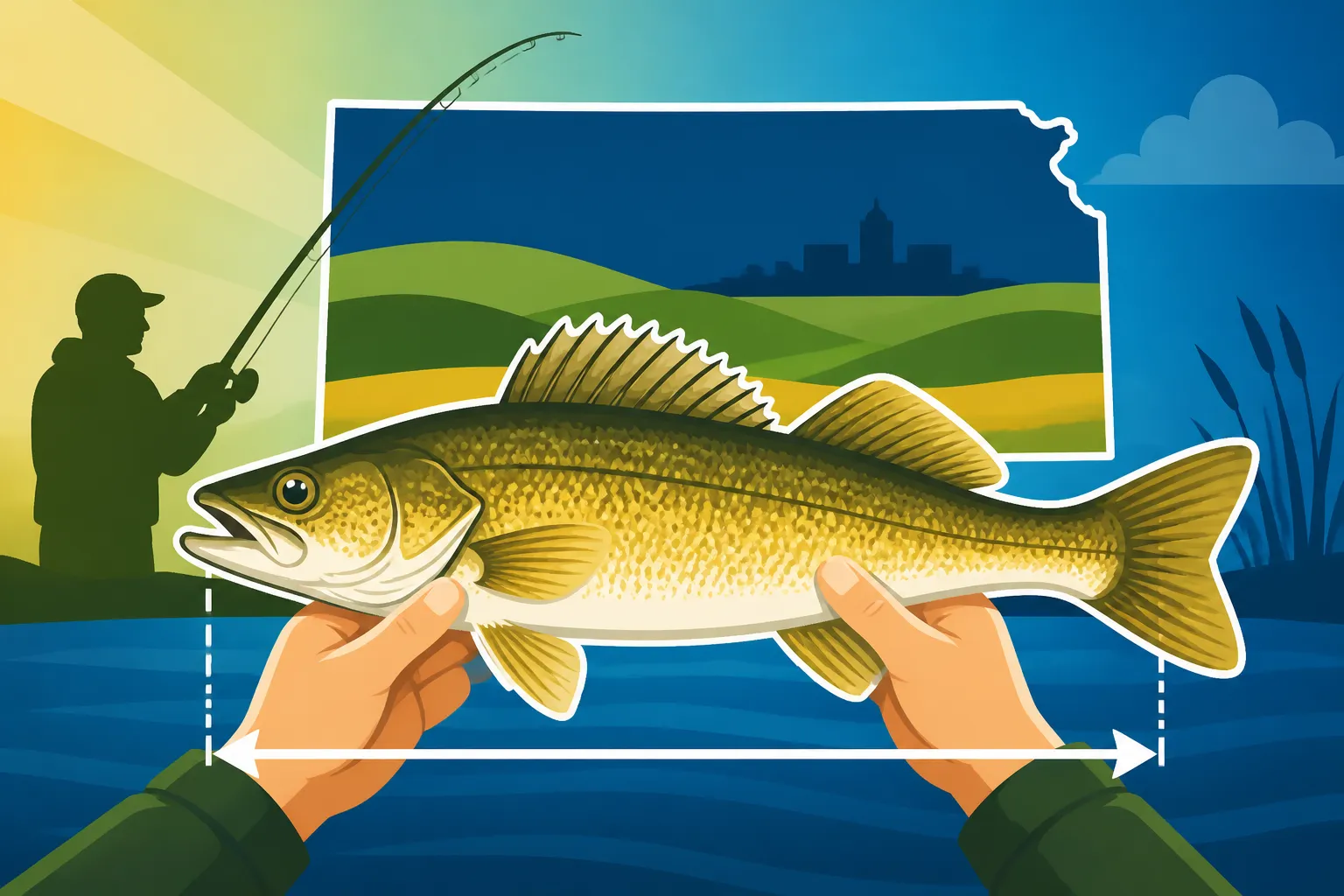
Measuring your walleye correctly is absolutely critical. A quick, inaccurate measure could mean the difference between a legal fish and a fine, or worse, releasing a fish that could have been kept or keeping one that should have been released. Here's how to do it right:
- Use a Reliable Measuring Device: Invest in a good, sturdy measuring board or tape. Many anglers prefer a bump board because it provides a consistent hard stop for the fish's nose. You can find excellent, durable options on platforms like Amazon that are designed for quick and accurate measurement on a rocking boat.
- Lay the Fish Flat: Place the fish on its side on the measuring device. The fish's mouth should be closed and against the bump stop (if using a board) or at the zero mark of your tape.
- Pinch the Tail: Gently squeeze the tail fin lobes together to get the maximum possible length. The measurement is taken from the tip of the snout to the end of the longest lobe of the tail fin. Do not measure to the fork of the tail.
- Read Clearly: Note the measurement precisely. If it's borderline, always err on the side of caution and release the fish if you're unsure.
A quick and accurate measurement is key to minimizing stress on the fish, especially if you plan to release it. Practice this technique a few times with a non-fish object to build muscle memory, so when you've got a live walleye on deck, you can do it swiftly and confidently.
Navigating Specific Walleye Regulations in Kansas Lakes
While there's a statewide minimum, Kansas is home to many fantastic walleye fisheries, and some of them have their own unique regulations that diverge from the general rule. These site-specific rules are tailored to the unique characteristics and population dynamics of each lake, reservoir, or river system. It's essential not to assume the statewide rule applies everywhere.
Statewide Daily Creel Limits vs. Special Lake Regulations
Beyond length, there's also the daily creel limit – the maximum number of fish of a certain species you can keep in a single day. The statewide daily creel limit for walleye is generally generous, but it can also be superseded by lake-specific rules. For instance, the statewide daily limit for walleye is usually five fish. However, this number often gets combined with length limits, or specific lakes might have a lower daily limit to protect their unique populations. For a more detailed look at the general limits, check out our guide on Kansas Daily Creel Limits by Species.
It’s not uncommon for a lake with a higher trophy potential to have a more restrictive creel limit or a higher minimum length. This helps ensure that more fish survive to reach larger sizes, providing those coveted trophy opportunities. Always consult the most current KDWPT fishing regulations booklet or their website before heading out to a new body of water. That little bit of homework can save you a lot of hassle and help you respect the fishery.
Notable Reservoirs with Unique Walleye Length Limits
Kansas boasts several premier walleye destinations, and many of these have specific length and creel limits to optimize their fisheries. Here are a few examples of how things can vary, though always confirm current regulations as they are subject to change:
- Milford Lake: As one of the largest and most popular walleye lakes in Kansas, Milford often has a different set of rules. For example, in recent years, it has had a 15-inch minimum length limit, but also a specific daily creel limit that might include a restriction on how many fish over a certain length (e.g., 20 inches) you can keep. This is where the concept of a "two-fish limit" often comes into play, as detailed in Kansas Walleye Daily Limit of Two Fish.
- Wilson Lake: Renowned for its clear water and excellent walleye fishing, Wilson Lake might employ a slot limit, which we'll discuss next. This means fish within a certain size range must be released, while smaller and larger fish can be kept. This specific management strategy aims to protect the breeding stock and enhance trophy potential.
- Cheney Reservoir: Another fantastic walleye lake, Cheney might have its own twist on the statewide rules, potentially including a higher minimum length or a different creel composition.
These examples highlight why a general understanding isn't enough. You need to know the specific rules for the specific lake you're fishing. Before you launch your boat into Best Walleye Lakes in Kansas, make sure your knowledge is up to date for that particular location.
The Nuance of Slot Limits and Protected Sizes
Slot limits are perhaps the most misunderstood of all walleye regulations, but they are incredibly effective tools for managing a fishery. Instead of just a minimum size, a slot limit designates a range of fish that must be released.
Here’s how a common slot limit might work:
- Minimum Length: All fish under X inches must be released (e.g., under 15 inches).
- Protected Slot: All fish between X and Y inches must be released (e.g., between 15 and 20 inches).
- Over-Slot: Fish over Y inches can be kept, often with a reduced creel limit (e.g., only one fish over 20 inches).
This structure, sometimes explained as the Kansas Walleye Slot Limit Explained, is designed to:
- Protect Spawning-Age Fish: The fish in the protected slot (e.g., 15-20 inches) are often the prime breeding stock. By ensuring these fish survive, the KDWPT helps maintain a strong natural reproductive base.
- Increase Trophy Potential: By releasing the middle-sized fish, they have the chance to grow into larger, "over-slot" trophy walleye, which can still be harvested (often with a very limited creel). This strategy answers the question, Why the Kansas Walleye Limit Is Only Two Fish, in many cases – it allows for the harvest of some large fish while protecting the most valuable breeders.
Slot limits are a testament to scientific fisheries management. They require anglers to be even more vigilant with their measuring, but the payoff is healthier, more robust walleye populations with the potential for truly memorable catches.
The Conservation Impact of Walleye Length Limits
It's easy to see fishing regulations as just rules to follow, but behind every length limit and creel restriction is a deep commitment to conservation. These rules are the bedrock of sustainable fishing, ensuring that our natural resources remain vibrant for current and future generations of anglers. The KDWPT employs highly skilled biologists who study fish populations extensively to make informed decisions that serve both the ecosystem and the angling community.
Protecting Spawning Stock and Future Generations
The most fundamental purpose of length limits, particularly minimum size limits and the protected slot within a slot limit, is to safeguard the spawning stock. Spawning-age walleye are the reproductive engine of any lake or river system. By allowing them to reach maturity and successfully reproduce multiple times, we ensure that new generations of walleye are born, keeping the population thriving.
Imagine a scenario without length limits: anglers could keep every small walleye they caught. This would drastically reduce the number of fish that ever reach spawning age, leading to a rapid decline in the overall walleye population. The result? Fewer fish for everyone, diminished angling opportunities, and an unhealthy ecosystem. The Kansas Walleye Minimum Length Limit of 21 Inches in some special regulation areas is a prime example of this strategy, aiming to ensure these fish contribute significantly to reproduction before they can be harvested. These conservation efforts are vital, and understanding them helps foster a greater appreciation for the regulations we follow.
Managing for Trophy Walleye Opportunities
Another significant benefit of carefully crafted length limits is the creation and enhancement of trophy walleye fisheries. By protecting a certain size class of fish (often the prime spawners in a slot limit, or simply allowing all fish to grow larger with a high minimum), biologists can encourage the development of larger, older walleye.
For many anglers, the dream isn't just to catch a walleye, but to catch a truly big walleye – a wall-hanger, a personal best, a fish that embodies the challenge and reward of the sport. Length limits, especially slot limits, are specifically designed to help achieve this by allowing fish to grow beyond typical harvest sizes. This creates a unique angling experience where the focus shifts from simply catching fish to targeting larger, more mature specimens. It takes patience and adherence to the rules, but the reward of a truly giant walleye makes it all worthwhile.
Adapting Regulations to Dynamic Fish Populations
Fish populations are not static; they ebb and flow with environmental changes, spawning success, and angling pressure. The KDWPT's fisheries management is a dynamic process, constantly monitoring data like catch rates, fish sizes, age structures, and environmental factors. This means that walleye length limits, while stable for long periods, can and do change.
For example, a series of poor spawning years might lead to a temporary increase in the minimum length limit to protect the dwindling numbers of young fish. Conversely, exceptionally strong year classes could, in some rare instances, lead to more liberal regulations to encourage harvest and prevent overpopulation of smaller fish. It’s a continuous cycle of assessment and adjustment. Staying informed through the official KDWPT website or their annual fishing regulations summary is crucial. Never assume last year's rules are identical to this year's, especially if you're venturing to a different lake or fishing after a major environmental event.
Practical Application for Kansas Walleye Anglers
Understanding the regulations intellectually is one thing; applying them effectively when you're on the water, with a lively walleye at the boat, is another. Good preparation and responsible angling practices are key to making sure you're compliant and that any fish you release has the best chance of survival.
Essential Gear for Measuring and Handling Walleye
Having the right tools on hand makes a world of difference when you're trying to quickly and accurately measure a walleye, especially if it's going to be released.
- Measuring Board or Tape: As mentioned, a solid measuring board is ideal. Look for one that's easy to read, durable, and floats if it accidentally goes overboard. Many popular brands offer compact, reliable options that fit easily into boat storage or a tackle bag. You can find a good selection of these on Amazon, often alongside other essential fishing accessories.
- Pliers/Forceps: Essential for quickly and safely removing hooks, especially from toothy walleye. A good pair of long-nosed pliers minimizes handling time and reduces stress on the fish.
- Knotless Rubberized Net: A net with knotless, rubberized mesh is far superior to traditional knotted nylon nets for walleye. It protects the fish's slime coat (its primary defense against disease) and fins, and prevents hooks from tangling, making for a quicker release.
- Wet Hands: If you must handle the fish, always wet your hands first. This further protects their delicate slime coat. Avoid holding fish by the eye sockets or gill plates unless absolutely necessary for very large fish being kept.
Investing in these few pieces of gear not only helps you adhere to regulations but also shows respect for the fish and the fishery.
Best Practices for Releasing Undersized or Slot Fish
Releasing a fish, especially one that's undersized or falls into a protected slot, is a critical part of being a responsible angler. The goal isn't just to get the fish back in the water, but to ensure it swims away strong and healthy.
- Minimize Handling Time: The less time a fish is out of the water, the better. Have your measuring device and release tools ready before you even bring the fish into the boat.
- Handle Gently: Support the fish horizontally. Avoid holding it vertically by the jaw for extended periods, as this can damage its internal organs. Use two hands, supporting its belly, especially for larger fish.
- Use a De-Hooker: If the hook is deeply set, a de-hooking tool can often remove it faster and with less damage than pliers. If a hook cannot be easily removed, cut the line as close to the hook as possible. The hook will often rust out or dislodge naturally.
- Revive if Necessary: If the fish seems sluggish after release, gently hold it in the water, facing into the current (or move it back and forth gently to force water over its gills) until it kicks strongly and swims away on its own power. This is particularly important with Kansas Walleye Fishing Techniques that might involve deeper water, as fish can suffer from barotrauma if brought up too quickly.
Every effort you make to properly release a fish contributes directly to the health and sustainability of Kansas's walleye populations.
Staying Informed About Regulation Changes
As mentioned earlier, fishing regulations are not static. The KDWPT regularly reviews and updates rules based on scientific data, public input, and management goals. Relying on old information can lead to unintentional violations.
- KDWPT Website: This is your primary, most reliable source. The KDWPT website (www.ksoutdoors.com) has the most up-to-date regulations. Check it before every fishing season, and ideally, before heading to a new lake.
- Annual Fishing Regulations Summary: The printed booklet, often available at license vendors and sporting goods stores, is an excellent resource. Pick up a new one each year. These summaries clearly outline statewide and site-specific rules, including Kansas Fishing License Guide information and species-specific limits.
- Local Bait Shops and Guides: These individuals are often immersed in the local fishing scene and can offer valuable insights into specific lake conditions and regulation nuances. However, always cross-reference their advice with official KDWPT sources.
- Signage at Ramps/Parks: Many state parks and boat ramps will have signs posted with local regulations. Pay attention to these.
Staying informed is part of being a responsible angler and helps ensure you don't inadvertently run into trouble.
Common Walleye Regulation Questions and Enforcement
Even with all the information at your fingertips, certain scenarios can still raise questions. Understanding how regulations are enforced and where to turn for clarification can prevent headaches on the water. It’s better to ask than to assume and risk a penalty.
Distinguishing Between Statewide and Lake-Specific Rules
One of the biggest sources of confusion for anglers is knowing when to apply the statewide rule and when a specific lake has its own unique regulations. The KDWPT's annual fishing regulations summary is your best friend here. It will clearly list general statewide regulations first, and then typically have a separate section detailing "Special Regulations" or "Site Specific Regulations" for individual lakes, reservoirs, and rivers.
When you plan a trip to a particular body of water, make it a habit to look up that specific location in the regulations summary. For example, while the statewide minimum might be 15 inches, you might find that Milford Lake has a different slot limit or a modified creel. If a lake is not listed under "Special Regulations," then the statewide rules apply. It’s really that simple, but you have to do the legwork. Don't rely on memory or what someone told you five years ago!
What Happens if You Don't Follow the Rules?
Fishing without adhering to length and creel limits is not just a minor oversight; it's a violation of state law and carries consequences. The penalties can vary depending on the severity and nature of the infraction.
- Fines: The most common penalty is a monetary fine. These can range from a couple of hundred dollars to much more significant amounts, especially for repeat offenses or for being significantly over the limit.
- Loss of Privileges: In addition to fines, you could have your fishing license suspended or revoked. This means you wouldn't be able to legally fish in Kansas for a specified period. This is often the case for more serious violations or multiple offenses. For details on broader implications, you might want to review What Happens If You Fish Without a License in Kansas?.
- Confiscation of Gear/Fish: In some cases, your fishing gear, and certainly any illegally taken fish, can be confiscated by law enforcement.
- Criminal Charges: While rare for a simple over-limit, very serious or repeated violations, especially those involving commercial poaching or protected species, can escalate to criminal charges.
Kansas game wardens (natural resource officers) are out on the water specifically to ensure compliance and protect the resource. They are highly trained and take their job seriously. It's always best to be polite, cooperative, and know your regulations.
Resources for Clarifying Ambiguous Regulations
Sometimes, a regulation might seem unclear, or you might encounter a situation on the water that isn't explicitly covered. Don't guess. Take the time to seek clarification.
- KDWPT Law Enforcement: If you have a specific question that isn't answered in the regulations summary, you can contact the KDWPT Law Enforcement division. Their contact information is usually found in the regulations booklet or on their website. It's always better to call ahead of time than to face a warden on the water with a questionable catch.
- KDWPT Fisheries Biologists: For more technical questions about why a certain regulation exists or how it impacts fish populations, the KDWPT Fisheries Division can be a valuable resource. While they can't interpret the letter of the law for enforcement purposes, they can provide background on the management strategy.
- Community Forums/Groups: Online fishing forums or local angling groups can be good places to discuss questions with other experienced anglers, but always remember to verify any information with official KDWPT sources. While you might get some good tips on lures or Kansas Walleye Fishing Techniques, regulatory advice should always come from the source.
Being proactive in seeking clarity is a hallmark of a responsible and ethical angler.
Table of Common Kansas Walleye Regulations (Example)
To help visualize how these regulations can vary, here's a simplified table comparing the general statewide rules with potential rules for a couple of well-known walleye fisheries. Always confirm current regulations as these are illustrative and subject to change.
| Location | Minimum Length | Protected Slot (if any) | Daily Creel Limit | Notes |
|---|---|---|---|---|
| Statewide General | 15 inches | None | 5 fish | Most common regulation for unlisted waters. |
| Milford Lake | 15 inches | None | 5 fish, but only 2 over 20 inches | Focus on retaining large breeders. |
| Wilson Lake | 18 inches | 20-25 inches | 5 fish, but only 1 over 25 inches | Strong trophy management emphasis. |
| Cheney Reservoir | 15 inches | None | 5 fish | May have specific seasonal restrictions. |
This table clearly shows how a specific lake can have different rules for length or how many larger fish you can keep, even if the general minimum or creel count is similar.
Conclusion: Being a Responsible Walleye Angler
Navigating the various Kansas walleye length limits, slot limits, and creel limits can seem like a lot to take in, but it's a crucial part of our shared responsibility as anglers. These regulations are not designed to complicate your fishing trip; they are carefully crafted by the KDWPT to protect our precious walleye populations and ensure that the thrill of catching these hard-fighting fish remains for future generations.
By understanding the "why" behind these rules, like the need to protect spawning stock or manage for trophy opportunities, you become a more informed and effective conservationist. Always carry a reliable measuring device (easily found on Amazon, by the way!), practice careful handling and release techniques, and make it a habit to check the latest KDWPT regulations before you head out. Whether you're targeting a Kansas State Record Walleye or simply bringing home a meal, knowing your limits empowers you to fish responsibly and enjoy every moment on the beautiful waters of Kansas.
Disclaimer
The information provided in this guide is for general informational purposes only and is not a substitute for the official Kansas Department of Wildlife, Parks and Tourism (KDWPT) fishing regulations. Regulations can change, and it is the angler's responsibility to consult the most current official KDWPT fishing regulations booklet or website before engaging in any fishing activities. Adherence to all applicable laws and regulations is mandatory.