Milford Lake Walleye Fishing Near the Dam
Trying to dial in on those elusive walleye at Milford Lake, especially near the powerhouse or spillway, can feel like a game of hide-and-seek without a map. Many anglers get frustrated because the dam area, while promising, also presents unique challenges like strong currents and fluctuating water levels. This guide is here to unravel the mysteries of targeting walleye effectively around the Milford Lake dam, helping you understand their patterns, the best techniques, and the essential gear for a successful trip.
Understanding Walleye Behavior Near the Milford Lake Dam
Fishing near a large dam like the one at Milford Lake is a whole different ballgame compared to open water. The dynamic environment created by the dam's structure and outflow dictates where walleye will hold, feed, and when they'll be most active. It's about understanding the subtle cues of the water and the fish themselves.
The Impact of Current and Structure on Walleye
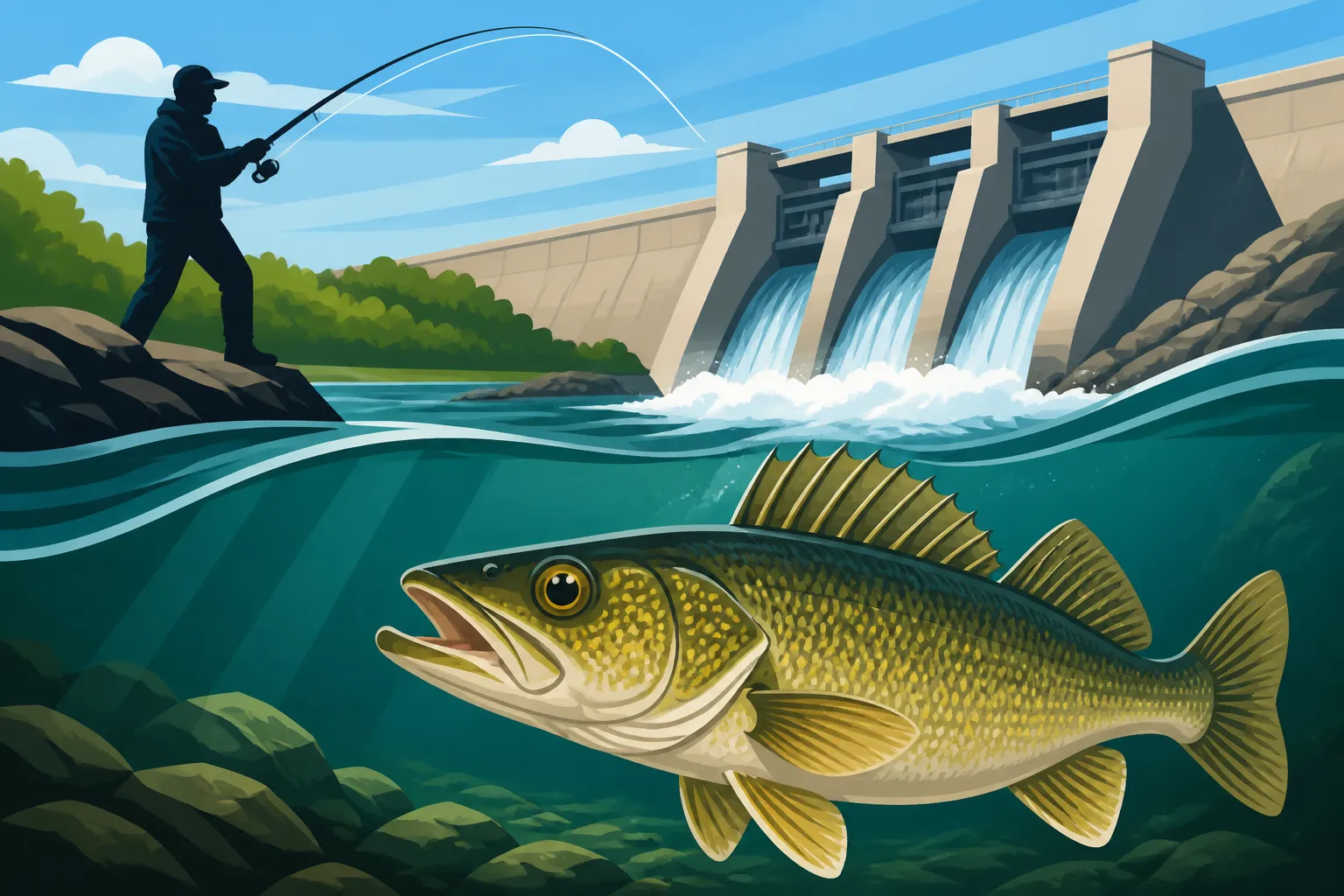
The dam at Milford Lake, with its concrete structures, riprap, and potential outflow from the spillway or powerhouse, creates a diverse underwater landscape that walleye absolutely love. These areas provide current breaks where fish can rest, ambush points for unsuspecting baitfish, and often deeper water that offers thermal refuge.
When water is being released from the dam, it creates a current that draws baitfish, and consequently, predatory walleye, to concentrate. Walleye are highly adapted to current, using minimal energy to hold in seams and eddies, waiting for food to drift by. You'll often find them just on the edge of the strongest flow, or tucked behind submerged rocks and structural irregularities that break the current. This is why knowing the dam's release schedule can be a game-changer. A strong current can make boat control challenging, but it often signals prime feeding opportunities. Pay close attention to current seams where fast water meets slow water; these are classic walleye ambush zones.
Seasonal Walleye Movements Around the Dam
Walleye behavior around the Milford Lake dam changes significantly with the seasons, driven primarily by spawning instincts, food availability, and water temperature. Understanding these seasonal shifts is crucial for planning your fishing trips.
In early spring, as ice melts and water temperatures begin to rise, walleye embark on their annual spawning migrations. While the main river channels are critical, the areas near the dam, especially where rocky riprap provides suitable substrate, can be staging grounds for prespawn walleye. They're often aggressive as they feed heavily before the spawn. As the spawn progresses and completes, many walleye will linger in the dam area, recovering and resuming feeding.
Summer sees walleye seeking deeper, cooler water, often gravitating towards the cooler thermocline if one forms. However, the dam area, with its deep water access and potentially cooler discharges, can continue to be productive. Night fishing for walleye can be particularly effective during the warmer months, as they move shallower to feed under the cover of darkness. They often relate to the deepest parts of the dam structure during the day, moving up into the riprap as the sun sets. If you're looking for guidance during these times, platforms like FishingBooker can help you connect with local guides who specialize in summer walleye patterns.
Fall brings cooler water temperatures and a strong feeding impulse as walleye fatten up for winter. This can be one of the best times to fish the dam, as walleye become highly active and can be found across various depths, often moving in schools. They'll actively chase baitfish moving into the dam area, making aggressive presentations highly effective. Finally, in winter, if the lake doesn't freeze over completely, walleye will continue to hold in the deeper sections of the dam, though their metabolism slows, requiring slower, more subtle presentations.
Effective Fishing Techniques for Milford Lake Walleye Near the Dam
Once you understand where the walleye are likely to be, the next step is knowing how to catch them. Fishing near a dam requires specific techniques that can handle current, target deep structure, and entice often wary walleye. It's about presentation, presentation, presentation!
Jigging and Live Bait Presentations
Jigging is arguably one of the most versatile and effective techniques for walleye, especially when fishing around the varied structure and depths near the Milford Lake dam. The key is to match your jig weight to the current, ensuring your bait gets down to the fish quickly and stays in the strike zone.
When the current is strong, heavier jigs (1/2 oz to 1 oz or more) are often necessary. Vertical jigging directly below your boat is a common tactic, allowing you to maintain contact with the bottom and detect subtle bites. Tipping your jig with live bait, such as a large shiner minnow, nightcrawler, or even a piece of cut bait, can significantly increase your success. The scent and natural movement of live bait are often irresistible to walleye. For precise presentations, a slip-bobber rig can be incredibly effective when walleye are suspended or holding tightly to structure at a specific depth. This allows your live bait to drift naturally into feeding lanes without being dragged by the current. Remember, walleye bites can be very light, often feeling like a slight tick or just added weight, so a sensitive rod is key.
Trolling and Crankbait Strategies
While jigging is excellent for targeting specific spots, trolling with crankbaits can be incredibly efficient for covering water and locating active walleye around the expansive dam area, particularly when current is less severe or fish are more scattered.
Selecting the right crankbait is paramount. Dive curves are important, as you'll want lures that can reach the depths where walleye are holding. Near the dam, that might mean deep-diving crankbaits that can hit 15-25 feet or more. Colors can vary, but natural baitfish patterns, firetiger, and chartreuse often perform well in Kansas waters. Trolling speeds should be adjusted based on fish activity; generally, slower speeds (1.5-2.5 mph) are a good starting point, but don't be afraid to experiment. Using a planer board system can allow you to present multiple lines away from the boat, covering a wider swath of water, especially along the riprap edges. For anglers seeking a guided experience, services like FishingBooker offer charters that specialize in trolling techniques, providing invaluable insights into local hotspots and bait preferences near the dam.
Here's a quick comparison of common walleye fishing techniques near the dam:
| Technique | Best Conditions | Recommended Bait/Lures | Pros | Cons |
|---|---|---|---|---|
| Vertical Jigging | Strong current, precise depth, known fish location | Jigs (1/2-1 oz+), minnows, nightcrawlers | Pinpoint accuracy, good in strong current | Limited water coverage, requires boat control |
| Slip-Bobbering | Moderate current, suspended fish, specific depth | Live minnows, leeches, nightcrawlers | Natural presentation, effective for wary fish | Less effective in very strong current |
| Crankbait Trolling | Scattered fish, covering water, moderate current | Deep-diving crankbaits (natural, bright colors) | Covers large areas, triggers aggressive bites | Can snag easily, less precise depth control |
| Bottom Bouncing | Moderate current, rocky bottoms, searching | Spinner rigs with crawlers, minnow rigs | Excellent for detecting bottom, good coverage | Can be cumbersome in heavy snags |
Timing Your Walleye Trip to Milford Lake
Timing truly is everything when it comes to walleye fishing, and the dam area at Milford Lake is no exception. Factors like the time of day, current flows, and specific seasonal events can dramatically influence your success.
Best Times of Day and Current Flows
Walleye are known for being creatures of low light, and this holds especially true around the dam. Dawn and dusk are typically prime feeding times. During these windows, walleye often move shallower, closer to the riprap and structural elements of the dam, making them more accessible to anglers. On overcast days or during periods of heavy current, walleye may remain active throughout the day.
Monitoring the dam's outflow schedule from the Kansas Department of Wildlife, Parks and Tourism (KDWP) website or app can provide a significant advantage. Periods of active water release typically create a feeding frenzy. The increased current disorients baitfish and washes food particles into the main channel, attracting walleye. Fishing during the start and end of a discharge cycle often yields the best results. However, be mindful of safety; strong currents require extra caution and proper boat handling. When the water release stops, the bite might slow, but fish often remain in the area for a while.
Leveraging Weather and Water Conditions
Beyond time of day and current, external factors like weather patterns and specific water conditions play a huge role in walleye activity near the dam. Don't underestimate their impact!
Cloudy days and light rain can often be excellent for walleye, as the reduced light penetration encourages them to stay active longer and move into shallower ambush positions. Conversely, bright, sunny days often push walleye into deeper, shadier haunts, or make them more active at night. Pay attention to changes in barometric pressure; a falling barometer often signals an approaching front and can trigger a strong pre-front bite, while a rapidly rising barometer after a front can shut them down for a bit.
Water temperature is another critical factor. While walleye are cold-water fish, they have preferred temperature ranges for feeding and spawning. For specific details on how temperature affects different species, you might want to read up on "Water Temperature Kansas Walleye Prefer". Turbidity, or water clarity, also matters. Walleye thrive in slightly stained or cloudy water, as it provides them with an advantage over their prey due to their superior low-light vision. Extremely clear water can make them skittish and more nocturnal. Conversely, very muddy water after heavy rains can push them out of an area until clarity improves slightly. If you're planning a trip to Milford Lake, considering these variables can drastically improve your chances of success.
Essential Gear and Safety for Dam Fishing at Milford Lake
Fishing near a major dam like Milford Lake comes with its own set of equipment and safety considerations. You're dealing with potentially strong currents, varied depths, and often crowded conditions, so being prepared is crucial for both success and safety.
Rods, Reels, and Line for Dam Walleye
Choosing the right fishing tackle is paramount when targeting walleye around the Milford Lake dam. You need gear that's sensitive enough to detect those subtle walleye bites yet powerful enough to handle larger fish in current.
For jigging, a medium-light to medium power, fast action spinning rod between 6'6" and 7'6" is often ideal. The fast action tip provides sensitivity for bite detection, while the backbone helps set the hook and fight fish. Pair this with a reliable spinning reel in the 2500-3000 size range, spooled with 8-10 lb braided line. Braided line offers superior sensitivity and minimal stretch, which is invaluable in deeper water and current. Always add a fluorocarbon leader (8-12 lb test) to your braid, as it's nearly invisible underwater and more abrasion-resistant against rocky structure. For trolling, a slightly heavier medium-heavy power rod with a moderate action, often a baitcasting setup, is preferred to handle the drag of deep-diving crankbaits. For more general advice, consider exploring "Best Rod and Reel Combo for Walleye".
Navigational Tools and Safety Precautions
Fishing near the dam means navigating potentially tricky waters, so safety should always be your top priority. Strong currents, submerged hazards, and boat traffic require vigilance.
A reliable fish finder and GPS unit are indispensable tools. Your fish finder will help you locate walleye holding on structure, identify depth changes, and spot baitfish. The GPS is crucial for marking productive spots and safely navigating, especially if fog or low light conditions reduce visibility. Always keep an eye on weather forecasts and water conditions. Changes in current or sudden storms can make the dam area hazardous quickly. Ensure your boat is equipped with all required safety gear, including proper life jackets for everyone on board – in Kansas, children 12 and under must wear a life jacket when underway in a vessel. Having a well-maintained engine, an emergency kill switch, and basic communication devices (like a fully charged cell phone or marine radio) are not just good ideas, they're essential. For more detailed safety guidelines, refer to the "Kansas Boating Safety Equipment Requirements".
For those unfamiliar with the specific nuances of fishing Milford Lake, especially near the dam, considering a guided trip can be an excellent investment. Services like FishingBooker can help you find experienced local guides who know the dam area like the back of their hand, providing both a productive fishing experience and valuable safety insights. They'll know the best spots and times, even sharing tips on how to effectively read the current.
Regulations and Conservation for Milford Lake Walleye
Responsible angling isn't just about catching fish; it's about preserving the resource for future generations. Understanding and adhering to fishing regulations and practicing good conservation habits are vital, especially when targeting a popular species like walleye.
Kansas Walleye Length and Creel Limits
The Kansas Department of Wildlife, Parks and Tourism (KDWP) sets specific regulations to manage fish populations, including those for walleye in Milford Lake. These regulations are designed to ensure sustainable fishing and promote healthy fish stocks.
It's absolutely essential to be familiar with the current "Kansas Walleye Length Limits" and "Kansas Daily Creel Limits by Species". These limits can sometimes vary by lake or specific body of water, so always double-check the latest KDWP fishing regulations summary. Typically, there's a minimum length limit for walleye, meaning any fish shorter than that must be immediately released unharmed. There might also be slot limits, which protect fish within a certain size range to allow them to grow and spawn, contributing to the population. For example, some regulations might allow keeping fish under a certain length and over another, but not in between. Always carry a measuring device and be ready to release fish carefully. Misinterpreting or ignoring these rules can lead to fines and penalties, which nobody wants after a great day on the water.
Practicing Catch and Release and Ethical Angling
While it's exciting to bring home a limit of walleye for dinner, practicing responsible catch and release, especially for larger breeding fish, is a cornerstone of conservation.
When you catch a walleye you intend to release, minimize its time out of the water. Handle the fish gently with wet hands or a wet towel to protect its protective slime coat. Remove hooks quickly and carefully, using de-hooking tools if necessary. If the fish is deeply hooked, it's often better to cut the line as close to the hook as possible rather than trying to remove it, which can cause more damage. Large female walleye, in particular, are vital to the health of the population; consider releasing these trophy-sized fish to ensure future spawning success. Also, be mindful of your impact on the environment. Avoid leaving trash or discarded fishing line, and respect other anglers and boaters. For more information on general fishing rules, consult a comprehensive resource like the "Kansas Fishing Regulations Explained". By following these simple guidelines, you're not just enjoying the outdoors; you're actively contributing to the longevity of Milford Lake's fantastic walleye fishery. If you're ever in doubt about specific rules or want to ensure you're fishing ethically, talking to a local guide, perhaps even one found through FishingBooker, can offer valuable peace of mind and hands-on education.
Disclaimer
The information provided in this guide is for general informational purposes only and is subject to change. Fishing regulations, conditions, and fish behavior can vary. Always consult the latest official Kansas Department of Wildlife, Parks and Tourism (KDWP) regulations before heading out on the water. Safety should be your top priority.