Kanopolis Lake Walleye Fishing Report
For many Kansas anglers, the allure of chasing walleye at Kanopolis Lake is strong, yet finding consistent, up-to-date fishing reports can feel like an endless puzzle. The constantly changing conditions, from water levels to seasonal shifts, make it tough to know where to start. This guide aims to cut through the confusion, offering a comprehensive and realistic look at the walleye situation at Kanopolis Lake, helping you decipher the patterns and put more fish in your boat or on the bank.
Understanding Kanopolis Lake's Walleye Fishery
Kanopolis Lake, often considered one of the state's hidden gems for walleye, offers a unique set of challenges and rewards. It's not always as straightforward as some of the larger reservoirs, but its distinct characteristics and management efforts by the Kansas Department of Wildlife and Parks (KDWP) make it a productive and exciting destination if you know what to look for.
Lake Characteristics and Walleye Habitat
Kanopolis Lake, located in Ellsworth County, is one of Kansas's older reservoirs, impounding the Smoky Hill River. This lake boasts a diverse underwater landscape that walleye absolutely love. You'll find a mix of rocky points, submerged humps, old creek channels, and expansive flats. The water clarity can vary, but it's often clearer than some of the more turbid eastern Kansas lakes, especially in the main lake body. This clearer water can make walleye a bit more wary, especially during bright daylight hours, often pushing them deeper or into low-light feeding patterns. The abundance of hard structure provides crucial ambush points and spawning grounds, while the deeper channels offer thermal refuge during the warmer months and excellent wintering habitat. Pay close attention to areas where old timber or brush piles meet these deeper channels, as they often hold good concentrations of fish.
Stocking Programs and Population Health
The KDWP plays a vital role in maintaining and enhancing the walleye population at Kanopolis Lake. Through consistent stocking programs, they ensure a healthy and sustainable fishery. This isn't a "wild" population relying solely on natural reproduction, though some natural spawning does occur. Instead, the supplementary stocking ensures a robust number of fish are available for anglers year after year. These stocking efforts typically involve fingerlings, which grow over several seasons to catchable size. What this means for you, the angler, is that while you might catch some smaller "hammer handle" walleye, there's also a strong chance of hooking into some respectable keepers. The health of the population is regularly monitored through sampling efforts, which help the KDWP determine stocking quotas and implement regulations like the Kansas Walleye Minimum Length Limit of 21 Inches to protect the fishery's future. It's truly a testament to thoughtful management that a lake like Kanopolis continues to provide such great opportunities.
Seasonal Walleye Patterns at Kanopolis Lake
Walleye behavior at Kanopolis Lake is highly seasonal, driven by water temperature, light conditions, and spawning cycles. Understanding these patterns is key to consistently finding fish, whether you're a seasoned pro or just getting started. Each season presents its own unique challenges and opportunities.
Spring Spawn and Post-Spawn Tactics
Spring is arguably the most anticipated time for walleye anglers at Kanopolis. As water temperatures begin to climb into the 40s and 50s Fahrenheit, typically from late March through April, walleye migrate to rocky shorelines, riprap areas, and shallow points to spawn. These are often the same areas that receive direct sunlight, warming up faster. During the pre-spawn period, the fish are aggressive and can be found staging near these spawning grounds, gorging themselves to build energy. Many anglers find success casting shallow-running crankbaits, jerkbaits, or jigging with live bait like shiners or nightcrawlers in these rocky areas.
Once the spawn concludes, usually by late April into May, walleye transition into a post-spawn phase. They're often lethargic and dispersed, recovering from the arduous spawning process. This can be a challenging time, but savvy anglers will look for fish retreating slightly deeper to adjacent breaks and submerged cover to rest and feed on easy meals. Focus on drop-offs near spawning flats or the first significant depth change from rocky points. Slow trolling with bottom bouncers and spinners tipped with a nightcrawler or a jig-and-minnow presentation can be effective. Remember, patience is crucial during this period.
Summer Deepwater and Night Fishing
When the brutal Kansas summer heat sets in and water temperatures soar into the 70s and 80s, walleye at Kanopolis will typically retreat to deeper, cooler waters. This means focusing your efforts on the main lake basin, especially around prominent submerged humps, ledges, and old creek channels. Your fish finder becomes an indispensable tool to locate these structures and identify schools of baitfish, which the walleye will follow. Trolling deep-diving crankbaits that can reach depths of 20-30 feet or more, such as those from Rapala or Berkley, becomes a go-to tactic. Vertical jigging spoons or heavy jigs over deep structure can also coax bites from reluctant fish.
Summer also brings incredible opportunities for night fishing for walleye. As the sun sets, these light-sensitive predators move shallower to feed under the cover of darkness. Rocky points, shallow flats adjacent to deep water, and areas with underwater lights (if allowed and safely deployed) can become prime hotspots. Casting suspending jerkbaits, stickbaits, or slowly retrieving jigs tipped with a plastic grub or a nightcrawler can be highly effective. Some anglers even use slip bobbers with live minnows or leeches near lighted areas, which attract baitfish and, consequently, walleye. Always be mindful of your surroundings and prioritize safety when fishing at night.
Fall Feeding Frenzy and Winter Opportunities
As autumn arrives and water temperatures begin to cool, usually from September through November, walleye at Kanopolis enter a robust feeding frenzy. They're trying to pack on fat reserves for the upcoming winter, making them highly aggressive and predictable. This is one of the most exciting times to target them. Fish will often move back to shallower depths, especially during overcast days, actively chasing baitfish. Look for them along the edges of weed lines (if present), main lake points, and secondary creek channels. Trolling crankbaits at various depths, casting jigging raps, or using blade baits can yield excellent results. The fish are often more spread out but actively hunting, so covering water is important.
Even in winter, when ice conditions allow for safe access, Kanopolis Lake can offer thrilling ice fishing for walleye. While it's certainly not as renowned as some northern lakes, dedicated anglers do find success. Walleye will hold tight to deep structure, often suspended just off the bottom over humps or along sharp drop-offs. Using small jigging spoons tipped with a minnow head or small horizontal jigs can trigger bites. Be sure to check ice thickness thoroughly and prioritize safety above all else. Understanding Kansas Ice Fishing Safety Tips is paramount before venturing out.
Top Tactics and Gear for Kanopolis Walleye
To consistently catch walleye at Kanopolis Lake, you need to employ the right tactics and have the right gear. It's a combination of understanding fish behavior and having the tools to match the conditions.
Best Baits and Lures
Walleye are opportunistic feeders, but they do have preferences that shift with the seasons and water conditions. During the cooler months of spring and fall, live bait often reigns supreme. Shiners, fathead minnows, and nightcrawlers rigged on a jig or a simple slip bobber setup are deadly. Leeches are also highly effective, especially in summer. When using live bait, focus on natural presentations that don't spook wary fish.
For artificial lures, crankbaits are a staple. Deep-diving models like the Berkley Dredger or Rapala DownDeep Husky Jerk are excellent for trolling during summer and fall over deep structure. Medium-diving crankbaits and suspending jerkbaits are perfect for spring and night fishing. Jigging is another foundational walleye technique. A 1/8 to 1/2 ounce jig head, tipped with a soft plastic swimbait, grub, or live minnow, can be fished vertically or cast and retrieved. Blade baits like the Silver Buddy or Rapala Rippin' Rap are fantastic for vertical jigging over deep humps or during the fall feeding frenzy. Don't forget spinner rigs, especially when slow trolling with a bottom bouncer; they are phenomenal when tipped with a nightcrawler for covering expansive flats.
Here's a quick reference for common Kanopolis Lake walleye baits:
| Season | Primary Baits/Lures | Preferred Technique | Notes |
|---|---|---|---|
| Spring | Live Minnows, Nightcrawlers, Jerkbaits, Shallow Crankbaits | Jigging, Casting, Slip Bobber | Focus on rocky points and riprap; pre-spawn aggressive, post-spawn slow. |
| Summer | Deep-diving Crankbaits, Trolling Spoons, Leeches | Trolling, Vertical Jigging, Drifting | Fish deeper humps and channels; night fishing in shallows. |
| Fall | Crankbaits (various depths), Blade Baits, Spinner Rigs, Live Minnows | Trolling, Casting, Jigging | Walleye are actively feeding; cover water, target points and drop-offs. |
| Winter | Small Jigging Spoons, Vertical Jigs, Live Minnow heads | Ice Jigging | Focus on deep structure through the ice. |
Essential Gear and Electronics
Having the right gear makes a significant difference in your walleye fishing success at Kanopolis. For rods and reels, a medium-light to medium power spinning rod (6'6" to 7'6") with a fast action tip is versatile for most jigging and casting applications. Pair it with a 2500-3000 series spinning reel spooled with 8-10 lb fluorocarbon or braided line with a fluorocarbon leader. For trolling, a medium power casting rod with a moderate action (7' to 9') and a line counter reel spooled with 10-14 lb monofilament or braid is ideal. You can find excellent options in a Kansas Fishing Gear Guide that can be adapted for walleye.
Electronics are almost mandatory for effective walleye fishing, especially on a lake like Kanopolis. A good quality fish finder with GPS and mapping capabilities can help you identify subtle contour changes, locate submerged structure, and mark schools of baitfish and walleye. Brands like Lowrance, Humminbird, and Garmin offer excellent units. Side-imaging and down-imaging technologies are incredibly useful for scanning wide areas and pinpointing fish holding tight to structure. A reliable electric trolling motor with GPS Spot-Lock capabilities, like those from Minn Kota or Lowrance, is also a game-changer for precise boat control, especially when holding over deep structure or navigating subtle contours. For more detailed guidance, check out a Kansas Fish Finder Buying Guide.
Where to Find Walleye on Kanopolis Lake
Knowing the general patterns is one thing, but knowing where to specifically drop your lines at Kanopolis Lake can turn a good day into a fantastic one. Walleye are creatures of habit and structure, and Kanopolis has plenty of both.
Key Structures and Hotspots
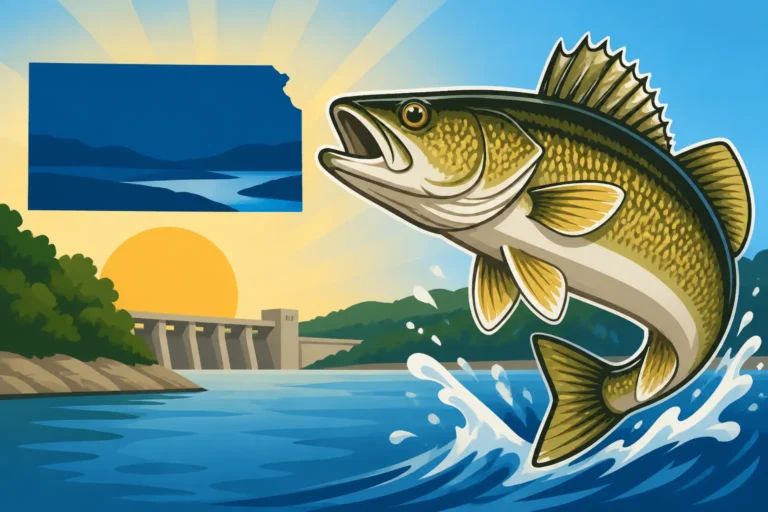
Kanopolis Lake is characterized by its numerous rocky features and varying depths, providing ample opportunities for walleye. One of the most consistent hotspots is around the dam area. The riprap along the dam face and the rocky points leading to it are prime spawning grounds in the spring and excellent feeding grounds during low-light conditions throughout the warmer months. The deep water immediately off the dam also holds fish, especially in summer.
Another crucial area consists of the main lake humps and ledges. These submerged structures, often remnants of old hills or creek beds, provide perfect ambush points for walleye. Look for humps that top out between 15-25 feet of water with steep breaks into 30+ feet. These areas concentrate baitfish and, consequently, walleye. The large main lake points that extend far out into the reservoir are also key. Walleye will relate to both the shallow tips and the deeper breaks of these points, moving up and down with light levels and feeding activity. Using a detailed lake map and your fish finder to pinpoint these specific structures is essential. You can often scout these spots by looking for anomalies or sudden depth changes, especially around areas you might find on a map of Best Fishing Lakes in Kansas.
Access Points and Bank Fishing
While a boat offers the most flexibility for reaching all the prime walleye spots at Kanopolis, there are still good opportunities for bank anglers, especially during the spring spawn and fall feeding periods. The riprap areas near the dam and along accessible causeways are popular bank fishing spots in spring. These areas often have easy public access. Additionally, some of the numerous public use areas and parks around the lake, such as those within Kanopolis State Park, offer accessible shoreline fishing. Look for rocky outcrops or points that extend into the water, providing deeper access closer to shore.
For those without a boat, targeting evenings and early mornings from these accessible points can be very productive, as walleye move shallower to feed. Casting crankbaits or jigs with live bait can work wonders. While specific "fishing reports" for bank fishing can be harder to come by, observing where other anglers are congregating and asking politely about recent success can provide valuable insights. If you're looking to explore the lake thoroughly, consider checking out resources like FishingBooker to find a local fishing guide who can show you the best access points or take you out on the water. They often have the most current information regarding local conditions and walleye movements.
Important Considerations for Kanopolis Walleye Anglers
Before you head out to Kanopolis Lake, there are a few important things to keep in mind to ensure a safe, legal, and successful trip. Being prepared means understanding the rules and being ready for changing conditions.
Current Conditions and Weather Patterns
Walleye fishing, especially at Kanopolis, is heavily influenced by current conditions. Water temperature is arguably the most critical factor, dictating spawning cycles, feeding activity, and depth preference. Always check the current water temperatures before your trip. Water clarity also plays a significant role; clearer water often means walleye are deeper or more active during low light, while stained water might allow them to be shallower during the day.
Weather patterns, particularly recent rain or sustained winds, can dramatically affect the bite. Strong winds can create current and concentrate baitfish, leading to hot bites, but they can also make boat control challenging. Heavy rains can muddy up the water, especially in the upper ends of the lake where river tributaries flow in. Monitoring weather forecasts and adapting your tactics accordingly is crucial. Services like the KDWP website or local bait shops often provide informal fishing reports that can give you a snapshot of recent success, but nothing beats personal reconnaissance and being flexible on the water.
Regulations and Conservation Efforts
It's absolutely essential to be familiar with all the current Kansas Fishing Regulations Explained before you begin fishing at Kanopolis Lake. This includes specific length limits for walleye (currently 21 inches minimum on many Kansas waters, but always double-check the KDWP fishing atlas), daily creel limits, and any special regulations unique to Kanopolis. Failing to adhere to these rules can result in penalties, and more importantly, it undermines the conservation efforts that make this fishery possible. Always carry your Kansas Fishing License Guide and any necessary permits.
The future of walleye fishing at Kanopolis depends on responsible angling. Practice catch-and-release, especially for larger breeding-size fish, if you've already met your creel limit or don't intend to keep them for a meal. Handle fish gently, and release them quickly to maximize their survival chances. Take care to dispose of all trash properly, and avoid introducing any invasive species. Being a responsible angler ensures that Kanopolis Lake remains a fantastic walleye destination for generations to come.
Disclaimer
The information provided in this guide is for general informational purposes only and is subject to change. Fishing conditions, regulations, and fish populations can vary. Always consult the official Kansas Department of Wildlife and Parks (KDWP) regulations and local authorities for the most current and accurate information before planning your fishing trip. Exercise caution and good judgment when on or near the water.