Drift Fishing for Kansas Catfish
One of the most persistent frustrations for any Kansas angler, especially when chasing those elusive, hard-fighting catfish, is simply locating them. Our vast reservoirs and winding rivers offer endless possibilities, which can sometimes feel more overwhelming than exciting. You spend hours anchored, casting, and waiting, only to wonder if you're even in the right spot. This guide is all about cutting through that uncertainty by introducing you to the incredibly effective technique of drift fishing, helping you cover more water, find active fish, and ultimately, land more Kansas catfish.
Understanding Drift Fishing for Catfish
Drift fishing is a fantastic technique that essentially turns your boat into a giant, slow-moving net, allowing you to present your bait to a much wider area than stationary fishing. Instead of guessing where the fish are and dropping an anchor, you let the natural forces of wind or current do the work, carrying your boat and baits across prime fishing grounds. It’s about being proactive and letting the fish tell you where they’re holding, rather than you trying to pinpoint them precisely beforehand.
What is Drift Fishing?
At its core, drift fishing involves presenting your bait while your boat is slowly moving, propelled by either wind, current, or a controlled combination using a trolling motor or drift socks. This isn't just randomly floating; it's a deliberate strategy. You're trying to replicate the natural movement of bait in the water, making your offering appear more lifelike and irresistible to hungry catfish. Imagine a piece of cut bait slowly tumbling along the bottom or a live shad suspended just above a submerged creek channel. By covering significant stretches of water, especially in large bodies like Milford Lake or Cheney Reservoir, you drastically increase your chances of intercepting active fish that might be scattered or moving. It’s particularly effective when fish aren't concentrated in one specific spot or when you're trying to scout new areas.
The beauty of drift fishing for catfish lies in its simplicity and adaptability. You're not relying on complicated electronics or pinpoint casting. Instead, you're becoming one with the water, understanding how wind pushes your boat and how currents sculpt the riverbed. This method is incredibly versatile, working equally well in the deep basins of our reservoirs, along shallow flats where channel cats might be foraging, or down the bends and seams of the Kansas River. It’s a technique that allows you to continually present fresh bait to new fish, often resulting in more consistent bites throughout the day.
Why Drift for Catfish in Kansas?
Kansas waters, with their expansive lakes and robust river systems, are perfectly suited for drift fishing for catfish. Our major reservoirs like Wilson Lake, Tuttle Creek Lake, and El Dorado Lake are huge, and trying to find catfish by anchoring in one spot can feel like searching for a needle in a haystack. Drifting allows you to systematically explore vast underwater structures, contour lines, and bottom transitions where catfish love to ambush prey. You can cover miles of water in a day, often discovering hotspots you might never have found by sitting still.
Beyond covering water, drift fishing in Kansas specifically targets the natural feeding behaviors of our common catfish species. Channel catfish often roam open flats and channel edges, scavenging for food. Blue catfish are notorious for suspending in deep water or cruising ledges, and a drifting bait puts your offering right in their strike zone. Even flathead catfish, though often associated with heavy cover, will actively hunt along river bends or creek channels, making a well-placed drifting bait incredibly enticing. If you're looking to catch a variety of Kansas Catfish Species Guide, drift fishing is a technique that significantly broadens your potential catches. It's also an excellent way to figure out the depth and type of structure fish are currently relating to on any given day.
Key Catfish Species for Drift Fishing in Kansas
While many fish can be caught while drifting, three species reign supreme for this technique in Kansas: channel catfish, blue catfish, and flathead catfish. Each has its nuances that make drift fishing particularly effective.
Channel catfish are perhaps the most common and widespread catfish in Kansas. They are opportunistic feeders that will readily pick up a drifting bait. When drifting for channel cats, you’ll often find them in shallower areas of reservoirs, along muddy flats, or in the gentler currents of rivers. Their aggressive nature means they're quick to strike a moving bait, and because they often school up, finding one frequently means finding several. Many anglers report great success drifting for them on the expansive flats of Clinton Lake or the shallower arms of Melvern Lake.
Blue catfish are the giants of our Kansas waters, particularly in lakes like Milford Lake and Cheney Reservoir. These powerful fish often suspend in the water column or cruise along deep river channels and ledges. Drift fishing is absolutely crucial for targeting them because it allows you to present baits at various depths and over long stretches of these deep-water habitats. A large piece of cut bait, slowly drifting through a school of shad in 20-40 feet of water, is often exactly what a trophy blue cat is looking for. The sheer size of blues means your gear needs to be up to the task, which we'll get into shortly.
Flathead catfish, the ultimate ambush predators, are often thought of as only being caught in heavy cover. However, they also actively patrol river bends, log jams, and deep channels, especially at night or during low-light conditions. Drifting a live bait, like a small sunfish or shad, along these features can be incredibly productive for flatheads. The key is to keep your bait natural-looking and allow it to cover their hunting grounds slowly. The Kansas River Fishing Guide often highlights areas where drift fishing for these powerful fish can yield impressive results, particularly around deeper holes and submerged structures.
Essential Gear for Kansas Catfish Drifting
When you're out on the water, especially in the vastness of a Kansas reservoir or the strong currents of a river, having the right gear isn't just about comfort—it's about success and safety. Drift fishing for catfish, in particular, demands a robust and reliable setup that can handle powerful strikes and the weight of a trophy fish, all while being maneuvered efficiently. Skimping on tackle here can lead to heartbreak.
Rods, Reels, and Line Selection
The foundation of a good drift fishing setup for Kansas catfish starts with your rod, reel, and line. For most channel catfish and medium-sized blue cats, a medium-heavy to heavy action rod, typically 7 to 8 feet long, is ideal. This length provides good leverage for fighting fish and enough backbone to handle heavy sinkers. Look for rods with a stout butt section and a sensitive tip, like those from Ugly Stik or Berkley, which offer a great balance of power and feel. When shopping on Amazon, you'll find a wide array of options that fit this description, often with user reviews highlighting their performance for catfish.
For reels, a sturdy baitcasting reel or a large spinning reel with a strong drag system is essential. Baitcasters offer more control over line release during the drift and superior cranking power, making them a favorite for targeting bigger blue and flathead catfish. Reels like the Abu Garcia Ambassadeur series or Penn Battle III are popular choices among Kansas anglers. Ensure your reel can hold at least 200-300 yards of line.
Regarding line, a good quality monofilament or braided line is critical. Many anglers prefer 20-30 lb test monofilament for its stretch and abrasion resistance, especially when fishing around submerged timber. However, for maximum sensitivity and strength, particularly when targeting trophy blue catfish, 50-80 lb test braided line is often preferred. Braid has no stretch, which allows you to feel subtle bites even with a lot of line out, and its thin diameter for its strength means you can spool more on your reel. Consider a 20-30 lb fluorocarbon leader for added stealth and abrasion resistance if you're using braid. If you're looking for more specific recommendations, our guide on the Best Rod and Reel Combo for Catfish offers excellent insights.
Terminal Tackle for Drifting
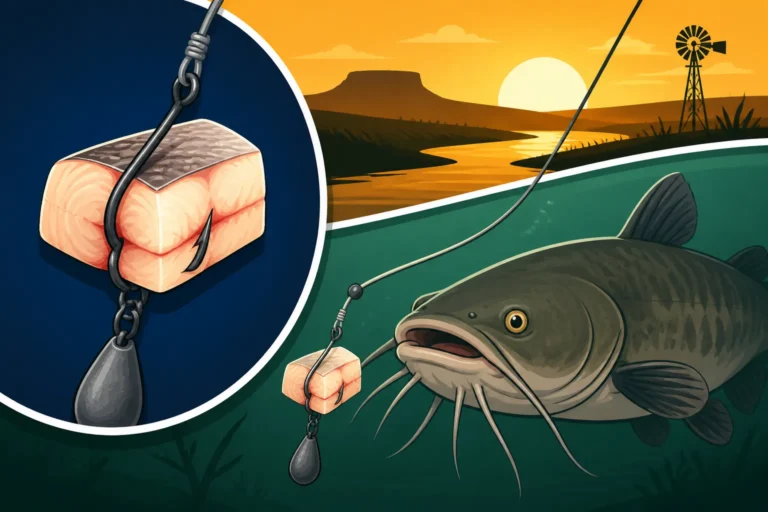
Your terminal tackle is where the business happens, connecting your line to your bait. Strong, sharp hooks are non-negotiable. Circle hooks, ranging from 5/0 to 10/0, are highly recommended for catfish drift fishing. They significantly reduce gut-hooking, improving the fish's survival rate if you plan to release it, and they are incredibly effective at hooking fish in the corner of the mouth when the fish swims away with the bait. The size depends on your bait and target species; smaller 5/0-7/0 for cut shad and channel cats, larger 8/0-10/0 for whole gizzard shad and big blue or flathead catfish.
Sinkers are crucial for keeping your bait near the bottom during the drift. Sinker weights can range from 1/2 ounce in light current or shallow water to several ounces (3-6 oz or more) in strong river currents or deep reservoir drifts. Egg sinkers or flat 'no-roll' sinkers are popular choices as they don't snag as easily. Swivels are also vital; heavy-duty barrel swivels or ball bearing swivels (around 80-100 lb test) prevent line twist, especially when using cut bait that might spin. A three-way swivel can be very effective for creating a simple drift rig where your main line attaches to one eye, a dropper line with a sinker to another, and your leader with the hook to the third.
While not always necessary, some anglers use floats in conjunction with drifting, especially when trying to suspend bait just above snags or structure. A stout bobber or a small, round foam float can be used to keep a live bait in the strike zone without letting it sink into the thickest cover. When you're stocking up, many anglers rely on the convenience of Amazon for a wide selection of these essential terminal tackle items.
Bait Choices for Drifting Success
The right bait can make or break a drift fishing trip. For channel catfish, cut bait is king. Fresh cut shad, goldeye, drum, or carp are exceptionally effective. The oil and scent trail they leave as they drift is irresistible. Prepared baits, often called "stink baits" or "punch baits," can also work well, especially for channel cats, but they generally don't hold up as well on a long drift as cut bait. Our guide on the Best Bait for Kansas Catfish has even more detailed suggestions.
For blue catfish, fresh cut bait is also preferred, but often larger pieces or even whole baits are used. A whole gizzard shad, cut in half, or a large chunk of carp or skipjack herring (if available) are excellent choices. Blue cats are primarily piscivores, meaning they feed heavily on other fish.
Flathead catfish, being primarily piscivores, almost exclusively prefer live bait. Small live sunfish (bluegill, green sunfish), bullheads, or gizzard shad are prime choices. Rig them through the back or lips to keep them lively during the drift. Ensure your live bait is legal to possess and use in Kansas waters, as regulations can vary.
Boat and Motor Considerations
A boat is essential for effective drift fishing, and while you can do a limited amount of drifting from a kayak in calmer waters, a traditional fishing boat offers more control and capacity. A dependable trolling motor is perhaps the most crucial piece of equipment for controlled drifting. It allows you to fine-tune your speed, correct your drift direction, and even hold you stationary against a light current or wind to thoroughly work a specific area. A bow-mounted electric trolling motor with GPS capabilities (like those from Minn Kota or Lowrance) can be a game-changer, allowing you to set a course and let the motor do the work of keeping you on track.
Drift socks (also called drift anchors or sea anchors) are another invaluable tool. These parachute-like devices are deployed off the bow or stern (or both) to slow your boat's drift significantly. This is particularly useful on windy days or when you want to thoroughly work a specific contour line. The size of the drift sock will depend on the size of your boat and how much you need to slow down. For safety, always ensure your Kansas Boat Registration for Anglers is up-to-date and all required safety equipment, such as life jackets, are on board.
Mastering Drift Fishing Techniques in Kansas Waters
Drift fishing might sound simple – just let your boat float and your bait trail behind – but mastering it in Kansas waters involves a nuanced understanding of hydrodynamics, fish behavior, and precise boat control. It's about turning a passive float into an active, strategic hunt.
Reading the Water and Choosing Your Drift
The first step to a successful drift is understanding where and how the water moves. Wind is a primary driver in Kansas reservoirs, while current dominates our rivers. Observe the surface – ripple lines, current seams, and areas where water looks calmer or choppier can tell you a lot. On reservoirs, wind will push your boat, and you'll want to position yourself "upwind" of your target area and let the wind carry you over it. Look for long, gradual points, submerged humps, channel edges, or flats adjacent to deeper water. These are classic catfish holding areas.
In rivers, the current is your guide. Identify the main current channel, eddies, and slack water pockets. Catfish, especially flatheads, will often sit just out of the main current, in an eddy or behind structure, waiting for food to be swept by. Your drift should aim to carry your bait through these transition zones. A slow, controlled drift along a river bend or a drop-off can be incredibly effective. Consider how features like the Republican River or the Arkansas River in Kansas might funnel baitfish, and position your drift accordingly. Using a good mapping GPS unit can help immensely in identifying these underwater features before you even start your drift.
Optimal Drift Speeds and Control
Finding the "right" drift speed is often the key to success. Too fast, and your bait might look unnatural or be missed by sluggish fish; too slow, and you might not cover enough ground. Generally, a drift speed between 0.5 to 1.5 mph is a good starting point for most Kansas catfish. This allows your bait to be presented naturally without zooming past potential biters.
Your trolling motor is your best friend here. Use it to maintain a consistent speed, correct your boat's direction, and even hold you on a specific contour line. If the wind is too strong, deploy a drift sock. A single drift sock off the bow can slow your forward momentum and help keep your boat aligned. For maximum slowdown and broadside presentation, you might deploy two drift socks, one off each side. Experiment with different placements and sizes. The goal is to keep your bait in the strike zone for as long as possible and present it in a way that mimics natural prey movement.
Setting Up Your Drift Rigs
There are several effective drift rig setups for Kansas catfish. The most common is a variation of the slip-sinker rig. For this, your main line runs through an egg sinker, then ties to a heavy-duty swivel. From the other side of the swivel, a 1-3 foot leader of fluorocarbon or heavy monofilament connects to your circle hook. This setup allows the fish to pick up the bait and move off without immediately feeling the weight of the sinker, giving them time to fully inhale the hook.
Another excellent option, especially for river drifting or when you want to present multiple baits at different depths, is the three-way swivel rig. Tie your main line to one eye of the three-way swivel. To a second eye, tie a short (6-12 inch) dropper line with a heavy sinker. To the third eye, tie a 1-3 foot leader with your hook and bait. This keeps your bait up off the bottom slightly, reducing snags, while the sinker maintains contact with the bottom. When fishing deeper water in our larger reservoirs, such as the depths of El Dorado Lake, this rig can be particularly useful for keeping your bait suspended just above the thermocline where blue cats might be holding.
For flatheads with live bait, a simple float rig or a heavy slip-sinker rig works well. The key is to let the bait swim naturally. You might also use a heavy-duty jig head (1-2 oz) with a live shad or large piece of cut bait, bouncing it slowly along the bottom during your drift. Ensure all knots are strong, and components are matched to handle the potential size of the fish you're targeting.
Targeting Specific Catfish Habitats
Knowing where to focus your drift for each species is paramount. For channel catfish, concentrate your drifts over large, relatively featureless flats, especially those with a soft or muddy bottom. They'll also often be found along the edges of submerged creek channels, where current or wind has pushed food. In rivers, look for areas with moderate current, riffles, and small eddies.
Blue catfish are often found in deeper parts of the reservoirs. Target main lake points that extend into deep water, the deep side of submerged humps, river channel bends within the lake, and thermocline layers in summer. Drifting through these deep-water highways is the most effective way to intercept these nomadic giants. Don't be afraid to try different depths within your drift, using multiple rods with different sinker weights or leader lengths.
Flathead catfish, true to their nature, prefer structure and cover. In rivers, drift your baits along outside bends, near large log jams, rock piles, or undercut banks. In reservoirs, look for submerged timber fields, old roadbeds, or riprap areas. While they love cover, remember they're ambush predators, so your bait needs to pass close enough for them to dart out and strike. Patience and precision in boat control are key when drifting for flatheads in these snag-prone areas.
Prime Kansas Locations for Drift Fishing
Kansas boasts an incredible array of fishing opportunities, and many of its premier waters are perfectly suited for drift fishing for catfish. Whether you're chasing monster blue cats on a massive reservoir or sneaky flatheads in a winding river, there's a spot waiting for you.
Large Reservoirs for Blue and Channel Cats
Our large reservoirs are truly jewels for drift fishing, offering vast expanses of water where catfish can roam, and you can cover significant ground.
Milford Lake, the largest lake in Kansas, is a prime example. Its extensive submerged river channels, vast mud flats, and numerous points make it a blue cat Mecca. Anglers often target the main river channel that winds through the lake, particularly the areas near the dam and the larger feeder creeks. Drifting large cut bait over these channels in 20-40 feet of water, especially during the warmer months, can yield some truly immense blue catfish. The sheer size of the lake means you can set up long drifts that allow you to thoroughly prospect an area for active fish. Our detailed Milford Lake Fishing Guide provides even more specific insights into this legendary fishery.
Cheney Reservoir is another fantastic choice, particularly known for its thriving blue catfish population and excellent channel cat fishing. Similar to Milford, Cheney features extensive open water, a well-defined main lake basin, and numerous submerged humps and creek channels. Drifting the main lake area, especially around the "flats" on the west side or the deeper portions near the dam, can be incredibly productive for blues. For channel cats, focus on the shallower bays and wind-blown shorelines, allowing your boat to drift slowly over fertile mud bottom. The prevailing winds often dictate the best drift paths here, so pay attention to forecasts.
Wilson Lake, often lauded as one of the clearest lakes in Kansas, might not immediately come to mind for catfish, but its deep structure holds plenty of surprises. While known for its striped bass and walleye, the deep channels and rock ledges can also hold big blue catfish. Drifting large cut baits over the deeper sections and along the old river channel can be effective. For channel cats, the upper arms and shallower bays with more stained water offer good opportunities, especially during evening drifts.
River Systems for Channel and Flathead Cats
While reservoirs get a lot of attention, Kansas river systems offer unique and often overlooked opportunities for drift fishing, particularly for flathead and channel catfish.
The Kansas River, also known as the Kaw, is a fantastic river for targeting both channel and flathead catfish. Its dynamic nature, with ever-changing sandbars, deep holes, and snag-ridden log jams, creates perfect ambush points for catfish. When drifting the Kansas River, focus your efforts on the outside bends where the current has scoured deeper holes, and the current seams where fast and slow water meet. These transition zones are where catfish will often lay in wait. Drifting live bait (for flatheads) or large cut bait (for channel cats) through these areas, carefully maneuvering around snags, can be incredibly productive. Access points along the river near Topeka, Lawrence, and Manhattan offer great starting points for drifts.
The Republican River, especially its lower sections before emptying into Milford Lake, is another excellent choice. During seasonal runs, particularly the spring white bass run, channel cats and flatheads will move into the river to feed on migrating baitfish. Drifting cut bait or live baits through the deeper pools and current breaks can be highly effective. The key in river systems is to understand that catfish often relate to current breaks and structure. Your drift should aim to present your bait just past these features, allowing the current to naturally carry it into their strike zone. Always be mindful of submerged hazards when fishing Kansas rivers.
Smaller Lakes and Ponds
While large reservoirs and rivers are primary targets, drift fishing can also be adapted for smaller Kansas State Fishing Lakes and even larger community ponds, particularly when fishing from a kayak or a small jon boat. In these waters, the "drift" is often more about controlled movement than covering vast distances.
For example, on a smaller lake like Lake Shawnee or Clinton State Park Lake, if there's a consistent breeze, you can use a single drift sock to slow your kayak or small boat down as you fan-cast baits across a flat or along a weed line. This technique helps you cover water more efficiently than anchoring in one spot. It’s particularly effective for channel catfish that are cruising for food. You're not relying on a powerful current, but rather the subtle push of the wind to move your presentation along.
Even in larger farm ponds, if they are expansive enough, a subtle drift with a small electric trolling motor can help you find roaming channel cats or even some larger flatheads that might be tucked away in submerged timber. The key here is scaling down your gear and approach to match the waterbody. Instead of massive cut baits, you might use smaller chunks of shad or worms. The principle remains the same: cover more water to find active fish, but do so with finesse in these more confined spaces. Always check Kansas Community Fishing Lake Rules, as some smaller lakes may have specific regulations regarding boating or fishing methods.
Safety and Regulations for Drift Fishing in Kansas
Hitting the water for a drift fishing adventure is an exhilarating experience, but it’s paramount to prioritize safety and adhere to all Kansas fishing regulations. Being prepared and informed ensures a smooth, enjoyable, and legal trip for everyone.
Boating Safety and Navigation
When drift fishing, you're actively moving on the water, often in areas with other boat traffic or hidden hazards. First and foremost, always wear a life jacket, and ensure everyone on board has a properly fitting one. This isn't just a suggestion; it's often a legal requirement in Kansas under certain conditions or for specific age groups. When purchasing gear on Amazon, you can find a wide range of comfortable, Coast Guard-approved life jackets suitable for all ages.
Navigation lights are crucial if you're fishing at dawn, dusk, or night, which are often prime times for catfish. Understand the "rules of the road" for boats, including who has the right-of-way. Be aware of your surroundings, especially submerged timber, rock piles, or shallow areas that could pose a risk to your boat or motor. A reliable GPS unit with detailed mapping can be a lifesaver in unfamiliar waters or during low visibility. Always tell someone your float plan – where you're going, when you expect to be back, and who is with you. Proper boat maintenance, including checking your engine, fuel, and battery before each trip, is also vital for safety.
Kansas Fishing Regulations and Limits
Kansas has specific fishing regulations that apply to catfish, including daily creel limits and sometimes length limits, which can vary by species and waterbody. Before you head out, familiarize yourself with the current Kansas Fishing Regulations Explained, often available on the KDWP website. For example, the Kansas Channel Catfish Daily Limit might differ from the Kansas Blue Catfish Facts and Limits or the Kansas Flathead Catfish Daily Limit. It's your responsibility as an angler to know these rules.
You'll also need a valid Kansas Fishing License Guide. Always carry it with you, whether in physical form or as an authorized digital copy on your phone. If you're targeting trout while drift fishing for catfish (which can happen, especially if you're using live bait near trout-stocked areas), ensure you have the appropriate Kansas Trout Permit Guide. Adhering to these regulations helps sustain our fantastic fisheries for future generations. Never keep more fish than the legal limit, and consider practicing catch and release for larger trophy fish, especially blue and flathead catfish, to preserve the breeding stock.
Environmental Awareness and Best Practices
As responsible anglers, it's our duty to protect the natural beauty and health of Kansas waterways. The "Leave No Trace" principles are simple yet powerful: pack out everything you pack in, and perhaps even a little extra. Avoid leaving behind fishing line, bait containers, or any other trash. Fishing line, in particular, can be incredibly harmful to wildlife.
Be mindful of your impact on the environment. If you're using a trolling motor, avoid disturbing sensitive aquatic vegetation unnecessarily. If you're releasing fish, do so quickly and carefully, minimizing their time out of water. Use proper fish handling techniques, especially for larger catfish, to ensure their best chance of survival. Avoid introducing invasive species by cleaning your boat, trailer, and gear thoroughly between fishing trips to different bodies of water. By practicing good environmental stewardship, we can all contribute to keeping Kansas a prime destination for drift fishing and all other forms of angling for years to come.
Catfish Drift Fishing Gear Comparison
To help you get geared up for success, here's a quick comparison of suggested tackle for drift fishing different catfish species in Kansas. Remember, these are general guidelines, and personal preference plays a big role!
| Gear Type | Channel Catfish (Smaller Bait, Moderate Current) | Blue Catfish (Large Bait, Strong Current/Deep Water) | Flathead Catfish (Live Bait, Heavy Cover) |
|---|---|---|---|
| Rod | 7-7.5 ft, Medium-Heavy Action, Fast Tip | 7.5-8.5 ft, Heavy Action, Moderate Fast Tip | 7.5-8.5 ft, Heavy/Extra-Heavy, Moderate Action |
| Reel | Baitcaster (300-400 size) or Large Spinning | Baitcaster (500-600 size) | Baitcaster (500-600 size) |
| Main Line | 20-30 lb Mono or 40-50 lb Braid | 60-80 lb Braid | 60-80 lb Braid |
| Leader Line | 20-30 lb Fluorocarbon/Mono | 50-80 lb Fluorocarbon/Mono | 60-100 lb Fluorocarbon/Mono |
| Hook Size | 5/0 – 7/0 Circle Hook | 8/0 – 10/0 Circle Hook | 8/0 – 12/0 Circle Hook |
| Sinker Weight | 1/2 oz – 2 oz Egg/No-Roll | 2 oz – 6 oz (or more) Egg/No-Roll | 2 oz – 6 oz (or more) Egg/No-Roll |
| Swivel | 80 lb test Barrel Swivel | 100 lb test Barrel/Ball Bearing Swivel | 100 lb+ test Barrel/Ball Bearing Swivel |
| Preferred Bait | Cut Shad, Prepared Baits | Large Cut Shad/Carp/Drum | Live Sunfish, Shad, Bullheads |
Disclaimer
The information provided in this guide is for general informational purposes only and does not constitute legal advice. Fishing regulations in Kansas can change, and it is the responsibility of each angler to consult the latest official regulations published by the Kansas Department of Wildlife and Parks (KDWP) before engaging in any fishing activities. Always prioritize safety on the water.