Structure Fishing for Kansas Bass
A common frustration for many Kansas anglers is consistently finding and catching bass, especially when the fish seem to vanish or become incredibly finicky. It's not always about having the fanciest gear; often, it's about understanding where bass prefer to hide and hunt. This comprehensive guide will meticulously break down the art and science of structure fishing for Kansas bass, helping you pinpoint those elusive largemouth and smallmouth, and turn more bites into successful catches, no matter the season or conditions.
Understanding Bass and Their Relationship to Structure in Kansas
Bass aren't just swimming around aimlessly; they're ambush predators who thrive in environments that offer both cover and feeding opportunities. In Kansas's diverse waterways, from sprawling reservoirs to intimate farm ponds, understanding this fundamental relationship between bass and structure is your first step to consistent success. It's truly like solving a puzzle, where each piece of structure is a potential hiding spot.
Why Bass Love Structure
Imagine yourself as a bass in the vastness of a Kansas lake. Without structure, you're exposed, vulnerable to larger predators like osprey or bigger catfish, and finding food becomes a much harder task. Structure, whether it's a sunken tree, a rock pile, or a boat dock, provides a critical advantage. It acts as a safe haven where they can hide from predators and harsh sunlight, a perfect place to ambush unsuspecting baitfish, and a refuge from strong currents or fluctuating water temperatures. For the bass, structure is home, a pantry, and a fortress all rolled into one.
These underwater features create micro-environments that concentrate baitfish, which in turn concentrates the bass. Think about a school of shad seeking shelter around a brush pile – it's an all-you-can-eat buffet for a hungry bass lurking just below. When you cast your line near structure, you're not just hoping for a random bite; you're placing your lure in a high-probability zone where a bass is actively living, feeding, or resting. This primal instinct to relate to structure is what drives bass behavior throughout the year in Kansas, making it the bedrock of effective bass fishing.
Types of Bass Found in Kansas Reservoirs and Ponds
Kansas is home to a few different species of bass that anglers frequently target, each with slightly varying preferences when it comes to the types of structure they inhabit. Understanding these nuances can significantly improve your targeting strategy.
The most common and widely distributed is the Kansas Largemouth Bass Facts. These are the green bass with the distinct lateral line, known for their preference for heavy cover and warmer, shallower waters. You'll often find largemouth tucked deep into submerged timber, thick weed beds, under overhanging branches, or beneath boat docks. They thrive in the stained, fertile waters of many Kansas reservoirs and farm ponds.
Then there's the Kansas Smallmouth Bass Facts, often called "bronze-backs." These feisty fighters are typically found in clearer, rockier waters, often relating to current and deeper, harder bottom structures like rocky points, ledges, and riprap. Lakes like Wilson and Milford are renowned for their smallmouth populations. While less common, some waterways might also hold spotted bass, which share characteristics of both largemouth and smallmouth, often preferring rocky banks and points but sometimes tolerating slightly more stained water than smallmouth. Knowing which species you're primarily targeting will help you refine your structural approach. For example, a rocky main lake point on Wilson Lake might hold smallmouth, while a timber-filled cove on Milford Lake is prime largemouth territory.
Seasonal Movements and Structural Preferences
Bass are creatures of habit, but their habits are deeply tied to the changing seasons, which dictate their structural preferences. As water temperatures fluctuate throughout the year, bass move to different depths and types of structure, much like we adjust our homes for summer and winter.
- Spring (Pre-spawn & Spawn): In early spring, as water temperatures creep into the upper 40s and 50s Fahrenheit, bass begin moving from deeper wintering grounds to shallower, sun-warmed areas. They often congregate on secondary points, creek channel bends, and flats adjacent to spawning coves. They'll use submerged brush, docks, and rock piles as staging areas, holding close to these structures before moving onto beds in calmer, protected bays with gravel or sandy bottoms when temperatures reach the high 50s and low 60s. This is a prime time to target bass aggressively relating to structure, as they're hungry and preparing to spawn.
- Summer: When the Kansas sun beats down and water temperatures soar into the 80s, bass seek refuge in deeper, cooler water or in dense, overhead cover that provides shade. Main lake points, deep ledges, offshore humps, and the deepest parts of brush piles or submerged timber become hot spots. They might also move into areas with current, like river channels, or under the shade of docks and overhanging trees during the day, coming out to feed more actively at dawn and dusk. Night fishing can be particularly effective during the oppressive summer months, as bass often relate to deeper structure during the day and move shallower to feed under the cover of darkness.
- Fall (Turnover & Migration): As water temperatures cool, often after lake turnover (when the water column mixes), bass become highly active feeders, pushing baitfish into shallower pockets and points. They will aggressively pursue shad or other forage, often concentrating around the same types of structure they used in spring – creek channels, main lake points, and prominent timber lines. This is a fantastic time for power fishing techniques, as bass are trying to fatten up before winter. Finding baitfish around structure is key to locating fall bass.
- Winter: In the coldest months, when water temperatures drop below 50 degrees, bass retreat to deeper, more stable water. They'll often school up tight on deep main lake points, channel swings, bluff walls, and large submerged timber stacks. Their metabolism slows, so they become less active, but a slow, methodical presentation near deep structure can still yield results. Understanding these Kansas Fishing Seasons Guide and how bass use structure year-round is crucial for consistent success, allowing you to anticipate their movements and target them more efficiently.
Identifying Key Structures in Kansas Waters
Finding the right structure is half the battle; the other half is knowing how to effectively present a lure to it. Kansas lakes and rivers present a wide array of options, both natural and man-made. Learning to identify these key features, whether you see them on your fish finder, recognize them from the bank, or even consult nautical charts, is a skill that will dramatically improve your catch rate.
Natural Structures: Rock Piles, Ledges, and Timber
Kansas reservoirs, often built on existing riverbeds, are rich in natural structures that have been submerged for decades. Rock piles and ledges are absolute magnets for smallmouth bass and often hold largemouth too, especially when crawfish are abundant. These hard-bottom areas provide excellent ambush points, hiding spots, and warmth retention. They are like underwater apartment complexes for bass.
Ledges, which are essentially underwater cliffs or distinct drop-offs, create significant depth changes that bass use to transition between shallow and deep water. Fishing the "lip" of a ledge, where it breaks from shallow to deep, is often highly productive, as bass will sit right on that edge, waiting for bait to swim by. Submerged timber, including standing trees, brush piles, and fallen logs, offers unparalleled cover and shade, especially for largemouth. These woody havens break up currents and provide countless nooks and crannies for bass to hide in, waiting for an easy meal. Learning to interpret your sonar to identify these features, or even mapping them out with buoys, is a game-changer. Areas where old creek channels intersect main lake points, often adorned with stumps or rock, are textbook natural structure hotbeds that scream "bass hangout."
Man-Made Structures: Docks, Riprap, and Roadbeds
While natural features are fantastic, Kansas also has an abundance of man-made structures that bass flock to, often because they stand out from the surrounding featureless bottom or provide unique cover. Docks, whether floating or stationary, provide overhead cover, shade, and often harbor baitfish and insects around their pilings. Bass will patrol these structures, particularly during bright sunny days or in the oppressive summer heat. Skipping a lure far back under a dock can often yield a strike from a bass that rarely sees a lure.
Riprap, the rocky shorelines found on dam faces, bridge causeways, and channel edges, is another excellent man-made structure. The irregular rocks create countless pockets and crevices for crawfish and baitfish, making them prime feeding grounds. These rocky banks also absorb and radiate heat, which can be attractive to bass in cooler months. Roadbeds and foundations from old homesteads that were submerged when the lakes were filled are also phenomenal but often overlooked structures. These hard-bottom features offer different textures than the surrounding soft bottom and can hold schools of bass, especially when combined with a depth change or adjacent timber. Old bridge pilings, culverts, and submerged pipelines are similar targets, creating vertical relief and current breaks that bass adore, making them high-percentage spots for anglers who take the time to find them.
Submerged Vegetation and How Bass Use It
Don't overlook the green stuff! While sometimes frustrating to fish due to snags, submerged vegetation – like hydrilla, coontail, pondweed, and milfoil – is a critical structure for bass, especially largemouth. These weed beds provide oxygen, cover, and a thriving ecosystem for baitfish, crustaceans, and insects. They're a vibrant underwater city where bass thrive.
Bass will hide within the thickest parts of the grass, often in small holes or along the edges, ambushing prey that ventures too close. They also use the tops of weed beds as a canopy, especially when the sun is high, providing shade and camouflage. The key is to find healthy, green vegetation, not dying or matted-down patches. Look for distinct edges, points, and pockets within the weed beds. Often, the "juice" is where the weed line abruptly stops or forms an irregular shape, creating an ambush point. On certain lakes, like El Dorado Lake or Cheney Reservoir, finding healthy weed lines can be the secret to a successful day. Even sparse, scattered clumps of grass can hold fish, so pay attention to even the slightest changes in vegetation density.
Essential Gear for Structure Fishing Kansas Bass
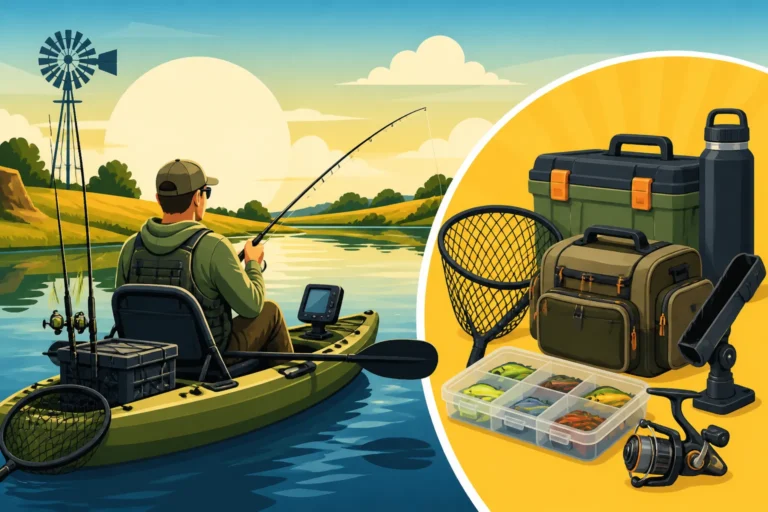
To effectively fish structure in Kansas, you need the right tools for the job. Having a versatile setup that allows you to present lures accurately and extract bass from dense cover is paramount. Don't worry, you don't need to break the bank, but investing in a few key items will make a world of difference. Many excellent options for rods, reels, lines, and electronics can be found readily on Amazon, offering a wide range for any budget and angling style.
Rods, Reels, and Line Choices for Specific Structures
Your rod and reel setup should be meticulously tailored to the type of structure you're targeting and the techniques you'll employ. A "one-size-fits-all" approach often leads to frustration when fishing diverse structures.
- Heavy Cover (Timber, Docks, Thick Weeds): For punching through matted vegetation or dragging bass out of submerged trees, a heavy or medium-heavy power casting rod (7' to 7'6") with a fast action tip is ideal. This combination provides the backbone to horse fish out of dense cover and the sensitivity to feel subtle bites. Pair this with a baitcasting reel offering a high gear ratio (7.1:1 or higher) for quick line pickup, which is crucial for staying ahead of a surging bass. For line, 15-20 lb fluorocarbon is essential for its abrasion resistance and low visibility, or consider 30-50 lb braided line for its incredible strength and ability to cut through weeds.
- Open Water (Ledges, Points, Riprap): For more open water structure, a versatile medium-heavy or medium power casting rod (6'6" to 7') with a moderate-fast action works well for most applications, offering a balance of casting distance and fish-fighting power. A baitcasting reel with a moderate gear ratio (6.4:1 to 7.1:1) is a good all-around choice. For line, 12-17 lb fluorocarbon is excellent for its sensitivity, low stretch, and invisibility, making it perfect for feeling subtle bites on deep structure.
- Finesse Applications (Clear Water, Finicky Fish): Sometimes, especially in highly pressured waters or clear lakes like Wilson, you'll need to scale down. A medium or medium-light power spinning rod (6'6" to 7') with a fast action tip and a matching spinning reel spooled with 6-10 lb fluorocarbon or braided line with a fluorocarbon leader is perfect for drop-shotting, shaky heads, or lighter jigs. This setup allows for incredibly subtle presentations that can entice even the most reluctant bass. Having a selection of these Best Rods and Reels for Kansas Fishing options ready will ensure you're prepared for whatever the bass throw at you, from aggressive strikes to tentative nibbles.
Lures and Baits for Different Structural Situations
The right lure can make all the difference when presenting to bass holding tight to structure. Matching your bait to the forage and the cover is paramount for success.
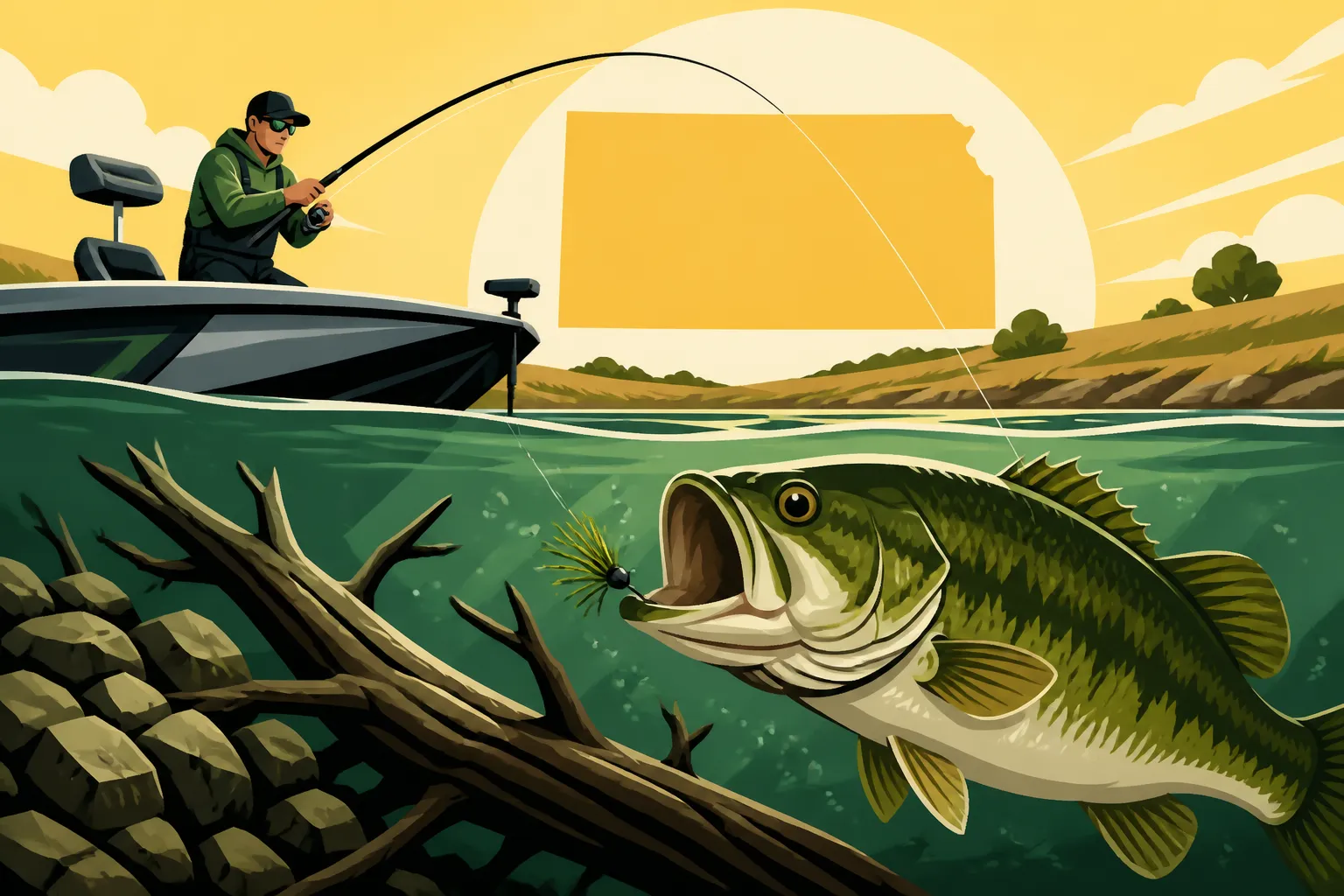
- Heavy Cover & Timber: Texas-rigged soft plastics (worms, creature baits, craws) with heavy tungsten weights are fantastic for punching through and around wood. The weedless nature of the Texas rig minimizes snags. Jig and trailer combinations, especially arkie-style jigs or football jigs, are also excellent for probing timber and brush piles, mimicking crawfish or small baitfish. Squarebill crankbaits that deflect off wood can also trigger reaction strikes due to their erratic action. Spinnerbaits and bladed jigs like a ChatterBait are great for covering water near the edges of cover, creating flash and vibration to draw bass out.
- Ledges & Drop-Offs: Deep-diving crankbaits are absolute workhorses for ledges, as they mimic fleeing baitfish and can reach fish holding in deeper water. Look for baits that dive to the specific depth of the ledge you're targeting. Football jigs, especially those with rattles, are superb for dragging along rocky bottoms and imitating crawfish. Carolina rigs with soft plastics (worms, lizards, creature baits) are also highly effective for presenting a bait just above the bottom on deep structure, allowing for a slower, more deliberate presentation.
- Docks & Riprap: Skipping jigs, wacky-rigged worms, or Texas-rigged senkos under docks can be incredibly effective, reaching bass hiding in the shade. For riprap, squarebill crankbaits, lipless crankbaits, and spinnerbaits are great choices to cover the rocky banks quickly. Small swimbaits or grub-on-a-jig can also be deadly along these rocky edges, mimicking small baitfish.
- Submerged Vegetation: Frogs and toad baits are unbeatable for fishing over matted grass, drawing explosive topwater strikes. Punching rigs with heavy weights and stout creature baits can penetrate holes in dense vegetation, reaching bass buried deep within. Bladed jigs, swim jigs, and shallow-running swimbaits are excellent for fishing the edges and sparse areas of weed beds, creating commotion and enticing bites. For a deeper dive into options, check out a Best Lures for Kansas Bass guide.
Electronics: Fish Finders and Trolling Motors for Structure
Modern electronics are not just a luxury; they are invaluable tools for serious structure fishing, transforming how you locate and stay on fish. They essentially give you "eyes" underwater.
A good Best Fish Finder for Kansas Reservoirs can reveal not just fish, but also the contours of the bottom, submerged timber, rock piles, old roadbeds, and even individual fish holding tight to those features. Side imaging and down imaging technologies are particularly useful for scanning large areas of water and identifying hidden structure well away from your boat, saving you countless casts on unproductive water. You can actually see the shape of a brush pile or the distinct edge of a creek channel. Brands like Humminbird and Lowrance offer excellent units for this, often available through retailers like Amazon, with various price points to fit different budgets.
A reliable Best Trolling Motor for Kansas Lakes, especially one with GPS Spot-Lock capabilities (like a Minn Kota Ultrex or a Garmin Force), is a game-changer. This technology allows you to hold your boat precisely in position over a specific piece of structure, even in strong wind or current, freeing you up to focus on fishing instead of constantly correcting your boat's drift. The ability to creep along a contour line, follow a weed edge, or hold steady over a brush pile allows for much more thorough and effective presentations. Without it, you'd be constantly adjusting, often drifting off the productive zone. This precision makes all the difference when bass are tightly grouped on a subtle piece of structure. For anglers in smaller boats or kayaks, exploring Kansas Kayak Fishing Gear Guide might reveal portable electronic options suitable for structure fishing.
Effective Techniques for Fishing Various Structures
Knowing where the bass are is only part of the equation; knowing how to fish those spots is the other. Different structures demand different approaches and presentations to coax those Kansas bass into biting. It's about presenting your lure in the most natural and enticing way possible for the specific situation.
Targeting Timber and Brush Piles
Timber and brush piles are infamous for snagging lures, but they are also absolute bass magnets, offering dense cover and ambush points. The key is to present your lure in a way that minimizes snags while maximizing your chances of a strike.
- Pitching and Flipping: For standing timber or tight brush, pitching and flipping heavy Texas-rigged soft plastics or jigs into the heart of the cover is often the most effective method. This technique allows for precise, quiet presentations into tight spaces. Use a stout rod and heavy line to quickly pull fish out before they can bury themselves deeper in the snags. Let the lure fall vertically, feeling for any tick or unusual weight on your line. A bass strike can be subtle in heavy cover, often feeling like a slight mushiness or just a cessation of the lure's fall rather than a sharp bite.
- Crankbait Deflection: For submerged timber that's not too dense, a squarebill crankbait can be deadly. Cast it so it bumps and deflects off the wood. This erratic, unpredictable action often triggers an aggressive reaction strike from bass hiding nearby, as it mimics an injured baitfish. Make sure your crankbait has strong, sharp hooks, as bass tend to smash these lures, and you don't want to lose a fish in the wood.
- Spinnerbaits and Bladed Jigs: These lures are excellent for working the edges of timber or brush piles, especially when bass are actively chasing bait. The flash and vibration can draw fish out of cover. Focus on retrieve speeds that keep the lure just above or bumping the timber. The single upturned hook on spinnerbaits makes them relatively weedless around wood, reducing frustration while still being highly effective.
Working Ledges and Drop-Offs
Ledges and drop-offs are fantastic for finding schools of bass, particularly during the summer and fall when fish seek deeper, cooler water. These areas act as highways for bass moving between shallow and deep water, and often hold large concentrations of baitfish.
- Deep Cranking: Use deep-diving crankbaits that are rated to reach the depth of the ledge you're fishing. Cast parallel to the ledge or at a slight angle, aiming to make contact with the bottom or the edge of the break. The deflective action off the bottom is often what triggers a strike, mimicking a crawfish or baitfish scurrying away. Experiment with retrieve speeds and pauses, as bass can be particular.
- Dragging Jigs and Carolina Rigs: A football jig or a Carolina rig is perfect for slowly dragging along rocky ledges. The heavy weight helps maintain bottom contact, and the soft plastic trailer on the Carolina rig dances enticingly behind, mimicking a crawfish or baitfish. This slow, methodical presentation allows you to cover the contour thoroughly. Pay close attention to your line for the subtle "thump" of a bass picking up the bait, or any feeling of "mushiness" that indicates a bite.
- Vertical Jigging: If you've located a tight school of bass on your fish finder, vertical jigging with a spoon or a heavy jig can be incredibly effective. Drop the lure directly onto the fish and impart a sharp jigging motion. This is a common technique on deep main lake points on lakes like Milford Lake, especially when bass are schooled up on bait. The quick, erratic movement can trigger dormant fish.
Fishing Docks, Riprap, and Bridge Pilings
These man-made structures are often overlooked by some anglers, but they can hold some of the biggest bass, especially in pressured waters where natural cover is scarce. They provide consistent shade and ambush points.
- Skipping Docks: Skipping jigs, soft plastics (like senkos or worms), or even small crankbaits under docks requires practice but is incredibly rewarding. The goal is to get your lure as far back into the darkest recesses of the dock as possible, where bass often hide from the sun and boat traffic. Look for docks with brush piles tied to them or those that sit over deeper water, as these are often prime spots.
- Cranking Riprap: Squarebill crankbaits, lipless crankbaits, and spinnerbaits are excellent for covering riprap. Cast parallel to the bank and retrieve at a speed that allows the lure to bounce off the rocks. This erratic movement is key to triggering strikes, often from bass hiding in the rocky crevices. Also, consider throwing a jig or Texas-rigged creature bait to slowly probe the gaps between the rocks, mimicking crawfish.
- Bridge Pilings: Bridge pilings create vertical structure and current breaks that bass love. Bass will often position themselves on the upstream side if the current is mild, or the downstream side if it's strong, waiting for baitfish to be swept by. Cast jigs, crankbaits, or even swimbaits close to the pilings, allowing the current to sweep your lure past them naturally. These areas can be particularly productive for Kansas White Bass Identification as well, so be prepared for a mixed bag and some exciting action!
Reading the Water and Adapting to Conditions
Fishing for bass in Kansas isn't a static activity; conditions are constantly changing, and successful anglers are those who can read the water and adapt their approach. This dynamic understanding is what separates good days from great days on the water. Just like a seasoned chef adjusts ingredients, you'll need to adjust your techniques.
Wind, Current, and Water Clarity Effects on Structure Fishing
These three environmental factors have a profound impact on how bass relate to structure and how you should fish them. Ignoring them is a recipe for a frustrating day.
- Wind: Wind can be your friend or your foe. A moderate chop on the water breaks up the surface, making it harder for bass to see you and often concentrating baitfish on wind-blown banks and points. These "wind-blown points" can be fantastic for targeting bass that are actively feeding, as the wind pushes bait towards them. However, extremely strong winds can make boat control and casting difficult, pushing baitfish into more protected coves. When fishing windy points or flats, consider using heavier lures to maintain contact with the bottom.
- Current: In river systems or below dams (like below Tuttle Creek Lake), current is a major factor that bass instinctively react to. Bass use current breaks – areas where the flow is interrupted by structure – to conserve energy and ambush prey. Look for bass on the downstream side of rocks, bridge pilings, or submerged logs. Upstream current seams where slower water meets faster water are also prime ambush points. Present your lure so it drifts naturally with the current into these zones, mimicking natural forage.
- Water Clarity: Water clarity dictates how visible your lure is and how much bass rely on their vision versus their lateral line. In clear water, fluorocarbon line and natural bait colors (greens, browns, clear with flake) are often preferred. Bass in clear water might hold slightly deeper or tighter to cover due to increased light penetration and wariness. In stained or muddy water, brighter colors (like chartreuse, black/blue, or junebug) and lures with more vibration (chatterbaits, spinnerbaits) can be more effective, as bass rely more on sound and vibration. Bass in dirty water often move shallower and hold very tight to cover, relying on their lateral line to detect prey. Adjust your presentations to be slower and more deliberate in murkier conditions to give fish time to find your lure.
Seasonal Adjustments and Time of Day
As we discussed earlier, seasonal changes dictate bass movements to and from different structural elements. But within each season, the time of day also plays a crucial role in bass activity.
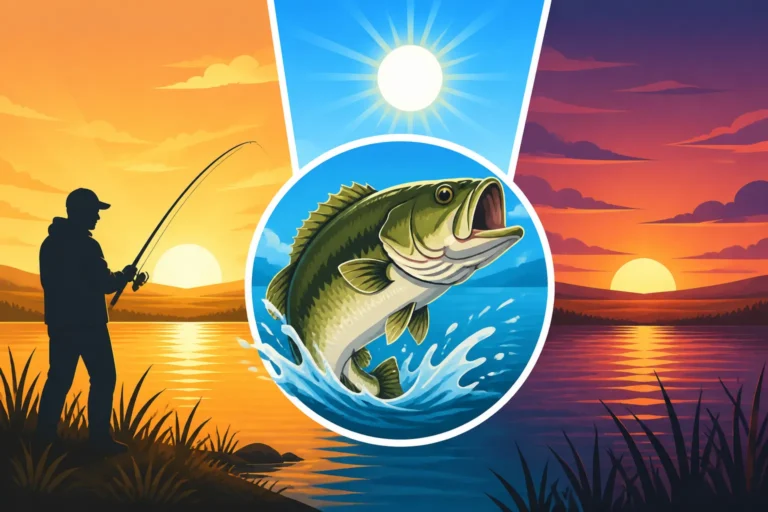
- Morning & Evening: Dawn and dusk are prime feeding times for bass in all seasons, but especially in summer when they avoid midday heat. Bass will move shallower to hunt baitfish and can be found on the edges of main lake points, shallow flats, and around docks. Topwater lures can be incredibly effective during these low-light periods, offering thrilling blow-ups.
- Mid-day: During bright, sunny mid-days, especially in warmer months, bass often retreat to the deepest, shadiest, or most protected parts of structure. This might mean the darkest recesses of a boat dock, the thickest part of a brush pile, or the deepest parts of a ledge. Slow presentations, jigs, and Texas rigs are often the most productive. In winter, sunny mid-days can warm up shallow, dark-bottomed areas, attracting bass for a short feeding window, so don't completely abandon the shallows.
- Overcast Days: Overcast conditions often keep bass more active and shallower throughout the day, as the lack of direct sunlight reduces pressure on their eyes. This can be a great time for moving baits like spinnerbaits and crankbaits, allowing you to cover more water and find active fish. Always remember to check local Kansas Daily Creel Limits by Species before heading out, as regulations can vary by lake and species.
Overcoming Common Challenges and Frustrations
Let's be real, structure fishing for bass in Kansas isn't always easy. You'll get snagged. You'll spend hours without a bite. But understanding common frustrations can help you push through and turn those challenging days into learning experiences.
- Snags: Snags are an inevitable part of fishing structure, especially timber. To minimize them, use weedless rigs (Texas rigs, weedless jigs), check your knots frequently, and use heavier line that can withstand abrasion. If you do get snagged, try a few tricks: give your rod tip a sharp twitch, point your rod directly at the snag and pluck the line like a guitar string, or if safe and possible, motor over to the snag and try to pull your lure free from a different angle. Always carry a lure retriever; it's an inexpensive tool that will pay for itself many times over by saving your favorite lures. Many reliable options are available on Amazon.
- Finicky Fish: Sometimes bass are just not biting. This could be due to a sudden cold front, heavy fishing pressure, or subtle changes in water conditions. When fish are finicky, slow down. Downsize your lures, switch to finesse presentations like a drop-shot or shaky head, and try different colors. Focus on high-percentage areas and present your lure multiple times from different angles. Sometimes, a subtle change in retrieve speed or a longer pause is all it takes. Remember, a Kansas Bass Fishing Guide emphasizes patience and adaptability.
- Locating Structure: Modern electronics are a huge help, but even without them, you can use physical clues. Look for points, changes in shoreline topography, and isolated trees on the bank that might indicate submerged timber. Talk to local bait shop owners or other anglers, who are often a great source of information. Utilize public maps (often available through the Kansas Department of Wildlife and Parks) that sometimes show old roadbeds or creek channels from before the lake was filled. Remember, perseverance pays off. Even a tough day on the water is a day well spent in Kansas, especially when you're learning something new. For more ideas on where to apply these techniques, check out the Best Bass Lakes in Kansas.
Here's a quick table to help you match structures with effective techniques and lures:
| Structure Type | Preferred Bass Species | Key Techniques | Recommended Lures/Baits |
|---|---|---|---|
| Submerged Timber/Brush | Largemouth | Pitching, Flipping, Cranking | Texas-rigs, Jigs, Squarebill Crankbaits, Spinnerbaits |
| Ledges/Drop-Offs | Largemouth, Smallmouth | Deep Cranking, Carolina Rigging, Jigging | Deep-diving Crankbaits, Football Jigs, Spoons |
| Docks | Largemouth | Skipping, Pitching | Jigs, Senkos, Wacky Worms, Small Crankbaits |
| Riprap | Largemouth, Smallmouth | Cranking, Casting | Squarebill Crankbaits, Lipless Crankbaits, Jigs |
| Submerged Vegetation (Mats) | Largemouth | Punching, Topwater | Frogs, Toads, Heavy Texas-rigs |
| Submerged Vegetation (Edges) | Largemouth | Casting, Swimming | Bladed Jigs, Swim Jigs, Swimbaits |
| Bridge Pilings | Largemouth, Smallmouth | Pitching, Cranking | Jigs, Crankbaits, Swimbaits |
| Rocky Points/Humps | Smallmouth, Largemouth | Dragging, Cranking, Jigging | Football Jigs, Deep-diving Crankbaits, Tube Baits |
Disclaimer
Fishing conditions and regulations in Kansas can change frequently. Always consult the latest Kansas Department of Wildlife and Parks (KDWP) regulations and the official Kansas Fishing License Guide before heading out. This guide is for informational purposes only and does not replace official guidelines.