How to Rig Cut Bait for Catfish
There's nothing quite as frustrating as showing up to your favorite Kansas fishing spot, bait bucket in hand, only to realize your presentation isn't quite right, and those trophy catfish are ignoring your offerings. Many anglers struggle with how to properly rig cut bait to maximize its appeal and ensure a solid hookset. This guide will walk you through the ins and outs of preparing and rigging cut bait, helping you overcome common challenges and increase your chances of landing some monster catfish on your next outing.
Understanding Cut Bait Basics for Kansas Catfish
Catfish are primarily scavengers with an incredible sense of smell, and cut bait leverages this characteristic perfectly. But not all cut bait is created equal, and understanding the nuances can make a significant difference in your success.
Why Cut Bait is a Catfish Magnet
Imagine you're a big, hungry channel catfish cruising the murky depths of Milford Lake or the swift currents of the Kansas River. What's going to grab your attention? A lively shad or a juicy piece of freshly cut bait, oozing with scent and looking like an easy meal. Cut bait mimics injured or dead prey, which is a natural part of a catfish's diet. The exposed flesh and blood release powerful attractants into the water, creating a scent trail that catfish can follow from a remarkable distance. This makes it incredibly effective, especially when targeting larger, more opportunistic feeders like blue cats and flatheads, though channel catfish absolutely devour it too. The key is to maximize that scent dispersion and present it in a way that looks utterly irresistible.
Choosing the Best Baitfish for Cutting
The type of baitfish you choose for cutting can significantly impact your results. While many species can work, some are undeniably better due to their oil content, flesh consistency, and natural presence in Kansas waters.
- Shad: This is often considered the gold standard for cut bait in Kansas. Both gizzard shad and threadfin shad are oily and have soft flesh that releases scent quickly. They are abundant in many Kansas reservoirs like Cheney Reservoir and Tuttle Creek Lake, making them a natural food source for local catfish. Fresh shad, caught with a cast net, is always superior, but frozen shad from a bait shop can also be effective.
- Carp: Common carp are another excellent choice, particularly for larger catfish. Their flesh is tough, which means it stays on the hook well, and they are quite oily. You can often catch carp on rod and reel or by bowfishing, and they provide substantial chunks of bait.
- Drum (Sheepshead): Freshwater drum are abundant in many Kansas rivers and lakes. Their firm, white flesh holds up well on the hook and has a subtle, appealing scent. They can be a great alternative, especially if shad or carp are harder to come by.
- Other Panfish: Bluegill, sunfish, or even small crappie can be effective, especially for channel catfish. Just be sure to check your local Kansas Fishing Regulations Explained to ensure you are legally allowed to use them as bait and that they meet any size or possession limits. Using a species that catfish are already accustomed to eating in their environment is always a smart move.
Preparing Your Cut Bait for Maximum Scent
Once you have your baitfish, proper preparation is crucial for unlocking its full potential as a catfish attractant. You're trying to create a scent bomb, not just a dead fish on a hook.
- Bleed the Fish (Optional but Recommended): If you're using fresh baitfish, a quick bleed by cutting the gills or severing the caudal artery can enhance the blood trail and overall scent. This is more common with larger baitfish like carp or drum.
- Cut into Manageable Chunks: The size of your cut bait should correspond to the size of the catfish you're targeting and the hook you're using.
- Small Chunks (1-2 inches): Ideal for channel catfish and smaller blues.
- Steaks or Strips (2-4 inches): Excellent for targeting larger blue catfish or flatheads. You can cut perpendicular to the spine to create "steaks" or lengthwise for strips.
- Heads: Baitfish heads are surprisingly effective, especially for flatheads, as they contain a lot of scent and can attract larger fish.
- Expose Flesh and Guts: This is key! Don't just slice a piece off. Ensure that you expose plenty of muscle tissue, blood, and even some internal organs (if applicable). The softer, gut-filled belly section of a shad or carp is particularly potent. Some anglers will even squeeze the bait lightly before casting to release extra juices.
- Keep it Fresh: Cut bait is most effective when it's fresh. While you can keep it on ice for a day or two, freezing and thawing can sometimes make the flesh mushy and less appealing. If you must freeze, try to vacuum seal it to minimize freezer burn. A good cooler and plenty of ice are your best friends on the water.
Essential Gear for Rigging Cut Bait
Having the right terminal tackle is just as important as having good bait. The strength and type of your hooks, weights, and line all play a role in how effectively you present your cut bait and, more importantly, how you land that trophy catfish.
Hooks: The Foundation of Your Rig
For cut bait, you typically want strong, sharp hooks that can penetrate a catfish's tough mouth. The specific type and size will depend on your target species and bait size.
- Circle Hooks: These are by far the most recommended hook for catfishing with cut bait. Circle hooks are designed to hook fish in the corner of the mouth, leading to fewer gut-hooked fish and making them much safer for catch-and-release. They also have a fantastic hook-up ratio when used correctly (don't set the hook aggressively; just let the fish take it and reel in). For general catfishing in Kansas, sizes ranging from 5/0 to 10/0 are common, with larger sizes for bigger bait and bigger fish like those monster blue cats in the Kansas River. You can find excellent quality circle hooks on platforms like Amazon.
- Treble Hooks: While some anglers use treble hooks for catfishing, they are generally discouraged, especially with live or cut bait. They are more likely to foul-hook fish or get snagged. If you do use them, opt for strong, large sizes.
- J-Hooks: Traditional J-hooks (Kahle, Octopus, Aberdeen) can also be used, but require a more direct hookset and are more prone to gut-hooking. If you prefer J-hooks, look for wide gap styles that provide enough space for your bait and a good hookup. Again, strength is key, so choose heavy-gauge wire hooks. For more on specific hook choices, check out our guide on Best Hook Size for Channel Catfish.
Weights: Keeping Your Bait in the Strike Zone
Weights are essential for getting your cut bait down to where the catfish are, especially in current or deeper water.
- Slip Sinkers (Egg Sinkers/Bullet Sinkers): These are fantastic for a versatile bottom rig. They allow the line to slide freely through them, meaning a catfish can pick up the bait and move off without immediately feeling the weight of the sinker. This reduces resistance and can lead to more confident bites. They come in various weights, from 1/2 oz for calmer waters to several ounces for heavy current.
- Pyramid Sinkers: Great for current, as their shape helps them "dig in" and hold the bottom better than a rounder sinker. Ideal for river fishing where you want your bait to stay put.
- Bank Sinkers: A common teardrop shape, these are also good for holding bottom in current or still water.
- Disc Sinkers: Flat and round, these are designed to prevent rolling in current and are often used in similar scenarios to pyramid sinkers.
- No-Roll Sinkers: As the name suggests, these are designed to sit flat and not roll with the current, making them excellent for precise bait placement in rivers.
Choose a weight heavy enough to hold your bait on the bottom but not so heavy that it's difficult to cast or feels unnatural to the fish. For a comprehensive overview of how different sinkers apply, you might find our guide on Best Slip Sinker Rig for Catfish helpful.
Line and Leader Considerations
Catfish can be incredibly powerful, especially the big ones, so your line and leader need to be up to the task.
- Main Line: For most catfishing in Kansas, a robust monofilament or braided line is recommended.
- Monofilament: Offers good abrasion resistance, some stretch (which can be a shock absorber), and is generally easier to tie knots with. Line strengths from 15-30 lb test are common, but for monster blue cats, you might go heavier.
- Braided Line: Extremely strong for its diameter, has virtually no stretch (providing excellent sensitivity), and casts exceptionally well. Its lack of stretch means less forgiveness during a fight, so a smooth drag is crucial. You might use 30-80 lb test braid, depending on your target. For a good breakdown, see Best Line Weight for Kansas Catfish.
- Leader Material: A leader is almost always a good idea when catfishing with cut bait.
- Monofilament or Fluorocarbon: Both offer good abrasion resistance. Fluorocarbon is less visible underwater, which can be an advantage in clearer waters, though catfish rely more on smell than sight. Leader strength should typically match or be slightly higher than your main line.
- Length: A leader of 12-24 inches is usually sufficient, providing some separation between your main line/sinker and your hook. This allows the bait to move more naturally.
- Swivels: Heavy-duty barrel swivels or ball-bearing swivels are essential for preventing line twist, especially when using rigs that involve spinning bait or fishing in current. They also provide a convenient attachment point between your main line and leader. Look for swivels with a breaking strength well above your line's rating.
Step-by-Step Guide to Popular Cut Bait Rigs
Now that you understand the components, let's put it all together. Here are a few tried-and-true rigs that work wonders for catfishing with cut bait in Kansas.
The Simple Carolina Rig for Bottom Fishing
The Carolina Rig is arguably the most popular and versatile rig for catfishing, especially when fishing on the bottom of lakes and rivers. It allows the fish to pick up the bait without feeling immediate resistance from the sinker.
Components:
- Main fishing line (braided or monofilament)
- Egg or bullet sinker (1/2 oz to 4 oz, depending on current and depth)
- Heavy-duty barrel swivel
- Monofilament or fluorocarbon leader (12-24 inches)
- Circle hook (5/0 to 10/0)
- Bead (optional, but recommended to protect the knot from the sinker)
Assembly Steps:
- Thread the Sinker: Slide your chosen slip sinker onto your main line. If using a bead, slide it on after the sinker. The bead acts as a buffer, protecting your knot from the constant banging of the sinker.
- Tie on the Swivel: Tie your main line to one eye of the barrel swivel using a strong knot like a Palomar knot or improved Clinch knot.
- Attach the Leader: Tie your leader material to the other eye of the barrel swivel. Ensure your knots are secure and cinched down properly.
- Tie on the Hook: At the end of your leader, tie on your circle hook. Again, a Palomar or improved Clinch knot works well.
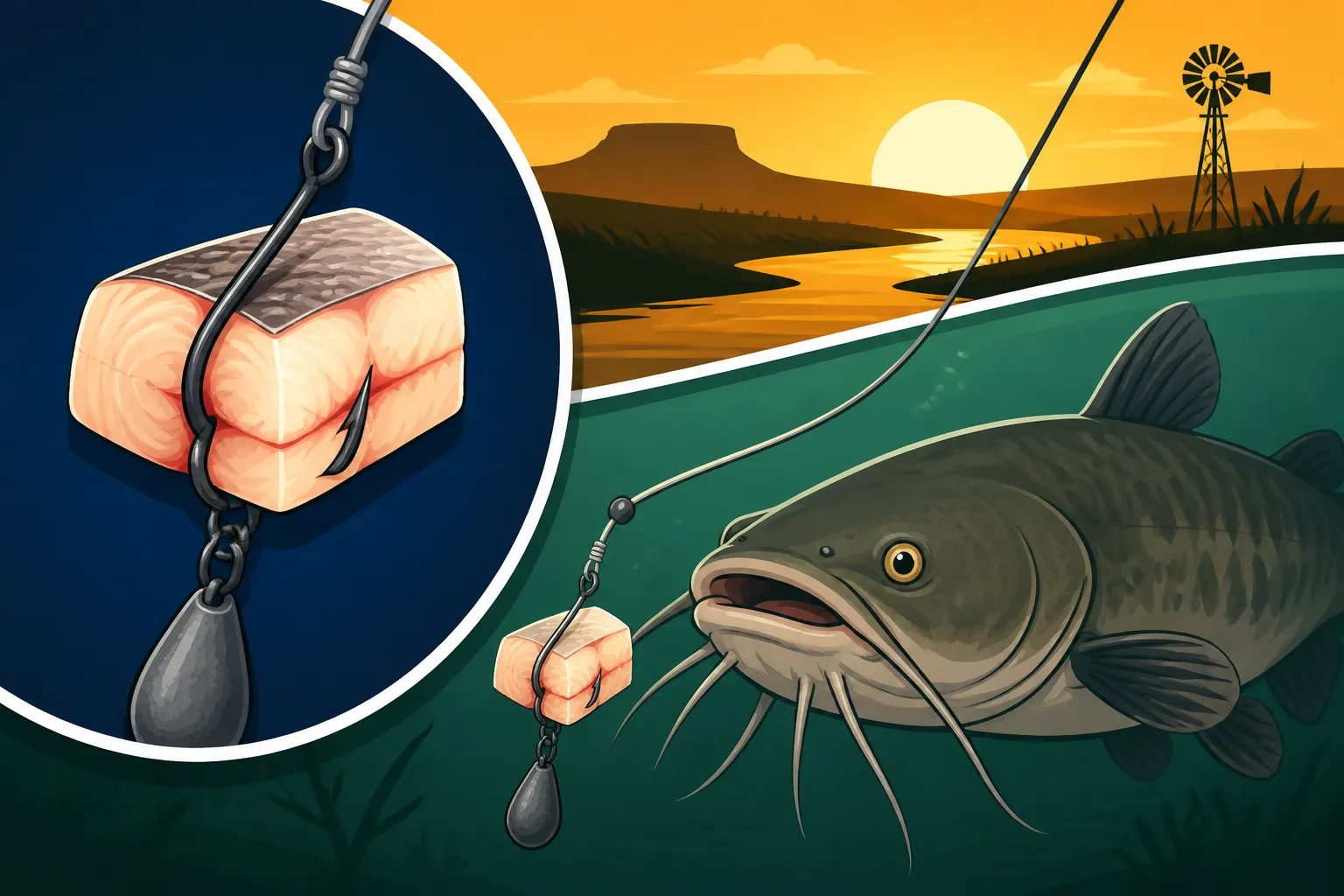
- Baiting the Hook: Thread your cut bait onto the hook, making sure the hook point is exposed. For chunks, push the hook through the skin side and out the flesh side, ensuring it's securely attached. For strips, thread it once or twice, leaving the tail to flutter. The goal is to hide most of the hook while ensuring a good hookset.
- Casting and Waiting: Cast your Carolina rig to your desired spot. Let it sink to the bottom. Keep your rod in a holder with a loose drag or hold it, allowing the line to slide freely. When a fish bites, don't set the hook aggressively; simply reel down until the line is taut and pull the rod steadily away from the fish. The circle hook will do the rest. This rig is fantastic for How to Catch Channel Catfish From the Bank or from a boat in still or slow-moving water.
The Three-Way Swivel Rig for Current
When fishing in strong current, such as in the Kansas River or below dams, a three-way swivel rig is an excellent choice. It allows your bait to drift naturally while keeping your sinker on the bottom.
Components:
- Main fishing line
- Three-way swivel
- Leader for the hook (monofilament or fluorocarbon, 18-36 inches)
- Leader for the sinker (monofilament, slightly lighter than hook leader, 6-12 inches)
- Pyramid, bank, or no-roll sinker (weight depending on current)
- Circle hook (5/0 to 10/0)
Assembly Steps:
- Tie Main Line to Swivel: Tie your main line to one eye of the three-way swivel.
- Attach Sinker Leader: To another eye of the swivel, tie a shorter piece of leader (6-12 inches). To the end of this leader, tie your sinker. Using a lighter test line for the sinker leader means that if your sinker gets snagged, you might only lose the sinker, not your entire rig.
- Attach Hook Leader: To the remaining eye of the three-way swivel, tie a longer leader (18-36 inches). At the end of this leader, tie your circle hook.
- Baiting: Bait your hook with your cut bait, ensuring the hook point is exposed.
- Fishing in Current: Cast upstream and let the current carry your bait downstream, bouncing the sinker along the bottom. The longer leader allows your cut bait to tumble and drift naturally, appearing like a dislodged piece of food, which is irresistible to hungry catfish. This rig is particularly effective when targeting fish in deeper holes or current seams.
The Slip Sinker Rig for Finicky Biters
While the Carolina rig is also a slip-sinker setup, this variation specifically focuses on minimizing resistance even further for extremely finicky fish, often in clearer water or when conditions are tough. It's essentially a Carolina rig but with extra attention paid to light weights and sometimes longer leaders.
Components:
- Main fishing line
- Small, light egg or bullet sinker (1/4 oz to 1 oz)
- Bead (optional)
- Small, strong barrel swivel
- Long monofilament or fluorocarbon leader (24-48 inches, or even longer)
- Circle hook (appropriate size for bait)
Assembly Steps:
- Thread Sinker and Bead: Slide the light slip sinker onto your main line, followed by a bead (if using).
- Tie on Swivel: Tie your main line to one eye of the small barrel swivel.
- Attach Long Leader: Tie your extra-long leader to the other eye of the swivel. The length here is crucial to present the bait far away from the sinker, reducing any perceived weight by the fish.
- Tie on Hook: Attach your circle hook to the end of the long leader.
- Baiting: Secure your cut bait onto the hook, ensuring the hook point is exposed.
- Subtle Presentation: This rig shines when catfish are hesitant. Cast it out and let it settle. The long leader allows the bait to drift and flutter very naturally. When you get a bite, the fish can swim a considerable distance with the bait before feeling any resistance from the sinker, often leading to a more solid take. This rig can be a game-changer when fishing for catfish that are finicky biters.
Advanced Tips and Common Mistakes to Avoid
Even with the right gear and basic rigging knowledge, there are always ways to refine your technique and avoid common pitfalls that can cost you fish.
Presentation Matters: Making Your Bait Look Natural
It’s not just about getting the bait in the water; it’s about making it irresistible. Catfish might have an incredible sense of smell, but a natural presentation can still make a difference.
- Hook Placement is Key: Always ensure the hook point is exposed after baiting. If the hook is buried, you'll have difficulty getting a solid hookset. For chunk baits, pass the hook through the toughest part (like the skin) to keep it secure, then ensure the point emerges cleanly. With strips, hook it once or twice near one end, letting the rest of the strip flutter.
- Balance Bait Size and Hook Size: Don't try to cram a huge chunk of bait onto a tiny hook, nor use a minuscule piece of bait on a massive hook. They need to be proportionate to allow for proper hook exposure and natural movement. A piece of cut shad the size of your thumb might pair well with a 7/0 circle hook.
- Embrace the Drift: In river systems or where there's a gentle current, allowing your bait to drift naturally with the current can be incredibly effective. Instead of casting directly downstream, cast slightly upstream and let the current carry your rig into prime feeding zones, like current seams or logjams. This natural movement mimics a dislodged, easy meal. This technique is often used when fishing the Kansas River Catfish Spots.
- Keep Your Line Clear: Minimize slack in your line while still allowing the fish to take the bait without immediate resistance (this is where slip sinkers shine). Too much slack means missed bites, but too tight, and fish will drop the bait. A slightly bowed line, just enough to feel resistance but not pull the sinker, is often ideal.
Avoiding Common Rigging Pitfalls
Even experienced anglers can make mistakes. Being aware of these common errors can save you a lot of frustration.
- Over-Baiting the Hook: Stuffing too much bait onto a hook is a common mistake. It can obscure the hook point, making it harder to get a good hookset, and can also make your bait look unnatural or too bulky for the catfish to easily swallow. Focus on quality over quantity – a well-presented, moderately sized piece of cut bait is better than a massive, poorly hooked chunk.
- Using Dull or Weak Hooks: Catfish mouths are tough. A dull hook simply won't penetrate. Always start with sharp, strong hooks. Regularly check your hooks for sharpness and replace them if they're bent or corroded. Cheaper hooks can bend or break under the strain of a large catfish, leading to heartbreak at the boat. Investing in quality hooks from brands available on platforms like Amazon is a worthwhile expenditure.
- Improper Knot Tying: A weak knot is the weakest link in your entire setup. Learn to tie a few strong, reliable knots (Palomar, improved Clinch, uni knot) and practice them until they're second nature. Always moisten your knots before cinching them down to prevent friction damage to the line.
- Incorrect Weight for Conditions: Using too light a weight in heavy current will result in your bait washing away from the desired strike zone. Too heavy a weight in calm, shallow water can spook fish and make your presentation less subtle. Adjust your sinker size based on the specific fishing conditions, depth, and current speed. If your bait isn't staying where you want it, adjust your weight.
Storage and Freshness of Your Cut Bait
The fresher your cut bait, the better. While catfish are scavengers, they prefer a potent, fresh scent trail.
- On the Water: Keep your cut bait in a cooler with plenty of ice. A small bait cooler within your main cooler can prevent cross-contamination. Avoid letting the bait sit in warm water or direct sunlight. If you're using a bait bucket, ensure it's aerated and cool.
- Pre-Cutting: Some anglers prefer to cut their bait at home before heading out. If you do this, store the cut pieces in Ziploc bags or airtight containers on ice. You can even add a bit of water to the bag to prevent them from drying out.
- Freezing for Later Use: If you have leftover bait, you can freeze it. Lay pieces flat on a baking sheet to freeze individually, then transfer them to a freezer bag or vacuum seal them. This prevents them from clumping together. While frozen bait can be effective, it often loses some firmness and scent compared to fresh bait. Always thaw slowly in the refrigerator, not at room temperature, to maintain quality.
- Scent Enhancements: Some anglers swear by commercially available scent additives or even garlic powder mixed with their cut bait. While not strictly necessary with fresh bait, these can sometimes give an extra edge, especially if your bait isn't perfectly fresh. However, nothing beats natural, fresh bait.
- The Power of Fresh Fish: If you're out catching bait with a cast net, only cut what you need for the immediate future. Freshly cut bait oozes blood and oils that simply can't be replicated by bait that's been frozen or sitting out too long. This fresh scent is a powerful lure, especially for active catfish.
By mastering these rigging techniques and understanding the nuances of cut bait, you'll be well on your way to more successful catfishing adventures across Kansas. From the smallest channel cats to the largest blues, a properly rigged piece of cut bait is often the ticket to a bent rod and a memorable fight.
Disclaimer
This article is for general informational purposes only and does not constitute professional advice. Laws, prices and regulations vary by location and change over time. Consult a qualified professional for guidance on your specific situation.