Weather Patterns and Kansas Fishing Success
We've all been there: you wake up with that perfect feeling that today's the day for a big catch, only to spend hours casting into dead water. Or maybe you hit the lake on a whim, battling less-than-ideal conditions, and suddenly you're reeling in fish after fish. It often feels like luck, but the truth is, successful fishing in Kansas isn't just about bait and technique; it's deeply tied to understanding how different weather patterns influence fish behavior. This comprehensive guide will break down the science and practical application of reading the weather to consistently improve your fishing success.
The Basics of Barometric Pressure and Fish Behavior
Barometric pressure, essentially the weight of the air pressing down on the earth and water, is one of the most significant yet often overlooked factors in fishing. Fish, like many animals, are sensitive to changes in pressure, which can affect their swim bladder and overall comfort, dictating whether they feel like feeding aggressively or hunkering down.
Rising Barometric Pressure
When the barometer starts to climb, indicating increasing air pressure, it often signals the approach of stable, fair weather. For anglers, this can be a double-edged sword. Initially, a slow, steady rise can sometimes mean improved fishing as fish become more comfortable and active. They might be willing to chase down a variety of baits, from crankbaits to jigs, feeling secure in their environment.
However, a rapid, sharp rise in pressure, especially right after a storm front has passed through, can cause fish to become quite lethargic. Imagine the sudden change in pressure on your own ears when flying or diving; fish feel similar internal discomfort. They might retreat to deeper water or dense cover, suspending themselves to equalize the pressure in their swim bladders. In these situations, your approach needs to be much more subtle. Think smaller baits, slower retrieves, and targeting fish that are holding tight to structure. Sometimes, this period can be a real grind, but knowing why it's happening helps you adjust rather than just getting frustrated.
Falling Barometric Pressure
This is often the golden ticket for many Kansas anglers, especially when targeting predatory species like walleye, bass, and even catfish. A falling barometer usually precedes a change in weather – often a storm front, rain, or even just increasing cloud cover. As the pressure drops, fish often sense the impending change and go on a feeding frenzy. It's a prime window to be on the water.
During this pre-front period, fish tend to be more aggressive and willing to move out of cover to chase prey. They're trying to pack in as much food as possible before the uncomfortable conditions of the storm set in. This is the time to throw those larger, more aggressive lures – spinnerbaits, crankbaits, or even topwater baits for bass if conditions allow. However, once the storm hits and the pressure bottoms out or begins to rise sharply post-front, that feeding window can slam shut just as quickly. Understanding this shift is key to maximizing your time on the water. Many successful anglers swear by hitting the water as soon as they see a sustained drop in pressure on their weather app or personal barometer.
Stable Barometric Pressure
Periods of stable barometric pressure, whether high or low, generally lead to more predictable fishing conditions. When the pressure holds steady for an extended period, fish tend to settle into more consistent patterns. They're not reacting to sudden environmental shifts, so their feeding habits become more regular.
If the pressure has been stable and high, fishing might be a bit slower, requiring patience and a finesse approach. Fish might still be in deeper water or dense cover, but they'll likely be more willing to bite than during a post-front rise. Conversely, if the pressure has been stable and moderate, you might find fish in more diverse locations, actively foraging. This is when you can really dial in a pattern, trying different techniques and locations until you find what works. The key during stable periods is to observe and adapt, as fish won't be as impulsive as they might be during a sharp pressure change. It's an excellent time to fine-tune your approach and really learn the habits of specific species in your favorite Kansas fishing spots, perhaps practicing some of the Kansas Fishing Techniques for Beginners.
Wind's Unseen Influence on Kansas Waters
Wind, often seen as an annoyance by anglers, is actually a powerful force that shapes fish behavior, sometimes for the better. It's not just about how difficult it is to cast; it's about how wind impacts the water column, baitfish, and ultimately, the game fish you're targeting.
Wind Direction and Speed
The direction and speed of the wind can profoundly affect fishing conditions. A gentle breeze, say 5-10 mph, is often considered ideal, as it creates a "chop" on the water that breaks up light penetration, offering cover for fish and making them less wary. It also helps conceal your presence from spooky fish. In Kansas, understanding Does Wind Direction Affect Kansas Walleye Fishing? is crucial, as certain directions can concentrate baitfish or create favorable feeding lanes.
Stronger winds, above 15-20 mph, can be challenging. Casting becomes difficult, boat control is a nightmare, and visibility can be reduced. However, these winds can also be incredibly productive. They push surface water, creating currents that dislodge food and concentrate baitfish on wind-blown banks, points, and humps. This is where predators often ambush. Conversely, a completely calm, slick surface can make fish very skittish, as they feel exposed. Light wind is generally favorable, especially from the south or west, which often brings warmer air. North winds, especially after a cold front, typically mean tougher fishing.
Wind-Generated Current and Oxygenation
Wind doesn't just ripple the surface; it creates subsurface currents that can be a game-changer. These currents, though often subtle, can concentrate plankton and other small organisms, which in turn attract baitfish. Where the baitfish go, the predators follow. Wind also churns the water, increasing dissolved oxygen levels, especially in warmer summer months when oxygen can be depleted in still, deep pockets. This oxygenation can invigorate fish, making them more active and willing to feed.
Anglers should pay close attention to the wind-blown side of a lake or reservoir. This is where the buffet line is set up. Look for points, coves, and creek channels that are getting a good push of wind. Fish will often stack up in these areas, using the current to their advantage, ambushing anything that drifts by. However, finding the "sweet spot" within these wind-blown areas is key – sometimes it's the very tip of a point, other times it's just inside a protected cove from the main wind.
Wind and Water Clarity
Wind can be a major factor in water clarity, which directly impacts how fish feed and how anglers should present their baits. Persistent strong winds blowing into a shallow bank can stir up sediment, creating muddy conditions. While some species, like catfish, thrive in dirty water, others, such as walleye and crappie, might shy away from it or require different presentations.
On the flip side, wind can also push clearer surface water into certain areas or even create distinct "mud lines" where clearer water meets turbid water. These mud lines are often fantastic ambush points for predators. When fishing windy conditions, adjust your lure choice based on clarity. In muddy water, brighter colors (chartreuse, orange) and noisy lures (rattling crankbaits, spinnerbaits) can be effective. In clearer, wind-blown water, more natural colors and subtle presentations might be needed. Sometimes, just a slight shift to a less wind-impacted area can mean the difference between a tough day and a great day, allowing you to match your presentation to the prevailing clarity.
Temperature Swings and Their Impact on Metabolism
Water temperature is arguably the most critical environmental factor dictating fish activity and location. Fish are cold-blooded, meaning their metabolism directly correlates with the water temperature. Even slight changes can dramatically alter their behavior, feeding patterns, and where they choose to hold.
Cold Fronts
A cold front is an angler's bane, a swift change in weather characterized by a sudden drop in air temperature, often accompanied by strong winds and precipitation, followed by clear, high-pressure skies. The immediate impact on fish is often a shutdown. As the water temperature drops rapidly and the barometric pressure rises, fish become lethargic and less willing to chase baits. They might move to deeper water, suspend themselves, or bury themselves in dense cover.
Fishing after a cold front requires a complete shift in strategy. Forget aggressive retrieves and flashy lures. Instead, think finesse: smaller baits, lighter lines, and extremely slow presentations. Jigs tipped with soft plastics, small worms, or subtle crankbaits crawled along the bottom can sometimes entice a bite. Targeting deeper structure or heavy cover where fish are seeking refuge is often the most productive strategy. Understanding How to Fish After a Cold Front in Kansas is a crucial skill for any serious Kansas angler. Patience is not just a virtue; it's a necessity during these challenging conditions.
Warming Trends
Conversely, a warming trend, whether it's the gradual onset of spring or a few unseasonably warm days in fall, can ignite fish activity. As water temperatures slowly climb, fish metabolism increases, making them more active and hungry. This is often when fish move shallower, seeking warmer water, especially during pre-spawn periods. These warming trends can make for some of the most exciting fishing of the year.
During warming trends, fish are often found transitioning between their deeper wintering grounds and shallower feeding or spawning areas. Points, flats, creek channels, and submerged cover in shallower bays become prime targets. Aggressive tactics can be very effective, as fish are willing to chase baits. Topwater lures, spinnerbaits, and medium-diving crankbaits can all produce excellent results. This is an ideal time to explore new areas and really cover water, as active fish are often on the move. Many anglers find the Best Spring Fishing Spots in Kansas become incredibly productive during these periods.
Water Temperature Layers and Thermoclines
In deeper Kansas reservoirs, especially during summer, water can stratify into distinct temperature layers. The upper layer, warmed by the sun, is called the epilimnion. Below that is the thermocline, a transitional layer where temperature changes rapidly. Beneath the thermocline is the hypolimnion, a cold, often oxygen-depleted layer. Fish, particularly those sensitive to temperature and oxygen, will often orient themselves along the thermocline, as it offers the most comfortable combination of temperature and oxygen levels.
Knowing how to use your fish finder to locate the thermocline is a huge advantage, especially during summer. Walleye, crappie, and even striped bass will hold tightly to this band, making them easier to target once you've found the depth. Fish might move above or below it to feed, but often return to its comfortable confines. As seasons change, so does the thermocline. In fall, the lake "turns over" as surface waters cool and sink, mixing the layers. This turnover can temporarily scatter fish and make fishing difficult until the water column stabilizes again.
Precipitation: Rain, Snow, and Their Aftermath
Rain and other forms of precipitation do more than just make you wet; they fundamentally alter the aquatic environment, impacting everything from water levels and clarity to oxygen content and food availability. Savvy anglers learn to leverage these changes to their advantage.
Fishing During or Immediately After Rain
Many anglers avoid fishing in the rain, but doing so can mean missing out on some of the best action. Light to moderate rain can be incredibly beneficial. It breaks up the surface tension, making fish feel more secure and less wary of overhead predators (including anglers). Rain also washes terrestrial insects and nutrients into the water, creating an immediate food source that can trigger a feeding response. This is particularly true for bass and catfish.
Immediately after a rain shower, especially a warm one, fishing can explode. The water gets oxygenated, temperatures might drop slightly, and fish become invigorated. Target areas where fresh rainwater is entering the lake or river, such as culverts, creek mouths, or even subtle drainage ditches. These "new" water sources bring in food and create current, attracting hungry fish. For example, How to Fish Muddy Water After Rain can reveal specific tactics for catfish, which often become very active in these conditions, responding well to stink baits or cut bait. Bass, too, might be active, chasing spinnerbaits or jigs in the newly muddied fringes.
The Impact of Runoff and Flooding
While a gentle rain can be great, heavy, prolonged downpours leading to significant runoff and even flooding present a different challenge. Heavy runoff can dramatically increase water levels, muddy the entire water column, and create strong, disorienting currents. This can disperse fish, making them harder to locate. Shallow areas that were once productive might become too turbid or fast-moving for comfortable feeding.
In these conditions, fish will often seek refuge in calmer, clearer water. Look for eddies behind points, protected coves, or the mouths of tributary creeks that might be running clearer than the main body of water. Fish might also move upstream into calmer stretches of rivers or into standing timber or brush to escape the heavy current. While challenging, these conditions aren't unfishable. It's about finding those pockets of stability where fish can comfortably hold and feed without expending too much energy. Using noisy lures that displace a lot of water can help fish locate your bait in turbid conditions.
Snow, Ice, and Winter Fishing
Winter weather, with its snow and ice, brings a unique set of challenges and opportunities for Kansas anglers. During open water winter fishing, snowmelt can temporarily cool water, potentially slowing fish activity, but it also provides an influx of fresh water. For ice fishing, snow cover on the ice dramatically impacts light penetration into the water below. Heavy snow can block sunlight, reducing light levels and sometimes making fish more active, as they feel less exposed. However, it can also lead to lower oxygen levels under the ice if it persists for long periods.
Ice fishing requires specific strategies due to the cold water and reduced fish metabolism. Fish are generally lethargic, so slow, subtle presentations with small baits are key. Jigging spoons, tiny soft plastics, and live minnows or wax worms are often effective. Understanding Kansas Winter Trout Fishing Guide conditions is particularly important, as trout remain active in cold water. Knowing how to read the ice thickness and snow cover will also dictate where and how safely you can fish. Always prioritize safety when venturing onto the ice; no fish is worth the risk.
Cloud Cover and Light Intensity
The amount of light penetrating the water directly influences how fish perceive their surroundings and how comfortable they feel. From bright, sunny days to heavily overcast conditions, light intensity plays a significant role in dictating when and where fish choose to feed.
Overcast Days
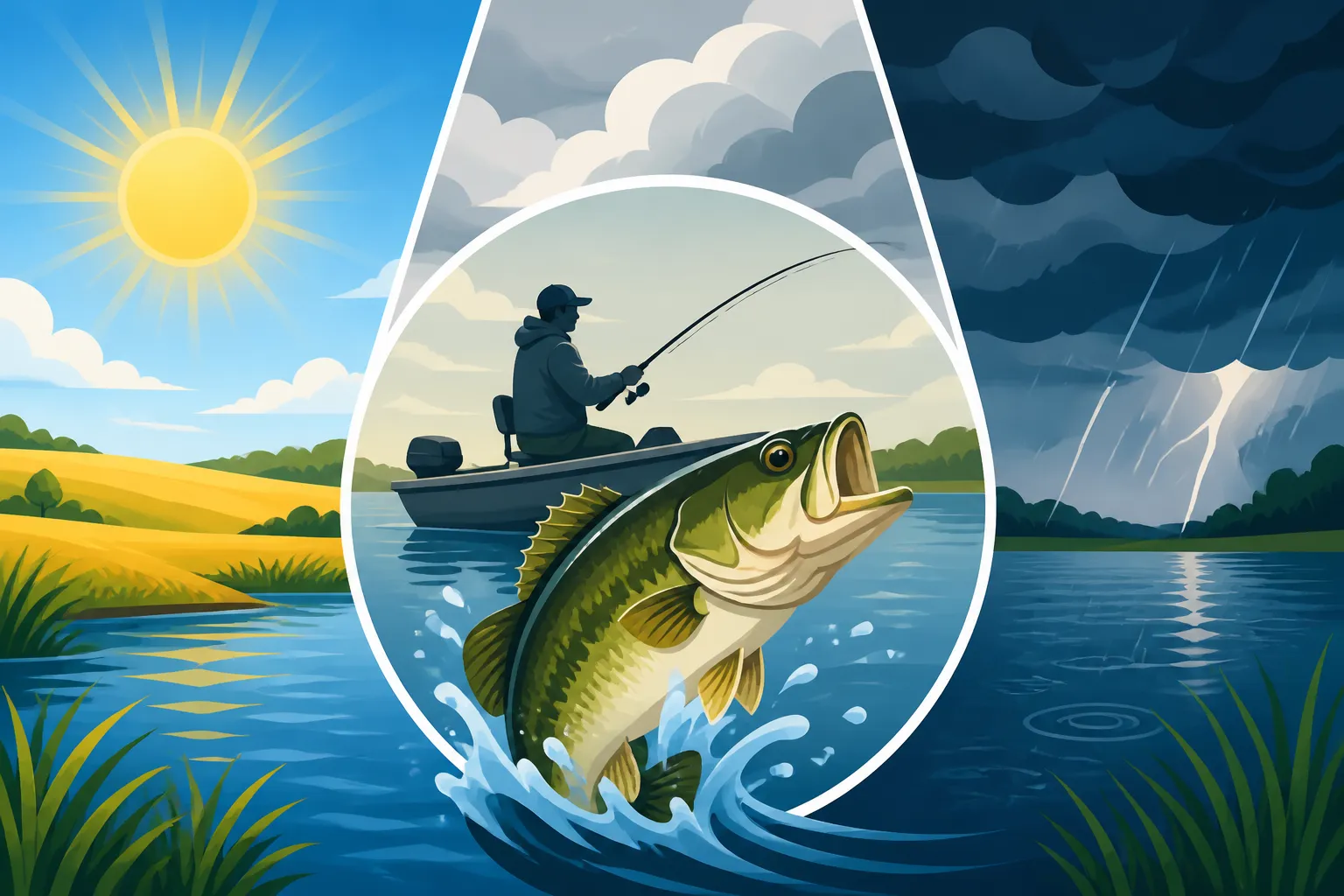
Overcast conditions, with a blanket of clouds reducing sunlight penetration, are often an angler's best friend. The diminished light makes fish feel more secure and less vulnerable to aerial predators. This often encourages them to move shallower and become more active throughout the day, rather than just during dawn and dusk.
On a cloudy day, predatory fish like bass, walleye, and crappie are often more willing to chase bait in open water or shallower cover. Topwater lures can be incredibly effective for bass, as they're not as hesitant to strike on the surface. Spinnerbaits, chatterbaits, and crankbaits can also produce well, especially when covering broad flats or submerged structure. It's a great time to experiment with more aggressive techniques and cover more water, as fish are typically spread out and actively foraging. These days can extend the "golden hours" of dawn and dusk across the entire daylight period.
Bright Sun and Clear Skies
Bright, sunny days with clear skies can present a significant challenge. Intense light penetrates deep into the water, making fish more visible to predators (including you!) and often driving them into deeper, darker, or more heavily shaded areas. Fish can become quite lethargic and hesitant to move far from cover.
When faced with bright sun and clear skies, adapt your strategy. Instead of covering open water, focus on areas with significant shade: docks, overhanging trees, deep submerged brush, rock piles, or areas where the water is significantly deeper. Fish will often hold tight to these spots. Your presentation should also become more subtle and finesse-oriented. Smaller baits, slower retrieves, and natural colors are usually more effective. It's also a great time for sight fishing in clear water, if available, patiently pitching to individual fish you can spot holding in cover. Don't be afraid to fish vertical presentations directly under the boat if you're marking fish deep.
Moon Phases
The influence of moon phases on fishing success is one of the most debated topics among anglers. While scientific evidence is often anecdotal or limited, many experienced anglers swear by the solunar theory, which suggests that fish activity increases during major and minor feeding periods related to the moon's position relative to the earth and sun. Major periods are often around new and full moons, and when the moon is directly overhead or underfoot.
While it's unlikely to be the primary factor determining a successful day, understanding Does Moon Phase Affect Kansas Fishing? can be a fun, supplementary piece of information to consider. Some anglers will check a solunar table before planning a trip, hoping to time their peak fishing efforts with these perceived activity windows. For most, however, it's a secondary consideration after more impactful factors like barometric pressure, temperature, and wind. Treat it as an interesting additional layer to your fishing strategy rather than a make-or-break predictor.
Putting it All Together: Developing Your Kansas Weather-Fishing Strategy
Understanding individual weather components is valuable, but true fishing success in Kansas comes from knowing how these factors interact and how to adapt your strategy accordingly. It's about becoming a detective, reading the signs, and making informed decisions on the fly.
Seasonal Weather Patterns in Kansas
Kansas experiences distinct seasonal weather patterns, each bringing its own set of challenges and opportunities for anglers. Spring is a volatile mix of warming trends, cold fronts, and often heavy rains, leading to highly variable fishing but also some of the most productive pre-spawn action. Summer brings stable, hot weather, pushing fish deeper during the day but making for excellent Kansas Night Fishing Guide opportunities, especially for catfish and white bass. Fall is often characterized by cooling water and shorter days, triggering aggressive feeding as fish prepare for winter. Winter brings cold temperatures and potential ice, requiring specialized Kansas Ice Fishing Guide techniques or targeting cold-tolerant species like trout in open water.
Being aware of the general seasonal trends helps you anticipate fish behavior. For instance, knowing that white bass typically start their river runs in spring as water temperatures hit a certain range, or that walleye often move to deep structure in summer, provides a framework for your seasonal strategy. The key is to then overlay the daily weather forecast onto these seasonal patterns.
Reading the Forecast and Local Conditions
Gone are the days when you had to rely solely on local news. Today, countless weather apps and websites (like NOAA, AccuWeather, or even dedicated fishing apps) provide hyper-local, real-time forecasts for everything from barometric pressure trends to wind gusts and expected precipitation. Make it a habit to check the forecast religiously before your trip. Pay attention to:
- Barometric pressure: Is it rising, falling, or stable? And how quickly?
- Wind: Direction and speed. Are there sustained winds or just gusts?
- Temperature: Air and predicted water temperature (if available).
- Precipitation: Chances of rain, snow, or storms.
- Cloud cover: Sunny, partly cloudy, or overcast?
However, the forecast is just a prediction. Always observe the actual conditions when you arrive at your fishing spot. Is the wind stronger or calmer than expected? Is the water clearer or muddier? Are there active baitfish? These real-time observations are crucial for making immediate adjustments to your game plan. Don't be afraid to change your target species, location, or retrieve speed based on what the water is telling you. This adaptability is part of what makes a successful angler. Consider some of the Best Time of Day to Fish in Kansas based on these observations.
Keeping a Fishing Log
This is perhaps the most underrated tool for mastering the art of weather-pattern fishing. A detailed fishing log allows you to connect the dots between specific weather conditions and your fishing success (or lack thereof). On each outing, record:
- Date and time
- Location (specific lake, river stretch, or even a particular cove)
- Air temperature
- Water temperature
- Barometric pressure (and its trend – rising, falling, stable)
- Wind direction and speed
- Cloud cover
- Precipitation (type and intensity)
- Moon phase (if you're tracking it)
- Species caught, size, and quantity
- Successful baits and techniques
- Notes on fish behavior or observations
Over time, you'll start to see patterns emerge that are specific to your fishing spots and your techniques. You might discover that crappie at Milford Lake bite best on cloudy days with a south wind, or that channel catfish in the Kansas River prefer falling pressure before a summer storm. This personalized data is invaluable and far more useful than general advice. You can use a simple notebook or a dedicated fishing log app available on platforms like Amazon.
Here's a quick reference table summarizing how different weather patterns generally affect Kansas fish behavior and what strategies you might employ:
| Weather Pattern | Barometric Pressure | Fish Behavior (General) | Recommended Strategy |
|---|---|---|---|
| Pre-Front (Falling Pressure) | Falling (fast) | Often triggered feeding frenzy, active, move shallower. | Aggressive retrieves, reaction baits (crankbaits, spinnerbaits), target wind-blown areas. Best time to catch fish. |
| Post-Front (Rising Pressure) | Rising (fast) | Lethargic, move deeper or into dense cover, suspend. | Finesse presentations, smaller baits, slower retrieves, target deep structure or heavy cover. Patience is key. |
| Stable, Moderate Pressure | Stable | Predictable feeding patterns, consistent activity. | Stick to known patterns, fine-tune techniques, explore various depths and cover. Good for learning specific behaviors. |
| Stable, High Pressure | Stable (high) | Can be slower; fish may be deeper or in cover, less active. | Finesse, subtle presentations, target shady areas or deep cover. |
| Light Wind (5-10 mph) | Varies | Breaks surface, offers cover, pushes baitfish. | Fish wind-blown banks, points, use various baits depending on other factors. Often ideal conditions. |
| Strong Wind (>15 mph) | Varies | Concentrates baitfish, creates current, can muddy water. | Focus on wind-blown structure, look for current breaks. Adjust lure color/size for clarity. Use heavier tackle for casting control. |
| Calm/No Wind | Varies | Fish can be spooky, feel exposed, may stay deep or in heavy cover. | Finesse, long casts, target shady areas or deep structure. Can be tough for some species. |
| Light Rain | Varies | Oxygenates water, washes in food, breaks surface tension, increases activity. | Target inflowing water, use noisy/darker lures in stained water. Often excellent for bass and catfish. |
| Heavy Rain/Runoff | Varies | Increases turbidity, strong currents, disperses fish. | Look for calm eddies, clearer tributaries, slack water. Use scent and noise. |
| Overcast (Cloudy) | Varies | Fish feel more secure, active throughout the day, move shallower. | Good for topwater, reaction baits, fishing shallow cover. Extends prime fishing hours. |
| Bright Sun/Clear Skies | Varies | Fish seek deep water, shade, heavy cover; often skittish. | Target shaded areas, deep structure, use finesse, natural colors. Patience and precise presentations. |
By embracing the constant changes that Kansas weather throws your way and understanding how fish react to them, you'll move beyond just hoping for luck and start actively increasing your chances of a successful and rewarding fishing trip.
Disclaimer
Fishing conditions and regulations in Kansas are subject to change. Always consult the latest Kansas Department of Wildlife, Parks and Tourism (KDWP) regulations before heading out. This guide provides general information and recommendations, but local conditions can vary significantly.