Best Auger Size for Kansas Ice Fishing
There's nothing quite like the crisp, quiet solitude of ice fishing on a frozen Kansas lake, but for many new to the sport – and even some seasoned anglers – the sheer variety of augers out there can be a bit overwhelming. Picking the right size, power, and type of ice auger is crucial for a successful and enjoyable day on the hard water, saving you frustration and wasted energy. This guide is here to help you cut through the confusion and find the best auger size for your specific Kansas ice fishing adventures, whether you're chasing panfish or trophy cats.
Why Your Auger Size Matters on Kansas Ice
Choosing the right auger size isn't just about how big a hole you can drill; it's about efficiency, safety, and ultimately, your enjoyment on the ice. Too small, and you might struggle to land that trophy walleye you’ve been dreaming of. Too large, and you'll be expending unnecessary energy, draining your battery faster, or wrestling with a heavier piece of equipment. In Kansas, where ice conditions can vary from a few inches in early December to over a foot in the heart of January, having the right tool for the job is paramount.
The Impact on Landing Fish
Imagine spending an hour in the biting cold, patiently jigging for crappie, and suddenly you hook into a monster channel catfish or a hefty wiper. You fight it to the surface, only to realize the hole you drilled is too small to pull its head through. This scenario is a real heartbreaker that many anglers have faced. A small 4-inch hole is perfectly fine for bluegill and small crappie, but anything larger, especially if it has broad shoulders like a walleye or a wide head like a flathead catfish, will require a wider opening. When you're fishing for species like these, you absolutely need a hole that accommodates their size. It’s not just about the body, but the head and gills which are often the widest part.
Efficiency and Energy Consumption
Drilling holes is hard work, no matter how sharp your auger blades are. The wider the hole, the more ice needs to be cut and removed. This means more physical effort if you're using a manual auger, and significantly more battery or fuel consumption if you're using a power auger. On a busy day, you might drill dozens of holes, especially if you're searching for active fish or moving to different depths. Each extra inch in diameter drastically increases the volume of ice removed. For example, an 8-inch hole has about 75% more volume than a 6-inch hole, meaning 75% more work. This exponential increase in effort means you need to balance the size of the fish you might catch with the practicalities of drilling numerous holes. If you're primarily targeting small panfish, an oversized auger will just wear you out.
Navigating the Auger Options: Manual vs. Power in Kansas
Before we dive into specific auger sizes, it's essential to understand the different types of augers available. Each has its pros and cons, especially when considering the typical ice thickness and fishing styles popular in Kansas. Whether you're a minimalist angler who values portability or someone who wants to drill holes all day with minimal effort, there's an auger type for you.
Manual Augers: The Simplicity of Hand Power
Manual augers are the classic choice, and for good reason. They are generally the most affordable, lightest, and require no fuel or battery charging. They're also incredibly reliable and quiet, which can be a huge advantage on spookier fish or in crowded ice fishing areas. For early season ice in Kansas, when the ice is typically less than 8-10 inches thick, a good manual auger can be incredibly efficient. They are perfect for anglers who don't need to drill many holes or prefer to stay mobile, walking from spot to spot across a lake like Hillsdale Lake or Melvern Lake.
However, once the ice thickens past a foot or more, which it often does during a good Kansas winter, manual augers can become a serious workout. Drilling multiple holes in thick ice can quickly lead to fatigue, turning a fun day into a chore. They are also less ideal if you plan on setting up a heated shelter and want to drill many holes inside and outside without breaking a sweat. If you're considering a manual auger, ensure the blades are always razor-sharp. You can often find replacement blades or even full manual augers on platforms like Amazon.
Power Augers: Harnessing the Force
Power augers take the physical strain out of drilling holes, making them a popular choice for many Kansas anglers, especially those who fish frequently, deal with thick ice, or like to drill a lot of holes. There are several types of power augers, each with unique characteristics.
Gas Augers: The Traditional Workhorses
Gas-powered augers have been the go-to for serious ice anglers for decades. They offer immense power and can cut through very thick ice quickly and efficiently. They are excellent for drilling dozens of holes throughout the day, even in frigid temperatures that can challenge other power sources. If you're heading out to a vast reservoir like Milford Lake or Cheney Reservoir and plan to cover a lot of ground, a gas auger will certainly get the job done.
The downsides? Gas augers are typically the heaviest, noisiest, and require maintenance like mixing fuel and oil. They also emit fumes, making them less suitable for use inside ice shelters without proper ventilation. Carrying extra fuel and dealing with potential starting issues in extreme cold can also be a hassle.
Propane Augers: A Cleaner Alternative
Propane augers emerged as a cleaner, quieter alternative to gasoline. They run on small propane cylinders, which are readily available and eliminate the need for mixing fuel. They are generally quieter than gas augers and produce fewer emissions, making them a slightly better option for use near shelters, though ventilation is still wise. Propane augers offer comparable power to many gas models and start reliably in cold weather.
The main drawbacks are the cost of propane cylinders, which can add up over a season, and the slightly reduced power compared to the strongest gas models. They can also be a bit heavier than electric augers.
Electric Augers: The Silent Revolution
Electric augers have rapidly gained popularity in recent years, offering a compelling blend of power, portability, and convenience. They are incredibly quiet, produce no emissions, and are generally lighter than their gas or propane counterparts. The instant start-up, even in bitter cold, is a huge plus. Modern lithium-ion battery technology has significantly improved their run time and power, allowing many anglers to drill dozens of holes on a single charge. You'll find a wide array of electric augers and accessories on Amazon, from lightweight panfish models to heavy-duty options.
However, battery life is still the primary concern. In extremely cold conditions, batteries can drain faster, and carrying spare batteries (which can be expensive) is often necessary for a full day of fishing, especially if you're drilling larger holes. They also need to be charged, meaning you need access to power before and after your trip. For targeting larger species where you might need to drill 10-inch holes, ensure you have a robust battery system.
Finding the Perfect Fit: Matching Auger Size to Your Kansas Fishing Style
Now that we've covered the types, let's zero in on auger sizes. The "best" size truly depends on what you're fishing for, how you like to fish, and what kind of ice you expect to encounter in Kansas. There's no one-size-fits-all answer, but by understanding the common sizes and their applications, you can make an informed decision.
The Nimble 4-inch and 6-inch Augers
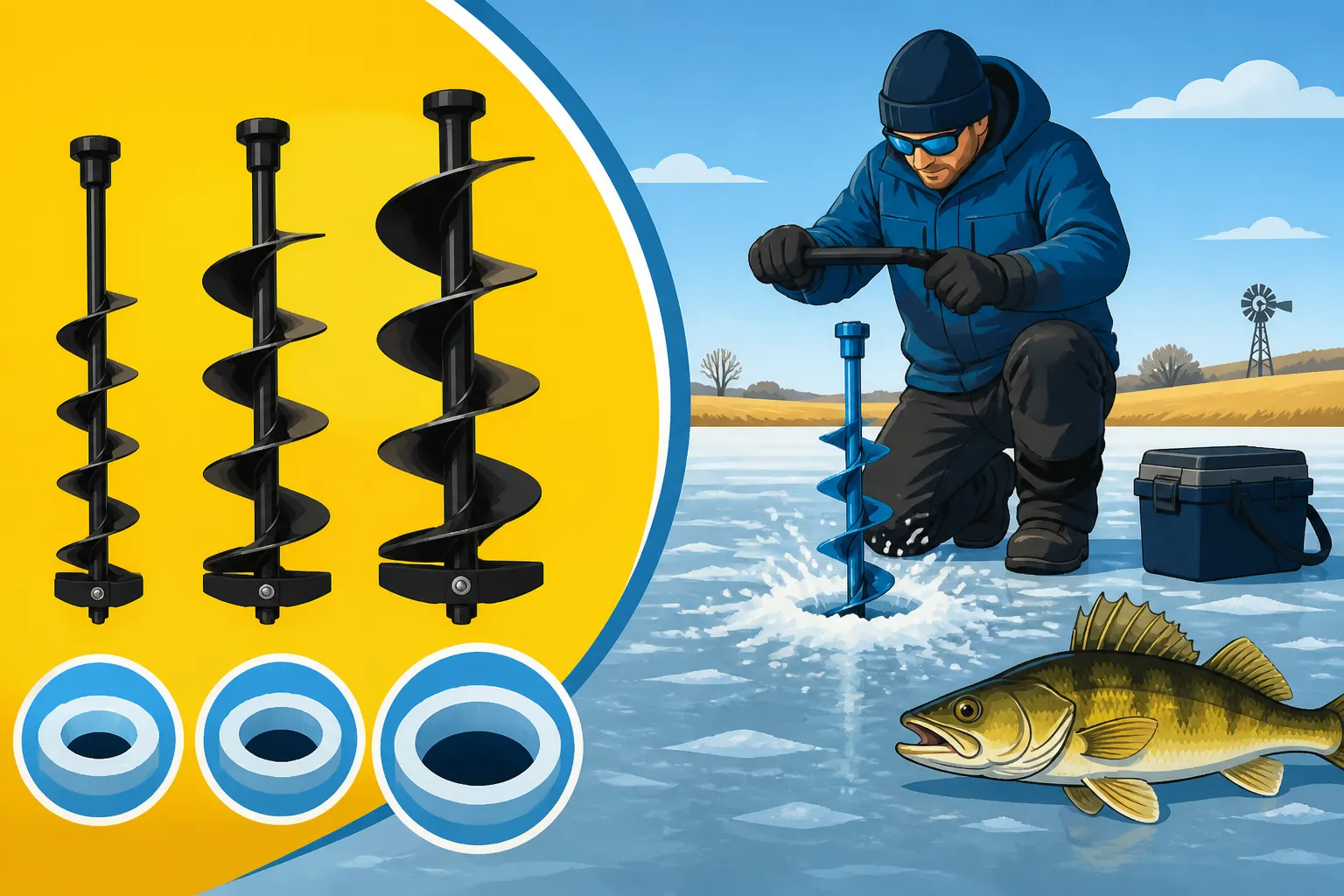
These smaller augers are champions of portability and speed, especially for manual models. A 4-inch hole is typically used for specific, smaller species like bluegill or small perch, where a large hole isn't necessary. They are fantastic for anglers who move constantly, drilling many holes quickly to locate active schools of fish. If you're targeting panfish at a Kansas Community Fishing Lake, these sizes are incredibly efficient.
The 6-inch auger is arguably the sweet spot for panfish and even smaller crappie. It offers a good balance of hole size for landing decent-sized panfish without requiring excessive effort. For the ice fishing enthusiast who loves chasing crappie at Clinton Lake or catching bluegill in a local pond, a 6-inch auger is a great choice. It's also ideal for those lighter electric augers focused on battery longevity. The main drawback is, of course, the limited size of fish you can comfortably land. That surprise 5-pound catfish will likely need to be released if you're only packing a 6-inch auger.
The Versatile 8-inch Auger
The 8-inch auger is often considered the most versatile and popular size for general ice fishing in Kansas. It provides a hole wide enough to comfortably land most common game fish, including respectable walleye, white bass, wipers, and even many channel catfish. If you're heading out to Webster Reservoir for walleye or Tuttle Creek Lake for catfish, an 8-inch auger gives you a good chance of landing whatever bites. It's also large enough to accommodate most tip-ups and allows for a bit more room to maneuver your jigging rod without banging the sides of the hole.
While it requires more effort than a 6-inch auger, the 8-inch model is still manageable for manual drilling in moderate ice, and power augers make quick work of it. This is often the size I recommend for anglers who want one auger that can handle a wide variety of fishing situations in Kansas without being too cumbersome. It strikes an excellent balance between hole size and drilling efficiency. You can easily find 8-inch blades and complete auger units on platforms like Amazon, offering a range of price points.
The Big Guns: 10-inch Augers and Larger
When you're serious about trophy fish, need to run multiple large tip-ups, or plan to try ice spearing (where legal and applicable in Kansas for certain species like rough fish), a 10-inch or even larger auger comes into play. These are designed for landing substantial fish, such as large blue catfish from the Kansas River or flathead catfish. If you're setting up a comprehensive ice camp and plan to spend an entire day targeting big game, a larger auger ensures you won't be limited by hole size.
However, the increased hole size comes with significant trade-offs. These augers are heavier, require considerably more effort (for manual models) or battery/fuel (for power models), and are typically more expensive. They are almost exclusively used with power augers due to the sheer amount of ice they displace. Unless you specifically know you'll be targeting fish that necessitate such a large opening, or are involved in spearing, a 10-inch auger is often overkill for general Kansas ice fishing.
Matching Auger Size to Kansas Fish Species
Let's get specific about common Kansas fish species and the auger sizes that best suit them. This isn't just about what can fit, but what makes for a less stressful and more enjoyable fishing experience.
Panfish: Bluegill, Crappie, Perch
For the quintessential panfish experience, where you might be catching dozens of fish, mobility and efficiency are key.
- 4-inch Auger: Excellent for pure bluegill or small perch. Minimal effort, quick holes. Best for kids or very light setups.
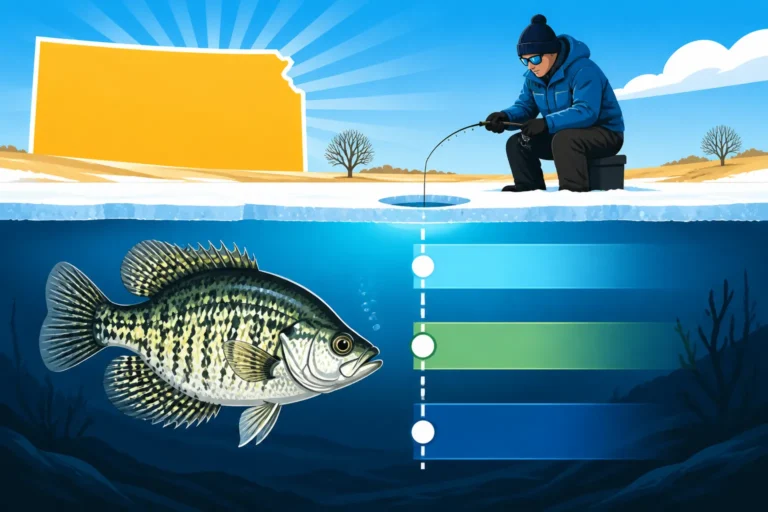
- 6-inch Auger: The ideal sweet spot for crappie and larger bluegill. Allows you to land a good-sized slab crappie comfortably. If you’re primarily targeting panfish, this is your go-to. It’s light, fast, and conserves energy or battery. When targeting crappie, especially during the colder months, having many holes to explore different depths and structures can lead to better success. A 6-inch auger makes this exploration much more manageable. Check out our guide on Kansas Crappie Fishing Techniques for more tips on finding these tasty fish.
Walleye and White Bass
These popular game fish require a bit more room, especially larger specimens that are common in Kansas's big reservoirs.
- 6-inch Auger: Can work for smaller white bass, but you'll be pushing it for any decent-sized walleye. If you encounter a slot-limit walleye, you might struggle.
- 8-inch Auger: This is the recommended size for walleye and white bass in Kansas. It provides plenty of room to land a trophy walleye without fear of losing it at the hole. It's also wide enough for multiple lines or larger presentations often used for these species. When you’re spending all day targeting walleye at Wilson Lake or Cheney Reservoir, an 8-inch hole just makes good sense. You'll find many anglers relying on this size. For more specific tactics, take a look at our article on Kansas Walleye Fishing Techniques.
Catfish and Wiper
When you're after serious fighters with broad shoulders and thick heads, like channel, blue, or flathead catfish, or the powerful hybrid wipers, you need to go bigger.
- 8-inch Auger: This is the absolute minimum for wipers and standard channel catfish. While possible, landing a large one will be a tight squeeze and requires careful maneuvering. You might break off a hook or bend a rod if you don't play it just right.
- 10-inch Auger (or larger): For trophy catfish (especially blue and flatheads that can reach impressive sizes in Kansas) and large wipers, a 10-inch auger provides the necessary clearance. This larger hole significantly increases your chances of successfully landing a hard-fighting fish that might weigh 10 pounds or more. While it requires more effort to drill, the peace of mind knowing you can land that monster is often worth it. If your goal is to land big fish, especially from a deep lake like Tuttle Creek Lake, this is your best bet.
Here’s a quick summary to help you decide:
| Auger Size | Ideal Target Species in Kansas | Pros | Cons | Best For |
|---|---|---|---|---|
| 4-inch | Small bluegill, small perch, very small crappie | Extremely light, very fast drilling, minimal effort | Very small landing hole, only for specific tiny fish, easily clogged | Highly mobile panfish anglers, kids, early season thin ice |
| 6-inch | Crappie, bluegill, small white bass | Excellent balance of portability and hole size for panfish, efficient | Limited for larger game fish (walleye, catfish, wipers) | Dedicated panfish anglers, good all-around choice for portability |
| 8-inch | Walleye, white bass, wipers, most channel catfish | Most versatile, good for majority of Kansas game fish, common size | More effort than 6-inch, less efficient for pure panfish, could be tight for trophy cats | All-around Kansas angler, mixed bag fishing, running tip-ups |
| 10-inch+ | Trophy catfish, large wipers, spearing | Ample room for trophy fish, large presentations | Heavy, requires significant effort (power auger recommended), higher cost, drains batteries faster | Dedicated trophy hunters, spearfishing, large group setups |
Keeping Your Auger Running Smoothly: Maintenance for Kansas Conditions
No matter what size or type of auger you choose, proper maintenance is crucial to ensure it performs reliably season after season on the unpredictable Kansas ice. A well-maintained auger is not only more efficient but also safer to operate.
Blade Sharpening and Replacement
The blades are the heart of your auger. Dull blades make drilling excruciatingly difficult, regardless of the auger's power source. For manual augers, dull blades mean a back-breaking workout. For power augers, they put unnecessary strain on the engine or battery. Regularly inspect your blades for nicks, dents, or dullness. Many manufacturers offer replacement blade sets, which are usually easy to swap out. You can also find blade sharpening services or even DIY sharpening kits on sites like Amazon. Having a spare set of sharp blades in your ice fishing kit, especially for a long trip to a remote lake, is a smart move. Remember, sharp blades cut smoothly and efficiently, making your time on the ice much more enjoyable.
Storage and Winterization
At the end of the ice fishing season (or even between prolonged uses), proper storage is key.
- Gas/Propane Augers: If you're putting your gas auger away for an extended period, it's wise to run it until it's out of fuel or use a fuel stabilizer to prevent gumming up the carburetor. Clean any accumulated ice or debris from the auger flighting and blades. Store it in a dry place, ideally covered, to protect it from dust and moisture.
- Electric Augers: For electric augers, store the battery in a cool, dry place, typically at a partial charge (around 50-60%) to prolong its lifespan. Avoid leaving it fully charged or fully depleted for long periods. Ensure the auger shaft is clean and dry to prevent rust.
For all auger types, always store your auger with the blade cover securely in place. This protects the sharp blades from damage and, more importantly, protects you and anyone else from accidental cuts. A damaged blade can be extremely dangerous. Regularly checking all bolts and connections for tightness will also prevent issues on the ice. Staying on top of your gear maintenance will help ensure that you can enjoy many seasons of Kansas Ice Fishing Guide. Knowing how long the ice needs to be to support fishing is also critical for safety, which you can learn about in How Thick Does Ice Need to Be to Fish?. You might also be interested in Kansas Ice Fishing Safety Tips before heading out.
Ultimately, the best auger size for your Kansas ice fishing adventures is the one that best suits your target species, fishing style, and the conditions you typically encounter. Don't be afraid to ask other anglers on the ice what they're using, and remember that sometimes, a little extra research upfront can save you a lot of hassle when the temperatures drop.
Disclaimer
This article is for general informational purposes only and does not constitute professional advice. Laws, prices and regulations vary by location and change over time. Consult a qualified professional for guidance on your specific situation.