Fly Fishing Tips for Kansas Trout Streams
Many anglers across Kansas feel like fly fishing for trout is something reserved for mountain states, a distant dream that doesn't quite fit our prairie landscape. This couldn't be further from the truth! Kansas offers unique and rewarding opportunities for fly anglers, especially those seeking the thrill of a trout on the line. This comprehensive guide will dispel those myths and equip you with the knowledge, gear advice, and tactical insights to successfully fly fish for trout right here in the Sunflower State.
Unlocking Kansas's Hidden Trout Fisheries
When most people picture Kansas, they think of endless plains and warm-water species like catfish and bass, which we certainly have in abundance! But what often goes unnoticed are the dedicated efforts by the Kansas Department of Wildlife, Parks, and Tourism (KDWPT) to create fantastic trout fishing opportunities. These aren't just accidental catches; these are carefully managed fisheries designed for anglers like you who enjoy the art of fly fishing.
Where to Find Stocked Trout in Kansas
Kansas trout fishing largely revolves around a "put-and-take" stocking program, primarily focused on rainbow trout, though you might even encounter some beautiful golden rainbow trout. These fish are stocked in specific lakes and streams when water temperatures are cool enough for them to thrive, generally from fall through spring. It’s crucial to know which waters are part of the program, as they vary each season. You'll often find these designated trout waters in urban community lakes, state fishing lakes, and occasionally in river access points. Checking the latest stocking schedules is always a smart move to ensure you're heading to a productive spot. Many anglers eagerly await the Kansas Trout Stocking Schedule for December to plan their winter outings.
It's not just about hitting any water; you need to target the right waters at the right time. Locations like Cedar Bluff State Park, Mined Land Wildlife Area, and various community lakes across the state regularly participate in the trout stocking program. These spots offer relatively easy access, making them perfect for both seasoned fly casters and those new to the sport. While these fish are often recently stocked, they quickly adapt to their new environment and can become surprisingly challenging and rewarding on a fly rod. Remember, the goal isn't just to catch fish, but to engage in the entire experience of reading the water and presenting your fly just right.
The All-Important Kansas Trout Permit
Before you even think about casting your first fly for trout in Kansas, there's a vital piece of paper you'll need: the trout permit. This isn't just an optional extra; it's a mandatory requirement for anyone wanting to fish for trout in designated trout waters, regardless of whether you already possess a standard Kansas fishing license. It's a small additional investment that directly funds the stocking programs that bring these exciting fishing opportunities to our state. You can find all the details you need in our comprehensive Kansas Trout Permit Guide.
The permit system ensures that the KDWPT has the necessary resources to continue these valuable programs. Think of it as your contribution to sustaining and enhancing these unique fisheries. For example, if you're an adult planning to hit the water, understanding the Kansas Adult Trout Permit Costs $14.50 is a good first step. It's always a good idea to secure your permit before you head out, and thankfully, acquiring one is a straightforward process, often available online or at local vendors. Don't let the lack of a permit turn a great day into a frustrating one; compliance is key to enjoying our state's fishing opportunities without a hitch, and understanding the Kansas Fishing Regulations Explained will keep you on the right side of the rules.
Gearing Up for Success: Fly Rods, Reels, and Lines
Fly fishing might seem intimidating with all its specialized gear, but for Kansas trout, you don't need to break the bank or get overly technical. The key is to choose balanced equipment that handles well and is appropriate for the size of fish you'll typically encounter and the waters you'll be fishing. Remember, finesse often trumps brute force in fly fishing.
Rod & Reel Combinations for Kansas Streams
For the stocked trout in Kansas, a lighter setup is generally preferred. A 3-weight or 4-weight fly rod, typically between 7 to 8.5 feet in length, is ideal. This lighter action allows for delicate presentations, which can be crucial when dealing with spooked, recently stocked trout in clear, smaller waters. It also makes fighting even a modest 10-inch rainbow feel like a trophy battle, adding to the excitement! You want a rod that loads easily for shorter casts and has enough backbone to handle a spirited fish.
Pair your rod with a matching reel that's primarily a line storage device. For these lighter setups, a simple click-and-pawl or disc-drag reel will do perfectly. The drag system won't be heavily relied upon for fighting smaller trout, but a smooth reel is always appreciated. You can find excellent entry-level fly rod and reel combos from various manufacturers, often available through retailers like Amazon, that are perfectly suited for Kansas trout fishing without being prohibitively expensive. This balanced approach ensures you have a setup that's both enjoyable to cast and effective at bringing fish to the net.
The Right Fly Line Makes All the Difference
The fly line is arguably the most critical component in fly fishing, as it's what carries your fly to the target. For most Kansas trout scenarios, a weight-forward (WF) floating line is your best friend. The weight-forward design helps with casting distance and turnover, while the floating aspect keeps your line on the surface, making it easier to mend and control your drift. Match the weight of your line to your rod's weight (e.g., a WF4F line for a 4-weight rod).
For leaders, a tapered leader between 7.5 to 9 feet long, ending in a 5X or 6X tippet, is usually appropriate. The taper helps transfer casting energy smoothly to your fly, allowing for delicate presentations. The lighter tippet is less visible to the fish and provides the necessary stealth. However, having a spool of tippet material on hand is wise, as you'll re-tie flies and occasionally break off in snags. Many anglers prefer fluorocarbon tippet for its invisibility in water and abrasion resistance, especially when fishing around submerged structures. You can often find multi-packs of tapered leaders and tippet spools on Amazon, which is convenient for stocking up.
Essential Accessories and Waders
Beyond the rod, reel, and line, a few other accessories will greatly enhance your Kansas trout fly fishing experience. A good pair of polarized sunglasses is a must, not just for eye protection but also for cutting glare off the water, allowing you to spot fish or subtle changes in bottom structure. A net, preferably one with a rubber or silicon mesh, is also invaluable for safely landing and releasing fish, minimizing harm.
Waders and wading boots are often essential, especially for exploring stream sections or getting to deeper water without spooking fish from the bank. Chest waders are versatile for varying water depths, and breathable materials are a blessing on warmer days. Look for comfortable, durable options. A small fly box filled with appropriate patterns (we’ll get to those soon!), nippers for cutting line, and forceps for hook removal round out your essential toolkit. Consider a small sling pack or vest to keep these items organized and easily accessible while you're on the water.
Mastering Techniques for Kansas Trout
Fly fishing is as much about technique as it is about gear. While Kansas trout might not be as "wild" as their mountain counterparts, they are still fish and react to presentation, drift, and fly choice. Learning to read the water and present your fly naturally will dramatically increase your success.
Reading the Water and Approaching the Stream
Effective fly fishing starts before your first cast. "Reading the water" means identifying areas where trout are likely to hold. Look for current breaks, deeper pockets, submerged structure (like logs or rocks), undercut banks, and even areas where debris has collected, creating a sheltered zone. These are all places where trout can find shelter from the current, ambush food, or feel secure. In community lakes, trout will often congregate around aerators, submerged brush piles, or deeper sections near drop-offs.
Your approach to the water is also critical. Trout, especially in smaller, clearer streams, are incredibly wary. Move slowly and deliberately, keeping a low profile. Avoid heavy footsteps on the bank that can send vibrations through the water, or casting a shadow over the water. Position yourself downstream from where you expect fish to be, and cast upstream or across, allowing your fly to drift naturally back towards you. This minimizes your presence and gives the fish a chance to see the fly before they see you. Stealth and observation are your secret weapons.
Presenting Your Fly with Precision
The golden rule of fly fishing for trout is a "drag-free drift." This means your fly should move at the same speed as the current, just like a natural insect or baitfish would. Any unnatural drag on your line will make your fly look suspicious, and trout will often refuse it. Learning to mend your line – adding or removing slack upstream or downstream with your rod tip – is fundamental to achieving this. Practice casting so your line lands lightly on the water, minimizing splash.
When nymph fishing (using subsurface flies), adding a small indicator (like a foam bobber or yarn indicator) and appropriate split shot can help get your fly down to the feeding zone. For dry fly fishing, delicate casts that allow the fly to land softly are paramount. Even small details, like making sure your leader is fully extended and not piled up, contribute to a natural presentation. Remember, a good cast isn't just about distance; it's about accuracy and delicacy, ensuring your fly looks irresistible to the fish.
What's on the Menu: Top Fly Patterns
Kansas trout, being primarily stocked rainbow trout, aren't overly picky, but certain fly patterns consistently produce results. You don't need hundreds of patterns, just a solid selection of reliable ones.
Here's a breakdown of common patterns:
| Fly Type | Specific Patterns | Typical Use |
|---|---|---|
| Nymphs | Pheasant Tail, Hare's Ear | Imitates submerged insects, fished near bottom. |
| Copper John, Zebra Midge | Good generalist patterns, especially in winter. | |
| San Juan Worm, Egg Patterns | Attracts recently stocked fish, good year-round. | |
| Streamers | Woolly Bugger (olive, black) | Imitates baitfish, leeches; good for aggressive fish. |
| Dry Flies | Adams, Elk Hair Caddis | Imitates adult insects on the surface, specific hatches. |
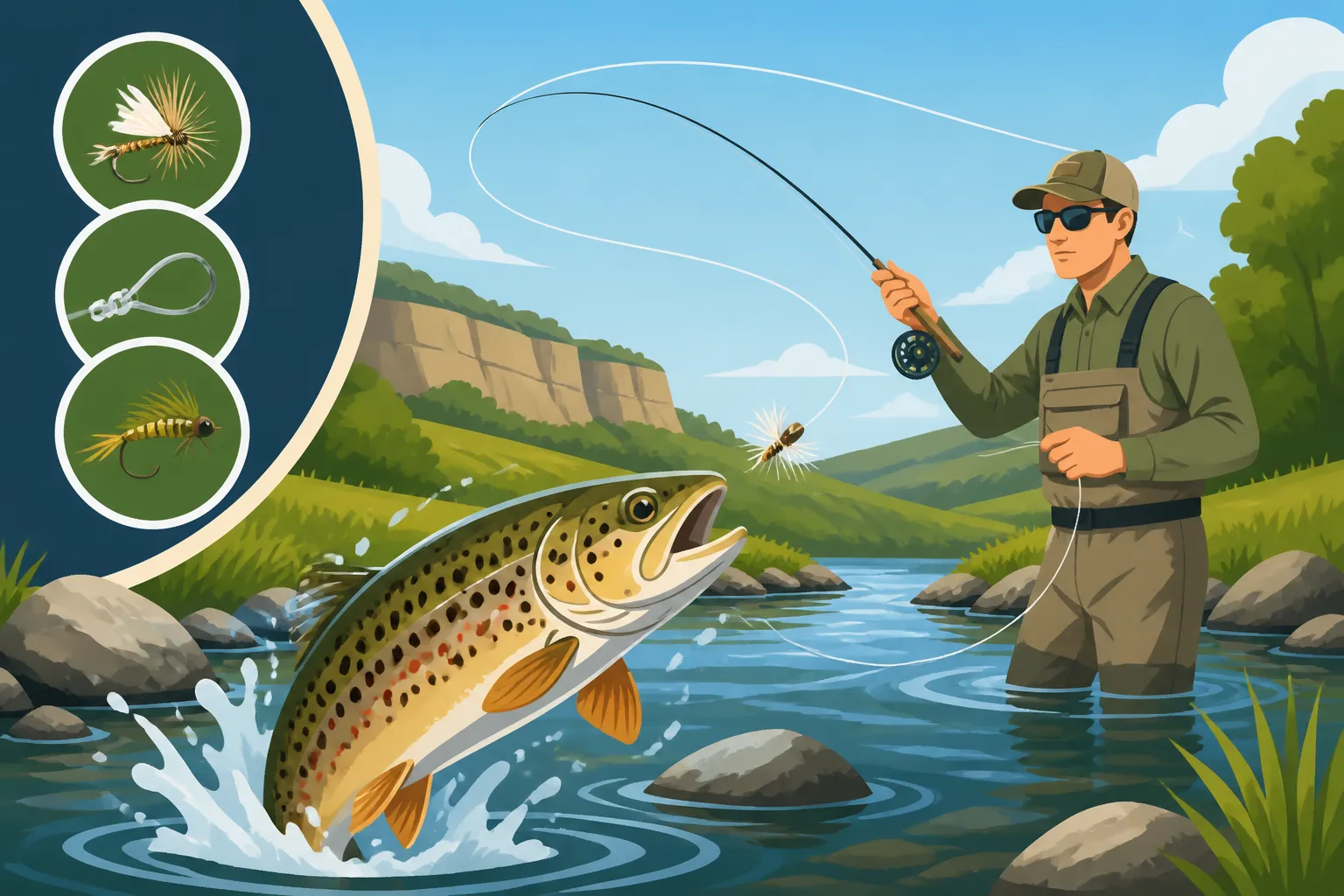
For nymphs, focus on sizes #12-18. Woolly Buggers can be effective in sizes #6-10. Dry flies typically range from #14-20. Having a variety of colors for Woolly Buggers (olive, black, brown) is also a good idea. Many of these effective patterns are readily available on Amazon or at your local fly shop. Our guide on Best Fly Patterns for Kansas Trout provides even more detailed suggestions for your fly box. Don't be afraid to experiment with different patterns until you find what the fish are keying in on that day. Sometimes, a subtle change in color or size can make all the difference.
Seasonal Strategies for Consistent Catches
Understanding the seasons is crucial for any type of fishing, and fly fishing for Kansas trout is no exception. The KDWPT's stocking schedule dictates when and where trout are available, making the cooler months the prime time for success.
Embracing the Winter Trout Season
The colder months, typically from November through March, are truly the bread and butter for Kansas trout fly anglers. During this period, water temperatures are consistently cool enough for trout to thrive, and this is when the vast majority of stocking occurs. It's not uncommon to see hundreds, if not thousands, of pounds of rainbow trout stocked across various locations during this time, often including the highly anticipated Pounds of Rainbow Trout Kansas Stocks Each Season. This means ample opportunities for eager anglers.
Winter fly fishing requires some adjustments. Fish metabolism slows down, so presentations should be slower and more deliberate. Nymphs and egg patterns fished slowly near the bottom are often the most productive. Indicator nymphing or even light European nymphing techniques can be highly effective. Warmer, sunny days during winter can also bring trout to the surface for short periods, making dry fly fishing a possibility if a hatch occurs. Dressing in layers is crucial, as Kansas winter weather can be unpredictable, often requiring you to carry a good waterproof jacket and warm underlayers. Don't let the cold deter you; it's often when the best trout fishing happens, and you can learn more about specific regulations in our Kansas Winter Trout Season License Rules.
Adjusting to Warmer Weather Opportunities
While the primary trout season is winter, there can still be limited opportunities as temperatures warm up, typically into late spring. Some deeper community lakes or spring-fed streams might hold trout longer, but as water temperatures rise above 70 degrees Fahrenheit, trout become stressed and less active. This is why the KDWPT generally ceases stocking in spring and allows the trout program to pause during the hot summer months.
If you do find yourself fishing for trout in warmer spring weather, look for areas with cooler water, such as deeper pools, shaded sections, or near inflows where fresh, cooler water might be entering. Early morning and late evening will be your most productive times, as the sun is less intense. Focus on quicker presentations and perhaps smaller streamer patterns that imitate opportunistic baitfish. Always prioritize the health of the fish; if the water is too warm or fish appear stressed, it's best to switch to warm-water species or come back when conditions are more favorable. Understanding the broader Kansas Fishing Seasons Guide will help you plan all your angling adventures throughout the year. For those specifically targeting these beautiful fish, our guide on How to Catch Rainbow Trout offers even more species-specific tips.
Disclaimer
This article is for general informational purposes only and does not constitute professional advice. Laws, prices and regulations vary by location and change over time. Consult a qualified professional for guidance on your specific situation.