Trolling for Walleye on Kansas Reservoirs
Trying to consistently catch walleye in Kansas reservoirs can feel like a real puzzle, especially when they're not biting shallow and visible. It's frustrating when you know those big fish are out there, but you just can't seem to get your bait in front of them. This comprehensive guide is here to unravel the mysteries of trolling for walleye in Kansas, providing you with the strategies, gear, and confidence to find and hook more of these prized fish, no matter the season.
Understanding Walleye Behavior in Kansas Reservoirs
Before you even think about dropping a line in the water, it's absolutely crucial to understand the mind of a Kansas walleye. These fish are masters of their environment, and their behavior changes dramatically throughout the year, influenced by water temperature, forage, and spawning cycles. Just showing up and throwing a lure won't cut it; you need to know where they are, and why.
Seasonal Movements and Depths
Walleye are migratory within their home waters, constantly seeking optimal conditions. This means the hot spot you found in May might be a barren wasteland in July. Ignoring these shifts is one of the biggest mistakes an angler can make.
In the early spring, as water temperatures nudge into the 40s and 50s, walleye begin to stage for the spawn. They'll often congregate in shallower main lake areas near potential spawning grounds, like rocky points or riprap shorelines, before moving into those specific areas to lay eggs. Post-spawn, usually by late April or May, they'll often be found somewhat shallower, recovering from the arduous spawning process and feeding aggressively. This is often when a lot of anglers have success casting from the bank or jigging. As spring transitions into summer and the water warms into the 60s and 70s, walleye typically start their migration to deeper, cooler, more oxygenated waters. This often means relating to offshore structures like submerged humps, ledges, or old creek channels, sometimes suspending over open water if baitfish are present. The thermocline, a layer of rapid temperature change, becomes incredibly important. Walleye will often be found just above, in, or directly below this layer.
By late summer and into fall, as water temperatures begin to drop again, walleye become incredibly active feeders. They're trying to pack on weight for the upcoming winter, and they'll follow baitfish into shallower pockets or relate to main lake points and humps again, though often still deeper than their spring haunts. This is a fantastic time for trolling, as fish are often spread out but actively chasing prey. Understanding these seasonal depth preferences is your first step to success. If you're looking for a deeper dive into these seasonal patterns, our Kansas Fishing Seasons Guide has a wealth of information.
Key Structures and Forage
Walleye aren't just swimming aimlessly; they are structure-oriented predators that follow their food source. To catch them, you need to understand what type of structures they prefer and what they're eating.
In most Kansas reservoirs, walleye are drawn to hard-bottom structures. This includes rocky points that jut out into the lake, submerged humps that rise off the bottom, steep ledges, and the subtle contours of old riverbeds or creek channels. These areas provide ambush points for baitfish and offer thermal refuge or cover for the walleye. Imagine these structures as highways and restaurants for fish – they travel along them and stop to eat. Clearer lakes like Wilson Lake or Cheney Reservoir tend to have walleye relating tightly to these distinct structures, while murkier lakes might see them spread out more, but still following subtle changes in bottom contour. Trolling allows you to cover these structures efficiently, presenting your lure to fish that might be scattered along a long ledge or a wide flat.
The primary forage for walleye in Kansas reservoirs consists largely of gizzard shad and threadfin shad. These baitfish schools are constantly on the move, and the walleye follow right behind them. Occasionally, they'll also key in on crappie or white bass fry. Knowing what they're eating is paramount to selecting the right lure size and color. If the shad are small, you might need a smaller crankbait. If the shad are large, a bigger profile might be more effective. Matching the hatch, as they say, isn't just for fly fishing. Your fish finder is an invaluable tool here, as it can help you locate baitfish schools, which often means walleye aren't far behind. You can find excellent options for every budget on "Amazon" to help with this.
Essential Trolling Gear for Kansas Walleye
Trolling isn't just about throwing out a line and driving around. It's a precise technique that often requires specialized gear to be truly effective. Trying to troll with your standard casting setup can lead to frustration, lost fish, and a lot of tangled lines. Investing in the right equipment makes a world of difference.
Rods, Reels, and Line
The right rod, reel, and line setup is the backbone of any successful trolling operation. Each component plays a crucial role in depth control, bite detection, and ultimately, landing those powerful walleye.
For trolling, you'll want rods that are typically longer and have a more moderate action than what you might use for jigging or casting. A rod length between 7 to 10 feet is common, allowing for better line separation in a multi-rod spread and providing a more forgiving bend when a fish hits, absorbing the shock without ripping the hooks out. Medium-light to medium power is usually sufficient, as walleye don't often require heavy tackle, but you want enough backbone to handle a larger fish and the drag of a deep-diving crankbait. Fiberglass or composite rods are popular choices because of their durability and softer action, which can be critical when trolling for these finicky biters.
Line counter reels are, without a doubt, a game-changer for walleye trolling. They allow you to precisely know how much line you have out, which is absolutely critical for consistently reaching the desired depth. Different lures dive to different depths based on speed, line diameter, and the amount of line let out. A line counter reel eliminates the guesswork. Baitcasting reels are often favored for their power and ease of use with heavier lures and lines, but some anglers prefer spinning reels for lighter presentations or if they're also casting periodically. The key is consistency in your presentations.
When it comes to line, many experienced trollers opt for braided line for their main line. Its zero-stretch properties offer incredible sensitivity, allowing you to feel subtle bites or when your lure is ticking bottom or picking up debris. It also has a thinner diameter for its breaking strength, which can help lures dive a little deeper. However, braid is visible to fish, so a fluorocarbon leader is almost always recommended. A 10-20 lb braided main line with an 8-12 lb fluorocarbon leader (typically 6-10 feet long) is a common and effective setup. Fluorocarbon is nearly invisible in water and has excellent abrasion resistance, which is vital when fishing around rocky structures. Consider checking out our Best Rods and Reels for Kansas Fishing guide for more detailed recommendations.
Planer Boards and Lead Core
To truly maximize your trolling spread and target wary walleye, you'll need to employ tools that expand your reach beyond the boat's prop wash. Planer boards and lead core line are two of the most effective ways to do this.
Planer boards are essential for covering a wider swath of water than your boat's beam. Walleye, especially in clear water, can be spooky of boat noise and shadows. By running lines off to the sides of the boat, you can present lures in undisturbed water, often resulting in more bites. There are two main types: inline planer boards (like Off Shore Tackle's Side Planers) clip directly onto your line and run out to the side, releasing when a fish strikes. Mast systems use larger boards tethered to a mast on your boat, with multiple lines clipped to the main line, providing even greater width. For most recreational anglers, inline boards offer a great balance of effectiveness and ease of use. They allow you to put multiple lures at different distances from the boat and at varying depths, effectively fishing a wide "net" of water.
Lead core line is another incredible tool for reaching deeper depths without heavy weights or specialized diving devices. It's a braided line with a lead core, segmented into different colors (usually every 10 yards). The weight of the lead core sinks the lure, with each "color" segment typically getting your lure down about 5-7 feet (depending on lure type, line diameter, and trolling speed). This allows you to precisely target suspended walleye or fish relating to deeper structures like the old river channels in Milford Lake. For example, if walleye are suspended 25 feet down, and you know your lure dives 10 feet on its own, you might need 3-4 colors of lead core to get it into the strike zone. It requires a bit of practice to master, but the ability to present lures effectively at these depths is invaluable. For even deeper presentations, especially when targeting fish in depths exceeding 40 feet, downriggers can be used to hold lures at an exact depth, while snap weights (clip-on lead weights) offer a more flexible, if less precise, alternative.
Top Trolling Lures and Their Applications
Choosing the right lure is just as important as the technique itself. Walleye are particular, and having a diverse selection of crankbaits and spinner rigs, matched to the conditions, is key to success. Don't be afraid to experiment; sometimes the craziest color is the one that gets the bite.
Crankbaits for Different Depths
Crankbaits are arguably the most popular trolling lure for walleye due to their versatility in covering various depths and imitating a wide range of baitfish. Knowing which crankbait to throw and when is a critical skill.
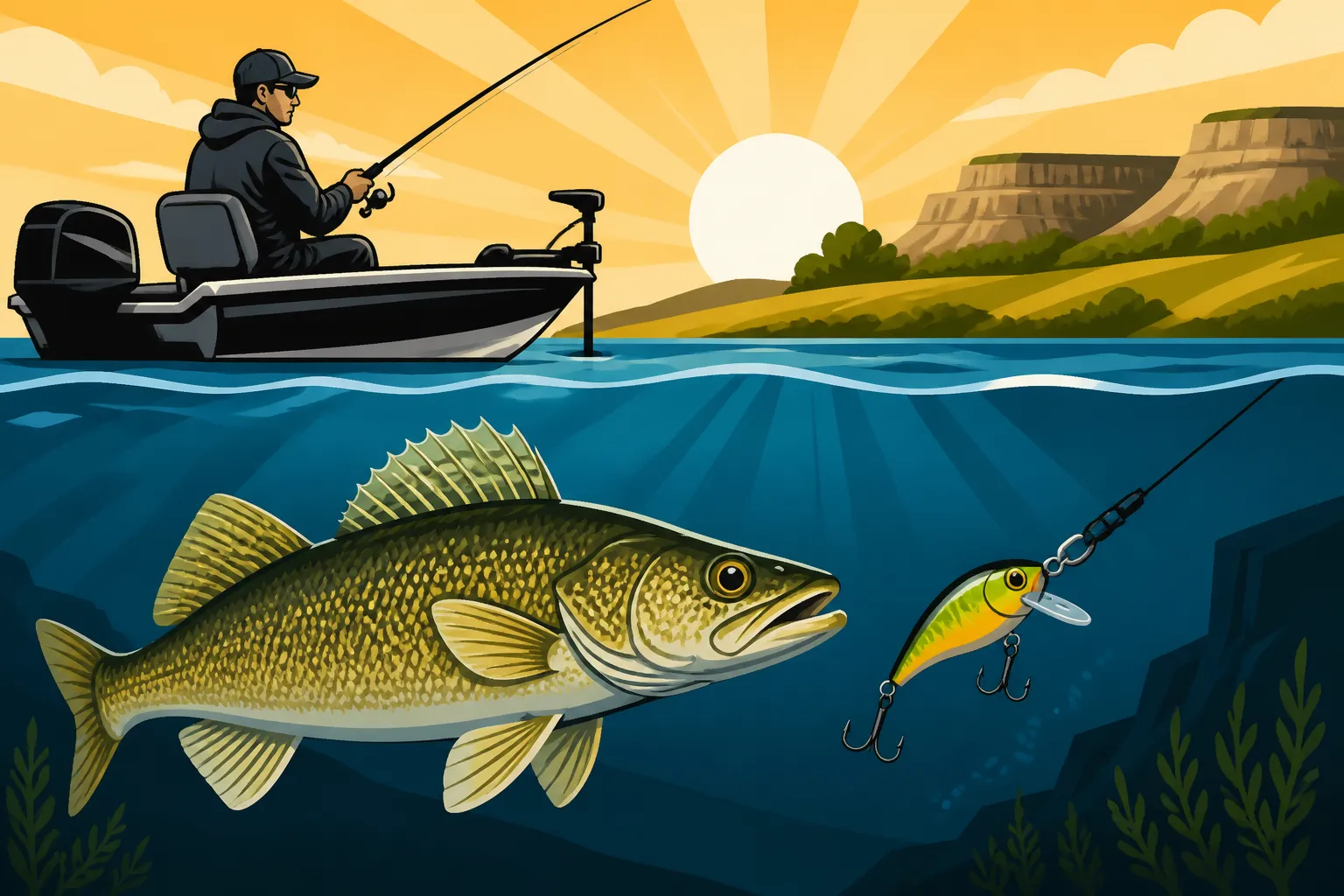
Shallow-diving crankbaits are your go-to for spring and fall walleye when fish are higher in the water column or relating to shallower structures. Lures like the classic Rapala Shad Rap, Berkley Flicker Shad, or Smithwick Rattlin' Rogue are fantastic for these conditions. They typically dive 2-8 feet on their own, making them perfect for covering flats, weed edges, or casting to visible structure. Many anglers will use these with planer boards to spread them out, especially in clear water where walleye might be wary of the boat. These lures often have a tight wobble, mimicking a struggling baitfish.
Medium-diving crankbaits fill the gap between shallow and deep, typically diving 8-15 feet on their own. Lures such as the Cotton Cordell Wally Diver, Bandit Walleye Deep, or Storm Original ThunderStick are excellent choices for targeting main lake points, intermediate ledges, or when walleye are suspended a bit deeper. These lures often have a more aggressive wobble or rattle, which can be effective in stained water or to call in fish from a distance. They're incredibly versatile and often form the core of a trolling spread, especially during the summer months when walleye are starting to move offshore.
Deep-diving crankbaits are specifically designed to plumb the depths, reaching 15-30+ feet on their own. Brands like Reef Runner Deep Divers, Bagley Rumble B, or Berkley Flicker Minnow Deep are prime examples. These are essential for summer and early fall when walleye are holding tight to deep structures like the reservoir dam faces or humps, or when they're suspended over open water baitfish schools. The longer bill on these lures helps them get down quickly and stay there, but it also creates more resistance, so a sturdy rod is a must. Don't be shy about trying out different colors; sometimes a bright chartreuse or firetiger will outperform a natural shad pattern, especially in stained water or low light. You can find a huge selection of these lures on "Amazon" to stock your tackle box for any condition. For more specific recommendations, check out our Best Lures for Kansas Walleye guide.
Spinner Rigs and Bottom Bouncers
While crankbaits are phenomenal, sometimes walleye prefer a slower, live-bait presentation. This is where spinner rigs and bottom bouncers truly shine, especially when walleye are holding tight to the bottom or are finicky about faster-moving lures.
Bottom bouncers are weighted wire frames designed to "bounce" along the bottom without snagging excessively. They feature an arm that extends forward and rides along the bottom, keeping your line and leader up off the snags. Weights typically range from 0.5 to 3 ounces, with the ideal weight depending on depth, current, and trolling speed. For instance, if you're targeting walleye on a rocky ledge at Cheney Reservoir, a 1.5 to 2-ounce bouncer might be perfect to maintain bottom contact at slower speeds. The beauty of a bottom bouncer is its ability to present a lure or live bait directly in the walleye's strike zone without constantly hanging up.
Spinner rigs (also known as crawler harnesses) are typically a short leader (2-6 feet) with a clevis, beads, and a spinner blade, followed by one or two hooks. These are almost always fished with live bait, such as a nightcrawler, leech, or even a minnow. The spinner blade creates flash and vibration, attracting walleye, while the live bait provides scent and natural movement. Blade types vary: Colorado blades create maximum vibration and lift, Indiana blades are a good all-around choice, and Willowleaf blades offer less resistance and more flash, ideal for faster trolling speeds or deeper presentations. The combination of a bottom bouncer and a spinner rig allows you to precisely target walleye that are hugging the bottom, often at slower speeds (around 0.8 to 1.5 mph). This method is incredibly effective when fish are scattered across flats or relating to subtle changes in contour.
| Lure Type | Typical Dive Depth (on its own) | Ideal Trolling Speed | Common Usage |
|---|---|---|---|
| Shallow Crankbait | 2-8 feet | 1.5-2.5 mph | Spring/Fall, low light, shallow flats |
| Medium Crankbait | 8-15 feet | 1.8-2.8 mph | Summer/Fall, main lake points, intermediate depths |
| Deep Crankbait | 15-30+ feet | 2.0-3.2 mph | Mid-Summer, deep humps, suspended fish |
| Spinner Rig | Bottom-bouncers vary | 0.8-1.5 mph | Bottom-hugging fish, slower bite, live bait |
Mastering Trolling Techniques for Kansas Walleye
Once you have the right gear, it's time to put it to use with effective techniques. Trolling for walleye is as much an art as it is a science, requiring patience, precision, and a willingness to adapt. It's about more than just dragging a lure; it's about presenting it enticingly and consistently.
Speed and Direction
These two factors are perhaps the most critical aspects of successful trolling. Even the perfect lure won't catch fish if it's not moving at the right speed or in the right direction.
Optimal trolling speeds can vary significantly depending on the lure type, water temperature, and fish mood. For most crankbaits, a speed range of 1.5 to 2.5 mph is a good starting point. Faster speeds (2.5-3.2 mph) can sometimes trigger reaction strikes, especially with aggressive walleye or when covering large areas. Slower speeds (0.8-1.5 mph) are generally more effective for spinner rigs, allowing the live bait to swim naturally and the blade to barely turn, often mimicking a slow-moving, injured baitfish. Always pay attention to what the fish are telling you. If you're marking fish but not getting bites, try increasing or decreasing your speed in small increments (0.1 mph) until you find what they prefer. A good GPS unit is indispensable for maintaining precise speeds.
Boat control and directional changes are vital for triggering strikes. Trolling in a perfectly straight line can be effective, but often the most productive technique involves making subtle "S-turns" or sweeping curves. When your boat turns, the lures on the inside of the turn slow down and drop, while the lures on the outside speed up and rise. This change in speed and depth can be the exact trigger that causes a following walleye to strike. For example, a sharp turn near a promising point on Milford Lake might cause that momentary hesitation or surge that makes a walleye commit. Use your GPS and depth finder to stay on structure. Don't just troll randomly; focus on specific contours, ledges, or humps that you've identified as potential walleye holding areas. Repeatedly running over these productive paths, varying your turns and speeds, will often pay dividends.
Depth Control and Presentation
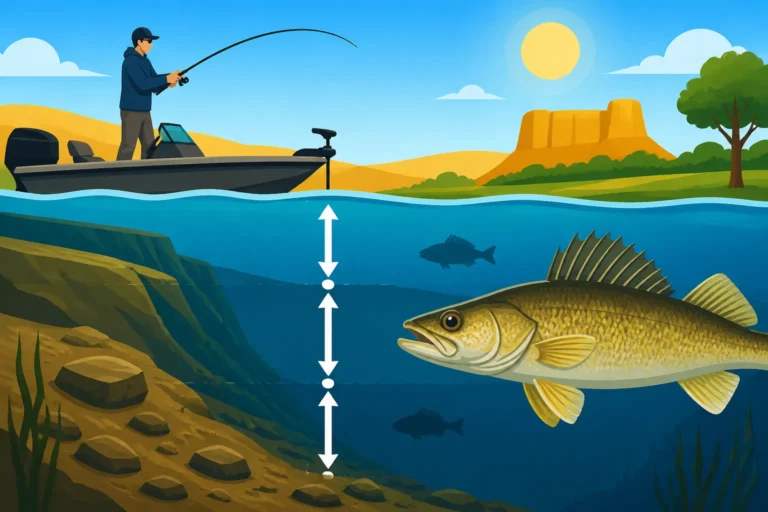
You can have the best lure and the perfect speed, but if your bait isn't at the right depth, you're just sightseeing. Precision in depth control is paramount when targeting walleye, as they often have a very narrow strike zone.
Line counter reels are your best friend here. They take the guesswork out of how much line you have out, which directly correlates to your lure's depth. Remember, every lure has a different dive curve, and factors like line diameter, trolling speed, and current all affect how deep it runs. It's a good practice to test your lures to understand their specific dive characteristics at various speeds. Many lure manufacturers provide approximate dive charts, but real-world conditions vary. A good rule of thumb for many crankbaits with mono line is that for every 10 feet of line you let out, your lure might drop an additional foot or two, but this is a rough estimate. With lead core, you'll use specific charts or learn the "colors out" needed to hit your target depth.
When using planer boards, you can also vary the lead length behind the board to present lures at different distances from your main line. This allows for even more customization in your spread. For example, you might run a deep-diving crankbait directly behind the boat, medium divers on short leads from inline boards, and shallow runners on longer leads from the boards, effectively covering a wide range of depths and widths simultaneously. Matching the hatch in terms of lure color is also important. Natural baitfish patterns (shad, perch) are often effective in clear water, while brighter colors (chartreuse, firetiger, clown) can be deadly in stained water or low-light conditions. Don't be afraid to mix and match colors in your spread until you find what the walleye prefer that day. Our Best Time of Day to Catch Walleye guide further emphasizes the role of light conditions in color choice.
Top Kansas Reservoirs for Trolling Walleye
Kansas might be known as a prairie state, but it boasts some fantastic reservoirs for walleye fishing. Each lake has its unique characteristics, and knowing where to focus your trolling efforts can significantly increase your chances of success.
Western Kansas Gems
Western Kansas reservoirs, often larger and sometimes clearer than their eastern counterparts, offer incredible opportunities for trolling walleye. The vast expanses of water allow for long trolling runs, covering extensive structure.
Wilson Lake, often called "Kansas's clearest lake," is a phenomenal walleye fishery. Its rocky points, submerged humps, and intricate creek channels provide ideal habitat for these predators. Trolling crankbaits along the main lake points, especially those with steep drop-offs, can be highly effective during summer and fall. The areas near the dam and the old river channel are consistent producers. Given its clear water, lure color can be crucial here; natural shad and perch patterns often work well, but don't shy away from subtle bright colors on cloudy days. You can learn more about this gem in our Wilson Lake Fishing Guide.
Webster Reservoir, located in north-central Kansas, is another consistent walleye producer. This lake is known for its extensive flats and humps that rise out of deeper water. Trolling spinner rigs with bottom bouncers across these flats, especially in the spring and fall, can yield impressive results. Walleye here often relate to even subtle changes in bottom contour. Focus on areas where the old river channel meanders or where there are distinct submerged breaks.
Lovewell Reservoir, though smaller than Wilson or Milford, is a great option for walleye, particularly in the earlier seasons. Its structure is less complex, but trolling the main lake basin and around its primary points can be very productive. It often warms up quicker in the spring, leading to an earlier walleye bite. Pay close attention to your electronics here to identify schooling baitfish, as walleye will often be in close pursuit.
Eastern Kansas Hotspots
Closer to the state's major population centers, eastern Kansas reservoirs offer equally exciting walleye trolling prospects, with some of the largest lakes providing vast fishing grounds.
Milford Lake, the largest lake in Kansas, offers immense potential for walleye trolling. Its sprawling waters include countless main lake points, submerged humps, and extensive old river and creek channels. During the summer, walleye will often suspend over these deeper channels, making lead core or deep-diving crankbaits a must. Early and late in the season, shallower points and flats can be hot. The areas around the dam and the many submerged roadbeds are perennial favorites. If you're looking for an in-depth look, our Milford Lake Fishing Guide covers everything you need to know.
Cheney Reservoir is renowned for its consistent walleye fishing, and trolling is one of the most effective methods here. The lake's distinct humps, ledges, and rocky structure provide ideal habitat. Trolling crankbaits or spinner rigs over the main lake humps, particularly those with sharp drops, can be incredibly productive, especially during low light or after a cold front. Walleye at Cheney often move up and down these structures throughout the day, so varying your depth is key. Our Cheney Reservoir Walleye Fishing article dives deeper into targeting these fish.
El Dorado Lake is another excellent eastern Kansas reservoir for walleye, particularly when they are relating to deeper structure or suspended offshore. The lake features several significant humps and ledges that are perfect for trolling passes. Like Cheney, El Dorado walleye can be sensitive to boat traffic, so employing planer boards to spread your lines away from the boat can be very beneficial. Target areas where significant depth changes occur, such as the old river channel and major points.
Common Trolling Mistakes and How to Avoid Them
Even with the best gear and knowledge, trolling can be frustrating. Many anglers make common mistakes that hinder their success. Recognizing and correcting these pitfalls can significantly improve your walleye catch rate. It's all part of the learning curve, and even veteran anglers still fall prey to some of these sometimes.
Lack of Depth Control
One of the most pervasive issues in walleye trolling is failing to maintain consistent and precise depth control. Walleye often feed in a very specific water column, and being even a few feet off can mean the difference between a loaded livewell and an empty cooler.
A common mistake is not fully understanding how deep your particular lure runs at your chosen trolling speed with the amount of line you have out. Many anglers assume a "deep diver" will just get to the bottom, but it's far more nuanced. Without a line counter reel or a good grasp of dive curves (which vary by lure brand, model, and even line type), you're essentially guessing. This leads to lures running too high above the fish, or worse, consistently snagging on the bottom. Always cross-reference manufacturer dive charts, but more importantly, experiment and observe. If you're using lead core, refer to charts or practice to know how many colors you need for a specific depth.
Another mistake is failing to adjust for dynamic variables. Your lure's depth will change with boat speed, current, and even line type and diameter. A slight increase in speed can make your lure run shallower, while a decrease can make it run deeper. Strong currents in some parts of a reservoir can push your lures off target. If you're fishing a long ledge at Wilson Lake, and the depth changes from 20 to 30 feet, you need to adjust your line out or your lead core segments accordingly. Always be monitoring your fish finder and making subtle adjustments to ensure your lures are in the strike zone. If you notice your line counter reels are showing wildly different numbers for the same depth, it might be time for a Kansas Fishing License Replacement Process in Kansas for a new reel!
Monotony and Impatience
Walleye can be incredibly finicky, and sticking to a single strategy for too long is a surefire way to come home empty-handed. Successful trolling requires constant adaptation and a healthy dose of patience.
A big mistake is fishing with only one speed, one lure color, or one depth for an extended period, especially when you're not getting bites. Walleye's preferences can change throughout the day, influenced by light conditions, water clarity, and their feeding mood. If your electronics are marking fish but they're not hitting, it's time to change something. Try varying your trolling speed by 0.1-0.2 mph increments. Swap out a lure for a different color or size, or try a different action (e.g., a tight-wobbling crankbait versus a wide-wobbling one). Experiment with different depths by letting out more or less line, or adding a snap weight. You should be running a variety of lures and depths in your spread until you find a pattern.
Impatience can also lead to moving away from a potentially productive area too quickly, or conversely, staying in unproductive water for too long. Sometimes walleye bites come in waves, and a single pass might not trigger a strike. Make multiple passes over a promising structure, varying your approach each time. Conversely, if you've trolled a large area with no marks and no bites, don't be afraid to pull up stakes and move to a completely different part of the lake. Trust your gut and your electronics. And always, always check your lures frequently. Weeds, debris, or even a tiny piece of slime can completely kill a lure's action and prevent bites. This is where a good set of Best Rods and Reels for Kansas Fishing can make re-setting a breeze.
Disclaimer
Fishing conditions and regulations in Kansas can change. Always consult the latest Kansas Department of Wildlife, Parks and Tourism (KDWPT) regulations before heading out on the water. This guide is for informational purposes only and does not constitute legal advice.