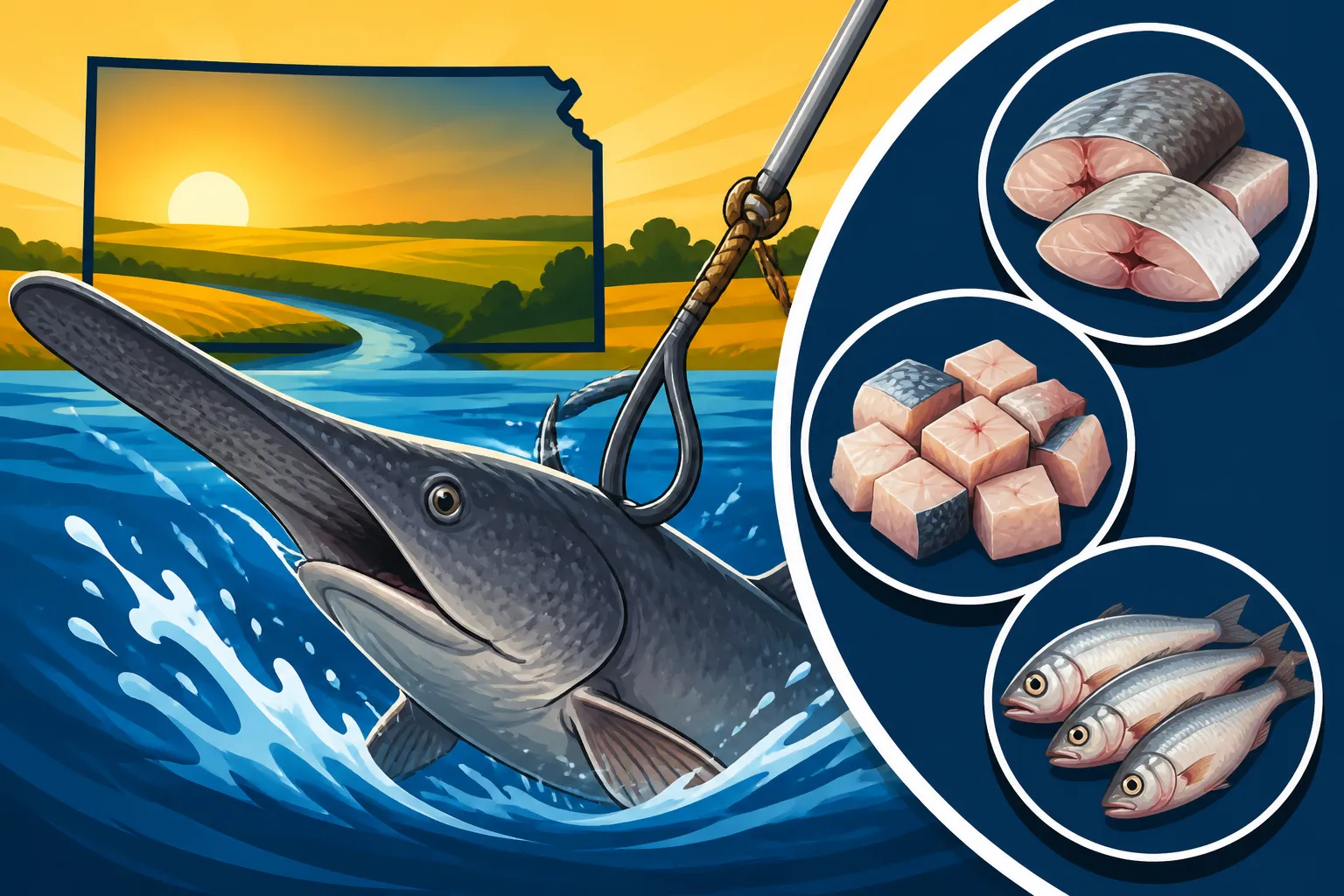
Best Bait for Paddlefish Snagging
Many anglers, especially those new to the exciting world of targeting paddlefish in Kansas, often find themselves scratching their heads, wondering what magical "bait" will entice these prehistoric giants. The truth is, if you're thinking about traditional baits like worms, minnows, or even stink bait, you're heading down the wrong river. Paddlefish are unique creatures that require a completely different approach, and this guide is here to unravel the mystery and show you exactly what you need to successfully "bait" (or rather, equip yourself for) paddlefish snagging.
Understanding Paddlefish and the Snagging Method
Let's clear the air right from the start: when it comes to paddlefish, the concept of "bait" as most anglers know it simply doesn't apply. These magnificent fish don't feed in the way a bass or a catfish does, which means your tackle box full of traditional lures and smelly concoctions won't do you much good.
The Unique Biology of Paddlefish
Paddlefish are truly one-of-a-kind. Often referred to as "spoonbills" because of their distinctive, paddle-shaped snout, these ancient fish are filter feeders. Imagine them as the gentle giants of the river, cruising slowly through the water with their mouths open, sifting out microscopic plankton and small invertebrates. Their diet consists almost entirely of these tiny organisms, which they detect using electroreceptors located on their paddle. This means they are not interested in a juicy worm, a shiny crankbait, or a cut piece of shad. They simply don't have the teeth or the feeding mechanism to consume such items, nor are they attracted to them. Understanding Kansas Paddlefish Facts is crucial to grasping why conventional fishing methods are ineffective.
This filter-feeding strategy is what makes paddlefish so challenging, and yet so rewarding, to target. You can't tempt them with a tasty morsel because they aren't looking for one. They are constantly swimming, straining food from the water, and their focus isn't on what's dangling from your hook. This fundamental biological difference dictates that a completely different technique is needed to bring one of these impressive fish to hand.
Why "Bait" Isn't the Right Term for Snagging
Given their filter-feeding habits, the primary method for catching paddlefish is called snagging. This isn't about luring them to bite a hook; it's about physically hooking them on their body as they swim by. The term "snagging" might sound a bit harsh to some, but it's a legal and widely accepted practice in specific seasons and locations across Kansas, precisely because it's the only practical way to catch these fish.
When you're snagging, you're not using "bait" in the traditional sense. Instead, you're employing heavy-duty tackle designed to cast a weighted treble hook out into areas where paddlefish are known to congregate. The goal is to sweep the hook through the water column, hoping to "snag" the fish on its side, belly, or back. It requires a lot of casting, reeling, and often, a considerable amount of physical exertion. It's less about finesse and more about brute force and persistence. Anglers who are accustomed to the nuanced world of traditional bait fishing might find this approach jarring at first, but it's a time-honored technique specifically adapted to the paddlefish's unique biology and behavior.
Essential Gear for Successful Paddlefish Snagging (Beyond "Bait")
Since traditional bait is out, what do you need? The answer lies in specialized, heavy-duty gear designed to withstand the immense power of a large paddlefish and the rigorous demands of the snagging technique. Think big, strong, and durable.
Rod and Reel Setup for Snagging Power
When you're aiming for a paddlefish, which can easily weigh fifty pounds or more and put up an incredible fight, your typical bass or crappie rod simply won't cut it. You need a powerhouse setup that can handle heavy weights, repeated casting, and the sheer force of a snagged fish.
- Rods: Look for a heavy or extra-heavy action rod, typically between 7 and 10 feet long. Many anglers gravitate towards surf rods or heavy-duty catfish rods because they offer the necessary backbone and power. A strong butt section is crucial for leverage during the fight, while a relatively sensitive tip can help you detect the subtle "thump" of a snagged fish, distinguishing it from a bottom snag. The rod needs to be able to cast weights upwards of 8-16 ounces, sometimes even more depending on the current. When considering options, some of the features you'd look for in a good Best Rod and Reel Combo for Catfish will be quite similar to what's needed for paddlefish.
- Reels: Pair your heavy rod with a large, robust spinning reel or a heavy-duty baitcasting reel. The key features here are a high line capacity for heavy line, and a smooth, powerful drag system that can withstand long runs from a powerful fish without locking up or failing. You'll want a reel that feels solid in your hands, not one that feels flimsy under pressure.
- Line: Braided line is almost universally preferred for paddlefish snagging. Its strength-to-diameter ratio is unmatched, allowing you to use heavy test lines (80-100 lb or even more) without filling your spool too quickly. The low stretch of braided line is also critical for feeling subtle snags and for setting the hook effectively on a fish that might be dozens of yards away in a strong current. Many anglers find it convenient to order their specialized snagging gear, like extra heavy weights or large treble hooks, from online retailers such as Amazon due to the wide selection and competitive pricing on these robust lines and reels.
The Importance of Hooks and Weights
These are your "tools" in lieu of bait, and they are absolutely critical to your success.
- Hooks: For paddlefish snagging, you'll be using large, sharp treble hooks. The size can vary, but typically anglers use hooks in the 8/0 to 14/0 range. The "treble" design, with three points, significantly increases the chance of hooking a paddlefish as you sweep the rig through the water. Sharpness is paramount; dull hooks will glance off the tough hide of a paddlefish. Some anglers even sharpen their hooks further right out of the package to maximize their effectiveness. You can often find these heavy-duty items, including specialized snagging hooks, on platforms like Amazon or at your local tackle shop.
- Weights: To get your treble hook down to where the paddlefish are swimming, especially in strong river currents, you'll need substantial lead weights. These are often bell sinkers or pyramid sinkers, ranging from 8 ounces to 16 ounces, and sometimes even heavier in exceptionally swift water. The weight ensures your rig sinks quickly and stays near the bottom where the fish are often concentrated. Your setup will typically involve a heavy-duty leader (often 100-200 lb test monofilament or fluorocarbon) attached to your main braided line, with the weight secured to the bottom of the leader and one or more treble hooks positioned above it. This setup allows the hooks to trail just above or around the weight as it bounces along the riverbed.
Other Essential Snagging Accessories
Beyond the core rod, reel, line, hooks, and weights, there are several other items that will make your paddlefish snagging experience safer, more comfortable, and more successful.
- Gloves: Heavy-duty fishing gloves are highly recommended. They protect your hands from cuts and abrasions from the heavy braided line, as well as from the rough skin and potential sharp edges of a large paddlefish.
- Large Net or Gaff: Landing a massive paddlefish can be challenging. A very large, sturdy landing net or a heavy-duty gaff (check regulations for gaff use) is essential to safely bring the fish into your boat or up onto the bank. A net like the ones discussed for Best Landing Net Size for Trophy Flathead Catfish would be a great starting point for comparison.
- Pliers/Bolt Cutters: Once you've landed a fish, you'll need tools for hook removal. Large, strong pliers are good for smaller hooks, but for deeply embedded or oversized trebles, a pair of bolt cutters might be necessary to cut the hook for safer release or handling.
- Life Jackets: If you're fishing from a boat, especially in rivers known for strong currents and heavy boat traffic during snagging season, personal flotation devices are non-negotiable. Always prioritize safety on the water. Make sure you're up to date on Kansas Boating Safety Equipment Requirements.
- Cooler: If you plan on keeping your catch, a large cooler with plenty of ice is essential to preserve the meat of these delicious fish.
Techniques for Effective Paddlefish Snagging
With the right gear in hand, the next step is mastering the techniques that will put you in the best position to snag a paddlefish. This isn't just about casting and reeling; it's about understanding paddlefish behavior, river dynamics, and persistent effort.
Locating Paddlefish Hotspots
Paddlefish are migratory, and their location can vary significantly throughout the year. During the spring spawning runs, they concentrate in specific areas, making them more accessible to anglers. Knowing where and when to find them is half the battle.
- River Channels and Deep Holes: Paddlefish often hold in deeper river channels, especially where there are eddies or slower currents that allow them to conserve energy while filter-feeding. Look for sudden drops in depth or areas where the river narrows, creating a natural funnel.
- Below Dams and Barriers: Dams can be major congregation points during spawning migrations, as fish are halted in their upstream movement. The turbulent waters below dams often attract large numbers of paddlefish. However, specific regulations may apply to fishing near these structures, so always check the local rules. The Kansas Paddlefish Snagging Season usually aligns with these critical migration periods, making certain Rivers With Paddlefish prime locations.
- Timing: The spring months are generally considered the prime time for paddlefish snagging in Kansas, as the fish are actively moving upstream to spawn. Conditions like water temperature and flow rates can influence their exact timing and location, so staying informed about local conditions is key.
The Art of Casting and Retrieval
Paddlefish snagging is a physically demanding technique that requires a specific casting and retrieval motion.
- Casting: You'll need to make long, powerful casts to cover as much water as possible. Aim your cast upstream and across the current, allowing your heavy weight to sink rapidly to the bottom. The goal is to get your rig into the main current where paddlefish are likely swimming.
- Retrieval: Once your weight hits the bottom, you'll typically engage your reel and begin a series of long, sweeping lifts and drops with your rod, reeling in line on the downstroke. This motion is designed to drag the treble hooks along or just above the riverbed, sweeping them through the water column where paddlefish might be. It's not a gentle retrieve; it's a deliberate, rhythmic movement that covers water and increases your chances of snagging. You're trying to intercept a moving fish.
- The "Feel": When you snag a paddlefish, it won't feel like a typical "bite." Instead, you'll often feel a sudden, heavy resistance or a solid "thump" as the hook connects. It's often compared to snagging a log, but then the log starts to move – powerfully! Once you feel that distinct resistance, set the hook hard with a mighty sweep of the rod, and prepare for a serious fight. Learning How to Snag Paddlefish effectively takes practice and a feel for the river.
Handling and Regulations for Snagged Paddlefish
Responsible angling includes knowing how to handle your catch and adhering to all regulations.
- Careful Handling: Paddlefish are not only powerful but also quite delicate, especially their paddle. If you intend to release a fish, minimize its time out of the water. Handle it gently, supporting its body, and avoid grasping its paddle. The best practice is to remove the hook quickly while the fish is still in the water if possible.
- Reviewing Regulations: Kansas has specific rules governing paddlefish snagging, including seasons, length limits, and creel limits. These regulations are in place to protect the paddlefish population and ensure sustainable fishing. It's absolutely critical to consult the current Kansas Fishing Regulations Explained before you head out. These rules can change, so always check the latest guide from the Kansas Department of Wildlife, Parks and Tourism (KDWPT).
- License Requirements: Don't forget that a valid fishing license is required to fish in Kansas, including for paddlefish snagging. Make sure you have your Kansas Fishing License Guide in order before you start your trip. Violating regulations, including exceeding Kansas Fishing Seasons and Limits or not having a license, can lead to serious penalties.
Common Misconceptions and Troubleshooting
Even with the right gear and techniques, snagging paddlefish can be challenging. Understanding common pitfalls and how to address them can save you frustration and increase your success.
Why Traditional Baits Don't Work for Paddlefish
This bears repeating because it's the most common misunderstanding for new paddlefish anglers. Trying to catch a paddlefish with traditional bait is like trying to catch a butterfly with a fishing net – it's the wrong tool for the job.
As we discussed, paddlefish are filter feeders. Their mouths are designed for sifting plankton, not biting down on a lure or baitfish. They lack teeth and the predatory instinct to chase down a meal. So, while you might hear old wives' tales about certain "secret baits," none of them are effective for directly attracting and catching paddlefish. Your efforts would be far better spent focusing on the right gear and snagging technique than experimenting with different types of food bait. Chumming, which works for some species, is also entirely ineffective for paddlefish, as they wouldn't recognize it as food.
Overcoming Challenges in Snagging
Paddlefish snagging comes with its own set of unique challenges that can test any angler's patience and endurance.
- Current Management: Strong river currents are common in paddlefish hotspots, and they can make it difficult to keep your rig on the bottom and feel the subtle takes. If the current is too strong, you might need to increase your weight, move to a slower eddy, or reposition your boat or casting spot. Sometimes, waiting for a slight change in river flow can make all the difference.
- Snags and Lost Tackle: Fishing in river channels often means dealing with submerged logs, rocks, and debris – prime areas for losing expensive tackle. To minimize snags, try to keep your rod tip higher on the retrieve, which can help lift your hooks over obstacles. Consider using a "breakaway" rig for your weight, where a lighter line secures the weight, allowing it to snap off if it gets truly stuck, saving your main line and hooks. Searching reviews on Amazon for specific "snagging rig" setups can often provide valuable insights and product ideas that incorporate such features.
- Physical Fatigue: Snagging is a workout! Repeatedly casting heavy weights and sweeping your rod, especially when battling a large fish, can quickly tire you out. Take breaks, stay hydrated, and don't be afraid to switch roles with a fishing buddy if you're on a boat. Finding durable gear, perhaps by browsing reviews on Amazon, can make a significant difference in how long your equipment stands up to the demands of this strenuous fishing method.
- Patience and Persistence: You might make dozens, even hundreds, of casts before you feel that telltale thump. Paddlefish snagging is not a numbers game in terms of constant action, but a game of persistence. Keep casting, keep sweeping, and trust that if you're in a productive area with the right gear, your efforts will eventually pay off.
Gear for Paddlefish Snagging vs. Traditional Bait Fishing
To help solidify the distinction, here's a quick comparison of the gear required for paddlefish snagging versus what you might use for traditional bait fishing for other species in Kansas:
| Feature | Paddlefish Snagging Gear | Traditional Bait Fishing Gear (e.g., Catfish) |
|---|---|---|
| Rod | Heavy to Extra-Heavy action, 7-10 ft (surf, heavy catfish) | Medium-Heavy to Heavy action, 6-8 ft (catfish, bass rods) |
| Reel | Large, high-capacity spinning or heavy baitcasting, powerful drag | Medium to Large spinning or baitcasting, smooth drag |
| Line | 80-100+ lb Braided line (low stretch) | 10-30 lb Monofilament or Braided (depending on species/target) |
| Hooks | Large treble hooks (8/0 – 14/0), very sharp | Single J-hooks, circle hooks (various sizes), treble hooks for lures |
| Weight | Heavy lead weights (8-16+ oz) | Lighter sinkers (1/4 oz – 4 oz, depending on current/depth) |
| "Bait" | None (snagging technique) | Worms, minnows, cut bait, stink bait, various lures |
| Method | Sweeping heavy hooks through water column to externally hook fish | Presenting edible bait to entice fish to bite |
| Physical Demand | High (constant casting, strong retrieves, fighting large fish) | Moderate (casting, reeling, fighting fish) |
So, while the idea of "bait" for paddlefish snagging is a common initial thought, the reality is that a completely different strategy involving specialized, robust gear and a physically demanding technique is what will lead you to success. It's a unique and thrilling way to experience fishing in Kansas, bringing you face-to-face with one of the river's most impressive inhabitants.
Disclaimer
This article is for general informational purposes only and does not constitute professional advice. Laws, prices and regulations vary by location and change over time. Consult a qualified professional for guidance on your specific situation.