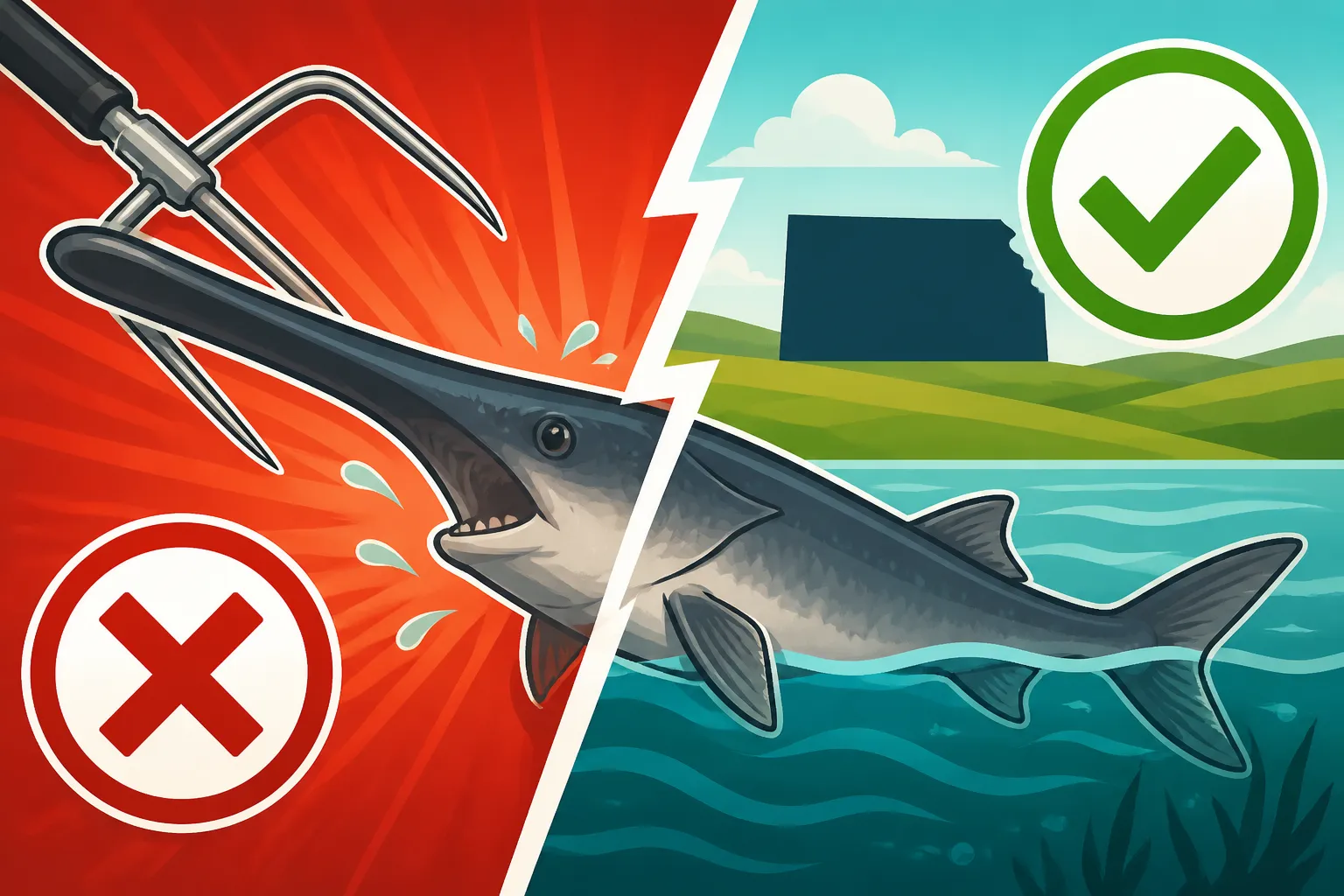
Is Paddlefish Snagging Legal in Kansas?
For many Kansas anglers, the idea of snagging a paddlefish brings up a lot of questions, mostly revolving around whether it's even legal to do so. You see videos of folks in other states pulling in these prehistoric giants, and it leaves you wondering if such an exciting, unique experience is something you can partake in right here in the Sunflower State. The good news is, yes, paddlefish snagging is legal in Kansas, but it comes with a very specific, carefully laid out set of rules and regulations. This guide is here to untangle all that confusion, breaking down exactly what you need to know to legally and responsibly pursue these incredible fish.
Navigating Paddlefish Snagging Legality in Kansas
It’s completely understandable why there’s so much uncertainty around paddlefish snagging. It’s not your typical rod-and-reel fishing, and the species itself is a bit of an enigma for many. Because of their unique biology and their status as a valuable native species, state wildlife agencies, including the Kansas Department of Wildlife and Parks (KDWP), have put strict guidelines in place.
Is Paddlefish Snagging Actually Allowed?
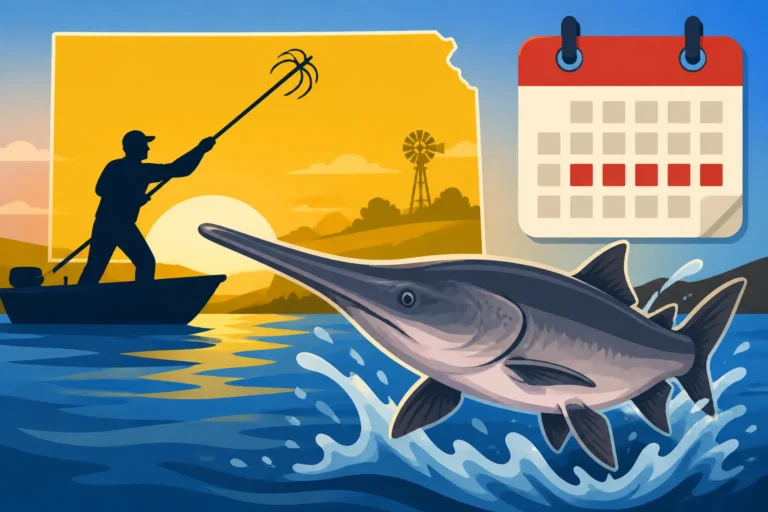
Let’s get right to the heart of it: Yes, paddlefish snagging is permitted in Kansas. However, it’s not a free-for-all across every body of water. Think of it less like general fishing and more like a highly regulated, special season event. The KDWP carefully manages paddlefish populations, and snagging is only allowed during a designated season, in specific locations, and with particular gear. Any deviation from these rules can lead to serious penalties, which you can learn more about in our guide on Kansas Fishing Law Enforcement and Penalties. This isn't just a suggestion; it's a legal requirement designed to protect this fascinating species.
The primary goal of these regulations is conservation. Paddlefish, often called "spoonbill" due to their distinctive rostrum, are long-lived filter feeders. They don't strike traditional baits or lures in the same way other game fish do. Instead, they swim with their mouths open, sifting plankton from the water column. This unique feeding behavior means that traditional angling methods are largely ineffective, making snagging the only practical way for recreational anglers to catch them. The KDWP uses strict controls to ensure that snagging doesn't negatively impact their reproduction or overall population health.
Understanding Why Paddlefish Snagging is Unique
Paddlefish are truly one-of-a-kind. They're one of the largest freshwater fish in North America, with some individuals growing to over five feet in length and weighing more than 100 pounds. They're also an ancient species, with a fossil record dating back millions of years. Their specialized feeding means that you can't just throw out a worm or a crankbait and expect a bite. Instead, anglers target them during their spawning runs when they congregate in predictable areas, typically in rivers below dams.
The snagging technique itself involves using a large, heavy hook, often weighted, and sweeping it through the water column to "snag" the fish. It requires a powerful rod, heavy line, and a lot of stamina. Because it's a non-selective method, meaning you might accidentally snag a fish you don't intend to catch, the regulations are extra stringent. They dictate everything from the size of your hook to the number of hooks allowed, and even what to do with a fish that's snagged illegally (e.g., out of season or undersized). This careful management ensures that while anglers can enjoy the thrill of catching these magnificent creatures, the species itself remains healthy and sustainable for future generations.
The Specifics of Legal Paddlefish Snagging in Kansas
Alright, so you know it's legal, but the devil is in the details. You can't just show up to any lake with a snagging rig. The Kansas Department of Wildlife and Parks has very precise rules that dictate when, where, and how you can participate in this unique fishery. Knowing these specifics is paramount to staying within the law and having a successful, ethical trip.
Identifying Legal Snagging Seasons and Locations
This is arguably the most critical piece of information for any aspiring paddlefish snagger. In Kansas, paddlefish snagging is a highly seasonal and geographically restricted activity. It's designed to coincide with the paddlefish's natural spawning migrations, which typically occur in the spring when fish move upstream to suitable spawning grounds, often congregating below major dam structures.
Historically, the primary location for legal paddlefish snagging in Kansas has been the Kansas River and its tributaries, particularly downstream from the major impoundments like Tuttle Creek Dam and Perry Dam. These areas provide the necessary current and depth that paddlefish seek during their spawning runs. While the regulations can change, a typical snagging season often runs from March 15 to May 15. It's absolutely crucial to consult the most current Kansas Fishing Regulations Explained before heading out, as dates and specific boundaries can be adjusted annually by the KDWP. For instance, specific stretches of river or particular pools might be open or closed depending on water levels, fish concentrations, or other biological factors. You won't find paddlefish snagging allowed in many of the larger reservoirs like Milford Lake or Cheney Reservoir, as those waters don't offer the riverine spawning habitat these fish require.
Permitted Gear and Techniques for Paddlefish
Since snagging is an unconventional method, the gear requirements are very particular. You can't just use your regular crappie rig! When snagging for paddlefish, you'll need robust equipment designed to handle a potentially large, powerful fish and the force required to effectively snag them.
- Rods and Reels: You'll need a heavy-action rod, typically 7 to 10 feet long, paired with a large, strong spinning or baitcasting reel. Many anglers opt for saltwater-grade gear due to its durability.
- Line: Heavy braided line, often in the 60 to 100-pound test range, is standard. Monofilament or fluorocarbon lines usually don't have the abrasion resistance or strength needed for this technique. You can find excellent heavy-duty braided lines on Amazon that are perfect for this.
- Hooks: This is where it gets really specific. Kansas regulations typically limit snagging to barbless hooks only. The hook gap (the distance from the shank to the point) often has a maximum size, such as no more than 1 inch. This is to minimize harm to fish, especially those that might be released. Some regulations may also specify a maximum number of hooks per line, usually one or two. Always double-check the current Kansas Fishing Regulations Explained for precise hook specifications.
- Weights: Heavy sinkers, often several ounces or even a pound, are used to get the hook down quickly and allow for the sweeping motion needed to snag. These can also be found on Amazon, just ensure they are lead-free if regulations require.
- Technique: The basic technique involves casting your heavy rig upstream and allowing it to sink. As it drifts downstream, you rapidly sweep your rod to pull the hook through the water, attempting to "snag" a fish. It's physically demanding and requires a good feel for what's happening beneath the surface.
Table: Overview of Kansas Paddlefish Snagging Regulations (Typical)
| Regulation Category | Typical Rule/Description | Important Notes |
|---|---|---|
| Legal Season | March 15 – May 15 | Always confirm current dates with KDWP. |
| Legal Locations | Kansas River & tributaries (e.g., below Tuttle Creek/Perry Dams) | Specific boundaries apply; check KDWP for detailed maps. |
| Daily Creel Limit | 1 Paddlefish | This is a strict limit; possession limits may also apply. |
| Minimum Length | No minimum length (for kept fish) | Some areas/years may have length limits; always verify. |
| Hook Type | Barbless single or treble hook (often limited to 1" gap) | Specific hook gap and number of hooks may vary. |
| Live Release | Mandatory for fish caught outside legal areas/seasons or if you've filled your limit. | Handle fish with care to ensure survival. |
| License Required | Valid Kansas Fishing License | A Kansas Fishing License Guide can help you get set up. |
Daily and Possession Limits for Paddlefish
Just like with other game fish, paddlefish have strict daily and possession limits designed to prevent overharvest. For paddlefish in Kansas, the daily creel limit is typically one fish. This means you can only keep one paddlefish per day. The possession limit often mirrors the daily limit, meaning you cannot have more than one paddlefish in your possession, whether on the water or in transit, at any given time. These limits are in place to ensure that the harvest is sustainable and that enough fish remain in the population to reproduce.
It's also important to note that these limits apply to all paddlefish, regardless of size. While some species have minimum length limits (like the Kansas Walleye Minimum Length Limit of 21 Inches), paddlefish often do not have a minimum length restriction during snagging season, meaning any legal-sized fish you snag and choose to keep counts towards your single daily limit. If you accidentally snag a paddlefish after you've already kept your limit, or if you're fishing outside the legal snagging season or area, you are required to immediately and carefully release the fish. Failure to adhere to these Kansas Daily Creel Limits by Species can result in fines and other penalties, similar to what you'd face for Fishing Without a License Penalties in Kansas.
Best Practices for Ethical Paddlefish Angling
Snagging, by its very nature, can be controversial, and as responsible anglers, it's our duty to engage in practices that ensure the health and longevity of the paddlefish population. Beyond just following the letter of the law, there are ethical considerations that every paddlefish angler should keep in mind.
Minimizing Harm to Released Paddlefish
Because snagging is a non-selective method, you're bound to snag fish that you won't keep. This could be because you've already filled your limit, the fish is snagged in a sensitive area (like the eye or gills), or you're simply practicing catch and release. Minimizing harm to these released fish is paramount for their survival.
- Quick Release: Have your tools ready – long-nosed pliers or a hook remover are essential. As soon as you bring a fish to hand that you intend to release, unhook it as quickly and gently as possible. Avoid unnecessary handling.
- Support the Fish: Paddlefish are large and heavy. When handling them, especially for photos, support their body weight horizontally. Never hold a large paddlefish vertically by its head or tail, as this can cause serious internal organ damage due to their weight. If you plan to release, try to keep the fish in the water as much as possible. A sturdy landing net, perhaps a rubberized one found on Amazon, can greatly aid in control and minimize stress on the fish.
- Barbless Hooks are Key: The requirement for barbless hooks is specifically designed to make unhooking easier and less damaging. If you're using hooks with barbs (only if legally permitted, which is rare for Kansas paddlefish snagging), consider pinching them down with pliers to facilitate release.
- Avoid Sensitive Areas: If a fish is deeply snagged in a vital area (like the gills or an eye), it's often best to cut the line as close to the hook as possible rather than attempting to rip the hook out. This can sometimes give the fish a better chance of survival.
- Revive Gently: If a fish seems sluggish before release, hold it gently in the current until it regains its strength and swims off on its own.
By following these practices, you contribute to the sustainability of the paddlefish fishery and uphold the principles of responsible angling. Many of these techniques apply to any form of Kansas Fishing Techniques for Beginners, emphasizing conservation.
Knowing When to Report Violations
Unfortunately, not everyone adheres to the rules. Poaching, overharvesting, or snagging outside of legal seasons and areas can severely impact paddlefish populations. As ethical anglers, we have a role in protecting these resources. If you witness a suspected violation, it’s important to know how to report it effectively.
- Do Not Confront: Your safety is the priority. Do not directly confront individuals you suspect are violating fishing laws. This can escalate quickly and put you in a dangerous situation.
- Gather Information: Discreetly gather as much detail as possible. This includes the date, time, specific location, description of the individuals, vehicle descriptions (make, model, color, license plate if possible), and the nature of the violation.
- Contact KDWP: The best way to report a violation is to contact the Kansas Department of Wildlife and Parks directly. You can find their contact information, including a dedicated poaching hotline, on their official website. You can also look up the Kansas Wildlife and Parks License Phone Number if you need immediate assistance.
- Be Prepared to Provide Details: When you call, be ready to provide all the information you gathered. Even seemingly small details can be crucial for law enforcement. Your report can help game wardens protect this valuable fishery.
Remember, responsible angling isn't just about what you catch; it's also about how you protect the resource for everyone.
Essential Gear for Kansas Paddlefish Snagging
Successfully landing a paddlefish during the snagging season requires specialized gear that can withstand the immense power of these large fish and the forces involved in the snagging technique. Trying to use inadequate tackle will not only lead to frustration but could also result in lost fish and gear. Investing in the right equipment is crucial for both effectiveness and safety.
Rods, Reels, and Line for the Fight
This isn't a finesse game. You need heavy-duty gear that can take a beating and deliver the power needed to set a large hook and reel in a big fish against strong river currents.
- Rods: Look for heavy to extra-heavy action rods, often in the 7 to 10-foot range. Fiberglass rods are often preferred by some snaggers for their durability, while composite rods offer a good balance of strength and sensitivity. The rod needs to be stout enough to cast heavy weights (often 8 ounces to a pound or more) and absorb the shock of snagging a large fish. Brands like Ugly Stik or Penn offer affordable, robust options.
- Reels: A large, sturdy reel is non-negotiable. Many anglers opt for saltwater-rated spinning reels (like a Penn Battle or Shimano Saragosa in 6000-8000 series or larger) or conventional baitcasting reels designed for heavy-duty applications. The key is a strong drag system and a large line capacity. You'll need to hold a substantial amount of heavy line.
- Line: Braided line is the overwhelming choice for paddlefish snagging. Its lack of stretch allows for better hook sets and transmits vibrations effectively. Think 60 to 100-pound test for your main line. Lighter lines will simply not hold up to the forces involved. Look for high-quality braided lines from brands like PowerPro or Sufix, which are readily available on Amazon. The heavy line also acts as a safety measure, reducing the chance of snapping off and leaving gear in the water.
Hooks, Weights, and Accessory Essentials
Beyond your rod and reel, several other pieces of tackle are absolutely vital for a successful and legal paddlefish snagging trip.
- Hooks: As discussed, Kansas regulations typically require barbless hooks, often with a maximum gap of 1 inch. You'll usually be using large, strong treble hooks or large single hooks. Always double-check the current Kansas Fishing Regulations Explained for the precise hook requirements. It’s a good idea to buy a selection of sizes, but err on the side of robust, well-constructed hooks.
- Weights/Sinkers: You'll need substantial weight to get your hook down in fast currents and for the sweeping action of snagging. Pyramid sinkers, bank sinkers, or specially designed snagging weights ranging from 4 ounces up to a pound or more are common. These can also be purchased in multi-packs on Amazon, saving you a trip to a specialized tackle store.
- Gloves: Handling large, rough-skinned paddlefish, especially when releasing them, can be tough on your hands. A good pair of heavy-duty fishing gloves will protect you from hooks, fins, and the abrasive skin of the fish.
- Pliers/Hook Remover: Long-nosed pliers or a dedicated hook remover are essential for quickly and safely dislodging hooks, especially if a fish is deeply snagged or you're releasing one.
- Net/Gaff: While a gaff is illegal for paddlefish in Kansas, a large, heavy-duty landing net with a robust handle can be incredibly helpful for securing a large paddlefish once it's close to shore or the boat. A wide-mouth net with a rubberized coating helps protect the fish's slime coat if you plan to release it. You can find excellent options on Amazon.
- Safety Gear: Since you'll often be fishing in swift currents, personal flotation devices (PFDs) are always a good idea, even for bank anglers. A headlamp (another Amazon find!) is invaluable if you plan to fish during low-light hours. Also, consider a sturdy cooler to properly store your kept fish, especially on warmer days.
Remember, proper preparation and the right gear are not just about catching fish; they're about ensuring a safe, legal, and ethical angling experience.
Disclaimer
Please note that fishing regulations, including those for paddlefish snagging, can change. Always consult the most current Kansas Department of Wildlife and Parks (KDWP) regulations before engaging in any fishing activity. This article provides general information and should not be considered a substitute for official KDWP publications.