Kansas Boat Registration Cost and Renewal
Feeling a bit lost in the bureaucratic wake when it comes to getting your boat legally on Kansas waters? You're not alone. Many boat owners, new and experienced, often find the process of understanding registration costs and keeping everything current a bit murky. This guide is here to clear the waters, walking you through the ins and outs of Kansas boat registration, from initial paperwork to smooth renewals, ensuring your time on the lake is spent fishing, not fretting.
Navigating the Waters: Why Kansas Boat Registration Matters
Hitting the open water in Kansas is a fantastic experience, whether you're chasing monster catfish on Tuttle Creek Lake or enjoying a peaceful sunset cruise on Milford. But before you cast off, it's crucial to understand that getting your boat registered isn't just a suggestion—it's a legal requirement. Think of it as your boat's driver's license and license plate; it's how your vessel is identified and tracked.
The Legal Requirement for Kansas Boaters
For most motorized vessels and sailboats over a certain length, Kansas law mandates registration. This isn't just about collecting fees; it's a fundamental part of responsible boating. Registration provides a unique identification number (the "KS" number on the bow) that links your boat to you, the owner. This system is vital for emergency services, helping them identify vessels in distress, and it aids law enforcement in maintaining safety on the water. Without proper registration, you could face citations and fines, which can quickly put a damper on any fishing trip. It’s not just about avoiding trouble, though; it’s about being a part of the responsible boating community that values safety and conservation.
This requirement helps ensure that all boaters are accountable, contributing to the overall order and safety of Kansas's beautiful lakes and rivers. Imagine a crowded ramp on a summer weekend; the registration system ensures that every vessel can be identified, reducing confusion and aiding in regulatory enforcement.
Benefits Beyond Compliance
While avoiding fines is certainly a motivator, there are tangible benefits to registering your boat beyond mere compliance. One significant advantage is in the event of theft. Should your prized fishing rig disappear from your driveway or a marina, its unique registration number is a critical piece of information for law enforcement in recovering your property. Without it, tracking down a stolen boat becomes an exponentially more difficult task, often leaving owners feeling helpless.
Furthermore, the fees collected from boat registrations directly contribute to the maintenance and improvement of Kansas's aquatic resources. These funds support critical initiatives like stocking programs for Kansas Fish Species Guide, boat ramp maintenance, public access area development, and aquatic invasive species prevention. So, when you pay your registration fee, you're not just complying with the law; you're actively investing in the health and accessibility of the very waters you enjoy. It’s a collective effort that helps ensure future generations can enjoy the same great fishing and boating opportunities we have today.
Initial Boat Registration in Kansas: The First Steps
So, you've just purchased a new (to you) boat, or perhaps you've moved to Kansas with your vessel. Exciting times! The first step is getting that initial registration squared away. This process can seem like a lot of paperwork, but breaking it down makes it much more manageable.
Required Documentation and Information
To kick off your boat's first registration in Kansas, you'll need to gather a few key pieces of documentation. Think of it as compiling your boat's birth certificate and ownership history. The most critical item is proof of ownership. This typically comes in the form of a manufacturer's statement of origin (MSO) for a brand-new boat, or a bill of sale and a signed-over title if you're purchasing a used vessel. Without a clear chain of ownership, the registration process will grind to a halt.
You'll also need your personal identification, as the boat will be registered in your name. Beyond personal details, you'll need comprehensive information about the boat itself: the Hull Identification Number (HIN), which is like your boat's VIN, along with its make, model, year of manufacture, overall length, and the type of propulsion (inboard, outboard, sail). If your boat has a motor, you'll typically need to provide details about the motor's horsepower and serial number as well. Having all this information ready before you start will make the process much smoother. For example, if you purchased your boat from a reputable dealer, they often provide you with a packet containing all necessary documents.
The Application Process and First-Time Fees
Once you have all your documents in hand, you're ready to submit your application. In Kansas, you can typically apply for initial boat registration through the Kansas Department of Wildlife, Parks and Tourism (KDWPT) website, by mail, or in person at designated KDWPT offices or county courthouses that handle registrations. Many find the online portal the most convenient, allowing them to complete the forms and pay fees from the comfort of their home.
The fees for initial registration usually comprise a few components. There will be the actual registration fee, which, as we'll discuss, can vary based on boat size and type. You might also encounter a titling fee if your boat requires a title, which most motorized vessels and larger sailboats do. It's important to remember that these initial fees are separate from annual property taxes you might pay on your vessel. The KDWPT website will have the most current information regarding specific fee structures, so it's always a good idea to check there before you begin. Ensure all forms are filled out accurately to avoid delays; a common mistake is forgetting a signature or miswriting a hull number.
Understanding Kansas Boat Registration Costs
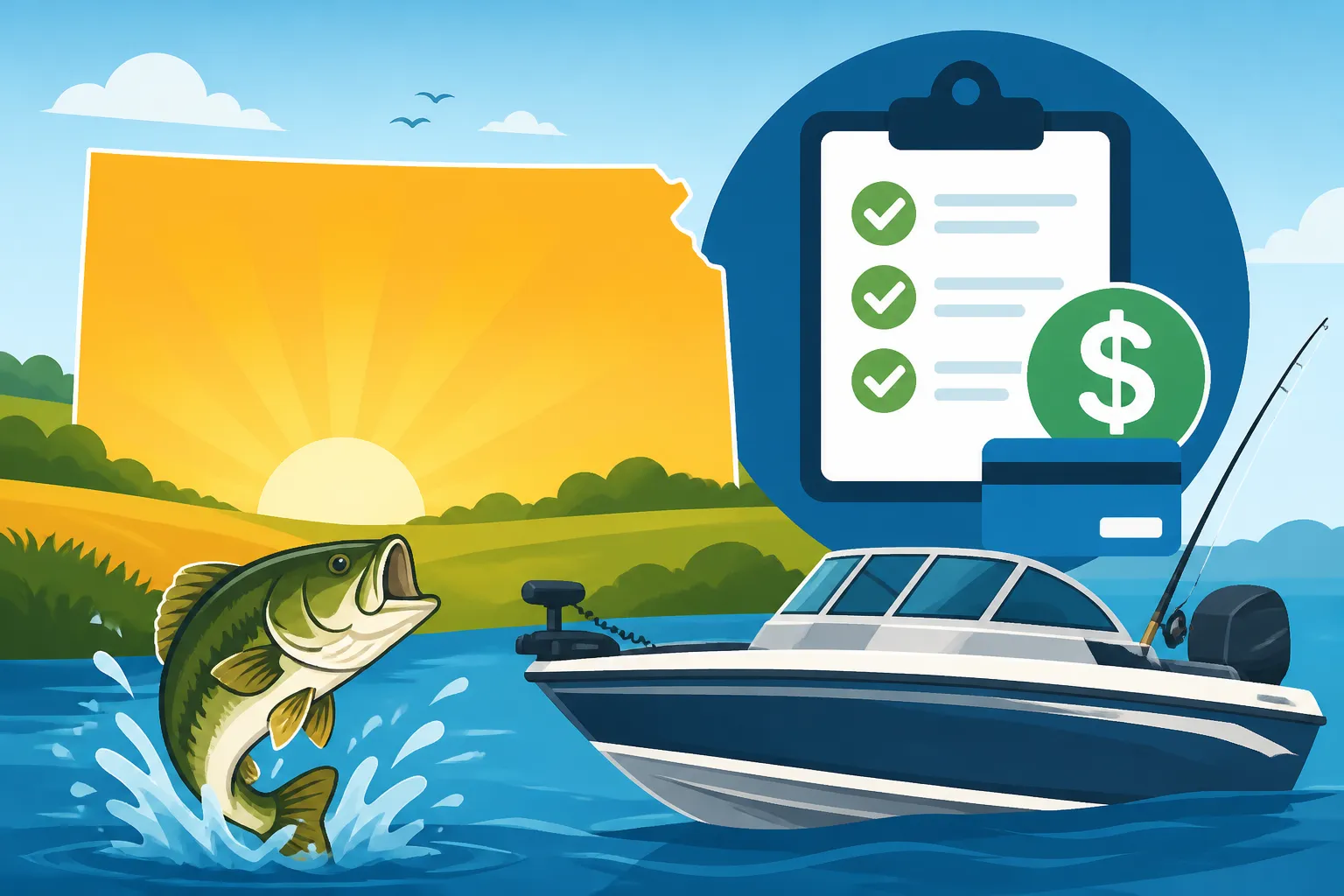
Let's talk about the dollars and cents. The cost of registering your boat in Kansas isn't a flat fee for everyone. It's designed to be equitable, taking into account the size and type of vessel you own. Understanding these factors will help you anticipate your expenses and plan accordingly.
Factors That Influence Your Registration Fee
The primary determinant of your boat registration fee in Kansas is almost always the boat's length. Larger boats generally incur a higher registration cost than smaller ones. This tiered system ensures that those operating larger vessels, which often have a greater impact on waterways and require more resources for regulation, contribute proportionally. For instance, a small Jon boat used for pond fishing will have a different fee structure than a larger cruiser or a bass boat hitting major reservoirs like Wilson Lake.
Beyond length, the type of vessel can also play a role. Motorized boats, including personal watercraft (PWCs), typically have a different fee scale than non-motorized sailboats that meet specific size requirements. These categories reflect different operational needs and potential environmental impacts. The state also often offers multi-year registration options, which can sometimes provide a modest cost savings over continuously renewing year after year. While the exact figures aren't fixed, exploring these multi-year choices might be beneficial for long-term boat owners. It's always smart to review the KDWPT's official information to see the current breakdown for different vessel classifications.
Potential Additional Fees and Charges
While the core registration fee covers the basics, there can be other charges that pop up during the process. As mentioned earlier, if your boat is of a size and type that requires a title in Kansas, there will be a separate titling fee. This is a one-time charge for establishing legal ownership of your vessel with the state. Think of Kansas Boat Titling Rules as the legal framework for formally claiming your boat.
Additionally, if you let your registration lapse and then try to renew it, you might face delinquency penalties or late fees. These charges are designed to encourage timely renewals and ensure compliance, and they can add a significant chunk to your overall cost. It’s always cheaper and less stressful to stay on top of your renewal dates! There might also be small processing fees, especially if you use online services or certain payment methods. When purchasing your boat, some dealers, such as those that work with Bass Pro Shops, might offer to handle the initial paperwork for you, often including these fees in their service, which can be convenient for first-time owners.
Keeping Your Registration Current: The Renewal Process
Once you've gone through the initial registration process, the goal is to keep it current. An expired registration is just as problematic as never having one at all. Thankfully, Kansas has made the renewal process quite user-friendly.
When and How to Renew Your Kansas Boat Registration
Kansas boat registrations are typically valid for a multi-year period, not just a single year. This means you don't have to worry about renewing every twelve months, which is a nice convenience for busy anglers and boaters. However, it also means it's easier for the renewal date to slip your mind. The KDWPT generally sends out reminders, either through postal mail or email, as your registration expiration approaches. It’s crucial to keep your contact information updated with them so you don't miss these important notifications.
When it's time to renew, you have several straightforward options. The most popular method for many is Kansas Fishing License Online Renewal, which often extends to boat registrations as well. The KDWPT online portal allows you to update information, pay your renewal fees, and often print a temporary registration document immediately. You can also renew by mail, sending in your renewal notice and payment, or in person at authorized KDWPT offices or county registration sites. Whichever method you choose, make sure to allow enough time for processing, especially if you're planning a trip soon after your expiration date.
Avoiding Lapses and Understanding Penalties
Life gets busy, and sometimes administrative tasks fall through the cracks. But letting your Kansas boat registration expire can lead to unnecessary complications and costs. If you're stopped on the water with an expired registration, you could receive a citation and be subject to fines. These penalties are designed to deter non-compliance and maintain the integrity of the state's boating regulations. Just like Fishing Without a License Penalties in Kansas can be a real hassle, an expired boat registration can ruin your day on the water.
A lapsed registration can also mean that when you finally do go to renew, you might face additional late fees on top of the standard renewal cost. In some cases, if the registration has been expired for an extended period, you might even be required to go through a more involved re-registration process, similar to an initial registration, rather than a simple renewal. The simplest advice? Mark your renewal date on your calendar, sign up for email reminders, and tackle it as soon as you receive notification. Keeping your registration current ensures uninterrupted enjoyment of Kansas waterways and avoids unexpected expenses or legal issues.
Where to Handle Your Registration and Renewal
Knowing what to do is one thing, but knowing where to do it is just as important. Luckily, Kansas offers several accessible avenues for boat registration and renewal.
Official Channels and Licensed Agents
The primary official channel for all Kansas boat registration needs is the Kansas Department of Wildlife, Parks and Tourism (KDWPT). Their official website is a treasure trove of information, forms, and online services. Beyond the digital realm, you can find KDWPT offices scattered across the state where you can handle registrations in person. Additionally, many county treasurers' offices are deputized to process boat registrations, offering a convenient local option for many Kansans.
When considering where to go, think about what works best for your schedule. If you prefer face-to-face interaction or have complex questions, an in-person visit to a KDWPT office or county clerk might be best. These locations also offer the advantage of immediate assistance if you encounter any issues with your paperwork. While large retailers like Bass Pro Shops may not directly handle registrations, their customer service desks often have general information about local KDWPT offices or can direct you to online resources.
Online Convenience and Digital Options
For most boaters, the absolute easiest way to manage registration and renewal is through the KDWPT's online portal. This digital service is available 24/7, allowing you to complete transactions on your schedule, without having to worry about office hours or travel time. You can fill out forms, upload necessary documents, and pay securely using a credit or debit card. Once complete, you often receive a printable temporary registration to keep with you until your official documents and decals arrive in the mail.
The convenience of online services extends to keeping digital records. Many boaters find it helpful to save a digital copy of their registration on their smartphone or in a cloud storage service. This way, if you ever misplace your physical card, you have immediate access to the necessary information. Just remember that while digital copies are handy, you generally still need to carry the physical registration card on board your vessel. This ease of access mirrors how you can How to Check a Kansas Fishing License Purchase Online, ensuring you're always prepared. For any small items you might need to protect your documents on the boat, like waterproof pouches, you can often find a wide selection available on platforms like Amazon.
Common Questions and Practical Tips for Kansas Boaters
Even after understanding the core process, specific scenarios often pop up that can leave boaters scratching their heads. Let's tackle a few common questions and offer some practical advice to keep your boating adventures smooth.
What About Non-Motorized Vessels or Small Boats?
This is a question that frequently comes up, particularly for those who enjoy quieter pursuits like kayaking, canoeing, or paddleboarding. Generally, very small, non-motorized vessels, such as most kayaks, canoes, and paddleboards, are often exempt from registration requirements in Kansas. These typically include vessels under a certain length or without mechanical propulsion. However, if you outfit a kayak with a trolling motor, for example, it might then fall under the registration requirements as a motorized vessel.
The key is "motorized." If your vessel has any form of mechanical power, it will almost certainly need to be registered, regardless of its size. For non-motorized vessels, even if they don't require registration, always ensure you have the necessary safety equipment on board, such as life jackets, which are a must for all paddlers. It’s always best to check the current KDWPT regulations to be absolutely sure about your specific vessel type, as rules can sometimes be nuanced. Our guide on Do Kayaks Need to Be Registered in Kansas? delves deeper into this specific topic.
Lost Documents and Replacement Procedures
It happens to the best of us: you misplace your registration card, or perhaps a decal peels off after a long season on the water. Don't panic! Replacing lost or damaged boat registration documents and decals in Kansas is a straightforward process, though it does usually involve a small administrative charge. You won't have to go through the entire initial registration process again.
To obtain replacements, you'll typically need to contact the KDWPT directly, either through their online portal, by mail, or in person. You'll usually need to provide your boat's registration number (the "KS" number), your owner information, and possibly the HIN to verify your ownership. Once your request is processed and the nominal fee is paid, new documents and decals will be sent to you. It’s a good practice to keep a record of your boat's registration number and HIN in a safe, separate place from your boat, perhaps in your home office, to make replacement easier if needed. This process is very similar to how you would handle a Fishing License Replacement Process in Kansas, making it a familiar process for many experienced anglers.
| Feature / Action | Initial Registration | Renewal Process |
|---|---|---|
| Primary Document | Proof of Ownership (Title, MSO, Bill of Sale) | Renewal Notice (often digital or mailed) |
| Boat Information | HIN, Make, Model, Length, Propulsion, HP | HIN, Length (for verification, usually pre-filled) |
| Owner Information | Full Name, Address, ID | Full Name, Address (for verification, update if changed) |
| Typical Cost Basis | Based on boat length/type, includes titling fee | Based on boat length/type, no titling fee |
| Frequency | One-time for new registration/new owner | Multi-year cycle (e.g., every few years) |
| Payment Options | Online, Mail, In-Person | Online, Mail, In-Person |
| Penalty for Delay | Cannot legally operate vessel | Fines, late fees, potential re-registration |
Disclaimer
This article is for general informational purposes only and does not constitute professional advice. Laws, prices and regulations vary by location and change over time. Consult a qualified professional for guidance on your specific situation.