Best Spinnerbait Colors for Bass
There’s nothing quite like the rush of a Kansas bass exploding on a spinnerbait. But let's be honest, standing in the aisle of your favorite tackle shop, staring at dozens of spinnerbaits in every color imaginable, can feel overwhelming. How do you pick the right one for the conditions you're facing? This comprehensive guide will pull back the curtain on the science and art of choosing the best spinnerbait colors for bass in Kansas, ensuring you step onto the water with confidence, ready to entice those largemouth, smallmouth, and spotted bass.
Understanding the Bass's Perspective: Why Color Matters So Much
Before we dive into specific color recommendations, it’s crucial to understand why color plays such a significant role in bass fishing success. Bass don't perceive the underwater world exactly as we do from above the surface. Water acts as a natural filter, absorbing light and altering the appearance of colors as they penetrate deeper. What looks vibrant and distinct in your hand can appear muted or even disappear at certain depths or in different water clarities. Ignoring these underwater realities means you might be presenting a lure that the bass can't effectively see or that doesn't trigger their predatory instincts.
The Role of Water Clarity in Color Selection
Water clarity is arguably the single most important factor when deciding on a spinnerbait color. Imagine trying to spot a specific color in a foggy room versus a brightly lit one – the visibility changes everything.
In clear water, like what you might find in many parts of Wilson Lake or some of the clearer coves in Milford Lake, bass rely heavily on their eyesight. They have a good long look at your lure, which means subtle, natural colors that accurately mimic their prey will often be most effective. Details like realistic scale patterns or the sheen of a baitfish are visible, and an unnatural-looking color can easily spook a cautious bass. The goal here is to blend in, yet still, offer enough flash or movement to attract attention.
Conversely, in stained or murky water, such as after a heavy rain on the Kansas River or in many agricultural ponds, visibility is severely limited. Bass in these conditions shift their primary senses. While their lateral line system helps them detect vibrations from moving prey, visual cues are still important for closing the deal. Here, colors need to create strong contrast and stand out against the low visibility backdrop. Bright, fluorescent colors or dark, silhouetted patterns become more effective because they're easier for the bass to perceive, even if the exact hue is lost. The goal isn't necessarily to look natural, but to be undeniable.
Light Conditions and Bass Vision
Beyond water clarity, the available light—whether it's a bright, sunny day, an overcast morning, or fishing deep water—also drastically impacts how colors appear underwater. On a bright, sunny day, especially in clear water, too much flash can sometimes be overwhelming or appear unnatural. Lures with less reflective, matte finishes or subtler blade combinations might be preferred. However, reflective blades like silver or nickel can effectively scatter the abundant light, making your lure shimmer like a darting baitfish.
When conditions are overcast or low light, such as at dawn or dusk, bass's pupils dilate, and they can pick up more light. This is when brighter, more opaque colors like chartreuse or pure white can really pop, offering a beacon for bass to hone in on. Similarly, dark colors like black and blue create a distinct silhouette against the lighter surface, making the lure visible as a solid shape even when true colors are indistinguishable.
As you fish deeper water, colors disappear sequentially. Red is the first to be absorbed, followed by orange, yellow, and green. Blue and violet penetrate the deepest. This means a bright red spinnerbait fished at 20 feet might appear as a dull brown or gray. Understanding this helps you choose colors that maintain some visual integrity at the depth you're targeting. For a deeper dive into bass behavior, check out our Kansas Bass Fishing Guide.
Top Spinnerbait Colors for Clear Water Bass in Kansas
When the water in your favorite Kansas fishing hole is clear enough to see your toes, bass are primarily sight feeders. This means your spinnerbait choices should emphasize realism, natural tones, and just the right amount of flash to mimic common forage without startling them.
Natural Hues: Silver, White, and Shad Patterns
In clear water, mimicking the natural prey of bass is your best bet. Shad are a primary food source in many Kansas reservoirs, and spinnerbaits that imitate them are consistently productive.
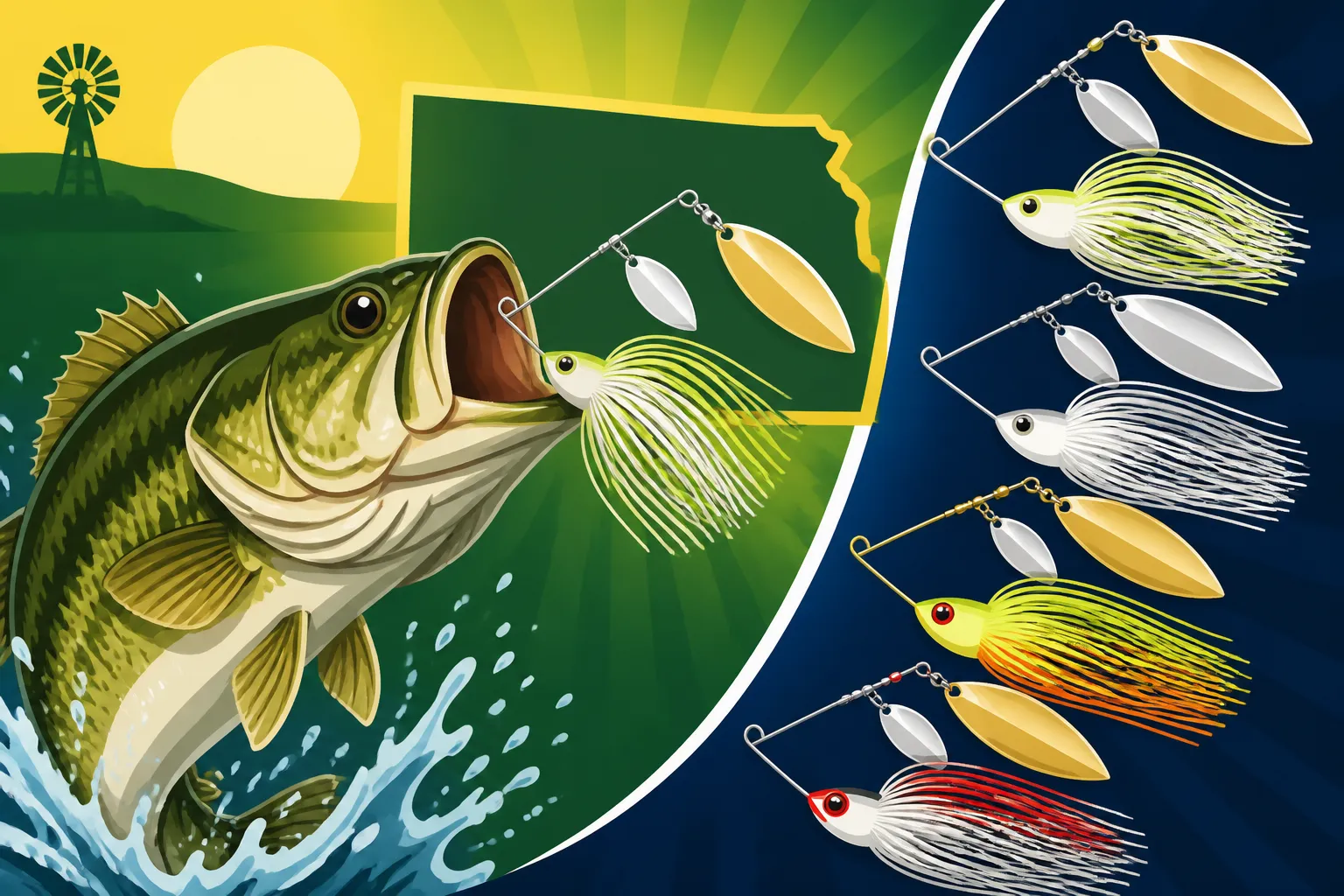
- Silver Blades with White Skirts: This is a timeless, universally effective combination. The silver blades, often willowleaf for a slender profile and subtle flash, perfectly mimic the side-flash of a fleeing shad. The white skirt completes the illusion, making it look like a school of baitfish or a single, injured shad. This setup is fantastic year-round, but truly shines when bass are actively chasing baitfish in open water. Many anglers swear by this combination on sprawling clear-water impoundments. You can find a huge variety of these at retailers like Bass Pro Shops or even a quick search on Amazon.
- Pearl White or Cream Skirts: Similar to pure white, pearl white offers a slightly more opaque, pearlescent sheen that can be incredibly appealing in clear conditions. These colors are versatile and can imitate a wide range of baitfish, from shad to small panfish. Pair them with silver or even white-painted blades for a more subdued flash.
- Green Pumpkin or Natural Patterns: When bass aren't keying on shad, they might be munching on crawfish or smaller bluegill in clearer, more vegetated areas. A spinnerbait with a green pumpkin or brown skirt, often with copper or gold blades, can be incredibly effective at imitating these bottom-dwelling creatures. Think about fishing these around submerged timber or rock piles where crawfish hide.
When Less Is More: Subtle Color Combinations
Sometimes, even natural hues can be too much in ultra-clear or highly pressured water. This is when subtlety becomes your secret weapon.
- Translucent Skirts or Clear Blades: These "ghostly" spinnerbaits are designed for when bass are extremely wary. A translucent chartreuse, smoke, or even a clear skirt offers just a hint of color and movement without being overly flashy. Paired with clear or very lightly tinted blades, they create a subtle shimmer that can fool even the most finicky bass. It's like a phantom baitfish, just enough to catch their eye without screaming "fake."
- Smoke or Light Blue Skirts: These understated colors can effectively mimic dying or lethargic baitfish. Bass often key in on injured prey that appears to be struggling. A smoke or light blue skirt with a single silver willowleaf blade offers a subtle profile that suggests an easy meal. This combination is particularly useful on calm, sunny days when bass might be suspended or cruising slowly.
- Small Willowleaf Blades: While not a color itself, the choice of blade type impacts the visual presence. In clear water, smaller willowleaf blades provide less thump and flash than their Colorado counterparts. This reduced commotion can be crucial for enticing strikes without overwhelming cautious bass. Consider using a double willowleaf setup for a slender, baitfish-like profile that still offers plenty of flash. If you're looking for more general tackle advice, check out our Best Tackle for Kansas Game Fish guide.
Dominant Spinnerbait Colors for Murky or Stained Water
Kansas waterways, whether it's a river swelling after heavy rains or a pond with a perpetual tint, frequently present stained or muddy conditions. When water clarity drops, bass rely less on detailed visual cues and more on vibration, contrast, and general shape. Your spinnerbait needs to be a beacon, not a ghost.
Bright and Bold: Chartreuse, Orange, and Firetiger
These colors are designed to stand out like a neon sign in low visibility, ensuring that bass can easily locate your lure.
- Chartreuse: The Murky Water King: If there's one color you should have in your tackle box for stained water, it's chartreuse. Its vibrant, almost fluorescent hue penetrates murky water better than almost any other color. Often combined with white or blue in the skirt, chartreuse creates an undeniable visual target. Bass, even when they can't make out fine details, can spot that bright glow and are drawn to it. This color is a staple for a reason and can trigger aggressive reaction strikes when other colors fail. For tips on navigating these conditions, read our guide on How to Catch Largemouth Bass in Muddy Water.
- Orange and Red: Mimicking Crawfish and Aggression: These warm colors are fantastic for situations where bass might be feeding on crawfish, which are a common food source in many Kansas waters, or when you want to trigger an aggressive strike. A spinnerbait with an orange or red skirt, perhaps with a touch of brown or black, can perfectly imitate a scurrying crawfish. Gold or copper blades complement these colors well, adding a warm, bright flash. This combination is especially potent during the pre-spawn when crawfish are active and bass are aggressively feeding.
- Firetiger: The High-Contrast Stimulator: This iconic pattern features a combination of chartreuse, orange, and black stripes. Firetiger is a high-contrast masterpiece that screams "eat me" in stained water. The distinct stripes break up the lure's profile, making it highly visible and creating an illusion of movement. It's an excellent choice for stimulating reaction strikes from bass that might be sluggish or simply need a bold presentation to commit. You'll find these high-visibility patterns readily available from various brands.
Darker Profiles: Black and Blue for Contrast
While bright colors aim to be seen, dark colors offer a different, equally effective strategy in low light and murky conditions: creating a powerful silhouette.
- Black and Blue: The Silhouette Powerhouse: This combination is legendary for a reason. In stained or muddy water, and especially in low light conditions (dawn, dusk, or heavy overcast), a black and blue spinnerbait creates a distinct, solid silhouette against the lighter sky or water surface. Bass don't necessarily see "black and blue" as colors, but rather as a prominent shape moving through their environment. This strong contrast makes the lure incredibly easy for bass to detect, triggering strikes based on their lateral line sense and general predatory instinct.
- Paired with Colorado Blades: For black and blue spinnerbaits, single or double Colorado blades are often preferred. Colorado blades are rounder and generate maximum vibration and "thump" as they move through the water. This strong vibration, combined with the powerful silhouette, forms an irresistible target for bass in murky conditions. The slower rotation of Colorado blades also makes them ideal for slow-rolling presentations, which can be deadly when bass are less active. This combination is also a go-to for Kansas Night Fishing Guide.
Seasonal and Situational Color Choices for Kansas Bass
Bass behavior, and consequently the most effective spinnerbait colors, can shift dramatically with the seasons and specific environmental conditions. Adapting your color choices to these changing factors can significantly improve your catch rate.
Spring and Fall: Aggressive Color Tactics
These transitional periods are prime times for spinnerbait fishing in Kansas, as bass are often active and feeding aggressively, albeit for different reasons.
- Spring Aggression (Pre-Spawn and Spawn): As water temperatures rise in spring, bass move shallower to feed and eventually spawn. During the pre-spawn, bass are bulking up, often targeting crawfish and larger baitfish. This is a great time for brighter, more aggressive colors like white, chartreuse, or even a spinnerbait with prominent red accents (mimicking a crawfish). The goal is to trigger reaction strikes from territorial or hungry bass. During the actual spawn, a spinnerbait can draw strikes from bass protecting their nests, and again, bolder colors often work well to provoke a defensive reaction. Our Kansas Spring Fishing Guide offers more insights into this exciting season.
- Fall Feeding Frenzy: In the fall, bass are putting on weight for the colder months ahead, leading to another period of aggressive feeding. Shad populations are often at their peak, and bass will actively chase schools of baitfish. This makes shad-imitating patterns (silver blades with white skirts) incredibly effective. Firetiger, perch patterns, or even brighter blues can also be productive as bass key in on a variety of forage. Consider upsizing your spinnerbait slightly in the fall to imitate larger, calorie-rich baitfish.
Summer and Low Light: Vibrancy vs. Silhouette
Summer in Kansas can present challenges with hot water and bright sun, but smart color choices can still yield fantastic results. Low light conditions, regardless of season, also demand specific considerations.
- Summer's Nuances: During the heat of summer, especially on bright, sunny days, bass often retreat to deeper, cooler water or seek shade under cover. In clear water, natural baitfish patterns (white, silver, pearl) remain strong choices, particularly during early morning or late evening feeding windows. However, if you're fishing deeper or in stained areas, a vibrant chartreuse or a dark black and blue can help your lure be seen. Sometimes, a subtle approach with natural green pumpkin can work when bass are hiding in dense vegetation.
- Night Fishing and Low Light: When the sun dips below the horizon, or on heavily overcast days, visual cues diminish significantly. This is where the black and blue spinnerbait truly shines, creating that distinct silhouette. The contrast is paramount, and the color itself becomes less important than the shape and vibration. Pair these with large Colorado blades to maximize the "thump" that bass can detect with their lateral lines in the dark. A good headlamp can help you rig up, but remember, the bass won't see it!
Matching the Hatch: When Bass Are Finicky
Sometimes, bass can be incredibly selective, especially in highly pressured waters or when they are actively feeding on a very specific type of forage. This is when "matching the hatch" becomes crucial.
Observe what the bass are feeding on: Are there schools of shad flickering on the surface? Are you seeing crawfish scuttling in the shallows? Are bluegill darting among lily pads? Try to replicate the dominant baitfish or crustacean in color, size, and flash. This might mean using olive green or brown patterns for bluegill or crawfish, or specific shad-colored options for baitfish. Don't forget to consider blade finishes – duller, matte silver or gold blades can be more effective than highly polished ones when bass are wary.
By understanding how bass see and react to colors under varying conditions, you can stop guessing and start catching more fish. Keep an assortment of these key colors in your tackle box, and you’ll be well-equipped for any bass fishing adventure in Kansas.
Spinnerbait Color Selection Guide
Here's a quick reference table to help you pick the right spinnerbait color based on common Kansas fishing conditions:
| Water Clarity | Light Conditions | Preferred Skirt Colors | Recommended Blade Colors | Why it Works |
|---|---|---|---|---|
| Clear Water | Bright Sun | White, Pearl, Smoke, Green Pumpkin | Silver, Nickel (polished/matte) | Natural imitation, subtle flash, less overwhelming |
| Clear Water | Overcast/Low Light | White, Pearl, Light Blue | Silver, Nickel | Good visibility, natural, doesn't spook |
| Stained Water | Bright Sun | White, Chartreuse, Orange, Firetiger | Gold, Painted (chartreuse/orange) | High visibility, stands out against tint |
| Stained Water | Overcast/Low Light | Chartreuse, Firetiger, Black/Blue | Gold, Black Painted | Max contrast & visibility, strong silhouette |
| Murky/Muddy Water | Any Light Condition | Chartreuse, Black, Blue, Firetiger | Gold, Black Painted (Colorado) | Creates strong profile and vibration, highly visible |
| Night Fishing | Dark | Black/Blue, Dark Purple, Dark Green | Black Painted (Colorado) | Strongest silhouette, maximum thump & vibration |
This article is for general informational purposes only and does not constitute professional advice. Laws, prices and regulations vary by location and change over time. Consult a qualified professional for guidance on your specific situation.