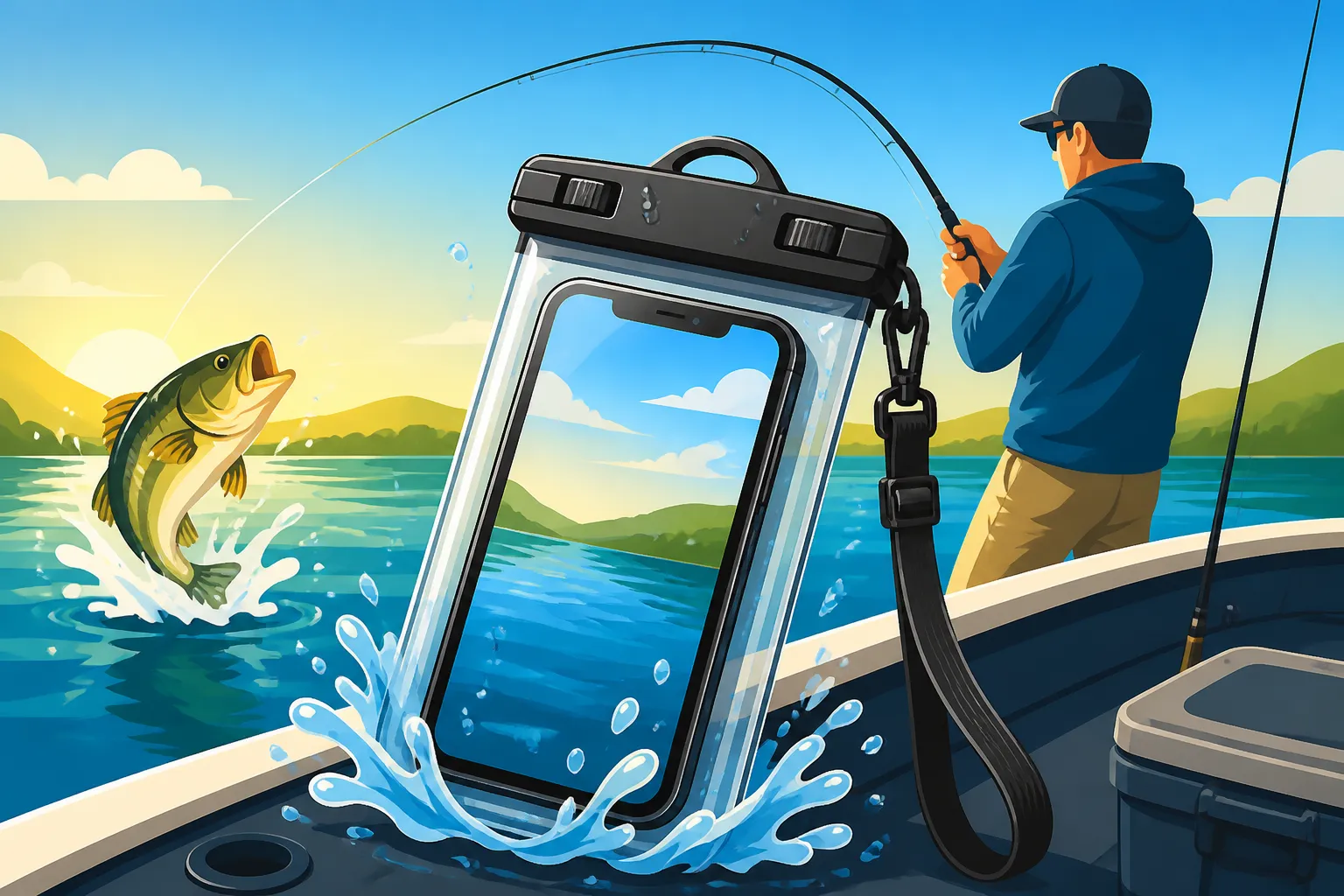
Best Waterproof Phone Case for Boat Fishing
There’s nothing quite like the feeling of being out on a Kansas lake, the sun on your face, the sound of the water lapping against your boat, and the hope of a big catch. But let’s be real, many of us also have that knot of anxiety in our stomach about our phone. That quick grab for a photo of your latest walleye, a sudden spray of water, or even just leaving it on a wet boat seat can spell disaster. This guide is all about helping you keep your precious device safe and sound with the best waterproof phone case for boat fishing, so you can focus on the fish, not the fear of a submerged smartphone.
Why a Waterproof Phone Case is Non-Negotiable for Anglers
For years, I told myself I'd be careful. I'd put my phone in a Ziploc bag, or tuck it away in a dry compartment. And for years, I saw friends (and almost myself!) have close calls or outright disasters. Whether it's an unexpected wave, a clumsy bump, or simply the pervasive dampness that comes with being on the water, a phone is always at risk. A dedicated waterproof case isn't just an accessory; it's essential gear, just like your life jacket or a reliable fishing rod.
Protecting Your Investment from the Elements
Modern smartphones are incredible tools, but they're not cheap. Dropping your phone in Milford Lake or even just getting splashed by a rogue wave at Cheney Reservoir can mean a costly repair or, worse, a complete replacement. Think about all the scenarios: a sudden summer storm rolling in over Tuttle Creek Lake, a splash while netting a lively catfish, or simply the condensation building up in your tackle box. Water, especially freshwater from lakes and rivers, can quickly corrode internal components, leading to irreversible damage.
Beyond just submersion, even consistent moisture can be detrimental. The humid air, the spray from the motor, or wet hands can introduce enough moisture to cause issues over time. A good waterproof case seals your phone off from these threats, allowing you to use it for navigation, checking fishing reports, or snapping that perfect trophy shot without a second thought. It’s an investment that pays for itself the first time it saves your phone.
Staying Connected Safely on the Water
Fishing, especially on larger Kansas reservoirs, can take you far from shore. Having a working phone isn't just about social media; it's a critical safety device. What if your boat breaks down, or you encounter an unexpected medical emergency? A waterproof phone case ensures that your ability to call for help, use GPS to find your way back, or check weather updates remains intact. You don't want to be in a situation where you need to make a critical call, only to find your phone drowned from an earlier splash.
Moreover, many anglers use their phones for detailed maps and navigation apps, especially when exploring new fishing spots or tracking their path. Imagine navigating tricky channels or finding hidden structures on Wilson Lake and suddenly your screen goes blank because of water damage. A reliable waterproof case means you can keep those essential navigation tools at your fingertips, letting you fish smarter and safer. It's about peace of mind, knowing that you're prepared for whatever the water throws at you.
Types of Waterproof Phone Cases: Finding Your Perfect Match
Just like there are different Kansas Fishing Techniques for Beginners, there are various types of waterproof phone cases, each with its own advantages. The "best" one for you depends on your fishing style, how often you're on the water, and your comfort level with different levels of protection.
Pouches and Dry Bags: Simple and Effective
Waterproof pouches are perhaps the most common and budget-friendly option. These are essentially clear, flexible bags with a secure sealing mechanism, often a double-zip lock followed by a roll-top or a clamp. Many come with lanyards so you can wear your phone around your neck, keeping it accessible but out of the way. They're fantastic for casual anglers or those who only need occasional access to their phone. You can usually still use the touchscreen through the plastic, although it might be a bit finicky.
These pouches are great for protecting against splashes, rain, and quick submersions. They are also versatile, able to fit a wide range of phone sizes, and often have room for keys or a small wallet. If you're bank fishing on a local Kansas Community Fishing Lake Rules or taking a leisurely paddle in a kayak, a good quality pouch can be all you need. Brands readily available on Amazon offer a wide selection of these, often with positive reviews from fellow outdoor enthusiasts. They provide that essential barrier without adding bulk directly to your phone.
Hard Cases and Mounts: Ultimate Protection and Accessibility
For serious boat anglers, a rugged, hard-shell waterproof case that directly encloses your phone might be the better choice. These cases are designed to be extremely durable, offering superior protection not just from water, but also from drops, dust, and impacts. They often feature an integrated screen protector and sealed ports, turning your phone into a nearly indestructible device. Some of these cases are designed for specific phone models, ensuring a snug, form-fitting protection.
The real game-changer for boat fishing is when these hard cases are paired with mounting systems. Imagine having your phone securely clamped to your boat's console, easily visible for navigation or checking fish finder readings, yet completely protected from spray and jostling. These mounts can be swivel or adjustable, letting you position your phone exactly where you need it. While these options tend to be pricier and add significant bulk, they offer unparalleled peace of mind and functionality for those who spend a lot of time on the water. You can often find a good selection of these robust options at stores like Bass Pro Shops, where you can see and feel the quality before you buy.
Waterproof Phone Features: Built-in Resistance
It's worth noting that many modern smartphones come with some level of inherent water resistance, often specified by an IP rating. For example, a phone might be rated IP67 or IP68. While this built-in resistance is a huge step up from older phones, it's generally designed for accidental splashes or shallow, brief submersions, typically in freshwater. It’s important to remember that this resistance can degrade over time with wear and tear, and it’s not truly waterproof for extended periods or under pressure.
Relying solely on your phone's built-in water resistance when you're out on a boat is a gamble I wouldn't recommend taking. The conditions on a boat—constant spray, potential for drops into deeper water, and exposure to different chemicals like fuel or sunscreen—are far more demanding than what these ratings typically account for. A dedicated waterproof case provides an additional, much-needed layer of defense, turning that "water resistance" into actual "waterproof" peace of mind for your fishing adventures. Think of your phone’s built-in resistance as a last line of defense, not the primary one.
Key Features to Look for in a Quality Waterproof Phone Case
Choosing the right waterproof phone case isn't just about picking the first one you see. There are specific features that can make a huge difference in its effectiveness and your overall experience on the water. Knowing what to look for will help you make an informed decision that truly protects your device.
IP Rating: Understanding the Waterproof Standard
The "IP rating" (Ingress Protection) is an international standard that tells you exactly how resistant an electronic device is to dust and liquids. It's usually a two-digit number, like IP68. The first digit refers to solid particle protection (dust), on a scale of 0-6. A '6' means it's dust-tight. The second digit refers to liquid ingress protection (water), on a scale of 0-9.
For boat fishing, you want to pay close attention to the water rating.
- IPX7: Protected against immersion in water for up to 30 minutes at a depth of 1 meter. This is good for accidental drops but might not hold up to prolonged exposure.
- IPX8: Protected against continuous immersion in water, usually beyond 1 meter. The exact depth and duration are specified by the manufacturer. This is what you should aim for if you're serious about waterproof protection, especially if there's a chance your phone could end up in deeper water, say, while fishing for Kansas Walleye Length Limits or trying to land a monster Kansas Flathead Catfish Daily Limit.
Always check the manufacturer's specific claims for IPX8, as it can vary. A higher IP rating generally means better protection, but also sometimes a higher price point or more bulk. For most anglers, an IP68 rating in a dedicated case provides excellent peace of mind against the rigors of boating.
Accessibility and Functionality on the Water
What good is a waterproof case if you can't use your phone when you need it? This is a crucial consideration.
- Touchscreen Responsiveness: Can you still swipe, tap, and type effectively through the case? Some cases, especially pouches, can make the touchscreen less responsive, especially when wet. Look for cases that specifically mention good touchscreen functionality.
- Button Access: Can you easily press the power and volume buttons? Some rugged cases have stiff buttons or make them hard to find.
- Camera Quality: If snapping photos of your catches or the beautiful Kansas scenery is important, ensure the case doesn't obstruct the camera lens or degrade photo quality. Clear lens covers are a must.
- Charging Port Access: Ideally, you'd want to be able to charge your phone without removing it from the case, especially if you have a portable power bank on your boat.
- Mounting Options: If you want to keep your phone visible and secure, look for cases that have integrated mounting solutions or are compatible with popular mounting brands.
Before heading out, always test your phone's functionality within the case. Try making a call, taking a photo, and using a key app like a fish finder or weather radar.
Durability Beyond Waterproofing
While waterproofing is paramount, a good boat fishing phone case needs to stand up to more than just water.
- Drop Protection: Boats can be bumpy, and things get dropped. Look for cases that offer impact absorption and shock protection, often indicated by reinforced corners or a rugged exterior.
- Dust and Dirt Resistance: Fishing environments are rarely pristine. Your case should prevent fine dust, sand, and even fish slime from getting into your phone's ports and crevices. This is also covered by the IP rating's first digit.
- UV Resistance: Constant exposure to sunlight can degrade some plastics over time, making them brittle or discolored. Cases designed for outdoor use often incorporate UV-resistant materials.
- Buoyancy: This is a bonus feature but a very valuable one. Some pouches and hard cases are designed to float if accidentally dropped overboard. This can be a literal lifesaver for your phone, preventing it from sinking to the bottom of the lake. It's especially handy when you're fishing in deeper areas of a reservoir.
A case that checks all these boxes will give you the most confidence when you're on the water, whether you're battling a big fish or navigating choppy conditions.
| Feature Type | Description | Ideal for Anglers | Example Case Type |
|---|---|---|---|
| Waterproof Rating | Defines protection against water ingress (IPX7, IPX8). | IPX8 for continuous submersion. | Hard Case, High-Quality Pouch |
| Drop Protection | Ability to withstand impacts and falls. | Military-grade drop protection or reinforced corners. | Rugged Hard Case |
| Touchscreen Access | Ease of using phone screen while in the case. | Clear, responsive screen cover for full functionality. | Specific Phone Model Hard Case, Quality Pouch |
| Port Access | Ability to charge or use headphones without removing phone. | Sealed, easy-to-open port covers. | Rugged Hard Case |
| Camera Clarity | Undistorted view for taking photos and videos. | Optical-grade clear lens area. | Any case with specific camera window |
| Mounting Options | Capability to attach to boat, kayak, or gear. | Integrated mount point or compatibility with universal mounts. | Hard Case (often brand-specific mounts) |
| Buoyancy | Floats if dropped in water. | Floating design or included flotation strap. | Some Pouches, few specialized Hard Cases |
| Material Durability | Resistance to UV, chemicals, and general wear and tear. | Robust, UV-resistant plastics and flexible seals. | High-Quality Hard Case or Pouch |
Top Tips for Using and Maintaining Your Waterproof Phone Case
Getting a great waterproof phone case is only half the battle. Proper usage and consistent maintenance are key to ensuring it performs as expected and keeps your phone safe for countless fishing trips to come.
Pre-Trip Checks and Best Practices
Before you even step foot on the boat, a few quick checks can prevent a lot of heartache.
- Water Test Your Case (Empty!): This is perhaps the most critical step. If it's a new case, or if it's been a while since you last used it, perform a dry run. Place a tissue or paper towel inside the empty case, seal it according to the manufacturer's instructions, and submerge it in a sink or bucket for at least 30 minutes. If the paper comes out dry, you're good to go. If not, don't trust it with your phone!
- Inspect Seals and Latches: Over time, seals can crack, become brittle, or collect debris. Before each trip, visually inspect all rubber gaskets and O-rings. Make sure they are clean, free of sand or lint, and not visibly damaged. Check that all latches and closures engage securely. A tiny piece of grit in a seal can compromise its waterproof integrity.
- Secure Your Lanyard/Mount: If your case comes with a lanyard, use it! Wearing your phone around your neck or wrist provides an extra layer of security against accidental drops. If you're using a mount, ensure it's tightly secured to your boat and the phone case is firmly clicked into place. Loose mounts are a recipe for disaster when the boat hits a wake.
- Practice Operation: Get comfortable using your phone within the case. Test the touchscreen, buttons, and camera functions. This prevents fumbling when you're trying to quickly snap a photo of that trophy Kansas Crappie or check a vital map coordinate.
By making these pre-trip checks a routine, you drastically reduce the risk of unexpected water damage and ensure your waterproof case lives up to its name.
Post-Fishing Care for Longevity
The journey doesn't end when you pull your boat out of the water. Proper care after each fishing trip will extend the life of your waterproof case and keep it performing optimally.
- Rinse Thoroughly: Even if your case is waterproof, lake water, especially brackish or dirty water from river fishing spots like the Kansas River Catfish Spots, can leave residues. Rinse the entire case, while your phone is still inside, under clean tap water. This removes salt, dirt, fish slime, and any other contaminants that could degrade the seals or plastic over time.
- Dry Completely Before Opening: This is incredibly important. Do NOT open your waterproof case while it's wet on the outside. Any lingering water droplets could trickle inside and defeat the purpose of the case. Use a towel or air dry the case completely before unlatching it and removing your phone.
- Inspect and Clean Seals Again: After drying, give the seals another careful inspection. If you notice any stubborn dirt or grit, gently clean it with a damp cloth and mild soap. Avoid harsh chemicals that could damage the rubber. If the seals appear worn or damaged, consider replacing them if parts are available, or replacing the entire case.
- Store Properly: When not in use, store your waterproof case in a cool, dry place away from direct sunlight. Avoid compressing the seals, which could cause them to lose their shape over time. Some cases come with storage bags or boxes; use them if available. This simple routine ensures that your case is always ready for your next fishing adventure, keeping your phone safe season after season.
Following these steps will help you maximize the investment you've made in protecting your valuable electronics while you're out enjoying the fantastic Kansas Fishing Seasons Guide and all the angling opportunities the state offers.
Disclaimer
This article is for general informational purposes only and does not constitute professional advice. Laws, prices and regulations vary by location and change over time. Consult a qualified professional for guidance on your specific situation.