Kansas Boat Registration Guide
Navigating the ins and outs of boat registration can feel like wrestling a flathead catfish – it's a critical task but often feels more complicated than it needs to be. For any angler dreaming of casting a line on Milford Lake or drifting for crappie on Cheney Reservoir, understanding Kansas boat registration isn't just a suggestion; it's a non-negotiable part of enjoying our beautiful waterways legally and safely. This comprehensive guide aims to demystify the entire process, walking you through every step from initial application to proper display and renewal, ensuring your next fishing trip is smooth sailing, not a bureaucratic headache.
Why Kansas Boat Registration Matters for Anglers
It's easy to think of boat registration as just another hoop to jump through, but it's actually a foundational element of responsible boating in Kansas. Beyond simply being a legal requirement, it plays a significant role in ensuring the safety of all water users and in supporting the very resources we cherish as anglers. Neglecting this crucial step can lead to more than just a slap on the wrist – it can derail your fishing plans and hit your wallet hard.
The Legal Obligation and Your Responsibilities
When you own a boat, whether it's a nimble bass boat or a sturdy pontoon, you're taking on certain legal responsibilities. In Kansas, most motorized vessels and all sailboats over a certain length are required to be registered. This isn't just about identifying your boat; it's about connecting an owner to a vessel for safety, emergency response, and proper management of aquatic resources. Think of it like a driver's license for your car – you wouldn't hit the highway without one, and the same principle applies to our lakes and rivers. This obligation ensures that everyone on the water is accounted for, contributing to a more orderly and safer environment for all. It's about collective responsibility, where each registered boat contributes to a comprehensive system that benefits every angler and boater.
How Registration Supports Kansas Waters
The fees collected from boat registrations don't just vanish into the ether; they are vital for funding critical programs that directly benefit Kansas anglers and the health of our aquatic ecosystems. These funds help support everything from fish stocking programs that keep our lakes teeming with game fish like walleye and catfish, to maintaining public boat ramps and access points, and even crucial water safety initiatives. Without a robust registration system, many of the services and facilities that make Kansas a fantastic fishing destination would simply not exist. So, when you pay your registration fee, you're not just complying with the law; you're actively investing in the future of Kansas Fishing and ensuring that generations to come can enjoy the same opportunities you do. It's a tangible way to give back to the waters that provide us so much enjoyment.
Avoiding Penalties and Hassles
Picture this: you've planned the perfect weekend fishing trip to Wilson Lake, loaded up your gear, and launched your boat, only to be stopped by a game warden for an expired registration. Not only is your day ruined, but you're now facing potential fines, which can be quite steep. Fishing without proper boat registration is a violation that can carry significant penalties, not to mention the embarrassment and wasted time. Staying on top of your registration means avoiding these unnecessary hassles and ensuring that every minute you spend on the water is focused on catching fish, not worrying about legal repercussions. It also streamlines things if you ever need to sell your boat or deal with insurance claims, as proper documentation is key. Make sure you understand Kansas Fishing Law Enforcement and Penalties to avoid such situations.
Who Needs to Register a Boat in Kansas?
It might seem straightforward, but figuring out exactly which boats need to be registered in Kansas can sometimes be a bit confusing. The rules aren't one-size-fits-all, and understanding the specifics can save you a lot of grief down the line. It's all about ensuring that the state has an accurate record of vessels operating on its public waters, for safety, conservation, and enforcement.
Identifying Registerable Vessels
Generally speaking, if your boat has a motor – any motor, electric or gas – it needs to be registered. This includes everything from small jon boats with a trolling motor to large cruising vessels. Additionally, sailboats that are 12 feet or longer, even if they don't have a motor, must also be registered. This covers a vast majority of the boats you'll see on popular fishing lakes like Tuttle Creek and El Dorado. The intention is to account for any vessel that has significant mobility or size, ensuring they can be identified if needed, such as in an emergency or for enforcement of boating regulations. If you've just bought a new fishing kayak with a small electric motor, yes, that needs to be registered too! Don't assume its size makes it exempt.
| Vessel Type | Registration Required? | Key Consideration |
|---|---|---|
| Any motorized vessel (gas or electric) | Yes | All sizes, regardless of motor horsepower. |
| Sailboats 12 feet or longer | Yes | Even without a motor. |
| Canoes, kayaks, paddleboards (non-motorized) | No | Unless they have an attached motor. |
| Private pond use only boats | No | As long as they never enter public waters. |
| Documented vessels (US Coast Guard) | No | These are federally registered, but state fees may apply. |
Exemptions to Kansas Registration Rules
While the general rule covers most boats, there are a few notable exceptions. Non-motorized vessels like canoes, kayaks, paddleboards, and rowboats typically don't require registration, which is a relief for many recreational paddlers. Also, if your boat is exclusively used on private waters, such as your own farm pond or a pond on private land where you have permission to fish, it usually doesn't need to be registered with the state. This is a common question, particularly for landowners who only fish their own property. However, the moment that boat touches public waters, even briefly, the registration requirement kicks in. Another exemption is for vessels that are federally documented with the U.S. Coast Guard, though they still might be subject to state use fees. Understanding these nuances is key to knowing whether you need to take action or if your vessel is truly exempt. Check out Do You Need a License to Fish Private Water in Kansas? for more details on private pond rules.
Special Considerations for Non-Residents and New Purchases
If you're a non-resident bringing your boat into Kansas, the rules are slightly different. Typically, if your boat is properly registered in your home state and you're only visiting Kansas for a short period (usually 60 consecutive days or less), you might not need to register it here. However, if you plan on spending extended time, or if Kansas becomes your primary boating location, you'll likely need to obtain Kansas registration. It's always best to check the latest regulations, as these can sometimes change. For new boat purchases, whether from a dealer or a private seller, you usually have a grace period (often 30-60 days) to get your vessel registered, during which you should carry proof of ownership and purchase date. Don't drag your feet on this; that grace period passes quickly, and you don't want to be caught unprepared on the water. Make sure to gather all the necessary documents from the seller immediately, as these are crucial for your application.
The Step-by-Step Kansas Boat Registration Process
Getting your boat registered in Kansas doesn't have to be a bewildering ordeal. Like any bureaucratic process, it's all about having the right information and following the steps. From gathering your paperwork to knowing where to submit everything, we'll break it down so you can get your numbers and decals on your hull and hit the water without unnecessary delays.
Gathering Your Essential Documents
Before you even think about filling out forms, gather all your paperwork. This is often the most time-consuming part, but doing it correctly upfront saves immense frustration. You'll typically need proof of ownership, such as a manufacturer's statement of origin (MSO) for a new boat or a signed title from the previous owner for a used boat. If Kansas titles boats, you'll need the proper documentation for that as well. You’ll also need to complete the official application form provided by the Kansas Department of Wildlife and Parks (KDWP). For a used boat, a bill of sale is critical, detailing the sale price and signatures of both buyer and seller. Having all these documents neatly organized ensures a smooth submission process. It's like packing your tackle box before a fishing trip – you want everything in its place when you need it. A quick check on the KDWP website for Documents Needed to Register a Boat will give you the most current list.
Where to Submit Your Application
Once you have all your forms filled out and documents in hand, you have a few options for submission. The most common and often quickest method is applying online through the KDWP website. This allows you to complete the process from the comfort of your home, and often results in receiving your temporary registration faster. Many anglers appreciate the convenience of online services, especially when juggling work and family life. Alternatively, you can typically apply in person at one of the KDWP regional offices or through authorized license vendors, such as some county clerk offices or sporting goods stores like Bass Pro Shops, which often have KDWP kiosks or staff trained to assist with registrations. Mailing in your application is also an option, though it might take a bit longer to process. Choose the method that best suits your schedule and comfort level, but remember, the faster you get it done, the sooner you can enjoy the water legally. Find more information on the Boat Registration Online Process.
What to Expect After Registration
After you've submitted your application and paid the necessary fees, you won't immediately get your permanent decals and certificate. Usually, you'll receive a temporary registration that you can print out or keep digitally on your phone. This temporary document allows you to legally operate your boat while you wait for the official materials to arrive in the mail, which can take a few weeks. When your permanent registration arrives, it will include your registration certificate, validation decals, and instructions on how to properly display your boat's registration numbers and decals. It's crucial to keep your registration certificate on board your vessel whenever you're out on the water, as it's your official proof of compliance. Don't stash it in a drawer at home; it needs to be accessible to law enforcement if requested.
Understanding Kansas Boat Registration Costs and Renewal
Just like your fishing license, boat registration isn't a one-and-done deal. There are costs involved, and you'll need to renew it periodically. Understanding these financial aspects and renewal cycles upfront helps you budget and avoid any surprises that could keep you off the water.
Breakdown of Fees and Permits
The cost of boat registration in Kansas can vary based on the length of your vessel and the type of motor. Generally, the fees are quite reasonable, but it's important to be aware of the exact figures. These fees contribute directly to the state's efforts in maintaining waterways, stocking fish, and ensuring boater safety. For instance, a basic annual registration fee for a small boat might be one amount, while a larger vessel will be slightly more. There might also be additional fees for titling a new boat or for late renewals. It's always best to check the current fee schedule on the KDWP website, as these can be updated periodically. While I can't give you exact numbers, be prepared for a modest cost that covers the administrative process and contributes to state conservation efforts. For a detailed breakdown, look for Kansas Boat Registration Cost and Renewal.
Renewal Cycles and Staying Current
Kansas boat registrations typically operate on a multi-year cycle, often renewing every three years. This is different from the annual cycle for most Kansas Fishing License Guide, which means you don't have to think about it quite as often, but it also means it's easier to forget! You'll usually receive a renewal notice in the mail or via email a few months before your registration is set to expire. Don't ignore these notices! Renewing online is often the most convenient option, ensuring you stay current without interrupting your fishing season. Marking your calendar or setting a reminder on your phone can be a simple but effective way to ensure you never miss a renewal deadline. An expired registration is just as problematic as no registration at all, so staying on top of the renewal cycle is crucial for continuous legal operation of your boat. For specifics on how long your registration is valid, refer to How Long a Kansas Boat Registration Stays Valid.
Transferring Ownership and Associated Costs
When you buy or sell a boat in Kansas, there's a specific process for transferring the registration and, if applicable, the title. As the seller, you'll need to sign over the title (if one exists) and provide a bill of sale. As the buyer, you'll need these documents to transfer the ownership into your name and register the boat. There will be transfer fees associated with this process, similar to transferring a vehicle title. It’s critical that these steps are completed promptly after the sale to avoid any legal complications for both parties. Without proper transfer, the previous owner could still be held liable for any issues, and the new owner won't be able to legally operate the vessel. Understanding Kansas Boat Titling Rules will be incredibly helpful in this scenario, as titling is distinct from registration but often handled concurrently.
Displaying Your Registration: Decals and Numbers
Once you’ve successfully registered your boat, the physical act of displaying your registration numbers and decals might seem like a small detail, but it’s a non-negotiable part of compliance. Doing it correctly ensures that your boat is easily identifiable by law enforcement and that you avoid any unnecessary citations on the water.
Proper Placement of Numbers and Validation Decals
Kansas law has clear guidelines for how your registration numbers and validation decals must be displayed. Your registration numbers, which are typically a combination of letters and numbers (e.g., KS 1234 AB), must be painted or permanently attached to both sides of the forward half of the boat. They need to be in block characters, at least three inches high, and in a color that contrasts sharply with the background. This ensures they are clearly legible from a distance. There should be a hyphen or space between the letters and numbers (e.g., KS-1234-AB or KS 1234 AB).
The validation decal, which shows your current registration period, must be displayed within six inches of the registration number on the port (left) side of the boat. This specific placement is important; don't just stick it anywhere. The goal is uniformity across all registered vessels, making it easy for game wardens and other officials to quickly verify your boat's status without having to search for the information.
Maintaining Visibility and Compliance
It's not enough to simply apply the numbers and decals once. You need to ensure they remain visible and legible throughout the registration period. This means regularly checking for peeling decals, fading paint, or obstructions. If your numbers start to chip or your decals fade, it’s your responsibility to replace them. This might mean ordering new decals from KDWP or carefully repainting your numbers. Think about it: if a game warden can’t clearly read your numbers, it’s the same as not having them properly displayed, and you could still face a citation. Taking a few minutes to inspect your boat’s registration markings before each season can save you a lot of hassle and ensure continuous compliance.
Common Display Mistakes to Avoid
Anglers sometimes make common mistakes when displaying their registration. One frequent error is using incorrect font size or style – numbers must be block letters, not decorative script, and at least three inches high. Another mistake is poor color contrast, making the numbers difficult to read against the hull. Forgetting the hyphen or space between segments of the number is also a common oversight. Perhaps the most frequent issue is incorrect placement of the validation decal, often placing it on the wrong side or too far from the numbers. Remember, the decal goes on the port (left) side, within six inches of the registration number. Avoiding these simple mistakes ensures that your boat is always ready for inspection and that you can enjoy your time on the water without worry.
Additional Permits and Requirements for Kansas Boaters
Beyond the basic boat registration, there are a few other permits and requirements that Kansas boaters, especially anglers, need to be aware of. Overlooking these can lead to fines or restrict your access to prime fishing spots. It’s all part of being a well-informed and responsible steward of our natural resources.
State Park Vehicle Permits and Lake Access
Many of Kansas's most popular fishing destinations, such as Milford Lake, Cheney Reservoir, and Wilson Lake, are located within state parks. While your boat registration covers your vessel, your vehicle entering the state park often requires a separate State Park Vehicle Permit. This permit allows you to park and access the boat ramps, camping areas, and other facilities within the park. You can usually purchase annual permits, which are a great value if you frequent the parks, or daily permits if you're just making an occasional visit. Failing to display this permit can result in a parking ticket, even if your boat is perfectly legal. It's a common oversight, so always double-check the entry requirements for the specific lake you plan to visit. Understanding Kansas State Park Vehicle Permit Rules is essential for smooth access to your favorite fishing spots.
Boating Safety Education Requirements
While Kansas doesn't universally require all boat operators to complete a boating safety course, it does have specific requirements based on age. If you're 12 to 15 years of age and wish to operate a motorized vessel without adult supervision, you are required to complete an approved boating safety course. Even if you're older and not legally required to take the course, completing one is highly recommended. These courses cover essential topics like navigation rules, emergency procedures, responsible boat operation, and basic first aid. They enhance your understanding of safety on the water, reduce the risk of accidents, and make you a more confident and capable boater. Many courses are available online and in person. For comprehensive guidance on safe boating practices, refer to the Kansas Life Jacket and Boating Safety Guide.
Trailer Registration Considerations
It's easy to focus solely on the boat itself, but don't forget about the trailer that gets it to the water! In Kansas, boat trailers, like any other utility trailer, must be properly registered and tagged with a license plate through the Department of Motor Vehicles (DMV). This is a separate process from your boat registration. You'll need proof of ownership for the trailer (often a title or manufacturer's statement of origin) and will pay registration fees based on its weight or value. Ensure your trailer's lights are always in working order, and that the license plate is clearly visible. A non-registered or poorly maintained trailer can lead to traffic stops, fines, and even safety hazards on the road. Many anglers keep their boat and trailer registration documents together for easy access, knowing they both need to be current for a legal trip to the lake.
Troubleshooting Common Registration Issues
Even with the best intentions, sometimes things go sideways. Lost documents, out-of-state moves, or complex ownership situations can throw a wrench into your boat registration plans. Knowing how to troubleshoot these common issues can save you a lot of time and stress.
Lost or Damaged Registration Documents
It happens to the best of us: you're digging through your boat's glove box or tackle bag, and that little registration card is nowhere to be found. Or maybe it got wet and is now an unreadable mess. If your Kansas boat registration certificate is lost, stolen, or damaged, don't panic. You can typically request a replacement through the KDWP. There might be a small fee associated with issuing a duplicate, but it's a small price to pay for compliance. The process is usually straightforward, often available online, or by mail. It's much better to proactively replace a lost document than to be caught on the water without it, facing a potential citation. Always keep a digital copy or a photo of your registration on your phone as a backup, though a physical copy is generally preferred by law enforcement. Find out more about the Fishing License Replacement Process in Kansas which is a similar process.
Dealing with Out-of-State Boats
Moving to Kansas with a boat from another state, or purchasing a boat from a non-resident, requires careful attention to detail. If you're relocating to Kansas, you'll need to register your boat here even if it was current in your previous state. This involves presenting your out-of-state title and registration, along with the standard KDWP application. The process is similar to registering a new boat, as Kansas will establish a new record for your vessel within its system. If you're buying an out-of-state boat, ensure the seller provides a clear title and a detailed bill of sale, as different states have different titling procedures. Some states might not issue titles for smaller boats, which can complicate things slightly but isn't insurmountable. Just be prepared to provide as much ownership documentation as possible to the KDWP to prove legal possession.
Navigating Complex Ownership Scenarios
Sometimes, boat ownership isn't as simple as one person, one boat. Joint ownership, boats inherited through an estate, or vessels owned by a trust or business can present more complex registration challenges. For jointly owned boats, all owners may need to sign the application, or at least be listed on the registration. If you've inherited a boat, you'll need legal documents (like a will, probate court order, or affidavit of heirship) to prove your right to ownership before you can register it in your name. For business-owned vessels, corporate documents and authorized signatures will be required. These situations often necessitate more direct communication with the KDWP or even legal counsel to ensure all paperwork is correctly handled. Don't try to shortcut these processes, as improper registration could lead to future legal disputes or difficulty selling the boat.
Best Practices for Responsible Kansas Boating
Beyond simply complying with regulations, truly responsible Kansas boating involves a proactive approach to safety, environmental care, and staying informed. These practices not only enhance your enjoyment but also contribute to the longevity and health of our cherished fishing spots.
Pre-Launch Checklists and Safety Gear
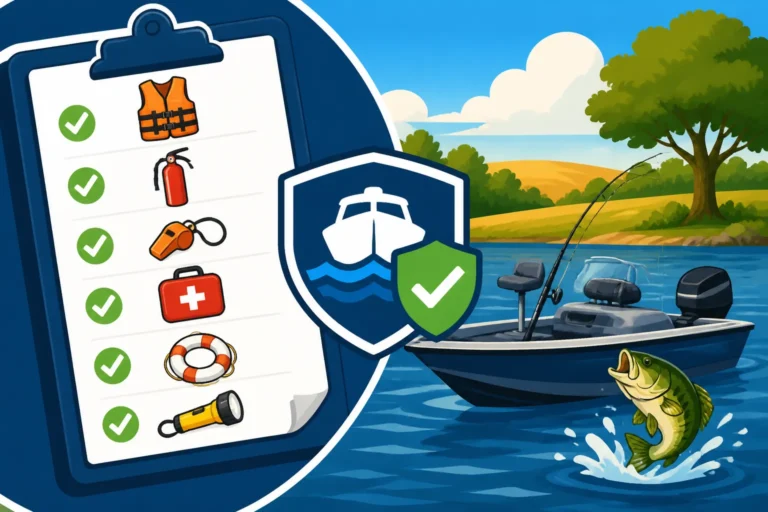
Every time you head out on the water, a thorough pre-launch checklist is your best friend. This isn't just for big trips; even a quick afternoon outing demands attention to detail. Check your boat's battery, fuel levels, navigation lights, and engine oil. Ensure all drains are plugged and that your trailer is securely hitched and unhitched. Most importantly, verify you have all required safety gear onboard and that it's in good working order. This includes enough properly fitting Best Life Jackets for Kansas Boaters for everyone, a sounding device (like a horn or whistle), a fire extinguisher (for most motorized boats), and visual distress signals if applicable. Many anglers keep a dedicated safety kit on their boat, replenished and checked regularly. These simple steps drastically reduce the risk of mechanical breakdowns or safety incidents, keeping you and your companions safe.
Environmental Stewardship on Kansas Waters
As anglers, we have a deep connection to the water, and with that comes a responsibility to protect it. Environmental stewardship is paramount. This means practicing "Leave No Trace" principles: pack out everything you pack in, and perhaps even a little more. Avoid littering, properly dispose of fishing line, and never dump waste, oil, or fuel into the water. Be mindful of aquatic invasive species; always clean, drain, and dry your boat, trailer, and gear after each use, especially when moving between different bodies of water. This simple act prevents the spread of harmful organisms like zebra mussels, which can devastate local ecosystems and fishing opportunities. Our collective actions directly impact the health of Kansas's lakes and rivers for future generations of anglers.
Staying Informed About Regulation Changes
Regulations are not static; they evolve. Whether it's changes to fishing limits, new boating safety laws, or updates to registration procedures, staying informed is a critical part of being a responsible boater and angler. The KDWP website is your primary resource for the most current information. They often publish annual regulation summaries, online news updates, and social media posts. Subscribing to their newsletters or regularly checking their website can help you stay abreast of any changes that might affect your fishing or boating plans. For example, understanding Kansas Fishing Seasons and Limits or specific length limits for species like Kansas Walleye Length Limits is just as important as knowing your boat registration is current. Being proactive in seeking out information ensures you're always operating within the law and contributing to the responsible enjoyment of Kansas's incredible outdoor resources.
Disclaimer
This article is for general informational purposes only and does not constitute professional advice. Laws, prices and regulations vary by location and change over time. Consult a qualified professional for guidance on your specific situation.