Best Cooler Size for a Day of Fishing
Oh, the age-old question that plagues every angler heading out for a day on the water in Kansas: "Is this cooler really big enough?" We've all been there, standing in the garage, staring at a cooler that seemed perfectly adequate at the store, only to realize halfway through a successful fishing trip that it's overflowing with ice, a few meager fillets, and a warm soda. Choosing the right cooler size for a day of fishing is more critical than many realize, impacting not just the freshness of your catch but your overall comfort and enjoyment. This guide will walk you through everything you need to consider to make sure your next day on the lake or river is perfectly chilled and perfectly productive.
Understanding Your Needs: What Makes a Fishing Day "A Day"?
When you're packing for a fishing trip, especially a day trip, it's easy to just grab the cooler you always use. But "a day" can mean so many different things. Are you heading out for a quick two-hour run, or are you planning a full sunrise-to-sunset marathon on Milford Lake? The answer to that question profoundly influences the ideal cooler size. It's not just about fitting fish; it's about fitting enough ice, food, drinks, and potentially even bait, all while keeping everything at its prime temperature. Getting this wrong means either a cramped, inefficient cooler or lugging around more cooler than you actually need.
How Many Fish Do You Realistically Expect to Catch?
Let's be honest with ourselves here. While we all dream of hitting our Kansas Daily Creel Limits by Species every time we wet a line, reality often paints a different picture. However, you should always plan for success! If you're targeting crappie on a spring afternoon, and the bite is hot, you could easily end up with a couple dozen fish. These smaller fish might not take up much room individually, but they add up fast. On the other hand, if you're specifically going after a couple of trophy walleye, those two fish will occupy a significant amount of space. A 21-inch walleye, for example, is a substantial fish.
Consider the species you're pursuing and their average size. Are you aiming for a few big channel catfish or a cooler full of panfish? A cooler that comfortably fits two large catfish might be overkill for a dozen bluegill, but a small cooler would be swamped by even one decent flathead. Always leave a little extra room for that unexpected lunker or the frenzied bite that exceeds your wildest expectations. It’s far better to have a bit of empty space than to be trying to stuff a prize catch into a cooler already bursting at the seams.
Duration of Your Fishing Trip and Kansas Weather
A quick morning run on a cool spring day is vastly different from a full day in the scorching Kansas summer heat. The longer you're out and the hotter the weather, the more ice you'll need, and thus, the more cooler space you'll require to keep that ice from melting into a puddle. Kansas summers are no joke, with temperatures often soaring, making ice retention a major factor. If you're going to be on the water for 8-10 hours under a blazing sun, a cooler with superior insulation and a larger capacity for ice will be your best friend.
Conversely, for a shorter trip or during cooler months, you might not need as much ice or as robust a cooler. Think about the season: Kansas Spring Fishing Guide trips usually mean milder temperatures, while Kansas Summer Fishing Guide adventures demand maximum ice retention. Packing extra ice is crucial not just for preserving your catch but also for keeping your drinks cold and your lunch fresh. A general rule of thumb is to have at least a 2:1 ice-to-contents ratio for optimal cooling, especially when the mercury climbs.
Beyond Fish: Food, Drinks, and Bait
Your cooler isn't just for fish, right? It's also the lifeline for your hydration and sustenance. Running out of cold drinks on a hot day can quickly turn a fun outing into a miserable one. And nobody wants a soggy sandwich. Consider how many people will be joining you and how much food and drink they'll consume. A solo angler might only need a few bottles of water and a sandwich, but a family trip means juice boxes, snacks, and multiple meals.
Then there's the bait. If you're using live bait like minnows or shad, you might already have a dedicated bait cooler or livewell. However, if you're bringing along prepared baits or worms that need to stay cool, they'll need their own space within your main cooler or a small secondary cooler. Some anglers prefer to keep their catch separate from their food and drinks entirely, using one cooler for fish and another for provisions. This is a smart strategy to avoid any cross-contamination and keep everything pristine. When you're thinking about Best Coolers for Kansas Fishing Trips, remember that versatility and capacity for all your day's necessities are key.
Common Cooler Sizes for Day Fishing Trips
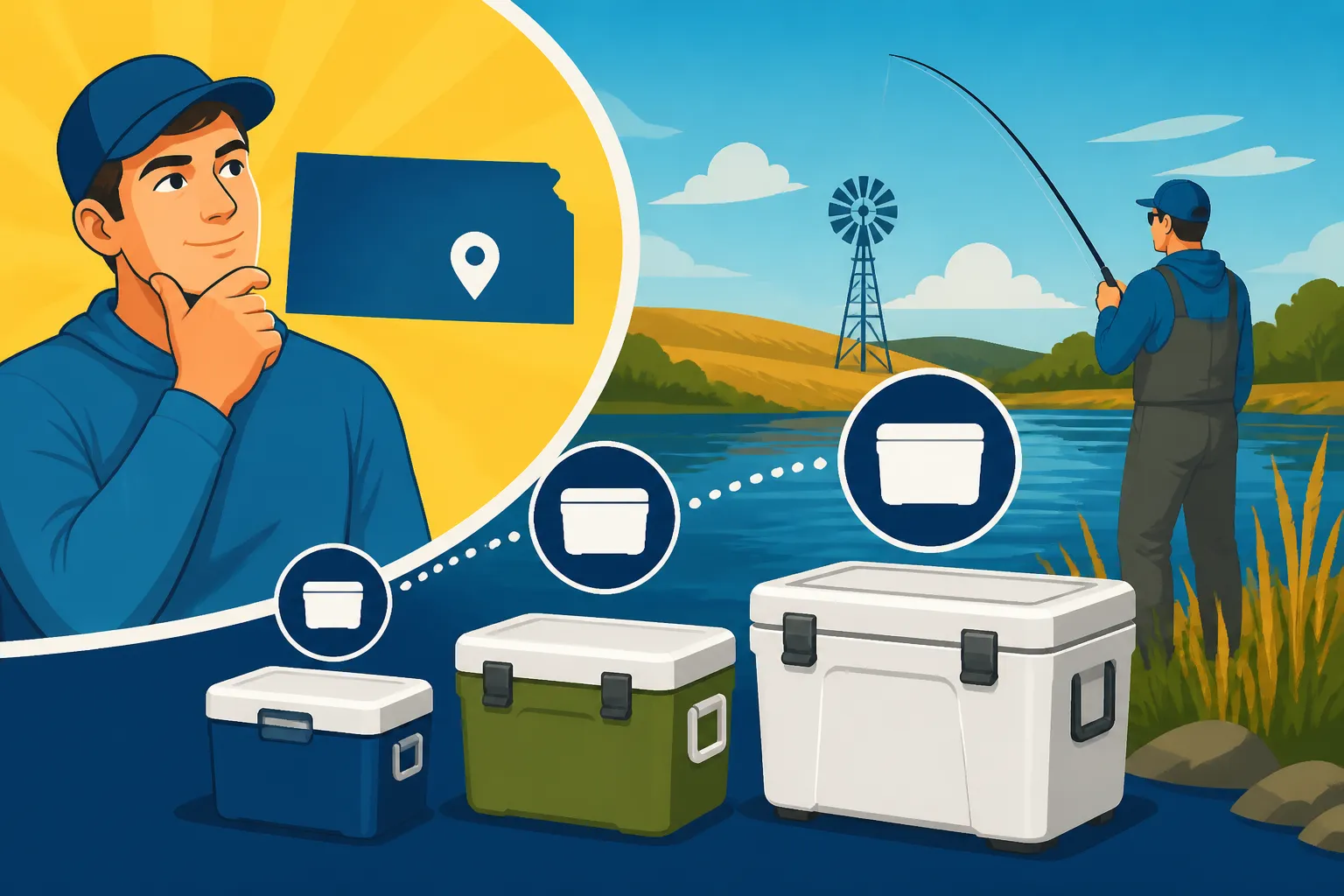
Cooler capacities are usually measured in quarts, but sometimes they're also advertised by the number of cans they can hold. It's helpful to understand what these numbers actually mean in terms of practical fishing applications. We're talking about anything from a small personal cooler to a robust chest that can handle a limit of bigger fish.
Small Coolers: 15-25 Quarts (12-25 Cans)
These compact coolers are perfect for a quick, solo outing or as a dedicated bait cooler. Think about a two-hour session at a local community lake targeting panfish, or a short Kansas Night Fishing Guide trip where you're just bringing a few essential drinks and maybe one or two fish back. They're lightweight, easy to carry, and don't take up much space in a small boat or kayak. You could fit a few water bottles, a sandwich, and perhaps a handful of smaller crappie or bluegill, along with enough ice to last a few hours.
They are also excellent for specific purposes, like keeping live minnows lively in a separate container, especially if you're walking a fair distance to your fishing spot. While they might not be your primary catch cooler, a small, well-insulated model can be invaluable for drinks, snacks, or even specialized bait that needs to stay cool. Just don't expect it to hold a limit of channel catfish.
Medium Coolers: 30-50 Quarts (30-50 Cans)
This is often the sweet spot for many day-tripping Kansas anglers, offering a great balance between capacity and portability. A 30-50 quart cooler can comfortably hold enough provisions for 1-2 people for a full day, plus a decent number of fish. If you're planning on catching a limit of crappie, a handful of decent walleye, or a couple of solid catfish, this size range will usually serve you well. For example, a 45-quart cooler could easily handle 10-15 good-sized crappie or 3-4 respectable channel catfish, along with 20-30 pounds of ice and a few drinks.
This size is versatile enough for both boat and bank fishing. It's manageable to carry from the truck to the shore, but also large enough to stash in most fishing boats without being cumbersome. Many popular brands, including those you might find at Bass Pro Shops or online at Amazon, offer excellent options in this range with features like enhanced insulation and durable construction, making them a wise investment for regular anglers. This is often the go-to size for those serious about their Kansas Fishing Seasons Guide outings.
Large Coolers: 60-75 Quarts (60-85 Cans)
Now we're talking about serious hauling capacity. A 60-75 quart cooler is designed for longer excursions, multiple anglers, or when you anticipate a truly epic haul. If you're heading out with a few buddies, planning an all-day trip targeting larger species, or hoping to fill the boat with a mix of walleye and catfish, this is your cooler. It can easily accommodate a full limit of many species, plenty of ice to last all day (and then some), and provisions for several people.
Imagine a group trip to Cheney Reservoir, hoping for a mixed bag of walleye and wipers. A 70-quart cooler could hold a combined limit for two anglers, 40-50 pounds of ice, and enough drinks and snacks to keep everyone hydrated and fed. While heavier and bulkier than smaller options, many of these larger coolers come with wheels for easier transport. For serious anglers or those who frequently fish with family and friends, a large cooler is an indispensable piece of gear. It also works well if you decide to dedicate one cooler solely for your catch, keeping your prize fish pristine.
| Cooler Size (Quarts) | Approximate Can Capacity | Best Use Case | Typical Fish Capacity (Example) | Key Considerations |
|---|---|---|---|---|
| 15-25 Quarts | 12-25 Cans | Short solo trips (2-4 hrs), bait cooler, personal drinks/snacks | A few panfish, 1-2 small bass/catfish | Portable, limited capacity, light-duty |
| 30-50 Quarts | 30-50 Cans | Full day solo/duo trips, balanced capacity | 10-15 crappie, 3-4 medium walleye/catfish | Versatile, good for most day trips, solid ice retention |
| 60-75 Quarts | 60-85 Cans | Multi-person trips, long days, large fish limits | 20+ crappie, 6-8 medium/large walleye/catfish | High capacity, excellent ice retention, heavier/bulkier |
Practical Tips for Maximizing Cooler Efficiency
It’s not just about the size of your cooler; it’s also about how you use it. Even the best cooler can disappoint if you don't employ smart strategies to keep its contents frosty. These tips will help you get the most out of whatever cooler you bring on your Kansas fishing adventure.
Pre-Chilling is Your Best Friend
This is perhaps the most overlooked step, but it makes a massive difference. Throwing warm drinks and room-temperature fish into a dry, warm cooler is like trying to cool down a sauna with an ice cube. Your initial ice will melt rapidly just trying to bring the cooler's internal temperature down.
The night before your trip, or at least several hours before, fill your cooler with sacrificial ice, a few frozen water bottles, or even a couple of frozen gel packs. Let it sit with the lid closed. This brings the interior of the cooler down to temperature, so when you add your good ice and contents for the trip, the ice isn't wasting energy cooling the cooler itself. Dump out the sacrificial ice (or save the frozen bottles for later use) just before packing for your trip. This simple step will significantly extend the life of your ice, especially on a hot Kansas afternoon.
The Right Ice Makes a Difference
Not all ice is created equal when it comes to cooler performance.
- Block Ice: This is your best bet for long-lasting cold. Large blocks of ice have less surface area exposed to the air compared to cubes, meaning they melt much slower. If you can, make your own block ice by freezing water in milk jugs or large plastic containers. These also double as potable water sources as they melt.
- Cubed Ice: Great for filling in gaps and quickly chilling items, but it melts faster. Use it to supplement block ice.
- Gel Packs: Reusable and mess-free, gel packs are excellent for keeping food and drinks cold without creating a watery mess. They don't typically last as long as block ice but are convenient for keeping specific items dry.
For optimal performance, combine block ice at the bottom, cubed ice to fill in around items, and maybe a few gel packs for delicate items. Always prioritize having more ice than you think you need – you can never have too much cold! This is especially true for those extended days on the water.
Strategic Packing for Longevity
How you pack your cooler is just as important as what you pack.
- Bottom Layer (Block Ice): Start with block ice at the very bottom. Cold air sinks, so having your coldest layer at the base helps keep everything above it cool.
- Middle Layer (Heavy Items/Fish): Place your fish, if keeping them whole, or heavier drinks on top of the block ice. For fish, consider bagging them individually or in smaller batches to prevent fish slime from contaminating other items. If you plan on keeping fish, make sure to bring extra bags.
- Top Layer (Cubed Ice/Lighter Items): Fill in any gaps with cubed ice. Lighter items like sandwiches, fruit, and snacks can go on top, perhaps in a separate dry bag or container to keep them from getting wet.
- Minimal Opening: Every time you open the cooler, warm air rushes in and cold air escapes. Try to minimize how often you open it. If you have separate coolers, use one just for drinks and snacks that will be opened frequently, and keep the "catch cooler" sealed tight until you add a fish or are ready to head home.
- Drain Plug Use: For day trips, it's generally best not to drain the melted water, especially if you have fish on ice. The cold water surrounding the fish helps keep them chilled, acting as an insulator. Only drain if you absolutely need the space or if your contents are getting overly submerged and you prefer dry items. However, if you're trying to keep the maximum amount of ice for the longest duration, draining off excess water helps prevent your remaining ice from melting faster. It’s a trade-off.
Beyond Size: Features to Look for in a Day Fishing Cooler
While size is paramount, a cooler is more than just a box for ice. Modern coolers offer a range of features that can greatly enhance your fishing experience. Investing in a quality cooler, even for just day trips, can pay dividends in performance and durability. Many anglers look to trusted brands found at retailers like Bass Pro Shops or online at Amazon when considering these features.
Insulation and Construction Materials
The heart of any good cooler is its insulation. Look for models with thick, pressure-injected polyurethane foam in the walls and lid. The thicker the insulation, the better the ice retention. Many premium coolers boast rotomolded construction, which means they are molded in one piece, providing extreme durability and consistent insulation throughout. This kind of construction also means they can withstand the bumps and scrapes that come with being on a boat or sliding around in the back of a truck.
Cheaper coolers might use thinner foam or even Styrofoam, which works for very short periods but won't stand up to a full day in the Kansas sun. While the initial cost might be higher for a well-insulated, robust cooler, it's an investment that saves you money on ice in the long run and, more importantly, keeps your catch and provisions perfectly chilled. When choosing the Best Coolers for Kansas Fishing Trips, prioritize insulation above almost all else.
Durability and Latching System
A fishing cooler takes a beating. It gets tossed in boats, dragged across rocky shorelines, and sat on countless times. You need a cooler that can handle it. Look for:
- Heavy-Duty Latches: Rubber latches that pull down securely are far superior to flimsy plastic clips that can break easily. Secure latches prevent accidental openings and keep the lid sealed tight, vital for ice retention.
- Strong Hinges: Integrated hinges or heavy-duty pin-style hinges are much better than simple plastic ones that can snap under stress.
- Non-Slip Feet: These are a huge plus, especially on a wet boat deck or the uneven ground near a riverbank. They prevent your cooler from sliding around, keeping its contents (and potentially you) safe.
- Drain Plug: A large, easy-to-use drain plug is essential for quickly emptying melted water or for cleaning. Look for one that's tethered so you don't lose it.
Many quality coolers also feature UV protection, which helps prevent the cooler from degrading and discoloring under prolonged sun exposure, a common issue in Kansas's wide-open spaces.
Portability and Additional Features
Even a large cooler needs to be moved around. Consider how you'll transport it:
- Handles: Comfortable, sturdy handles are a must. Rope handles with rubber grips are often preferred over hard plastic ones, especially for heavy loads.
- Wheels: For larger coolers, integrated wheels can be a lifesaver, making it much easier to haul a full cooler from your vehicle to the fishing spot.
- Measuring Ruler on Lid: A convenient feature for quickly checking if your fish meet the minimum length requirements for species like walleye or crappie.
- Cup Holders/Cutting Board: Some lids are designed with molded-in cup holders or even feature a cutting board surface, which can be incredibly handy when you're preparing bait or cleaning a small catch on the spot.
- Baskets/Dividers: Internal baskets can keep delicate items like sandwiches or cameras dry and separate from ice and fish. Dividers can help organize your catch by species or separate food from fish.
- Tie-Down Slots: If you plan to transport your cooler in a boat, truck bed, or kayak, tie-down slots are crucial for securing it and preventing it from shifting or falling out. This is a must for any angler venturing out on larger bodies of water.
Ultimately, the best cooler size for a day of fishing isn't a one-size-fits-all answer. It's a careful consideration of your target species, the duration of your trip, the weather, and your personal needs for food and drink. By thoughtfully assessing these factors and choosing a quality cooler with the right features, you'll be well on your way to a more comfortable, productive, and enjoyable fishing experience in Kansas. You might even consider having a couple of different sizes on hand – a smaller one for quick trips or dedicated drinks, and a larger one for those big fishing adventures.
Disclaimer
This article is for general informational purposes only and does not constitute professional advice. Laws, prices and regulations vary by location and change over time. Consult a qualified professional for guidance on your specific situation.