Best Kayak Length for Reservoirs
Trying to pick out the perfect kayak for fishing the vast, often windy reservoirs here in Kansas can feel like navigating a maze blindfolded. You stand there, looking at all the different lengths, wondering if a shorter, nimble boat is best for those tight coves, or if you need something long and sleek to cut through the chop on Milford Lake. It’s a common frustration, and this guide is here to demystify kayak length, helping you confidently choose the ideal vessel for your Kansas reservoir adventures.
Understanding the Unique Challenges of Kansas Reservoirs for Kayak Anglers
Fishing our incredible Kansas reservoirs from a kayak offers a unique blend of tranquility and adventure, but it also comes with its own set of challenges that directly impact your gear choices, especially kayak length. These aren't small, sheltered ponds; many of our impoundments are massive bodies of water, open to the elements, and that means considering factors like wind, waves, and the sheer distance you might want to cover.
The Ever-Present Wind and Waves
Anyone who's spent a day on Cheney Reservoir or Wilson Lake knows that Kansas wind is a force to be reckoned with. What might start as a gentle breeze can quickly whip up into a sustained gust, turning calm water into a choppy mess. For a kayak angler, this isn't just an annoyance; it can seriously impact your ability to paddle, hold your line, and even stay comfortable. A shorter kayak, while easy to maneuver, can get tossed around like a toy in these conditions, making it incredibly difficult to track straight or maintain your position over a promising fishing spot. Longer kayaks, with more hull in the water, tend to handle these conditions much better, offering a more stable and less fatiguing ride.
Covering Distance and Tracking Efficiency
Kansas reservoirs are big. Think about places like Milford Lake Is the Largest Lake in Kansas or Perry Lake. You might want to paddle a mile or two to reach that perfect point, or explore a distant coves that’s holding crappie. If your kayak isn't efficient at covering distance, those long paddles can become exhausting and eat into your fishing time. Shorter kayaks, by design, require more effort to maintain speed and tend to wander more, meaning you're constantly correcting your course. Longer kayaks, on the other hand, are built for covering ground efficiently. They track straighter with less effort, allowing you to glide across the water with fewer paddle strokes, saving your energy for fighting fish. This efficiency is a game-changer when you're targeting specific structures far from the launch point.
Stability for Casting and Landing Fish
While not directly tied to length as much as hull design, the perceived stability of a kayak is often influenced by its overall footprint. When you're standing to cast for walleye, or wrestling a big catfish into your net, you need a stable platform. Reservoirs often have boat wakes from larger vessels, adding another layer of instability. While most fishing kayaks prioritize stability, the longer, wider models can sometimes offer a more reassuring feel in rougher water. It’s about feeling secure enough to perform all the necessary fishing actions without fear of an unexpected swim.
The Relationship Between Kayak Length and Performance on Reservoirs
When we talk about kayak length, we're not just discussing a number on a spec sheet. It directly translates to how a kayak performs on the water, especially on open, expansive bodies like Kansas reservoirs. There's a sweet spot for reservoir fishing, and understanding the pros and cons of different lengths is key to finding it.
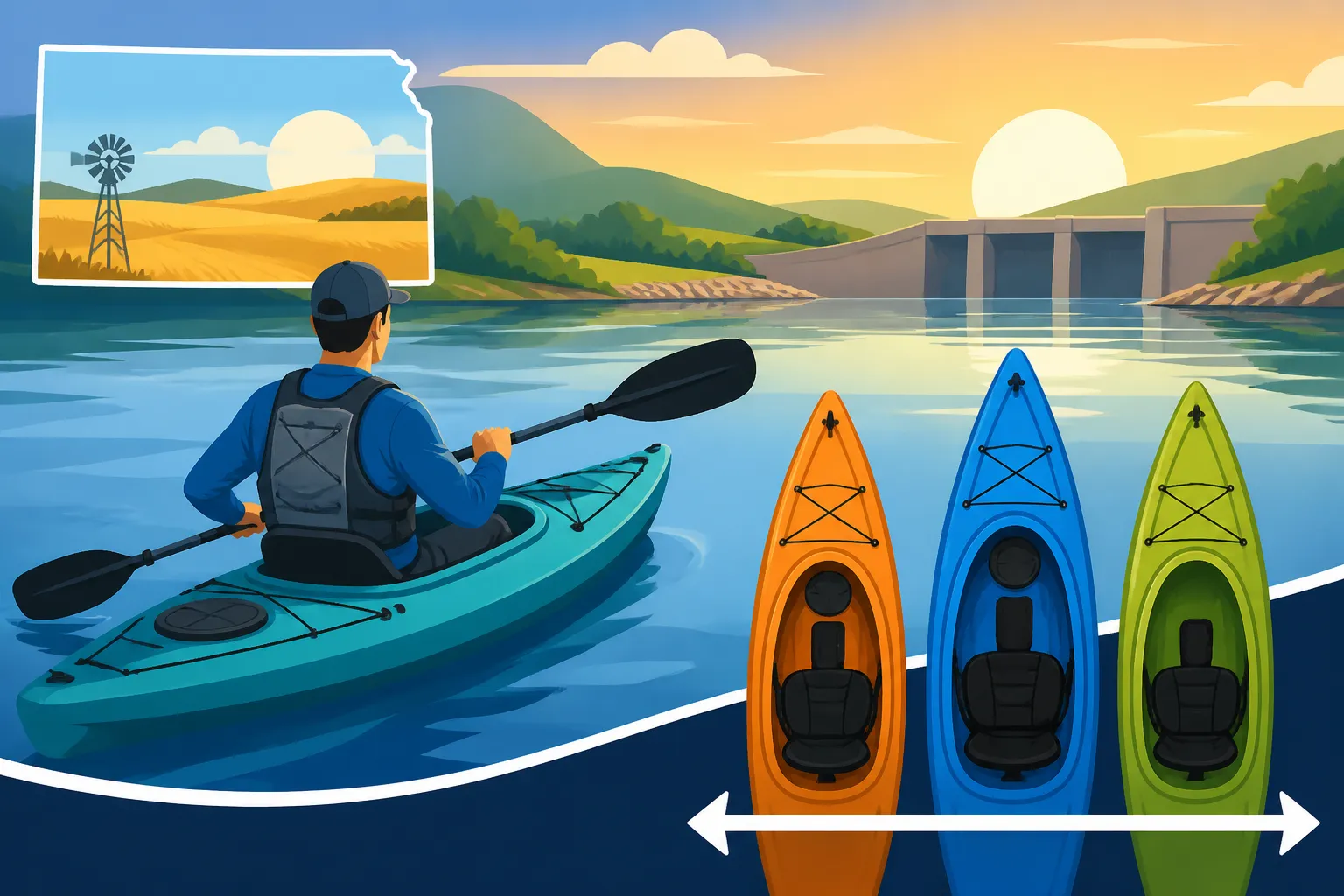
Shorter Kayaks Under 12 Feet
Shorter kayaks, typically those under 12 feet, are often lauded for their maneuverability and portability. They're lighter, easier to load onto a vehicle, and can be spun on a dime in tight spaces. For smaller, sheltered ponds or calm rivers, they're fantastic. However, on a large Kansas reservoir, their advantages quickly diminish.
Pros for Shorter Kayaks:
- Maneuverability: Excellent for navigating very tight coves, dense timber, or small stream mouths emptying into the reservoir.
- Portability: Easier to transport, launch, and retrieve, especially if you're fishing alone or have limited storage space.
- Cost: Often less expensive than longer models, which can be appealing for budget-conscious anglers.
Cons for Shorter Kayaks on Reservoirs:
- Tracking Issues: They tend to be more susceptible to wind and current, making it difficult to paddle in a straight line, especially across open water. You'll spend more energy correcting your course.
- Speed and Efficiency: They are slower and require more effort to cover distance, which is a significant drawback on large reservoirs. Long paddles can become tiresome very quickly.
- Wave Handling: Shorter boats can get pushed around significantly by boat wakes and natural waves, leading to a less comfortable and potentially wetter ride.
- Limited Storage: Generally offer less storage space for gear, tackle, and coolers, which can be an issue for a full day of fishing.
Medium-Length Kayaks 12 to 14 Feet
This is often considered the "sweet spot" for many kayak anglers, particularly those venturing onto larger lakes and reservoirs. Kayaks in the 12 to 14-foot range strike a good balance between the benefits of longer boats and the practicalities of shorter ones.
Pros for Medium-Length Kayaks:
- Improved Tracking: They hold a line much better than shorter kayaks, requiring less effort to paddle straight, especially in mild wind.
- Better Speed and Glide: Offer a more efficient glide through the water, allowing you to cover more distance with less exertion.
- Enhanced Stability: Often provide a more stable platform for casting and standing, making them more comfortable for longer fishing sessions.
- Increased Storage: Typically have more deck space and storage options for gear, allowing you to bring more essentials for a full day on the water.
- Versatility: Capable of handling both open reservoir conditions and still being maneuverable enough for larger coves or slower river sections.
Cons for Medium-Length Kayaks:
- Less Maneuverable Than Shorter Boats: While good, they won't spin quite as quickly in super tight spots.
- Heavier: Start to become a bit heavier and bulkier than their shorter counterparts, which can impact solo transport and launch.
For most Kansas reservoir anglers, a kayak in the 12 to 14-foot range offers the best compromise. It gives you the confidence to tackle larger bodies of water while still being manageable enough for everyday use. Many popular fishing kayaks from brands like Old Town, Hobie, or Wilderness Systems fall into this category.
Longer Kayaks 14 Feet and Up
These are the cruisers of the kayak fishing world, designed for covering serious distance and handling the choppiest conditions with grace. While not as common for every angler due to their size and weight, they excel in specific scenarios on huge bodies of water.
Pros for Longer Kayaks:
- Superior Tracking: Unmatched tracking performance, cutting through waves and wind with minimal deviation.
- Maximum Speed and Efficiency: Designed for speed and long-distance paddling with minimal effort, making them ideal for covering vast expanses of water or quickly getting to far-off spots.
- Exceptional Wave Handling: The longer hull rides over waves rather than being pushed through them, offering the driest and most comfortable ride in rough conditions.
- Ample Storage: Usually boast significant storage capacity, perfect for multi-day trips or anglers who carry a lot of gear.
- Better for Trolling: The consistent tracking and speed make them ideal for trolling lures for species like walleye or wipers across large flats.
Cons for Longer Kayaks:
- Decreased Maneuverability: They are the least agile, making tight turns or navigating very narrow spaces a challenge.
- Heavier and Bulkier: Significantly heavier and longer, requiring more effort to transport, load, and store. A trailer or robust roof rack system is often a necessity.
- Higher Cost: Generally the most expensive category of fishing kayaks.
- Launch Limitations: Can be more challenging to launch from undeveloped banks or very shallow access points.
While longer kayaks offer peak performance on truly massive, open water, their practical considerations often make them a niche choice. However, if your primary goal is to cover huge distances and regularly fish the biggest, most exposed sections of our Kansas reservoirs, a 14-foot plus model might be your ultimate weapon.
Key Considerations Beyond Length for Reservoir Kayaks
While length is a huge factor, it's really just one piece of the puzzle when choosing the best kayak for reservoir fishing. A boat that performs well on our Kansas waters needs a few other critical design elements to truly shine. Think of length as the foundation, and these other features as the essential rooms and amenities that make it a perfect home for your fishing adventures.
Hull Design: Stability vs. Speed
A kayak's hull design is arguably as important as its length. You'll generally find two main types for fishing:
- Pontoon-style (Cathedral) Hulls: These hulls are wide and flat, often with multiple pontoons or channels running the length of the bottom. They are designed for maximum primary stability, meaning they feel very stable when you first get in or are sitting still. This is fantastic for standing to cast, reeling in a heavy fish, or just feeling secure on the water. The trade-off is usually speed and tracking; they tend to be slower and require more effort to paddle. For many Kansas anglers prioritizing a stable platform to stand and cast for bass or walleye, this design is excellent.
- V-shaped or Rounded Hulls: These hulls are narrower and more streamlined, designed to cut through the water efficiently. They offer better secondary stability (how resistant they are to tipping once they've already started to lean), but may feel less stable initially. They are much faster and track incredibly well, making them great for covering long distances with ease. If speed and covering ground on big reservoirs like Clinton Lake are your priorities, and you're comfortable with a slightly less "planted" feel, a V-hull might be a good fit.
Many fishing kayaks combine elements of both, aiming for a balance of decent speed and good stability. Always consider what you value more – rock-solid stability for standing, or speed to quickly get to your next spot.
Propulsion Methods: Paddle, Pedal, or Motor?
How you move your kayak across the water is another vital decision, especially on big reservoirs where covering distance is key.
- Paddle Kayaks: These are the traditional choice and often the most budget-friendly. Modern fishing paddles are efficient, and with a good technique, you can cover a surprising amount of water. The main drawback on reservoirs is the constant paddling can be fatiguing, especially in wind or when trying to maintain position while fishing. However, they offer simplicity and access to very shallow areas. You can find excellent paddle kayaks for fishing at local outfitters or online retailers like Amazon.
- Pedal Kayaks: A game-changer for many reservoir anglers, pedal drives allow you to propel the kayak with your legs, freeing up your hands for casting, rigging, or fighting a fish. Brands like Hobie pioneered this, but many other manufacturers now offer excellent pedal systems. They are significantly more efficient for covering distance and maintaining position, making them ideal for trolling or battling wind on Kansas lakes. The downside is they are heavier, more expensive, and the drive unit can sometimes limit access to very shallow water or get snagged on submerged debris.
- Motorized Kayaks: Some kayaks are designed to accept electric trolling motors, or even come with integrated motor systems. This offers the ultimate in effortless propulsion, allowing you to cover vast distances, fight strong winds, and easily maintain speed for trolling. While highly convenient, they are the heaviest and most expensive option, often require additional batteries, and need to adhere to Kansas Boat Registration Guide rules if the motor is over a certain horsepower.
Consider your budget, how much effort you want to exert, and how much gear you're willing to manage. For serious reservoir anglers, pedal or motorized options often provide a significant advantage.
Storage, Rigging, and Comfort Features
A fishing kayak is more than just a boat; it's a mobile fishing platform.
- Storage: On reservoirs, you'll likely want to carry plenty of tackle, a cooler for drinks and fish, safety gear, and perhaps a dry bag for electronics. Look for kayaks with ample bow and stern storage hatches, a large tank well (open storage area) behind the seat, and enough gear tracks to mount accessories.
- Seating: A comfortable seat is non-negotiable for long days on the water. Adjustable, elevated frame seats are a common feature on quality fishing kayaks, providing better visibility, dryer sitting, and more comfort than traditional molded seats.
- Rigging: Integrated gear tracks (often called "track systems") are incredibly useful for mounting rod holders, fish finders, camera mounts, and other accessories without drilling holes in your kayak.
- Rod Holders: Built-in flush mount rod holders are standard, but look for models that also allow for easy installation of adjustable rod holders (like those from RAM Mounts or Scotty) for trolling or setting up multiple lines.
Choosing a kayak with these features can drastically improve your overall fishing experience on any Kansas reservoir. You might find a wider selection of longer touring kayaks at a dedicated outdoor retailer like Bass Pro Shops, or browse a vast array of models on Amazon to compare features and read reviews.
Matching Kayak Length to Your Fishing Style and Kansas Reservoir Choices
Ultimately, the best kayak length isn't a universal number; it's the one that best suits your specific fishing style and the types of Kansas reservoirs you plan to frequent. What works for a quick evening trip on a small community lake might not be ideal for a full day on a sprawling impoundment.
Understanding Your Primary Fishing Locations
Kansas offers a diverse range of fishing opportunities, from small, urban community lakes to massive flood control reservoirs.
- Large, Open Reservoirs (e.g., Milford, Cheney, Wilson): These are the arenas where longer kayaks truly shine. If you're frequently fishing the main lake body, covering long distances, or dealing with strong winds and boat traffic, a kayak in the 12.5- to 14-foot range or even longer (14+ feet) will provide the stability, speed, and tracking you need. Think about targeting walleye on the flats of Cheney Reservoir Walleye Fishing or chasing striped bass on Wilson Lake Striped Bass Fishing. The efficiency of a longer boat will make these trips far more enjoyable.
- Medium-Sized Reservoirs with Varied Structure (e.g., Clinton, Melvern, Tuttle Creek): For these waters, which offer a mix of open water, large coves, and river arms, a 12- to 13.5-foot kayak is often the perfect all-rounder. It's long enough to handle most main lake conditions comfortably but still nimble enough to explore timber, creek channels, or shallow backwaters without becoming a barge. This length offers excellent versatility for anglers who might chase crappie in flooded timber one day and then troll for catfish on the main lake the next. Many anglers find this length ideal for exploring the diverse waters of Tuttle Creek Lake Fishing Guide.
- Smaller State Fishing Lakes and Community Ponds: While you could use a longer kayak here, it might be overkill. For smaller, more sheltered waters, a kayak in the 10- to 12-foot range can be perfectly adequate. These boats are easier to launch and retrieve from less developed access points, more maneuverable in tight quarters, and generally more portable. If you're mainly fishing Kansas Community Fishing Lake Rules or Kansas State Fishing Lakes Guide, a slightly shorter boat could be a more practical choice, saving you effort in transport and handling.
Your Preferred Fishing Techniques and Trip Duration
Your fishing methods also play a big role in determining the ideal kayak length.
- Trolling: If you love to troll crankbaits for walleye or wipers for hours, a longer, more efficient kayak (13+ feet) with good tracking is a massive advantage. It maintains a consistent speed and course with less effort, allowing you to focus on your rods.
- Casting and Sight Fishing: If you're constantly casting to visible structure, flipping into cover, or sight fishing for bass, stability for standing is often paramount. While hull design is key here, a slightly longer kayak can contribute to overall confidence, especially in choppier water.
- Bank Fishing Support: Sometimes, a kayak is used as a tool to access unreachable bank fishing spots or ferry gear. In these cases, portability might outweigh length, making a slightly shorter boat more appealing if you’re dragging it across varied terrain.
- Full-Day vs. Short Trip: For quick, two-hour evening trips, a slightly shorter, easier-to-manage kayak might be preferred. But for all-day excursions, especially on windy days, the comfort and efficiency of a longer boat will make a huge difference in your endurance and enjoyment.
Consider a Balance: The Versatile 12-Foot to 13-Foot Range
For many Kansas anglers, the 12 to 13-foot range hits the sweet spot. It's long enough to handle the majority of reservoir conditions, offers decent speed and tracking, and provides sufficient stability for fishing. At the same time, it’s still manageable enough for most people to transport and launch without needing a specialized trailer. This length offers a great balance of performance and practicality for the diverse angling opportunities we have in Kansas. Before making a final decision, consider visiting a local sporting goods store or a retailer like Bass Pro Shops to sit in a few different models and get a feel for their size. Remember, the best kayak for you is the one that gets you on the water comfortably and effectively to chase those Kansas lunkers.
| Kayak Length Category | Typical Length Range | Ideal Kansas Reservoir Use | Pros for Reservoirs | Cons for Reservoirs |
|---|---|---|---|---|
| Short | Under 12 feet | Small community lakes, sheltered coves, calm streams entering reservoirs. | Very maneuverable in tight spots, easy to transport/store. | Poor tracking in wind/waves, slow, exhausting over distance, less storage. |
| Medium | 12 to 14 feet | Most large and medium Kansas reservoirs (e.g., Clinton, Melvern, most of Milford/Cheney). | Good balance of tracking, speed, stability, and maneuverability. Versatile. | Less agile than short kayaks, slightly heavier than short ones. |
| Long | 14+ feet | Vast, open sections of major reservoirs (e.g., main lake Milford/Cheney), long-distance trips, heavy wind/waves. | Excellent tracking, high speed, superior wave handling, ample storage. | Heavy, difficult to transport/store, expensive, poor maneuverability. |
Many anglers find great deals on fishing kayaks, whether through local shops or online platforms like Bass Pro Shops and Amazon, especially during off-season sales. When you're ready to make your purchase, don't forget to secure your Kansas Fishing License Guide and perhaps explore options for Kansas Boat Registration for Anglers if your kayak is motorized. Taking the time to consider these factors will lead you to a kayak that maximizes your enjoyment and success on Kansas's fantastic fishing waters.
Disclaimer
This article is for general informational purposes only and does not constitute professional advice. Laws, prices and regulations vary by location and change over time. Consult a qualified professional for guidance on your specific situation.