Best Fishing Kayak Accessories
Kayaks have truly revolutionized how many of us experience fishing, offering an unparalleled sense of intimacy with the water and a stealthy approach to those elusive fish. But as wonderful as they are, a bare kayak isn't always the most efficient or comfortable setup for a serious angler. Many new and even seasoned kayak anglers struggle with figuring out which accessories are truly necessary, often leading to wasted money on gear that doesn't quite fit their needs or, worse, overlooking essential items that could enhance safety and success on the water. This comprehensive guide is here to help you navigate the vast world of kayak fishing accessories, ensuring you make smart choices that elevate your Kansas fishing adventures.
Essential Safety and Navigation Gear for Kayak Anglers
When you're out on the vast Kansas reservoirs or winding rivers, your safety is paramount. Kayaks, while stable, are still small craft, and being prepared for various situations is crucial. Thinking ahead about how you'll handle unexpected weather, strong currents, or even just needing to stay put in a prime fishing spot can make all the difference between a great day and a stressful one.
Personal Flotation Devices PFDs
Let's be honest, wearing a PFD isn't always the "coolest" thing, but it's absolutely non-negotiable for kayak fishing. Kansas waters, especially the big reservoirs like Milford Lake or Cheney Reservoir, can get surprisingly choppy, and accidents can happen fast. A PFD is your primary line of defense if you unexpectedly find yourself in the water.
When choosing a PFD for kayak fishing, look beyond the standard bulky orange vests. Many modern PFDs are designed specifically for paddlers, offering a much more comfortable, low-profile fit that doesn't impede your casting or paddling motion. Inflatable PFDs are a popular choice for their minimal bulk, though it's important to understand their manual or auto-inflate mechanisms and ensure they are regularly inspected. Consider one with plenty of pockets for small essentials like a whistle, knife, or even your fishing license. Having a comfortable PFD means you're more likely to wear it consistently, which is the whole point, right? Remember, state regulations regarding Kansas Life Jacket and Boating Safety Guide are in place for a reason, and they apply to kayak anglers just as much as boaters.
Anchoring Systems
Ever found that perfect honey hole, only to drift away frustratingly fast with every cast? An effective anchoring system is a game-changer for kayak anglers, especially on open water or in river currents. It allows you to hold your position over structure, in a current seam, or along a productive weed line, maximizing your fishing time in the strike zone.
Traditional anchors, like grapple anchors, work well in various bottom types. However, a dedicated kayak anchor trolley system is an absolute must-have accessory. This ingenious setup allows you to deploy and retrieve your anchor from either the bow or stern of your kayak without having to awkwardly reach or paddle, simply by sliding the anchor line along a pulley system that runs the length of your boat. This is particularly useful in windy conditions or currents, as you can quickly adjust your position relative to the wind or flow to present your bait perfectly. Ensure your anchor line is long enough for the depths you'll be fishing in Kansas, typically at least two to three times the water depth.
Visibility and Signaling
Because kayaks sit so low on the water, visibility to other boaters is a serious concern, particularly on busy lakes or during low-light conditions. Being seen is being safe, and a few simple accessories can dramatically increase your presence on the water.
A bright, elevated flag or light pole is a smart investment. Many companies make collapsible flagpoles that mount easily to your kayak and can be fitted with a battery-powered LED light for dawn, dusk, or night fishing. While not always legally required for kayaks, it's a responsible choice that could prevent an accident. Additionally, always carry a whistle attached to your PFD for audible signaling in emergencies or to warn other boaters. A small, waterproof headlamp or flashlight can also be useful for rummaging through tackle boxes in low light or signaling if needed.
Comfort and Ergonomics for Long Days on the Water
Kayak fishing often involves spending hours seated, paddling, and casting. Without proper comfort and ergonomic support, those long days can quickly lead to discomfort, fatigue, and a diminished fishing experience. Investing in accessories that enhance your comfort will allow you to focus on the fish, not your aching back or tired arms.
Seating Enhancements
Let's face it, many factory kayak seats are, shall we say, "functional" rather than comfortable. After a few hours, your back and glutes will definitely let you know it. Upgrading your seating can dramatically improve your endurance and enjoyment on the water.
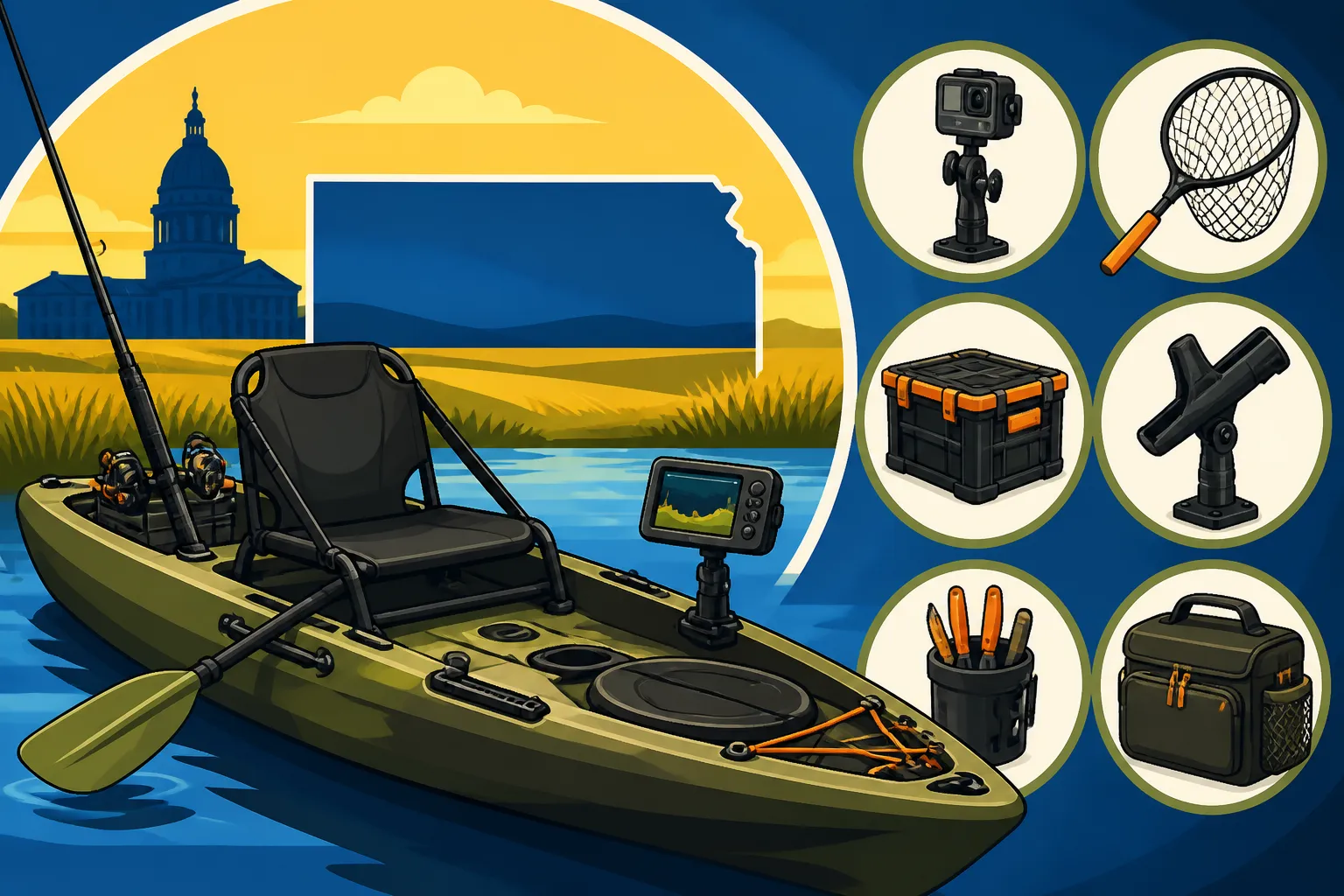
Look for aftermarket seats that offer increased padding, lumbar support, and higher backrests. Some premium seats even elevate you slightly, providing a better vantage point for casting and sight fishing, which can be a huge advantage when targeting species like walleye or bass in clearer Kansas waters. The difference a good seat makes is profound; it transforms your kayak from a piece of plastic to a comfortable fishing platform. Many anglers report being able to spend twice as long on the water after upgrading their seat, making it a worthwhile investment for serious enthusiasts.
Paddle Leashes and Holders
It might seem like a small thing, but losing your paddle in the middle of a lake or river is a nightmare scenario. A paddle leash is a simple, inexpensive accessory that attaches your paddle to your kayak, preventing it from drifting away if you set it down to fight a fish or re-tie a lure. Similarly, dedicated paddle holders keep your paddle securely stowed when you're not actively paddling, freeing up your hands and keeping your cockpit clutter-free.
Beyond just security, consider how you use your paddle. Having a designated spot where it clicks in easily means you're not fumbling with it when a fish strikes or when you need to make a quick adjustment to your position. Some anglers prefer flush-mount paddle clips, while others like bungee systems or specialized paddle parks that can hold the paddle horizontally across the bow. Find a system that keeps your paddle accessible but out of the way, so it doesn't interfere with your casting or landing fish.
Hydration and Sun Protection
The Kansas sun can be relentless, especially during summer days on the open water. Staying hydrated and protected from the sun is not just about comfort, it's about health and safety. Dehydration and sunburn can quickly turn a fun fishing trip into a dangerous situation.
Invest in a good, insulated water bottle or a hydration bladder system that fits within easy reach. Many kayaks have designated cup holders or bungee systems where you can secure your drink. For sun protection, a wide-brimmed hat, sunglasses with polarized lenses, and long-sleeved, breathable fishing shirts are essential. Don't forget high-SPF sunscreen, and reapply it regularly. Some anglers even add kayak canopies or umbrellas, particularly for longer, exposed trips on large reservoirs. Being proactive about sun and hydration will keep you feeling good and fishing strong all day long.
Fishing-Specific Rigging and Storage Solutions
One of the biggest challenges for kayak anglers is managing gear in a confined space. It's easy for the cockpit to become a cluttered mess of rods, lures, and tools, which can be frustrating and even dangerous. Smart rigging and storage solutions are key to staying organized, efficient, and safe.
Rod Holders and Organizers
Unless you're a purist with a single rod, you'll quickly discover the need for dedicated rod holders. Modern kayak fishing often involves carrying multiple rods rigged for different techniques or species, whether it's one for Kansas Walleye Fishing Techniques and another for Kansas Crappie Fishing Techniques. Having them secured and easily accessible is paramount.
Flush-mount rod holders, often molded into the kayak, are great for "storage" or trolling a single line directly behind you. However, adjustable, rail-mounted, or track-mounted rod holders offer far more versatility. These allow you to position your rods precisely where you need them for trolling, holding spare rods, or even getting them out of the way for paddling. Look for holders with a secure locking mechanism to prevent rods from bouncing out, especially when traversing rough water or battling a big fish. Having a dedicated spot for each rod prevents tangles, damage, and the dreaded moment of accidentally knocking a favorite combo overboard.
Tackle Management Systems
Your tackle is the heart of your fishing operation, and keeping it organized, protected, and easily accessible in a kayak is an art form. Traditional bulky tackle boxes often don't translate well to kayak fishing's limited space.
Waterproof tackle boxes and bags designed for smaller craft are excellent choices. Look for systems that can be stowed securely but accessed quickly. Many kayak anglers utilize milk crates or specialized fishing crates that fit perfectly in the stern tankwell, often customized with additional rod holders or tool attachments. These crates provide a centralized, organized location for multiple tackle trays, soft plastics, and other essentials. For quick-access items, smaller waterproof pouches or clear plastic boxes can be stored in the cockpit. Keeping your frequently used lures, tools, and terminal tackle within arm's reach means less fumbling and more fishing. You can find a vast array of these organizational solutions at retailers like Bass Pro Shops or even specialty kayak fishing stores.
Coolers and Livewells
Depending on your fishing goals, a cooler for keeping your catch fresh or a livewell for bait or catch-and-release is a crucial accessory. Kansas fishing regulations often have Kansas Daily Creel Limits by Species, and if you're keeping fish, you want them in prime condition.
For keeping your catch, small, insulated coolers designed to fit in a kayak's tankwell or even strapped to the bow are perfect. Many high-quality soft-sided coolers offer excellent insulation without the bulk of traditional hard coolers. For bait, a small aerated livewell or bait bucket can keep your minnows or shad lively throughout the day. Some kayaks come with integrated livewell systems, but aftermarket options that run on portable D-cell batteries are readily available. Ensuring your bait is healthy increases your chances of success, and a good cooler keeps your table fare in top shape until you get home.
Advanced Electronics and Power Solutions
Modern fishing often involves technology, and kayak fishing is no exception. Electronics can give you a significant edge, helping you locate fish, understand underwater structure, and navigate efficiently. Powering these devices, and even propelling your kayak, opens up new possibilities.
Fish Finders and Mounts
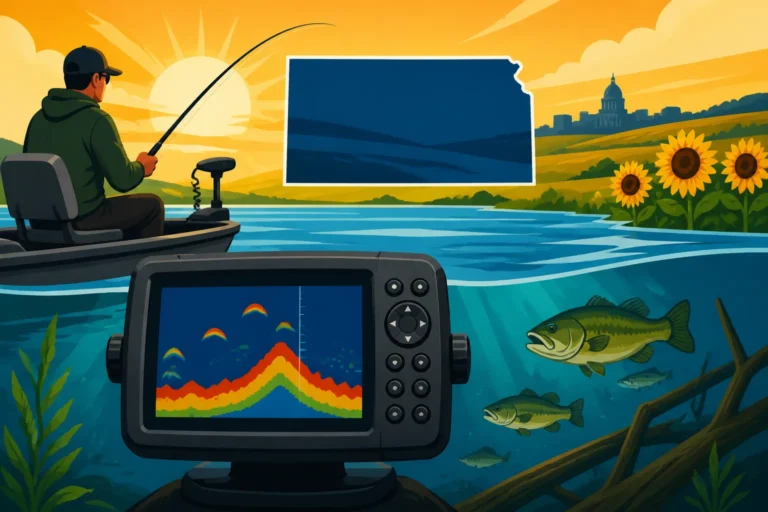
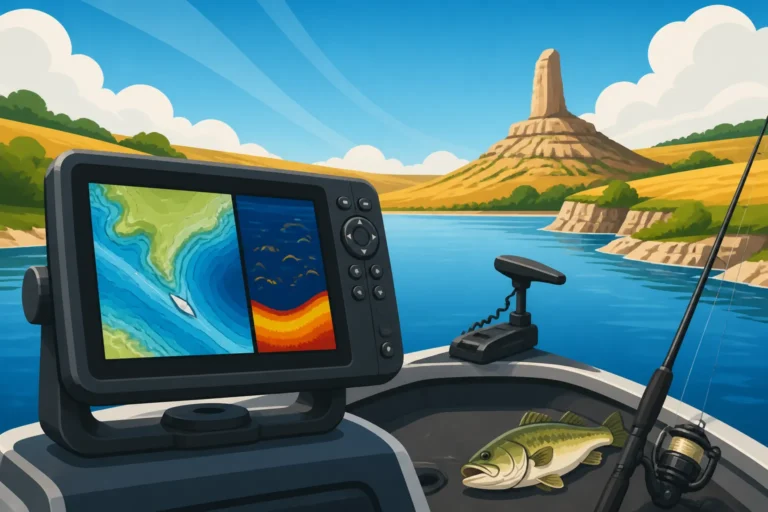
A good fish finder is arguably the most impactful electronic accessory for many kayak anglers, especially on large, complex bodies of water like Wilson Lake or El Dorado Lake. It provides a window into the underwater world, revealing depth, structure, baitfish schools, and even individual fish.
For kayaks, compact, battery-powered fish finders are the go-to. Look for models with clear, high-resolution screens and features like Down Imaging or Side Imaging, which can paint a detailed picture of what lies beneath and to the sides of your kayak. The key is a robust mounting system for both the display unit and the transducer. Many kayaks now come with transducer-ready scupper holes or designated mounting plates, but universal kits are available. Ensuring your transducer is properly deployed in the water and your display is securely mounted and easily viewable will maximize the utility of this powerful tool. Check out our guide on Kansas Fish Finder Buying Guide for more in-depth information.
Battery and Charging Solutions
Powering your fish finder, navigation lights, or even a small trolling motor requires a reliable battery system. The good news is that advancements in battery technology have made these setups increasingly compact and efficient.
Deep-cycle marine batteries or lightweight lithium-ion batteries are popular choices for kayak use. The size and type will depend on the power demands of your electronics and how long you plan to run them. Waterproof battery boxes are essential to protect your power source from splashes and submersion. For charging, a smart battery charger designed for your specific battery type will ensure longevity and optimal performance. Some anglers also carry portable power banks to recharge smaller devices like phones or action cameras throughout the day. Planning your power needs carefully prevents unexpected outages when you need your electronics most.
Trolling Motors for Kayaks
While traditionalists might scoff, a small trolling motor can be a game-changer for covering water, fighting winds, or slow-trolling on large Kansas reservoirs. It transforms your paddle kayak into a hybrid power-paddle craft, reducing fatigue and expanding your fishing range.
Not all kayaks are designed to accommodate a trolling motor, so check for transom mounts, motor wells, or flat areas where a mounting bracket can be installed. Low-thrust, lightweight electric motors are ideal for kayaks. They are typically powered by a 12V marine battery, similar to what you'd use for a fish finder, though often a larger capacity. Integrating a trolling motor also means considering the additional weight of the motor and battery, as well as how it affects your kayak's balance and transport. While it adds complexity and cost, the ability to effortlessly move across a large lake against the wind can significantly extend your fishing day and open up new possibilities for targeting fish.
Transport and Storage Solutions for Kayak Anglers
Getting your kayak to and from the water, and then storing it securely, can sometimes be as much of a logistical challenge as the fishing itself. The right accessories can make these tasks infinitely easier, preventing strain, damage, and frustration.
Kayak Carts and Wheels
Unless you live right on the water, you'll inevitably need to transport your kayak from your vehicle to the launch point. This often involves navigating parking lots, gravel paths, or even short stretches of uneven terrain. A quality kayak cart or set of wheels is a back-saver.
These carts typically consist of a frame with wheels that cradle your kayak, allowing you to easily roll it down to the water. Different styles exist, from scupper carts that plug into the drain holes (ensure they fit your specific kayak and don't stress the scupper) to strap-on carts that secure around the hull. Look for durable, all-terrain wheels if you frequently launch from unpaved areas, and a compact design that can be disassembled and stored in your kayak while you're on the water. A good cart makes solo launches much more feasible and spares your back for reeling in fish, not lugging gear. Our guide on Best Kayak Fishing Gear for Kansas Lakes might offer more general transportation tips.
Storage Covers and Garage Solutions
When your kayak isn't on the water, protecting it from the elements and storing it safely are important for its longevity. UV rays, dust, and even curious critters can take a toll on your investment.
A durable kayak cover, ideally one made from UV-resistant material, will shield your kayak from sun exposure, rain, and debris when stored outdoors or even on a trailer. For garage or shed storage, a simple hoist system or wall-mounted storage racks are excellent solutions. These keep your kayak off the ground, saving floor space, and preventing hull deformation over time. Properly storing your kayak ensures it remains in prime condition for many seasons of Kansas fishing.
Vehicle Racks and Loaders
Transporting your kayak on your vehicle is often the biggest hurdle for new kayak anglers. While some might try to strap it directly to roof bars, a dedicated kayak rack system offers superior security and ease of loading.
Roof-mounted J-cradles, stackers, or saddles are specifically designed to safely secure your kayak to your vehicle's crossbars. J-cradles hold the kayak on its side, often allowing for two kayaks on one vehicle, while saddles cradle the hull flat. For heavier kayaks or those struggling with lifting, specialized loading assist systems, often available through brands like Thule or Yakima, can make getting your kayak onto the roof a one-person job. These systems typically slide out or pivot to help you lift and position the kayak without straining. Investing in a reliable vehicle rack system provides peace of mind on the highway and makes the entire process of getting to your favorite Kansas fishing spot much less of a chore.
Here's a quick comparison of essential vs. optional accessories to help you prioritize your purchases:
| Accessory Category | Must-Have for Basic Safety & Function | Highly Recommended for Comfort & Efficiency | Nice-to-Have for Enhanced Experience |
|---|---|---|---|
| Safety | PFD | Anchor System & Trolley | Visibility Flag/Light, Whistle |
| Paddling/Movement | Paddle | Paddle Leash & Holders | Kayak Trolling Motor |
| Comfort | — | Upgraded Seat Cushion | Sun Shade/Canopy |
| Gear Management | Small Dry Bag for Essentials | Rod Holders, Tackle Crates/Bags | Integrated Livewell |
| Electronics | — | Fish Finder & Mount | GPS/Chartplotter (if not on fish finder) |
| Transport/Storage | Vehicle Tie-Down Straps | Kayak Cart, UV Cover | Vehicle Loading Assist, Garage Hoist |
| Personal Items | Water Bottle | Sunscreen, Hat, Polarized Sunglasses | Waterproof Phone Case, Bug Spray |
Remember, the goal isn't to buy every accessory on the market, but to carefully select items that genuinely improve your safety, comfort, and fishing success. Start with the essentials, and as you gain experience on the water, you'll naturally discover which additional accessories will truly enhance your unique kayak fishing adventures in Kansas. Kansas Fishing Gear Guide offers more broad advice on what to pack.
Disclaimer
This article is for general informational purposes only and does not constitute professional advice. Laws, prices and regulations vary by location and change over time. Consult a qualified professional for guidance on your specific situation.