Best Circle Hooks for Catfish
There's nothing quite as frustrating as feeling that unmistakable tug on your line, setting the hook with all your might, and coming up empty. Or, worse yet, reeling in a fish that's been gut-hooked, making release difficult and often fatal for the fish. For us Kansas anglers targeting catfish, these scenarios are all too common with traditional J-hooks. But what if there was a simple switch that could dramatically improve your hookup ratio while also being much kinder to the fish? This guide will dive deep into why circle hooks are the unsung heroes of catfish angling and how to choose and use the best ones for success on our local waters.
Why Circle Hooks are a Game Changer for Catfish Anglers
Many of us grew up fishing with J-hooks, and they certainly have their place. But when it comes to the powerful, often subtle bites of Kansas catfish—whether you're after a scrappy channel cat or a monstrous flathead—circle hooks offer a distinct advantage. They are a true revolution for both your catch rate and the well-being of the fish, transforming the way you approach a day on the water.
The Unique Mechanics of Circle Hooks
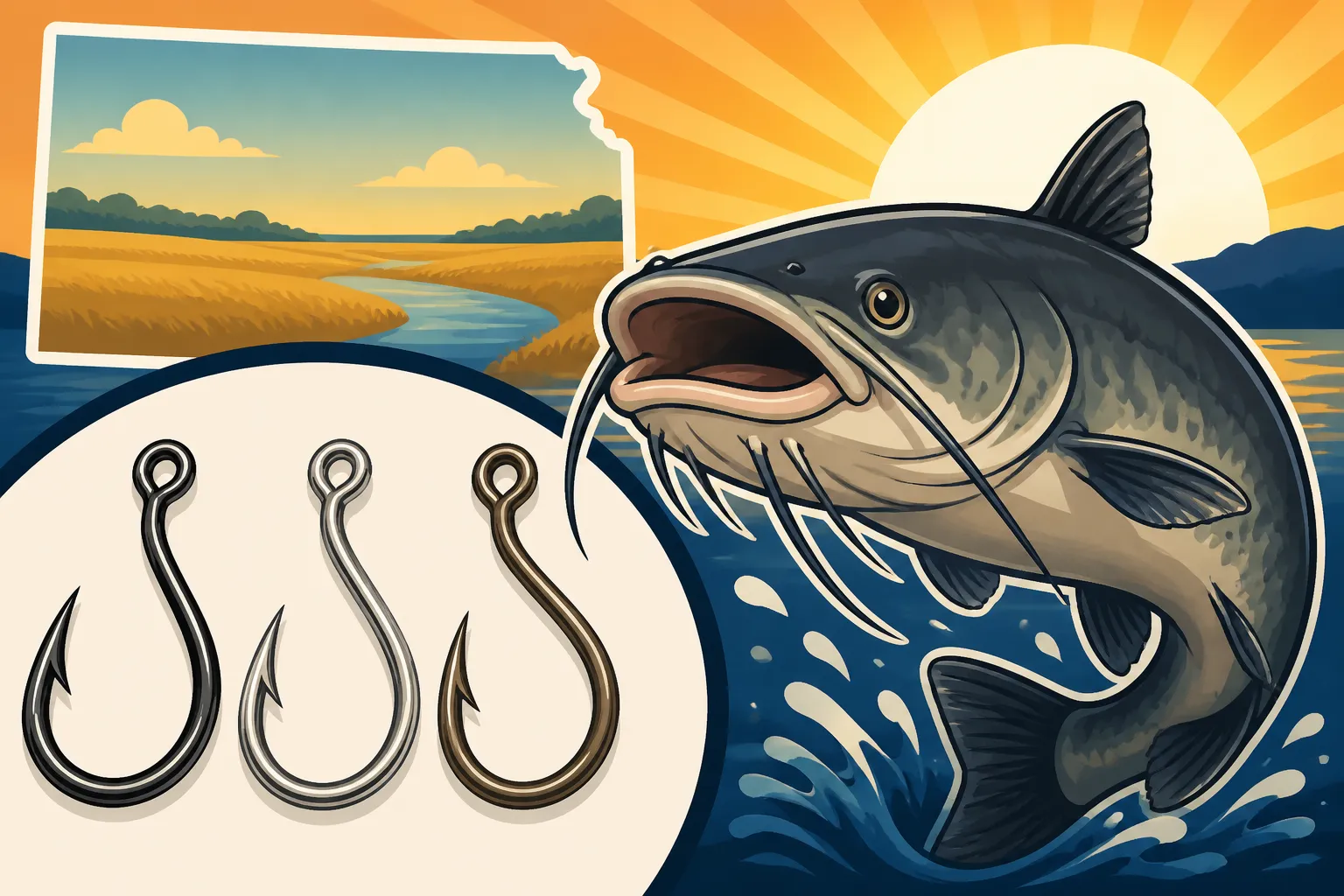
Unlike a J-hook, which is designed to penetrate wherever it makes contact, a circle hook is specifically engineered to hook the fish in the corner of its mouth. The inward-pointing point and rounded bend are key to this magic. When a catfish takes your bait, the hook is swallowed deep. As the fish swims away, or as you begin to reel, the tension on the line pulls the hook out of the fish's throat. Because of its unique shape, the hook then rotates and slides until the point catches on the jaw or the corner of the mouth, setting itself firmly without any need for a dramatic hookset from the angler. It's a remarkably efficient and humane design.
This self-setting action takes a bit of getting used to if you're accustomed to swinging for the fences every time you feel a bite. Instead of a sharp jerk, a steady, continuous retrieve is all that's typically needed to seal the deal. This subtle difference in technique is crucial and, once mastered, becomes second nature. It truly feels like the hook does all the heavy lifting for you, allowing you to focus on the fight rather than the initial hookup.
The Unmatched Benefits for Fish and Angler
The primary benefit of circle hooks, especially the non-offset variety, is the significant reduction in gut-hooked fish. This means if you're practicing catch and release, or if you simply want to minimize harm to smaller fish you don't intend to keep, circle hooks are your best friend. They dramatically increase the survival rate of released fish, which is vital for maintaining healthy fish populations in our Kansas lakes and rivers. This commitment to conservation is something all responsible anglers can appreciate.
Beyond conservation, circle hooks also offer tangible benefits for the angler. First, because they consistently hook in the mouth, fish tend to stay on the line better. You'll experience fewer missed strikes and fewer fish shaking free during the fight, leading to a much higher landing ratio. Secondly, unhooking a fish caught on a circle hook is usually far simpler and quicker. No more digging deep into a fish's gullet with pliers; a quick twist or gentle tug often releases the hook from the corner of the jaw, getting your bait back in the water faster. This makes for a more enjoyable and efficient fishing experience overall.
Choosing the Right Circle Hook Size and Style
Selecting the right circle hook isn't a "one-size-fits-all" deal. Just like with J-hooks, there's a range of sizes and subtle design variations that can make a big difference depending on what kind of catfish you're pursuing and the bait you're using. Understanding these nuances will help you rig up for maximum success, whether you're targeting a trophy blue cat or a mess of channel cats for a fish fry.
Understanding Hook Terminology: Offset vs. Non-Offset
This distinction is perhaps the most critical when it comes to circle hooks. A non-offset (or "inline") circle hook has the point of the hook running parallel to the shank. This design ensures the hook rotates and sets itself in the corner of the fish's mouth almost every time, minimizing the chance of gut-hooking. Many conservation-minded anglers and some regulations actually prefer or require non-offset hooks, especially in saltwater fisheries, due to their superior performance in preventing deep hooking. For Kansas anglers who care about fish health and promoting sustainable fishing, non-offset circle hooks are often the top choice.
An offset circle hook, on the other hand, has the point angled slightly outward, away from the shank. This slight offset can sometimes make them "grab" a bit quicker, but it also increases the chance of deep hooking, similar to a J-hook, albeit to a lesser degree than a traditional J-hook. While they might feel more familiar to those transitioning from J-hooks, if conservation is your priority, stick with non-offset. Always double-check any specific regulations for the waterbody you're fishing, as some areas may have rules regarding hook types.
Sizing Up Your Circle Hooks for Kansas Catfish
The size of your circle hook will depend heavily on the size of the catfish you're hoping to catch and the type of bait you're presenting. A good rule of thumb is to match the hook size to the bait. You want the hook to be large enough to easily embed in the corner of the fish's mouth without being so large that it deters bites or so small that it's swallowed too easily.
- Channel Catfish (1-5 lbs): For average channel cats, especially when using smaller baits like worms, shrimp, or cut bait pieces, a size 2 to 4/0 circle hook is often appropriate. If you're using larger chunks of cut bait or liver, you might go up to a 5/0 or 6/0.
- Larger Channel Cats (5+ lbs) & Blue Catfish (All Sizes): For bigger channels and most blue cat excursions, you'll want to scale up. Sizes from 6/0 to 8/0 are excellent for medium to large blue cats, especially when paired with substantial cut bait, shad, or even live perch. These larger hooks ensure a solid hookset in their tough jaws.
- Flathead Catfish: Flatheads are a different beast, preferring live bait. For these powerful fish, you need robust hooks to handle their aggressive strikes and strong runs. Depending on the size of your live bait (sunfish, goldfish, perch), you'll typically be looking at 8/0 to 12/0 circle hooks. The larger gap accommodates the larger live baits and ensures enough exposed hook to grab hold.
When shopping, you'll find brands like Gamakatsu, Owner, and Mustad offer excellent quality circle hooks. You can usually find a great selection for any target species at your local sporting goods store, or browse a huge variety of options online from retailers like Bass Pro Shops or Amazon. It's a good idea to have a range of sizes in your tackle box to adapt to different conditions and bait choices. Consider what kind of bait you usually fish with and get a few sizes around that, then expand as you gain experience. You'll soon figure out your preferred Best Hook Size for Channel Catfish or what works for that monster flathead.
Rigging and Fishing with Circle Hooks for Success
Switching to circle hooks isn't just about the hook itself; it requires a slight adjustment in your rigging and fishing technique. Don't worry, it's not complicated, but understanding these nuances will significantly increase your success rate and truly unlock the potential of these amazing hooks. The goal is to let the hook do its job, which means resisting some of our ingrained habits.
Baiting Your Circle Hook Properly
This is a critical step that often gets overlooked. With a J-hook, we're taught to thread the bait on to cover the entire hook. With a circle hook, you need to expose the gap and the point. The hook needs room to pivot and turn in the fish's mouth.
- For Cut Bait or Prepared Baits: Gently pierce your bait (like a piece of shad, skipjack, or chicken liver) once or twice, leaving the entire curve and point of the hook exposed. Don't crowd the hook. Think of it more like "hanging" the bait on the hook rather than stuffing it. If you're using a large chunk of cut bait, sometimes just a single puncture through the toughest part of the bait is all you need. The goal is for the bait to be secure enough not to fly off on a cast, but loose enough for the hook to rotate freely.
- For Live Bait: When using live bait for flatheads or large blue cats, hook the baitfish lightly through the lips, the top of the back (above the lateral line, avoiding the spine), or just behind the dorsal fin. Again, the key is to ensure the point and bend of the hook are completely unobstructed. The bait should be able to swim naturally, and the hook should be free to rotate. This ensures the live bait stays active, attracting those big fish, while giving the circle hook the freedom it needs to set.
The "No-Jerk" Hookset Technique
This is perhaps the biggest mental shift for anglers accustomed to J-hooks. With a circle hook, you do not need to violently jerk the rod to set the hook. In fact, doing so will likely pull the hook right out of the fish's mouth before it has a chance to properly engage.
Instead, when you feel a bite:
- Resist the Urge: When the fish takes the bait and starts pulling, just let it run. Give it a few seconds to fully commit to the bait and move away.
- Apply Steady Pressure: Slowly and smoothly reel in any slack in your line. As the line tightens, the circle hook will begin to work its magic.
- Lift and Reel: Once the line is taut, gently lift your rod tip to a fighting position (about 45 degrees) and continue to steadily reel. The hook will rotate and embed itself securely in the corner of the fish's mouth.
It sounds almost too simple, but it works. This technique is often referred to as "letting the rod load up." The bending of the rod and the consistent pressure from your reel is what sets the hook, not a sudden, sharp motion. This is particularly effective when How to Catch Channel Catfish From the Bank where steady pressure can be applied easily.
Common Rigs for Circle Hooks
Circle hooks can be incorporated into almost any catfish rig you already use. Here are a few popular options:
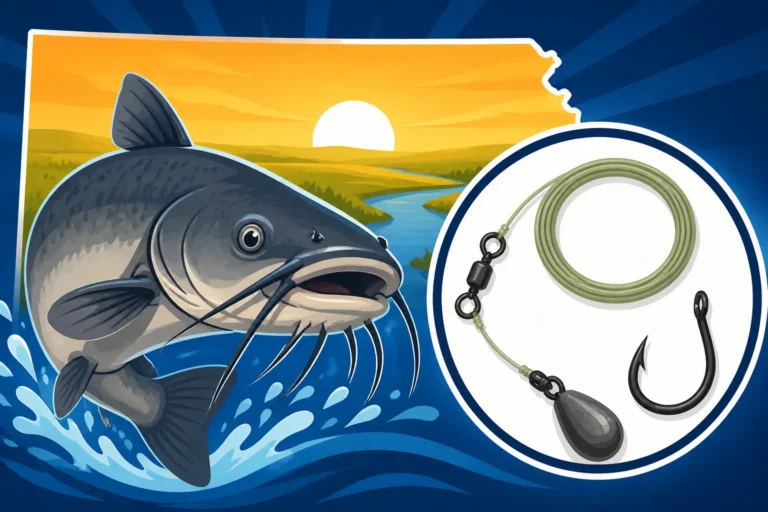
- Carolina Rig (or Slip Sinker Rig): This is a classic for a reason. You'll have a lead sinker (egg sinker or no-roll sinker) sliding freely on your main line, followed by a swivel, then a leader (monofilament or fluorocarbon, often 12-24 inches) tied to your circle hook. This allows the fish to pick up the bait and move off without feeling the weight of the sinker, giving the circle hook time to set. This is ideal for targeting catfish near the bottom in lakes and rivers.
- Santee Cooper Rig: A variation of the Carolina rig, the Santee Cooper adds a peg float (often a small, cigar-shaped foam float) on the leader between the swivel and the hook. This keeps your bait suspended slightly off the bottom, making it more visible and keeping it out of snags, which can be fantastic in slightly vegetated areas or over muddy bottoms. It's particularly effective for large blue and channel cats.
- Three-Way Swivel Rig: This rig is excellent for fishing current in rivers. You'll tie your main line to one eye of the three-way swivel, a short leader with a sinker to another eye, and a longer leader (18-36 inches) with your circle hook and bait to the third eye. This allows your bait to drift naturally in the current, which is often irresistible to active river cats.
Regardless of the rig, the principle remains the same: give the fish time to take the bait, and let the hook do its job. When selecting your fishing line, remember that Best Line Weight for Kansas Catfish will vary based on target species and fishing conditions, but braided lines are often favored for their sensitivity and strength, which can be a real asset when letting a circle hook do its work.
| Catfish Species | Recommended Hook Sizes (Non-Offset) | Common Baits | Ideal Rig Type (Examples) |
|---|---|---|---|
| Channel Catfish | 2 to 6/0 | Cut Bait, Worms, Liver, Dough Baits | Carolina, Santee Cooper |
| Blue Catfish (Small) | 5/0 to 7/0 | Cut Shad, Perch | Carolina, Santee Cooper, 3-Way |
| Blue Catfish (Large) | 8/0 to 10/0 | Large Cut Bait, Live Shad/Perch | Carolina, Santee Cooper, 3-Way |
| Flathead Catfish | 8/0 to 12/0 | Live Sunfish, Perch, Goldfish | Carolina, Free-Line |
Common Mistakes and Troubleshooting with Circle Hooks
Even with the best gear, like the robust selection of circle hooks you can find at Bass Pro Shops or various options on Amazon, there's always a learning curve with new techniques. Circle hooks are incredibly effective, but they do require a slight adjustment in mindset and action. Many anglers make a few common mistakes when first transitioning from traditional J-hooks, which can lead to frustration. Let's tackle these head-on so you can avoid them and maximize your success on the water.
The Instinct to Jerk and Set the Hook
This is, hands down, the most common mistake. Our brains are hardwired from years of fishing with J-hooks to react instantly and forcefully when we feel a bite. That sharp, upward swing of the rod is a reflex for many of us. However, with circle hooks, this instinct is counterproductive. When you jerk, you're almost guaranteed to pull the hook out of the fish's mouth before it has a chance to rotate and catch.
- The Fix: Practice patience. When you feel a bite, take a deep breath. Count to three, or even five, before you do anything. Let the fish really commit to the bait and swim away with it. Instead of jerking, simply start reeling steadily. The tension created by the fish swimming away and your continuous retrieve will do all the work. If you're fishing with multiple rods, consider using rod holders and letting the rod bend significantly before you even touch it. The rod's bend and the steady pressure will ensure the hook finds its mark. It's a completely different philosophy of How to Set the Hook on a Kansas Catfish.
Using the Wrong Size Hook for Your Bait or Target Species
Another frequent issue is mismatching the hook size. A hook that's too small might be swallowed too easily, defeating the purpose of the circle hook. A hook that's too large for the bait might not present naturally or could intimidate smaller fish. Conversely, a small hook on a large bait for a big flathead might get lost in the bait or simply straightened by a powerful fish.
- The Fix: Refer back to our sizing guide in the previous section. Always consider the mouth size of the fish you're targeting and the bulk of your bait. For example, if you're using a full shad for a monster blue cat, you need a substantial hook (8/0-10/0) to ensure enough gap is exposed for proper penetration. If you're fishing with a small piece of cut bait for average channel cats, a 3/0 or 4/0 might be perfect. Having a range of sizes in your tackle box, particularly for different Kansas Catfish Species Guide, allows you to adapt.
Over-Baiting the Hook
Just like using the wrong size, packing too much bait onto a circle hook can prevent it from working correctly. If the hook's gap and point are buried deep within the bait, it can't rotate freely and catch in the fish's mouth.
- The Fix: Always leave the hook point and at least a good portion of the bend exposed. For cut bait, pierce it only once or twice, leaving plenty of hook visible. For live bait, hook it lightly through the lips or back, ensuring the hook can pivot. Think of the bait as an offering, not a disguise for the hook. The goal is to tempt the fish, not to hide the working part of the circle hook. This is a crucial element of effective Kansas Fishing Techniques for Beginners when using these specialized hooks.
Not Having a Strong Enough Setup
While circle hooks are self-setting, they still need a robust setup to handle the powerful fights of Kansas catfish. Using too light of line, a flimsy rod, or an undersized reel can lead to break-offs or lost fish, even with a perfect hookset.
- The Fix: Ensure your entire fishing system is balanced for your target. For larger catfish, you'll want a medium-heavy to heavy action rod, a reel with a smooth drag and plenty of line capacity, and a strong line. For example, when pursuing trophy flatheads, a sturdy catfish-specific rod paired with a baitcasting reel spooled with 30-50 lb braided line is not overkill. Check out guides on Best Rod and Reel Combo for Catfish to make sure your gear can handle the challenge. Remember, the hook is only one part of the equation; the rest of your Kansas Fishing Gear Guide needs to be up to snuff!
By understanding these common pitfalls and adjusting your approach, you'll find that circle hooks are an incredibly effective and enjoyable way to target catfish across Kansas, leading to more successful outings and healthier fish.
Disclaimer
This article is for general informational purposes only and does not constitute professional advice. Laws, prices and regulations vary by location and change over time. Consult a qualified professional for guidance on your specific situation.