Kansas Crappie Minimum Length Limit of 10 Inches
It can be incredibly frustrating to be out on the water, reeling in what feels like a perfect crappie, only to realize it's just a hair too short to keep. We've all been there, wondering why there are so many rules when all we want to do is enjoy a peaceful day of fishing and maybe bring home a few fillets for dinner. This guide is here to clear up the confusion surrounding the Kansas crappie minimum length limit of 10 inches, explaining exactly what it means for you, why it's in place, and how to make sure you're always fishing within the law.
Understanding Kansas Crappie Regulations and the 10-Inch Rule
Navigating fishing regulations can sometimes feel like trying to untangle a stubbornly knotted fishing line. You know there's a system, but it's not always immediately clear how all the pieces fit together. When it comes to crappie fishing in Kansas, one of the most consistent and important rules you'll encounter is the minimum length limit of 10 inches. This isn't just a random number; it's a carefully considered regulation designed to protect and enhance the quality of crappie fishing across the state. Understanding the "why" behind this rule can often make it easier to adhere to and appreciate.
Why a Minimum Length Limit Exists for Crappie
The Kansas Department of Wildlife and Parks (KDWP) doesn't just pull these numbers out of a hat. The 10-inch minimum length limit for crappie is a cornerstone of their fisheries management strategy, rooted deeply in conservation science and the desire to create sustainable, high-quality angling opportunities for everyone. Think about it: if every crappie, no matter how small, could be harvested, many lakes and ponds would quickly be depleted of larger, more desirable fish. This would lead to a population dominated by stunted, small crappie, making for a less rewarding fishing experience overall.
The primary reason for this rule is to allow crappie to reach sexual maturity and spawn at least once, and ideally multiple times, before they're harvested. A crappie typically needs about two to three years to reach that 10-inch mark, depending on the specific water body and food availability. By allowing these fish to reproduce, we ensure there are always new generations to replace the ones caught, maintaining a healthy and vibrant fishery. It's a long-term investment in our shared natural resources. Additionally, larger crappie contribute more to the overall biomass of the lake, providing a better food source for larger predatory fish and maintaining ecological balance. Without this safeguard, the crappie populations in many Kansas lakes would struggle to sustain themselves, leading to a noticeable decline in both the size and number of fish available to anglers.
How the 10-Inch Minimum Affects Your Crappie Fishing
This 10-inch minimum means that every crappie you catch must be measured, and if it falls short of that mark, it needs to be released immediately and unharmed. This is where the frustration can really set in, especially when you've had a fantastic day, but all your fish are just shy of being legal. It can feel like a tease! However, this rule directly influences how you approach your crappie fishing trips. Instead of just focusing on quantity, it encourages anglers to think about quality and responsible harvesting.
You might find yourself investing in better measuring tools that are quick and easy to use on the boat, or perhaps adjusting your fishing spots to target areas known for holding larger fish. The regulation also means you need to be prepared for catch and release, even if you planned on keeping a limit. This involves having the right de-hooking tools, keeping your hands wet when handling fish, and getting them back into the water as quickly as possible. It truly shifts the focus from "how many can I catch?" to "how many legal-sized fish can I responsibly harvest?" For a deeper dive into the broader regulatory landscape, you might want to check out our comprehensive guide on Kansas Fishing Regulations Explained to understand how different rules interact.
The Specifics of the Kansas Crappie Length Limit
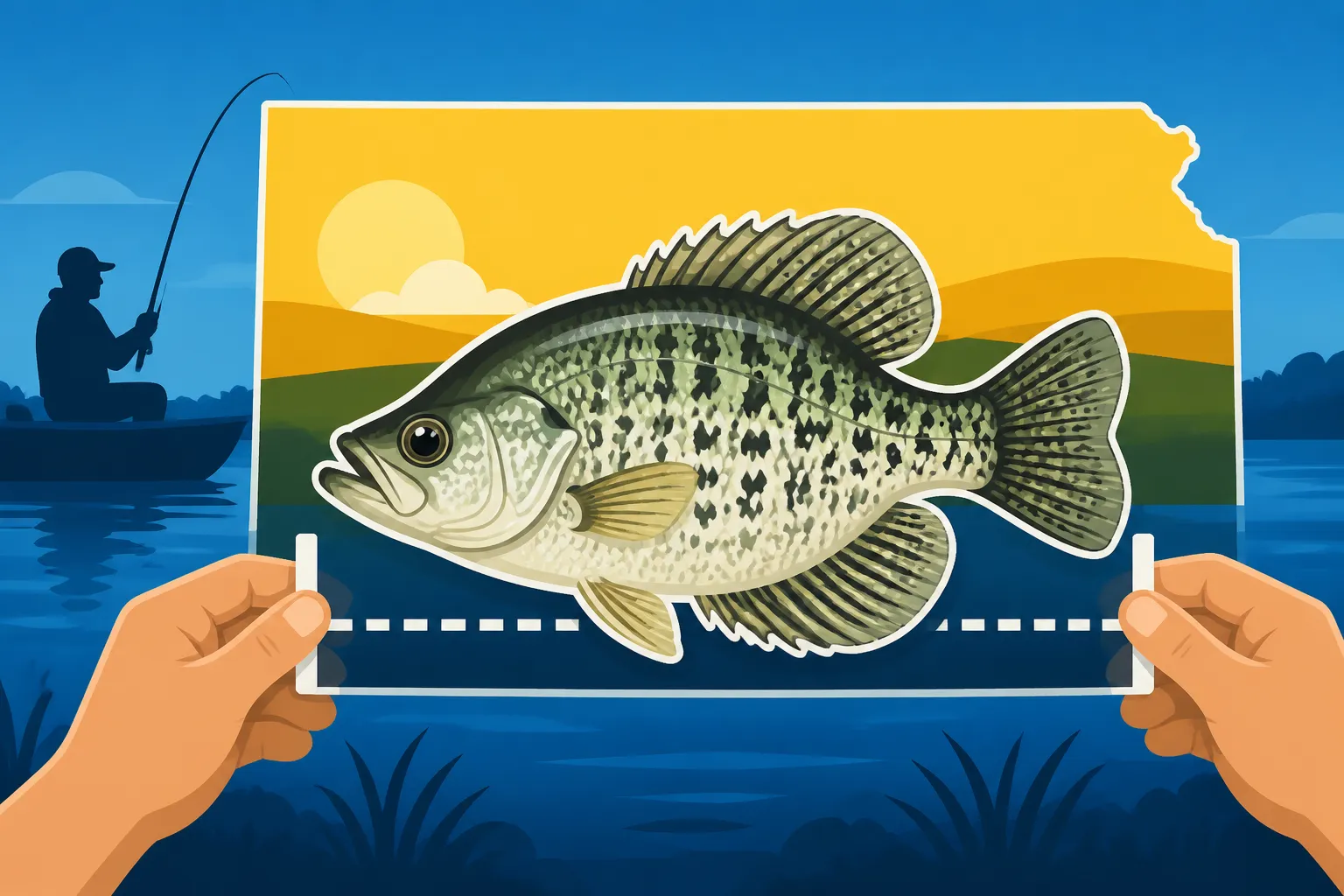
So, let's nail down the specifics: in Kansas, the general statewide rule for both white and black crappie is indeed a minimum length of 10 inches. This means from the tip of the snout to the end of the tail (with the tail squeezed together to get the maximum length), your crappie needs to measure at least 10 full inches to be legally kept. If it's 9 and 7/8 inches, it goes back into the water. No exceptions for a "good effort" or "almost there!"
It's also crucial to remember that this minimum length limit works in conjunction with the daily creel limit. While some states might have "slot limits" where you can only keep fish within a certain size range, Kansas primarily uses a minimum length, which simplifies things a bit. However, always be sure to consult the most current KDWP fishing regulations pamphlet or their website, as specific lakes or community fishing ponds can sometimes have different, more restrictive rules to address unique population dynamics. For instance, a particular lake might have a more stringent limit if its crappie population is struggling, or a liberal one if it's overpopulated with small fish. While the 10-inch rule is common, always verify for your specific fishing destination. You can find more details on combined regulations in our article on Kansas Crappie Length and Bag Limits.
Tools and Techniques for Responsible Crappie Anglers
Being a responsible angler means more than just knowing the rules; it means having the right gear and techniques to follow them effectively and ethically. The 10-inch crappie minimum isn't a barrier to a great day on the water; it's an opportunity to refine your skills and ensure the health of our fisheries for generations to come. Having the right tools at your disposal makes adherence to this rule second nature, allowing you to focus more on the thrill of the catch and less on potential legal worries.
Essential Measuring Tools for Crappie
To avoid any doubt or accidental violations, having a reliable measuring device readily accessible is non-negotiable. There's nothing worse than guessing and risking a fine, or worse, harming a fish by holding it too long while you search for a ruler. The most common and effective tools include simple stick-on rulers for your boat or tackle box lid, or dedicated fishing bump boards. A bump board is fantastic because it provides a fixed end to push the fish's mouth against, ensuring a consistent and accurate measurement every time. You can find a wide variety of these on platforms like Amazon, from basic plastic models to more robust, foldable options that fit easily into a tackle bag.
When you measure, always lay the crappie flat on a wet surface with its mouth closed and against the bump board or the starting point of your ruler. Gently pinch the tail fin together to get the maximum length measurement. Speed and accuracy are key here. The less time the fish is out of the water, the better its chances of survival after release. Some anglers even mark a 10-inch line on their net handle or cooler lid, but a dedicated tool is always the most reliable for legal purposes.
Proper Catch and Release Practices for Undersized Crappie
Releasing an undersized crappie correctly is just as important as measuring it accurately. A poorly handled release can mean the difference between the fish swimming away strong and becoming an easy meal for a predator or dying from stress. Always try to handle crappie as little as possible. If you must touch them, wet your hands thoroughly beforehand. Dry hands can remove the protective slime coat on a fish, making it vulnerable to disease.
When de-hooking, try to use needle-nose pliers or a dedicated de-hooking tool, especially if the hook is deeply set. Barbless hooks can also make release much quicker and less traumatic for the fish. Avoid putting your fingers in the fish's gills, as this can cause severe damage. Support the fish horizontally, never vertically by the jaw, as this can damage its internal organs. If the fish seems stunned or stressed, gently hold it upright in the water until it regains its strength and can swim away on its own. It's a small act that makes a huge difference in contributing to a healthy fishery, which is what the 10-inch minimum is all about.
Adjusting Your Fishing Strategy for the 10-Inch Minimum
Knowing you can only keep crappie 10 inches or longer can definitely influence your approach to fishing. Instead of just throwing out any old bait, you might start thinking about ways to target larger fish. This could involve using slightly larger jigs or minnows, which tend to discourage smaller crappie, or focusing on areas known to hold bigger fish. Larger crappie often prefer deeper water or more substantial cover like submerged timber or brush piles in lakes like Milford Lake or Cheney Reservoir, especially during different seasons.
During the spring spawn, crappie move shallow, but even then, targeting the slightly deeper edges of spawning flats can sometimes yield bigger fish. In the summer, look for crappie suspended over open water or relating to thermoclines in deeper reservoirs. Your choice of Best Bait for Kansas Crappie can also play a role. While tiny jigs are great for catching numbers, upsizing your presentation slightly might help weed out the smaller ones. By understanding crappie behavior and adjusting your presentation, you're not just adhering to the regulations; you're also becoming a more skilled and successful angler.
Navigating Common Crappie Limit Scenarios and Penalties
Even with the best intentions, anglers can sometimes find themselves in tricky situations or simply unsure about the nuances of the rules. Knowing what to do in common scenarios and understanding the potential consequences of violations is crucial for any responsible Kansas angler. It’s not about being afraid of the law, but respecting it and ensuring we all do our part to keep Kansas fishing fantastic.
What to Do When You Catch an Undersized Crappie
It's going to happen, and often! You're fishing, you feel that familiar tap-tap-tap, reel in a beautiful crappie, and then your ruler tells you it's 9.5 inches. Your first instinct might be disappointment, but your immediate action needs to be a responsible release. As soon as you determine the fish is undersized, get it back into the water quickly. Don't linger for photos if the fish is showing signs of stress. Prioritize its survival.
Sometimes, a fish might be deeply hooked, making release challenging. In these cases, it's often better to cut the line as close to the hook as possible rather than trying to aggressively rip the hook out, which can cause internal damage. While a deeply set hook can be detrimental, leaving a small, plain hook in can sometimes allow the fish a better chance of survival than a forceful extraction. Keep a pair of small, sharp scissors or clippers handy for these situations. The goal is always to minimize stress and injury, ensuring that little crappie has the best possible chance to grow up and be a legal catch another day.
Understanding Exceptions and Local Regulations
While the 10-inch minimum is the statewide standard for crappie, it's vital to remember that fisheries management can be very localized. The KDWP sometimes implements special regulations on specific water bodies to address unique ecological conditions or management goals. For example, a particular lake might have an 8-inch minimum if it has an overabundance of small, stunted crappie that need to be thinned out, or perhaps a 12-inch minimum if it's managed for trophy-sized fish. You won't see many exceptions to the 10-inch rule that make it easier to keep smaller fish; typically, exceptions are more restrictive.
Before heading to a new fishing spot, or even a familiar one you haven't visited in a while, always double-check the current KDWP fishing regulations. These are usually available online, at license vendors, and in physical pamphlets. This is especially true for Kansas Community Fishing Lake Rules or specific reservoirs. A quick look at the latest guide ensures you're always informed and compliant, avoiding any unwanted surprises from a game warden. These regulations are updated annually, so don't rely on last year's knowledge.
Consequences of Violating Crappie Length Limits
Nobody wants to find themselves on the wrong side of a conservation officer. The penalties for violating fishing regulations, including length limits, can vary depending on the severity of the offense and whether it's a first-time or repeat infraction. Typically, you could face fines, forfeiture of your catch and gear, and even the suspension of your fishing privileges. For instance, possession of undersized fish is often treated as seriously as having an over-limit. The KDWP takes these rules seriously because they are fundamental to managing our state's valuable fish populations.
It's not just about the monetary fine, which can range from a few hundred dollars to more substantial amounts depending on the circumstances. It's also about the principle of responsible angling and supporting the conservation efforts that make Kansas fishing so great. Ignorance of the law is generally not a valid defense, which underscores the importance of staying informed. For a broader understanding of the enforcement side, you might find our article on Kansas Fishing Law Enforcement and Penalties insightful. Ultimately, adhering to the 10-inch minimum for crappie is a small effort that contributes significantly to the health and future enjoyment of Kansas's crappie fisheries.
Here's a quick overview of crappie regulations in Kansas:
| Regulation Type | General Statewide Rule | Notes & Considerations |
|---|---|---|
| Minimum Length Limit | 10 inches | All crappie (white and black) must measure 10 inches or greater from snout to squeezed tail. Release undersized fish immediately. |
| Daily Creel Limit | 50 fish | You can keep a maximum of 50 crappie per day, provided they meet the minimum length requirement. This includes both white and black crappie combined. |
| Measurement | Mouth closed, tail squeezed | Lay fish flat on a wet ruler or bump board. Gently squeeze the tail to measure to the longest point. |
| Handling | Wet hands, quick release | Minimize handling time. Use wet hands or a de-hooking tool. Cut line if deeply hooked. |
| Local Exceptions | Check KDWP regulations | Always verify rules for your specific lake or community pond, as some may have more restrictive or unique regulations. |
Disclaimer
Please note that fishing regulations can change. While every effort has been made to provide accurate and up-to-date information, it is the angler's responsibility to consult the current Kansas Department of Wildlife and Parks (KDWP) fishing regulations before heading out. This guide is for informational purposes only and should not be considered legal advice.