Kansas Crappie Length and Bag Limits
It can be incredibly frustrating to head out for a peaceful day of crappie fishing in Kansas, only to realize you’re not entirely sure about the latest length and bag limits. The rules can feel like they’re constantly shifting, and nobody wants to inadvertently break a regulation. This comprehensive guide is here to clear up all that confusion, detailing everything you need to know about crappie length and bag limits in Kansas so you can fish with confidence and stay on the right side of the law.
Understanding Kansas Crappie Regulations: Why They Matter
Many anglers, especially those new to Kansas waters or who haven't checked the rulebook in a while, can find the state's fishing regulations a bit daunting. You might think, "Why do they make it so complicated?" The truth is, these rules, while sometimes feeling like a hurdle, are absolutely crucial for the long-term health of our fisheries.
The Importance of Conservation
At its heart, every fishing regulation, from the size of a fish you can keep to the number you can take home, is about conservation. Crappie, both black and white crappie, are incredibly popular sport fish in Kansas. Their delicious fillets and aggressive biting habits make them a favorite target for countless anglers throughout the year. But with such popularity comes the risk of overharvesting. If everyone kept every crappie they caught, regardless of size or quantity, our lakes and reservoirs would quickly become depleted, impacting future generations of fish and anglers alike.
Length limits ensure that crappie have the chance to grow to maturity and spawn at least once, contributing to the next generation. This helps maintain a healthy age structure within the population, preventing a scenario where only small, young fish remain. Bag limits, on the other hand, spread the harvest among more anglers and prevent any single individual from taking an excessive number of fish. It's about balance—allowing us to enjoy the resource today while safeguarding it for tomorrow. Without these measures, the fantastic crappie fishing we enjoy at places like Milford Lake or Cheney Reservoir simply wouldn't last.
Navigating the Regulations Guide
The Kansas Department of Wildlife and Parks (KDWP) is the governing body responsible for setting and enforcing these fishing regulations. They publish a comprehensive annual fishing atlas, often available online and at KDWP offices or licensed vendors. This atlas is your go-to resource, and honestly, you should always have access to the most current version, even if it's just on your phone. Regulations can, and sometimes do, change from year to year, or even within a season for specific bodies of water. What was legal last year might not be this year, or what applies to one lake might not apply to another just down the road.
The KDWP regulations are designed to be dynamic, responding to biological surveys, environmental changes, and fishing pressure. For instance, if a particular lake's crappie population is struggling due to poor spawns or heavy harvest, the KDWP might implement a more restrictive limit for that specific body of water. Conversely, if a population is booming, they might temporarily relax limits to encourage harvest and prevent overpopulation of smaller fish. It's a complex science, and staying informed by regularly checking the official KDWP resources, such as their website or the annual fishing guide, is the best way to avoid any unwelcome surprises when a game warden checks your cooler. Remember, being aware of all the rules is part of being a responsible angler in Kansas. You can always refer to the general Kansas Fishing Regulations Explained for broader context.
Kansas Crappie Length Limits: What You Need to Know
When it comes to crappie, size truly does matter in Kansas. Most anglers are familiar with the concept of a "minimum length limit," meaning any fish shorter than a certain measurement must be immediately released. This is particularly important for crappie as it allows them to reach sexual maturity and contribute to future spawns. However, it's not always as straightforward as it seems.
The Statewide Minimum Length
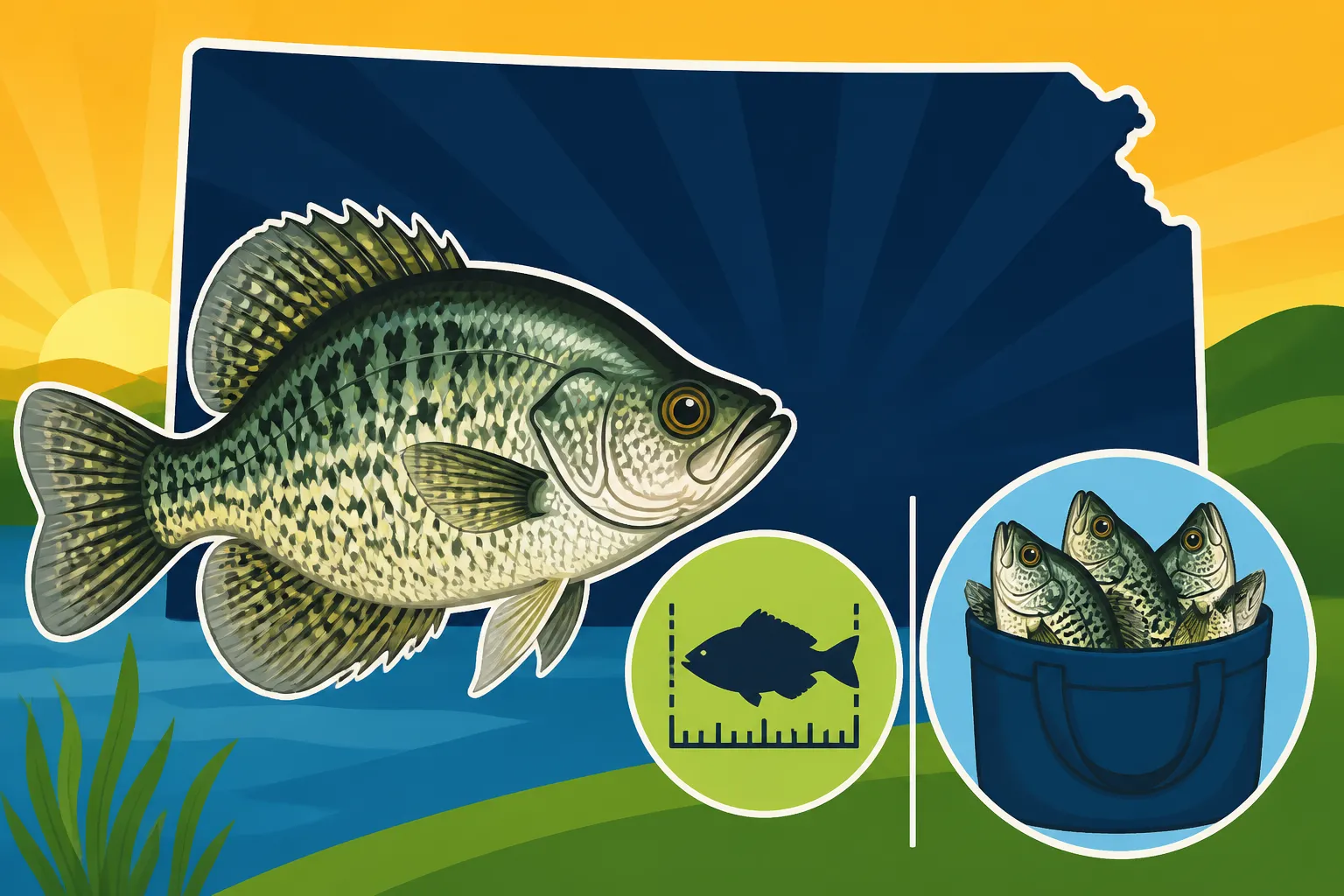
For much of Kansas, the statewide minimum length limit for crappie, both white and black crappie, is 10 inches. This means if you catch a crappie shorter than 10 inches, it needs to go back into the water as quickly and gently as possible. This 10-inch rule is quite common across many of the state's popular fishing destinations, including many of the large reservoirs and state fishing lakes. The purpose of this limit is primarily to protect the younger, smaller crappie, giving them a chance to grow larger and contribute to the overall health of the crappie population through reproduction.
Measuring a squirming fish can be a real challenge, especially when you're trying to do it quickly and accurately to minimize stress on the fish. The correct way to measure a crappie is from the tip of its snout (with its mouth closed) to the tip of its tail, with the tail pinched together to get the maximum length. It's not about guessing or estimating; it needs to be precise. Many anglers carry a simple bump board or a ruler affixed to their boat or tackle box for quick and accurate measurements. For example, a reliable, easy-to-read fish measuring board can be found on Amazon, which can really help with those quick decisions on the water.
Lake-Specific or Special Length Limits
While the 10-inch minimum is widely applied, it's absolutely critical to understand that some specific lakes or community fishing ponds in Kansas might have different, often more restrictive, length limits for crappie. These localized regulations are put in place by the KDWP when their fisheries biologists determine that a particular body of water requires special management to maintain a healthy crappie population. This could be due to unique habitat conditions, intense fishing pressure, or specific population dynamics within that lake.
For example, while many lakes simply have the 10-inch minimum, some smaller impoundments or community lakes might occasionally implement a slot limit, though this is less common for crappie than for other species like walleye. A slot limit means you can keep fish below a certain size and above another size, but not those "in the slot." Always double-check the KDWP fishing regulations for the specific lake you plan to fish. You can find these details in the annual Kansas Fishing Regulations Summary or on the KDWP website. Ignoring these local rules could lead to penalties, even if you’re adhering to the general statewide regulations. It's a small step that can save you a lot of headache and ensure you're fishing responsibly for those delicious Kansas Crappie Fishing Techniques you've been perfecting.
Kansas Crappie Bag Limits: Daily and Possession
Beyond how long your crappie must be, Kansas also imposes strict limits on how many crappie you can keep. These "bag limits" are just as important as length limits in managing the fishery and ensuring sustainable populations for everyone who enjoys casting a line. Understanding the difference between daily and possession limits is key to avoiding penalties.
The Standard Daily Creel Limit
For the vast majority of Kansas waters, the standard daily creel limit for crappie is 50 fish. This means that in any single calendar day, you can legally harvest and keep a maximum of 50 crappie. The "creel" refers to the basket or container traditionally used to hold fish, hence "creel limit." This generous limit for crappie reflects their prolific breeding habits and their importance as a forage species for larger predators, as well as a popular table fare for anglers. It's a number that allows most anglers to enjoy a successful day out without significantly impacting the overall crappie population. You can verify this specific detail in the Kansas Crappie Daily Limit of 50 Fish guide.
However, the "daily" aspect is crucial. If you fish on Monday and keep 50 crappie, and then go out again on Tuesday, you can harvest another 50 crappie on Tuesday. The important part is that you don't exceed 50 in a single day's fishing trip. The daily limit resets at midnight. This is distinct from a "possession limit," which we'll discuss next, but for crappie in Kansas, the possession limit often aligns directly with the daily creel limit in terms of unprocessed fish. It's designed to prevent someone from continually accumulating fish over several days without processing them.
Lake-Specific or Reduced Bag Limits
Just like with length limits, certain lakes or specific areas within Kansas may have reduced daily bag limits for crappie. These exceptions are put in place for very specific conservation reasons, often when a particular crappie population is experiencing stress, slow growth, or heavy angling pressure. It’s absolutely vital to check the current KDWP fishing regulations for the specific body of water you intend to fish, as these localized rules supersede the statewide general limit.
For example, historically, lakes such as La Cygne Lake have had a reduced daily bag limit of 10 crappie. Other state fishing lakes, especially those managed intensively, might also have special regulations that differ from the norm. These reduced limits are a management tool to protect vulnerable populations, encourage growth of larger fish, or ensure that more anglers have a chance to catch fish in highly popular but smaller venues. If you're planning a trip to a state park or a community fishing lake, you should always consult the KDWP regulations pamphlet or their website to confirm specific local rules. Failing to do so could result in fines, even if you were completely unaware of the localized change. This is why having an up-to-date Kansas Fishing License Guide and the associated regulations handy is so important every time you head out. These details are often listed under the specific lake entries in the KDWP fishing guide, which is a treasure trove of information about Kansas Daily Creel Limits by Species for various fish.
Here's a quick summary of common crappie limits in Kansas, though remember to always check current KDWP regulations for the specific body of water you plan to fish:
| Category | Statewide General Limit | Specific Lake Example (La Cygne Lake) | Specific Lake Example (Wilson State Park) |
|---|---|---|---|
| Minimum Length Limit | 10 inches | 10 inches | 10 inches |
| Daily Creel Limit | 50 crappie | 10 crappie | 10 crappie |
| Possession Limit | 50 crappie | 10 crappie | 10 crappie |
Note: Possession limit refers to the maximum number of unprocessed fish an angler can possess at any given time. If fish are processed (filleted), they must be clearly identifiable as crappie and count towards the daily limit of the last day fished.
Measuring Your Catch and Avoiding Penalties
Let's face it, measuring a lively fish on a rocking boat or a muddy bank isn't always the easiest task. But getting it right is crucial. Misjudging a crappie's length by even half an inch could put you in violation of the law. Beyond knowing the numbers, understanding how to measure and the potential consequences of getting it wrong are essential parts of responsible angling.
The Right Way to Measure a Crappie
When a crappie bites, and you reel it in, excitement often takes over. But before you decide if it's a keeper, a quick and accurate measurement is in order. The KDWP defines fish length as the total length from the tip of the snout, with the mouth closed, to the tip of the tail, with the tail compressed or "pinched" to achieve the maximum possible length. It's not about how far apart the tail lobes are naturally; it's about pushing them together to find the longest point.
To do this efficiently and accurately, I highly recommend having a dedicated measuring device. A simple ruler works, but a specialized fish measuring board, often made of plastic or aluminum, is far more practical. These boards usually have a "bump" at one end to butt the fish's nose against, ensuring you start from the correct point every time. Many anglers find these boards on Amazon to be invaluable tools for quickly and correctly assessing their catch. When you've got the fish on the board, pinch its tail, read the measurement, and then make your decision to keep or release. This process minimizes stress on the fish and ensures you're compliant. Don't eyeball it; that's a surefire way to accidentally keep an undersized fish.
Consequences of Non-Compliance
It's tempting to think, "What's the big deal if I keep one crappie that's only 9.5 inches instead of 10?" or "Who's counting if I go over the 50-fish limit by a couple?" The "big deal" is that these are legal regulations, and violating them can lead to significant penalties. Kansas game wardens are out on the water and in the field specifically to enforce these laws, protect our wildlife, and ensure fair play among anglers. They are well-trained and dedicated, and they take their jobs seriously.
If you're caught with undersized crappie or over the bag limit, you could be facing hefty fines. These fines vary depending on the severity of the violation, the number of fish involved, and whether it's a repeat offense. Beyond monetary penalties, you could also have your fishing license suspended or revoked, meaning you wouldn't be able to fish in Kansas for a period. In some cases, your fishing gear, including rods, reels, and even your boat, could be confiscated. Imagine losing your prized fishing equipment or being barred from your favorite pastime just because you didn't measure correctly or kept too many fish. Ignorance of the law is never an excuse, and game wardens hear it all. It's much simpler and far less stressful to just know and follow the rules. This is similar to the consequences outlined for Fishing Without a License Penalties in Kansas, though specific fines would differ. Always assume the law applies to you, and act accordingly.
Special Considerations and Common Questions
Fishing regulations can sometimes feel like a maze, especially when special circumstances come into play. Many anglers wonder if rules change for different age groups, how tournaments impact individual limits, or what happens when you decide to clean your fish while still at the lake. Let’s tackle some of these common questions and considerations.
Youth and Senior Anglers
A frequent question revolves around whether children or older adults have different crappie length and bag limits. The general rule of thumb in Kansas is that length and bag limits apply equally to all licensed anglers, regardless of age. So, if the minimum crappie length is 10 inches and the daily bag limit is 50, those rules apply whether you're 16 or 66. The fish don't discriminate, and neither do the regulations in this regard.
However, where age does come into play is with fishing license requirements. In Kansas, children under the age of 16 do not need a fishing license to fish. This is a wonderful initiative to encourage youth participation in outdoor activities. Similarly, Kansas residents who are 65 years or older may be eligible for a reduced-cost senior annual fishing license, or even a five-year option at a discount, but they still generally require a license. Despite these license exemptions or discounts, once a person is legally fishing (with or without a license, as applicable), they are expected to adhere to all species-specific length and bag limits. So, while a child might not need a license, their crappie catch is still subject to the same 10-inch minimum and 50-fish daily limit as an adult's. For more information on age-related licensing, you can check out guides like Do Kids Need a Fishing License in Kansas? and Do Seniors Need a Fishing License in Kansas?.
Tournament Rules and Commercial Fishing
For the average recreational angler, the standard crappie limits apply. But what about organized events like fishing tournaments? Tournament organizers typically have to apply for special permits through the KDWP, and these permits often outline specific rules for their event, which might include live release requirements, weigh-in procedures, or temporary holding regulations that differ slightly from everyday angling. However, the fundamental state-mandated length and bag limits usually remain the baseline. Any fish kept by individual participants must still adhere to the state's minimum length and daily creel limits for crappie, unless explicitly superseded by a KDWP-approved tournament exception, which is rare for harvest limits. Always confirm with tournament organizers their specific rules and how they align with KDWP regulations.
When it comes to commercial fishing, it's a different ballgame entirely. In Kansas, commercial fishing for crappie in public waters is generally not permitted. Crappie are managed as a sport fish, reserved primarily for recreational anglers. While some species like certain carp or catfish might have commercial harvest allowances in specific river systems, crappie are explicitly protected from commercial exploitation to preserve them for sport fishing. So, you won't see large nets targeting crappie for sale in Kansas markets that originated from public lakes or rivers.
Cleaning Fish On-Site
This is a common point of confusion and a critical regulation many anglers inadvertently violate: cleaning fish at the lake. It's perfectly natural to want to fillet your catch right away to preserve freshness or to lighten your load. However, Kansas regulations state that if you are fishing in waters with length or species limits, you cannot process your fish to the point where its length or species cannot be determined until you are at your domicile or a commercial processing plant.
What does this mean for crappie? If you're at a lake with a 10-inch minimum length limit for crappie, you cannot fillet your crappie down to just boneless meat at the boat ramp or on the water. You must leave enough of the fish intact – typically at least one fillet with the skin attached – so that a game warden can easily identify the species and measure its original length if necessary. This rule exists to prevent anglers from discarding undersized fish carcasses or exceeding bag limits by making identification impossible once they leave the fishing site. It validates the honest angler by preventing illicit activities. If you're on a multi-day trip, storing these identifiable fillets can be a bit of a hassle, but it's a non-negotiable part of responsible angling in Kansas. When fishing during the Kansas Fishing Seasons and Limits, this rule applies universally.
Strategies for Respecting Crappie Limits and Sustainable Fishing
Adhering to crappie length and bag limits isn't just about avoiding a fine; it's about being a responsible steward of our natural resources. As anglers, we have a vital role to play in ensuring that Kansas's crappie populations remain healthy and abundant for years to come. This involves more than just knowing the rules; it's about adopting sustainable fishing practices.
Practicing Catch and Release
Even if you're targeting crappie to keep for a meal, you'll inevitably catch fish that are too small to meet the Kansas Crappie Minimum Length Limit of 10 Inches. How you handle these undersized fish makes a huge difference in their survival rate. Poor catch-and-release practices can lead to high mortality rates for released fish, negating the conservation efforts of length limits.
Here are some best practices for catch and release:
- Handle with care: Minimize the time the fish is out of the water. Crappie have delicate slime coats that protect them from disease. Avoid touching them with dry hands, if possible; wet your hands first.
- Use appropriate tackle: Circle hooks, especially when fishing with live bait, can significantly reduce gut-hooking. If a fish is deeply hooked, it's often better to cut the line as close to the hook as possible rather than trying to rip the hook out, which can cause fatal internal damage.
- Proper unhooking tools: Keep a pair of needle-nose pliers or a de-hooker handy. These tools allow you to quickly and easily remove hooks, especially from feisty crappie. You can find excellent, durable sets of fishing pliers on Amazon that are perfect for this task.
- Revive gently: If a crappie seems lethargic after being unhooked, hold it gently in the water, facing into the current, until it regains its strength and can swim away on its own. Don't just toss it back. Taking these extra few seconds can greatly increase a fish's chances of survival, contributing to a robust population that will provide excellent fishing opportunities in the future.
Adapting Your Fishing Strategy
Sometimes, you might find yourself in a spot where you're consistently catching crappie that are below the legal length limit, or perhaps you've quickly reached your bag limit. Instead of continuing to fish that spot and putting unnecessary stress on the fish through repeated catch and release, adapting your strategy is the responsible thing to do.
Consider these adjustments:
- Change locations: If you're catching only small crappie in one cove or on a particular brush pile, move to a different area of the lake. Crappie tend to school by size, so moving a short distance could put you on larger fish. Explore different depths, structures, or even different parts of the lake.
- Adjust your bait or lure: Smaller baits often attract smaller fish. If you're consistently catching dinks, try upsizing your jig, using a larger minnow, or switching to a different lure profile. This might reduce the number of bites but increase the average size of the fish you encounter.
- Modify your presentation: Sometimes, simply changing the speed of your retrieve, the depth you're fishing, or the type of jigging motion can make a difference in the size of the crappie that bite. For example, if you're getting a lot of small fish on a fast retrieve, try slowing down. For ideas on different presentations, refer to a guide on Best Bait for Kansas Crappie.
- Focus on other species: If you've hit your crappie limit but still want to fish, consider targeting other species where you haven't yet reached your limit. Kansas offers fantastic fishing for a variety of fish, including channel catfish, walleye, and bass.
By being mindful of your impact and willing to adapt, you're not only complying with regulations but also actively participating in the conservation of Kansas's fantastic crappie fishing. It's all about making informed choices on the water, whether you're fishing a bustling reservoir or a quiet community pond.
Disclaimer
Please remember that fishing regulations, including length and bag limits, are subject to change. While every effort has been made to provide accurate and up-to-date information, it is the angler's responsibility to consult the most current official Kansas Department of Wildlife and Parks (KDWP) fishing regulations before heading out. This guide is for informational purposes only and should not be considered a substitute for the official KDWP publications.