Rules Against Loaning Your Kansas Fishing License
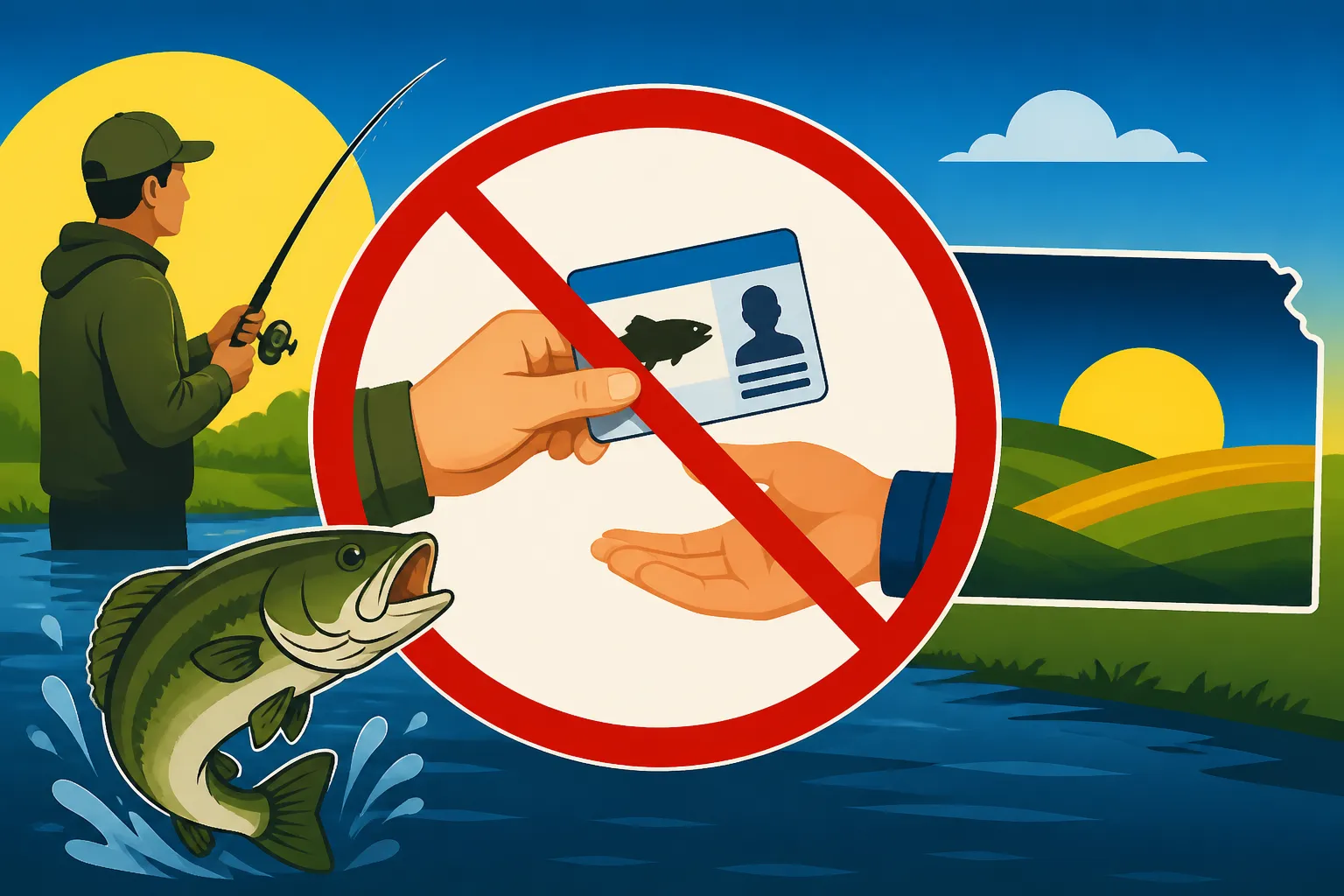
It might seem like a small, harmless favor: lending your fishing license to a friend or family member for a quick trip to the lake. We've all been tempted to bend the rules a little, especially when it feels like no one will ever know. But the truth is, loaning out your Kansas fishing license, or using someone else's, carries significant risks and goes against the very spirit of our state's conservation efforts. This guide will clarify why your fishing license is strictly personal, the serious repercussions of misusing it, and how to ensure everyone enjoys Kansas waters legally and responsibly.
Understanding the Personal Nature of a Fishing License
When you purchase a fishing license in Kansas, you’re not just buying permission to cast a line; you're obtaining a personal permit that is uniquely tied to you, the individual angler. It’s designed to be non-transferable for very important reasons, chief among them being the financial support for our state’s precious natural resources and the accurate tracking of fishing activity.
Why Your License is Like an ID Card
Think of your Kansas fishing license less like a generic admission ticket and more like a personal identification document, specifically tied to you and your fishing privileges. Just as you wouldn't lend your driver's license to someone else to operate a vehicle, you cannot legally lend your fishing license. Each license contains unique identifiers, like your name, date of birth, and a KDWPT (Kansas Department of Wildlife, Parks and Tourism) customer ID number. These details are crucial for enforcement officers to verify that the person holding the license is, in fact, the legal owner.
This personal connection ensures accountability. If a violation occurs, the responsible party can be identified. It also prevents fraud and abuse of the licensing system. The KDWPT relies on the integrity of this system to manage fish populations and recreational access effectively. Without individual licenses, tracking who is fishing and for what duration would become impossible, undermining critical conservation efforts. This personal responsibility is a cornerstone of Kansas Fishing Regulations Explained.
The Purpose of a Fishing License in Kansas
The money generated from the sale of fishing licenses is vital. Every dollar spent on a Kansas Fishing License Guide goes directly into funding the Kansas Department of Wildlife, Parks and Tourism's incredible work. This includes critical conservation programs such as fish stocking, habitat restoration, water quality monitoring, and the maintenance of public fishing access points across the state. From the bustling shores of Milford Lake to the quiet serenity of smaller community ponds, these funds ensure that Kansas remains a prime destination for anglers for generations to come.
Imagine a scenario where licenses were freely transferable. Not only would revenue plummet, but the ability to accurately assess fishing pressure on specific species or water bodies would vanish. The KDWPT uses license sales data, alongside angler surveys, to make informed decisions about bag limits, length limits, and stocking schedules, ensuring sustainable fishing for everyone. Your individual license isn't just a piece of paper; it's a direct contribution to the health and future of Kansas fisheries.
The Serious Consequences of Loaning or Using a Loaned License
While the act of loaning a license might seem innocuous, the Kansas Department of Wildlife, Parks and Tourism takes these violations seriously. Their dedicated game wardens are highly trained and vigilant, and they view such offenses not just as minor infractions but as actions that undermine the integrity of the state's conservation and regulatory framework.
Legal Penalties for Misuse
Using a fishing license that isn't your own, or allowing someone else to use yours, is typically considered a misdemeanor offense in Kansas. This isn't just a polite request; it's a legal requirement. The penalties can be quite stiff and far-reaching, much more severe than many anglers realize. You're looking at potential fines that can easily run into the hundreds of dollars, and in some cases, even thousands. For example, Fine for Fishing Without a License in Kansas can vary, but the state's statutes provide a framework for these penalties, often making such an offense punishable by a fine of $100 up to $500, plus court costs.
Beyond financial penalties, there's the possibility of jail time, though this is usually reserved for repeat offenders or more egregious violations. More commonly, you might face the forfeiture of your fishing equipment, like your rod, reel, or even your boat if it was involved in the offense. This is a tough pill to swallow for what might have seemed like a simple, well-intentioned act. The KDWPT takes a firm stance because these rules are in place to protect the resource for everyone, and bypassing them directly threatens that protection.
Impact on Your Future Fishing Privileges
One of the most significant, and often overlooked, consequences of misusing a fishing license is the potential impact on your ability to obtain future licenses. A conviction for loaning or using a loaned license can result in the suspension or revocation of your fishing privileges in Kansas for a significant period. This means you could be legally barred from fishing, even if you wanted to purchase a new, valid license. Imagine being an avid angler, passionate about Kansas waters, only to be told you can't participate for a year or more. That's a real consequence.
Furthermore, Kansas is part of an interstate wildlife compact. This means that a license revocation or suspension in Kansas could be recognized and enforced by other states. So, if you're planning a fishing trip to Nebraska, Missouri, or Oklahoma, your Kansas violation might prevent you from purchasing a license there too. This broad impact truly highlights the seriousness of treating your fishing license as a personal, non-transferable document. It's a privilege, not a right, and misuse can lead to its temporary or even permanent loss.
Enforcement and Detection
Kansas game wardens are the front line of enforcement for all fishing and hunting regulations. These dedicated officers patrol our lakes, rivers, and ponds, conducting routine license checks. They are highly trained professionals who know the local waters and the habits of anglers. They're not just looking for obvious violations; they're also trained to spot subtle inconsistencies. During a check, a warden will ask to see your license and a form of identification. If the names don't match, or if there's any suspicion that the license holder is not the individual whose name appears on the document, an investigation will immediately follow.
It's common for wardens to be present during popular fishing events, at boat ramps, or in busy fishing areas. They're often out on the water in patrol boats, but also conduct checks on bank anglers and those accessing smaller streams. With modern technology, KDWPT officers can quickly verify license information against a central database. This makes it incredibly difficult to successfully use a loaned license without being detected. The officers are there to ensure fair play and protect our shared resources, and they perform their duties diligently. If you're ever checked, simply be polite, cooperative, and present your own valid license and ID.
Common Scenarios and Misconceptions About License Sharing
Many people find themselves in situations where loaning or borrowing a license seems like a minor transgression, or they simply misunderstand the rules. Let's tackle some of these common scenarios and clear up any misconceptions.
"Just Borrowing it for a Quick Trip"
"My buddy forgot his license, but we're only going to cast for an hour. Surely, it's okay if he just uses mine for a bit?" This is a dangerously common thought, and it's a hard no. Even for "just a few casts" or "only for an hour," the rules are crystal clear: the person holding the rod must possess their own valid fishing license. There are no exceptions for duration or intent. The act of fishing without your own license, regardless of whether you're using someone else's, is a violation.
This scenario often arises with casual anglers who don't fish often and might not want to buy an annual license. However, Kansas offers convenient options like the Kansas One-Day Fishing License which is very affordable and perfect for those spur-of-the-moment trips. It’s a far better and safer alternative than risking legal trouble by using a borrowed license. Remember, game wardens don't distinguish between someone who genuinely forgot their license and someone intentionally trying to skirt the rules; the violation is the same.
Family Members and Minors
"But what about my spouse? We share everything!" While the sentiment is sweet, when it comes to fishing licenses, the answer is still no. Each adult angler, including spouses, must possess their own valid Kansas fishing license if they are 16 years of age or older. There's no "family plan" for licenses that covers multiple adults under one purchase. If both you and your spouse are fishing, both of you need individual licenses.
The rules for minors are a bit different, and this is where some confusion often lies. In Kansas, children under the age of 16 are generally exempt from needing a fishing license. This is fantastic news and encourages youth participation in the sport! So, if your 10-year-old is casting alongside you, they don't need a license. However, once they hit their 16th birthday, they'll need to purchase their own. For more detailed information on age requirements, check out Do Kids Need a Fishing License in Kansas? and Minimum Age for a Kansas Fishing License. These exemptions are designed to foster new anglers, not to facilitate license sharing among adults.
Group Fishing and Tournaments
When you're out with a group, perhaps on a guided trip, or participating in a local fishing tournament, it might feel like the rules are relaxed. But this is another area where personal responsibility is paramount. Even if you're part of a larger party, every individual aged 16 and over actively fishing must carry their own valid Kansas fishing license. The guide operating the boat will have their own specific guide license, but that doesn't cover the clients.
The only exception for group fishing regarding licenses would be during designated Kansas Free Fishing Days Guide, which typically occur once or twice a year, usually in early June. On these special days, residents and non-residents alike can fish Kansas public waters without needing a license. However, all other regulations, such as length and creel limits, still apply. Always double-check the KDWPT website for exact dates and any specific rules for Free Fishing Days. Otherwise, assume every angler needs their own document.
How to Ensure Everyone is Properly Licensed in Kansas
The good news is that acquiring a Kansas fishing license is incredibly easy and convenient, making any temptation to loan or borrow one completely unnecessary. The Kansas Department of Wildlife, Parks and Tourism has made the process streamlined and accessible, so there's really no excuse not to have your own valid license.
Purchasing Your Own License
The simplest and quickest way to get your own Kansas fishing license is online. You can visit the KDWPT website from the comfort of your home, complete the application, and print your temporary license right away. Many anglers also appreciate the option to save a digital copy on their phone, which is typically accepted by game wardens. This is especially handy if you happen to misplace a physical copy. For detailed steps on how to do this, our guide on Where to Buy a Kansas Fishing License provides all the necessary information.
If you prefer to buy in person, you can visit numerous KDWPT offices, state park offices, or authorized license vendors across the state. These often include bait and tackle shops, sporting goods stores, and even some convenience stores. Places like Walmart, for instance, are common vendors where you can pick up a license while stocking up on snacks or a new lure. After your initial purchase, Kansas Fishing License Online Renewal is a breeze, ensuring you're always ready for your next fishing adventure.
Remember, while you can't buy your actual fishing license through general online retailers, you can certainly find all the complementary gear you need. Platforms like Amazon offer a huge selection of fishing rods, reels, tackle boxes, and even specialized apparel that can enhance your time on the water. Stocking up on good quality gear from Amazon ensures you’re well-prepared for whatever Kansas waters throw your way, all while making sure you have that all-important license securely in hand.
Understanding Exemptions
While the general rule is that anyone 16 years or older needs a license, Kansas does offer a few thoughtful exemptions. Beyond children under 16, certain individuals may also be exempt. For example, resident landowners and their immediate family members (spouse, children, and parents) can fish on their own private land without a license. This applies only to waters entirely within the boundaries of their land.
Another important exemption applies to certain disabled veterans. Qualified resident veterans with a service-connected disability of 30% or more may be eligible for a free fishing license. This is a small token of gratitude for their service and a wonderful opportunity to enjoy our state's natural beauty. You can find more details on these specific rules in our article about Kansas Disabled Veteran Fishing License. Always be sure to check the specific criteria for any exemption to ensure you qualify. It’s far better to be certain than to risk a fine by assuming you’re exempt when you’re not.
Encouraging Proper Licensing
As experienced anglers and stewards of Kansas’s natural resources, it’s our collective responsibility to encourage proper licensing among our peers, especially new and younger anglers. When you introduce someone to fishing, take the time to explain the importance of having their own license and how those funds contribute to conservation. Show them how easy it is to purchase one, whether it’s through the KDWPT website or at a local vendor.
Consider gifting a fishing license to a friend or family member who you know loves to fish but might forget to renew. It’s a practical and thoughtful present that promotes responsible angling. You can even find great starter kits for young anglers on Amazon, pairing that new rod and reel with the knowledge of how and where to get their first license when they turn 16. By setting a good example and sharing accurate information, we help maintain the health of our fisheries and ensure that the joys of fishing can be experienced by everyone, legally and ethically. The more people understand why these rules exist, the more likely they are to comply, protecting our fishing future.
Here's a quick reference on common scenarios:
| Scenario | License Requirement | Legality |
|---|---|---|
| You fishing with your own license | Required for residents and non-residents aged 16 and older. | Legal |
| Your friend fishing with your license | Each individual 16 and older needs their own license. Loaning yours means your friend is fishing without a valid license, and you are aiding in a violation. | Illegal (for both parties) |
| Your spouse fishing with your license | Each adult, including spouses, must have their own individual license. There are no "family" licenses for adults. | Illegal (for both parties) |
| Your 12-year-old child fishing | Children under 16 years of age do not need a license to fish in Kansas. | Legal (for the child) |
| Fishing during Kansas Free Fishing Days | On designated Free Fishing Days, a license is not required for anyone. All other regulations (bag limits, length limits) still apply. | Legal (during specific dates) |
| Fishing on private pond you own | Resident landowners and their immediate family can fish on their own private land's waters without a license, as long as the water is entirely contained within their property. Non-residents or guests still typically need a license. | Legal (for owners/family on their property), but consult Do You Need a License to Fish Private Water in Kansas? for specifics. |
| Fishing without any license | If you are 16 or older and not covered by an exemption, fishing without any license is a direct violation. | Illegal (subject to Fishing Without a License Penalties in Kansas) |
Disclaimer
The information provided in this guide is for general informational purposes only and does not constitute legal advice. While we strive to provide accurate and up-to-date information, fishing regulations in Kansas can change. Always refer to the most current Kansas Fishing Regulations Summary available from the Kansas Department of Wildlife, Parks and Tourism (KDWPT) or consult with KDWPT officials for specific legal interpretations and updates.