Do You Need a License to Fish Private Water in Kansas?
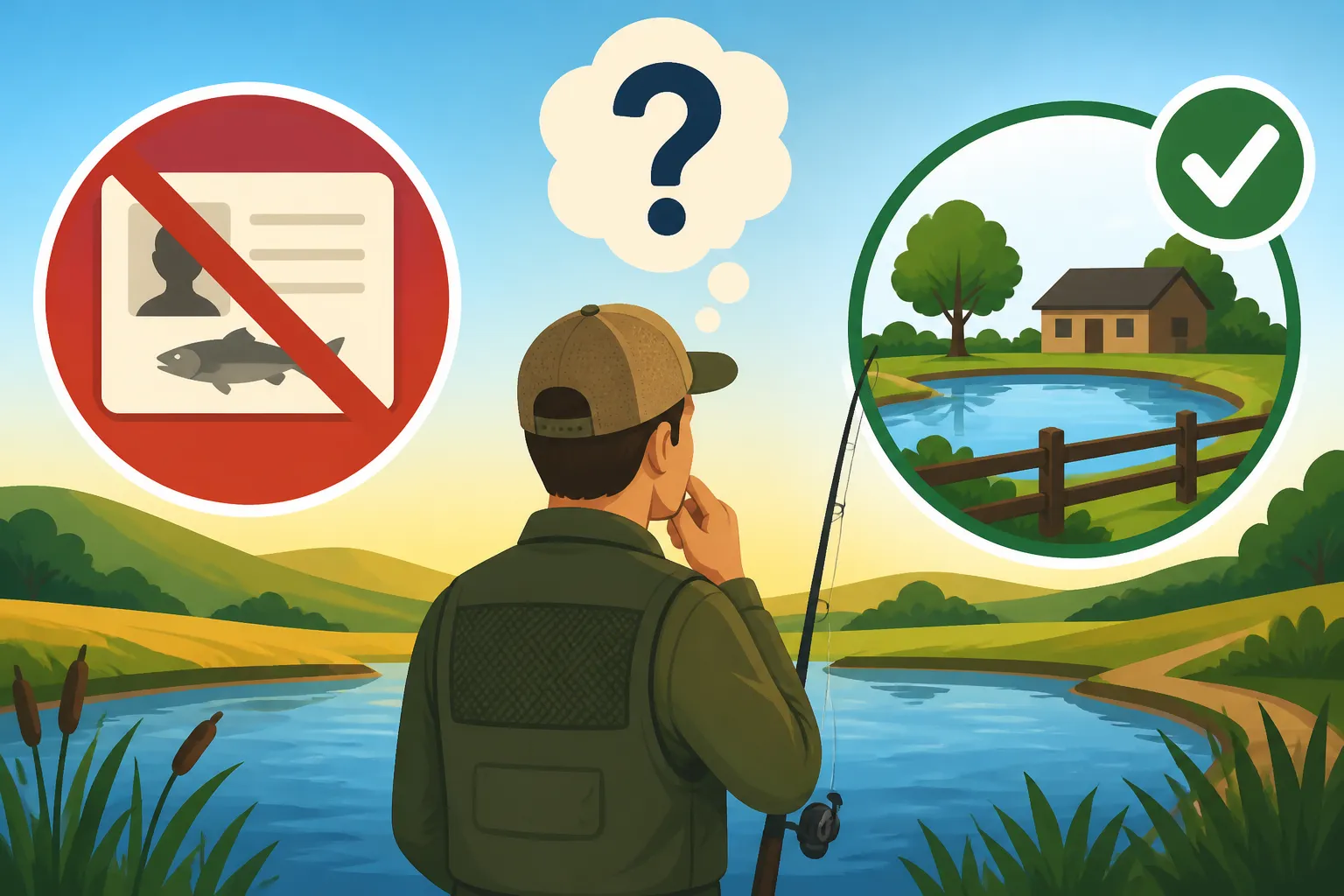
It's a common dilemma when you're invited to fish a friend's private pond or that beautiful, secluded lake on your family's farm: do you still need a fishing license in Kansas? Many anglers assume that if the water isn't public, the rules somehow disappear, leading to confusion and, sometimes, unexpected fines. This guide will unravel the intricacies of Kansas fishing regulations specifically concerning private waters, helping you understand who needs a license, who is exempt, and how to navigate these often-misunderstood rules to keep your fishing trips legal and stress-free.
Understanding Kansas Fishing License Requirements on Private Water
The question of whether you need a fishing license to fish private water in Kansas is not as straightforward as a simple "yes" or "no." It really boils down to who you are in relation to the property and the water body itself. The Kansas Department of Wildlife, Parks and Tourism (KDWP) has specific definitions and exemptions that are crucial to understand. While it might seem counterintuitive to need a license on water that isn't publicly accessible, the state's goal is often tied to fisheries management and revenue collection that supports these efforts across all waters, not just those owned by the public.
Defining "Private Water" in Kansas Regulations
When the KDWP talks about "private water," they're generally referring to water bodies that are entirely enclosed within privately owned land and not open to public access without permission. This usually means farm ponds, privately owned lakes, or sections of streams that run exclusively through private property. However, it's important to differentiate this from a public water body that simply adjoins private land. For instance, if a section of the Kansas River flows through private property, that portion of the river is still considered public water for fishing purposes, and anyone fishing there, even from private land with permission, would still need a license.
The key distinction is public access versus private ownership. A large reservoir like Milford Lake, for example, has state park access points, but also private landowners whose property borders the lake. Fishing from the shore of private property on Milford Lake still requires a license because Milford Lake itself is a public water body. Conversely, a pond that is entirely on your buddy's 80-acre cattle farm, with no public roads or access points touching it, is what the KDWP would generally consider "private water."
Landowner and Immediate Family Exemptions
Here's where the primary exemptions come into play for private waters. If you are the owner of the land upon which a private pond or lake is located, you generally do not need a Kansas fishing license to fish that specific body of water. This exemption extends to your immediate family members residing with you on that property. This usually includes your spouse, dependent children, and sometimes even grandchildren, as long as they are residing with or visiting the landowner on the property where the private water is located. This means if you own a few acres with a stocked pond near Topeka, you, your spouse, and your kids living at home can enjoy some relaxed angling without worrying about purchasing a license.
However, "immediate family" has specific definitions. It generally doesn't extend to cousins, aunts, uncles, or even adult children who live elsewhere, unless they are specifically covered under another exemption (like being under the age of 16). For more details, you can always check the specific rules regarding Kansas Landowner Fishing License Exemption Rules. It's always best to err on the side of caution and understand the precise wording of the regulations to avoid any misunderstandings.
Guests and Non-Residing Family Members
This is where most of the confusion, and potential problems, arise. If you are fishing a private pond or lake that you do not own, and you are not an immediate family member residing with the landowner, you almost certainly need a Kansas fishing license. This applies whether you're a friend, a distant relative, or even a non-resident of Kansas visiting for the day. Simply having the landowner's permission to fish doesn't exempt you from the license requirement.
Imagine you're invited to your friend's beautiful private pond in rural Kansas for a weekend of bass fishing. You might assume since it's "private property," you're good to go. But if you don't hold a valid Kansas fishing license, you could be cited by a game warden. The same goes for your cousin visiting from out of state; they would need a Kansas Nonresident Fishing License Guide to legally cast a line in that private pond, despite being guests. The only exception here is if the guest falls under another exemption, such as being under 16 years of age, or during a designated Kansas Free Fishing Days Guide. These scenarios underscore the importance of understanding the regulations beyond just property lines.
Who is Exempt from Needing a License on Private Water?
It’s easy to get tangled in the nuances of fishing regulations, especially when it comes to private property. Most states, including Kansas, try to strike a balance between promoting outdoor recreation and managing their aquatic resources. This means there are carefully carved-out exemptions, but they aren’t limitless. Understanding these specific exemptions is key to enjoying private water fishing without a legal snag.
The Landowner and Occupant Exemption
The most significant exemption for private water fishing in Kansas applies directly to the landowner. If you own the land on which a private pond or lake is entirely situated, you are exempt from needing a fishing license to fish those specific waters. This is a common-sense rule designed to allow property owners to enjoy their own resources. This also typically applies to anyone leasing the property and living on it, provided they have exclusive fishing rights to the private water. The logic is that the landowner or legal occupant is responsible for the management of that private water, and the state's licensing system primarily funds management of public fisheries.
For example, if you've got a farm near Garden City with a couple of nice ponds on your acreage, you can grab your rod and reel, step out the back door, and fish all day long without purchasing a license. This also extends to immediate family members living with you on that property. This includes your spouse and your children. Some regulations even extend this to grandchildren residing with or visiting the landowner, but it's always critical to confirm the most current rules. If your grown son or daughter comes to visit from their own home, even if it's just down the road, they generally fall outside this specific "residing with you" clause and would need a license unless another exemption applies.
Age-Based Exemptions That Still Apply
Kansas offers age-based exemptions that apply universally, whether you're fishing public or private waters. Critically, children under the age of 16 do not need a fishing license in Kansas. This is a wonderful initiative to encourage youth participation in fishing and create lifelong anglers. So, if your grandkids, nieces, or nephews (under 16) are visiting and want to try their luck in your private pond, they are covered, even if they don't reside on your property. This rule holds true regardless of the water's private or public status. You can find more details on Do Kids Need a Fishing License in Kansas?.
Similarly, Kansas also offers specific provisions for senior anglers. While not entirely license-free for all seniors, there are often discounted rates or special exemptions for older residents. It's important for seniors to check the specific requirements and available discounts, as these can change. You can refer to guides like Kansas Senior Fishing License Discounts for the latest information. These age-related exemptions are powerful because they cut across the public/private water distinction, offering a blanket pass for those who qualify.
Other Potential Exemptions
Beyond landowners and age, there are other, more specific exemptions that might apply, although they are less common for general private pond fishing. For instance, individuals with certain disabilities, or those actively serving in the military (sometimes with specific conditions), might qualify for reduced-cost or free licenses. Additionally, some private water bodies might be managed under a special permit system that addresses licensing differently, though this is rare for typical farm ponds.
It’s also important to note that if you're engaging in activities like seining for baitfish on your own private pond for use only on that same pond, you might not need a license. However, if you plan to transport those baitfish to another body of water, public or private, different regulations, and likely a license, would apply. The general rule of thumb is: if you're in doubt, assume a license is required. The cost of a Kansas Resident Annual Fishing License Costs $25 is a small price to pay for peace of mind compared to the potential fines.
Navigating Private Water Fishing as a Guest
Being invited to fish a private pond or lake is a fantastic opportunity, offering a peaceful angling experience often with less pressure than public waters. However, being a guest doesn't automatically mean you're exempt from state fishing regulations. This is a crucial point where many anglers get confused, potentially leading to citations.
The Importance of Valid Permission
First and foremost, whether you need a license or not, you must have permission from the landowner to fish on their private property. Fishing on private land without explicit permission is trespassing, a separate legal issue that can have serious consequences, regardless of whether you have a fishing license. This permission is best obtained directly from the property owner. While verbal permission is often accepted, having something in writing (a text message, email, or even a signed note) can save a lot of headaches if questions arise. Game wardens in Kansas are well within their rights to ask for proof of permission if they encounter you on private land, especially if it's not clearly marked as open to fishing.
It’s respectful and smart practice to ask about any specific rules the landowner might have, such as designated fishing areas, catch-and-release policies, or limitations on boat use. Many landowners take pride in managing their private waters and appreciate anglers who respect their wishes.
When a License is Absolutely Required for Guests
As we touched on earlier, if you are a guest on private property in Kansas, and you are not the landowner or an immediate family member residing with them, you will need a valid Kansas fishing license. This applies to most situations:
- Friends: Your fishing buddy inviting you to their stocked pond.
- Distant Relatives: An aunt, uncle, or adult child who lives off-property.
- Non-Residents: Anyone visiting Kansas from another state or country. For these visitors, a Kansas Nonresident Fishing License Guide or a short-term license (like a one-day or five-day option) would be necessary.
- Even if the water is fully private: The status of the water as "private" only affects the landowner and their immediate household, not their guests.
The only common exceptions for guests are age-based (under 16 years old) or during designated Kansas Free Fishing Days in June. During these specific days, the license requirement is temporarily waived for everyone, even on most private waters (with landowner permission, of course). Otherwise, plan on purchasing your license. You can easily buy one online through the KDWP website or at various vendors. If you're wondering Where to Buy a Kansas Fishing License, local bait shops and sporting goods stores like those found on Amazon often sell them too.
Scenario Breakdown: Who Needs What?
To make it super clear, let's look at a few common scenarios:
| Scenario | Relationship to Property | Age | License Required? | Notes |
|---|---|---|---|---|
| Landowner fishing their own pond | Owner | Any | No | Exemption applies for waters entirely on their owned property. |
| Spouse of landowner | Immediate Family (residing) | Any | No | Exemption applies if residing on the property with the landowner. |
| Child (under 16) of landowner | Immediate Family (residing) | Under 16 | No | Covered by both age exemption and immediate family exemption. |
| Child (16+) of landowner (residing) | Immediate Family (residing) | 16+ | No | If living with the landowner on the property, they are usually exempt. |
| Child (16+) of landowner (not residing) | Distant Family | 16+ | Yes (Resident or Nonresident depending on status) | Even if it's their parent's pond, if they don't live there, they are a "guest" in the eyes of the law. |
| Friend invited to fish | Guest | Any | Yes (Resident or Nonresident depending on status) | Permission from landowner is essential, but a license is also required for guests of any age 16 and over. |
| Non-resident relative (e.g., cousin) | Guest | Any | Yes (Nonresident) | Must purchase a Kansas Nonresident Annual Fishing License Costs $75 or a short-term option. |
| Any angler during Free Fishing Days | Any | Any | No | This applies to all waters (public and private, with permission). Check the specific dates; for instance, Kansas Free Fishing Days Are June 6 and 7. |
| Angler fishing river that crosses private land | Public Water Access | Any | Yes (Resident or Nonresident depending on status) | Even with landowner permission to access the river from their property, the water itself is public, and thus a license is required. |
As you can see, the safest bet for any guest over 16, regardless of residency or the "private" nature of the water, is to have a current Kansas fishing license. It's truly a small investment for a potentially great day on the water.
Practical Considerations for Private Water Anglers
Beyond the strict license requirements, there are several practical and ethical considerations for anglers visiting private waters in Kansas. These aren't just about legality, but also about maintaining good relationships with landowners and ensuring the sustainability of these often-prized fishing spots.
Respecting Property Rights and Landowner Rules
Even when granted permission to fish, remember that you are a guest on someone else's property. Always be respectful. This means sticking to designated areas, not wandering off into fields or gardens, closing gates, and packing out all your trash – leaving absolutely no trace behind. If the landowner has specific rules, like "catch and release only" for certain species, or "no motorized boats," adhere to them strictly. These waters are often private treasures, and landowners invest time and money into managing them. Disregarding their wishes could easily lead to revoked access for you and future anglers.
I've heard stories where a landowner was so frustrated by guests leaving trash or driving carelessly that they simply stopped allowing anyone to fish their beautiful pond, even friends. Don't be that angler! A good relationship with a landowner can provide incredible fishing opportunities for years to come. Sometimes, you might even ask if they have a guest book to sign, which can serve as an informal record of permission, or if they prefer you just send a quick text message when you arrive and leave.
Understanding Catch Limits and Regulations for Private Ponds
While the license requirements on private water have some exemptions, general fishing regulations like length limits and daily creel limits typically still apply, even on private ponds and lakes, unless specifically stated otherwise in a unique permit issued by KDWP (which is rare for a typical private pond). This means you can't just keep every fish you catch because it's a private pond. The state's fisheries management goals extend to controlling fish populations to prevent overharvest and ensure healthy ecosystems, regardless of ownership.
For example, if you're fishing a private pond in Kansas that has a healthy population of largemouth bass, and the statewide regulation is a 15-inch minimum length, you still need to release bass under that size, even if the pond is yours. The same goes for crappie, walleye, or catfish. For instance, the Kansas Crappie Length and Bag Limits or Kansas Walleye Length Limits would apply. However, if a landowner has specifically stocked their private pond with non-native species for which there are no state regulations, or if they have an active pond management plan in coordination with KDWP that provides specific harvest rules, those might supersede general rules for that specific pond. This is uncommon but worth clarifying with the landowner. Always check the current Kansas Fishing Regulations Explained for species you target.
Best Practices for Healthy Private Water Fisheries
If you're a landowner with private water, or a frequent guest, understanding best practices can help maintain a thriving fishery. This includes:
- Responsible Stocking: If you're stocking a private pond, acquire fish from reputable dealers to avoid introducing diseases or invasive species. Always check KDWP guidelines on what species are permitted for stocking.
- Habitat Management: Consider adding fish habitat structures like submerged brush piles or artificial reefs. These provide cover and spawning areas, enhancing the health of the fishery.
- Water Quality: Monitor water quality, especially oxygen levels and pH, to ensure a healthy environment for fish.
- Targeted Harvest: Don't just remove the biggest fish. Selective harvesting, especially of smaller, overpopulated panfish, can improve growth rates for larger game fish. For catfish, Kansas Channel Catfish Daily Limit can provide guidance, but private pond owners often tailor their harvest to their pond's specific population dynamics.
Many landowners take great pride in their private ponds, treating them like a personal sanctuary. Guests should contribute to this ethos. You can even find specialized equipment for pond management, from aeration systems to fish feeders, on platforms like Amazon. Being an informed and respectful angler, whether on public or private water, ensures that these precious resources remain vibrant for future generations to enjoy.
Disclaimer
The information provided in this article is for general guidance only and does not constitute legal advice. Fishing regulations in Kansas can change, and it is the responsibility of each individual angler to consult the latest official regulations published by the Kansas Department of Wildlife, Parks and Tourism (KDWP) before fishing. Always verify specific rules and exemptions that may apply to your situation directly with KDWP or official sources.