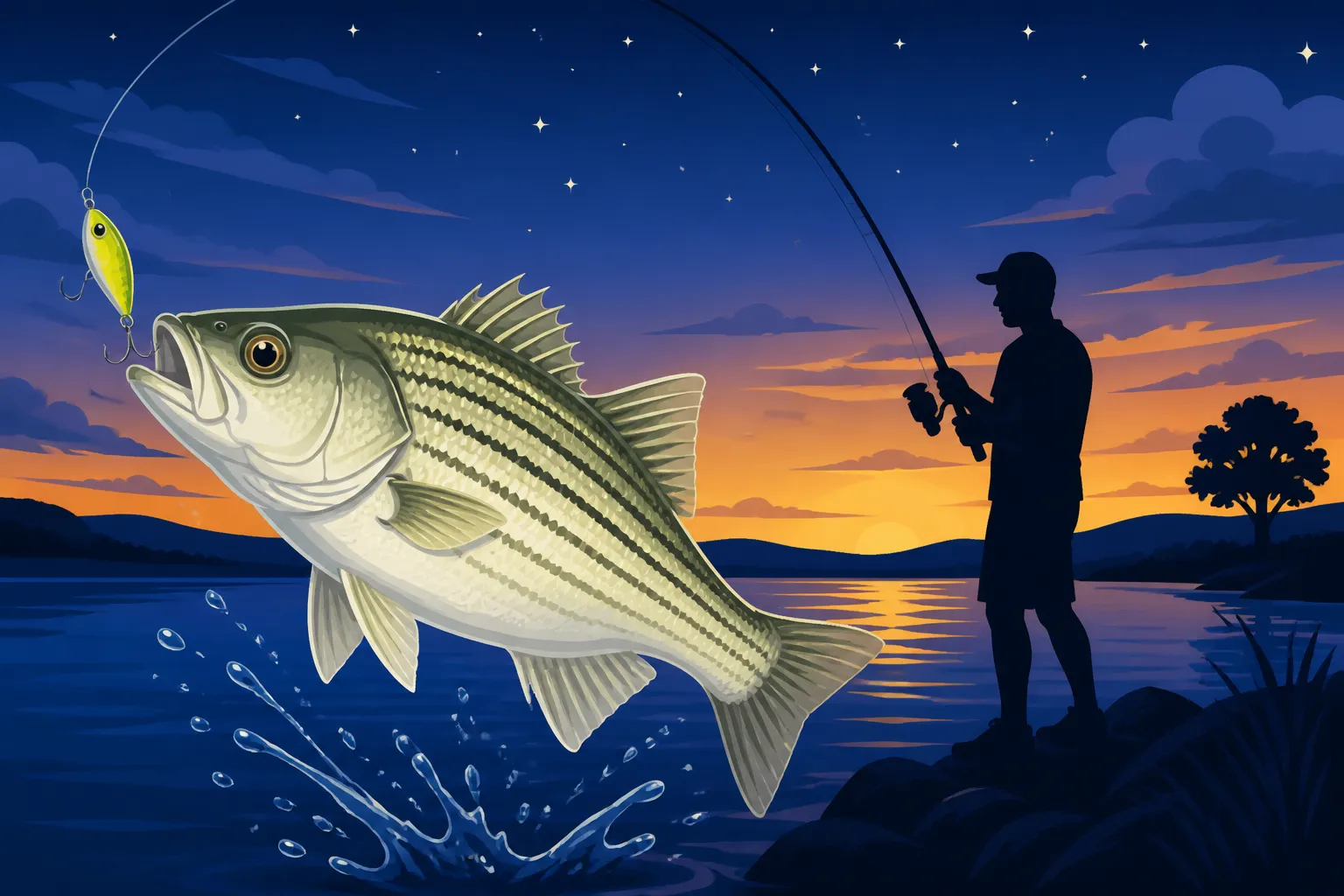
Kansas Summer Night Fishing for White Bass
The sweltering heat of a Kansas summer day can make fishing feel like a battle against the elements rather than a peaceful escape. When the sun is high and the water feels like bathwater, many of our favorite fish species, including the feisty white bass, retreat to deeper, cooler depths, making them notoriously hard to catch. But don't hang up your rod just yet! As dusk settles and the air cools, a whole new world of angling opportunity opens up, particularly for those looking to experience the thrill of summer night fishing for white bass. This guide will walk you through everything you need to know to make your nighttime white bass adventures a roaring success.
Why Night Fishing for White Bass? Understanding Their Summer Behavior
There’s a common misconception that fishing slows down completely in the summer heat. While daytime action can certainly be tough, many species, white bass especially, become incredibly active once the sun dips below the horizon. It's not just about comfort; it’s about survival and opportunity.
Escaping the Heat: How Water Temperature Affects White Bass
During the dog days of summer, surface water temperatures in Kansas reservoirs like Milford Lake or Cheney Reservoir can climb well into the 80s, sometimes even higher. This warm water holds less dissolved oxygen, and it can make fish sluggish and inactive. Just like us, fish get uncomfortable in extreme heat. White bass, being active predators, need good oxygen levels to maintain their high metabolism.
As the sun sets, the surface water begins to cool, and the entire water column often experiences a subtle shift. This cooling effect, even if it's just a few degrees, can be enough to signal to white bass that it's time to emerge from their deeper, cooler haunts. They feel more energetic and are ready to feed without the stress of intense sunlight and scorching temperatures. They'll push up into shallower water or suspend higher in the water column, actively hunting, rather than just waiting for an easy meal to pass by.
The Nighttime Feeding Frenzy: Baitfish Movement and Predation
The cooling water isn't the only trigger for white bass activity at night. Baitfish, such as gizzard shad, which are a primary food source for white bass in Kansas, also change their behavior after dark. During the day, shad often stay in deeper, open water to avoid predators. But as night falls, these baitfish feel safer moving closer to the surface and into shallower areas, especially around points, humps, and submerged timber, to feed on plankton.
This movement of baitfish creates a perfect storm for white bass. They have a distinct advantage in low-light conditions thanks to their larger eyes, which are highly adapted for seeing in dim light. When shad move into the shallows, white bass follow, often herding them against structure or the surface. This can lead to explosive feeding frenzies where schools of white bass bust on the surface, making for some incredibly exciting angling opportunities. Listening for these "busts" is a key part of Kansas Summer Night Fishing for White Bass.
Essential Gear for Successful Kansas Night Fishing
Night fishing requires a slightly different approach to gear than your typical daytime outing. While you might already have some of the basics, a few specialized items can significantly improve your experience and success after dark.
Rods, Reels, and Line: Setting Up for the Strike
For white bass, whether you're fishing day or night, a versatile rod and reel combo is key. I generally recommend a medium-light to medium power spinning rod, around 6'6" to 7' long, with a fast action tip. The fast tip is crucial because it gives you the sensitivity needed to detect subtle bites in the dark, while the backbone of the rod provides the power to handle those hard-fighting white bass and make long casts. A good example would be a St. Croix Triumph or Ugly Stik GX2 paired with a 2000 or 2500 series spinning reel. You can find excellent options for these on Amazon.
When it comes to line, a 6 to 10-pound test monofilament or fluorocarbon line works great for its stretch and low visibility. However, many anglers, myself included, prefer a braided line of similar diameter (e.g., 10-15 lb test) for its superior sensitivity and casting distance, especially when you need to feel those light taps in the dark. If you go with braid, consider adding a 3-4 foot fluorocarbon leader to reduce visibility in clearer water. The lack of stretch in braid transmits every bump and bite directly to your hand, which is invaluable when you can't rely on visual cues. For more general advice, check out the Best Rods and Reels for Kansas Fishing.
Lighting and Safety: More Than Just Seeing Your Line
Visibility is obviously a major concern when fishing after dark. A reliable headlamp is an absolute must-have. Look for one with multiple settings, including a red light option. Red light preserves your night vision, which is incredibly important when you're moving around, tying knots, or identifying obstacles. Avoid using bright white light unless absolutely necessary, as it can temporarily blind you and spook fish.
Beyond your headlamp, a lantern can be invaluable for illuminating your boat or bank setup area. Battery-powered LED lanterns are generally safer and more convenient than propane models, especially if you’re fishing from a small boat. Don't forget bug spray – mosquitoes and other biting insects are often out in full force on summer nights in Kansas. Safety should always be your top priority. Always wear a properly fitted life jacket, even if you're a strong swimmer, especially if you're fishing from a boat. A small first-aid kit, a fully charged cell phone, and knowing your surroundings are also critical components of a safe night fishing trip.
The Tackle Box Essentials: Lures That Shine in the Dark
When targeting white bass at night, think bright colors and vibration. Lures that shimmer, glow, or create a lot of commotion are your best bet. Here’s what you’ll definitely want in your tackle box:
- Small Jigs and Grubs: These are white bass magnets. Opt for 1/8 to 1/4 ounce jigs, often with white, chartreuse, or glow-in-the-dark plastic grub bodies. Curly-tail or paddle-tail grubs are excellent. You can tip them with a small piece of nightcrawler for added scent.
- Inline Spinners: Brands like Mepps or Rooster Tail in sizes #0 to #2 are incredibly effective. The spinning blade creates flash and vibration that white bass can detect even in the darkest water. Again, white or chartreuse blades and dressings are popular.
- Small Crankbaits: Shallow-diving crankbaits in white, chrome, or even glow patterns can work wonders, especially when white bass are actively chasing bait near the surface. The vibration and wobble are key.
- Spoons: Small casting spoons, like a Kastmaster or Little Cleo, can be deadly when retrieved steadily or jigged vertically around schools of fish. Their erratic flash mimics a wounded baitfish.
Remember, the goal is to present something that stands out in the dark, either visually or through vibration. For a deeper dive into specific lure types, check out Best Lures for Kansas White Bass. Many of these specific lure types are readily available for purchase on Amazon, making it easy to stock up before your next night outing.
Prime Locations for Summer Night White Bass Action
Finding white bass at night often boils down to finding their food. During the day, they might be scattered, but at night, they tend to concentrate in predictable areas where baitfish congregate.
Reservoir Hotspots: From Main Lake Points to River Mouths
Kansas is blessed with numerous large reservoirs that are fantastic for white bass fishing. Milford Lake, being the largest, is a prime example, known for its abundant white bass populations. Cheney Reservoir and Tuttle Creek Lake are also fantastic choices. At night, focus your efforts on:
- Main Lake Points and Humps: White bass will often push baitfish up against these structures, especially if there's a quick drop-off nearby. These act like underwater highways for schooling fish.
- Submerged Ledges and Creek Channels: These provide transition zones where white bass can ambush baitfish moving from deeper water to shallower feeding grounds.
- River Inflow Areas and Below Dams: Moving water attracts baitfish and, consequently, white bass. The current brings in nutrients and creates natural ambush points. For example, the area below the dam at Milford Lake is famous for its white bass runs, and can be productive at night, especially during certain times of year. This area is often highlighted in guides like Best Spot Below Milford Dam for White Bass. The current from the Republican River feeding into Milford is also a hotspot.
When selecting a reservoir, consider the time of year. While white bass have a famous spring run, like the Kansas White Bass Run Timing, they are still very active in reservoirs during the summer, just often in different locations and during different times of day (or night!).
Finding the Bait: Reading the Water at Night
Even in the dark, you can "read" the water. Keep your ears open for splashing and "busting" sounds on the surface, which indicates white bass are actively feeding on schools of baitfish. If you have a fish finder, pay attention to arches and bait balls, but remember that fish might be shallower than during the day. Sometimes, it's about seeing baitfish jumping to escape predators.
On clearer nights, especially with a bit of moonlight, you might even spot schools of baitfish near the surface. Focus on areas where you know there’s submerged structure – rock piles, old roadbeds, brush piles. These are magnets for baitfish seeking cover and food, and therefore, for white bass. Even in the Kansas River Fishing Guide, you'll find similar principles apply, looking for current breaks and structure where bait can hide.
Community Lakes and Rivers: Smaller Waters, Big Opportunities
While the big reservoirs get most of the attention, don't overlook smaller community lakes and wider river stretches in Kansas. Many of these waters are regularly stocked and can hold surprisingly good populations of white bass. Access might be easier for bank anglers at these locations too. Look for public access points with good rip-rap, boat docks (if fishing is permitted), or bridge pilings. These man-made structures provide excellent ambush points and cover for baitfish, drawing in the white bass. Always check local regulations for specific rules regarding night fishing in these smaller bodies of water.
Techniques for Hooking White Bass After Dark
Night fishing demands a different kind of finesse and attention to detail. Since you can't rely on sight as much, you'll need to develop a feel for the bite and for your lure's action.
Casting and Retrieving: Mastering the Lure Presentation
The key to catching white bass at night is often consistency and covering water effectively. Fan-cast your lure, starting from shallow water and working your way out to deeper sections, or vice-versa, depending on the structure.
- Steady Retrieve: Often, a simple, steady retrieve is all it takes for inline spinners and small crankbaits. White bass are opportunistic feeders and will hit anything that looks like a fleeing baitfish. Vary your retrieve speed until you find what the fish are responding to.
- Jigging and Yo-Yo Retrieve: For jigs and spoons, a "yo-yo" retrieve can be deadly. Cast it out, let it sink to your desired depth (or until it hits bottom), then lift your rod tip sharply, letting the lure fall on a semi-slack line. The erratic action mimics a struggling baitfish. Experiment with the speed and height of your lifts.
- Matching the Hatch (Speed and Depth): If fish are busting on the surface, present your lure immediately to that area. If you're not seeing surface activity, start by fishing closer to the bottom and slowly work your way up the water column until you find where the fish are holding. White bass are often schooling, so once you find one, there are likely many more.
Remember, without visual cues, you'll have to rely on feeling the thumps and taps. Keep a light grip on your rod and pay close attention to any change in tension or resistance.
Light Discipline and Stealth: Don't Spook the Fish
While you need light to navigate and tie knots, excessive or careless use of bright lights can absolutely spook white bass. Fish, especially predatory ones like white bass, become more sensitive to light at night. A sudden blast of bright white light on the water can send them scattering.
- Minimize Direct Light: Use your headlamp's red light setting whenever possible. If you need white light, direct it away from the water or use it quickly and sparingly.
- Quiet Approach: Just as with light, sudden noises can also alarm fish. Try to be as quiet as possible when moving around your boat or on the bank. Avoid stomping, dropping gear, or loud conversations.
- Stay in the Shadows: If you're fishing from the bank, try to position yourself so your silhouette isn't cast directly onto the water. Use natural shadows or structure to your advantage.
Using Light to Your Advantage: Attracting Baitfish
Paradoxically, while bright lights can spook fish, certain types of artificial light can actually attract them, or more accurately, attract their food source.
- Submersible Lights: Green or white submersible fishing lights are incredibly popular for night fishing. When submerged a few feet under the water, they attract zooplankton, which in turn attracts baitfish (like shad), and the baitfish then attract the white bass. It creates a natural food chain right next to your boat or dock.
- Positioning is Key: If using submersible lights, deploy them away from your casting area but close enough to draw in the bait. You want the white bass to approach the light-attracted bait from the darker perimeter, giving you prime casting opportunities into that transition zone.
- Above-Water Lights: Some anglers use lanterns positioned above the water, again to attract insects, which then fall into the water and attract baitfish. This can be less effective than submersible lights but can still work in certain situations.
Here’s a quick comparison of common lighting options for night fishing:
| Light Source | Pros | Cons | Best Use Case |
|---|---|---|---|
| Headlamp | Hands-free, portable, often has red light option | Can spook fish if too bright/directed at water | Tying knots, rigging, walking, general navigation |
| Lantern (LED) | Area illumination, safer than fuel models | Can attract bugs, might spook fish if too bright | Illuminating boat deck or bank setup area |
| Submersible Light | Attracts baitfish (and thus game fish), subtle | Requires power source (battery), can be expensive | Concentrating fish around boat/dock for active fishing |
| Glow Sticks/Tape | Cheap, waterproof, easy to attach to lures | Limited brightness, short-lived, environmental concern | Marking rod tips, buoys, or subtle lure enhancement |
Common Challenges and Troubleshooting
Night fishing comes with its own unique set of challenges. Don't get discouraged if things don't go perfectly at first; it's all part of the learning curve!
Tangled Lines and Poor Visibility: The Nighttime Nuisances
Trying to untangle a bird's nest of line or re-tie a knot in pitch darkness is one of the most frustrating aspects of night fishing. It happens to everyone!
- Preparation is Key: Before heading out, tie on a few different lure options to extra rods if possible. This way, if you break off or need to change, you can quickly grab a pre-rigged setup.
- Use Your Red Light: When you absolutely need to tie a knot or untangle a mess, switch your headlamp to red light mode. It will provide enough illumination without completely ruining your night vision.
- Practice Knot Tying: Being proficient at tying common fishing knots by feel will be a huge advantage. Practice at home with your eyes closed!
- Keep a Clean Deck/Area: Ensure your fishing area is organized and free of clutter. Tripping over gear in the dark is not only frustrating but potentially dangerous.
The Bite Goes Cold: What to Do When Fish Aren't Active
Even on the best nights, there will be periods when the bite slows down. White bass are notorious for feeding in bursts. If things go quiet for an extended period, it's time to troubleshoot.
- Change Lures: If what you're using isn't working, switch it up. Try a different color, size, or lure type (e.g., from an inline spinner to a jig). Sometimes, a slight change can make all the difference.
- Vary Depth and Retrieve: If you were fishing shallow, try letting your lure sink deeper. If you were retrieving fast, slow it down, or vice-versa. Experiment with erratic pauses and jerks.
- Move to a New Spot: White bass are schooling fish and highly mobile. If they've moved on from your current location, it's time to move with them. Check nearby points, ledges, or humps.
- Be Patient: Sometimes, it’s just a lull. White bass will often feed heavily for a period, then become quiet, only to start busting again later. Don't pack up prematurely unless you've exhausted all your options.
Weather Considerations: Storms, Wind, and Cold Snaps
Kansas weather can be unpredictable, especially during the summer. While a gentle breeze can be pleasant, strong winds or approaching storms can quickly turn a fun night into a dangerous situation.
- Check the Forecast: Always check the weather forecast before heading out for a night trip. Pay attention to wind speeds, storm chances, and temperature drops.
- Dress in Layers: Even if it's hot during the day, summer nights can get surprisingly cool, especially on the water. Bring extra layers of clothing, including a waterproof jacket, just in case.
- Stay Home During Storms: Never risk fishing during a thunderstorm. Lightning is a serious threat, and navigating in heavy rain and wind at night is extremely dangerous.
- Wind and Boat Control: High winds can make boat control difficult and create choppy water, making it hard to feel subtle bites and manage your gear. Consider bank fishing on very windy nights, or choosing a more sheltered location.
Legalities and Ethics of Night Fishing in Kansas
Before you head out, make sure you're familiar with all the relevant rules and regulations. Being a responsible angler means respecting the law and the environment.
Licenses and Regulations: Staying Compliant
First and foremost, you absolutely need a valid Kansas fishing license if you are 16 years or older. This is non-negotiable, whether you’re fishing day or night, or even on Kansas Free Fishing Days Guide if you're not exempt. Make sure your license is up to date and accessible, as wardens can and do check at night.
Beyond the general license, familiarize yourself with the specific Kansas Fishing Regulations Explained. Some bodies of water might have specific restrictions on hours, tackle, or boat use at night. Always check the current Kansas Fishing Regulations Summary for any area-specific rules. For instance, while generally legal, some community lakes or state park waters might have unique rules regarding night access or boating. Also, be aware of Kansas Daily Creel Limits by Species for white bass to ensure you're not overharvesting. White bass limits are usually quite liberal, but it's important to know them.
Respecting Other Anglers and the Environment
Night fishing often means solitude, but you might still encounter other anglers. Be respectful of their space and experience. Keep noise levels down, especially if you're near residential areas or other campers. Avoid shining bright lights into their boats or fishing spots.
Furthermore, always practice Leave No Trace principles. Pack out everything you pack in, including fishing line, bait containers, and any other trash. Do not leave discarded fishing line or plastics on the banks or in the water. These can be harmful to wildlife and mar the beauty of our natural resources. Dispose of fish waste properly, not just tossed on the bank, which can attract unwanted pests and create unpleasant odors.
Handling and Releasing Fish Safely in the Dark
While white bass are often destined for the frying pan, responsible catch-and-release practices are still important, especially for any fish you don't intend to keep or those that don't meet length requirements (if any).
- Wet Hands: Always wet your hands before handling fish. Dry hands can remove the protective slime coat, making fish more susceptible to disease.
- Minimize Air Exposure: Try to keep the fish in the water as much as possible, especially during warmer summer nights. If you need to bring it aboard for a quick photo, do so quickly and gently.
- Use a Net: A rubberized landing net can help protect the fish's slime coat and fins. For white bass, a smaller, shallower net is usually sufficient.
- Quick Release: If you're releasing a fish, do so gently. Hold it upright in the water until it swims away under its own power. Avoid simply tossing it back.
By following these guidelines, you're not only increasing your chances of a successful night on the water but also contributing to the health and sustainability of Kansas's incredible fisheries.
Disclaimer
Fishing regulations and conditions can change rapidly. Always consult the latest official Kansas Department of Wildlife, Parks and Tourism (KDWPT) regulations before heading out. The information provided in this guide is for general informational purposes only and should not be considered legal advice.