How to Fish Rocky Points for Smallmouth Bass
Many Kansas anglers dream of reeling in a feisty smallmouth bass, but actually finding and consistently catching them, especially from the challenging rocky points they love, can feel like trying to solve a complex puzzle. This guide is here to break down the mystery, offering practical, in-depth strategies to help you effectively fish rocky points for smallmouth bass across Kansas's diverse waterways, turning frustration into successful angling adventures.
Understanding Kansas Smallmouth Bass and Rocky Points
Smallmouth bass are incredible fighting fish, known for their aggressive strikes and powerful runs. Unlike their largemouth cousins, they prefer clearer, cooler water with hard bottom structures, making Kansas's rocky points prime real estate. Understanding their habitat and behavior is the first step to consistently hooking these bronze beauties.
The Allure of Smallmouth Bass in Kansas
While not as widespread as largemouths, smallmouth bass hold a special place in the hearts of Kansas anglers. They are an absolute thrill to catch, famous for their acrobatic jumps and dogged fights. Their preference for specific environments, primarily rocky lakes and rivers, means that when you target them, you're often engaging in a more technical and rewarding form of fishing. You'll find them in places like Wilson Lake, which is particularly renowned for its robust smallmouth population, offering a fantastic challenge for any bass enthusiast. Knowing the difference between them and other bass species can really help, so make sure to check out Largemouth vs Smallmouth Bass Identification to sharpen your recognition skills.
Beyond the fight, smallmouth bass are also a beautiful fish, with their distinctive vertical barring and powerful, compact bodies. Pursuing them often leads you to some of the most scenic and pristine waters Kansas has to offer. It's not just about the catch; it's about the entire experience of exploring these unique aquatic environments that smallmouth call home. Plus, understanding their preferred habitats means you're already one step ahead when it comes to locating these elusive fish.
Why Rocky Points are Smallmouth Havens
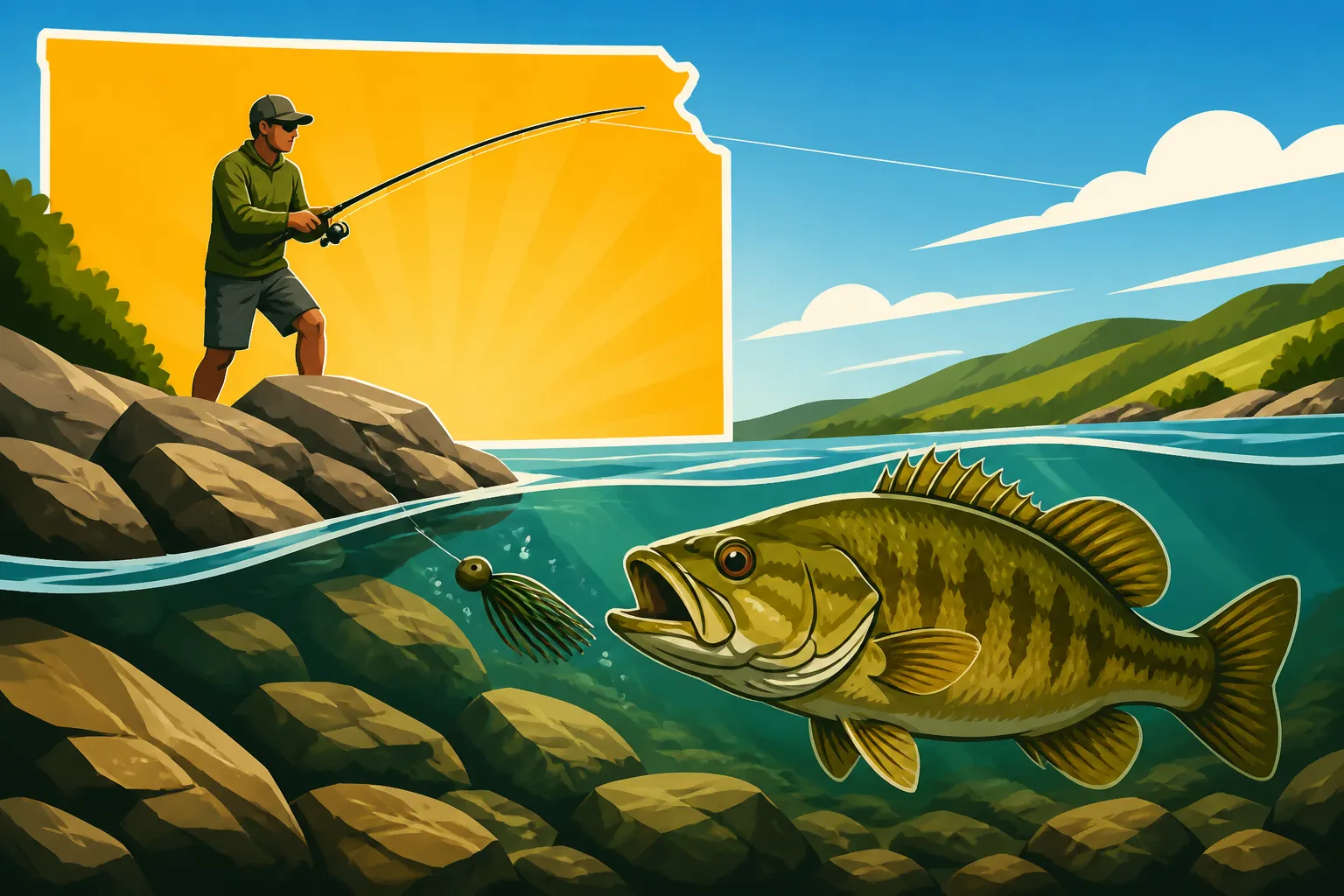
Rocky points are essentially underwater extensions of the shoreline, characterized by a mix of boulders, gravel, and sometimes even submerged timber. For smallmouth bass, these areas are absolute goldmines. They offer a trifecta of benefits: structure, forage, and ambush points. The rocks themselves provide cover from predators and strong currents, and they also attract baitfish and crayfish, which are primary food sources for smallmouth.
Think of a rocky point as a natural buffet and fortress all rolled into one. Smallmouth will position themselves along drop-offs, behind larger boulders, or in crevices, waiting for an unsuspecting meal to swim by. The varying depths and contours of a rocky point also mean that regardless of the season or time of day, there's usually a comfortable temperature zone and feeding opportunity for the bass. Mastering how to fish these nuanced structures is key to consistently finding active fish. For a broader look at how different fish relate to structure, you might find Structure Fishing for Kansas Bass helpful.
Essential Gear and Tackle for Rocky Point Smallmouth
Having the right tools for the job is non-negotiable when you're targeting smallmouth on rocky points. These environments are tough on gear, and the fish themselves are hard fighters, so you'll want reliable equipment that can handle the abuse and deliver consistent performance.
Rods, Reels, and Line Choices
When it comes to rods, a medium-light to medium power spinning rod, typically 6'6" to 7'2" in length, is often ideal. This length provides good casting distance and accuracy, while the medium action allows for solid hook sets and enough backbone to control a feisty smallmouth, yet still has enough give to prevent tearing hooks out of their mouths. You want a rod sensitive enough to feel subtle bites, but robust enough to pull a fish out of heavy cover. For specific recommendations, our Best Rods and Reels for Kansas Fishing guide can offer some excellent insights into general setups suitable for many Kansas species, including bass.
Pair your spinning rod with a quality spinning reel in the 2000-3000 size range. Look for smooth drag, as smallmouth will test it, and a decent retrieve ratio. For line, I usually recommend 8-10 pound test fluorocarbon or braided line with a fluorocarbon leader. Fluorocarbon is nearly invisible underwater and has excellent abrasion resistance, which is crucial when fishing around sharp rocks. Braided line offers superior sensitivity and casting distance, making it a great main line, but you'll definitely want that fluorocarbon leader for stealth and rock resistance. Many good options for all these components can be found on platforms like Amazon, offering a wide range of choices to fit your budget.
Lure Selection for Rocky Structure
Smallmouth bass on rocky points are often aggressive, but they can also be finicky. Having a diverse selection of lures is critical. My go-to choices include:
- Jigs: Football jigs or stand-up jigs (1/4 to 3/8 ounce) with crayfish-imitating trailers are deadly. Crawdads are a staple in a smallmouth's diet, and dragging these jigs along the bottom mimics their natural movement perfectly.
- Crankbaits: Smallmouth love crankbaits, especially those designed to dive to the depth of the point you're fishing. Lipless crankbaits are great for covering water and triggering reaction strikes, while diving crankbaits that deflect off rocks can be incredibly effective. Look for natural colors that imitate baitfish or crayfish.
- Soft Plastics: Tubes, Ned Rigs, and shaky head worms are incredibly versatile. A tube jig, in particular, with its subtle fall and movement, can be irresistible to smallmouth. Ned Rigs are fantastic for a finesse approach when the bite is tough. Rigging these correctly is key to maximizing their action.
- Topwater Lures: In low-light conditions or when fish are active near the surface, topwater baits like walking baits or poppers can provide explosive strikes. There's nothing quite like watching a smallmouth blow up on a topwater lure.
Experimentation is key, but starting with these options will give you a solid foundation. You can often find a wide array of these specialized lures available for purchase on Amazon, making it easy to stock your tackle box. For more general lure ideas, check out Best Lures for a Kansas Tackle Box.
Kayak and Boat Considerations for Access
Reaching those prime rocky points often requires more than just bank access. A boat or kayak can dramatically expand your fishing opportunities. For many of Kansas's larger reservoirs, a traditional bass boat or even a good multispecies boat gives you the speed and stability to cover a lot of water and safely navigate choppy conditions. You can quickly move from point to point, covering different depths and angles.
However, for smaller lakes, coves, or more remote areas, a fishing kayak is an outstanding option. Kayaks allow for stealthy approaches, letting you get right up to the structure without spooking fish. They're also perfect for navigating tighter spaces and can often access areas larger boats can't. If you're considering this route, our Kansas Kayak Fishing Gear Guide offers excellent advice on selecting the right setup and accessories to enhance your experience. Even from a kayak, you'll want to ensure you have a good system for storing your tackle and keeping it organized, perhaps with a waterproof tackle box that you can easily acquire from Amazon.
Mastering Techniques for Rocky Point Smallmouth
Once you have your gear sorted, it's time to talk strategy. Fishing rocky points isn't just about casting and reeling; it's about understanding how smallmouth use the structure and presenting your lure in a way that triggers a strike.
Reading the Water and Point Structure
Successful smallmouth fishing on rocky points begins with your ability to "read" the water. This means looking for visible clues like current breaks, seams, and changes in water clarity. Above water, observe the shoreline: where does the rock extend? Are there large boulders? Is there a wind-blown side? These observations can give you clues about the underwater landscape.
Below the surface, your electronics become invaluable. A good fish finder will reveal drop-offs, submerged rock piles, and any sudden depth changes that smallmouth will relate to. Pay attention to contour lines on your maps, as sharp changes often indicate prime smallmouth habitat. Fish will often position themselves on the "top" of a point, along the sides, or even right on the tip, depending on current and forage availability. Don't just cast blindly; try to visualize the structure beneath the waves and imagine where a smallmouth would be ambushing prey. Think about how the fish might use a specific rock formation as a current break or a sunning spot.
Presentation Strategies: Cast, Retrieve, and Jig
Smallmouth are ambush predators, so your presentation needs to entice them out of cover. Here are some key strategies:
- Fan Casting: Start by fan casting around the point, covering all angles. Begin on the shallower side and work your way deeper. This helps you locate active fish without spooking them from deeper water first.
- Contact with Bottom: When using jigs or soft plastics, maintaining bottom contact is critical. Smallmouth are often hugging the rocks, looking for crayfish or minnows. Dragging your lure, letting it bounce off rocks, and occasionally pausing can mimic natural forage and trigger bites.
- Deflection with Crankbaits: If you're throwing crankbaits, aim to make them "crash" into the rocks. The sudden deflection and erratic movement can often provoke an aggressive strike from a smallmouth that might otherwise ignore a steadily retrieved lure. Vary your retrieve speed; sometimes a fast, aggressive retrieve is key, other times a slower, more methodical approach works best.
- Jerkbait Pauses: When fishing jerkbaits, particularly in cooler water, long pauses are often the secret weapon. Cast the jerkbait, give it a few quick twitches, and then let it sit motionless. Smallmouth will often strike during the pause, mistaking the bait for a struggling or injured fish. The length of the pause can vary from a few seconds to even 10-15 seconds, so experiment! Our How to Fish a Jerkbait in Cold Water article, while not specific to bass, offers some fantastic insights into this technique that you can readily adapt.
Seasonal Considerations for Success
Smallmouth behavior on rocky points can shift dramatically with the seasons. Being aware of these changes will significantly increase your success rate:
- Spring: As water temperatures warm, smallmouth move shallower onto rocky points to spawn. This is a fantastic time for aggressive fishing. They'll be feeding heavily before and after spawning. Look for them on the sunny, shallower sides of points. Crankbaits, jigs, and tubes are all excellent choices. For more on this period, dive into our Kansas Spring Fishing Guide.
- Summer: During the heat of summer, smallmouth will often retreat to deeper water during the day, especially on the cooler, shadier sides of points or along deeper drop-offs. Early mornings, late evenings, and even night fishing can be productive with topwater lures or deep-diving crankbaits. They will still use the points, but at different depths or times of day.
- Fall: As water temperatures drop in the fall, smallmouth go on a major feeding binge to bulk up for winter. They can be found actively feeding on rocky points, often in shallower to mid-depths. Crankbaits, jerkbaits, and even spinnerbaits can be very effective. This is an excellent time to target trophy-sized fish. You might find some transferable strategies in articles like Kansas Fishing Seasons Guide.
Advanced Tips and Troubleshooting for Tricky Conditions
Even with the best gear and knowledge, smallmouth can be challenging. Sometimes conditions just aren't ideal, and that's when you need to adapt.
Dealing with Wind, Current, and Water Clarity
Kansas weather and water conditions can be notoriously unpredictable. Here's how to tackle some common challenges:
- Wind: A little wind can actually be a good thing, as it breaks up the water surface and often concentrates baitfish, which in turn attracts smallmouth. However, too much wind can make boat control and casting difficult. On windy days, focus on the windblown side of a point, as the current will stack baitfish there. Use heavier jigs or crankbaits to maintain bottom contact, or try a spinnerbait to cut through the chop.
- Current: Rivers and reservoir tailraces often have strong currents. Smallmouth love current, as it brings food to them, but they'll position themselves out of the main flow, in current breaks created by large rocks or eddies. Cast upstream and allow your lure to drift naturally into these slack water areas.
- Water Clarity: Smallmouth generally prefer clearer water. If the water is muddy after a rain, they can be harder to find. In these situations, use lures with more vibration or sound, like rattling crankbaits or jigs with larger, bulkier trailers. Brighter colors, like chartreuse or orange, can also be more visible in stained water. Conversely, in ultra-clear water, finesse tactics and natural colors become even more critical, and a long fluorocarbon leader is a must.
Adapting to Pressure and Subtle Bites
Smallmouth bass, especially in heavily fished areas, can become wary of typical presentations. When the bite gets tough, or you suspect the fish are pressured, it's time to switch gears.
- Downsize and Slow Down: If fish are finicky, try downsizing your lures. A smaller jig, a lighter Ned Rig, or a compact tube can often get bites when larger baits are ignored. Slow down your retrieve significantly, giving the fish more time to inspect the bait. Sometimes, just letting a soft plastic sit motionless on the bottom for an extended period is all it takes.
- Change Angles and Depths: If you've been working a point thoroughly without success, try approaching it from a different angle. Sometimes a cast that comes from a different direction can trigger a strike. Also, experiment with different depths. The fish might be holding just a few feet deeper or shallower than you initially thought. Don't be afraid to leave a productive point for a bit and come back later; fish behavior can change quickly.
- Subtle Bites: Not all smallmouth strikes are bone-jarring. Especially in cold water or when fish are lethargic, bites can be very subtle – a slight tick, a spongy feeling, or just a sudden heaviness on your line. Pay close attention to your line; any twitch or movement out of the ordinary could be a fish. Using highly sensitive rods and braided main lines (with a fluoro leader) can help you detect these faint takes.
Safety First on Rocky Waters
Fishing rocky points, especially from a boat or kayak, comes with its own set of challenges and potential hazards. Safety should always be your top priority.
- Navigation: Be extra vigilant when navigating around rocky points. Submerged rocks can appear suddenly and cause significant damage to your prop or hull. Always consult up-to-date navigational charts and use your depth finder to identify hazards. Never assume deep water just because you're away from the visible shore.
- Weather Awareness: Kansas weather can change in a heartbeat. Keep an eye on the sky and monitor weather forecasts. Strong winds can quickly turn a calm lake into a dangerous environment, especially for smaller boats and kayaks. If a storm is brewing, it’s always better to head to shore early.
- Personal Flotation Devices (PFDs): Always wear a PFD, especially when boating or kayaking in cooler water or around hazardous structure. Accidents happen fast, and a PFD can be a literal lifesaver. Ensure everyone on board has a properly fitted life jacket.
- Footwear and Stability: If you're wading or bank fishing on rocky points, wear appropriate footwear with good grip to prevent slips and falls. If you're in a boat or kayak, maintain good balance and avoid standing up unnecessarily, especially when navigating rough water or retrieving a fish. Being prepared can make all the difference, and a quality pair of non-slip boots is a wise investment, easily found on Amazon.
| Lure Type | Best Conditions | Retrieve Strategy | Target Depth | Notes |
|---|---|---|---|---|
| Football/Stand-up Jigs | Clear to stained water, rocky bottom, current | Slow drag, hop, or subtle shake; maintain bottom contact | Bottom to 15 ft | Excellent crayfish imitation; sensitive to structure. |
| Diving Crankbaits | Moderate clarity, active fish, varying depths | Cast and retrieve, aiming for rock deflection | 5-20 ft (lure dependent) | Triggers reaction strikes; choose depth accordingly. |
| Lipless Crankbaits | Active fish, covering water, windy conditions | Fast retrieve, stop-and-go; rip through vegetation | 3-10 ft | Good for schooling fish; high vibration. |
| Tube Jigs | Finesse situations, clear water, pressured fish | Drag, twitch, dead stick; mimic dying baitfish | Bottom to 20 ft | Versatile, subtle action; often fished with light line. |
| Ned Rigs | Tough bite, cold water, clear water | Drag and subtle hop; extremely slow retrieve | Bottom to 15 ft | Finesse king; great for finicky fish. |
| Jerkbaits | Cooler water, suspended fish | Twitch, twitch, PAUSE (long pauses are key) | 3-12 ft | Excellent for colder water; suspends enticingly. |
| Topwater Lures | Low light, calm water, active fish | Walk-the-dog, pop, chug; erratic surface action | Surface | Explosive strikes; best at dawn/dusk. |
Disclaimer
This article is for general informational purposes only and does not constitute professional advice. Laws, prices and regulations vary by location and change over time. Consult a qualified professional for guidance on your specific situation.