Best Lures for Kansas White Bass
It's a familiar scene for any Kansas angler: you've heard the whispers, seen the reports, and felt that undeniable twitch in your rod hand. White bass are schooling, busting bait, or making their epic spawning run, and you want to be there. But wading through tackle shop aisles or endlessly scrolling online for the "perfect" lure can be overwhelming. This guide is here to cut through the noise, breaking down the most effective lures for catching white bass in Kansas, so you can spend less time guessing and more time reeling.
Understanding White Bass Behavior and Habitat in Kansas
Before we even talk about specific lures, it's crucial to understand the fish we're after. White bass in Kansas are incredible game fish – aggressive, plentiful, and a blast to catch. Their behavior, however, shifts significantly throughout the year, and knowing these patterns is key to choosing the right lure.
The Annual White Bass Run Phenomenon
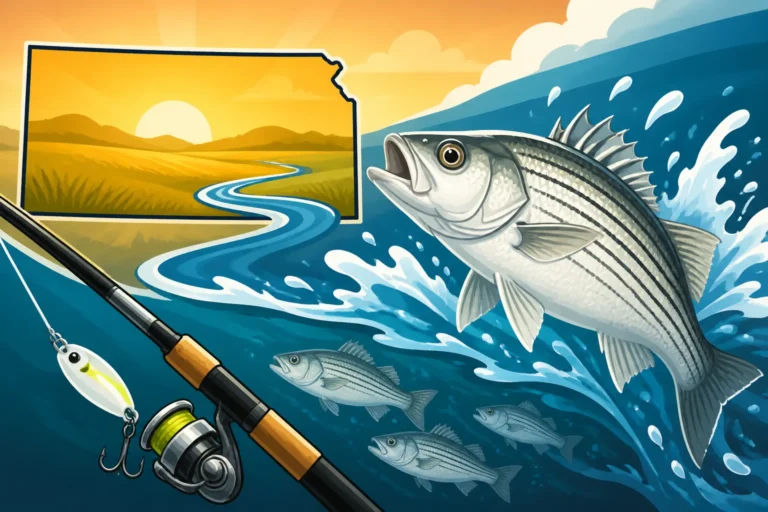
The white bass run is arguably the most exciting time to target these fish in Kansas. This annual migration usually kicks off in the spring when water temperatures start to consistently climb into the mid-50s to low-60s Fahrenheit. Driven by their instinct to spawn, white bass leave the main bodies of our large reservoirs and surge upstream into feeder creeks and rivers. Imagine literally thousands of fish, stacked up, eager to hit anything that looks like a meal.
In Kansas, prime locations for these runs include the Republican River arm feeding into Milford Lake, the Cottonwood River leading into John Redmond Reservoir, or even the numerous smaller creeks and rivers that flow into lakes like Cheney or Wilson. Below dams on larger rivers can also be hotspots, as the fish congregate against the current. This is a high-energy time, and the fish are often highly aggressive. Your lure choice during the run needs to mimic small baitfish or larvae being swept downstream, or something highly visible that triggers a reaction strike in crowded conditions. It’s an almost predictable event, and you can usually find information on when the run is starting by keeping an eye on local fishing reports or talking to bait shop owners near these major waterways. This phenomenon is a cornerstone of our Kansas Fishing Seasons Guide.
Locating White Bass in Reservoirs and Rivers
Beyond the spring run, white bass spend a good portion of the year roaming our vast reservoirs. Unlike some other species that stick to specific cover, white bass are pelagic, meaning they often suspend in open water, following schools of shad, their primary food source. This means they can be a bit harder to pin down.
During the summer, you might find them actively busting bait on the surface at dawn or dusk, creating chaotic explosions that are hard to miss. During the heat of the day, they might be deeper, relating to submerged humps, main lake points, or channel edges, often suspending in 15-30 feet of water. A good fish finder is an invaluable tool here, allowing you to identify bait balls and the white bass stacked beneath them. In the fall, as water temperatures drop, they'll often continue to chase shad aggressively before settling into deeper winter patterns. Understanding this nomadic nature is crucial, as the best lure often depends on whether you're casting to a surface-feeding frenzy, trolling for suspended fish, or vertically jigging a deep school.
Classic Lures That Always Produce for Kansas White Bass
Some lures have stood the test of time for a reason. These are the workhorses in any white bass angler's tackle box, consistently bringing fish to the boat year after year.
The Ever-Reliable Jig and Twister Tail Combo
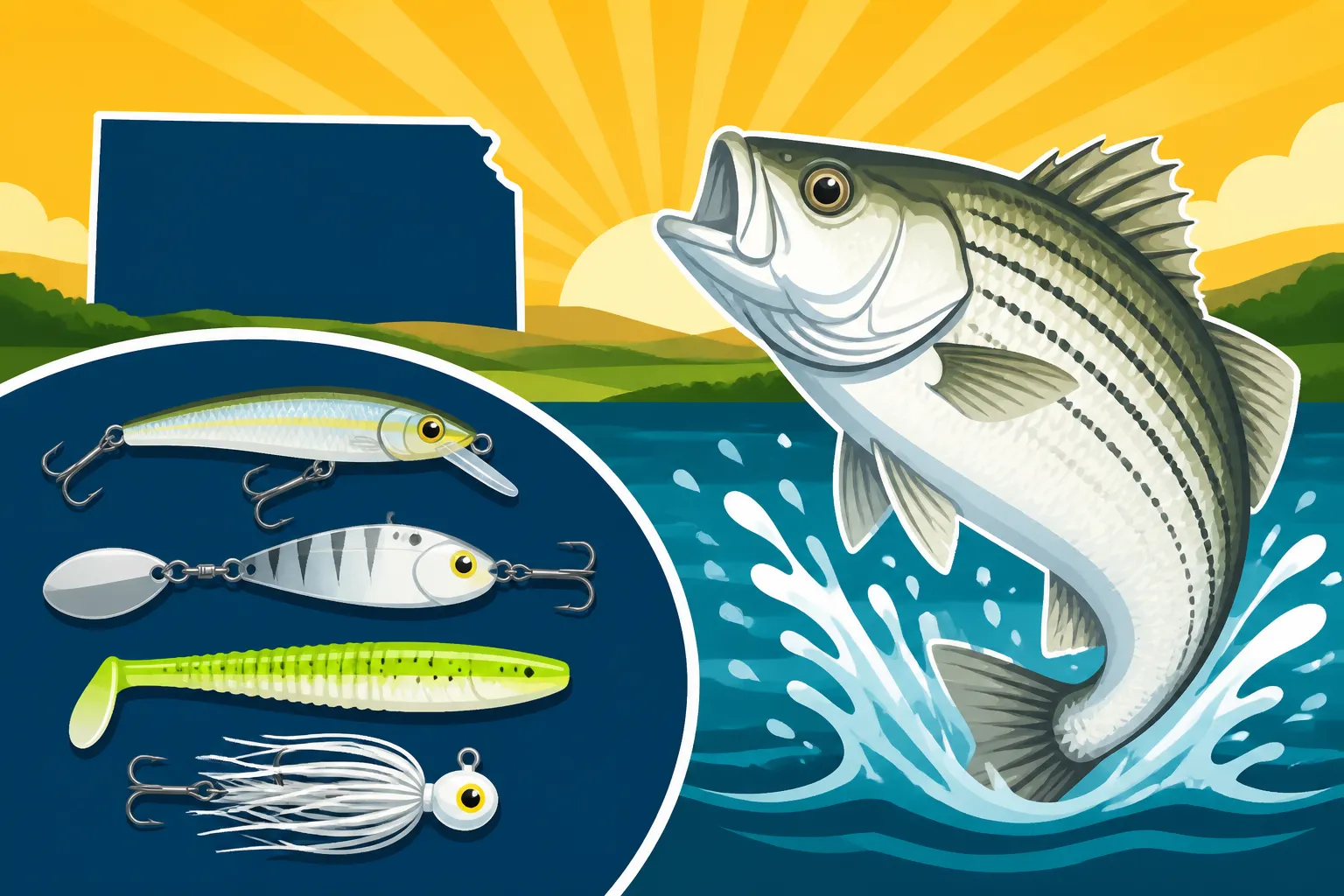
If there's one lure that every Kansas white bass angler should have, it's the humble jig and twister tail. This simple setup is incredibly versatile, effective whether you're fishing the spring run, targeting schooling fish in open water, or even pulling them off deeper structure. The jig provides the weight and profile, while the curly tail of the plastic grub provides an irresistible swimming action.
When it comes to size, 1/8 oz to 1/4 oz jigs are the most popular, allowing for good casting distance and a natural fall rate. Color can be critical: classic white, chartreuse, and pink are perennial favorites. Clear with glitter is another excellent choice, especially on bright, sunny days. Experiment with your retrieve: a steady swim, a bounce along the bottom, or even a sharp rip-and-fall technique can all be deadly. Some anglers even tip their jig with a small piece of bait, like a crappie nibbler or a minnow, for added scent. This combo is simple enough for anyone learning Kansas Fishing Techniques for Beginners to master quickly.
Spinnerbaits and Roadrunners for Flash and Vibration
When white bass are aggressive or the water has a bit of stain to it, spinnerbaits and their smaller cousin, the Roadrunner, really shine. The combination of a spinning blade and a vibrating head creates both flash and thumping vibration, which is a powerful attractant for a species that hunts by sight and lateral line.
For white bass, you'll typically want smaller spinnerbaits, in the 1/8 oz to 1/4 oz range, often with a single willow leaf or Colorado blade. White, chartreuse, or even a white/chartreuse combination are go-to colors. The key is to keep the blade spinning, so a steady, medium retrieve is often best. Roadrunners, which feature a jighead with an attached spinner blade, are especially popular for their compact profile and ability to be fished slower while still providing flash. They're excellent for pitching into current breaks during the spring run or casting to scattered fish. The vibration can call in fish from a distance, making them a great search bait.
Spoons: Vertical Jigging and Casting Power
Spoons are another classic lure that absolutely slays white bass in Kansas. You'll primarily encounter two types: casting spoons and jigging spoons. Both are incredibly effective, just used in different scenarios. Casting spoons, like a Kastmaster or Little Cleo, are dense and can be hurled a mile, making them perfect for reaching distant schooling fish that are busting on the surface in the middle of a reservoir. A simple cast and retrieve, with occasional pauses, is often all it takes.
Jigging spoons, such as a Cotton Cordell C.C. Spoon or a Hopkins Shorty, are designed to be dropped directly down to suspended schools of fish. The action comes from lifting the rod tip sharply and then letting the spoon flutter back down on a semi-slack line, mimicking a dying baitfish. Colors like silver, gold, or white are highly effective. For white bass, 1/4 oz to 1/2 oz spoons are generally the sweet spot. These lures are particularly deadly when you've located a tight school of fish on your fish finder, as you can drop directly into them and trigger a feeding frenzy.
| Lure Type | Ideal Conditions | Recommended Sizes/Colors | Retrieval Style | Notes |
|---|---|---|---|---|
| Jig & Twister Tail | Versatile: Spring run, open water, deeper fish | 1/8 – 1/4 oz; White, Chartreuse, Pink, Clear/Glitter | Steady retrieve, bounce, rip-and-fall | Extremely versatile, great for all skill levels. |
| Spinnerbaits / Roadrunners | Aggressive fish, stained water, current breaks | 1/8 – 1/4 oz; White, Chartreuse, White/Chartreuse | Steady medium retrieve (keep blade spinning) | Flash and vibration attract fish from a distance. |
| Casting Spoons | Surface schooling fish, long casts | 1/4 – 1/2 oz; Silver, Gold, White, Chrome | Cast and retrieve with occasional pauses | Excellent for covering open water quickly. |
| Jigging Spoons | Deep, suspended schools identified by electronics | 1/4 – 1/2 oz; Silver, Gold, White, Chrome | Vertical jigging: sharp lift, flutter on slack line | Deadly for pinpointing schools in deeper water. |
| Soft Plastic Swimbaits | Mimicking baitfish, subtle presentation | 2-3 inches; Shad, Chartreuse, Pearl | Steady swim on a jighead or underspin, slow roll | Natural action, good for finicky fish. |
| Small Crankbaits | Trolling, covering water, scattered fish | Shallow to Medium Diver; Shad, Chrome, Firetiger | Steady retrieve, troll at varied speeds | Effective when fish are slightly deeper or widely spread. |
| Topwater Lures | Surface busts, low light, calm water | Small poppers, walking baits; Bone, Chrome, Shad | Erratic retrieve, twitch-pause, walk-the-dog | Explosive strikes, best when fish are visible on top. |
Modern and Specialized Lures for Tricky Conditions
While the classics are always reliable, sometimes you need something a little different to coax a strike, especially when the fish are pressured or conditions are challenging.
Soft Plastic Grubs and Swimbait Bodies
Beyond the traditional twister tail, a whole world of soft plastic grubs and swimbait bodies can be incredibly effective for Kansas white bass. These lures excel at mimicking baitfish with a more natural, subtle action than some of their flashier counterparts. Paddle tail swimbaits, for instance, have a tail that kicks and wiggles, creating a lifelike swimming motion that can fool even wary white bass. Fluke-style baits, which have a split tail, dart erratically with each twitch of the rod, resembling a fleeing or injured minnow.
You can rig these plastics on a standard jighead, or for an added element, consider an underspin jighead which has a small spinner blade attached to the bottom. This combines the natural profile of the soft plastic with the flash of a spinner. Colors that mimic shad (silver, pearl, light blues) are always a safe bet, but don't shy away from chartreuse or bright greens, especially in dingier water. Sizes typically range from 2 to 3 inches for white bass. These are great choices when fish are feeding on smaller baitfish or when you need a presentation that's a bit more refined. Many excellent options are readily available on Amazon, making it easy to experiment with different shapes and colors.
Crankbaits for Covering Water and Deeper Fish
Crankbaits might not be the first lure that comes to mind for white bass, but smaller, shallow to medium-diving models can be incredibly effective, especially when you're covering large expanses of water by casting or trolling. These lures often feature a distinct wobble and sometimes internal rattles that create noise, helping fish locate them in less-than-clear water or when they're actively searching.
Look for crankbaits that dive to depths where you're marking fish – typically 5 to 15 feet for many white bass scenarios. Shad patterns, chrome, firetiger, and even bright oranges can be deadly. When casting, a steady retrieve with occasional twitches or pauses can trigger a strike. For trolling, which is particularly effective for finding scattered schools in larger reservoirs like Cheney or Wilson Lake, experiment with different speeds until you find what the fish prefer. The vibration and profile of a small crankbait can often outcompete other lures when white bass are slightly deeper or dispersed over a wide area.
Topwater Lures for Explosive Surface Action
There's nothing quite like the thrill of a white bass blowing up on a topwater lure. When white bass are actively busting bait on the surface, especially during low light conditions in the mornings or evenings, or on calm summer days, topwater lures become an absolute game-changer. These are the moments anglers live for, where the strike is visual and undeniably exciting.
Small poppers that splash and gurgle, walking baits that glide back and forth, or prop baits with spinning blades on the front or back can all draw violent strikes. Colors aren't as critical as the action and profile against the sky, but white, bone, or shad patterns are usually good starting points. The key is to work them with an erratic retrieve – twitch, pause, twitch, twitch – mimicking a distressed baitfish struggling on the surface. When you see schools of white bass crashing shad near the surface, as often happens during the Milford Lake White Bass Run in the main lake, don't hesitate to tie on a topwater. The sheer excitement of a fish exploding on your lure is unmatched.
Matching Lures to Specific Kansas White Bass Scenarios
Knowing the general types of lures is one thing, but understanding when and where to use them is the real secret to consistent success.
Tackle for the Famous White Bass Run
The spring white bass run is an event many Kansas anglers eagerly await. As hordes of white bass push up rivers and creeks to spawn, they become incredibly concentrated, and the fishing can be fast and furious. The key here is often to fish lighter and target current breaks. Small jigs (1/8 oz to 1/4 oz) with white or chartreuse twister tails are king. You'll want to cast these upstream and let them drift naturally with the current, retrieving just fast enough to keep the tail spinning or to bounce them gently off the bottom.
Small spinnerbaits or Roadrunners are also excellent choices, providing that irresistible flash and vibration in the moving water. Some dedicated anglers even bring fly-fishing gear, using small white or chartreuse streamers to mimic minnows. Focus your efforts on eddies, seams where fast water meets slow water, and around any visible structure that breaks the current. Remember, the fish are often stacked, so once you find them, the action can be non-stop. Keep an eye on local conditions, because When Does the White Bass Run Start can vary slightly year to year based on weather and water temperatures.
Lures for Open Water Schooling White Bass
Throughout much of the summer and fall, white bass will be found suspending in the open water of our large Kansas reservoirs, actively chasing schools of shad. These situations often present themselves as surface busts, where you'll see a frothing boil of water as white bass decimate a bait ball. This is when speed and covering water become paramount.
Long-casting spoons are ideal for reaching these distant surface disturbances. Quickly cast past the commotion and retrieve, allowing the spoon to flash through the feeding fish. Soft plastic paddle tail swimbaits rigged on jigheads are also incredibly effective, as they accurately mimic the shad being targeted. If the fish aren't busting on the surface but you're marking schools on your fish finder, vertically jigging spoons or small blade baits directly into the school can trigger aggressive strikes. For anglers using boats, trolling small crankbaits or even jig-and-grub combos behind planer boards can be a great way to locate scattered schools and keep your lure in the strike zone.
Low Light and Night Fishing Strategies
Don't put away your rods when the sun goes down, especially in the warm Kansas summer months! White bass are often surprisingly active after dark, particularly in areas where baitfish congregate under artificial lights or in main lake areas. This is where Kansas Summer Night Fishing for White Bass can really pay off.
For night fishing, the general principle shifts slightly. While flash can still work, scent and silhouette often become more important. Dark-colored jigs (black, dark blue) with plastic grubs create a strong silhouette against the moonlit sky or artificial lights, making them easier for fish to see. Glow-in-the-dark lures, such as glowing jigging spoons or soft plastics, can also be highly effective, providing a visible target. A slower, more methodical retrieve is generally preferred, as fish might be less aggressive in the dark. Focus your efforts around boat docks with lights, bridges, or any main lake points where you've found fish during the day. Sometimes, simply suspending a lantern over the water can attract baitfish, which in turn draws in the white bass.
Essential Gear and Tips for White Bass Success
Having the right lures is just one piece of the puzzle. The rest of your gear and your overall approach can significantly impact your success rate.
Rod, Reel, and Line Recommendations
For white bass, you generally want a setup that offers sensitivity, casting distance, and enough backbone to handle a feisty fight. A light to medium-light spinning rod, typically in the 6-foot 6-inch to 7-foot range, with a fast action tip, is ideal. This combination allows for precise casting of lighter lures and excellent feel for subtle bites. Paired with a 1000 to 2500 series spinning reel, you'll have a balanced setup perfect for these hard-fighting fish. This setup is similar to what you might use for crappie, so checking out a guide on the Best Rod and Reel Combo for Crappie could give you more ideas.
As for line, 6-10 lb test monofilament or fluorocarbon is a good all-around choice. Monofilament offers good knot strength and stretch, while fluorocarbon provides better sensitivity and invisibility. Many anglers also opt for 10-15 lb braided line with a short fluorocarbon leader (2-4 feet) for maximum casting distance, sensitivity, and strength. The braid's lack of stretch allows you to feel even the lightest taps, which can be crucial when white bass are hitting softly. Thinking about line choices, some principles are similar to those outlined in Best Line Weight for Kansas Walleye.
Reading the Water and Adjusting Your Approach
Being adaptable is perhaps the most important skill for any angler. White bass behavior can change rapidly based on environmental factors like wind, current, water temperature, and clarity. What worked yesterday might not work today, and what works on one part of the lake might not work on another.
Always be observing. Look for diving birds, which often indicate baitfish pushed to the surface by predatory fish below. Watch for surface disturbances or actual fish busting bait. If you're not getting bites with one lure, don't be afraid to change it up. Try a different color, a different size, or a different type of lure altogether. Vary your retrieve speed and depth until you find what the fish are responding to. Sometimes, a subtle twitch is all it takes, while other times, a fast, aggressive retrieve is the ticket. Don't get stuck in a rut; the most successful anglers are always experimenting.
Where to Buy Your White Bass Lures
Once you've got a good idea of what lures you want to try, finding them is the next step. Kansas is fortunate to have a variety of options. Your local bait shops, often small, family-owned businesses, are fantastic resources. Not only do they carry a good selection of region-specific lures, but the owners and staff are often invaluable sources of current fishing reports and local knowledge. They can tell you what's biting, where, and on what.
For a wider selection, larger sporting goods stores like Cabela's or Bass Pro Shops offer an extensive array of brands and lure types. And, of course, the convenience of online retailers like Amazon means you can browse an almost limitless selection from the comfort of your home, often at competitive prices. No matter where you choose to purchase your gear, remember that supporting local businesses helps keep our angling communities vibrant.
Disclaimer
Fishing inherently involves risks. Always prioritize safety, understand and follow all local Kansas fishing regulations, and be aware of weather conditions. The information provided in this guide is for informational purposes only and does not guarantee fishing success or safety.