Best Depth for Crappie Fishing in Spring
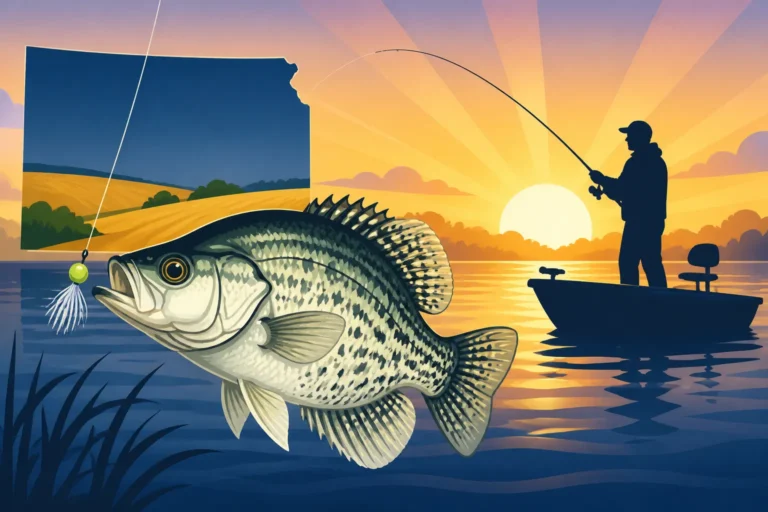
It's that glorious time of year again, isn't it? The ice is finally gone (or mostly gone!), the days are getting longer, and the promise of a frying pan full of delicious crappie is dancing in every Kansas angler's head. But let's be honest, trying to pinpoint exactly where those crappie are hiding in the spring can feel like a perpetual scavenger hunt. One day they're shallow, the next they've vanished, leaving you wondering if you've missed some secret memo. This guide is here to cut through that frustration, helping you understand the "why" behind spring crappie movements and, most importantly, the "where" – specifically, the best depths to find them in Kansas waters.
Unpacking Spring Crappie Behavior in Kansas Lakes
Crappie are fascinating creatures, and their behavior in the spring is almost entirely dictated by one crucial factor: water temperature. As the Kansas sun begins to warm the reservoirs and smaller lakes, these fish move through distinct phases, each with its own preferred depth. Understanding these transitions is key to consistently filling your livewell.
Early Spring and Pre-Spawn Movements
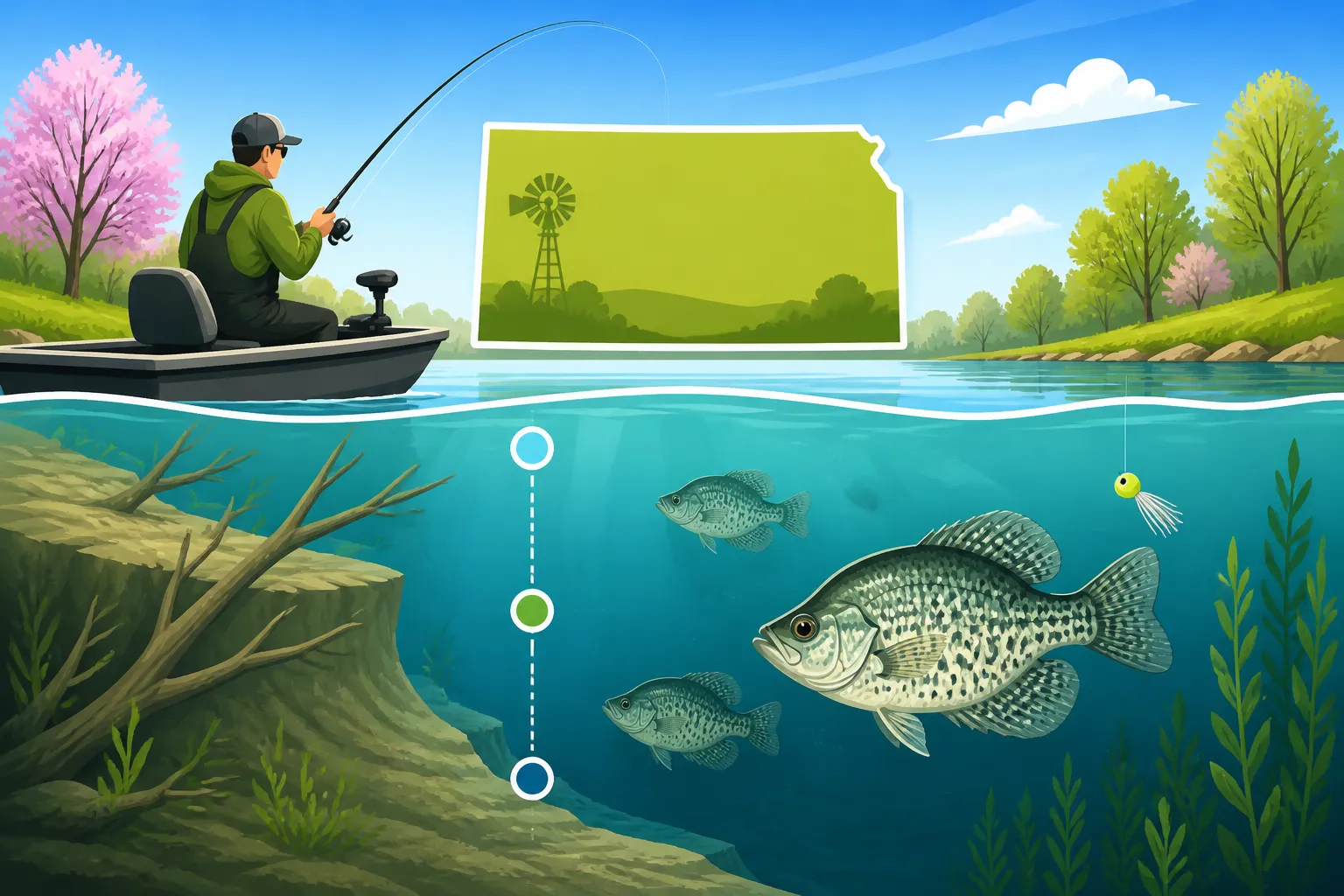
When spring first officially arrives, but the water is still feeling pretty chilly, say in the low 40s to low 50s Fahrenheit, crappie are typically in their pre-spawn mode. They've spent the winter holding in deeper, more stable water, often suspended over old creek channels, humps, or near significant submerged structure like timber or brush piles in 15 to 25 feet of water, sometimes even deeper in larger impoundments like Milford Lake or Cheney Reservoir.
During this early stage, they're starting to become more active, feeding to build up energy for the upcoming spawn, but they're not quite ready to commit to the shallows. You'll often find them congregating in loose schools at these deeper depths, but they'll make quick forays up to shallower points or flats when the sun warms the surface temporarily, only to retreat when conditions cool. Think of them like us Kansans after a long winter – eager for warmth but not ready to shed all our layers just yet! Using a sensitive rod and reel combo designed for crappie can help you detect those subtle bites at these depths.
The Peak Spawn and Shallow Water Migration
This is the phase everyone dreams about, right? When the water temperatures finally hit that sweet spot, generally between 55 and 65 degrees Fahrenheit, the crappie spawn kicks into high gear. This is when those reports of "crappie on the bank" start flying around. They move aggressively into super shallow water, sometimes just a foot or two deep, to lay their eggs.
They'll seek out specific types of cover in these shallow areas. Think flooded buckbrush, fallen trees, dock pilings, rock riprap, or even dense stands of cattails in protected coves. Locations in smaller, shallower community lakes across Kansas, like those managed by the Kansas Department of Wildlife, Parks and Tourism (KDWPT), are often the first to warm up and see this shallow bite. The males will move in first to prepare nests, then the females join them. The tricky part is that not all crappie spawn at once; it can be a staggered event over several weeks, depending on the specific water body and local conditions. This means you might find some shallow and some still staging a bit deeper, making it crucial to adapt your approach.
Post-Spawn Transition and Retreating Depths
Once the spawn is complete, the crappie, especially the females, are often exhausted. They'll start to move away from the immediate shallows but usually won't go back to their deep winter haunts right away. Instead, they'll transition to slightly deeper water, often holding in 8 to 15 feet. They'll relate to the first significant drop-offs or submerged cover adjacent to their spawning grounds.
This post-spawn period can be a bit more challenging, as the fish can be lethargic and spread out. They might be suspended a few feet off the bottom, or tucked tight into brush piles. The good news is, as they recover and begin to feed aggressively again, this can be an excellent time to target them with a variety of techniques. They're still accessible but require a bit more searching than during the peak of the shallow spawn.
Navigating the Factors Influencing Crappie Depth
While water temperature is undeniably the primary driver, several other interconnected factors play a huge role in determining where crappie will hang out at any given moment in spring. Ignore these at your peril!
Water Temperature is King
We've touched on this, but let's dive a little deeper into the specific temperature ranges and what they mean for crappie depth.
- Below 45°F (Early Pre-Spawn/Late Winter): Crappie are deep, often 20-30+ feet, usually suspended over major structure in the main lake basin. They're sluggish, and bites are subtle. Focus on vertical jigging or slow trolling.
- 45-54°F (Active Pre-Spawn): This is when they start their serious migration. You'll find them moving up creek channels, holding to the edges of old roadbeds, or suspended around deep timber in 10-20 feet of water. They're actively feeding. This is an excellent time for a slow retrieve with jigs or minnows.
- 55-65°F (Peak Spawn): The magical shallow water bite! Crappie will be in 1-8 feet, depending on clarity and cover. Look for them in protected coves, flooded bushes, and on rocky banks. Aggressive males will guard nests. This is when you can find them in places like Clinton Lake's shallow bays or around the abundant timber in Hillsdale Lake. Understanding how to interpret your fish finder becomes invaluable here.
- 66°F and Above (Post-Spawn/Early Summer): Crappie start moving back to slightly deeper cover, often 8-15 feet, relating to submerged brush, channel breaks, or the outer edges of spawning flats. They'll still visit shallower areas at dawn/dusk to feed.
Keep in mind that these are general guidelines. A cold front can push fish back deeper even if temperatures were ideal, and a prolonged warm spell can accelerate their progression.
Submerged Structure and Cover are Essential
Crappie are structure-oriented fish, always seeking out some form of cover for ambush points, protection, and spawning. This is especially true in the spring as they transition from deep water to shallow.
- Brush Piles and Laydowns: These are crappie magnets year-round, but particularly in spring. Early on, they provide a staging area in deeper water (10-20 feet). During the spawn, they offer prime nesting sites in the shallows (1-8 feet). Post-spawn, fish will often hold to these same cover elements, just slightly deeper on the break. Many anglers actively create and sink brush piles, which can be fantastic long-term fishing spots.
- Old Creek Channels and Roadbeds: These topographical features act as highways for crappie. Fish will travel along the edges of these channels as they move from deep to shallow. They often hold along the channel lips, especially where there's some additional cover.
- Rock Riprap and Bridge Pilings: These man-made structures absorb and radiate heat, attracting baitfish and crappie in early spring. During the spawn, riprap provides excellent hard bottom for nesting. You'll often find good concentrations of fish around bridges on places like Melvern Lake.
- Standing Timber: Reservoirs like El Dorado Lake or Tuttle Creek Lake have vast areas of standing timber. This offers vertical cover that crappie will suspend in at various depths, providing protection and shade. Early spring fish might be deep in the timber, while spawning fish will move to the shallow edges.
Baitfish Presence Dictates Location
Crappie, like most predators, follow their food. In the spring, as water temperatures rise, so does the activity of baitfish like shad and minnows.
- Shad Schools: Keep an eye on your electronics for schools of baitfish. If you see bait concentrated at a certain depth, there's a good chance crappie are lurking nearby, either right in the school or just below it, waiting to ambush.
- Warm Water Bays: Early in the spring, warmer water in protected bays and coves will attract baitfish. This, in turn, draws crappie into these areas earlier than in the main lake.
- Wind-Blown Banks: A consistent, light wind blowing into a bank can push baitfish into that area, creating a feeding opportunity for crappie. However, heavy wind can muddy the water, which might push crappie to the calmer side or to slightly deeper, clearer water.
Practical Strategies for Dialing In Spring Crappie Depths
Knowing why crappie move where they do is half the battle. The other half is knowing how to find them and catch them. Here are some actionable strategies for your next Kansas crappie adventure.
Utilizing Electronics Effectively
If you're serious about crappie fishing, a good fish finder is no longer a luxury; it's a necessity. Modern units, even budget-friendly ones, can drastically improve your success.
- Sonar Interpretation: Learn to read your traditional 2D sonar. Crappie often show up as distinct arches or, when tightly schooled, as blobs. Pay attention to the depth at which you're marking fish, and look for baitfish schools. DownScan and SideScan are also incredibly useful for identifying submerged brush piles and other structure that crappie relate to. You can often find great deals on these units on Amazon.
- Mapping and Waypoints: Use your GPS to mark significant structure, brush piles, or areas where you've caught fish in the past. These waypoints become your personal crappie honey holes. Many units have detailed contour maps of Kansas lakes, helping you identify creek channels and depth breaks before you even drop a line.
- Temperature Gauge: Most modern fish finders come with a built-in water temperature gauge. This is your absolute best friend for tracking the crappie's seasonal progression. Monitor the surface temperature closely, and remember those key temperature ranges for pre-spawn, spawn, and post-spawn.
Fan Casting and Depth Progression
When you're searching for crappie, don't just cast in one direction. Work an area thoroughly by fan casting, covering different angles and, crucially, different depths.
- Start Shallow, Work Deep (or vice-versa): If you suspect fish are shallow (e.g., during the spawn), start by casting your jig or minnow rig right up to the bank and retrieving it slowly. If you don't get bites, gradually increase your casting distance, letting your bait sink a little deeper with each cast, until you find the productive zone. Conversely, if you're in deeper water, start by fishing closer to the bottom and then experiment with shallower depths by counting down your jig.
- Targeting Structure: Once you've identified a promising brush pile or submerged tree on your electronics, approach it carefully. Cast to all sides of the structure, letting your bait fall through the branches. Often, crappie will be holding at a specific depth within that cover. This is where Jigging Techniques for Kansas Crappie really shine.
- Trolling and Drifting: For covering large areas in deeper water, especially during pre-spawn or post-spawn, slow trolling or drifting with multiple rods at different depths can be incredibly effective. Use small crankbaits or jig-and-minnow combinations, varying the weight or lure size to present baits at different levels in the water column.
Bait and Lure Selection for Specific Depths
The type of bait or lure you use, and how you rig it, directly impacts the depth it fishes.
- Jigs (Plastic or Marabou): These are crappie staples. Use lighter jig heads (1/32 to 1/16 ounce) for shallower water or slow falls, and heavier heads (1/8 to 1/4 ounce) for deeper water or windy conditions. Pair them with small soft plastics, tube baits, or marabou jigs. You can find a huge variety of these on Amazon.
- Live Minnows: A classic for a reason. Minnows can be fished under a bobber in shallow water, or on a bare hook or small jig head in deeper water. Using a slip bobber allows you to easily adjust your minnow's depth. When the crappie are finicky, a live minnow on a Best Bait for Kansas Crappie rig is often the ticket.
- Crankbaits: Smaller crappie-sized crankbaits are excellent for targeting fish at specific depths. They come with different diving lips that dictate how deep they run. Troll them or cast them over flats and along channel edges.
- Slab Spoons: For very deep, suspended crappie (especially in early spring), a small slab spoon can be deadly. Drop it down, jig it aggressively, and then let it flutter. This is a great technique for when fish are holding tight to vertical structure.
Crappie Depth by Season and Location
While we’ve discussed the general principles, it's worth noting that specific regions and types of water bodies in Kansas can influence preferred crappie depths.
Western Kansas Reservoirs
Lakes like Wilson Lake, Webster Reservoir, or Cedar Bluff Reservoir are often clearer than their eastern counterparts. In clearer water, crappie tend to hold deeper, even during the spawn, to avoid bright sunlight. You might find spawning crappie in 3-8 feet instead of 1-4 feet, and pre-spawn fish could be easily in the 20-30 foot range. Low-light conditions (overcast days, dawn, dusk) are often best for catching them shallower in these clear-water lakes.
Eastern Kansas Lakes
Lakes like Hillsdale Lake, Clinton Lake, or Melvern Lake often have more stained or turbid water. In these murkier conditions, light penetration is reduced, so crappie can afford to be shallower. Spawning depths might be closer to that 1-5 foot range, and even pre-spawn fish might relate to structure in 10-15 feet more readily. The abundant timber in many eastern Kansas reservoirs also provides plenty of vertical cover for crappie to suspend at various depths. You can usually consult the KDWPT's detailed reports for specific bodies of water. For a full rundown of rules, be sure to check the Kansas Crappie Length and Bag Limits.
Here's a quick summary table to help you visualize those depths and corresponding water temperatures:
| Crappie Season Phase | Water Temperature Range | Typical Depth Range (Feet) | Key Behaviors & Locations | Recommended Techniques |
|---|---|---|---|---|
| Early Pre-Spawn | Below 45°F | 20-30+ (suspended) | Deep main lake basin, channels, humps; sluggish | Vertical jigging, slow trolling |
| Active Pre-Spawn | 45-54°F | 10-20 (staging) | Creek channel edges, deep timber, points; actively feeding | Slow jigging, minnows, light crankbaits |
| Peak Spawn | 55-65°F | 1-8 (shallow) | Protected coves, flooded brush, riprap, docks; nesting | Jigs under bobbers, cast & retrieve jigs, minnows |
| Post-Spawn | 66°F+ | 8-15 (transitioning) | First breaklines, submerged brush, channel edges; recovering, then feeding | Jigging structure, slow trolling, slip bobbers |
Finding the "best" depth for crappie fishing in spring isn't a fixed target. It's a dynamic puzzle that requires patience, observation, and an understanding of how these fish react to their environment. But with a solid grasp of water temperatures, structure, baitfish movements, and effective techniques, you'll be well on your way to a successful Kansas crappie season. Good luck out there!
Disclaimer
Fishing conditions and regulations in Kansas can change rapidly. Always consult the latest official Kansas Department of Wildlife, Parks and Tourism (KDWPT) fishing regulations before heading out. This guide is for informational purposes only and should not replace official sources.