How to Jig for Crappie in Rocky Cover
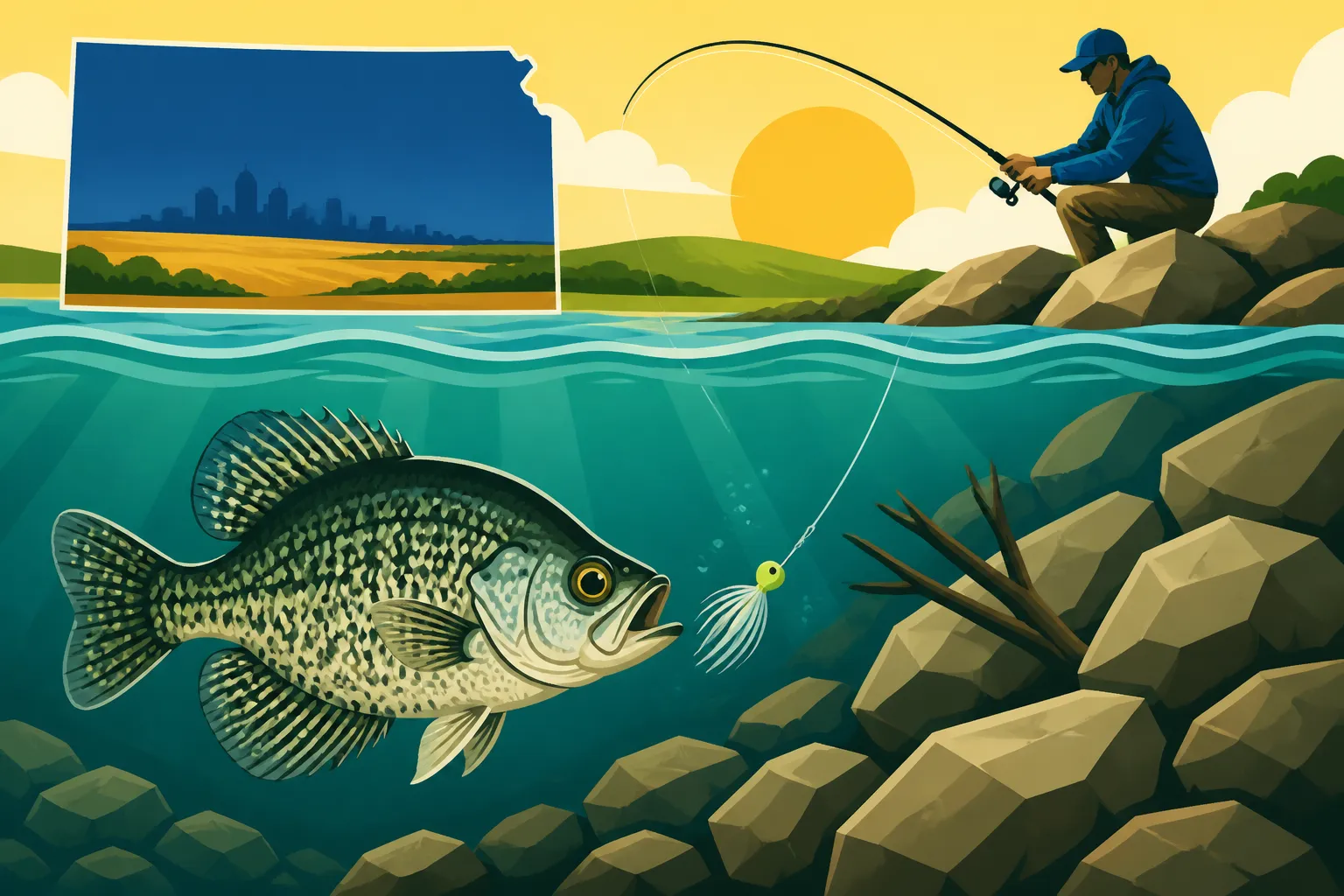
Ah, the rocky cover dilemma! If you've spent any time chasing crappie in Kansas, you know that feeling: you've found a promising rock pile or riprap bank, you drop your jig, and thwack! — you're snagged. It's incredibly frustrating to lose good jigs, especially when you know those slabs are holding tight to that structure. But here's the good news: with the right approach, jigging for crappie in rocky cover doesn't have to be a tackle graveyard. This guide is all about helping you understand why crappie love these areas and, more importantly, how to fish them effectively without constantly re-tying.
Unraveling the Mystery of Crappie in Rocky Cover
Crappie, those speckled beauties we all love to catch, are masters of relating to structure. And when it comes to structure, rocks offer a whole buffet of benefits that make them irresistible to these fish. Understanding why they're there is the first step to figuring out how to catch them.
Why Crappie Love the Rocks
Rocks aren't just pretty scenery beneath the water; they're essential habitat. First off, they provide fantastic ambush points. Imagine a school of baitfish swimming by an old submerged boulder – a waiting crappie can dart out, grab a meal, and retreat back to safety in an instant. This makes rocky areas prime feeding grounds, especially when baitfish are abundant.
Beyond feeding, rocks offer crucial protection. They break up current, creating calm pockets where crappie can conserve energy. They also provide cover from predators, whether that's a lurking flathead catfish or an opportunistic osprey. Furthermore, rocks absorb and radiate heat, which can be a significant factor in colder months or during sudden temperature drops. Crappie are ectothermic, meaning their body temperature mirrors their surroundings. A rock pile that's a degree or two warmer can attract and hold fish when other areas are too cold.
Think about those long, sprawling riprap banks you see at big reservoirs like Milford Lake or Cheney Reservoir. They're not just there to prevent erosion; they're bustling crappie cities! Submerged rock piles, old foundations, and even scattered boulders in deeper water all serve as critical real estate for crappie throughout the year.
Reading the Water for Rocky Crappie
Knowing that crappie like rocks is one thing; finding the specific rocks they're on is another. It all comes down to reading the water, whether you're fishing from the bank or a boat. For bank anglers, look for visible signs of rocky transitions: a shoreline that changes from dirt to stone, a rocky point extending into the water, or even subtle changes in vegetation that might hint at submerged structure.
From a boat, your electronics become your best friend. Side-imaging and down-imaging on your fish finder can reveal incredible detail of submerged rock piles, individual boulders, and how crappie are positioning themselves around them. Look for variations in the rock formations. Crappie aren't usually just sitting on a flat expanse of rock; they prefer edges, crevices, and the sides of larger boulders. Often, they'll congregate on the "down-current" side of a rock or at a specific depth break where the rocks meet a softer bottom.
Consider this scenario at El Dorado Lake: you're cruising along and your fish finder suddenly paints a picture of a massive rock pile, a relic from an old farmstead. Instead of just randomly casting, you notice a distinct drop-off on one side, and your screen shows a cluster of arches suspended just above the rocks at that depth. That's your cue! Crappie often relate to these types of structural changes, using them as highways or resting areas. Pay attention to how the rocks transition into mud or sand, as these "seams" are often hotspots. You'll often find that crappie prefer certain depths along these rocky edges, depending on the time of year and day.
Gearing Up for Success in the Boulders
Fishing rocky cover is inherently challenging due to the constant threat of snags. But with the right gear choices, you can significantly reduce frustration and increase your hook-up ratio. It's all about balancing sensitivity with resilience.
Rods, Reels, and Line Choices
Let's talk about rods first. For jigging in rocky cover, sensitivity is paramount. You need to feel those subtle bumps and ticks as your jig bounces off rocks, and more importantly, feel the incredibly light bite of a crappie. A light to medium-light power spinning rod, typically 5 to 7 feet in length, with a fast action tip, is ideal. The fast action tip gives you the sensitivity to detect bites and the quick backbone for solid hooksets, while the overall lighter power helps you detect those gentle takes. Rods from brands like St. Croix or even the more durable Ugly Stik models can stand up to the occasional bang against the boat or bank, which is a real plus when you're focusing on tight structure.
For reels, a small spinning reel in the 1000 or 2000 size is perfectly suited. These reels are designed for lighter lines, offer smooth drag systems that are crucial for fighting crappie on delicate tackle, and are lightweight enough to pair comfortably with your sensitive rod. You'll be making many subtle movements, and a balanced, light setup reduces fatigue and enhances feel.
Now, line. This is where many anglers stumble in rocky cover. While braided line offers incredible sensitivity and strength, its lack of stretch means it can get easily frayed or cut on sharp rocks. I typically recommend a good quality monofilament or fluorocarbon line in the 4 to 6 lb test range. Monofilament offers a bit of stretch, which can act as a shock absorber when a crappie surges or if your jig momentarily hangs up. Fluorocarbon, on the other hand, is nearly invisible underwater, offers less stretch than mono for improved sensitivity, and is quite abrasion-resistant. Many anglers will tie a short fluorocarbon leader (3-5 feet) to a main braided line to get the best of both worlds – the sensitivity of braid with the abrasion resistance and invisibility of fluoro. For a great all-around setup, you can check out various options for Best Rod and Reel Combo for Crappie on Amazon, making sure to read reviews for sensitivity and durability.
The Right Jigs and Hooks to Combat Snags
Your choice of jig head and soft plastic is absolutely critical when fishing around rocks. The goal is to maximize appeal to crappie while minimizing snag potential. For jig heads, look for shapes that are less prone to wedging into crevices. Mushroom-style heads or traditional ball heads with the line tie positioned a bit further back can be more forgiving. Weights typically range from 1/32 ounce to 1/8 ounce, depending on the depth you're fishing and the wind conditions. Lighter jigs fall slower and are less likely to embed themselves, but they're also harder to keep vertical in wind or current. For a more in-depth look, check out our guide on Best Jig Head Weight for Crappie.
When it comes to hooks, sharpness and strength are key. While many crappie jigs come with decent hooks, sometimes upgrading to a premium "sickle" style hook can improve your hook-up ratio and prevent bent hooks on bigger fish. The hook should be stout enough not to bend on a fish, but not so thick that it takes away from the jig's action or makes it harder to penetrate a crappie's papery mouth. We've got more tips on selecting Best Hooks for Kansas Crappie Fishing if you want to dive deeper.
As for soft plastics, stick to smaller profiles, typically 1 to 2 inches. Grub tails, tube jigs, and minnow imitators are all excellent choices. The action of the tail on a grub or the subtle quiver of a tube jig can be irresistible to crappie. Color selection often depends on water clarity: natural colors like white, shad, or translucent patterns work well in clear water, while brighter colors like chartreuse, pink, or orange can be more effective in stained or muddy conditions. I've had incredible luck with small, 1/16 oz jig heads paired with a two-inch Bobby Garland soft plastic grub when targeting submerged rocks at Clinton Lake. These go-to crappie baits are consistently available and highly rated on Amazon.
Mastering the Art of the Rock-Jigging Retrieve
So you've got the right gear. Now comes the finesse: how do you present that jig in a way that tempts crappie without getting hopelessly stuck? It's all about control, feel, and subtle movements.
Vertical Jigging and Controlled Drops
Often, the most effective way to fish tight rocky cover, especially from a boat, is through vertical jigging. This means positioning your boat directly over or very close to the structure you're targeting and dropping your jig straight down. This method allows for maximum control over your bait and minimizes the chances of horizontal snags.
Once your jig reaches the desired depth – perhaps just above the crappie you see on your fish finder, or a foot or two above the densest part of the rock pile – begin your retrieve. The "lift and drop" is classic for a reason. Gently lift your rod tip 6 to 12 inches, then slowly lower it, allowing the jig to fall on a semi-slack line. The bite, more often than not, will occur as the jig is falling. It might not be a violent strike; sometimes it's just a subtle "tick," a momentary pause in the fall, or your line will simply go slack. These are all crappie telling you they've inhaled your bait. Set the hook quickly but gently with a sweep of the rod.
Imagine you're on Melvern Lake, hovering over a deep rock pile you've marked. You carefully lower your 1/16 oz jig. As it descends, you watch your line intently. You see a slight twitch in the line or feel a faint "mushy" resistance as you start to lift. That's your cue! A quick, upward sweep of the rod, and you're tight to a chunky crappie. This direct, controlled presentation is a game-changer when fish are holding tight to intricate structure.
Casting and Bumping the Bottom (Carefully!)
While vertical jigging is often king, there are times when crappie are more spread out on flatter rocky areas, or you're fishing from the bank. In these situations, casting and a controlled retrieve can be effective. The key word here is "controlled."
Cast your light jig out and let it sink. As it approaches the bottom or the rocky structure, begin a slow, deliberate retrieve. Instead of a continuous reel, try a "sweep and pause" method. Sweep your rod tip to the side, reeling in the slack as you do, then pause, letting the jig settle or lightly touch the bottom for a moment. This brief pause is often when a crappie will decide to strike. The idea is to make the jig appear to "crawl" or "hop" over the rocks, mimicking a foraging baitfish, without actually getting wedged between them.
A technique I've found useful, especially when fishing a rocky bank from shore at Hillsdale Lake, is the "do nothing" retrieve. After a small twitch or sweep, I'll let the jig sit for several seconds, sometimes even a full 10-15 count, especially in colder water. Many times, a crappie will finally commit to eating the jig while it's completely motionless on or near the bottom. This patience can pay off big time. For more general approaches, our Kansas Crappie Fishing Techniques guide can offer additional insights.
Overcoming Challenges and Refining Your Approach
No matter how skilled you are, fishing rocky cover means dealing with snags. It's an inevitable part of the game. But there are strategies to minimize them and recover your precious jigs, along with other tips to boost your success.
Minimizing Snags and What to Do When They Happen
The best defense against snags is prevention. As we discussed, using lighter jig heads, keeping your line as vertical as possible when boat fishing, and maintaining slow, controlled retrieves are paramount. If you're fishing a weedy rock pile, sometimes a weedless jig head (though less common for crappie) can help. Always be conscious of your line angle; a too-shallow angle increases the chances of your jig getting wedged.
But let's be realistic: snags will happen. When they do, don't just yank! That's a sure-fire way to break your line and lose your jig. Instead, try this technique: point your rod tip directly at the snag, putting direct tension on the line. Then, without moving your rod, pluck your line like a guitar string. The vibration can sometimes free the hook from a rock. If you're in a boat, carefully motor directly over the snag and try to pull the jig free straight up. This reduces the leverage the snag has against your line. Sometimes, a gentle but firm pull straight up is all it takes. I once spent what felt like an eternity trying to recover a hand-tied custom jig at Kanopolis Lake using this method, and when it finally popped free, it felt like winning the lottery! It really is worth trying.
Seasonal Adjustments and Scent Strategies
Crappie behavior around rocky cover isn't static; it changes with the seasons. In spring, especially during the spawn, crappie will often move shallower, congregating around rocky banks and points that warm up quickly, or using submerged rocks as spawning beds. Later in summer, they might move to deeper rock piles where the water is cooler and more oxygenated. During winter, they'll often hunker down in the deepest rock formations they can find, using them for thermal refuge. Understanding these seasonal shifts is key to knowing where on the rocky structure to target. Our comprehensive Kansas Fishing Seasons Guide can give you a broader overview of yearly patterns, and for specific crappie insights, look at Kansas Spring Crappie Fishing Tips and How Deep to Fish for Crappie in Winter.
Finally, don't underestimate the power of scent. Crappie have an excellent sense of smell, and sometimes adding an attractant to your jig can make all the difference, especially when the fish are finicky or the water is cold. Gels, sprays, or even small, scented crappie nibblers can be applied directly to your soft plastics. This added olfactory appeal can make a crappie hold onto your jig longer, giving you more time to detect the bite and set the hook. During a particularly cold December day at Melvern Lake, I found crappie really hesitant. A tiny Crappie Nibbler on the hook point made them hold on just long enough for me to feel that faint tap. You can easily find a variety of fish attractants and crappie nibblers on Amazon to experiment with.
Here's a quick guide to jig head weights for different conditions in rocky cover:
| Jig Head Weight | Depth Range (Approx.) | Wind Conditions | Best For | Comments |
|---|---|---|---|---|
| 1/32 oz | 0-8 feet | Light/Calm | Shallow rocks, very finicky fish, slow fall desired. | Very sensitive, but difficult to control in any current or wind. |
| 1/16 oz | 5-15 feet | Light/Moderate | All-around, versatile for most rocky cover scenarios. | My personal go-to; offers good feel and controlled descent. |
| 1/8 oz | 10-25 feet+ | Moderate/Windy | Deeper rocks, faster current, or when needing quick descent. | Gets down fast, but can be harder to feel subtle bites or avoid snags in dense cover. |
It's all about experimenting and finding what works best for the specific conditions you're facing. Fishing rocky cover for crappie is a rewarding challenge, and with these techniques, you'll be catching more slabs and losing fewer jigs! Always remember to consult the Kansas Crappie Length and Bag Limits before you head out, and if you're exploring new areas, check the specific Kansas Community Fishing Lake Rules as some may have unique regulations. And of course, having good Kansas Fishing Gear Guide on hand is always a smart move.
Disclaimer
Please remember that fishing conditions, regulations, and fish behavior can change rapidly. Always check the most current Kansas Department of Wildlife and Parks (KDWP) regulations before you head out, and prioritize safety on the water. This guide is for informational purposes only.