Best Line Weight for Walleye Trolling
Oh, the eternal question of fishing line! It can feel like a labyrinth, can't it? You're out there on Milford Lake or Cheney Reservoir, trying to dial in that perfect trolling pass for walleye, and suddenly you're wondering if your line choice is helping or hurting. It’s a common frustration—so many options, so much conflicting advice! This guide is here to simplify things, helping you understand the best line weights for walleye trolling in our beloved Kansas waters, so you can spend less time guessing and more time reeling in those toothy beauties.
Understanding the Basics of Fishing Line for Walleye Trolling
Before we dive into specific weights, it's really helpful to understand the different types of fishing line available. Each has its own personality, so to speak, and knowing their quirks will empower you to make the best choice for your trolling setup. Trolling for walleye often means trying to keep your lure at a very specific depth and speed, and your line plays a huge role in that equation.
Monofilament Line Characteristics
Monofilament, or "mono," is likely what most of us started fishing with. It’s a classic for a reason! Made from a single strand of nylon, mono line is known for its excellent knot strength, good abrasion resistance, and a decent amount of stretch. This stretch can be a double-edged sword when trolling. On one hand, it acts like a shock absorber, forgiving a walleye’s sudden head shakes and reducing the chances of pulling the hook. If you’ve ever had a big walleye hit a crankbait hard, you know that immediate jolt can sometimes rip the hooks right out if there’s no give in your system.
However, that stretch also means less direct feel for your lure. When you're trying to detect a subtle bite from a finicky walleye in 20 feet of water, or feel your crankbait ticking the bottom structure, that cushioning effect can dampen the feedback. It also affects how deep your lure runs, as the stretch and diameter of mono can cause more drag in the water. For instance, if you're running a deep-diving crankbait on a long line, the stretch can significantly reduce your true running depth compared to a non-stretch line. This is a crucial consideration when trying to hit that sweet spot on a contour map.
Braided Line Characteristics
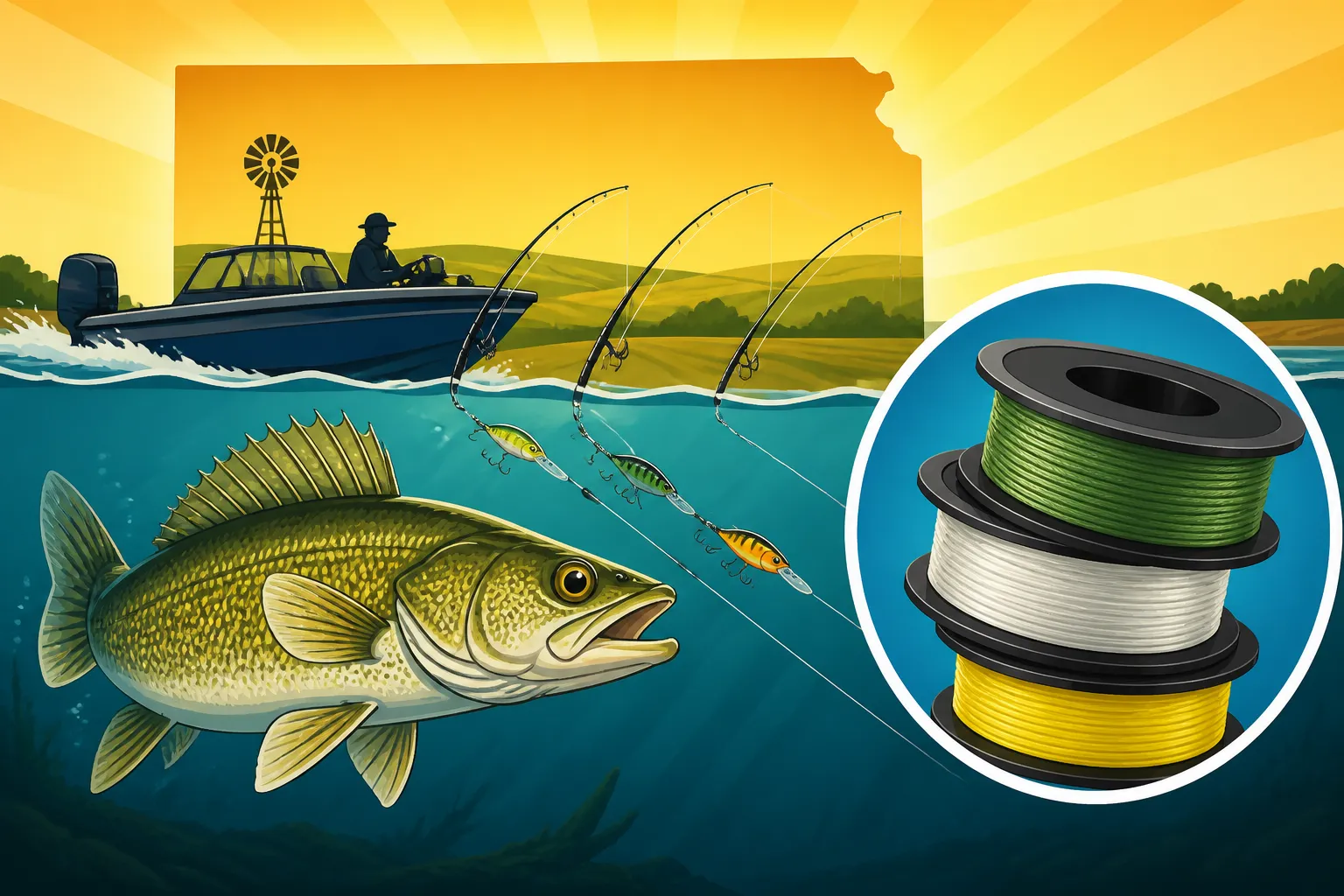
Braided line is a completely different animal. It’s made by weaving together multiple strands of synthetic fibers, creating a super-strong, thin line with virtually no stretch. This "no stretch" quality is its superpower for trolling. You get incredible sensitivity, allowing you to feel every bump, tick, and subtle bite. If a walleye so much as breathes on your lure, you'll feel it! This also means your lures will run truer to their advertised depths, as there's less line diameter and stretch to create drag.
The downside? The lack of stretch can be unforgiving. A sudden, violent strike from a big walleye can put immense pressure on your knots and rod, potentially leading to pulled hooks or even snapped lines if your drag isn't set perfectly. Braided line is also more visible in the water, which can be a concern in clear Kansas lakes like Wilson Lake, where walleye can be quite line-shy. This is why many anglers opt for a fluorocarbon leader when using braid for walleye. Despite these considerations, many experienced walleye anglers swear by braid for its sensitivity and depth control.
Fluorocarbon Line Characteristics
Fluorocarbon line, often referred to as "fluoro," offers a compelling middle ground, or is often used in conjunction with braid. Like monofilament, it’s a single-strand line, but it’s made from a different polymer. Its key characteristics include very low visibility in water (it has a refractive index very similar to water), excellent abrasion resistance, and much less stretch than mono, though more than braid. This combination makes it fantastic for leaders, especially when fishing clear water.
When used as a main line for trolling, fluorocarbon sinks faster than mono, which can help your lures get down to depth quicker and stay there. Its low stretch provides a good balance of feel and some forgiveness. However, it can be stiffer than mono, which can sometimes lead to more memory on the spool and a bit more challenge with knot tying. For serious walleye hunters, particularly in high-pressure scenarios or exceptionally clear waters, a full spool of fluorocarbon can be a game-changer for stealth and depth management.
Factors Influencing Line Weight Choice for Kansas Walleye Trolling
Choosing the right line weight isn't just about what feels "strong enough." There are several critical factors that Kansas walleye anglers need to consider to maximize their success, especially when targeting different depths and conditions.
Lure Type and Depth Requirements
The type of lure you're pulling is probably the biggest factor in determining your line weight. Are you pulling tiny flicker shads for shallow-feeding walleye in spring, or deep-diving crankbaits that need to hug the bottom in 30 feet of water during summer? Lighter lines (think 8-12 lb test) allow your crankbaits to dive deeper on a given amount of line out. This is physics at work: less line diameter means less water resistance, which translates to a deeper dive. If you're trying to hit that 25-foot contour with a crankbait rated for 20 feet, a lighter line is your friend. This is particularly true on large reservoirs like Milford Lake, where walleye can suspend or hold deep.
Conversely, if you're pulling larger, more aggressive crankbaits or using heavier bottom bouncers and live bait rigs, you might opt for a slightly heavier line. While a heavier line might reduce your maximum diving depth for crankbaits, it provides more backbone for managing those bigger lures, dealing with snags, and fighting larger fish more confidently. It's a trade-off: depth potential versus brute strength and abrasion resistance. Many anglers will keep multiple setups with different line weights to adapt to various lure types and depths.
Water Clarity and Conditions
Kansas lakes can vary wildly in clarity. Some, like Wilson Lake, are known for their crystal-clear water, while others, particularly after heavy rains, can be stained or downright muddy. In clear water, line visibility becomes a huge factor. Walleye, being predatory but often cautious, can be spooky of thick, visible lines. This is where you might lean towards lighter lines or the use of fluorocarbon leaders. A 10 lb fluorocarbon leader attached to a 20 lb braided main line gives you the best of both worlds: the strength and sensitivity of braid, with the stealth of nearly invisible fluorocarbon near your lure. This is a common setup for targeting walleye in pristine conditions.
In stained or murky water, however, line visibility is less of a concern. Here, you might prioritize strength and abrasion resistance. Heavier lines (15-20 lb test) might be perfectly acceptable, especially if you're trolling through brush piles or over rocky bottoms where snags are frequent. The added diameter won't deter fish as much, and the extra strength can help you retrieve snagged lures, saving you money and frustration. Think about how many times you've lost a favorite crankbait to a submerged stump—a slightly heavier, tougher line might have made the difference.
Structure and Cover in Kansas Lakes
Kansas reservoirs are full of diverse underwater structures, from rock piles and ledges to flooded timber and standing weed beds. Trolling these areas is often where the walleye are, but it also presents challenges for your line. When you're constantly bumping lures off rock transitions or grinding them through submerged timber, your line takes a beating. Lighter lines, while offering depth advantages, are more susceptible to fraying and breaking in these abrasive environments. Imagine your 8 lb mono rubbing repeatedly against a sharp limestone edge at El Dorado Lake—it won't last long.
For aggressive trolling over rocky bottoms, such as those found at Kanopolis Lake or Milford Lake, a line with excellent abrasion resistance is paramount. Braided lines, especially those with tighter weaves, can offer superior cut resistance compared to mono. If you're using braid, ensure your leader material is also robust enough for the job. Fluorocarbon leaders, with their tough exterior, are often preferred for this reason. In these situations, stepping up to a 12-15 lb main line, even in braid, can provide an extra margin of error and prevent heartbreak from lost fish or expensive lures. It’s all about matching your gear to the battlefield.
Recommended Line Weights for Different Trolling Scenarios
Now that we’ve covered the basics, let’s get down to the brass tacks: what specific line weights should you be considering for your Kansas walleye trolling adventures? It really boils down to the tactics you plan to employ.
Light Line (8-12 lb Test) for Finesse Trolling
This is your go-to range for when you need maximum depth from your crankbaits, or when walleye are being particularly finicky in clear water.
- Monofilament (8-10 lb): If you're pulling smaller, shallow-to-mid diving crankbaits in areas where a little stretch isn't a huge detriment, like open water flats or gradual slopes, 8-10 lb mono works great. It's forgiving, handles well, and is generally more budget-friendly. This is a good choice for targeting walleye in the 10-20 foot range, especially during cooler water periods when bites can be subtle but fish aren't hitting with violent aggression. Just be mindful of its stretch when trying to feel light bites.
- Braided Line (10-12 lb): For ultimate depth control and sensitivity, especially with smaller crankbaits, a 10-12 lb braided main line is excellent. You'll feel everything! This is ideal for subtle bites or when you're trying to precisely tick the bottom with a bottom bouncer in deeper water. Pair it with a 10-12 lb fluorocarbon leader (3-6 feet long) to mitigate visibility issues and add a touch of abrasion resistance near the lure. This setup is incredibly effective for vertical jigging or pulling lighter rigs where sensitivity is key. You can often find quality braided lines like PowerPro or Berkley X9 at your local Bass Pro Shops or even order spools online from Amazon.
When I'm trying to eke out every inch of depth from a Rapala Shad Rap or a Bandit 200, an 8 or 10 lb fluorocarbon main line often gets the nod, especially if I'm not running planer boards and need that direct lure action. It just sinks better and offers minimal resistance. This approach works wonders on clearer lakes like Clinton or Cedar Bluff, where walleye might shy away from heavier lines.
Medium Line (15-20 lb Test) for Versatile Trolling
This is the sweet spot for many Kansas walleye anglers, offering a great balance of strength, depth capability, and handling.
- Braided Line (15-20 lb): This is arguably the most popular choice for general walleye trolling with braid. A 15-20 lb braided line gives you excellent strength for fighting larger walleye, pulling magnum crankbaits, or handling the drag of planer boards. It still maintains great sensitivity and allows lures to run deep, especially when combined with a fluorocarbon leader (12-15 lb test). This setup is robust enough for most trolling applications, from covering wide flats to working structured points at Perry Lake. The added strength helps immensely if you snag, giving you a better chance to free your lure.
- Monofilament (12-15 lb): While less common for dedicated deep trolling compared to braid or fluorocarbon, 12-15 lb mono can be a good choice for medium-depth crankbaiting (15-25 feet) or for pulling heavier spinner rigs. Its stretch can still be beneficial for shock absorption, especially when a big walleye makes a powerful run right at the boat. This is a forgiving line that's easier on the budget and great for anglers who prefer a bit more "give" in their system. However, be mindful that your lures won't dive as deep as they would on thinner lines.
Many of my trolling rods are spooled with 15 lb braid. It's just so versatile. I can attach a 10 lb fluoro leader for finesse presentations, or bump up to a 15 lb fluoro leader if I'm banging crankbaits through heavy rock or timber. Kansas Fishing Gear Guide often discusses the versatility of different line types.
Heavy Line (20-30 lb Test) for Heavy-Duty and Specialized Trolling
While less common for standard walleye trolling, there are situations where a heavier line is warranted.
- Braided Line (20-30 lb): If you're primarily pulling large offshore planer boards on big water, using very heavy bottom bouncers (2+ oz), or targeting areas with extremely heavy cover or snags, a 20-30 lb braid is the way to go. The increased strength is invaluable for managing multiple lines, especially if you're running inline planer boards that create significant drag. This beefier line offers superior abrasion resistance and confidence when a monster walleye decides to dive into the thickest cover. While it might reduce your lure's maximum depth slightly due to diameter, the trade-off for durability and pulling power is often worth it in these specific scenarios.
- Monofilament (17-20 lb): In some specific applications, like very heavy planer board fishing with extremely large deep-diving crankbaits where maximum diving depth isn't the absolute priority, some anglers might still use heavier mono. However, for most precise walleye trolling, braid or fluorocarbon in this weight class will outperform mono due to their lower stretch and thinner diameter for equivalent strength.
This heavier range isn't typically for your everyday crankbait trolling, but if you're pulling big RipShads or super deep-diving plugs in a river system known for logs, or perhaps going after those massive blue catfish that sometimes hit walleye lures at Tuttle Creek Lake, then the extra muscle of a 20-30 lb braid is a smart move. Always match your line to the intended target and the challenging conditions you expect to encounter.
Here's a quick comparison of popular line types and their optimal uses for walleye trolling:
| Line Type | Key Characteristics | Ideal Trolling Scenario | Pros | Cons |
|---|---|---|---|---|
| Monofilament | Stretchy, good knot strength, decent abrasion | Shallow-to-mid depth crankbaits, forgiving hooksets | Affordable, good shock absorption, easy to cast | High stretch, thicker diameter, less sensitive |
| Braided | No stretch, thin diameter, very strong, high sensitivity | Deep water, planer boards, bottom bouncing, maximum depth | Extreme sensitivity, strong, durable, long-lasting | Visible, less forgiving hooksets, can fray on sharp objects |
| Fluorocarbon | Low visibility, low stretch, good abrasion, sinks | Leaders for braid, full spool for clear water, depth control | Near invisible, excellent abrasion resistance, good feel | Stiffer, more expensive, some stretch (more than braid) |
Tips for Rigging and Maintaining Your Trolling Line
Having the right line weight is only half the battle. How you rig it and take care of it makes a huge difference in its performance and longevity. These small details can prevent big headaches on the water.
Leader Considerations
If you're using braided line (which many dedicated walleye trollers do), a leader is almost always a good idea. Fluorocarbon is the top choice here. It's virtually invisible underwater, which helps with line-shy walleye, and its abrasion resistance protects your main line from rocks and the walleye’s abrasive mouth. A leader also provides a small amount of stretch, adding a bit of shock absorption to an otherwise rigid braid setup. Typically, a 3-6 foot leader is sufficient. You can attach it to your main line using a blood knot, uni-to-uni knot, or an FG knot for a strong, low-profile connection. This blend gives you the power of braid with the subtlety of fluorocarbon. You can learn more about specific knot types for different lines when exploring Kansas Fishing Techniques for Beginners.
Choosing the leader weight is also important. Generally, your leader should be a slightly lighter test than your main line. For example, if you're running 15 lb braid, a 10-12 lb fluorocarbon leader is a great match. This way, if you get a serious snag, your leader will likely break before your main line, saving you some valuable braid. This is especially useful when trolling near rocky areas at Tuttle Creek Lake where snags are common.
Line Counters and Spooling
For effective trolling, especially when trying to replicate successful passes, a line counter reel is indispensable. It allows you to precisely know how much line you have out, which directly correlates to your lure’s depth. However, these reels only work accurately if your line is spooled correctly. Overfilling or underfilling your spool can throw off the line counter's calibration. When spooling new line, especially monofilament or fluorocarbon, try to do it under some tension to prevent line twist and ensure it lays neatly on the spool. For braid, a backing of mono can prevent it from slipping on the spool and save you some money since braid is more expensive.
When you're trying to replicate a specific depth on your fish finder screen, knowing exactly how many feet of line are out is critical. If your line counter is off, you might be trolling 5 feet above or below the fish. Many experienced anglers will calibrate their line counters by letting out a known amount of line (e.g., to a specified marker or a measured distance) to ensure accuracy. This precision helps you hit those sweet spots repeatedly, like the contours at Cedar Bluff or the depths at Melvern Lake.
Regular Line Inspection and Replacement
Your fishing line is a wear-and-tear item, and it's often the weakest link in your system. Regularly inspect the first 10-20 feet of your line, especially after fishing around abrasive structure. Look for nicks, frays, or discolored spots. If you find any, cut back a few feet until you reach fresh, healthy line. This simple habit can save you from losing a trophy walleye due to compromised line.
Monofilament and fluorocarbon lines can also degrade over time due to UV exposure and age. Even if you haven't fished heavily, it's a good practice to replace these lines at least once a year, or more frequently if you fish often. Braided line is much more durable but can still suffer from abrasion. If you notice significant fraying or fuzziness on your braid, it's time to replace it. A good rule of thumb is to replace mono or fluoro annually, and braid every 2-3 years, depending on use. Remember, a good fishing line is an investment in your success; don't skimp on maintenance! Even with the Best Rod and Reel Combo for Walleye, a weak line can ruin your day.
The quest for the perfect line weight for walleye trolling is an ongoing journey for every angler, but armed with this knowledge, you're well on your way to making informed decisions that will put more fish in your boat. Tight lines out there, Kansas anglers!
Disclaimer
This article is for general informational purposes only and does not constitute professional advice. Laws, prices and regulations vary by location and change over time. Consult a qualified professional for guidance on your specific situation.