How to Jug Fish for Catfish
There's a unique kind of challenge and reward that comes with chasing Kansas catfish, and for many anglers, the traditional rod and reel isn't the only way to get in on the action. Maybe you’ve heard whispers about "jug fishing" and felt a mix of curiosity and confusion, or perhaps you're tired of spending hours holding a rod only to come up empty. This guide is all about demystifying jug fishing for catfish, breaking down the regulations, the setup, and the strategies so you can confidently try this productive and often thrilling method on your next Kansas outing.
Understanding the Basics of Jug Fishing in Kansas
Jug fishing often feels like a bit of a secret weapon in the catfish angler's arsenal, especially when you're targeting those big, hungry whiskers. It's a method that allows you to cover more water and set more lines than traditional rod and reel fishing, increasing your chances of finding where those channel cats, blue cats, and flatheads are really hanging out and feeding. But like any powerful tool, it comes with its own set of rules and best practices.
What is Jug Fishing?
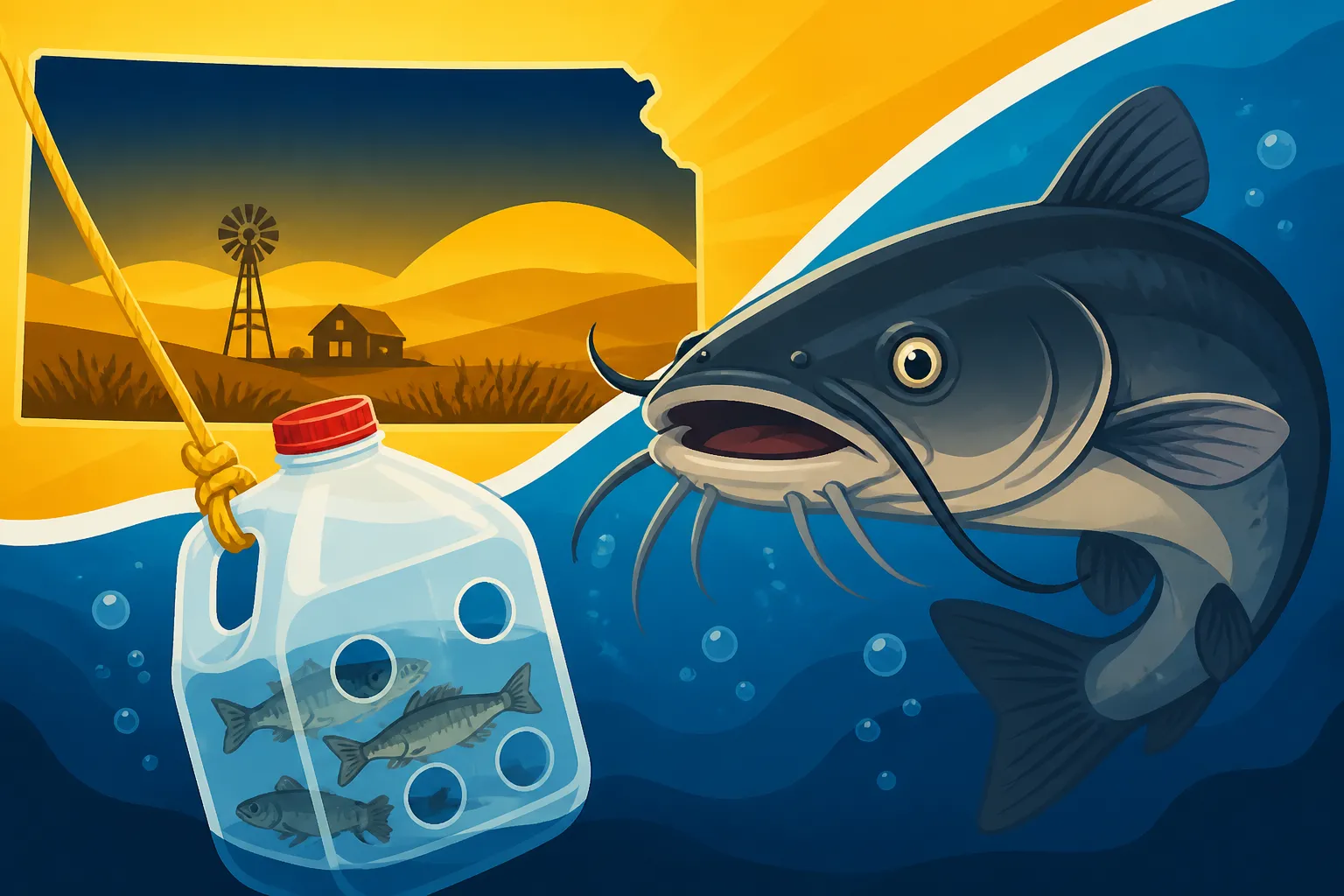
At its core, jug fishing involves using free-floating lines, each attached to a buoyant object – the "jug" – that drifts with the current or wind, presenting bait to fish over a wide area. Imagine a fleet of little bobbers, each with its own baited hook, working independently to find a hungry fish. When a catfish takes the bait, the jug will start to dance, tip, or even take off across the water, making for an incredibly exciting chase. It’s a passive yet highly effective technique, especially for species like channel and blue catfish that often roam open waters or patrol river channels.
The beauty of jug fishing is its simplicity, but don't let that fool you into thinking it's not strategic. You're essentially letting the current and the fish do a lot of the work. You might use anything from repurposed plastic milk jugs or pool noodles to commercially manufactured floats available from retailers like Amazon. The line, typically a sturdy nylon or braided line, is tied to the jug, and at the other end is a weight and a hook, baited with whatever delicious (to a catfish, anyway!) offering you've chosen. The key is to have enough line to reach the desired depth and enough buoyancy in the jug to support a fighting fish without sinking. This method is particularly effective for those times when fish are scattered or when you want to explore different depths and current seams in a large body of water like Milford Lake or Tuttle Creek Lake.
Kansas Regulations for Jug Fishing
Before you even think about tossing your first jug into a Kansas waterway, it's absolutely crucial to understand the rules set forth by the Kansas Department of Wildlife and Parks (KDWP). Ignoring these can lead to fines and a ruined day on the water. Kansas, thankfully, does allow jug fishing, but it's far from a free-for-all.
First off, you need a valid fishing license. This isn't optional for any type of fishing in Kansas, including passive methods like jugging. You can find comprehensive details on the specific requirements in our guide on the Kansas Fishing License Guide. Beyond that, the KDWP dictates that you can use up to eight jugs per person. Each jug must be clearly marked with your name and KDWP number (your fishing license number). This isn't just a suggestion; it’s a strict requirement for identification and accountability.
Where you can jug fish is also important. Jug fishing is generally permitted on most public waters, including major reservoirs and rivers. However, there are some restrictions, particularly in specific community fishing lakes or designated urban ponds where only rod and reel fishing might be allowed. Always check local regulations for the specific waterbody you plan to fish. You'll also need to monitor your jugs. While they are free-floating, you can't just set them out and leave them for hours on end. Kansas regulations typically require that you "attend" your jugs, meaning you must be actively present and able to retrieve them if necessary. This often means staying within visual distance or at least within a reasonable proximity where you can respond quickly. This helps prevent lost gear and ensures that any caught fish are retrieved promptly and ethically. You can read more about various fishing regulations in our comprehensive article on Kansas Fishing Regulations Explained.
It’s worth noting that using trotlines is a different technique with its own distinct rules, so don't confuse the two. While both involve multiple baited lines, the deployment and monitoring requirements differ. Understanding these nuances is key to a legal and enjoyable jug fishing experience in Kansas.
Setting Up Your Jugs for Catfish Success
Alright, you've got your license and a clear understanding of the rules. Now comes the fun part: preparing your gear! The right setup can make all the difference between a frustrating day of lost jugs and tangled lines, and a triumphant outing filled with big catfish. It’s about balancing simplicity with effectiveness and durability.
Choosing the Right Jugs and Lines
When it comes to the "jug" itself, you have a lot of options, and most are quite affordable. The most common choices range from repurposed items to purpose-built fishing floats.
-
Repurposed Items:
- Plastic Milk Jugs: These are classic for a reason. They're readily available, free, and have decent buoyancy. Just make sure they're clean and have a sturdy handle for tying off your line. The main drawback is they can be a bit flimsy over time and might not stand up to repeated use or very large fish.
- Pool Noodles: Cut into 1-2 foot sections, pool noodles offer excellent buoyancy and are very visible. You can thread your line through the center or tie it securely around the outside. Their bright colors make them easy to spot, even in choppy water. Many anglers like to add a small weight to one end so they stand upright in the water, making it even easier to see when a fish pulls them down.
- PVC Pipe & Foam: Some DIY anglers create more robust jugs using short sections of PVC pipe capped at the ends and filled or wrapped with closed-cell foam for buoyancy. These are virtually indestructible but require a bit more effort to construct.
-
Commercial Jugs: Many outdoor retailers, including online platforms like Amazon, offer purpose-built jug fishing floats. These often come in bright, high-visibility colors, are made from durable materials, and sometimes feature integrated line wraps or weighting systems. They're a great option if you're looking for something that will last and perform consistently.
No matter your choice, ensure the jug is buoyant enough to support a struggling catfish without sinking. For line, you'll want something strong and abrasion-resistant. Heavy-duty nylon monofilament (around 80-100 lb test) or braided line (50-80 lb test) are excellent choices. Monofilament offers a bit of stretch, which can act as a shock absorber against powerful runs, while braided line is incredibly strong for its diameter and has no stretch, offering direct feel. The length of your line is crucial; it needs to be long enough to reach the deepest parts of the water column you're targeting, plus some extra for drift and fish fighting. Many anglers use 10-20 feet of line, but if you're fishing a deep river channel in the Kansas River, you might need more. Securely attach a sturdy swivel to the end of your line, followed by a lead weight (enough to keep the bait down but not so much that it sinks your jug too easily) and then your hook.
For hooks, circle hooks are highly recommended, especially when you might not be attending your jugs constantly. Circle hooks are designed to hook fish in the corner of the mouth, significantly reducing gut-hooking and making for easier, healthier releases if you're not keeping every fish. Sizes range from 5/0 to 10/0, depending on the size of catfish you're targeting. For flatheads, a larger, stout hook is essential. You can find excellent quality circle hooks and lead weights on Amazon.
Best Baits for Jug Fishing Catfish
The right bait is paramount to jug fishing success, and Kansas catfish have a diverse palate. What works best can depend on the species of catfish you're after and the time of year.
- Cut Bait: This is arguably the king of jug fishing baits for channel and blue catfish. Freshly cut shad, carp, drum, or even smaller panfish (where legal) emit oils and scent that catfish simply can't resist. Cut bait is particularly effective because it’s easy for catfish to find using their keen sense of smell, even in murky water or at night. For channel catfish, a chunk of shad about the size of your thumb can be deadly. For blue catfish, especially larger ones in rivers like the Kansas River, a bigger piece of cut carp or an entire small shad can be very enticing. Ensure your cut bait is fresh; frozen bait can work, but fresh is almost always better.
- Stink Baits/Prepared Baits: There's a reason these are so popular: they're designed to attract channel catfish from a distance with powerful, often pungent, scents. Brands like Sonny's Super Sticky or Catfish Charlie are mainstays. These are typically used with sponge hooks or treble hooks that hold the soft bait well. While effective for channel cats, they generally aren't as productive for the more predatory blue or flathead catfish.
- Live Bait: For trophy flathead catfish, live bait is almost essential. A lively bluegill, green sunfish, or even a small carp (check local regulations on baitfish species and size) hooked through the back or lips will often prove irresistible to a lurking flathead. You'll need slightly larger, stronger hooks when using live bait to ensure a good hookset and to prevent the bait from tearing off too easily. The struggle of a live baitfish sends out vibrations that attract these apex predators. Milford Lake is renowned for its flathead potential, making live bait a top choice there.
- Other Baits: Less common but still effective baits include chicken livers (very messy but potent), shrimp, and even hot dogs soaked in garlic. These are usually better for smaller channel catfish.
When baiting your hooks, make sure the hook point is exposed for a solid hookset. For cut bait, threading the hook through the meat and skin will help it stay on during the drift. Remember to match your bait to your target species. If you’re targeting large blue cats in the lower Republican River arm of Milford Lake, a big slab of fresh cut shad or carp will likely outperform a small piece of chicken liver. Conversely, if you’re fishing for numbers of channel cats in a smaller impoundment like a Kansas Community Fishing Lake Rules, stink bait can be highly effective.
| Bait Type | Primary Target Species | Key Advantages | Considerations |
|---|---|---|---|
| Cut Bait | Channel Catfish, Blue Catfish | Strong scent trail, easy to acquire/prepare | Can be messy, needs to be fresh for best results |
| Live Bait | Flathead Catfish, Large Blue Catfish | Irresistible to predatory catfish, strong action | Requires baitfish, potential for quick bait loss |
| Stink Baits | Channel Catfish | Highly attractive scent, convenient | Less effective for flatheads/blue cats, can be messy |
| Chicken Liver | Channel Catfish | Strong odor, readily available | Very soft, easily pulled off hook, messy |
Strategic Placement and Monitoring for Optimal Catches
You've got your jugs built and baited, now it's time to put them to work. This isn't just about tossing them out and hoping for the best. Strategic placement, understanding catfish behavior, and diligent monitoring are what elevate jug fishing from a novelty to a highly productive technique.
Where to Set Your Jugs in Kansas Waters
The "where" is just as important as the "what" when it comes to jug fishing success. Catfish, while often thought of as bottom dwellers, are highly migratory and will follow food and favorable conditions.
-
Reservoirs (like Cheney Reservoir, Wilson Lake):
- Main Lake Humps and Ledges: Catfish often relate to underwater structure. Drift your jugs over submerged humps, along sharp drop-offs, or near the edges of old creek channels. These areas act as highways for foraging catfish.
- Wind-Blown Banks: A consistent wind pushing across a reservoir can stack baitfish on the leeward side, and where the baitfish go, the catfish will follow. Setting jugs parallel to these banks can be incredibly productive.
- Standing Timber/Brush Piles: Submerged trees or brush offer cover and ambush points for catfish. Drifting jugs near these structures, especially on their outside edges, can draw strikes. Just be prepared for potential snags.
- River Arms/Creeks: Inflow areas where rivers or creeks enter a reservoir can concentrate baitfish and provide oxygenated water, making them prime catfish territory. Think about the upper reaches of Tuttle Creek Lake, for instance.
-
Rivers (like the Kansas River, Republican River):
- Deep River Channels: Catfish, particularly blue and flathead, love to cruise the deeper parts of river channels. Jugs set here will cover prime real estate.
- Current Seams and Eddies: Look for areas where faster current meets slower water, creating current seams. Catfish will often hold in the slower water, waiting for food to be swept by. Eddies, those swirling pockets of water behind obstructions, are also excellent ambush points.
- Log Jams and Undercut Banks: These provide shelter, shade, and excellent feeding opportunities. Approach these areas with caution to avoid losing your jugs, but they are often highly productive. For specific river fishing tips, check out our Kansas River Fishing Guide.
-
Time of Day and Season: Catfish are often most active during low-light conditions, meaning dawn, dusk, and especially night are prime times. During the warmer months, night fishing with jugs can be exceptionally productive as catfish move shallower to feed. In cooler weather, they might hold deeper. Pay attention to water temperature and current reports to gauge their activity. Remember to always consider the Kansas Fishing Seasons and Limits when planning your trips.
Monitoring Your Jugs and Landing Your Catch
Once your jugs are deployed, the waiting game begins. But "waiting" doesn't mean ignoring them. You're legally required to attend them, and practically, you want to be ready to spring into action when a jug signals a bite.
- Vigilant Observation: Keep a close eye on your spread. A jug that suddenly starts bobbing erratically, tips completely over, or takes off at a steady pace is a clear indicator that you have a fish on. The excitement of seeing a jug take off is one of the biggest thrills of this method!
- Approaching the Jug: When a jug signals a fish, approach it slowly and quietly with your boat or kayak. Don't charge in, as this can spook the fish, causing it to fight harder or even pull free. Try to get ahead of the drifting jug if possible, so you can control its direction as you get closer.
- The Fight: Once you have the jug in hand, the real fight begins. Don't just yank the line; let the fish run if it wants to, tiring it out. Use gloves to protect your hands from the line. Work the fish slowly towards the boat. For larger fish, a sturdy landing net is invaluable. A good, large net like those found on Amazon can save you from losing a trophy right at the boat.
- Landing and Handling: Once the fish is alongside, use your net to scoop it up. For big catfish, especially flatheads, a sturdy pair of lip grippers can also be helpful. Be mindful of their sharp fins and the thrashing power of a large catfish. Have a pair of pliers ready to remove the hook quickly. If you're planning on keeping the fish, move it to a cooler with ice as soon as possible to preserve its quality. If you're releasing it, handle it gently, remove the hook, and get it back into the water quickly. You can learn more about Kansas Catfish Species Guide to better understand your catch.
Jug fishing offers a unique and often highly effective way to target catfish in Kansas. By understanding the regulations, setting up your gear properly, and employing smart strategies for placement and monitoring, you'll be well on your way to enjoying some fantastic catfishing adventures on Kansas's many excellent waterways.
Disclaimer
Please note that fishing regulations can change. It is always the angler's responsibility to consult the most current Kansas Department of Wildlife and Parks fishing regulations handbook before heading out on the water. This guide provides general information and should not be considered a substitute for official KDWP publications.