How to Locate Baitfish Schools in Kansas Lakes
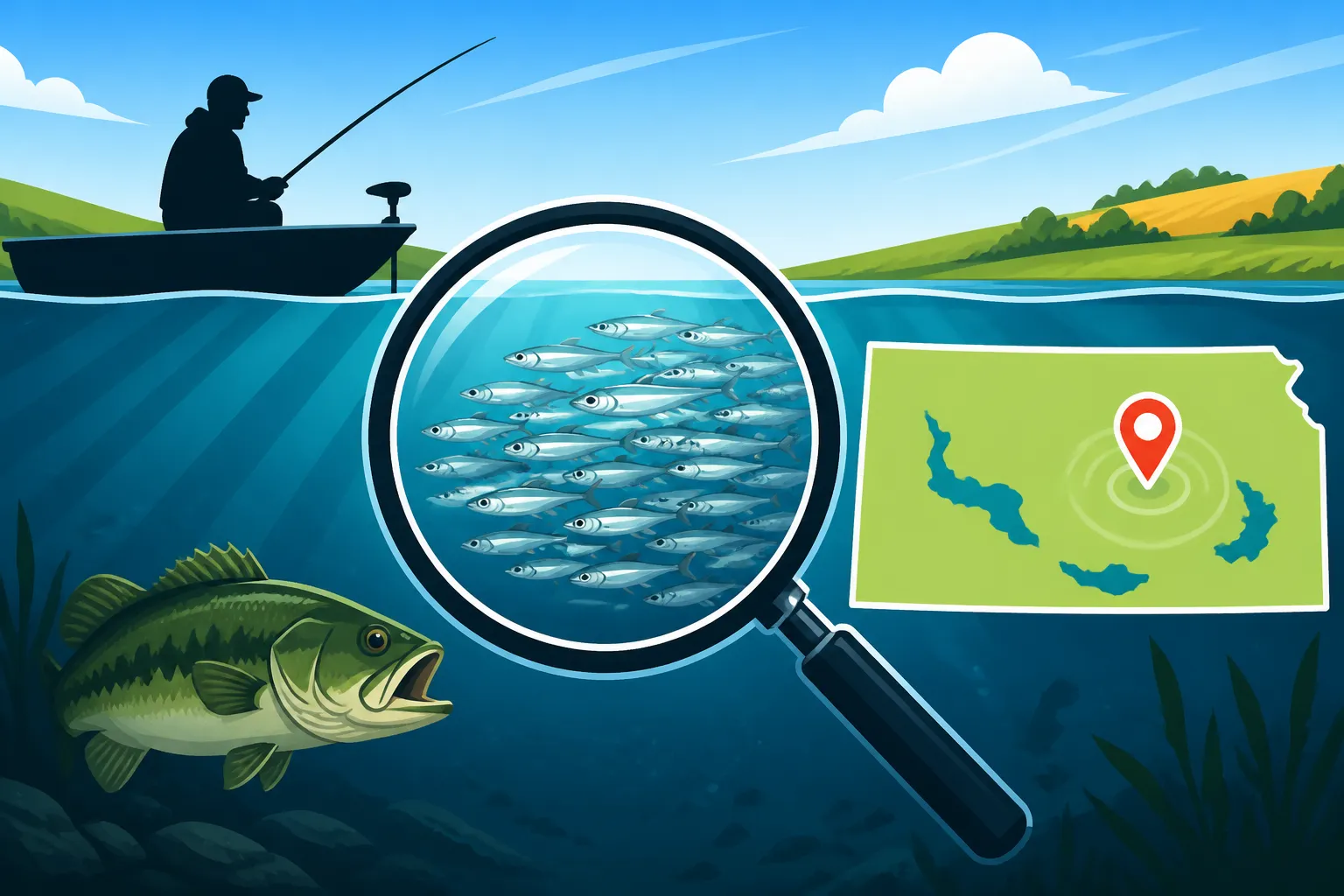
It can be incredibly frustrating to hit a prime fishing spot on a Kansas lake, only to cast repeatedly into what feels like a barren underwater desert. You know the fish are somewhere, but without locating their food source – the baitfish – you're essentially just guessing. This guide is all about equipping you with the knowledge and tactics to consistently find those crucial baitfish schools, turning your guesswork into strategic, successful angling.
Why Finding Baitfish is Your Secret Weapon on Kansas Lakes
Let's be honest, we all want to catch more fish, right? And for predator species like walleye, crappie, catfish, and bass in Kansas, baitfish are the absolute bedrock of their diet. If you can find the bait, you're halfway to finding the game fish that are actively hunting them. It’s a fundamental principle, but one often overlooked in the rush to cast a line.
The Food Chain Connection
Think of it like this: a hungry diner goes where the food is served. Our Kansas game fish are no different. They are constantly on the prowl for schools of shad, minnows, or other small forage fish. When you locate a dense school of baitfish, you've essentially found the "restaurant" where the bigger fish are likely dining or waiting for their next meal. It’s a direct link in the food chain that you, as an angler, can exploit.
Understanding this connection helps you move beyond just casting randomly. Instead, you start to think like a predator. Where would the baitfish be hiding? What are their preferred habitats? Answering these questions puts you in the prime position to intercept the bigger fish. It truly elevates your fishing game from hopeful casting to targeted hunting.
How Baitfish Drive Predator Behavior
Baitfish aren't just passive snacks; their movements and concentrations dictate where and how predator fish operate. During certain times of the year, like the famous Kansas White Bass Run Timing in spring, you'll find white bass pushing huge schools of shad to the surface, creating a feeding frenzy that's hard to miss. These aren't isolated incidents; similar patterns play out on a smaller scale constantly beneath the surface.
Predator fish will follow baitfish into different depths, relate to specific structures, and even adjust their feeding times based on baitfish activity. For example, if baitfish are holding tight to a deep-water hump, you can bet that a school of Kansas Walleye Fishing Techniques will be lurking nearby, ambushing any strays. By keying into these movements, you can anticipate where the game fish will be, rather than simply reacting to where you hope they might be. It’s about being proactive, not just reactive, in your fishing strategy.
Reading the Water: Visual Clues and Environmental Factors
Before you even turn on your electronics, your eyes and ears can tell you a lot about where baitfish might be congregating. Learning to "read the water" is a skill that develops over time, but it's one of the most rewarding aspects of becoming a more intuitive angler. Sometimes the best fish finder is simply paying close attention to your surroundings.
Surface Activity: Ripples, Jumps, and Birds
Keep an eagle eye on the water's surface. Small, nervous ripples or sudden splashes that don't look like a single fish jumping could be baitfish trying to escape a predator. Sometimes you'll even see them "boiling" on the surface, a clear sign of a large school being driven up from below. Pay attention to diving birds, like terns or gulls, particularly during feeding periods. They often target the same baitfish that game fish are pursuing, acting as natural, airborne fish finders.
If you spot these kinds of activities, cast towards them immediately, as it indicates an active feeding situation. These visual cues are invaluable, especially during early morning or late evening when light conditions might make electronics less effective for observing surface activity. Learning to differentiate between a single fish jumping for an insect and a mass of baitfish fleeing a predator comes with practice, but it's a critical skill for any angler on a Milford Lake Fishing Guide or any other large reservoir.
Shoreline and Cover Preferences
Baitfish often seek protection in shallower waters or around dense cover, especially when they're not actively being pursued. Look for areas with submerged timber, rock piles, weed beds, or even boat docks. These structures provide refuge from larger predators and can be prime locations for baitfish to congregate, particularly in smaller bodies of water like community fishing lakes.
In many Kansas lakes, the shoreline itself offers plenty of places for baitfish to hide. Overhanging trees, fallen logs, or even just shallow flats with a little bit of ripple can hold schools of minnows. Don't be afraid to fish these areas, even if they seem less "glamorous" than open water. Many times, the game fish will be lurking just outside this cover, ready to ambush any baitfish that venture too far out. This is a great tip for anyone practicing Kansas Bank Fishing Techniques!
Understanding Water Temperature and Clarity
Water temperature plays a huge role in baitfish behavior. Like most cold-blooded creatures, their metabolism and activity levels are directly tied to temperature. They'll often seek out preferred temperature ranges, which can vary by species and season. In colder months, baitfish might move to deeper, more stable temperatures, while in warmer months, they might seek slightly cooler, oxygen-rich waters.
Water clarity also influences where baitfish hold. In clearer water, they might spread out more or seek deeper cover to avoid detection. In murkier or stained water, they might hold tighter together or closer to the surface, as visibility is reduced for both them and their predators. Paying attention to these subtle environmental cues can give you a significant advantage in narrowing down where to focus your efforts. A sudden change in clarity, perhaps after a heavy rain, can drastically alter where baitfish schools will be holding.
High-Tech Helpers: Using Electronics to Pinpoint Baitfish
While visual cues are fantastic, modern fishing electronics have revolutionized the way we locate baitfish schools. A good fish finder can show you what's happening beneath the surface, revealing schools of bait that your eyes simply can't see. It's like having x-ray vision for the water.
Mastering Your Fish Finder Settings
Your fish finder is an incredibly powerful tool, but only if you know how to use it. Many anglers just turn it on and go, missing out on crucial details. To effectively locate baitfish, you need to adjust your sensitivity, gain, and frequency settings. Often, increasing sensitivity slightly can help pick up smaller baitfish schools that might otherwise appear as faint specks or be ignored by automatic settings.
Experiment with different frequency settings too. High frequencies (like 200 kHz) generally provide better detail for shallower water and bait schools, while lower frequencies (like 50 kHz) can penetrate deeper. Don't be afraid to spend time playing with these settings on the water. What works best for spotting crappie schools in Cheney Reservoir Fishing Guide might be different from what you need for deeper walleye in another lake. You can find excellent instructional videos and even new units on Amazon that explain how to dial in these settings for specific applications. Mastering these skills will vastly improve your ability to discern baitfish from game fish.
Side Imaging and Down Imaging for Bait Schools
Traditional 2D sonar is great for showing you what's directly under your boat, but side imaging and down imaging take it to a whole new level. Down imaging provides a photo-like view directly beneath you, making it easier to distinguish dense baitfish clouds from individual fish or structure. This clarity helps you confirm if those blips are indeed baitfish.
Side imaging, however, is a game-changer for scanning large areas quickly. It sends sonar beams out to the sides of your boat, allowing you to see hundreds of feet on either side. This means you can spot huge bait balls or scattered schools without having to drive directly over them. Imagine cruising along, scanning the flats, and suddenly seeing a massive cloud of baitfish off to your port side. You can then mark it on your GPS and approach carefully. Many anglers consider a fish finder with good side imaging crucial, and there's a wide range of options available, often through retailers like Amazon, to fit different budgets. This technology is incredibly helpful for covering water and finding the "motherlodes" of forage.
GPS and Mapping for Recurring Spots
Once you find a consistent baitfish school, especially one holding around a specific piece of structure or depth, mark it on your GPS! Baitfish, like game fish, often follow predictable patterns. A brush pile that holds bait one week might hold it again the next. A specific submerged point where you see activity could be a recurring buffet line.
Using detailed lake maps in conjunction with your GPS can help you anticipate where baitfish might be. Look for contour lines indicating subtle depth changes, humps, creek channels, or sharp drop-offs. These are all areas where baitfish might congregate, either for food, cover, or to escape predators. If you notice a pattern of baitfish holding on the northern side of humps in the spring, for instance, you can use your map to target similar structures elsewhere on the lake. Keeping good records of your marks can lead to consistently productive spots season after season, making your Kansas Fishing Seasons Guide even more effective.
Seasonal Movements and Time of Day
Baitfish aren't static; their locations and behavior shift dramatically throughout the year and even over the course of a single day. Understanding these seasonal and daily rhythms is key to consistently putting your boat over the fish.
Spring Spawning and Shallow Water Concentrations
Spring is a time of renewed life, and for many baitfish species, it means moving into shallower waters to spawn. Shad, for example, will congregate in bays, coves, and along rip-rap shorelines where the water warms up faster. These shallow areas provide protection for their eggs and fry. Naturally, this migration draws in hungry predators looking for an easy meal.
During this period, focus your efforts on these shallow, warmer areas. Look for schools dimpling the surface in protected coves or along windswept banks. The activity can be furious as predator fish gorge themselves after a long winter. These concentrations of baitfish can also be found in river arms leading into larger reservoirs, where species like white bass will chase them upstream. This is an excellent time to target areas where you might find a Kansas White Bass Run Timing in full swing.
Summer Deep Water and Nighttime Patterns
As Kansas summers heat up, many baitfish move to deeper, cooler, and more oxygenated waters. They might suspend over deep channels, congregate around thermoclines, or hold near the cool water discharges of dams. This can make them harder to locate, often requiring good electronics and a willingness to explore open water.
However, baitfish also become more active at night in the summer. Under the cover of darkness, they'll often move shallower to feed on plankton or insects, sometimes coming right to the surface. This can trigger intense nighttime feeding by game fish. Anglers practicing Kansas Night Fishing Guide often use submersible lights to attract baitfish to their boats, knowing that game fish will follow. This provides a unique opportunity to find bait when they are otherwise holding deep during the day.
Fall Migration and Feeding Frenzies
Fall is a critical time for both baitfish and predator species in Kansas. As water temperatures begin to cool, baitfish senses that winter is approaching and they will start to feed aggressively to build up fat reserves. This often leads to massive schools congregating in open water, moving around as they search for food.
Predator fish, in turn, become incredibly active, knowing they too need to pack on weight for the lean winter months. This can result in spectacular feeding frenzies, especially on reservoirs like Wilson Lake or El Dorado Lake, where schools of white bass, stripers, and wipers can be seen crashing bait on the surface. Look for baitfish pushed against main lake points, over humps, or in the backs of creeks. These are prime areas for anglers looking to catch schooling fish using Best Lures for Kansas White Bass.
Winter Stratification and Deep Holds
In the colder winter months, baitfish metabolism slows down considerably, and they tend to hold in deeper, more stable temperature zones. They might suspend in the water column over deep flats, or relate tightly to deep structure like creek channels, bluffs, or submerged timber. Their movements are much less erratic, and they often form dense, tightly packed schools.
Locating these schools often requires patient use of your fish finder, meticulously scanning deep areas. Once found, they can be a consistent source of food for game fish, which will often be suspended just above, below, or within these bait balls. This is a crucial time for ice fishing anglers in Kansas, who rely on their electronics to find these deep baitfish concentrations to then target species like crappie or walleye. Understanding these deep-water holds is essential for successful Kansas Ice Fishing Guide outings.
| Method of Baitfish Detection | Pros | Cons | Best Use Scenarios |
|---|---|---|---|
| Visual Observation | Free, requires no equipment, engaging, confirms surface activity | Limited to surface/shallow water, can be affected by weather/light | Calm mornings/evenings, active feeding frenzies, shallow coves |
| Traditional 2D Sonar | Good for general depth, under-boat view, widely available | Less detailed, harder to distinguish small baitfish from clutter | Basic scanning, confirming depth, finding large schools under boat |
| Down Imaging | Photo-like clarity, excellent for distinguishing bait balls | Limited to directly beneath boat, still requires interpretation | Confirming bait presence on specific structure, identifying dense schools |
| Side Imaging | Scans wide areas quickly, great for covering water | Requires more practice to interpret, higher cost equipment | Searching large flats/channels, locating schools away from boat |
| GPS & Mapping | Tracks successful spots, aids in pattern development | Relies on prior knowledge/discoveries, maps aren't always current | Returning to productive areas, targeting similar structures |
| Water Temp/Clarity | Helps predict general locations, low-tech, intuitive | Not a direct locator, requires other methods for pinpointing | Adjusting search areas based on seasonal/environmental conditions |
Disclaimer
This article is for general informational purposes only and does not constitute professional advice. Laws, prices and regulations vary by location and change over time. Consult a qualified professional for guidance on your specific situation.