Best Season for Trophy Largemouth Bass in Kansas
Anglers across Kansas dream of landing that wall-hanger largemouth bass, but often feel frustrated trying to pinpoint the absolute best time to connect with a true trophy. It's not just about fishing any time; it's about understanding the specific seasons and conditions that coax these elusive giants out to feed. This guide will walk you through the prime windows for targeting enormous largemouth bass in Kansas, detailing the biological reasons behind these periods and offering practical strategies to increase your chances of success.
Understanding Trophy Largemouth Bass in Kansas
Chasing a trophy largemouth bass is a quest many anglers undertake, and in Kansas, it’s a pursuit that often requires a nuanced understanding of fish behavior and seasonal patterns. It's more than just luck; it's about strategic planning and knowledge.
What Defines a "Trophy" Bass in Kansas?
For many, a "trophy" largemouth isn't just a big fish, but one that truly stands out from the crowd, a fish that makes your heart pound when it strikes. While a 5-pounder might be a trophy for some, especially new anglers or those in heavily fished waters, serious Kansas anglers are often chasing 7, 8, or even 10+ pound fish. These are the elusive giants that don't come around every day, the kind of fish that warrants a photo and a story for years to come. It's less about a strict, universal number and more about hitting a personal best or exceeding what's commonly caught in your local waters.
The Kansas state record largemouth bass is an impressive specimen, showcasing the incredible potential within our state's waters. While few of us will ever break that record, knowing what's possible fuels the pursuit. It highlights the importance of sustained growth, abundant forage, and prime habitat – factors that allow a bass to reach such monumental sizes. This knowledge helps us set our own personal goals and appreciate the journey of targeting these magnificent creatures.
Ultimately, catching a trophy bass is often a culmination of skill, patience, and being in the right place at the right time with the right presentation. These older, larger fish are often warier, more experienced, and less likely to bite just any offering. They've survived countless encounters with anglers and predators, developing a cautious nature that makes their capture all the more rewarding and challenging. It’s a true test of an angler's dedication and expertise.
Factors Influencing Bass Growth and Size in Kansas
To consistently catch trophy largemouth, you first need to understand what makes them grow so big in the first place. Several environmental and biological factors play critical roles in a bass's journey to trophy status.
Habitat is paramount for a largemouth bass to thrive and grow large. This includes ample cover like submerged timber, dense aquatic vegetation (such as lily pads, hydrilla, coontail, or milfoil), expansive rock piles, and well-defined old creek channels. These features are not just places for bass to hide; they provide crucial ambush points for feeding, protection from predators, and thermal refuge during extreme temperatures. Good habitat allows bass to conserve energy and focus on eating, which directly translates to growth. Typically, deep water access near shallow feeding flats is a common characteristic of lakes consistently holding big bass.
Abundant forage is another non-negotiable requirement. Simply put, big bass need big food, and lots of it. A healthy population of various baitfish like gizzard shad, threadfin shad, sunfish, and smaller panfish, along with crayfish and frogs, is crucial. Lakes with thriving forage bases allow bass to bulk up quickly and efficiently. Water clarity also plays a role in how bass hunt; clear water often means bass rely more on sight, while murkier water might favor vibration-producing baits. This food source must be readily available year-round to support continuous growth, ensuring these fish have a constant supply of calories.
While less controllable by anglers, genetics and fishing pressure also play significant roles. Some bass strains are simply predisposed to grow larger and reach their maximum size potential faster than others. Additionally, fishing pressure can impact the number and wariness of trophy-sized fish available. Heavily fished lakes, while still capable of producing big fish, might see those giants caught more frequently, making them even warier and harder to entice. Understanding the Kansas Fishing Regulations Explained helps ensure these valuable resources are managed sustainably for future generations of anglers.
The Prime Seasons for Kansas Trophy Largemouth Bass
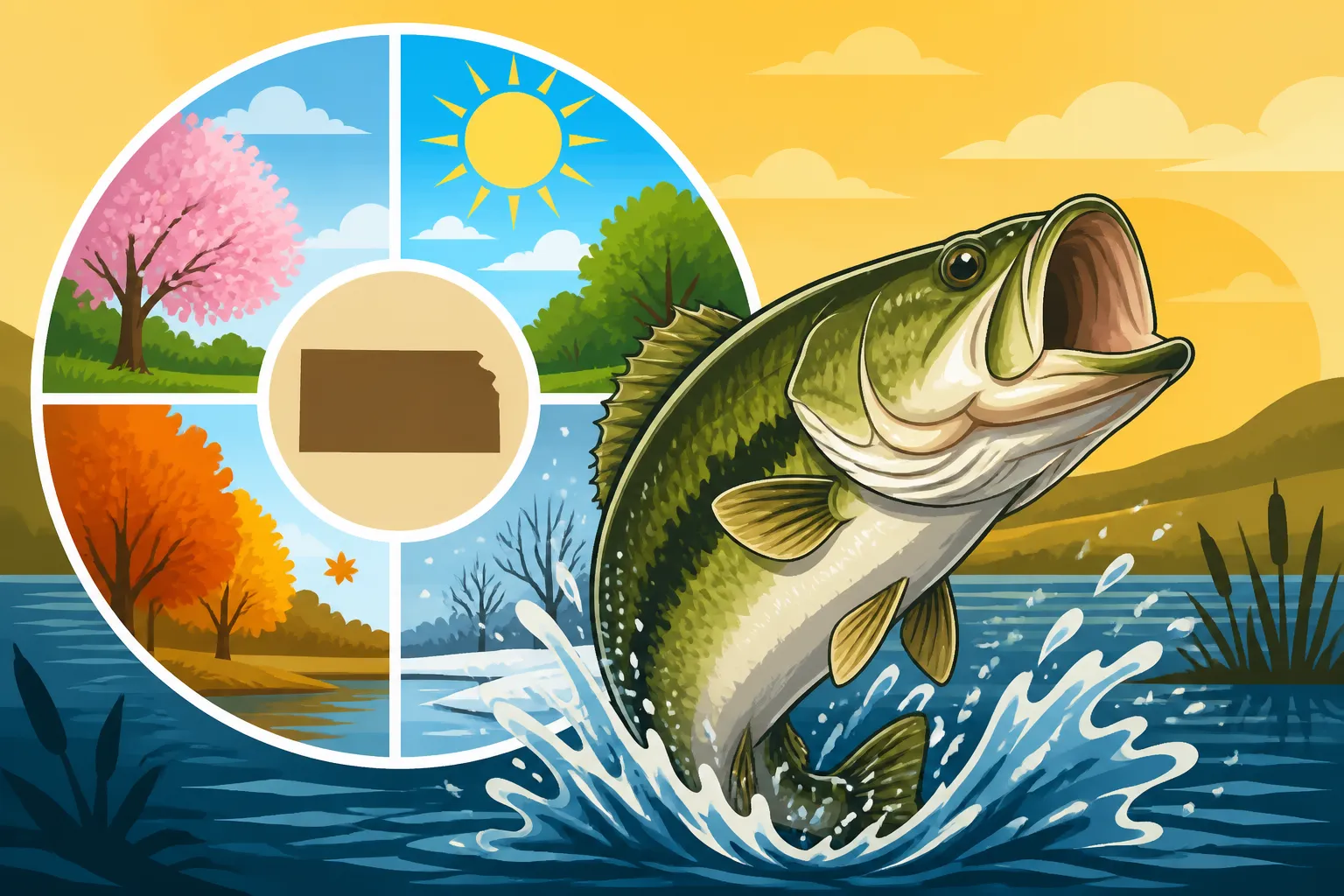
While you can technically catch a bass in Kansas year-round, there are undeniably specific windows when your odds of hooking into a truly massive specimen skyrocket. These seasons align with critical biological processes that make bass more active and aggressive.
Spring: The Pre-Spawn and Spawn Bonanza
Without a doubt, spring is the premier season for targeting trophy largemouth bass in Kansas. As the cold grip of winter finally loosens its hold and water temperatures begin to steadily climb into the upper 40s and 50s, bass shake off their lethargy. This pre-spawn period is when their metabolism kicks into high gear, and they begin moving from their deeper winter haunts towards shallower staging areas. This migration is driven by an instinctual need to feed heavily and build up energy reserves before the strenuous and energy-intensive spawning ritual.
During pre-spawn, trophy bass are often at their absolute heaviest for the year, gorging themselves on available baitfish and crayfish. They are aggressive and can be found congregating on main lake points, submerged humps, and along the edges of creek channels that lead directly into shallow spawning coves. This is a fantastic time for "power fishing" techniques, utilizing larger baits like deep-diving crankbaits, suspending jerkbaits, and heavy spinnerbaits, as these fish are actively hunting and willing to chase down a meal. Targeting these staging areas with heavy tackle and a confident approach can yield truly impressive results.
As water temperatures continue to climb and hit the crucial low to mid-60s range, bass will move onto their beds in shallow, protected coves and flats to spawn. While many anglers, myself included, choose to avoid actively targeting spawning bass out of conservation concerns, those guarding their nests are often fiercely protective and will strike at anything perceived as a threat to their eggs. Post-spawn sees a temporary dip in activity as fish recover from the rigors of spawning, but they soon resume feeding, often relating to nearby cover like submerged brush, docks, or standing timber. Understanding specific Kansas Largemouth Bass Facts can help you predict their behavior throughout this crucial season.
Fall: The Feeding Frenzy Before Winter
While spring takes the undisputed crown, fall runs a very close second for trophy largemouth opportunities in Kansas, offering a different but equally exciting challenge. As the sweltering summer heat gives way to cooler autumn temperatures, the entire aquatic ecosystem undergoes a significant transformation. Baitfish, primarily shad, begin to school up more tightly, and largemouth bass, sensing the impending arrival of winter and the need to conserve energy, go on an intense feeding binge to pack on as many calories as possible. This period, sometimes punctuated by the 'fall turnover' where surface and deeper waters mix, can be tricky initially, but once stable, the fishing can be absolutely phenomenal.
The absolute key to successful fall trophy bass fishing is accurately finding and following the baitfish. Shad, in particular, will form massive, dense schools, often congregating in the backs of creeks and coves where they feel secure and have access to plankton. These baitfish concentrations act like magnets for hungry bass. Look for tell-tale signs such as birds diving into the water, baitfish flicking or skipping on the surface, or use your fish finder electronics to locate these dense schools of forage. When you find the bait, you'll often find the big bass right on their heels, ready to strike. Reaction baits like lipless crankbaits, spinnerbaits, and swimbaits are incredibly effective at imitating these fleeing baitfish during this period.
As fall progresses and water temperatures continue their steady descent, typically dropping into the 50s and eventually the low 40s, bass will begin their transition from the shallow feeding flats back towards deeper water. They often relate to main lake points, ledges, and deep timber, seeking the more stable temperatures of deeper water. As the water cools further, they might become less aggressive, requiring slower, more deliberate presentations with baits like jigs, shaky heads, or finesse worms. This late fall period can still produce giants, but it often demands a more patient and precise approach, relying on subtler techniques to coax a bite.
Key Strategies for Targeting Trophy Bass During Peak Seasons
Knowing when to fish is only half the battle; knowing how and where to effectively present your baits to trophy largemouth bass during these peak seasons is what truly makes the difference.
Locating Large Bass During Spring
In spring, particularly during the pre-spawn and spawn, trophy bass will stage along very specific pathways that lead to their eventual spawning grounds. Think about prominent main lake points, secondary points within larger coves, and the mouths of creeks that offer both deeper water access and a gradual transition to shallow flats. Hard bottom areas, like gravel or rock, are often preferred for spawning beds, so these are excellent places to start your search. Look for areas with significant cover – a lone submerged tree, a rocky outcrop, or a patch of thick emergent weeds can hold multiple large fish.
Water temperature is your ultimate guide during the spring. Pay very close attention to it. When the water hits that sweet spot (mid-50s for aggressive pre-spawn feeding, low-60s for the actual spawn), focus your efforts intently on those prime staging or bedding areas. A reliable water thermometer is an absolutely essential tool in your arsenal. Often, fishing the sunny banks and northern coves first will be more productive, as these areas warm up faster and attract bass earlier in the season. Utilize baits like jig and trailer combos, medium-diving crankbaits in shad or crawfish patterns, or a classic Best Lures for Kansas Walleye soft plastic jerkbait (though meant for walleye, some baits crossover effectively for bass).
During the actual spawn, sight fishing can be incredibly effective for protective bass, but it requires a keen eye and a stealthy approach. Good quality polarized sunglasses are a must for spotting beds in clear water. When you identify a bed with a fish on it, cast beyond the bed and slowly work your bait into the strike zone. Remember that these fish are often more interested in protecting their eggs from intruders than actively feeding, so repeated casts with different bait presentations or colors might be necessary to trigger a reaction strike. Be patient, observant, and respectful of the fish.
Effective Fall Tactics for Monster Largemouth
In the fall, big bass are often found shadowing large, nomadic schools of shad or other baitfish. These schools can be anywhere from main lake humps and deep offshore structure to the very backs of creeks and coves, sometimes even shallow flats. Keep a vigilant eye on your fish finder for dense bait balls and the tell-tale arches of bass below or around them. Early mornings and late evenings can be particularly productive as bass push bait to the surface, creating explosive topwater action. A well-placed Zara Spook or Pop-R can be deadly when this occurs, making for some truly exciting strikes.
Fall bass can be either spread out and cruising or tightly schooled, making it crucial to cover water efficiently until you find them. Trolling larger spinnerbaits or crankbaits along reservoir main lake channels or casting big swimbaits and lipless crankbaits across expansive flats are excellent search tactics. Once you locate a feeding school of bass, slow down significantly and thoroughly work the entire area. The principles from How to Troll for Walleye on Rocky Points can sometimes be adapted for bass on similar structures, focusing on finding those active feeding fish.
As fall transitions into late fall, and water temperatures plummet, fish will begin to move deeper and their activity will decrease. Don't be afraid to fish vertical presentations like spoon jigging over deep humps or drop shots on ledges. The bite might be incredibly subtle, feeling like nothing more than extra weight or a slight tick, but a trophy bass could certainly be lurking. Having a variety of baits on hand, easily accessible in a well-organized tackle box, can make all the difference as conditions and fish moods change rapidly. Many anglers find great deals on versatile tackle assortments and storage solutions on Amazon.
Gear Up for Success
Having the right equipment is critical when you're targeting trophy largemouth bass. You need gear that can withstand powerful runs, heavy cover, and the sheer force of a large fish.
For trophy largemouth, you'll definitely want gear that can handle the raw power of the fight. A medium-heavy to heavy power baitcasting rod, typically in the 7 to 7'6" length range, paired with a reliable baitcasting reel (a gear ratio around 7.1:1 offers excellent versatility) is a common and highly effective setup. This combination provides the necessary backbone and leverage to wrestle big fish out of dense cover and allows for long, accurate casts with larger, heavier baits. When looking for quality rods and reels, many anglers often check out the extensive selection on Amazon for competitive prices and wide choices.
Don't ever skimp on your fishing line when chasing giants. For heavy cover fishing, 15-20 lb fluorocarbon or 30-50 lb braided line is a solid and dependable choice. Fluorocarbon offers excellent sensitivity for detecting subtle bites and is nearly invisible underwater, which can be a huge advantage in clear water. Braided line, on the other hand, provides incredible strength, abrasion resistance, and absolutely no stretch for powerful, instantaneous hooksets. In clearer water conditions, consider tying a fluorocarbon leader to your braided mainline. This setup effectively prevents break-offs when that monster bass inevitably tries to dive into the nearest brush pile or submerged timber.
Your tackle box should be a treasure trove of proven big bass baits. Think about stocking up on larger jigs (flipping and football jigs), hefty creature baits, both soft and hard swimbaits, deep-diving crankbaits that can reach fish holding deep, and heavy spinnerbaits that can cover water quickly. Don't forget essential terminal tackle like stout, sharp hooks, appropriate weights for different depths and techniques, and quality snaps or swivels. Having reliable tools like a good set of fishing pliers for hook removal and a sturdy, generously sized landing net, which you can easily find and order from Amazon, will also prove absolutely invaluable when that long-awaited trophy finally bites.
Beyond the Peak: Other Seasons and Considerations
While spring and fall are undeniably the prime times for trophy largemouth in Kansas, it doesn't mean you can't catch a big one outside of these windows. It just means you'll need to adjust your expectations and strategies significantly.
Summer and Winter Challenges
While summer can produce good numbers of bass, especially smaller, more active ones, trophy largemouth often go deep or become largely nocturnal to escape the intense heat, increased boat traffic, and recreational pressure. You can still catch big fish, but it often requires targeting deep, offshore structure like ledges, humps, and submerged timber with slow, methodical finesse presentations during the day, or completely switching your focus to night fishing with dark-colored baits like large worms, jigs, and blade baits. Our Kansas Night Fishing Guide offers more specific advice for these unique, low-light conditions.
Winter fishing for largemouth bass in Kansas can be particularly tough, presenting the greatest challenge for trophy hunters. Their metabolism slows dramatically in the frigid water, making them significantly less active and far less willing to chase baits aggressively. During winter, bass will typically hold in deep, stable water near vertical structure, steep drops, or well-defined creek channels, seeking consistent temperatures. Slow-rolling spinnerbaits, suspending jerkbaits, or jigging spoons directly in their strike zone can sometimes coax bites, but extreme patience is key, and bites will often be incredibly subtle, feeling like nothing more than a slight tick or added weight. This is definitely not the prime season for high-volume trophy hunting.
Fishing in these off-peak seasons demands significant adjustments to your strategy and mindset. Speed and bait choice are critical; you'll almost always need to slow down your retrieve considerably. Downsizing baits, slowing your retrieve to a crawl, and focusing on presenting baits directly in front of the fish's face will increase your odds. Modern fish finder electronics become even more crucial for accurately locating these inactive, cold-water bass that are often tightly grouped or hugging structure. The mental game is just as important – maintaining patience and confidence when bites are few and far between.
Best Kansas Lakes for Trophy Largemouth
Kansas is blessed with several fantastic reservoirs that consistently produce big largemouth bass, and knowing which ones to focus your efforts on can significantly boost your trophy potential. These lakes often share characteristics like excellent habitat, diverse forage, and effective fisheries management.
Lakes like Milford Lake Fishing Guide, Clinton Lake Fishing Spots, El Dorado Lake Bass Fishing, and Hillsdale Lake Fishing Spots are frequently mentioned in trophy bass circles and angler reports. These bodies of water tend to have excellent, varied habitat, ranging from vast expanses of standing timber to deep rock piles and healthy aquatic vegetation. They also boast diverse forage bases, including abundant shad and panfish populations, which are critical for bass to reach impressive sizes. Furthermore, these lakes often benefit from management practices that support healthy, growing bass populations.
Before heading out to any lake, it's always a good idea to do some crucial homework. Check recent fishing reports from reliable sources, talk to experienced local bait shop owners, or consult online forums for the specific lake you plan to visit. Conditions can change rapidly due to weather, water levels, or even seasonal fish movements, and local insights can provide invaluable clues to current patterns and hotspots. Sometimes, even smaller, lesser-known state fishing lakes or community ponds, particularly if well-managed, can hold a surprise lunker due to less fishing pressure. The Kansas State Fishing Lakes Guide can be a great resource for exploring these hidden gems.
While the large reservoirs get a lot of well-deserved attention, don't overlook private farm ponds if you're fortunate enough to have access to them. Similarly, some of the well-managed Kansas Community Fishing Lake Rules can also produce fantastic fishing. These smaller bodies of water often receive less fishing pressure and, if managed correctly with good forage and habitat, can grow some truly immense bass. Always remember the golden rule: ensure you have explicit permission to fish any private waters to avoid any legal issues and maintain good relations with landowners.
Disclaimer
This article is for general informational purposes only and does not constitute professional advice. Laws, prices and regulations vary by location and change over time. Consult a qualified professional for guidance on your specific situation.