Kansas Catfish Daily Limits
Alright, let's talk catfish, because if you're like most anglers in Kansas, you've probably spent some time chasing these whiskered beauties. One of the trickiest parts of enjoying our fantastic catfish fisheries isn't just hooking a big one, but knowing exactly how many you can keep and what sizes are allowed. It can feel like a maze sometimes with different rules for different species and even different lakes. This comprehensive guide is here to clear up all that confusion about Kansas catfish daily limits, ensuring your next outing is both rewarding and compliant with state regulations.
Understanding Kansas Catfish Species and Their Limits
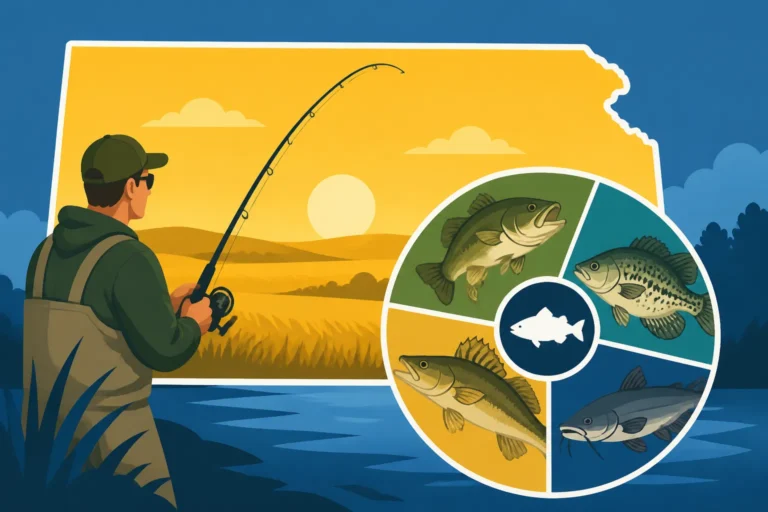
Kansas is home to several popular catfish species, each offering a unique angling experience. From the feisty channel cats to the elusive flatheads and the powerful blues, understanding the specific regulations for each is crucial. It’s not a "one size fits all" situation, and knowing the nuances can save you a headache (and potentially a fine) later on.
Channel Catfish Regulations
Channel catfish are arguably the most widespread and popular catfish species in Kansas. You'll find them in nearly every river, reservoir, and pond across the state, and they're often the first fish many Kansans learn to catch. Their abundance and adaptability mean they can sustain a higher harvest rate compared to some other species.
Typically, the statewide daily creel limit for channel catfish is quite generous, often allowing anglers to keep up to 10 fish per day. However, it's vital to remember that "statewide" is just the starting point. Many popular fishing spots, especially the larger reservoirs and urban community lakes, might have special regulations in place. For instance, some lakes might impose a protected slot limit, meaning you can keep fish under a certain size and over another, but not those in the middle. This is often done to protect a segment of the breeding population, allowing them to grow larger and reproduce. Always double-check the specific regulations for the body of water you plan to fish, either by consulting the latest Kansas Fishing Regulations Explained or checking signs at the boat ramp. These subtle differences are what trip up many anglers, so being diligent is key.
Flathead Catfish Regulations
Flathead catfish are the giants of the Kansas catfishing world, known for their solitary nature, predatory diet, and immense size. Unlike the omnivorous channel cats, flatheads primarily feed on live fish, making them a challenging and highly sought-after trophy species. Because they grow slower and are less numerous than channel catfish, their harvest is usually more restricted to ensure their populations remain healthy.
The statewide daily creel limit for flathead catfish is generally much lower than for channel cats, often set at 5 fish per day. This limit reflects their slower growth rate and the desire to protect larger breeding individuals. While you might not fill a stringer with flatheads like you would channel cats, landing even one trophy flathead is a monumental achievement. Keep in mind that some specific lakes or river stretches might have even stricter limits or length restrictions. For example, a particular lake might only allow two flatheads over 20 inches, or impose a minimum length to protect juvenile fish. Always consult the official regulations for your chosen fishing spot. Understanding the nuances of the Kansas Flathead Catfish Daily Limit will prevent any unwelcome surprises.
Blue Catfish Regulations
Blue catfish, while not native to all Kansas waters, have been successfully introduced into several of our larger reservoirs and river systems, where they are thriving. They share many characteristics with channel cats but can grow to truly enormous sizes, rivaling and even exceeding flatheads in potential weight. Places like Milford Lake and Tuttle Creek Lake are becoming renowned for their burgeoning blue catfish populations.
Because blue catfish are a relatively newer species in many Kansas waters and can grow so large, their regulations often balance allowing harvest with protecting the potential for trophy fish. The statewide daily creel limit for blue catfish is often 5 fish, similar to flatheads. However, this is another species where specific lake regulations frequently come into play. Some reservoirs known for trophy blue cats might implement protected slot limits or allow only one fish over a certain impressive length, like 35 inches, to be kept. This strategy helps foster a robust population of large fish, offering both harvest opportunities and the chance for anglers to pursue true giants. Before heading out, make sure you're up-to-date on the specific Kansas Blue Catfish Daily Limit for your destination.
Bullhead Catfish Considerations
While not as widely targeted as their larger cousins, bullhead catfish are a common sight in many Kansas ponds, slow-moving rivers, and smaller lakes. They are easily identifiable by their rounded tails and typically smaller size. Three species of bullheads—black, yellow, and brown—can be found in Kansas.
For most anglers, bullheads are a fun catch, especially for kids, and they make for excellent table fare despite their smaller size. The good news is that bullhead catfish generally do not have a statewide daily creel limit in Kansas. This means you can keep as many as you'd like, provided you're fishing in public waters and adhering to all other fishing regulations. This lack of a specific limit reflects their widespread abundance and reproductive success. However, it’s still wise to check for any local exceptions, particularly in managed community fishing lakes, which occasionally have unique rules for all species. Always verify with the Kansas Community Fishing Lake Rules if you're fishing one of these designated spots.
Why Catfish Limits Exist: Conservation and Management
It's easy to look at a daily limit and just see a number, but behind every regulation is a carefully considered strategy designed to maintain healthy fish populations and ensure quality fishing for future generations. The Kansas Department of Wildlife and Parks (KDWP) doesn't just pull these numbers out of thin air; they're based on scientific research, population surveys, and long-term management goals.
Protecting Breeding Populations
One of the primary reasons for daily limits is to protect the breeding stock of fish. For species like flathead and blue catfish, which mature slower and have fewer offspring than channel catfish, it's critical to ensure enough mature adults survive to reproduce each year. If anglers were to harvest too many large, fertile fish, it could significantly impact the species' ability to replenish its numbers, leading to a decline in future fishing opportunities.
Protected slot limits, often seen with species like walleye but sometimes applied to catfish in specific waters, are a prime example of this strategy. These limits allow anglers to keep smaller fish (often abundant) and very large trophy fish (which have likely passed their peak reproductive years), while protecting those medium-sized fish that are typically the most prolific breeders. This ensures that the heart of the population remains strong, providing a steady supply of new fish. It’s a delicate balancing act to allow recreational harvest while safeguarding the future of the fishery.
Maintaining Healthy Ecosystems
Fish populations don't exist in a vacuum; they are integral parts of complex aquatic ecosystems. Catfish, especially large predatory species like flatheads and blues, play crucial roles as apex predators in their habitats. By managing their numbers through daily limits, wildlife biologists help maintain a healthy balance within the ecosystem.
Overharvesting a particular species can have ripple effects throughout the food chain, potentially leading to an explosion of prey species or a decline in other predators that compete for the same food sources. Conversely, under-harvesting certain species, particularly those that reproduce quickly like channel catfish in some smaller ponds, can lead to stunted populations where no fish grow to a desirable size due to overcrowding and limited food. The KDWP uses these limits, along with stocking programs and habitat improvements, to keep our aquatic environments thriving. It's about ensuring diversity and stability, so all the creatures in our waters, from the tiniest minnow to the biggest catfish, can flourish.
Balancing Angler Opportunity
Let's be honest, we all love catching fish, and for many, keeping a few for the dinner table is a cherished part of the experience. Daily limits are also designed to balance the desires of individual anglers with the overall sustainability of the fishery. Without limits, a few highly successful anglers could potentially deplete a fishing spot quickly, leaving little for others.
By setting reasonable daily limits, the KDWP aims to distribute the harvest more equitably among all anglers. This means more people have the chance to catch fish and take some home, rather than a select few. It fosters a sense of shared resource and promotes ethical angling practices. It’s about managing expectations and ensuring that when you head out to a lake like El Dorado Lake or Milford Lake, you have a reasonable expectation of a successful and legal fishing trip, not just for today, but for years to come.
Navigating Specific Waterbody Regulations
While statewide limits provide a baseline, it's the localized regulations that often confuse even seasoned anglers. Kansas has a diverse array of water bodies, from massive federal reservoirs to small community ponds, and each can have its own specific rules tailored to its unique characteristics and management goals.
Statewide vs. Special Lake Regulations
The most common pitfall for anglers is assuming statewide regulations apply everywhere. This is a dangerous assumption, especially when it comes to popular game fish like catfish. Many of Kansas's larger, heavily fished reservoirs – like Clinton Lake, Cheney Reservoir, or Wilson Lake – often have special regulations. These might include reduced daily limits, minimum length requirements, or those aforementioned protected slot limits.
For example, while the statewide channel catfish limit might be 10, a specific lake known for producing trophy channel cats might reduce that to 5, or even impose a 15-21 inch slot where fish in that range must be released. These special regulations are almost always posted prominently at boat ramps and access points, and they are always detailed in the annual Kansas Fishing Regulations Summary booklet, which you can pick up at any KDWP office or sporting goods store, or find online. Before you even cast your first line, always consult these resources. It's much easier to plan your trip around the rules than to accidentally break them.
River System Specifics
Kansas rivers offer incredible catfishing opportunities, especially for big channel and flathead catfish. The Kansas River, Republican River, and Arkansas River are renowned for their whiskered inhabitants. While statewide limits generally apply to river systems, there can sometimes be localized rules, particularly in specific stretches or near certain access points.
One key difference with river fishing, particularly for flathead catfish, is that the dynamic nature of rivers can sometimes lead to different management strategies than stagnant lake environments. For instance, while a lake might have a length limit to protect larger fish, a river system might focus more on daily bag limits due to the vast, interconnected nature of the waterway. Anglers targeting blue catfish in the Kansas River or the lower reaches of its tributaries should pay close attention to any KDWP advisories, as these populations are actively managed and regulations might adjust to promote their expansion. It's wise to consider specific river characteristics and look for any special notices published by the KDWP that might pertain to particular river segments.
Community Fishing Lakes and Ponds
Kansas is blessed with numerous Community Fishing Lakes (CFLs) and public ponds, many of which are specifically managed for recreational angling, often with a focus on family-friendly fishing and high catch rates. These smaller, more intensively managed waters often have their own set of rules, which can vary significantly from statewide regulations.
CFLs, often located near urban centers like Wichita or Topeka, are designed to provide accessible fishing opportunities. To maintain a healthy population of catchable fish in these smaller bodies, the KDWP frequently implements more restrictive daily limits or length limits for catfish, along with other species. For instance, a community pond might have a daily limit of 2 channel catfish with no minimum length, or a single flathead catfish of any size. These rules are tailored to the size and carrying capacity of the individual pond or lake. Always look for signage at the lake entrance or check the official KDWP website for specific regulations pertaining to Kansas Community Fishing Lake Rules before you wet a line. These detailed rules are there to ensure everyone gets a fair shot at catching fish in these popular, accessible spots.
Practical Tips for Staying Within Limits
Knowing the rules is one thing, but practically applying them on the water is another. There are a few simple habits and pieces of gear that can help you easily stay compliant with Kansas catfish daily limits. No one wants to accidentally overharvest, and these tips can make a big difference.
Measuring and Counting Your Catch
This might seem obvious, but it's where most mistakes happen. You get excited, the bite is hot, and suddenly you’ve got a stringer full of fish. To avoid accidental violations, always carry a reliable measuring device. A simple tape measure or a commercially available fish measuring board (you can find plenty of options on Amazon) is essential.
For length limits, measure from the tip of the snout to the end of the tail with the fish lying flat. If there's a fork in the tail, measure to the fork. It's a good habit to measure every fish you intend to keep before putting it on the stringer or in the livewell. For counting, keep a mental tally, or even better, use a clicker counter or mark down your keeps in a small notebook. If you're fishing with a group, clearly designate who is keeping what to avoid confusion, especially if everyone is sharing a single livewell. Remember, the daily limit applies to the individual angler, not per boat.
Responsible Catch and Release Practices
Sometimes, you'll catch a fish that's either too small, too large (if there's a slot limit), or simply one you don't intend to keep. Practicing responsible catch and release is critical for the health of the fish and the fishery.
When releasing catfish, handle them gently. Wet your hands before touching them to protect their protective slime coat. If you’re using bait, try to use circle hooks, especially if targeting species like flatheads or blue cats, as they are designed to hook in the corner of the mouth, reducing gut-hooking. Avoid excessive stress by bringing the fish in quickly rather than playing it to exhaustion. Use a quality landing net, like one you might find on Amazon, that supports the entire body of the fish. If a fish is deeply hooked, sometimes it's better to cut the line as close to the hook as possible rather than trying to remove the hook, which can cause more damage. A healthy release means that fish lives to fight another day and contribute to the population.
Essential Gear for Compliance
Beyond your rod, reel, and bait, a few key items will help you stay on the right side of the regulations:
- Measuring Device: As mentioned, a tape measure or a dedicated fish ruler. Keep it easily accessible.
- Regulations Guide: Always have a copy of the current Kansas Fishing Regulations Summary, either a physical booklet or a digital version on your phone. This is your go-to reference for any specific questions about Kansas Fishing Regulations Explained or Kansas Daily Creel Limits by Species.
- Stringer or Livewell: While you might be tempted to keep all your fish in a bucket, a good stringer or a properly aerated livewell will keep your catch healthy until you're ready to leave. This is especially important for species like channel cats that are often kept. For trophy fish you might measure, photograph, and then release, a soft mesh landing net and a calm spot in the water are essential.
- Pliers/Hook Remover: Essential for quickly and safely removing hooks, especially when practicing catch and release. Long-nosed pliers are a must-have, readily available at any tackle shop or on Amazon.
- Scale (Optional, but useful): While not directly related to limits, a scale can help you determine if you've caught a potential state record, which is always fun to know! You can find the rules for the Kansas State Record Catfish in the KDWP guide.
Having these tools ready before you hit the water means you can focus on fishing, not worrying about being compliant.
Common Misconceptions and Penalties for Violations
Despite the KDWP's best efforts to disseminate information, misunderstandings about fishing regulations persist. Knowing the truth behind these common myths and understanding the consequences of non-compliance is important for all anglers.
Debunking Myths About Catfish Limits
Let's tackle a couple of common misconceptions that can lead to unintentional violations:
- Myth 1: "If I catch and release a fish, it doesn't count towards my limit." This is partially true but often misunderstood. The daily creel limit refers to the maximum number of fish you can possess at any given time while actively fishing. If you catch 10 channel catfish, put them on a stringer, then decide to release 5 and keep fishing, those initial 10 did count towards your limit at the point of possession. It's not a revolving door. Once a fish is kept, it counts. If you plan to release a fish you just caught because it’s not what you're looking for, then it doesn’t count towards your limit. The problem arises when you’ve kept your limit, then decide to upgrade by releasing smaller fish for larger ones. In many cases, this is illegal. You effectively had your limit, and releasing one to replace it is considered over-the-limit possession at some point. Always verify the rules for "culling" in the KDWP regulations.
- Myth 2: "Kids don't need to worry about limits." While minors under a certain age (typically 16 for residents) don't need a fishing license in Kansas, they do still need to adhere to all bag and length limits. The regulations apply to everyone, regardless of whether they need a license or not. It's the parent or guardian's responsibility to ensure that any minors fishing under their supervision are also complying with the rules. If you're planning a family trip, be sure to brush up on Fishing License Age Requirements in Kansas.
Consequences of Exceeding Daily Limits
Fishing without adherence to regulations can lead to serious repercussions. It's not just a slap on the wrist; exceeding daily limits is a violation of Kansas fishing law, and the penalties can be substantial.
The most immediate consequence is a fine, which can range from several hundred dollars to well over a thousand, depending on the severity of the violation and the number of fish involved. In addition to monetary fines, violators may also face court costs and be required to pay restitution for the value of the illegally taken fish. More severe or repeat offenses can lead to the suspension or revocation of your fishing privileges in Kansas, and potentially in other states through interstate compacts. In some extreme cases, especially involving large quantities of illegally taken fish or commercial poaching, even jail time can be on the table. The KDWP takes these violations seriously because they directly impact the sustainability of our fisheries. Learning about Fishing Without a License Penalties in Kansas can give you an idea of the kinds of penalties involved in other violations.
Reporting Violations and Promoting Ethics
If you witness someone violating fishing regulations, whether it's exceeding daily limits, taking undersized fish, or any other illegal activity, you have a role to play in protecting our natural resources. The Kansas Department of Wildlife and Parks has a dedicated reporting system for violations.
You can often call a toll-free tip line or use an online reporting tool to anonymously report suspicious activity. Providing details like vehicle descriptions, license plate numbers, descriptions of the individuals, and the specific location and nature of the violation can greatly assist game wardens in their investigations. Promoting ethical angling isn't just about following the rules yourself; it's about fostering a community that respects wildlife and ensures fair access and healthy populations for everyone. Our fisheries are a shared resource, and it’s up to all of us to be good stewards.
Here’s a quick overview of the general statewide daily limits for common Kansas catfish species. Always remember to check specific lake and river regulations, as these can vary significantly!
| Catfish Species | General Statewide Daily Limit | Common Special Lake Rules Examples |
|---|---|---|
| Channel Catfish | 10 fish | 5 fish daily limit; 15-21 inch protected slot limit; no length limit for 2 fish |
| Flathead Catfish | 5 fish | 2 fish daily limit; 1 fish over 30 inches |
| Blue Catfish | 5 fish | 2 fish daily limit; 1 fish over 35 inches |
| Bullhead Catfish | No limit | Rarely limited, but always check specific community lake rules |
Note: "General Statewide" limits apply unless specific regulations for a particular body of water are posted or published. Always consult the current Kansas Fishing Regulations for the most accurate and up-to-date information for your chosen fishing location.
Disclaimer
The information provided in this guide is for general informational purposes only and is not intended as legal advice. Fishing regulations in Kansas can change, and specific rules often apply to individual bodies of water. Always consult the official Kansas Department of Wildlife and Parks (KDWP) fishing regulations guide or their website for the most current and accurate information before fishing. Failure to do so may result in penalties.