Kansas State Record Catfish
There's a special kind of thrill that comes with chasing trophy fish, and for many Kansas anglers, that dream centers on landing a monster catfish. We've all heard the whispers of giant blues pulled from our big reservoirs or flatheads that could swallow a small dog, and it's easy to wonder: what does it really take to hook one of the state's biggest cats? This guide dives deep into the world of Kansas state record catfish, uncovering the history, the species, and the strategies that turn a fishing tale into official history.
Understanding Kansas's Trophy Catfish Potential
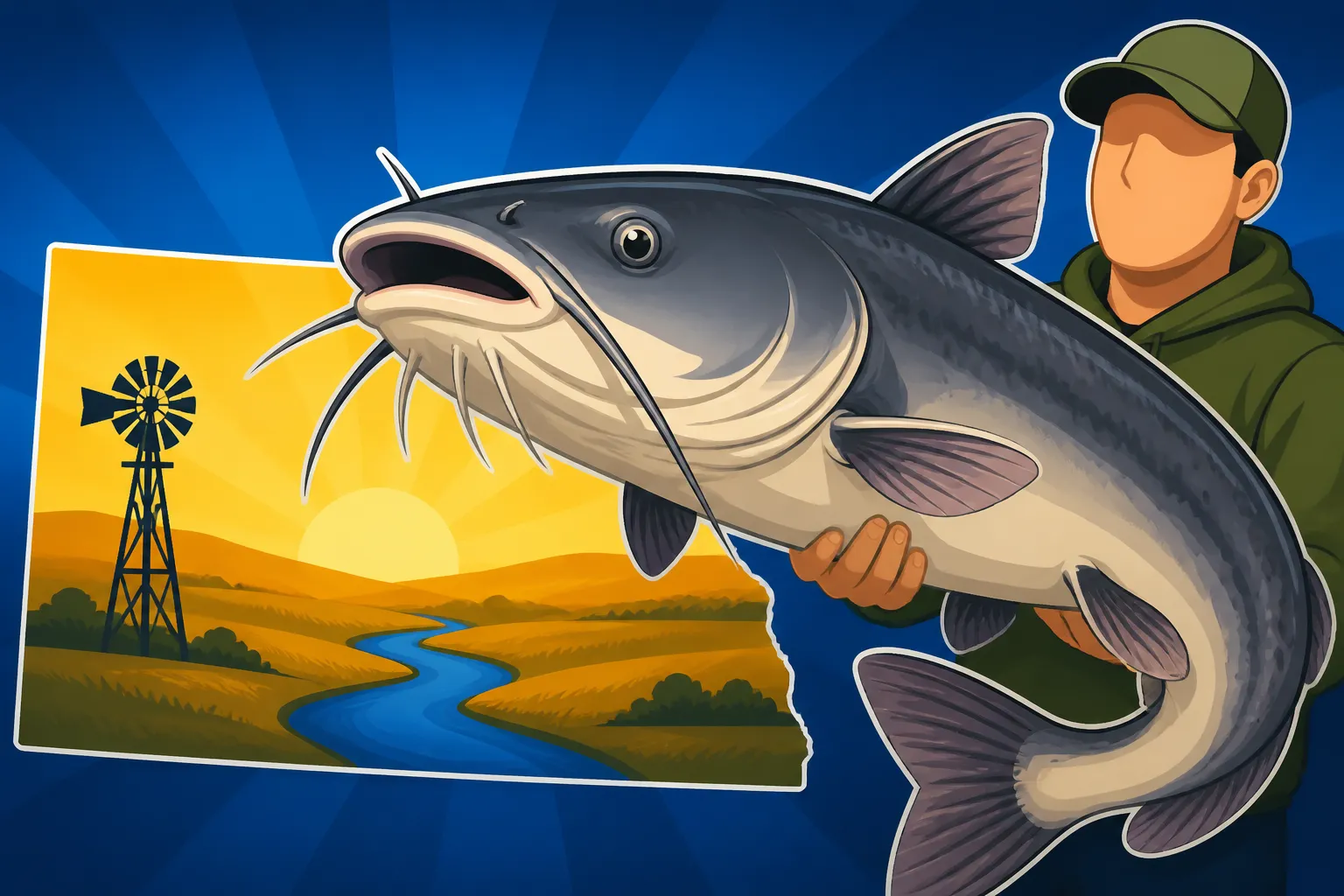
Kansas might be known for its vast prairies and golden wheat fields, but beneath the surface of its rivers and reservoirs lies a thriving ecosystem perfect for growing truly enormous catfish. Anglers from across the region are often surprised by the sheer size and abundance of these whiskered giants found here. It's not just luck; it's a combination of diverse waterways and a healthy food chain that makes Kansas a genuine hotspot for trophy catfish.
Why Kansas is a Catfish Hotspot
Our state's waterways offer a fantastic habitat for various catfish species. Think about the massive reservoirs like Milford Lake, Cheney Reservoir, or Tuttle Creek Lake – these aren't just big puddles. They are complex environments with deep channels, submerged timber, rocky ledges, and vast flats, all providing ideal cover and feeding grounds. Then there are the major rivers, like the Kansas River, the Missouri River, and the Arkansas River, which carve through the landscape, offering rich, moving water full of forage and oxygen that these fish absolutely thrive in. The sheer volume of water and its varied structure allow catfish to grow to impressive sizes, often reaching weights that are rare in other parts of the country. Plus, our generally warmer summers mean a longer growing season, pushing these fish towards true trophy potential year after year.
Imagine a slow-moving river bend on the Kansas River, lined with snaggy trees and deep holes, or the expansive main lake basin of Milford with its abundant baitfish. These are the kinds of places where a channel, blue, or flathead catfish can find everything it needs to grow old and enormous. The abundance of gizzard shad, carp, and other smaller fish in these systems provides a consistent, high-protein diet that fuels rapid growth and supports a robust population of apex predators like our big catfish. This is why when people ask about serious catfish angling, Kansas always comes up in the conversation.
Factors Influencing Giant Catfish Growth
Several key factors contribute to a catfish reaching state-record dimensions. First and foremost is the availability of food. Catfish are opportunistic eaters, and in a system teeming with baitfish, crayfish, and other aquatic organisms, they can pack on pounds quickly. Healthy populations of shad or smaller panfish act like a buffet, allowing them to grow larger and faster than in less fertile waters. Secondly, water quality plays a crucial role. Clean, well-oxygenated water helps fish remain healthy, resist disease, and maintain a strong metabolism for growth. While catfish are notoriously hardy, optimal conditions certainly benefit their overall size and longevity.
Age is another critical component. These record-breaking fish aren't caught in their first few years of life; they are venerable old warriors that have survived countless fishing seasons and environmental challenges. Many of these big cats can live for decades, steadily increasing in size. A blue catfish, for example, can easily live beyond 20 years, and some even push 30 or more, given the right conditions. This extended lifespan, combined with ample food and good water quality in places like the deeper sections of Clinton Lake Fishing Spots or the sprawling structure of Wilson Lake Fishing Guide, gives them the time needed to become truly monstrous. Finally, consistent management by the Kansas Department of Wildlife and Parks (KDWP) through stocking programs and sensible length and creel limits helps ensure that enough fish survive to reach these impressive sizes, allowing the possibility of a record to always be on the horizon.
The Kings of Kansas Waters: Catfish Species That Hold Records
When we talk about state record catfish in Kansas, we're really focusing on three magnificent species: the channel catfish, the blue catfish, and the flathead catfish. Each has its own distinct characteristics, preferred habitats, and fighting styles, making them unique challenges for any angler hoping to write their name into the record books. Understanding these differences is key to targeting the specific giants that swim our waters.
Channel Catfish: Abundant Giants
The channel catfish is arguably the most recognizable and widely distributed catfish species in Kansas. They are found in nearly every river, lake, and pond across the state, from small farm ponds to large reservoirs and major river systems. While often thought of as a "smaller" catfish compared to blues or flatheads, channel cats can still grow to substantial sizes, with trophy specimens pushing well into the 20-pound range, and the state record being significantly higher. Their slender, often speckled bodies, deeply forked tails, and barbels make them distinct. They are aggressive biters, known for putting up a spirited fight on lighter tackle.
Channel catfish are not picky eaters, which contributes to their widespread success. They'll readily take everything from prepared stink baits, cut bait, worms, and even artificial lures. This versatility makes them a favorite target for anglers of all skill levels. If you're looking to target bigger channel cats, focusing on larger water bodies where they have ample food and room to grow is essential. Reservoirs like El Dorado Lake Fishing Guide and larger rivers are excellent choices. Often, deeper channels and submerged structures will hold the biggest channel cats, especially during the heat of summer. For more on these amazing fish, check out our guide on Kansas Channel Catfish Facts and Limits.
Blue Catfish: The True Monsters
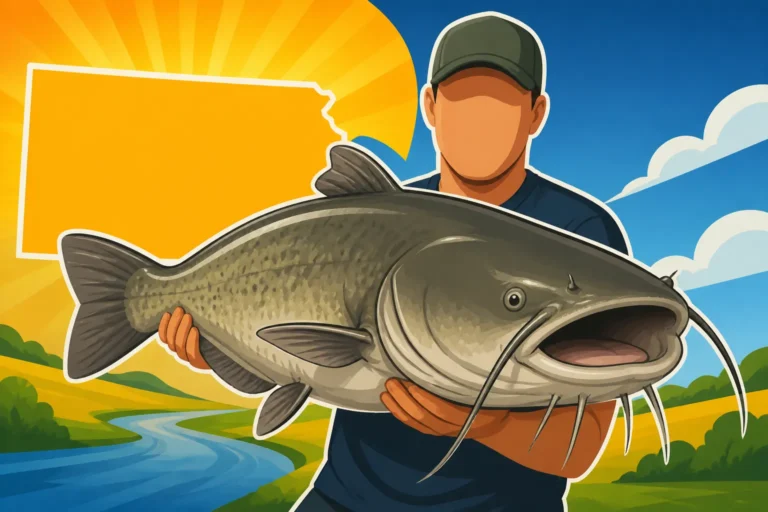
When most Kansas anglers dream of breaking a state record, they're often picturing a blue catfish. These are the true behemoths of the catfish world, capable of reaching truly staggering sizes, well over 100 pounds in the right conditions. Blue catfish are characterized by their slate-blue to silvery-gray color, a humped back, and a deeply forked tail, much like a channel cat but without the spots and with a more robust, powerful build. They are primarily found in the larger river systems and massive reservoirs of eastern Kansas, particularly those connected to the Missouri River basin.
Blue cats are powerful fighters, known for long, sustained runs that can strip line off your reel with alarming speed. Targeting them requires heavy-duty gear and a good understanding of their habits. They prefer strong currents, deep channels, and areas with abundant baitfish, particularly gizzard shad. Anglers often find success drifting cut bait (shad or carp being prime choices) along river channels or fishing deep holes and ledges in reservoirs. The challenge of landing a true trophy blue catfish is immense, but the reward is a fish that will test your tackle and your resolve to their absolute limits. If you're ready to tackle these giants, our Kansas Blue Catfish Facts and Limits article offers even more insights.
Flathead Catfish: Ambush Predators
Flathead catfish are a different beast altogether. Unlike the omnivorous channel cat or the schooling blue cat, flatheads are solitary, predatory fish that prefer live bait and ambush tactics. They are easily identified by their flattened heads (hence the name), small eyes, mottled brown or olive coloration, and a square or slightly rounded tail, which differentiates them from the deeply forked tails of channel and blue cats. Flatheads also possess a distinctly protruding lower jaw. These powerful predators can grow to incredible sizes, often exceeding 50 pounds, with the state record pushing towards the century mark.
Flatheads are typically found in rivers and large reservoirs, often associating with heavy cover like logjams, submerged timber, rock piles, or undercut banks. They are nocturnal hunters, preferring to lie in wait for unsuspecting prey. Because they prefer live bait – think live bluegill, sunfish, or carp – targeting them requires a different approach than other catfish. Stout rods, heavy line, and sturdy hooks are essential, as you'll often be trying to pull a massive fish out of incredibly snaggy cover. The fight from a big flathead is a powerful, bulldogging battle, often characterized by deep, stubborn dives. For those seeking the ultimate river monster, the flathead presents an unparalleled challenge. Learn more in our Kansas Flathead Catfish Facts and Limits guide.
Deciphering the State Record Catfish: Specifics and Stories
The allure of the state record isn't just about the number on the scale; it's about the story, the struggle, and the sheer dedication it takes to achieve such a feat. Kansas has a proud history of producing some truly remarkable catfish, and understanding the specifics of these catches, as well as the tales behind them, can inspire and guide aspiring record-breakers.
Examining the Current State Records
While specific weights fluctuate with new catches, the shape of the Kansas state record catfish table typically highlights the impressive potential of our waters. For instance, the state record channel catfish demonstrates that even this common species can grow to truly monumental proportions, far beyond the average "eater" size. Imagine a fish that weighs as much as a small child – that's the kind of scale we're talking about for a record channel cat. The blue catfish record, predictably, represents an even more titanic achievement, often pushing into triple digits, a testament to the immense power and growth potential of these river monsters. Finally, the flathead catfish record showcases the brute strength and elusive nature of these ambush predators, with some truly massive fish being wrestled from their snaggy lairs.
It's important to remember that these records are set by inches as well as pounds. A fish's length and girth are often recorded alongside its weight, painting a fuller picture of its massive size. These records are not just static numbers; they are dynamic benchmarks that passionate anglers are constantly striving to surpass. Every season brings the potential for a new record to be established, pushing the boundaries of what we thought was possible in Kansas waters. To see a full overview of all record fish, you might want to check out our Kansas State Record Fish Guide.
Tales from the Record Books: Legendary Catches
Behind every state record is an incredible story of perseverance, a touch of luck, and often, an epic battle. Imagine the feeling of hooking into a fish that refuses to budge, a tug-of-war that lasts for what feels like an eternity. Many record catches happen unexpectedly, when an angler is targeting another species, only to be surprised by a true giant. Other times, it's the culmination of years of dedicated trophy hunting, spending countless hours on the water, meticulously researching locations, and refining techniques.
One common thread in these stories is the struggle. These aren't fish that come in easily. Anglers often recount battles where they were pushed to their physical limits, their gear strained to the breaking point. Boats have been spun, rods snapped, and muscles ached from the sheer force of these powerful creatures. There's the classic tale of the angler who had to chase a giant blue cat for miles downriver before finally landing it, or the one who spent an hour carefully working a massive flathead out of a submerged logjam. These stories aren't just fishing folklore; they are a testament to the incredible fish that swim in Kansas and the dedication of the anglers who pursue them. It's a reminder that sometimes, the biggest fish come with the biggest challenges and the most unforgettable memories.
What Constitutes a Valid State Record
Catching a giant catfish is one thing; getting it certified as a state record is another. The Kansas Department of Wildlife and Parks (KDWP) has strict protocols to ensure the integrity of its record books. Generally, a fish must be caught by legal means (rod and reel, trotline, jug line, etc., depending on species rules), and it must be weighed on a certified scale, usually at a grocery store or a commercial scale that is regularly inspected for accuracy. The weighing must often be witnessed by multiple individuals who are not directly involved in the catch.
Crucially, the fish must be positively identified by a KDWP biologist or another qualified expert. Misidentification can happen, especially between channel and blue catfish, or between different types of bass, so proper ID is paramount. Measurements of length and girth are also taken. Photographs are essential for documentation, showing the angler with the fish and the weighing process. After all these steps, official paperwork must be completed and submitted to the KDWP for review and approval. It's a thorough process, designed to leave no doubt about the legitimacy of a new state record, and it ensures that the angler's achievement is truly recognized.
Strategies for Targeting Trophy Catfish in Kansas
Chasing state record catfish isn't about haphazardly tossing a line in the water. It requires a thoughtful approach, understanding the fish, their habitat, and having the right tools for the job. You wouldn't bring a butter knife to a sword fight, and you certainly wouldn't bring light spinning gear to tackle a potential 100-pound blue cat. Serious trophy hunting demands serious preparation.
Gear Up for Battle: Rods, Reels, and Line
When targeting potential state record catfish, your gear needs to be up to the immense task. Forget your ultralight spinning combos; we're talking about heavy-duty equipment built for power and endurance. For rods, look for strong, moderate-fast action rods in the 7 to 10-foot range, capable of handling lines upwards of 50 pounds. Ugly Stik, for example, makes some incredibly durable rods that are popular among catfishermen. Longer rods offer better leverage for casting heavy baits and fighting powerful fish, especially from the bank.
Reels should be robust baitcasting reels with a strong drag system and high line capacity. Ambassadeur or Penn reels are often go-to choices for serious catfishing. You want a reel that can hold at least 200-300 yards of heavy monofilament or braided line. Speaking of line, braided line is almost universally preferred for trophy catfishing due to its incredible strength-to-diameter ratio, lack of stretch, and superior abrasion resistance. Think 60-80 pound test braided line as a starting point, especially if you're fishing in snaggy areas. Heavy monofilament in the 30-50 pound range can also be effective, particularly for its stretch, which can act as a shock absorber during violent head shakes. Don't skimp on terminal tackle either; extra-strong swivels, heavy-duty hooks (like 8/0 to 12/0 circle hooks for blues and flatheads), and heavy sinkers are non-negotiable. If you're looking to upgrade your setup, you can often find great deals on robust gear like heavy-duty baitcasting reels or strong braided lines on Amazon. For a detailed dive into combos, check out Best Rod and Reel Combo for Catfish.
Prime Locations and Seasonal Tactics
Knowing where and when to find these giants is half the battle. For blue catfish, focus on the deeper, current-swept areas of major rivers like the Kansas River or the lower reaches of large reservoirs such as Milford Lake. River bends with deep holes, scour marks below dams (where legal and safe), and main channel ledges are prime spots. During colder months, blue cats tend to congregate in these deep holes, while in warmer periods, they might move up onto shallower flats adjacent to deep water to feed.
Flathead catfish are ambush predators, so look for heavy cover: massive log jams, submerged trees, rock piles, and undercut banks in rivers and tributary arms of reservoirs. The Kansas River, in particular, is renowned for its flathead population. They are most active at night, especially during the warmer months from late spring through early fall, so night fishing is often the most productive strategy for these elusive giants. Channel catfish, while widespread, will also seek deeper water and structure in larger reservoirs like Cheney Reservoir Fishing Guide when they reach trophy size. Targeting them often means fishing near humps, points, and channel edges, especially during low light hours or overnight in the summer. Understanding Kansas Catfish Fishing Techniques will provide even more specific guidance.
Baiting and Rigging for Big Cats
The right bait is critical for drawing in a state record catfish. For blue catfish, fresh cut bait is king. Shad, carp, drum, or even smaller sunfish (where legal) cut into chunks are highly effective. The fresher the better, as the scent trail is what attracts these powerful scavengers from afar. For flathead catfish, live bait is almost always the preferred choice. Live bluegill, sunfish, or even small carp hooked through the back or lips are irresistible to these ambush predators. Ensure your live bait is healthy and active to entice a bite.
For channel catfish, a wider array of baits can work, including prepared "stink" baits, chicken livers, worms, and even hot dogs for smaller ones. However, for true trophy channel cats, fresh cut bait or even a whole dead shad can be more effective. Rigging usually involves a heavy sinker (a 3-6 oz no-roll or pyramid sinker is common) on a slip rig, allowing the fish to take the bait without feeling immediate resistance. A heavy-duty swivel connects your mainline to a strong leader (often 50-80 lb monofilament or fluorocarbon) of about 1-3 feet, and then to a large, sharp circle hook. The circle hook is crucial for ensuring a solid hookset in the corner of the fish's mouth, reducing gut hooking and making release easier if you choose to let the giant swim free. For detailed bait suggestions, read Best Bait for Kansas Catfish.
The Process of Documenting a Potential State Record Fish
Catching a fish of a lifetime is an incredible achievement, but if you believe you've landed a potential state record, the work isn't over. There are crucial steps you need to take immediately and throughout the verification process to ensure your catch is properly documented and eligible for the record books. Missing a single step could mean your monumental catch goes unrecognized.
Immediate Actions After a Catch
The moment you land a fish that you suspect might be a state record, time becomes a critical factor. First, if you intend to release the fish, or if it's too large to keep indefinitely, photograph it extensively from multiple angles, clearly showing its size in relation to a known object (like a cooler or a measuring tape if you have one on hand). Documenting the moment of catch is important for the story, but formal photos for the record are taken during the official weigh-in. For official consideration, the fish usually needs to be kept in good condition until it can be properly weighed and identified. This often means keeping it alive in a large livewell, an aerated cooler, or on a sturdy stringer if local regulations permit.
Secondly, you need to identify the closest certified scale. This is not your bathroom scale or a simple hand scale. These are scales that have been calibrated and inspected for accuracy, typically found at post offices, grocery stores with meat departments, or feed stores. Call ahead to confirm they have a certified scale and that someone is available to assist with the weighing. During this time, keep the fish cool and wet to maintain its weight and health. Remember, even a slight loss of moisture can mean a loss of crucial ounces on the scale.
Official Weighing and Verification
Once you arrive at a location with a certified scale, the official weighing process begins. This is not a solo act; you'll typically need witnesses. At least two impartial witnesses, not associated with your fishing party, should be present to observe the weighing. This adds credibility to your claim. The fish should be weighed in a container (like a sturdy bucket or large net) that has been tared (its weight subtracted from the total) to ensure only the fish's weight is recorded. Document the weight, date, time, and location meticulously.
Immediately after weighing, the next crucial step is positive identification. This often requires the presence of a KDWP biologist or a qualified expert who can confirm the species. They will look at key features like fin rays, body shape, and coloration. They will also take precise measurements of the fish's length and girth. These details are vital for the official record application. It's not uncommon for fish of similar appearance, like blue and channel catfish, to be mistaken, so expert verification is non-negotiable.
The Paperwork and the Wait
After the weighing and identification, the final step is completing the official state record application paperwork. This form requires all the details you’ve collected: your information, details about the catch (date, time, location, method), the certified weight, length, girth, names and signatures of witnesses, and the identifier of the KDWP official or expert who verified the species. High-quality photographs of the fish, the angler, and the weighing process are also typically required.
Once the application is thoroughly completed and all necessary documentation is attached, it must be submitted to the Kansas Department of Wildlife and Parks. Then comes the waiting game. KDWP officials will review all the submitted materials, potentially contacting witnesses or the identifying biologist for further clarification. This process ensures the integrity of the state record list. If everything checks out, you'll eventually receive official confirmation that your name has been etched into Kansas fishing history! It's a rigorous process, but it ensures that only truly exceptional catches are recognized. Before you even head out, it's wise to review the Kansas Fishing Regulations Explained to be sure your methods are legal for a record fish.
Beyond the Records: The Thrill of the Chase
While setting a state record is an incredible feat, the true joy of fishing, especially for big catfish, often lies in the journey itself – the thrill of the chase, the time spent on the water, and the respect we show for these magnificent creatures. Record books are wonderful, but the memories made and the lessons learned are often just as valuable.
Conservation and Ethical Angling
Chasing trophy catfish, particularly those of record-breaking size, comes with a significant responsibility for conservation. Many record-class fish are old, slow-growing, and crucial to the breeding population. Practicing catch-and-release for these giants, whenever possible, ensures that they can continue to contribute to the fishery and potentially offer another angler the chance at a fish of a lifetime. If you do keep a record fish for certification, consider donating the meat to a food bank or sharing it, rather than letting it go to waste.
Using proper handling techniques is also vital. Large catfish can be difficult to manage, but minimizing their time out of water, supporting their full body weight (especially their internal organs), and using wet hands or gloves can significantly increase their survival chances upon release. Avoid dragging them on rough surfaces or holding them by the lower jaw if they are extremely heavy, as this can damage their jaw structure. Ethical angling means respecting the fish, the environment, and fellow anglers, ensuring that the thrill of the chase can be enjoyed for generations to come. This is a topic that is often covered in discussions about Kansas Fishing Regulations Explained and Kansas Fishing Law Enforcement and Penalties.
The Mental Game of Trophy Hunting
Hunting for state record catfish is as much a mental game as it is a physical one. It requires immense patience, persistence, and the ability to learn from every outing, whether successful or not. You might spend countless hours on the water, meticulously preparing baits, scouting locations, and enduring long periods without a bite. This is where dedication truly comes into play. There will be days of frustration, missed opportunities, and the feeling that a record fish is an impossible dream.
However, the mental game also involves an unwavering belief that the next cast could be the cast. It means celebrating the smaller victories, like refining a rigging technique or discovering a new honey hole, even if it doesn't yield a record. It's about enjoying the solitude, the challenge, and the connection to nature that fishing provides. The pursuit of a record fish builds character, sharpens skills, and deepens appreciation for the incredible aquatic resources we have in Kansas. And even if you never land a state record, the journey of trying will undoubtedly make you a more skilled, knowledgeable, and appreciative angler. Getting your Kansas Fishing License Guide is the first step on that journey.
| Catfish Species | Typical Record Weight Range (Kansas) | Preferred Habitat | Primary Diet Preference | Key Characteristics |
|---|---|---|---|---|
| Channel Catfish | Large (20-30+ lbs) | Rivers, lakes, ponds | Omnivorous (cut bait, stink bait) | Forked tail, spots (juvenile), widely distributed |
| Blue Catfish | Massive (70-100+ lbs) | Large rivers, deep reservoirs, strong current | Fresh cut bait | Deeply forked tail, humped back, no spots, slate-blue |
| Flathead Catfish | Huge (50-80+ lbs) | Rivers, reservoirs, heavy cover, logjams | Live bait (sunfish, carp) | Flat head, small eyes, mottled brown, square tail, lower jaw protrudes |
Disclaimer
This article is for general informational purposes only and does not constitute professional advice. Laws, prices and regulations vary by location and change over time. Consult a qualified professional for guidance on your specific situation.