Wilson Lake Striped Bass Fishing Tips
Ah, the mighty striped bass of Wilson Lake! If you've ever dreamt of feeling that powerful tug on your line, the kind that makes your reel scream and your arms ache in the best possible way, then you're thinking about stripers in Kansas. These aren't your grandpa's catfish; these are true freshwater bruisers, and while Wilson Lake holds some incredible fish, they can be incredibly elusive, making many anglers feel like they're searching for a needle in a haystack. This guide is all about cutting through that frustration and giving you the nitty-gritty, real-world tips to put those magnificent striped bass in your boat, or at least on the end of your line.
Understanding Wilson Lake's Striped Bass Fishery
Wilson Lake, often called the "most beautiful lake in Kansas," isn't just a pretty face; it's a premier destination for anglers, especially those chasing the hard-fighting striped bass. Known for its clear water, dramatic limestone bluffs, and ample structure, it provides an ideal habitat for these powerful fish. But what makes Wilson Lake so special for stripers, and how do you even begin to find them in such a vast body of water?
Why Wilson Lake is a Striper Hotspot
Wilson Lake boasts an impressive population of striped bass, thanks to the Kansas Department of Wildlife, Parks and Tourism (KDWP) stocking efforts. Unlike some other species that naturally reproduce in our reservoirs, striped bass are largely sustained by regular stocking, making Wilson a prime example of a successful put-grow-and-take fishery. The lake’s deep, clear waters mimic the conditions stripers prefer, and its abundance of gizzard shad and other baitfish provides a robust food source, allowing these fish to grow to impressive sizes. It’s not uncommon to hear tales of anglers landing stripers weighing 10, 20, or even 30 pounds here. These are trophy fish by any standard, and the sheer challenge of hooking one makes the pursuit all the more thrilling. The distinct ecosystem of Wilson Lake truly sets it apart, offering a unique opportunity to target a species usually associated with coastal areas, right here in the heart of Kansas.
Locating Striped Bass in Wilson Lake
Finding striped bass in Wilson Lake is often less about finding a specific "spot" and more about understanding their nomadic behavior and following the food. These are open-water predators that constantly chase schools of baitfish, primarily gizzard shad. Therefore, your best bet for locating stripers is to first locate the bait. Look for large schools of shad on your fish finder, often suspended over deeper water, along underwater humps, or near main lake points and channels. Stripers will typically be found either just below or right on the edges of these baitfish schools, ready to ambush.
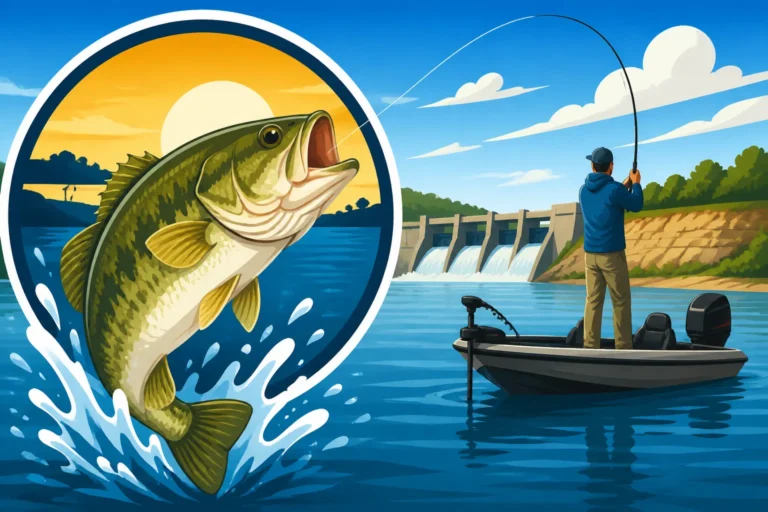
Pay close attention to sudden changes in depth, submerged timber, and deep points where currents might concentrate bait. The area near the dam, particularly on the deeper side, can also be a productive zone, especially during certain times of the year when fish congregate there. Don't be afraid to cover a lot of water; these fish are constantly on the move. Sometimes, finding local fishing reports or even consulting with a local guide through platforms like FishingBooker can give you a real-time advantage, as patterns can shift quickly with water temperature and bait movements. They often have the most up-to-date knowledge on where the stripers are currently holding.
Understanding Striper Behavior
Striped bass are highly social and pelagic fish, meaning they live in the open water column, often in large schools. Their behavior is heavily influenced by water temperature, light conditions, and the presence of bait. In cooler water, such as spring and fall, they might be found shallower, chasing bait near the surface. As the water warms in summer, they tend to move deeper, seeking cooler, more oxygenated water, and often become more active during low-light conditions like dawn, dusk, or even at night.
Their aggressive, predatory nature means they'll strike with immense power, often making multiple runs. Understanding this behavior is key to both finding them and successfully fighting them once hooked. They use their excellent eyesight and lateral lines to detect struggling baitfish, so lures that mimic this action are often highly effective. It’s a constant chess match between you and the fish, where anticipating their next move based on the environment is crucial. This is why having good electronics and knowing how to interpret them can make all the difference when trying to decipher where these powerful fish are holding.
Prime Seasons and Times to Target Stripers
Successfully targeting striped bass in Wilson Lake often boils down to being in the right place at the right time, and that means understanding their seasonal movements. The Kansas fishing seasons guide often highlights general trends, but stripers have their own specific calendar. Their activity levels and locations change dramatically throughout the year, so adapting your approach to the season is paramount.
Spring Spawning Runs and Post-Spawn Activity
Spring is arguably one of the most exciting times to target striped bass at Wilson Lake. As water temperatures rise, typically from April through early June, stripers begin their anadromous spawning migration upriver. While they can't successfully reproduce in the landlocked conditions of Wilson Lake (they need long stretches of flowing water for their eggs to hatch), they still instinctively attempt to run up the Saline River arm of the lake. This creates a fantastic opportunity for anglers, as large schools of stripers congregate in these riverine sections.
During this period, look for them in the upper reaches of the lake and into the river channel, particularly where there's current. They'll be aggressively feeding before and after their "spawn run" attempt. After this, they'll often disperse back into the main lake, but remain relatively shallow and active. This post-spawn period in late spring can also be highly productive, as fish are recovering and feeding heavily, often near main lake points and flats. Using lures that mimic baitfish, like large crankbaits, swimbaits, or even topwater plugs during low light, can be incredibly effective.
Summer Deep Water Tactics
As Kansas summer temperatures soar and the lake water warms up, striped bass will seek refuge in deeper, cooler, more oxygenated waters. This usually means they move to the main lake basin, congregating around underwater humps, points that drop off into deep water, and the thermocline (the layer where the water temperature changes rapidly). During the scorching midday sun, they can be found as deep as 30-50 feet, making them a challenge to reach without the right gear.
This is when trolling becomes a dominant strategy. Using heavy sinking lures like spoons, deep-diving crankbaits, or umbrella rigs allows you to present your bait at the precise depth where the stripers are holding. Early mornings and late evenings, and even night fishing, can bring them shallower to feed on baitfish that have moved up. Fishing with live gizzard shad or large shiners on a Carolina rig in these deeper areas can also be deadly. Knowing how to read your fish finder is absolutely critical during summer, as you'll be targeting suspended schools rather than bottom-hugging fish.
Fall Feeding Frenzy
Autumn is another prime time for Wilson Lake stripers. As lake temperatures begin to cool, the baitfish become more active, and the striped bass enter a "feeding frenzy" to bulk up for the upcoming winter. You'll often find them chasing large schools of shad closer to the surface, particularly in the mornings and evenings. This can lead to incredible surface boils where stripers literally blow up on bait, creating a visible spectacle. These are moments you live for as a striper angler!
Look for these surface feeding events around main lake points, coves, and areas where baitfish are abundant. Tossing topwater lures, swimbaits, or casting spoons into these frenzies can result in explosive strikes. As fall progresses and water temperatures continue to drop, the stripers might move into more defined channels and creek arms, still following the bait. This season often offers some of the most consistent and exciting action for anglers willing to spend time on the water. It's a fantastic time for the Kansas Fall Walleye Fishing Tips also, as many species are on the prowl.
Essential Gear and Tackle for Wilson Lake Stripers
When you're dealing with a fish that can peel line off your reel with the force of a small freight train, you can't skimp on your gear. Striped bass are powerful fighters, and undergunned tackle will lead to heartbreak. Having the right setup means the difference between landing that trophy and telling a "one that got away" story.
Rods, Reels, and Line Selection
For Wilson Lake striped bass, you'll want a robust setup. A medium-heavy to heavy action casting or spinning rod, typically 7 to 8 feet long, is ideal. This length provides the leverage needed to cast heavier lures and fight big fish, while still offering enough sensitivity to detect subtle bites. Look for rods with a strong backbone to handle the initial powerful surges of a striper. Brands like Ugly Stik or St. Croix offer durable options that can stand up to the abuse.
Pair your rod with a high-quality baitcasting or spinning reel capable of holding a substantial amount of line – think sizes 3000-5000 for spinning reels or 300-400 for baitcasters. A smooth drag system is non-negotiable; you need a drag that can handle long, powerful runs without sticking or chattering, which can lead to snapped lines. For line, 20-30 pound braided line is a popular choice due to its strength, sensitivity, and thin diameter, which allows for longer casts. Many anglers will tie on a 15-25 pound fluorocarbon leader for abrasion resistance and reduced visibility, as Wilson Lake's clear water can make fish line-shy.
Here's a quick reference for common setups:
| Gear Type | Recommendation (Wilson Lake Stripers) |
|---|---|
| Rod | 7'-8' Medium-Heavy to Heavy action, Fast or Moderate-Fast |
| Reel | Spinning: 3000-5000 series; Baitcasting: 300-400 series |
| Main Line | 20-30 lb Braided Line |
| Leader | 15-25 lb Fluorocarbon (3-5 feet length) |
| Knots | FG Knot (braid to fluorocarbon), Palomar Knot (lure to leader) |
Lure and Bait Choices
The tackle box for Wilson Lake stripers should be well-stocked with a variety of options to match different conditions and feeding patterns. When stripers are chasing bait on the surface, topwater plugs like Heddon Super Spooks or Zara Spooks, or poppers, can be incredibly exciting. For subsurface action, large swimbaits (e.g., Keitech Swing Impact FAT, Yum Money Minnow), crankbaits (e.g., Storm ThunderStick Deep, Rapala Down Deep Husky Jerk) that dive to various depths, and lipless crankbaits are essential.
When fish are deeper, heavy spoons (e.g., a 1 oz Kastmaster or Little Cleo) or lead head jigs dressed with large soft plastic paddle tails are excellent for vertical jigging or casting. Umbrella rigs, often rigged with multiple swimbaits, are also highly effective for trolling, mimicking a school of baitfish. However, don't overlook live bait. Gizzard shad, ideally caught with a cast net from the lake itself, are the stripers' natural forage and can be devastatingly effective, especially when fished on a Carolina rig or under a balloon to control depth. If you're planning a trip, be sure to check out the Kansas Fishing Gear Guide for a broader overview of tackle.
Key Electronics and Accessories
Modern electronics have revolutionized striper fishing. A quality fish finder with side-imaging or down-imaging capabilities is almost a necessity for consistently finding striped bass in Wilson Lake. These units allow you to mark schools of baitfish and the stripers lurking beneath them, often suspended in the water column. Being able to discern the size and density of these schools gives you a massive advantage. Garmin, Humminbird, and Lowrance all offer excellent units suitable for this kind of fishing. Many guides on platforms like FishingBooker will have top-tier electronics, which is another reason to consider their services for a productive outing.
Beyond electronics, a good trolling motor, especially one with GPS anchoring capabilities like a Minn Kota Ulterra or Terrova, can be a game-changer. It allows you to quietly approach schools of fish, hold your boat over a specific spot, or precisely follow contour lines while trolling. Other critical accessories include a large landing net with a long handle (to handle big, feisty stripers), a good set of pliers for hook removal, and a reliable cooler to keep your catch fresh (if you plan to keep fish). Don't forget proper safety equipment, including life jackets and a first-aid kit, as conditions on large reservoirs can change quickly.
Effective Techniques for Catching Striped Bass
Once you have your gear sorted and a basic understanding of striper behavior in Wilson Lake, it's time to talk about putting those skills to use on the water. Catching these powerful fish often requires a combination of techniques, depending on the season, time of day, and how the fish are relating to bait.
Trolling Strategies
Trolling is perhaps the most popular and often the most effective method for covering water and consistently catching striped bass in Wilson Lake, especially during the summer months when fish are scattered or holding deep. The idea is to slowly pull your lures behind the boat, allowing them to reach the desired depth and cover large areas where stripers might be feeding. Speed is crucial; generally, a trolling speed of 2.5 to 4 miles per hour is effective, but always experiment to see what the fish prefer on any given day.
Different lures require different setups for trolling. Deep-diving crankbaits are excellent for reaching fish in the 15-30 foot range, while spoons or umbrella rigs can go even deeper with the addition of lead core line or downriggers. Pay close attention to your fish finder while trolling. If you see bait or stripers at a specific depth, adjust your lure depth to match. Trolling along main lake channels, over underwater humps, and around prominent points is a great starting point. Vary your trolling path, making S-turns or sudden changes in speed, as these erratic movements can often trigger strikes from following fish. For deeper insights, you might want to review Trolling for Walleye on Kansas Reservoirs, as some principles apply.
Casting and Jigging Approaches
When stripers are actively chasing bait near the surface, especially during spring and fall feeding frenzies, casting becomes the most exhilarating technique. Topwater plugs are the king here. When you see stripers busting the surface, cast your topwater lure directly into the commotion and work it with a walk-the-dog retrieve (for spooks) or short, sharp pulls (for poppers). The visual strike of a striper exploding on a topwater lure is unmatched! Swimbaits and lipless crankbaits can also be cast and retrieved through schooling fish just below the surface.
For deeper, suspended fish that aren't actively chasing, vertical jigging with heavy spoons or large soft plastic jigs can be very effective. Position your boat directly over marked schools of fish using your trolling motor and drop your lure down to their depth. Work the jig with aggressive lifts and drops, mimicking a wounded baitfish. Sometimes a slower, more subtle retrieve is needed. Experiment with different jigging actions until you find what triggers a strike. This method requires precision and a keen eye on your electronics to stay on top of the fish.
Live Bait Fishing
Sometimes, especially when stripers are a bit finicky or holding tight to structure, live bait can be the ultimate equalizer. Gizzard shad, the primary forage for Wilson Lake stripers, are hands-down the best live bait. You'll often need to catch your own with a cast net in the lake's shallower coves or creek arms. Once you have a good supply, keep them lively in a well-aerated livewell.
There are several ways to fish live bait. A simple Carolina rig, with a weighted sinker above a swivel and a leader ending in a circle hook, is effective for presenting a shad near the bottom or suspended at a specific depth. When fish are holding deeper, you can slow troll live shad using an in-line sinker or a three-way swivel setup. For suspended fish in open water, a balloon rig can be deadly. Attach a balloon above your bait at the desired depth, allowing the current or wind to drift your bait over suspended schools. The key is to keep the bait as natural-looking and lively as possible. Remember, the goal is to make it irresistible to a hungry striper! If you’re looking to hire a guide for these kinds of trips, FishingBooker lists experienced local captains who specialize in live bait tactics for Wilson Lake.
Disclaimer
Fishing conditions, regulations, and fish behavior can change rapidly. Always consult the latest official Kansas Department of Wildlife, Parks and Tourism (KDWP) regulations before heading out on the water. This guide is for informational purposes only and does not guarantee fishing success. Practice safe boating and fishing habits, and always respect the natural environment.