What a Wiper Fish Is
For many anglers exploring the bountiful waters of Kansas, a specific fish often sparks a mix of excitement and sometimes, a little confusion: the wiper. You might hear seasoned fishermen talking about their epic battles with wipers, or see pictures of impressively sized fish that look a bit like a striped bass but not quite. This guide is here to clear up that mystery, explaining exactly what a wiper fish is, why it's such a popular game fish in our state, and how you can get in on the action.
Understanding the Wiper Fish: A Hybrid Marvel
Wiper fish are not a naturally occurring species in most waters; they are a fascinating success story of fisheries management, created specifically to offer an exhilarating challenge to anglers and to help manage forage fish populations in large reservoirs. Think of them as the ultimate power-packed package, combining the best traits of two well-known species.
The Parentage: Striped Bass Meets White Bass
At its core, a wiper is a hybrid. It's the offspring of a cross between a female striped bass (Morone saxatilis) and a male white bass (Morone chrysops). This genetic blending results in a fish that often grows larger and fights harder than a pure white bass, while being more tolerant of freshwater environments than its ocean-dwelling striped bass parent.
In Kansas, these fish aren't usually found in the wild through natural spawning. Instead, they are typically produced in fish hatcheries and then stocked into our large reservoirs. This controlled stocking ensures a healthy population of wipers without relying on uncertain natural reproduction. The striped bass contributes the potential for impressive size and a robust, powerful build, while the white bass lends its adaptability and aggressive feeding habits. It’s truly a testament to thoughtful fisheries science that we have such an incredible sport fish thriving in our local lakes. For more details on their genetic makeup, you might find Kansas Hybrid Striped Bass Identification interesting.
Key Identification Features
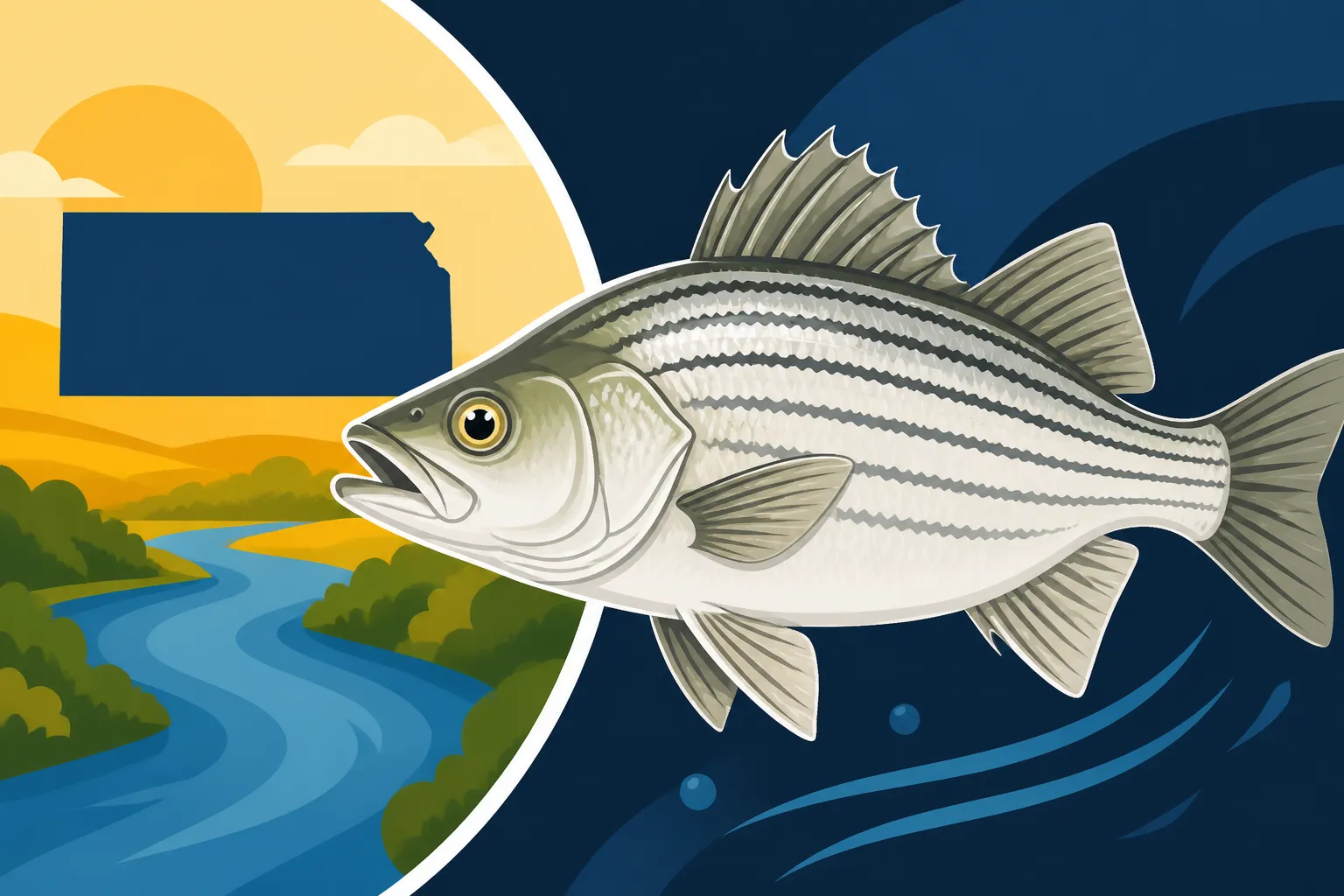
Distinguishing a wiper from its parent species can sometimes be tricky, especially for newcomers. However, there are a few tell-tale signs to look for. Both wipers and striped bass have prominent horizontal lines running along their bodies. The key difference lies in these lines:
- Wiper: The horizontal lines on a wiper's body are typically broken or interrupted, especially those below the lateral line. They might appear fragmented or less continuous.
- Striped Bass: Pure striped bass usually have solid, unbroken lines running from gill to tail.
- White Bass: White bass are generally smaller, with fewer, often fainter lines that can sometimes be broken. They also tend to have a deeper body profile compared to the more elongated wiper or striped bass.
Another indicator can be body shape. Wipers tend to be a bit more robust and deeper-bodied than a white bass, but often not quite as torpedo-shaped as a large pure striped bass. Observing the overall profile and the pattern of those lateral lines is your best bet for accurate identification. This distinction is important, as Are Wipers and Striped Bass the Same Fish? clarifies further.
Why Wipers are a Favorite in Kansas
Wipers are celebrated in Kansas for several compelling reasons, making them a true angler's delight. First and foremost, they are incredibly strong fighters. Hook into a decent-sized wiper, and you're in for an epic tug-of-war. Their powerful runs and stubborn resistance make them a thrilling catch on appropriate tackle. Many anglers specifically target wipers for this exhilarating challenge.
Secondly, wipers grow to a respectable size. While not typically reaching the behemoth proportions of their ocean-going striped bass relatives, a 5-10 pound wiper is common, and fish pushing into the teens are not unheard of, offering a substantial fish to battle and potentially take home.
Beyond the thrill of the fight, wipers also play a crucial ecological role. They are voracious predators, excellent at controlling populations of shad and other abundant baitfish in our reservoirs. This helps maintain a balanced ecosystem, preventing overpopulation of forage species and often benefiting other game fish by reducing competition for resources. Their aggressive nature and impressive size potential ensure that Kansas fisheries stocking programs continue to value and promote this hybrid species. If you're wondering about other popular fish, check out our Kansas Fish Species Guide.
Where to Find Wipers in Kansas Waters
Knowing what a wiper is gets you halfway there; the next step is knowing where to find these hard-fighting fish. Luckily, Kansas has several prime locations where wipers thrive, offering excellent opportunities for anglers.
Prime Kansas Reservoirs and Lakes
Wipers generally prefer large, open reservoirs with abundant forage fish, particularly gizzard shad. In Kansas, several lakes are renowned for their robust wiper populations and offer fantastic fishing opportunities:
- Cheney Reservoir: Located west of Wichita, Cheney is often cited as a top-tier wiper lake. Its vast open waters and significant shad populations create an ideal environment for wipers to grow large and healthy. Anglers often find success around main lake points, submerged humps, and the dam face. More specific tips can be found in our Cheney Reservoir Fishing Guide.
- El Dorado Lake: Near El Dorado, this reservoir consistently produces good numbers of wipers, with many anglers reporting impressive catches. Similar to Cheney, targeting open water structures and areas where shad are schooling can be highly effective.
- Wilson Lake: Known for its clear water and stunning scenery, Wilson Lake also holds a strong population of wipers. While it's also famous for striped bass, wipers are a regular target here, often found chasing baitfish schools in open water or along rocky points.
- Milford Lake: As the largest lake in Kansas, Milford offers plenty of territory for wipers. The massive baitfish schools here attract wipers, especially in the main lake basin and towards the dam. For more comprehensive information, see our Milford Lake Fishing Guide.
- Other notable lakes where wipers can be found include Tuttle Creek Lake, Clinton Lake, and Perry Lake, though these might not be as widely recognized for wipers as the top four.
Habitat and Behavior
Wipers are highly adaptable, but they do have preferred habitats and behaviors that anglers can learn to exploit. They are schooling fish, often found in large groups, especially when actively feeding. This means if you catch one, there's a good chance more are nearby!
They frequently suspend in open water, chasing and corralling schools of shad. Look for "nervous water" or birds diving, which can indicate wipers pushing bait to the surface. Main lake points, underwater humps, and sudden depth changes are also prime locations where wipers will ambush passing bait. During different seasons, their movements might shift. For instance, in warmer months, they might be deeper during the day, coming shallower during low-light conditions to feed. Understanding Kansas Fishing Seasons Guide can help you time your trips for optimal wiper activity.
Their aggressive nature means they are often found near current, such as below dam outflows or in areas with wind-driven currents, which disorients baitfish and makes for an easy meal. Electronics like a good fish finder can be invaluable for locating these suspended schools in open water, allowing you to present your lure directly to them.
Effective Techniques for Catching Wipers
Catching wipers is an exciting challenge that often requires robust gear and a keen understanding of their aggressive nature. They're not shy, but they are powerful, so come prepared!
Gear Up for the Fight
When targeting wipers, you'll want to ensure your tackle can handle the strain of their powerful runs and head shakes. A medium-heavy to heavy action spinning or baitcasting rod, typically 6'6" to 7'6" long, is a great starting point. Pair this with a reliable reel spooled with strong line, at least 15-20 lb monofilament or fluorocarbon, or even 30-50 lb braided line with a fluorocarbon leader. Braided line is particularly popular for its sensitivity and strength, allowing you to feel subtle bites and muscle in bigger fish.
Because these fish hit hard and fight dirty, having robust snaps, swivels, and split rings on your lures is crucial. You don't want to lose a trophy fish to a weak component. When building your tackle box, consider browsing sites like Amazon for high-quality, durable components and specific wiper lures. Many anglers find it convenient to stock up on essentials like hooks, weights, and leaders from online retailers before heading to the lake. A good Best Rod and Reel Combo for Walleye setup can often double effectively for wipers.
Top Lures and Baits
Wipers are opportunistic predators, and their diet consists primarily of shad and other baitfish. Therefore, lures and baits that mimic these forage species are highly effective.
- Spoons: Casting spoons or jigging spoons are phenomenal for wipers, especially when they are schooling or suspended. Sizes from 3/4 oz to 2 oz in silver, chrome, or white are excellent choices. Vertically jigging spoons near baitfish schools detected on your fish finder can be deadly.
- Crankbaits: Deep-diving crankbaits that imitate shad are great for trolling or casting to structure. Look for colors like chrome/blue, shad patterns, or white.
- Swimbaits: Soft plastic swimbaits rigged on heavy jig heads (1/2 oz to 1 oz) are versatile. You can cast them to breaking fish, retrieve them steadily, or bounce them off the bottom.
- Topwater Lures: During low-light conditions or when wipers are actively busting bait on the surface, topwater poppers, walk-the-dog lures, or prop baits can result in explosive strikes. The visual thrill of a wiper smashing a topwater lure is unparalleled!
- Live Bait: Live shad, if legal and available, is often the most effective bait. Rigged on a simple Carolina rig or suspended under a bobber, live bait is hard for a hungry wiper to resist. Large shiners or even cut bait can also entice strikes.
Fishing Strategies and Tactics
Being successful at wiper fishing often comes down to adapting to their feeding patterns and locating baitfish.
- Trolling: This is a fantastic way to cover large areas of open water, especially in large reservoirs like Milford or Cheney. Use deep-diving crankbaits or umbrella rigs to imitate schools of baitfish. Vary your speed and depth until you find what triggers bites. Trolling speed is often faster than for walleye, sometimes 2-4 mph.
- Casting to Schools (Run-and-Gun): Keep a keen eye out for surfacing activity. When you see wipers actively busting bait on the surface, motor quickly (but safely and respectfully) to the area, keeping a distance so as not to spook the fish. Cast spoons, swimbaits, or topwater lures into the melee. This can be fast and furious action, but it often ends as quickly as it begins, so be ready to move again.
- Targeting Structure: When fish aren't schooling on the surface, they'll often relate to underwater structure. Focus on main lake points, submerged humps, channel edges, and dam faces. Vertically jigging spoons or swimbaits over these areas, especially if you mark fish on your electronics, can be very effective. Try dropping your lure to the depth where fish are holding.
- Retrieval Speed: Wipers are aggressive, so don't be afraid to use a fast, erratic retrieve. They often prefer a lure that looks like a panicked baitfish trying to escape. A quick retrieve, often with pauses and jerks, can trigger an instinctual strike. Many successful wiper anglers use a fast retrieve. Check out Kansas Wiper Fishing Techniques for more advanced tips.
Important Regulations and Conservation
As with any fantastic fishery, respecting the regulations and practicing good conservation habits is vital to ensure that wiper fishing remains excellent for years to come in Kansas.
Kansas Limits and Regulations
Every state, and often specific bodies of water within that state, will have regulations governing the size and number of fish you can keep. Wipers are no exception. While I can't provide specific, current numbers, it's absolutely crucial that you check the latest Kansas Department of Wildlife, Parks and Tourism (KDWP) fishing regulations before you head out. These regulations typically cover:
- Creel Limits: The maximum number of wipers you can keep in a single day.
- Length Limits: Minimum or sometimes maximum lengths that fish must be to be legally harvested. Some lakes might have slot limits, where fish within a certain size range must be released.
These rules are put in place for a good reason – to manage fish populations sustainably, ensuring that enough fish survive to spawn (or are stocked) and maintain a healthy balance. Always have a tape measure on hand and be familiar with the regulations for the specific lake you're fishing. Penalties for violating fishing regulations can include fines and loss of fishing privileges, so it's not something to take lightly. A quick review of Kansas Fishing Regulations Explained and Kansas Daily Creel Limits by Species will save you a lot of headaches. And don't forget your Kansas Fishing License Guide!
Practicing Catch and Release and Sustainable Angling
Even if you plan to keep some wipers for the dinner table, practicing responsible catch and release for fish you don't intend to keep is vital, especially for larger specimens or when approaching your daily limit. Wipers are incredibly powerful, and a prolonged fight can exhaust them.
Here are a few tips for proper handling to maximize their survival chances:
- Land Quickly: Try to land the fish as quickly as possible to reduce stress.
- Handle Gently: Minimize handling, especially when removing the hook. Use wet hands or a wet towel if you must touch the fish.
- Use Barbless Hooks: Consider crimping down barbs on your hooks to make hook removal easier and quicker.
- Appropriate Tools: Keep needle-nose pliers or a hook remover handy for deep-set hooks. Consider a lip gripper to control the fish safely without harming its body.
- Revive Properly: If a fish seems sluggish, hold it gently in the water, facing into any current, allowing water to flow over its gills until it regains strength and can swim away on its own.
By adhering to regulations and practicing thoughtful angling, we can all contribute to the thriving wiper fishery in Kansas. These exciting hybrid fish offer some of the most thrilling battles in freshwater, and with a little knowledge and the right approach, you can experience the fight firsthand.
Disclaimer
This article is for general informational purposes only and does not constitute professional advice. Laws, prices and regulations vary by location and change over time. Consult a qualified professional for guidance on your specific situation.