State Record Blue Catfish Weight
There’s a special kind of thrill that comes with chasing trophy fish, especially here in Kansas. We all dream of that one monumental catch, the kind that bends your rod double, tests your line to its limit, and leaves your arms aching but your heart soaring. For many anglers, particularly those with a passion for bottom dwellers, that dream centers around landing a colossal blue catfish. This guide is all about that ultimate quest, focusing on the impressive standard set by our state record blue catfish and how you might just etch your own name into Kansas angling history.
The Kansas Blue Catfish State Record: A Testament to Persistence
For dedicated anglers, the Kansas state record isn't just a number on a wall; it's a beacon, a challenge, and a testament to what's truly possible in our waters. The pursuit of giant blue catfish is a labor of love, requiring patience, skill, and sometimes, a whole lot of luck. Knowing the benchmark helps us all understand the incredible potential lurking beneath the surface of our rivers and reservoirs.
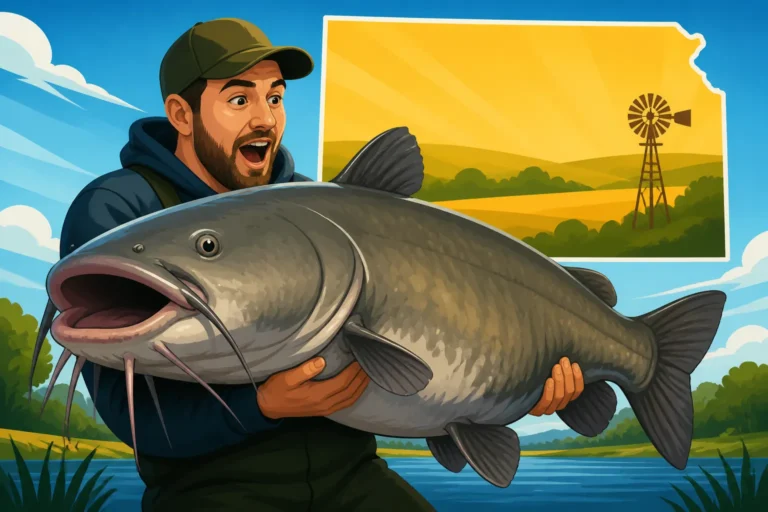
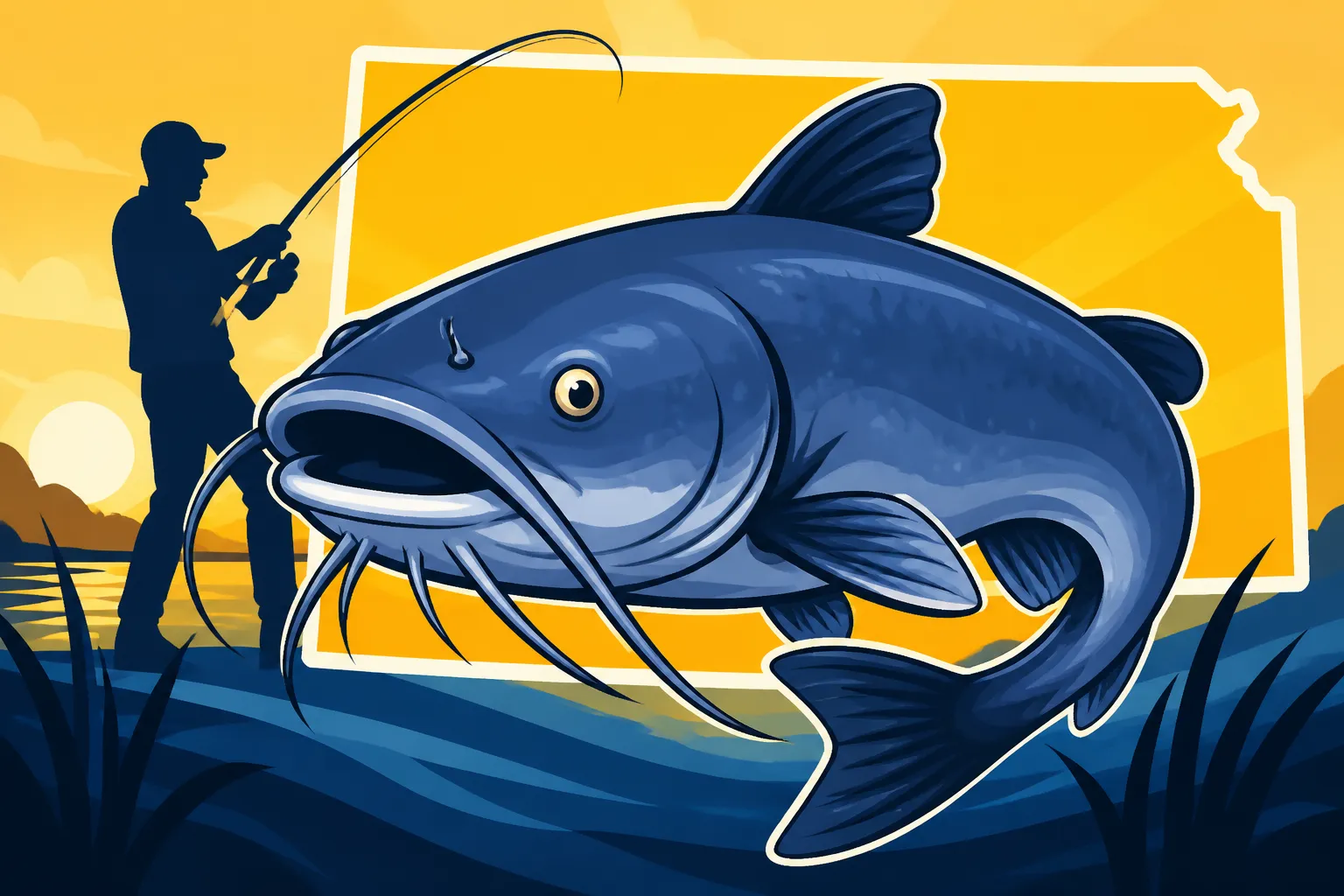
The impressive Kansas state record for blue catfish stands at a formidable 102.8 pounds. This isn't just a big fish; it's a true leviathan, a fish that commands respect and inspires awe. This kind of catch is the culmination of a fish's long life in ideal conditions and an angler's unwavering dedication. Imagine the fight, the sheer power pulling against your gear, the moment that massive head breaks the surface – it's the stuff of angling legend. Catching a fish of this magnitude isn't just about putting bait in the water; it’s about understanding the habits of these immense creatures and having the fortitude to see the battle through.
The Record-Setting Catch: A Day to Remember
Every state record has a story behind it, a tale of perseverance and a little bit of magic. While the exact details can vary, these record catches often happen after hours, days, or even years of targeting a specific species. The angler who landed the 102.8-pound blue catfish experienced one of those once-in-a-lifetime moments, likely on a day that started like any other fishing trip. They probably had their tackle dialed in, the right bait deployed in a promising location, and then came the strike that changed everything.
Think about what goes into catching a fish over 100 pounds. It's not a casual hook-set. It involves a grueling fight, often in challenging conditions. The angler had to manage their line, control the boat (if they were on one), and work the fish carefully to avoid breaking off. Landing a fish that heavy also requires serious muscle and a well-planned strategy. It’s a testament to the fact that while some fish are caught by chance, true giants often fall to those who are prepared and persistent. It's a memory that lasts a lifetime, a story told and retold, solidifying its place in Kansas fishing lore.
How Records Are Verified: The Official Process
So, you've landed a potential state record blue cat. What now? It’s not enough to simply weigh it on your bathroom scale. Official verification is a stringent process designed to ensure accuracy and prevent any disputes. The Kansas Department of Wildlife and Parks (KDWP) has a clear protocol for documenting such extraordinary catches.
First and foremost, the fish must be weighed on a certified scale. This usually means a commercial scale found at a grocery store, a tackle shop, or a meat locker, one that's regularly calibrated for accuracy. Witnesses are crucial; you’ll need at least two credible adults to observe the weighing process. Proper identification of the species is also paramount. While a seasoned angler might easily identify a blue catfish, KDWP officials will often examine photographs or even the fish itself to confirm it’s indeed a blue cat and not a closely related species like a channel catfish or flathead. Measurements of length and girth are also typically taken to further document the catch. This meticulous approach ensures that when a new record is proclaimed, there's no doubt about its legitimacy. It’s a thorough system, and one that gives all anglers confidence in the integrity of our state’s fishing records. If you're ever in that position, make sure you know the Kansas Fishing Law Enforcement and Penalties if you don't follow the proper rules.
Understanding Blue Catfish in Kansas: Why They Get So Big
Blue catfish are known for their massive size potential, and Kansas waters are no exception. These powerful fish thrive in certain environments, growing to impressive dimensions thanks to abundant food sources and suitable habitats. Understanding their biology and preferred stomping grounds is key to targeting these giants. This is why many anglers spend countless hours poring over maps and fishing reports, trying to crack the code of where the next record might be hiding.
Blue Catfish Biology and Preferred Habitats in Kansas
Blue catfish (Ictalurus furcatus) are native to the Mississippi River basin, and Kansas's rivers and large reservoirs provide excellent homes for them. Unlike channel catfish, which are more widely distributed and often found in smaller streams and ponds, blue catfish prefer large, open bodies of water with strong currents and deep channels. They are often found in the main channels of rivers, near deep holes, submerged timber, and along the edges of drop-offs where current brings food to them. They're built for power, with a deeply forked tail, a somewhat flattened head, and a distinctive bluish-gray coloration on their backs.
In Kansas, our major reservoir systems and significant rivers offer exactly what big blues need to flourish. These fish are relatively long-lived, and their continuous growth means that older fish can reach truly enormous sizes. They also tolerate a wide range of water temperatures, though they are often more active and feed aggressively in warmer months. Knowing these biological traits and habitat preferences helps anglers focus their efforts on areas where these behemoths are most likely to be found. For more detailed insights, you might want to check out our Kansas Catfish Species Guide and Kansas Blue Catfish Facts and Limits.
Key Kansas Waters Known for Monster Blue Cats
While blue catfish can be found in many of Kansas's larger water bodies, some locations are consistently renowned for producing trophy-sized specimens. These are the places where anglers specifically target the kind of fish that could rival, or even break, the state record.
Reservoirs like Milford Lake, the largest lake in Kansas, are famous for their healthy populations of big blues. Its vast expanse, deep channels, and abundance of shad provide an ideal environment. The same goes for Tuttle Creek Lake, which is another prime blue catfish destination, particularly in the river channels upstream and downstream of the dam. The Kansas River itself, especially sections with deep scour holes and consistent current, is also a hotspot for massive blue catfish. These river systems serve as highways for baitfish, which in turn attract the apex predators like big blues. It’s in these expansive, nutrient-rich environments that blue catfish have the opportunity to grow truly enormous, becoming the legendary fish that anglers dream about. We have more detailed information in our Best Catfish Lakes in Kansas guide.
What Blue Catfish Eat to Reach Record Size
To grow to a colossal 100+ pounds, a blue catfish needs to eat a lot, and often. These fish are opportunistic predators with a diet that primarily consists of other fish. They are not particularly picky, but their preferences tend towards what's readily available and easy to ambush.
In Kansas reservoirs and rivers, their main food source is often shad – gizzard shad and threadfin shad are abundant and provide a rich, fatty meal. Blue catfish will also prey on carp, drum, sunfish, and even smaller game fish. They'll also consume invertebrates, crawfish, and anything else they can get their mouths around. This diet of protein-packed forage allows them to pack on pounds rapidly, especially in their younger years, and then maintain their massive size throughout their long lives. Anglers targeting trophy blues often mimic this natural diet, using large pieces of cut bait from these same species to entice a strike. The bigger the bait, the bigger the fish you're likely to attract – a general rule that holds true for these giants.
Chasing Trophy Blue Cats: Tips for Landing a Giant
Landing a state-record blue catfish is no accident; it's the result of strategic planning, specialized gear, and persistent effort. If you're serious about hooking into a fish that could rival the current record, you need to be prepared for every aspect of the challenge. This isn't your casual bobber-and-worm fishing trip.
Essential Gear for Targeting Trophy Blue Catfish
When you're after a fish that could potentially weigh over 100 pounds, your standard bass rod isn't going to cut it. You need heavy-duty gear that can withstand immense strain and serious power. Start with a stout, heavy-action rod, typically 7 to 9 feet long, paired with a large, robust baitcasting reel or a heavy-duty spinning reel capable of holding hundreds of yards of strong line. I often recommend looking at options on Amazon for these types of specialized, heavy-duty setups, as you can compare various brands and read reviews from other serious anglers.
Your line is arguably the most critical component. Opt for braided line in the 50 to 100-pound test range, ensuring it's abrasion-resistant for fishing around submerged structure. A leader of fluorocarbon or monofilament, slightly lighter than your main line (e.g., 30-50 pound test), can be used to connect to your hook, providing a bit of stretch and camouflage. Hooks should be equally robust – strong circle hooks, size 8/0 to 12/0, are preferred for their effectiveness in hooking fish in the corner of the mouth, which is better for both the fish and your landing success. You'll also need heavy sinkers, sometimes 6 to 12 ounces or more, to hold your bait in strong currents. Don't forget a large, sturdy landing net with a deep basket, or better yet, a reliable landing glove for hand-landing true giants. Many anglers find great deals on these specialized nets on Amazon as well. For more on this, check out our Best Rod and Reel Combo for Catfish guide.
Techniques for Luring in Giants
Catching enormous blue catfish usually involves a few tried-and-true techniques, all centered around presenting large, appealing baits in the right locations. Drift fishing and anchoring are two of the most popular and effective methods.
- Drift Fishing: This technique involves allowing your boat to drift slowly with the current or wind, dragging your bait across prime blue catfish territory. This covers a lot of water and allows you to present your bait to numerous fish. You'll need to use enough weight to keep your bait on the bottom, adjusting as current or depth changes. Pay close attention to your rod tip for the tell-tale thud of a big blue inhaling your bait. This is a dynamic way to find active fish, especially in large reservoirs with expansive flats.
- Anchoring: Once you've identified a promising spot – perhaps a deep hole, a submerged hump, or a river bend with current seams – anchoring allows you to present multiple baits simultaneously in a concentrated area. This is particularly effective when you believe fish are holding in a specific structure. Use heavy anchors to ensure your boat stays put in strong currents. Deploy several rods, each with a different bait or at a slightly different depth, to maximize your chances. You can read more about these strategies in Kansas Catfish Fishing Techniques.
Regardless of the technique, big, fresh cut bait is king. Shad, carp, drum, or even large pieces of bluegill or sunfish are excellent choices. Don't be afraid to use substantial chunks; a trophy blue catfish isn't deterred by a large meal. I always recommend sourcing the freshest bait possible; sometimes, catching your own fresh bait can make all the difference. For more detailed bait information, refer to our Best Bait for Blue Catfish guide.
Best Times and Conditions for Blue Catfish Fishing
Timing and conditions play a significant role in successful blue catfish fishing, especially when you're targeting those elusive giants. While blue cats can be caught year-round, certain periods offer better odds.
Generally, the warmer months from late spring through fall are prime time. As water temperatures rise, blue catfish become more active and feed more aggressively. They’ll often hold in deeper, cooler water during the heat of summer days, moving shallower to feed during dusk, dawn, and through the night. Night fishing can be incredibly productive for big blues, as they use their keen sense of smell and lateral line to hunt in low light conditions. The cover of darkness often makes them bolder and less wary of anglers. Many anglers swear by Kansas Summer Catfish Fishing Tips and also How to Catch Flathead Catfish at Night.
Look for periods of stable weather. While some fish bite well before a storm, extreme weather changes can put blue cats off the bite. Moderate current in rivers or good wind-blown points in reservoirs can concentrate baitfish and, consequently, blue cats. Don't overlook the importance of good water quality; while catfish are hardy, clean, oxygenated water is generally where you'll find the healthiest and largest fish. Always keep an eye on weather forecasts and water conditions.
| Blue Catfish Fishing Strategy | Key Gear | Ideal Conditions | Typical Locations |
|---|---|---|---|
| Drift Fishing | Heavy rod/reel, braided line (50-100lb), 8/0-12/0 circle hooks, heavy sinkers, Amazon-sourced rod holders | Moderate current/wind, stable weather, warmer water | River channels, main lake basins, deep flats |
| Anchoring | Heavy rod/reel, braided line (50-100lb), 8/0-12/0 circle hooks, heavy anchors, large landing net (consider Amazon for size options) | Stable conditions, low wind, good current flow | Deep holes, submerged structure, river bends, dam tailwaters |
| Night Fishing | All above plus headlamp, lanterns, glow sticks, bug spray (find essentials on Amazon) | Warm nights, stable barometric pressure, clear skies | Similar to day fishing, but often shallower edges of main channels |
Beyond the Record: Documenting and Respecting Your Catch
Catching a truly massive blue catfish is an incredible accomplishment. Whether it's a new state record or simply your personal best, it’s important to handle these magnificent creatures with care and respect, ensuring their legacy for future generations.
Reporting a Potential State Record Fish
If you believe you’ve landed a fish that could challenge the state record, acting quickly and correctly is crucial. The KDWP needs to be notified as soon as possible, ideally while the fish is still fresh. Have your certified scale and witnesses ready. It's also a good idea to have a camera or phone ready to take clear photos of the fish, especially if you plan to release it after weighing.
Contacting KDWP officials is your next step. They will guide you through the precise documentation requirements, which often include specific photos, a signed affidavit from witnesses, and official species verification. Remember, the goal is not just to prove the weight, but also to confirm the species and the legitimacy of the catch. Being prepared with your Kansas Fishing License Guide and any permits can also help streamline the process. A successful state record submission is a point of pride for both the angler and the state, and it hinges on following these careful steps.
Practicing Catch and Release with Big Blues
While the thrill of a state record is undeniable, many trophy anglers today prioritize the health of these large, long-lived fish. Practicing responsible catch and release, especially with truly enormous blue catfish, helps ensure that these genetics remain in our waters for others to enjoy and for the species to continue thriving. A fish that has grown to over 100 pounds is likely very old and is a vital part of the ecosystem’s breeding stock.
If you intend to release a large blue catfish, minimize its time out of the water. Have your weighing and measuring equipment ready to go. Support the fish horizontally, especially when lifting it for photos, to prevent internal organ damage. Avoid dragging it on rough surfaces. Use large, barbless hooks if possible, or crimp down barbs on your circle hooks to make removal easier. Once measurements and photos are taken, gently release the fish back into the water, holding it upright until it swims away under its own power. Witnessing such a magnificent creature swim strongly back into the depths is, for many, an even greater reward than seeing its name in a record book. It’s about being a steward of our natural resources and ensuring that the tradition of chasing giants continues for years to come.
Disclaimer
This article is for general informational purposes only and does not constitute professional advice. Laws, prices and regulations vary by location and change over time. Consult a qualified professional for guidance on your specific situation.