Protected Fish Species in Kansas
It's always a bit unsettling when you're out enjoying a peaceful day of Kansas fishing, casting your line, and then suddenly you hook into something that looks… different. You might wonder, "Is this fish even legal to keep? Am I going to get in trouble?" That uncertainty can really take the joy out of fishing. This guide is here to clear up that confusion, focusing on protected fish species in Kansas, particularly the most well-known one that anglers might encounter, and what you need to do to stay on the right side of conservation and the law.
Understanding the "Why": Why Kansas Protects Certain Fish Species
Before we dive into the specifics, it’s important to understand why certain fish species receive protection in Kansas. It's not just about setting arbitrary rules; it's about preserving the delicate balance of our aquatic ecosystems and ensuring a healthy future for all species, including the ones we love to pursue. When a species is designated as threatened or endangered, it means its populations are in peril, often due to habitat loss, pollution, or other environmental pressures.
The Ecological Importance of Native Fish
Every native fish species plays a unique and vital role in the health of our Kansas waterways. Think of it like a complex jigsaw puzzle; if you remove even one piece, the whole picture starts to become unstable. Native fish contribute to the food web, act as indicators of water quality, and help maintain biodiversity. For instance, smaller species might be a crucial food source for larger game fish, while others might help control insect populations or even aid in nutrient cycling. When a species struggles, it sends ripples through the entire ecosystem, potentially affecting everything from the insects they eat to the larger predators that depend on them. Protecting these species is about protecting the entire web of life, which ultimately benefits all of us who enjoy the outdoors.
Consider the intricate balance in a small Kansas creek – the minnows graze on algae, insects feed on detritus, and larger fish like bass and catfish prey on both. If a key native minnow species disappears, it could mean less food for the bass, an increase in algae, or a disruption in the insect population, all of which change the fishing experience for everyone. These protected species, though perhaps not traditional "game fish," are often the linchpins of healthy aquatic environments.
Legal Frameworks and Conservation Designations
Kansas, like other states, has specific laws and regulations designed to protect its vulnerable fish populations. These laws are often guided by both state and federal mandates, such as the Endangered Species Act. The Kansas Department of Wildlife and Parks (KDWP) is the primary agency responsible for identifying, protecting, and managing these species within the state. They conduct extensive research, monitor populations, and implement conservation strategies to try and bring these species back from the brink.
Species are typically given designations like "threatened" or "endangered" based on population numbers, habitat health, and projected threats. An "endangered" species faces an immediate and severe risk of extinction, while a "threatened" species is likely to become endangered in the near future. These designations trigger a range of protective measures, including prohibitions on harming, harassing, or possessing the fish, as well as efforts to restore their habitats. Understanding these classifications helps anglers grasp the gravity of the situation and why strict adherence to regulations is so critical. You can learn more about the broader rules in Kansas Fishing Regulations Explained.
Focus on the Topeka Shiner: Kansas's Most Prominent Protected Fish
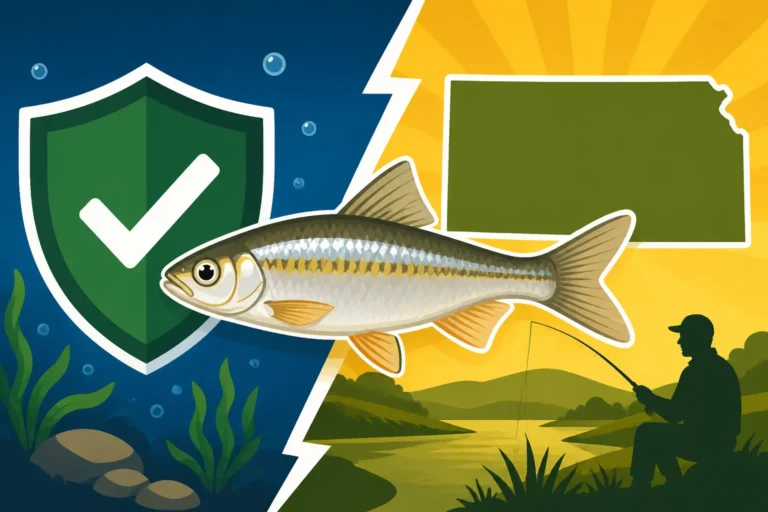
When we talk about protected fish species in Kansas that anglers might actually encounter, one name stands out: the Topeka shiner. This small, unassuming minnow holds a significant place in conservation efforts across the state and is federally listed as an endangered species. Its story is a classic example of how habitat loss can impact even the smallest members of our aquatic community. Knowing about this fish is key for any responsible angler fishing in areas where it might be present.
Identifying the Topeka Shiner in the Wild
Identifying a Topeka shiner can be a bit tricky because, let's be honest, many small minnow-like fish look similar at first glance. However, there are some key characteristics that can help you distinguish it. The Topeka shiner is a small, silvery fish, typically growing no more than 3 inches long. It has a dark lateral stripe running along its side, often fading as it nears the tail. A distinctive feature is a small, dark crescent-shaped spot at the base of its dorsal fin. During spawning season, males develop vibrant red or orange fins and breeding tubercles (small bumps) on their heads.
It's crucial to remember that misidentification is common, especially with other shiner species. If you catch a small, silvery minnow with these general features, and you're in an area known to be Topeka shiner habitat, it's always best to err on the side of caution and release it immediately and unharmed. A good field guide, perhaps one you can find on Amazon, can be an invaluable tool for on-the-spot identification. This is a perfect example of why it's so important to know Is the Topeka Shiner Protected in Kansas?.
| Feature | Topeka Shiner Description |
|---|---|
| Size | Small, typically up to 3 inches (7.5 cm) |
| Coloration | Silvery body, often with a darker lateral stripe |
| Distinctive Mark | Crescent-shaped dark spot at the base of the dorsal fin (often the best identifying feature) |
| Fins | Clear, but males develop red/orange fins during spawning |
| Body Shape | Slender, elongated |
| Mouth | Small, terminal mouth |
Typical Habitats and Range
The Topeka shiner prefers clear, cool-water streams with a moderate current, often found in pools or runs that have clean gravel or sand bottoms. They are particularly fond of streams that flow through prairies, where the riparian vegetation helps maintain cooler water temperatures and provides stable banks. Crucially, they thrive in streams that have perennial flow (flow year-round) but also have off-channel pools or wetlands that serve as refugia during dry periods or high flows. These areas often have abundant submerged vegetation, which provides both cover from predators and a place for them to spawn.
Historically, the Topeka shiner was widespread across the central prairies, including much of eastern and central Kansas. However, due to habitat degradation from agricultural runoff, channelization of streams, dam construction, and increasing sedimentation, their range has significantly shrunk. Today, their populations are fragmented, largely confined to higher-quality stream segments that have resisted these impacts. This makes finding pristine Kansas River Fishing Guide areas, or smaller tributary streams, all the more critical for their survival. If you are fishing in areas like the Flint Hills or certain parts of the Ozark border region, you should be particularly aware of the potential presence of this species.
Angler Responsibilities and Best Practices for Protected Species
Knowing about protected species like the Topeka shiner is only half the battle; the other half is understanding your role as an angler in their conservation. It’s about being a steward of our natural resources and ensuring that your passion for fishing doesn't inadvertently harm vulnerable populations. This means adopting specific catch-and-release techniques and knowing what to do if you happen to hook something you shouldn't.
What to Do on an Accidental Catch
Despite your best efforts, sometimes you might accidentally catch a protected species. It happens! The most important thing is to know exactly what to do when it occurs. If you suspect you've caught a Topeka shiner or any other protected fish:
- Identify Quickly: Try to quickly and accurately identify the fish. Refer back to the identifying characteristics. If you're unsure, treat it as a protected species.
- Handle Minimally: Avoid touching the fish with dry hands, as this can remove their protective slime layer, making them susceptible to disease. If you must handle it, wet your hands thoroughly first.
- Keep it in the Water: Whenever possible, unhook the fish while it's still in the water. This minimizes stress and keeps it hydrated.
- Unhook Gently: Use needle-nose pliers or a de-hooking tool to remove the hook as quickly and gently as possible. If the fish is deeply hooked and removing the hook would cause significant trauma, it’s often best to cut the line as close to the hook as you can. A quick release tool, which can be found readily on Amazon, can be a game-changer for these situations.
- Release Immediately: Once unhooked, gently guide the fish back into the water and allow it to swim away under its own power. Don't just toss it back; hold it gently upright in the current until it regains its strength and swims off.
Remember, the goal is to minimize stress and injury to ensure the fish has the best chance of survival. Intentionally harming or possessing a protected species can lead to significant penalties, as outlined in Kansas Fishing Law Enforcement and Penalties.
Preventing Incidental Catches and Minimizing Impact
While accidental catches can occur, there are proactive steps you can take to minimize the likelihood and impact of encountering protected species. These best practices not only help conserve vulnerable fish but also promote responsible angling in general.
- Research Before You Go: Before heading out, especially to smaller streams or lesser-fished areas, do a little research. The KDWP website or local conservation groups often provide information on sensitive areas or known habitats for protected species. Knowing if you're fishing in a known Topeka shiner stream means you can adjust your tactics accordingly.
- Use Appropriate Gear: Consider using tackle that is less likely to deeply hook small fish. For example, using circle hooks (especially for bait fishing) can significantly reduce gut-hooking. Also, choose lures or baits that are appropriately sized for your target species, reducing the chance of smaller, non-target fish taking the bait. Lighter line can also help detect subtle bites and make for easier unhooking. You can find a wide range of suitable gear on platforms like Amazon.
- Adjust Your Technique: If you know you're in an area with protected minnows, avoid using live bait that might appeal to them. Instead, focus on artificial lures that are less attractive to smaller species, or fish larger baits designed specifically for larger game fish.
- Respect Habitat: Be mindful of where you're stepping and casting. Avoid disturbing stream banks, spawning areas, or aquatic vegetation, as these are critical habitats for many species, including the Topeka shiner. Any actions that lead to increased sedimentation or erosion can negatively impact these sensitive ecosystems.
- Educate Others: Share your knowledge! If you see another angler struggling with an accidental catch or using practices that could harm protected species, politely offer advice on proper handling and release techniques. Many people simply aren't aware.
By being informed and proactive, you contribute directly to the health of Kansas's aquatic ecosystems, ensuring that fish populations, both game and protected, can thrive for generations to come.
Beyond the Shiner: Broader Conservation Efforts and Your Role
While the Topeka shiner often takes center stage when discussing protected fish in Kansas due to its endangered status and the potential for angler interaction, it's important to remember that conservation is a much broader endeavor. Many other native species, though not federally listed, may be considered species of concern at the state level, or their populations may be locally imperiled. Your role as an angler extends beyond just knowing specific protected fish; it encompasses a general commitment to healthy waterways and responsible outdoor ethics.
Protecting Habitats and Water Quality
The single biggest threat to fish populations, protected or otherwise, is habitat degradation and poor water quality. This is where every single Kansan, and especially every angler, can make a significant difference. Healthy fish need clean water, stable stream banks, and diverse in-stream habitats.
Consider how actions far upstream or away from the water's edge can impact the entire system. Runoff from agricultural fields carrying pesticides or fertilizers, discharge from industrial sites, or even erosion from poorly managed land can severely degrade water quality, making it uninhabitable for sensitive species. Trash and litter, unfortunately often left by people, not only pollute but can directly harm aquatic life. Support initiatives that promote riparian buffer zones (vegetation along stream banks), sustainable farming practices, and responsible waste management. Participate in local stream cleanups or watershed councils. Your efforts to keep litter out of the water not only makes the area more pleasant for you but actively protects the environment for creatures like the Kansas Fish Species Guide.
Even small actions, like making sure your boat doesn't introduce invasive species (always clean, drain, and dry your boat!), or properly disposing of fishing line (which can entangle wildlife), contribute to the bigger picture of conservation. The health of our Best Fishing Lakes in Kansas and all our smaller streams depends on our collective vigilance.
Reporting Violations and Supporting Conservation
If you ever witness someone intentionally harming protected species, polluting waterways, or violating fishing regulations, it's your responsibility to report it. The Kansas Department of Wildlife and Parks (KDWP) relies on public support to enforce these crucial laws. Don't hesitate to contact KDWP law enforcement with details, including location, time, and a description of the activity. This isn't about being a "tattletale"; it's about protecting the resources we all cherish.
Beyond reporting, there are many ways to actively support conservation efforts. Purchasing your Kansas Fishing License Guide is a direct way to contribute, as a significant portion of license fees goes directly to wildlife and fisheries management, habitat restoration, and conservation programs. Consider joining or donating to local conservation organizations that work to protect Kansas's natural heritage. These groups often engage in hands-on habitat projects, public education, and advocacy. Your support, whether through time, money, or simply being an informed and responsible angler, is invaluable in ensuring a vibrant future for all fish species in Kansas.
Disclaimer
This article is for general informational purposes only and does not constitute professional advice. Laws, prices and regulations vary by location and change over time. Consult a qualified professional for guidance on your specific situation.